
Retail Characteristics And Retail Organization Retailers Characteristics Retailers
- Slides: 27
Retail Characteristics And Retail Organization
Retailers- Characteristics • Retailers range from street vendors to large corporations. • Basic characteristic of a retailer is its retail mix --the elements used to satisfy it customers' needs
Facts • The retail industry is always evolving • As consumer needs and competition within the industry change, new retail formats are created to respond to those changes.
Four elements of the retail mix (1) The type of merchandise sold, (2) The variety and assortment of merchandise sold, (3) The level of customer service, and (4) The price of the merchandise
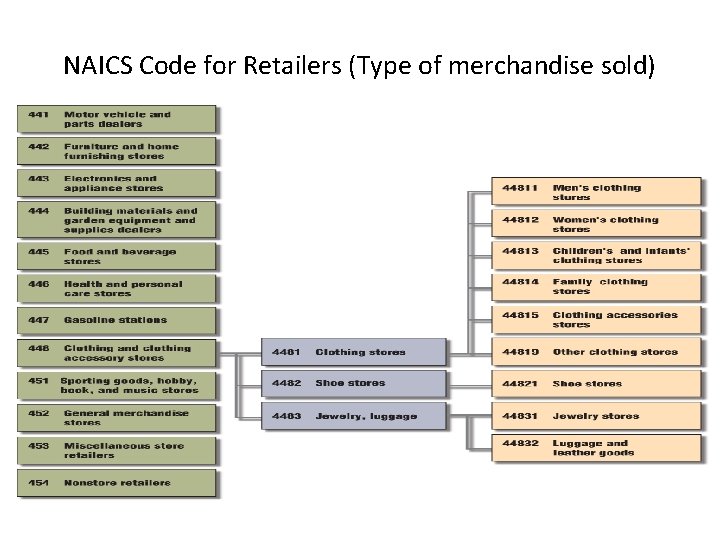
NAICS Code for Retailers (Type of merchandise sold)
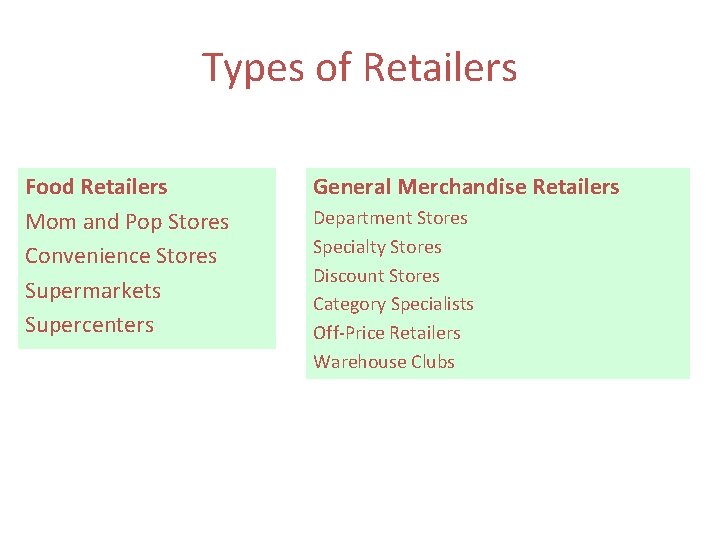
Types of Retailers Food Retailers Mom and Pop Stores Convenience Stores Supermarkets Supercenters General Merchandise Retailers Department Stores Specialty Stores Discount Stores Category Specialists Off-Price Retailers Warehouse Clubs
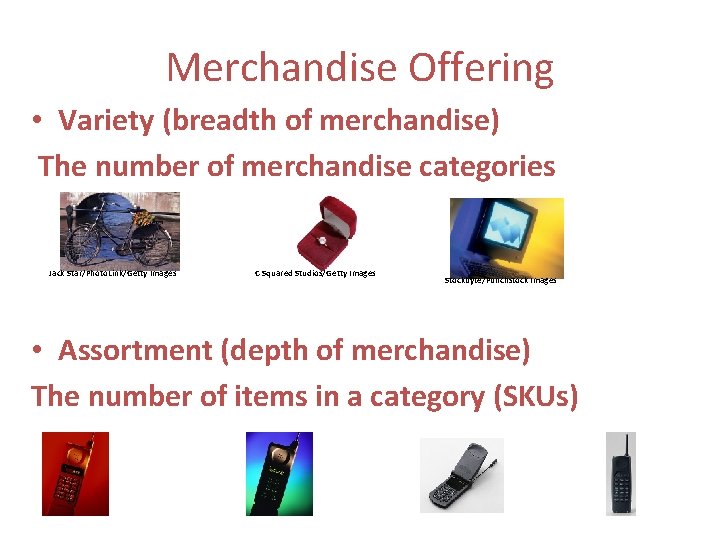
Merchandise Offering • Variety (breadth of merchandise) The number of merchandise categories Jack Star/Photo. Link/Getty Images C Squared Studios/Getty Images Stockbyte/Punchstock Images • Assortment (depth of merchandise) The number of items in a category (SKUs)
Merchandise Offering • Variety is the number of different merchandise categories a retailer offers • Assortment is the number of different items in a merchandise category • Each different item of merchandise is called a SKU (stock keeping unit) • Variety is often referred to as the breadth of • merchandise and assortment is referred to as • the depth of merchandise
Services Offered • Retailers also differ in the services they offer customers. Customers expect retailers to provide some services--accepting personal checks, providing parking, and being open long and convenient hours
The price of the merchandise • When a retailer offers many SKUs, inventory investment increases • Services attract customers to the retailer, but they are also costly. • A critical retail decision involves the trade-off between costs and benefits of maintaining additional inventory or providing additional services.
Retail Organization • The organizational structure of a retail store will vary by the size and type of the business • Several Procedures Involved in Retail Organization Set Up and Arrangements
Managing a retail Business • Setting Up An Organizational Structure • Hiring and Managing Personnel • Managing Operations
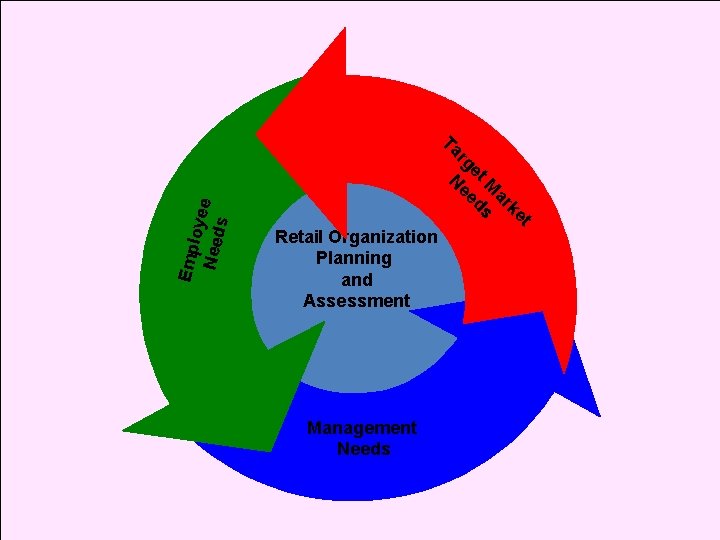
Management Needs Emp loye Need e s t ke ar M s et d rg Nee Ta Retail Organization Planning and Assessment
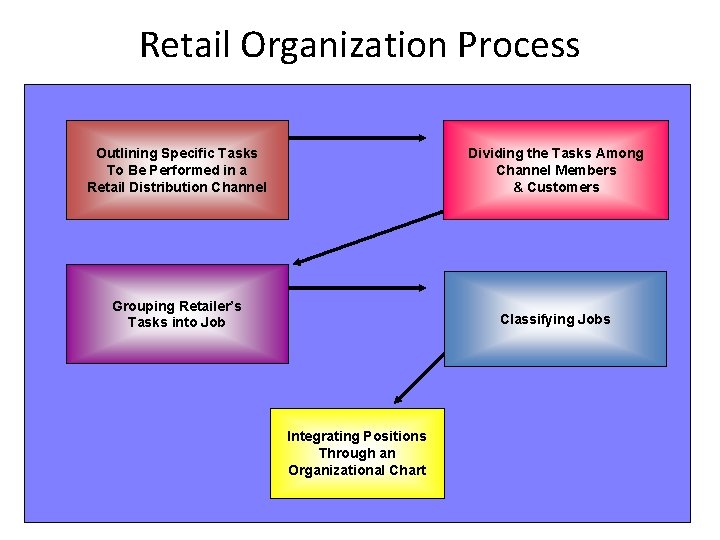
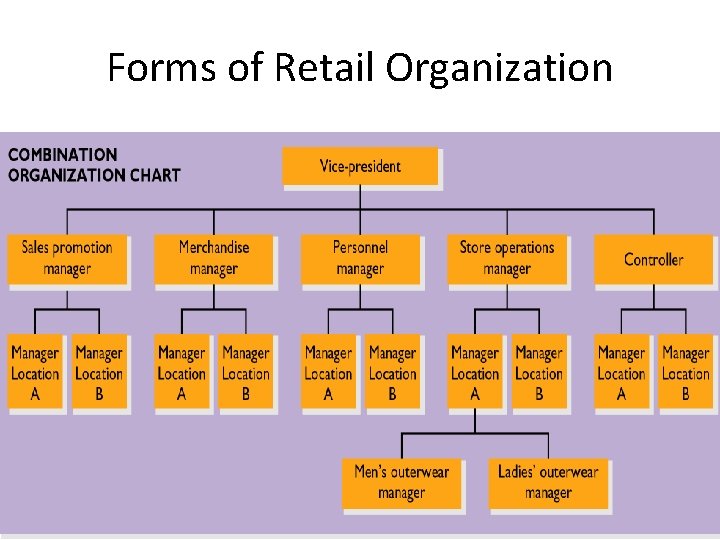
Retail Organization Process Outlining Specific Tasks To Be Performed in a Retail Distribution Channel Dividing the Tasks Among Channel Members & Customers Grouping Retailer’s Tasks into Job Classifying Jobs Integrating Positions Through an Organizational Chart
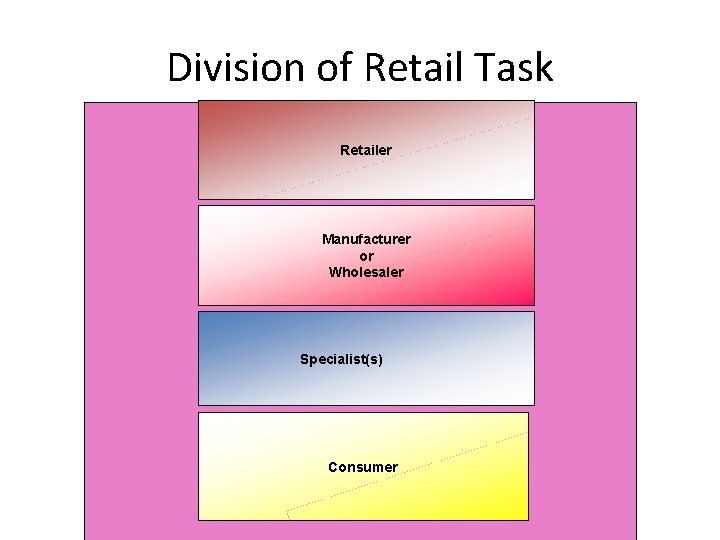
Division of Retail Task Retailer Manufacturer or Wholesaler Specialist(s) Consumer
Grouping of Tasks • Specialization? • Construct Job descriptions
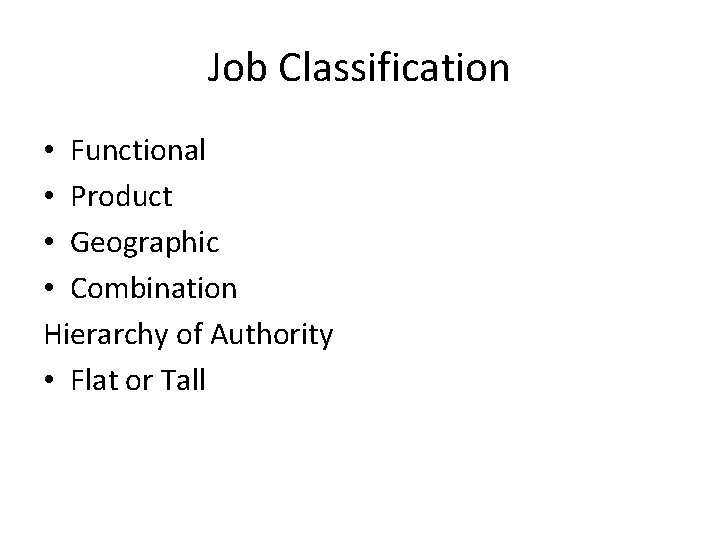
Job Classification • Functional • Product • Geographic • Combination Hierarchy of Authority • Flat or Tall
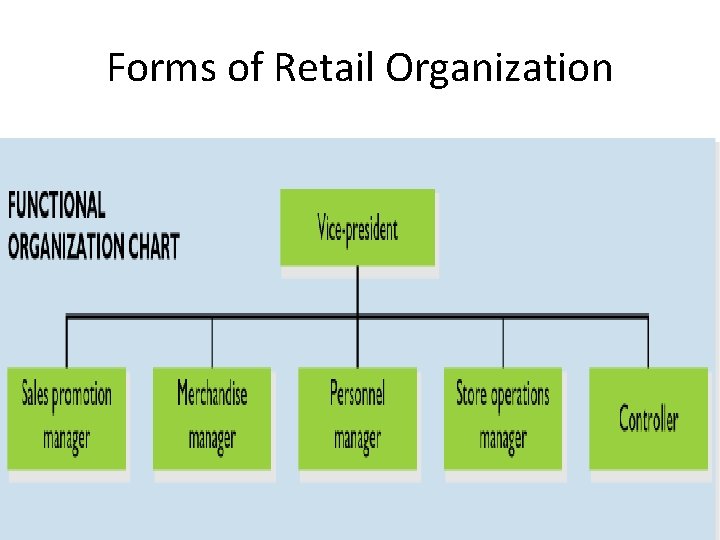
Forms of Retail Organization
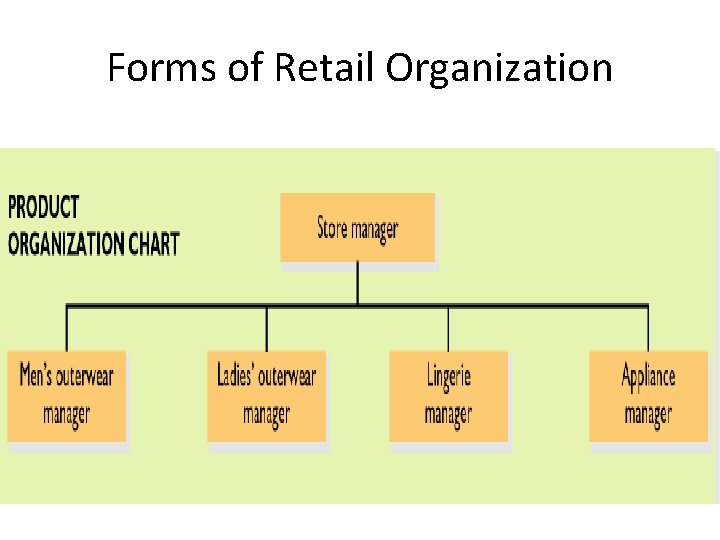
Forms of Retail Organization
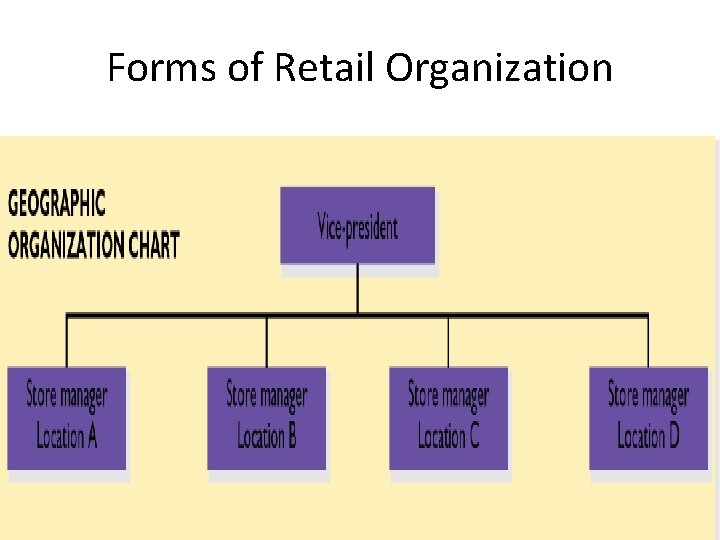
Forms of Retail Organization
Forms of Retail Organization
Small Independent Organization • Simple Arrangements • Few Levels • Little Specialization
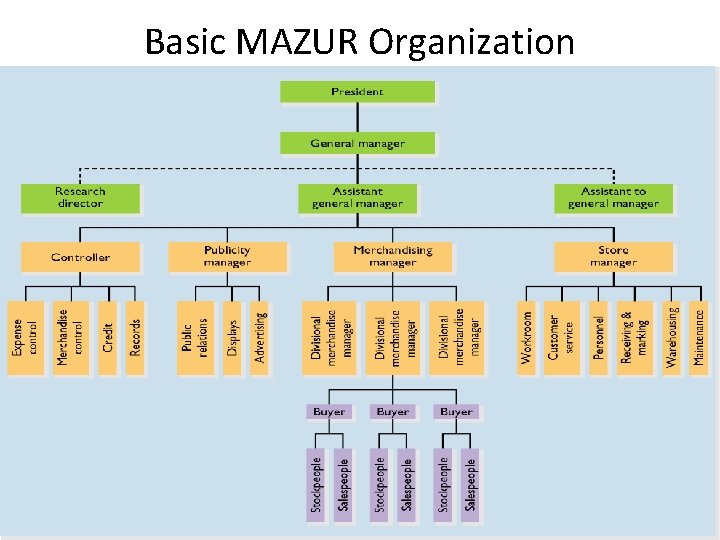
MAZUR Plan Retail store management technique under which activities are divided into four major areas or departments: • (1) merchandising (responsible for buying and selling), • (2) publicity, • (3) store management, and • (4) accounting and control.
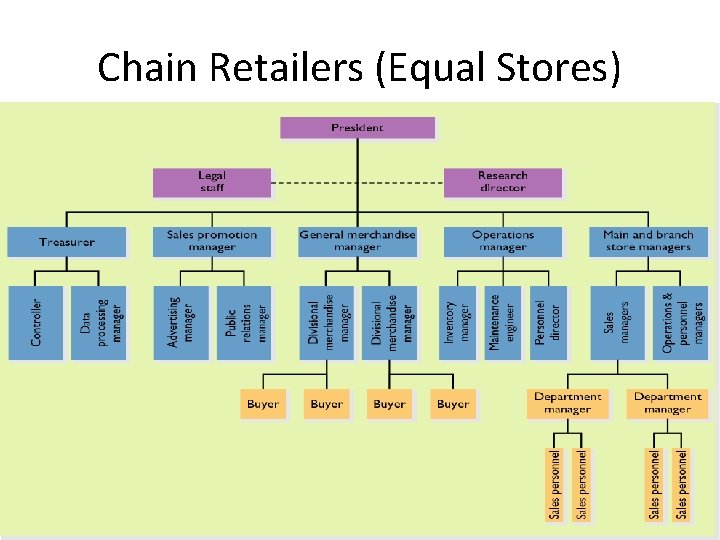
Department Store • Mazur Plan – Merchandising – Publicity – Store Management – Accounting & Control • Mother Hen with Branch Store Chickens • Separate Store Organization • Equal Store Organization
Basic MAZUR Organization
Chain Retailers (Equal Stores)
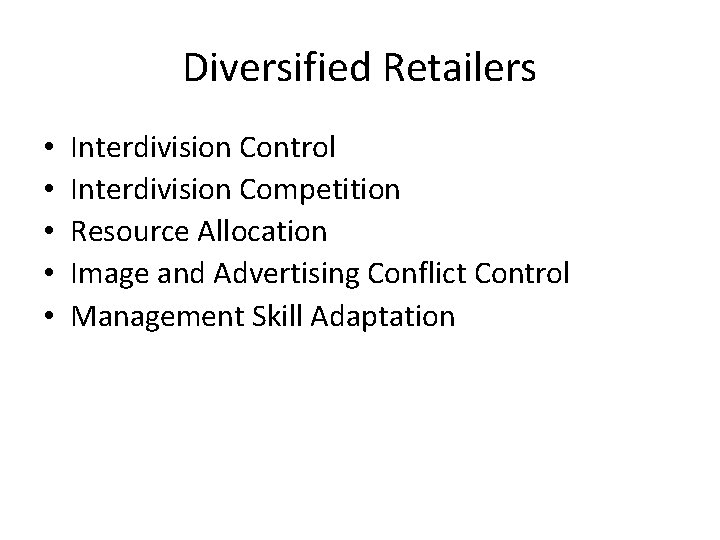
Diversified Retailers • • • Interdivision Control Interdivision Competition Resource Allocation Image and Advertising Conflict Control Management Skill Adaptation