
RESULTS OF LISTERIA SAMPLING IN CRAWFISH PROCESSING PLANTS
- Slides: 31
RESULTS OF LISTERIA SAMPLING IN CRAWFISH PROCESSING PLANTS
Project Approach Study 10 RTE seafood processing plants in the U. S. - 4 smoked fish (2 East Coast & 2 West Coast) - 4 crab (Chesapeake) & 2 crawfish (Louisiana) Year 1 (2001) – Track and evaluate Listeria contamination patterns in each plant using molecular DNA subtyping techniques Year 2 (2002) - Implement and evaluate intervention strategies & their effectiveness Year 3 (2003) – Conduct industry workshops to facilitate industry use of effective Lm controls
Summary of Sampling Results n L. monocytogenes and other Listeria species were found on live crawfish n n Assume there are Listeria on every uncooked crawfish entering your facility Standard industry cooking process destroys Listeria n Achieve an internal temperature of 180ºF n Based on destroying pathogens
Summary of Sampling Results n n n Primary risk of Listeria on processing surfaces and final product is through in-plant crosscontamination L. monocytogenes in finished product is a serious health risk to the consumer Discovery of Lm in your final product puts your business at risk to regulatory actions
Sampling Overview n Sampling Goal - determine potential sources of Listeria and its spread through the process n n Two crawfish plants participated Two seasons – weekly sampling n 2001 & 2002 Listeria control strategies training were given between seasons As the study progressed in the two plants, sampling locations were added
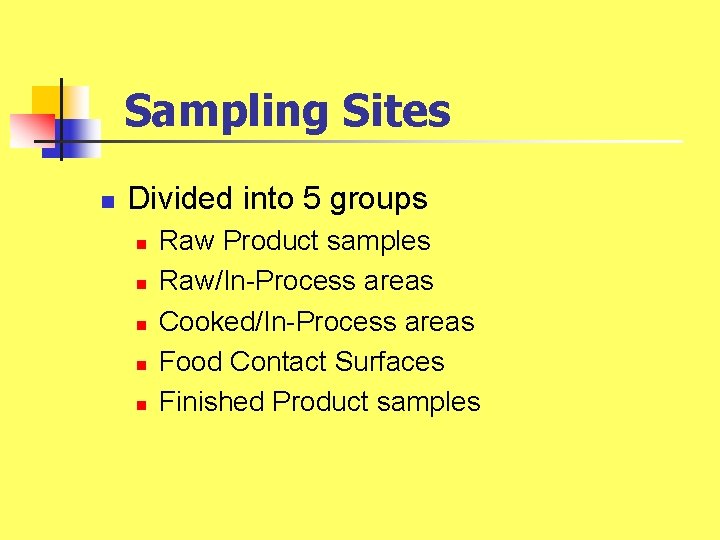
Sampling Sites n Divided into 5 groups n n n Raw Product samples Raw/In-Process areas Cooked/In-Process areas Food Contact Surfaces Finished Product samples
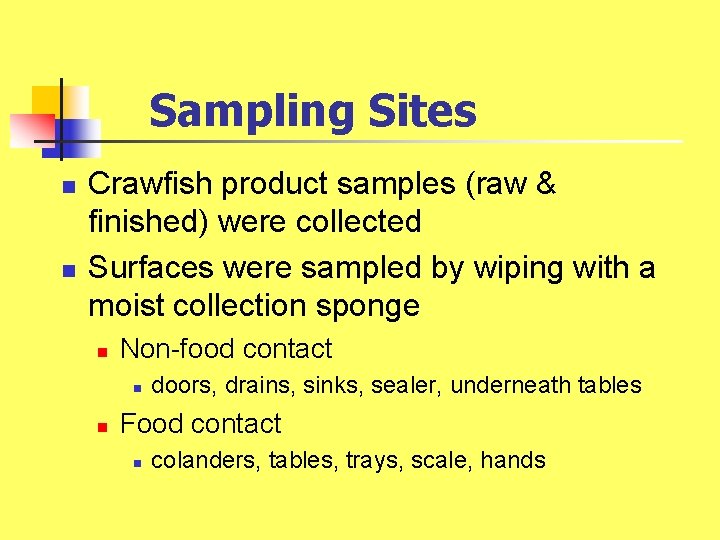
Sampling Sites n n Crawfish product samples (raw & finished) were collected Surfaces were sampled by wiping with a moist collection sponge n Non-food contact n n doors, drains, sinks, sealer, underneath tables Food contact n colanders, tables, trays, scale, hands
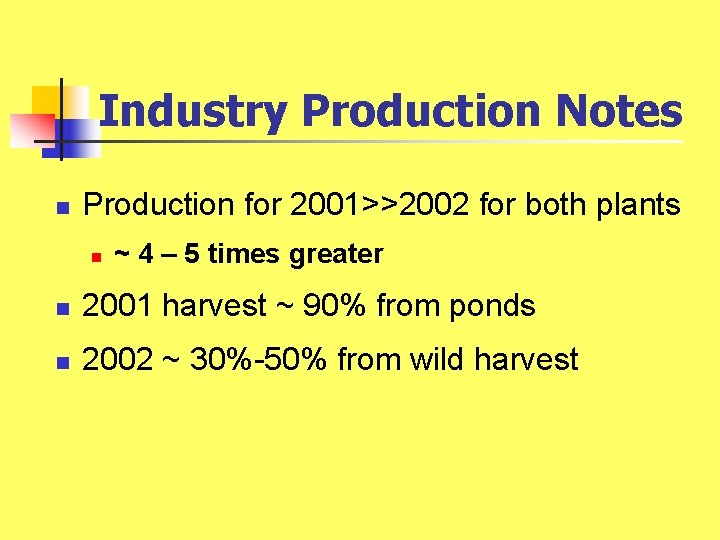
Industry Production Notes n Production for 2001>>2002 for both plants n ~ 4 – 5 times greater n 2001 harvest ~ 90% from ponds n 2002 ~ 30%-50% from wild harvest
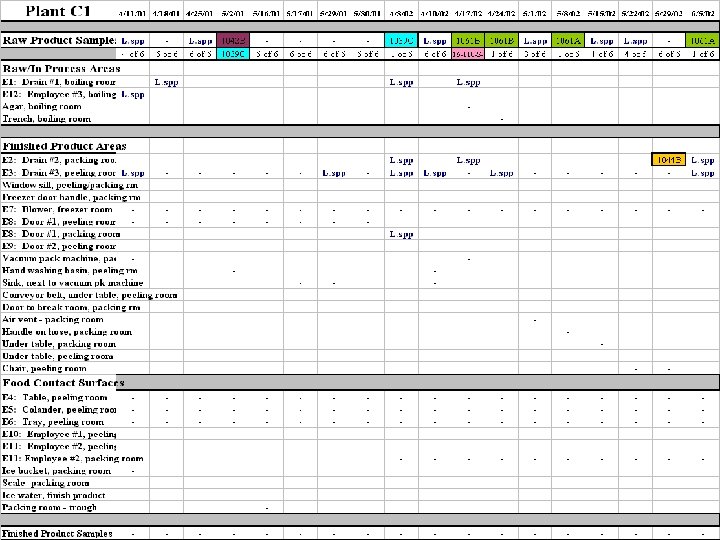
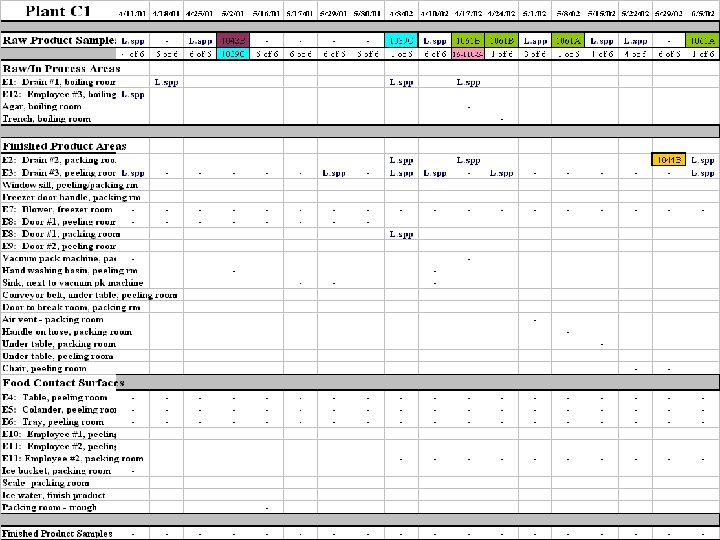
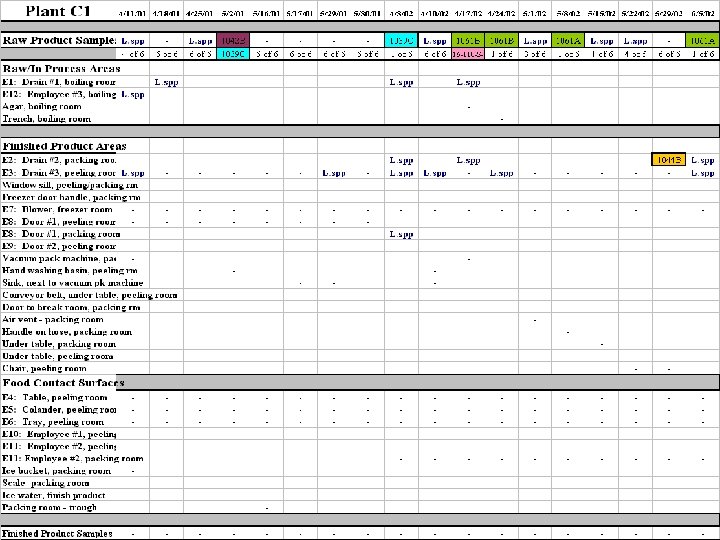
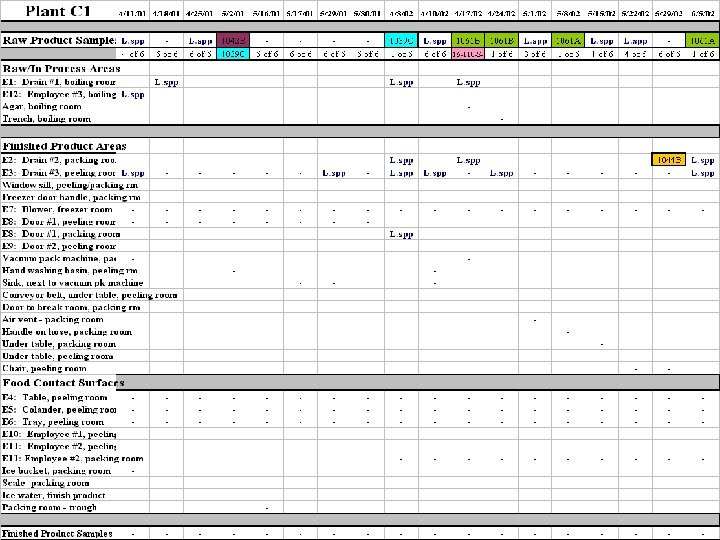
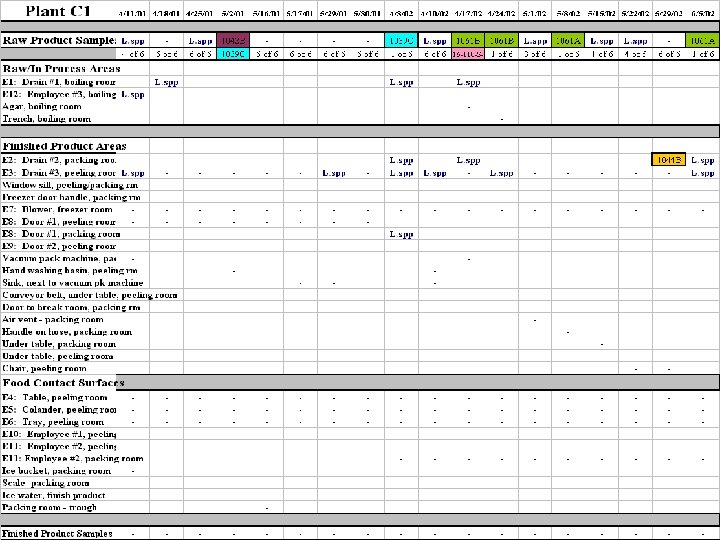
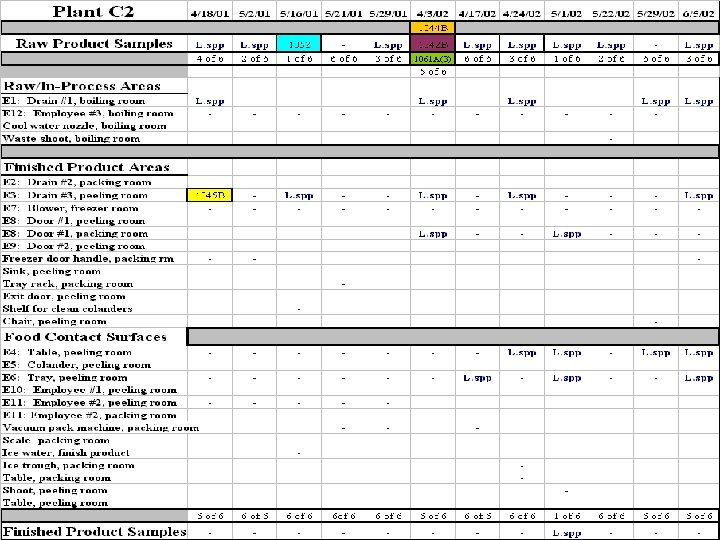
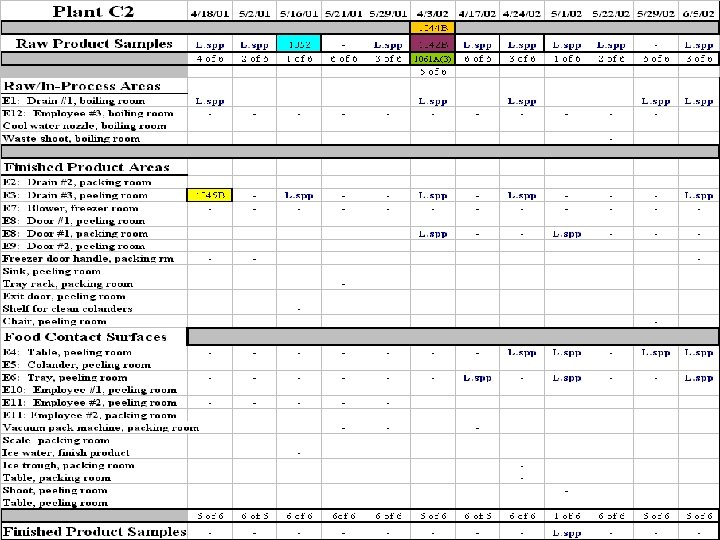
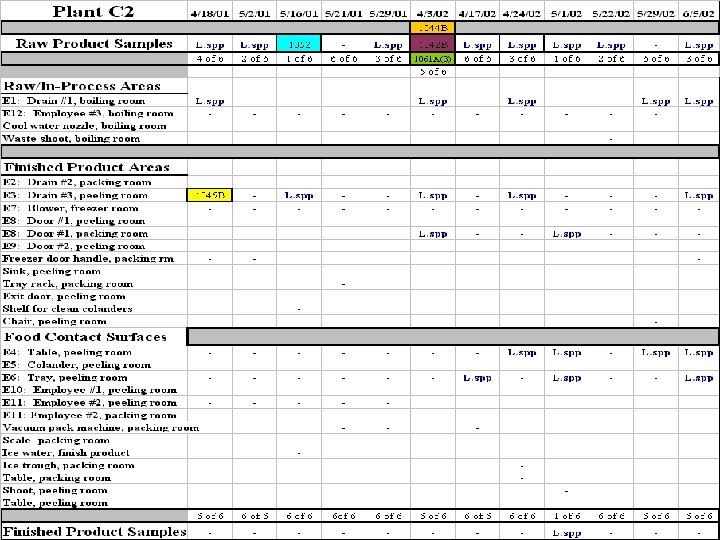
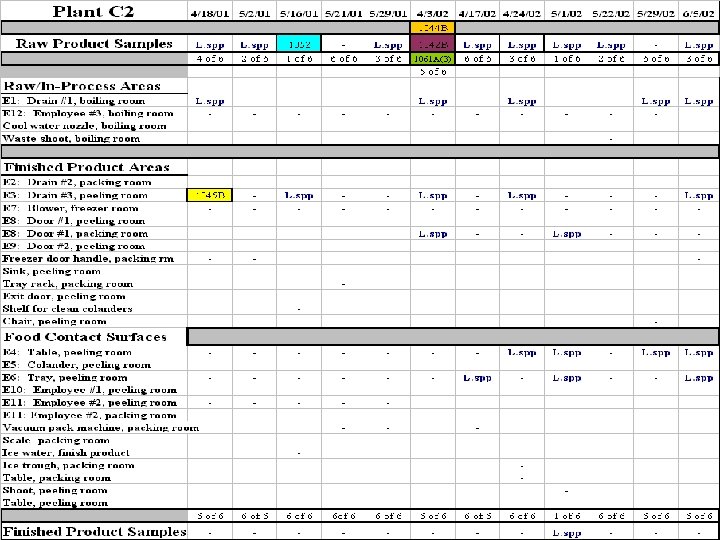
Microbiology data & results n n Different numbers & colors mean different Lm (pathogens) ribotypes L. ssp means Listeria (non-pathogens) other than monocytogenes Raw & Finished product had six lots tested at each sampling week “-” means no Listeria were found
Plant C 1 -Raw Product n Confirms presence of Listeria on live crawfish n n n Raw crawfish are source of Listeria Multiple ribotypes (strains) of Lm and other Listeria species 2002 season larger incidence of Listeria n 4 – 5 times greater production
C 1 -Raw/In-Process n Shows presence of Listeria and potential growth n Potential of cross-contamination from raw, live crawfish: n Live crawfish falling on floor n Employees – handling raw, then cooked crawfish n Handling raw crawfish, then area surfaces n Travel between live collection/handling area and cook room n Leaving raw crawfish containers in cook room/floor
C 1 -Cooked/In-Process n n n Further confirmation of kill step during cooking Potential cross-contamination from raw process area Drains – single largest area of incidence n Difficult to control & remove Listeria once it is introduced n A mostly wet, moist environment n Favorable condition for Listeria growth
Drain-to-Drain n Potential methods of contamination n Back-up/overloading of drains n n All rooms same connected system Via floors, travel between rooms n Employees, equipment Control or stop employee travel between rooms Control equipment movement between peeling and packing rooms
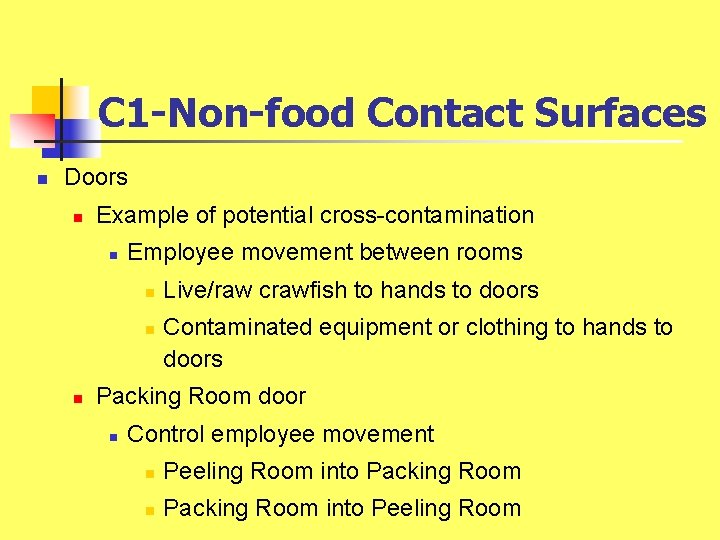
C 1 -Non-food Contact Surfaces n Doors n Example of potential cross-contamination n Employee movement between rooms n n n Live/raw crawfish to hands to doors Contaminated equipment or clothing to hands to doors Packing Room door n Control employee movement n Peeling Room into Packing Room n Packing Room into Peeling Room
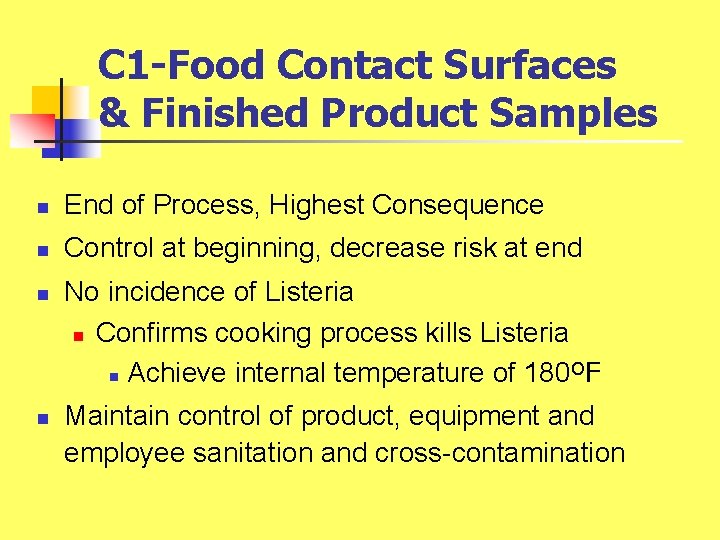
C 1 -Food Contact Surfaces & Finished Product Samples n End of Process, Highest Consequence n Control at beginning, decrease risk at end n n No incidence of Listeria n Confirms cooking process kills Listeria n Achieve internal temperature of 180ºF Maintain control of product, equipment and employee sanitation and cross-contamination
Plant C 2 -Raw Product & Raw/In-Process Areas n n n Again, confirms presence of multiple Listeria on live crawfish Greater incidence of Listeria in 2002 Listeria harborage in drains, similar to C 1 n n No Lm found though No incidence found on employee hands
C 2 -Cooked/In-Process & Non-food Contact Surfaces n Potential cross-contamination from raw, live crawfish n Drains & Doors n Listeria in peeling room, not in packing room drains – does includes Lm n Mostly continuous wet, moist environment n n Favorable condition for Listeria growth Listeria found on packing room door n Similar to plant C 1
C 2 -Food Contact Surfaces n Repeated incidence of Listeria found n Contamination of processing equipment n Possibly trays on floor n n Trays back onto table n n Listeria found in peeling room drain Contamination of table Similar risk if product gets onto floor then table
C 2 -Finished Product Samples n n Single incidence of Listeria confirms importance of preventing cross-contamination Listeria on food product surfaces provides high risk of contamination of finished product n n Tables, trays, colanders Need to control cross-contamination throughout process to prevent Listeria in packaged tail meat
Overall Conclusions n n n Live crawfish are a source of Listeria monocytogenes and other bacteria Proper crawfish cooking process kills Listeria Facilities can still possess Listeria n n Drains were the main location of contamination Cross-contamination of food processing surfaces and equipment can lead to Listeria in your finished product
Overall Conclusions n Preventing cross-contamination is Critical n n n Live crawfish to plant surfaces Live product to cooked product Contamination of surfaces between cook, peeling, and packing rooms Equipment to product Food Safety, Product Quality, Good Business
Acknowledgements n n n Johnathan Walker for collecting plant samples Martin Wiedmann’s Laboratory at Cornell for microbiological testing and analysis USDA Food Safety Initiative for project funding