
Resulting Trusts Terminology Classifications and Definitions The use
- Slides: 8
Resulting Trusts Terminology, Classifications and Definitions
The use of terms • Express trusts v Non-express Trusts: • Non-express Trusts: – Resulting/Implied trusts – Constructive trusts • • Sometimes equity will presume that, in a transaction, a trust was intended and will impose a trust relationship (resulting trust). This is a presumption, by law.
Resulting Trusts • Express trusts – intention on the part of the creator of the trust is paramount • Resulting trusts – intention is presumed by law • Don’t confuse this with the concept of intension for an express trust where intention is implied from words and surrounding circumstances
What is a Resulting Trust Arises by operation of law in two situations: 1) Upon the failure of an express trust (automatic resulting trust); 2) When contributions have been made to the purchase price but the contributor has not been given the legal title that mirrors that contribution (presumed resulting trust)
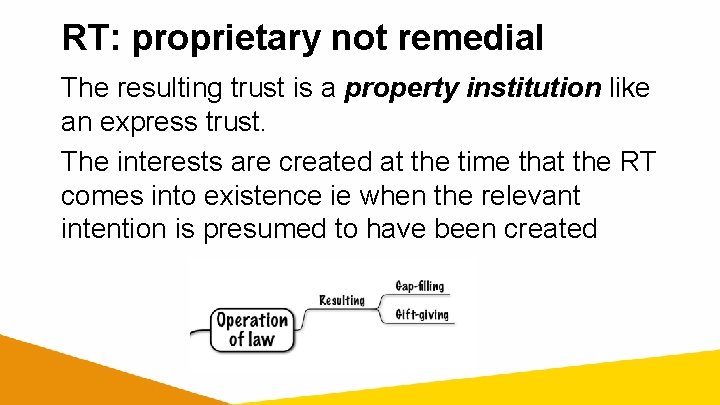
RT: proprietary not remedial The resulting trust is a property institution like an express trust. The interests are created at the time that the RT comes into existence ie when the relevant intention is presumed to have been created
When/how does the presumption of a RT arise? • The law presumes that the creator of the trust intends to retain some beneficial ownership • The RT is not expressly created • 3 certainties – irrelevant • Complete constitution - irrelevant
When/how/why is the presumption of a RT rebutted? • The presumption of intention can be rebutted in certain circumstances
RT arises in the following circumstances: 1. Failure of an express trust / Quistclose trust situation 2. In relation to surplus trust property once an express trust has been terminated 3. On purchase of property 1. Contribution that is not mirrored in legal title 2. Voluntary transfer of property to a person without consideration • Personalty • land