
Restorative Practices in Schools Tier 1 Community Building

Restorative Practices in Schools Tier 1, Community Building, OSSU, December 07, 2018
Achievement Based Objectives ▪ Reflected on restorative practice concepts ▪ Practiced a relationship building circle ▪ Discussed Supporting Frameworks for Restorative Practices ▪ Worked in teams on Tier 1(Circle) practices
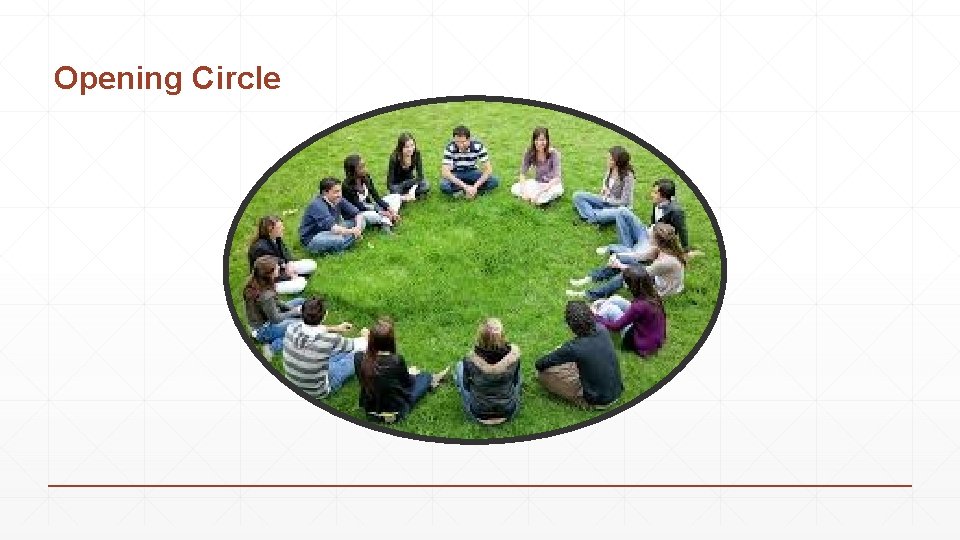
Opening Circle

Key Elements of Circle ▪ Ceremony Opening/Closing ØUsed to indicate that this is a different space. ▪ Centerpiece ØA focal point to promote speaking and listening. ▪ Identify Values/Guidelines ØDefined by the group. Serve as a reminder of expectations. ▪ Talking Piece ØRegulates dialogue, allows for focus, and limits interruption. ▪ Facilitation or Keeping ØAssists the group in creating and maintaining the space.
Moving From Punitive to Restorative You can’t institute Restorative Practices overnight! The most sustainable way to institutionalize whole-school restorative practices is to gradually increase restorative practices over time.

Restorative Practices Implementation 1. Frame Restorative Justice for You Site 2. Assemble the RJ Team 3. Celebrate Strengths and Assess Needs 4. Moving from Punitive to Restorative Practices 5. Include Others in Your Visions 6. Implement Tier 1 Strategies Year 1
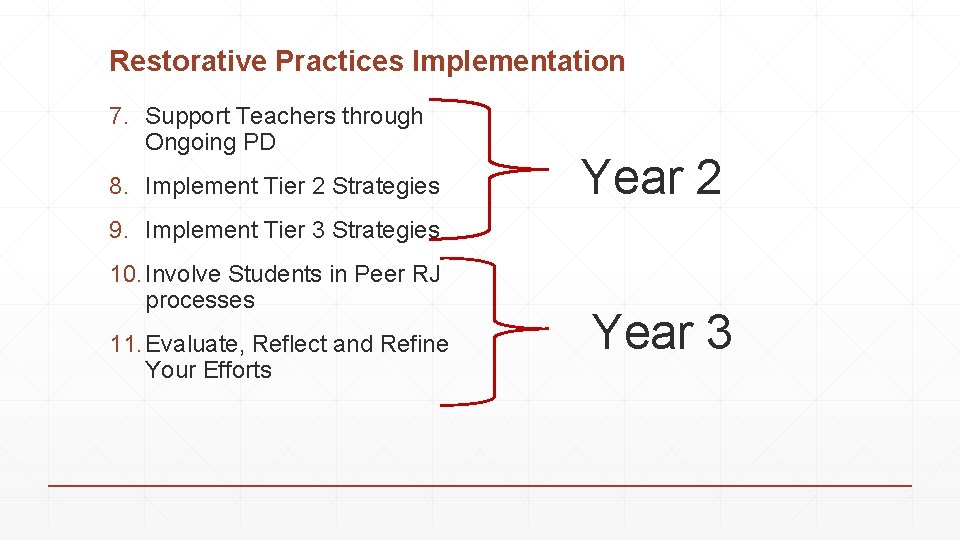
Restorative Practices Implementation 7. Support Teachers through Ongoing PD 8. Implement Tier 2 Strategies Year 2 9. Implement Tier 3 Strategies 10. Involve Students in Peer RJ processes 11. Evaluate, Reflect and Refine Your Efforts Year 3
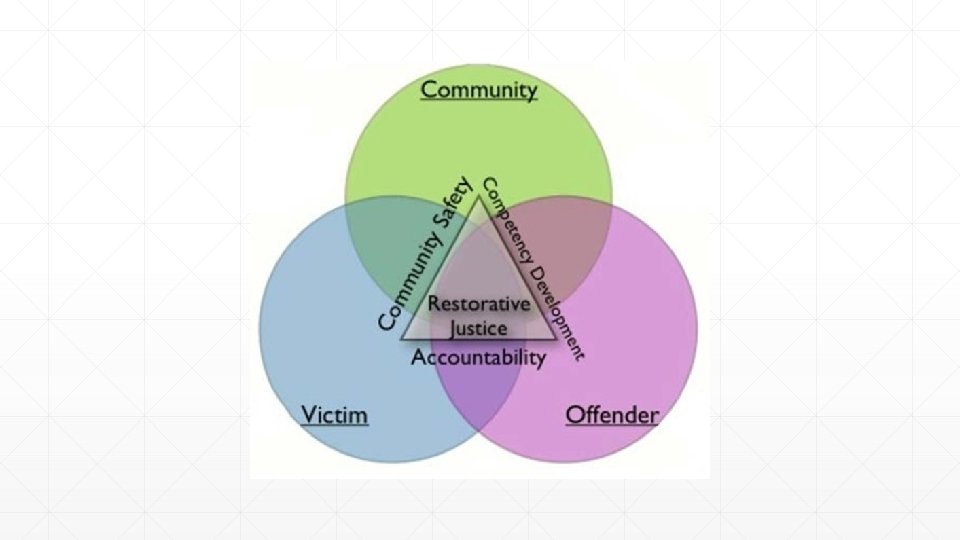
Why Restorative Practices? Restorative practices promote social engagement and connection by: (1) proactively building community and connection, (2) repairing relationships when things go wrong, (3) providing more intensive support when needed to help a young person develop a sense of belonging.
Principles ▪ Engagement: Involves those impacted, including the community, in the process and resolution. ▪ Responsibility: Encourages appropriate responsibility for addressing needs and repairing the harm (accountability) ▪ Restoration: Acknowledges and repairs the harm caused by, and revealed by, wrongdoing. Excerpted and adapted from: http: //emu. edu/now/restorative-justice/2009/04/20/restorativejustice-and-peacebuilding/
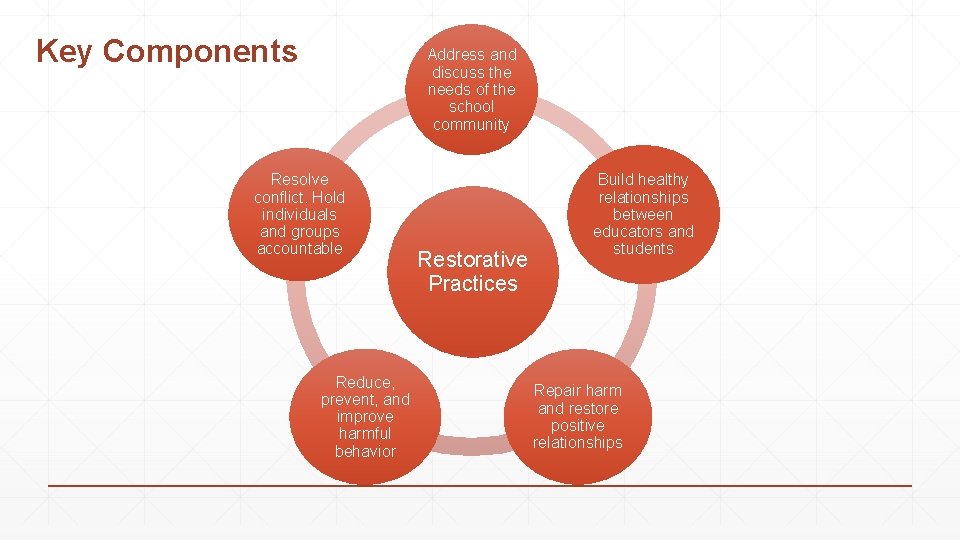
Key Components Address and discuss the needs of the school community Resolve conflict. Hold individuals and groups accountable Reduce, prevent, and improve harmful behavior Restorative Practices Build healthy relationships between educators and students Repair harm and restore positive relationships
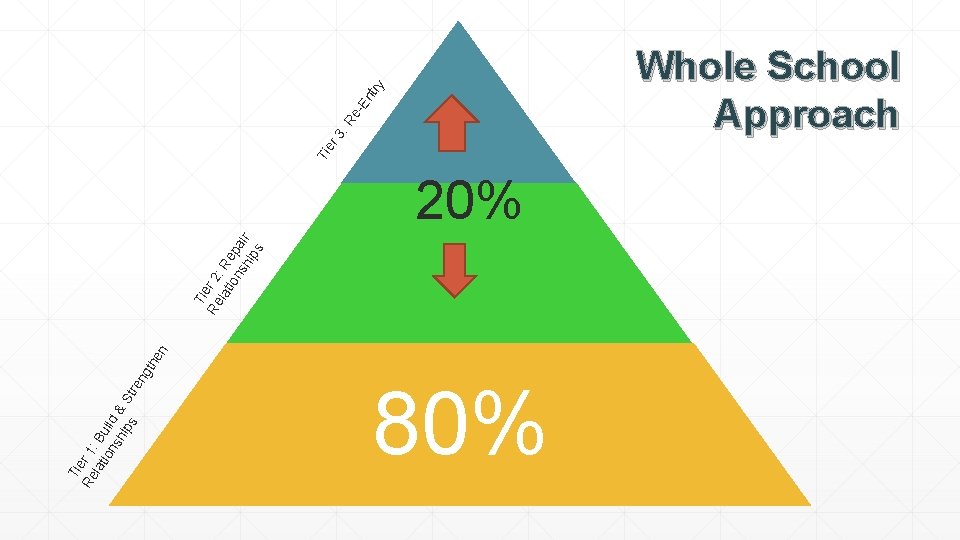
the ng Tie Re r 1 lat : Bu ion ild sh & ips St re n Ti Re er 2 lat : R ion ep sh air ips er Ti 3 : ry nt e. E R Whole School Approach 20% 80%
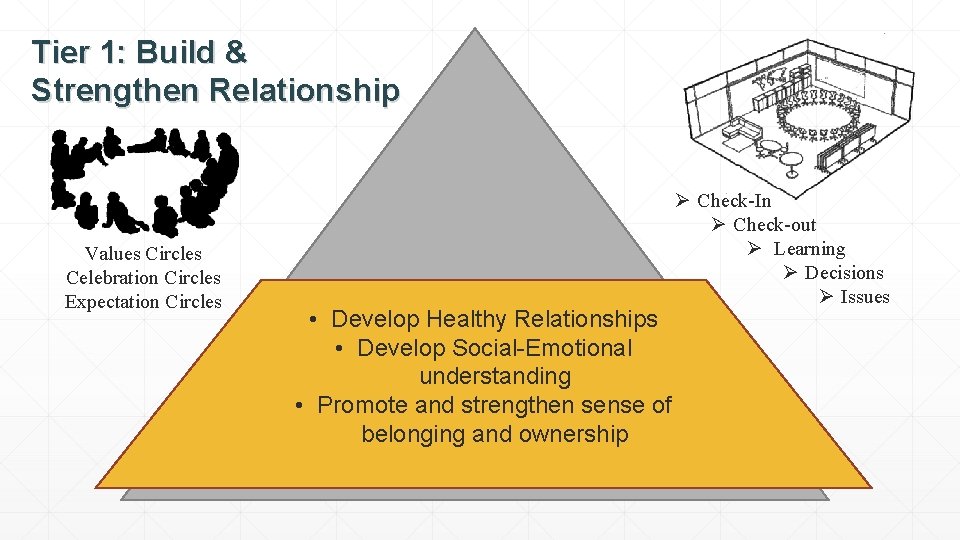
Tier 1: Build & Strengthen Relationship Values Circles Celebration Circles Expectation Circles Ø Check-In Ø Check-out Ø Learning Ø Decisions Ø Issues • Develop Healthy Relationships • Develop Social-Emotional understanding • Promote and strengthen sense of belonging and ownership
Whole School Approach: 80/20 Rule ØA good guideline is that about 20% of a school’s restorative practices respond to conflict while 80% are proactively creating shared cultures and building strong relationships. This approach cultivates a climate where destructive responses to conflict are less likely to occur.
Relationships Matter Circle ▪ Up to 8 participants per circle ▪ Grab a circle packet (outline, talking piece, center piece) ▪ Find a quiet corner of the building ▪ Return in 30 minutes
Relationships Matter Circle-Debrief ▪ How was that process for you? ▪ Where there commonalities around the characteristics or traits of role models? ▪ What about strategies for building relationships in a classroom?
Supporting Frameworks for Restorative Practices ▪ Social Discipline Window ▪ Continuum of Restorative Practices ▪ Restorative Justice Typology
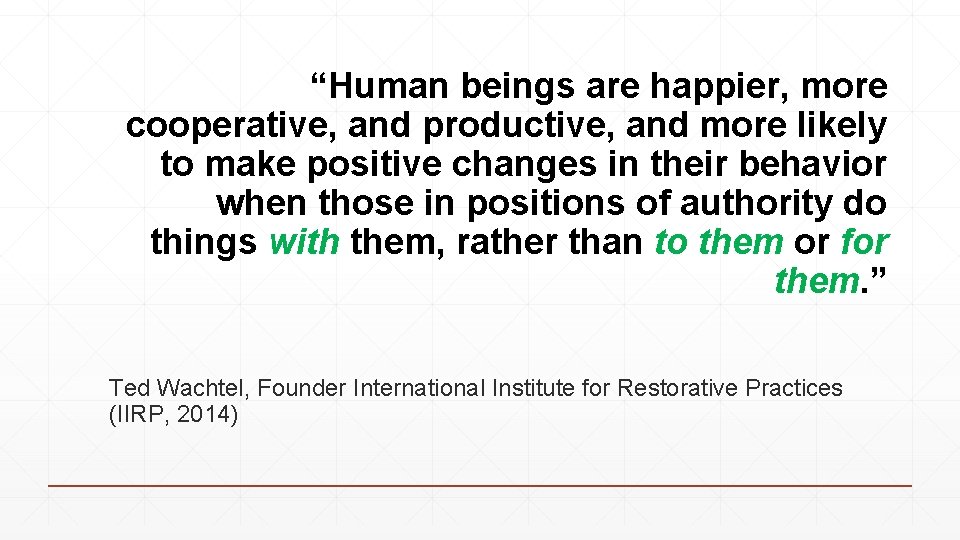
“Human beings are happier, more cooperative, and productive, and more likely to make positive changes in their behavior when those in positions of authority do things with them, rather than to them or for them. ” Ted Wachtel, Founder International Institute for Restorative Practices (IIRP, 2014)
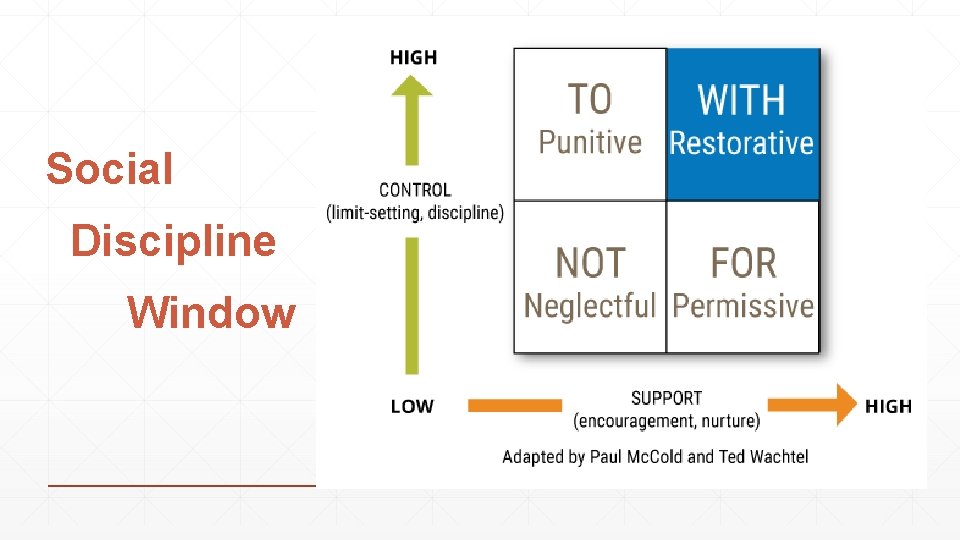
Social Discipline Window
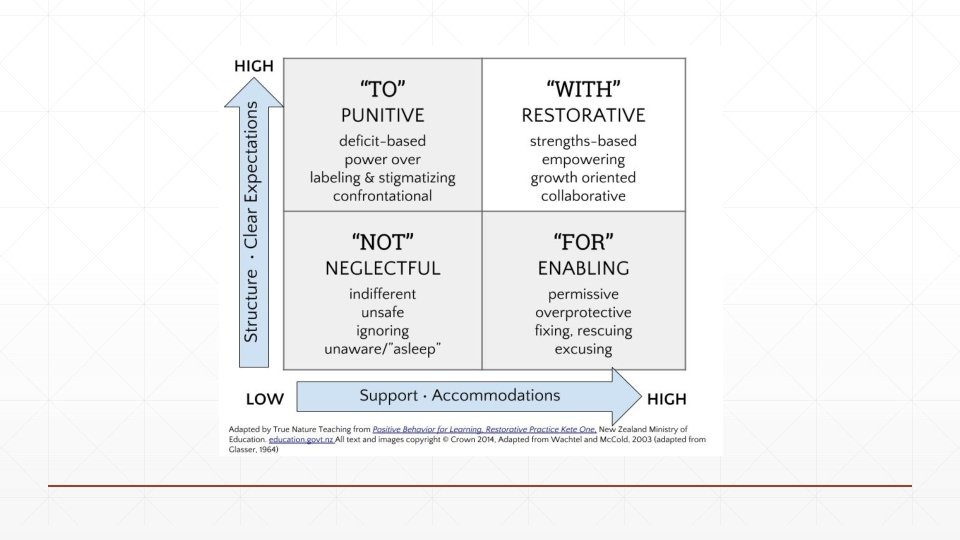
Activity: Social Discipline Window With a partner, please share and discuss the following in relation to the Social Discipline Window: –Think of a teacher you connected with in school. Which quadrant best describes that teacher? Why? – Which quadrant best describes your practice as an educator? Please explain. This Photo by Unknown Author is licensed under CC BY-SA

Restorative Practices Continuum
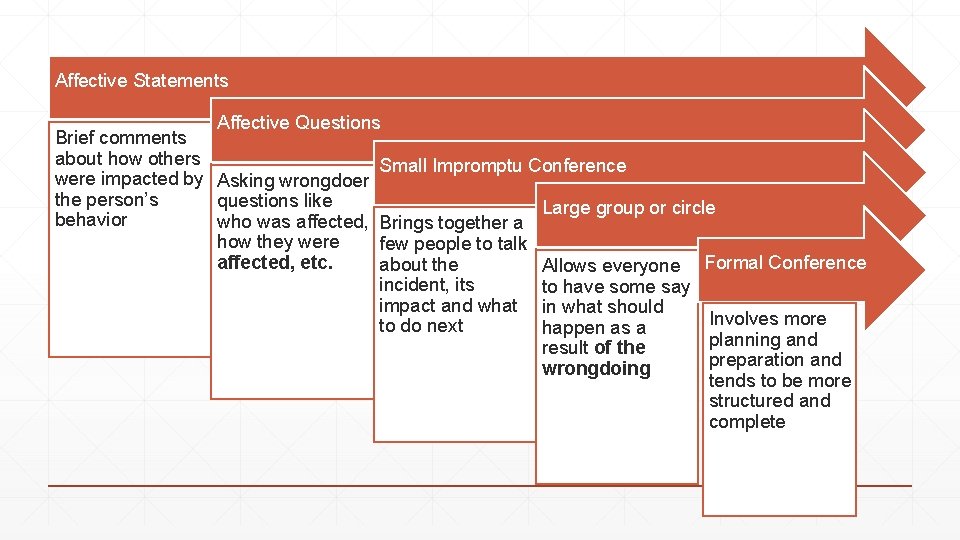
Affective Statements Affective Questions Brief comments about how others Small Impromptu Conference were impacted by Asking wrongdoer the person’s questions like Large group or circle behavior who was affected, Brings together a how they were few people to talk affected, etc. about the Allows everyone Formal Conference incident, its to have some say impact and what in what should Involves more to do next happen as a planning and result of the preparation and wrongdoing tends to be more structured and complete
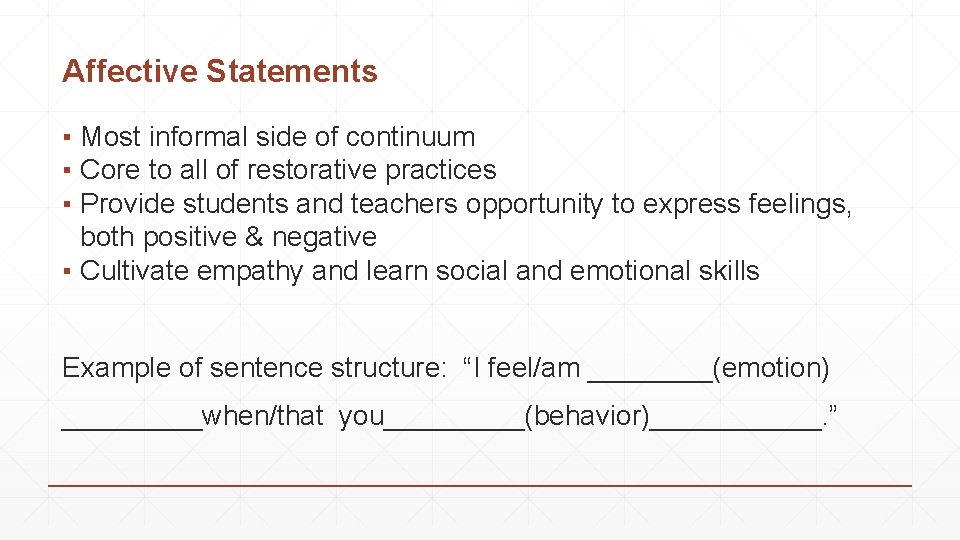
Affective Statements ▪ Most informal side of continuum ▪ Core to all of restorative practices ▪ Provide students and teachers opportunity to express feelings, both positive & negative ▪ Cultivate empathy and learn social and emotional skills Example of sentence structure: “I feel/am ____(emotion) _____when/that you_____(behavior)______. ”
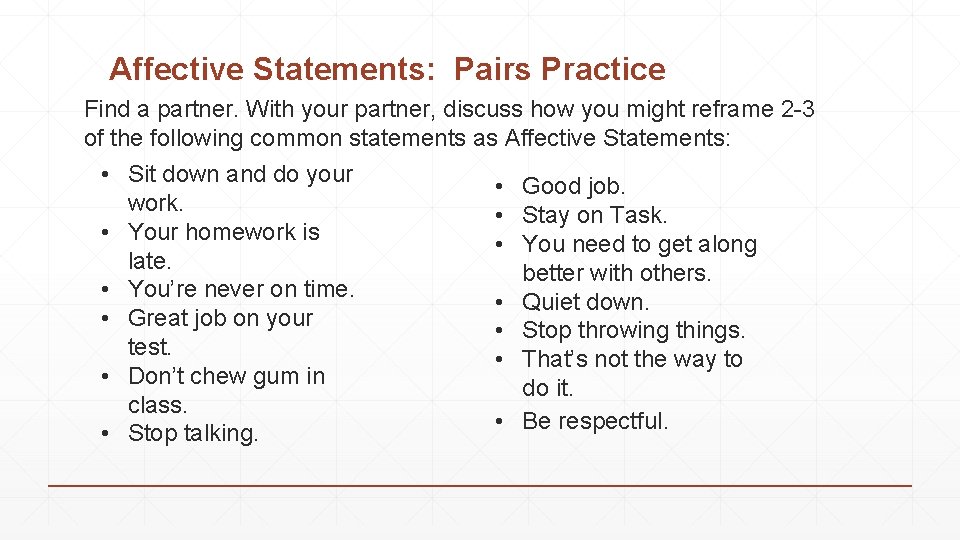
Affective Statements: Pairs Practice Find a partner. With your partner, discuss how you might reframe 2 -3 of the following common statements as Affective Statements: • Sit down and do your work. • Your homework is late. • You’re never on time. • Great job on your test. • Don’t chew gum in class. • Stop talking. • Good job. • Stay on Task. • You need to get along better with others. • Quiet down. • Stop throwing things. • That’s not the way to do it. • Be respectful.
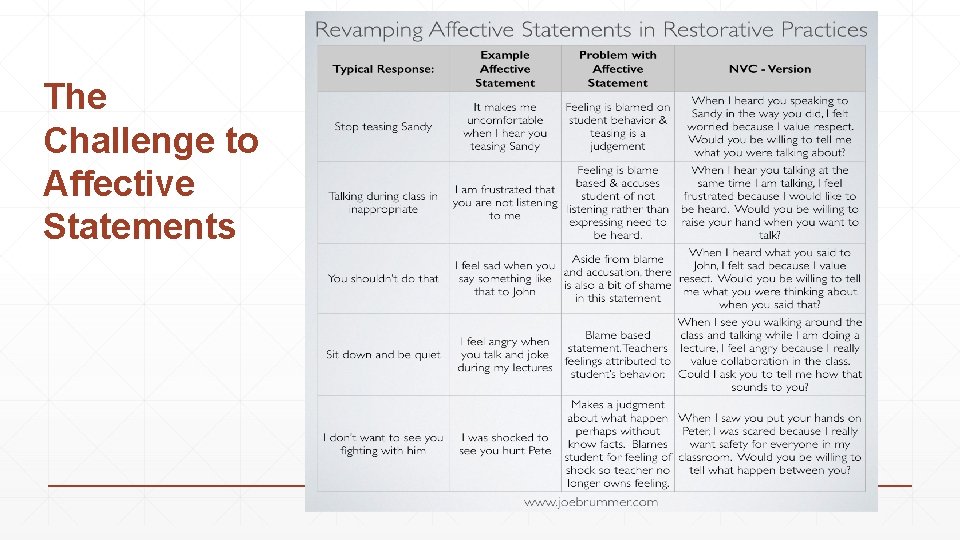
The Challenge to Affective Statements
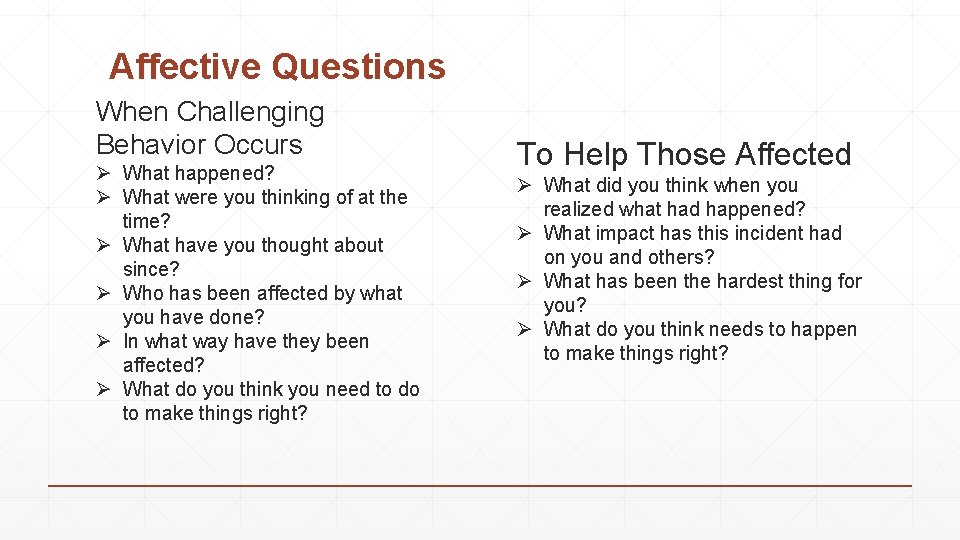
Affective Questions When Challenging Behavior Occurs Ø What happened? Ø What were you thinking of at the time? Ø What have you thought about since? Ø Who has been affected by what you have done? Ø In what way have they been affected? Ø What do you think you need to do to make things right? To Help Those Affected Ø What did you think when you realized what had happened? Ø What impact has this incident had on you and others? Ø What has been the hardest thing for you? Ø What do you think needs to happen to make things right?
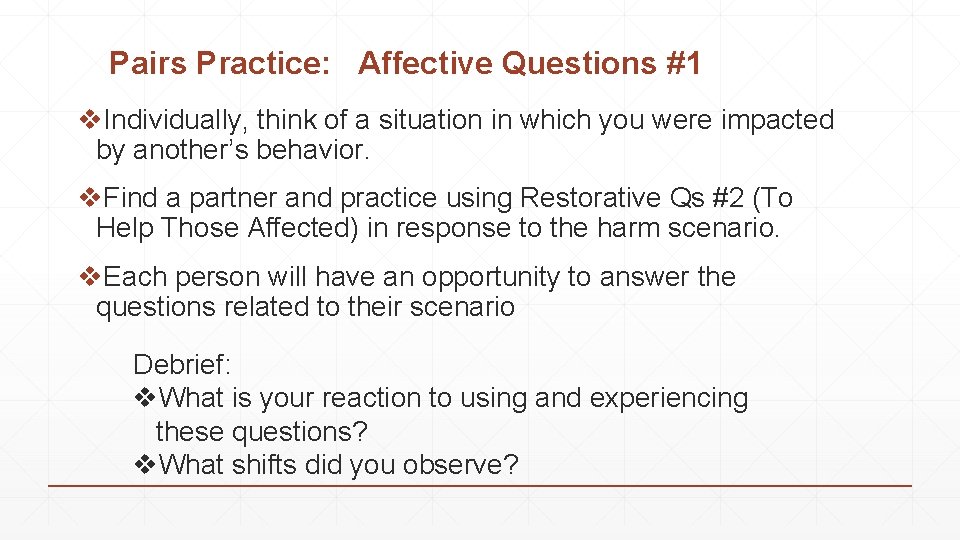
Pairs Practice: Affective Questions #1 v. Individually, think of a situation in which you were impacted by another’s behavior. v. Find a partner and practice using Restorative Qs #2 (To Help Those Affected) in response to the harm scenario. v. Each person will have an opportunity to answer the questions related to their scenario Debrief: v. What is your reaction to using and experiencing these questions? v. What shifts did you observe?
Restorative Justice Typology
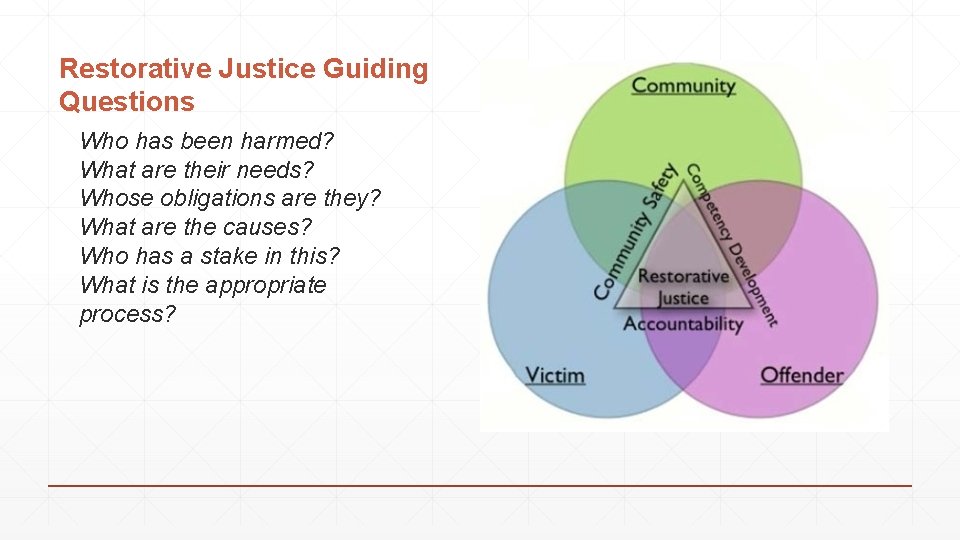
Restorative Justice Guiding Questions Who has been harmed? What are their needs? Whose obligations are they? What are the causes? Who has a stake in this? What is the appropriate process?
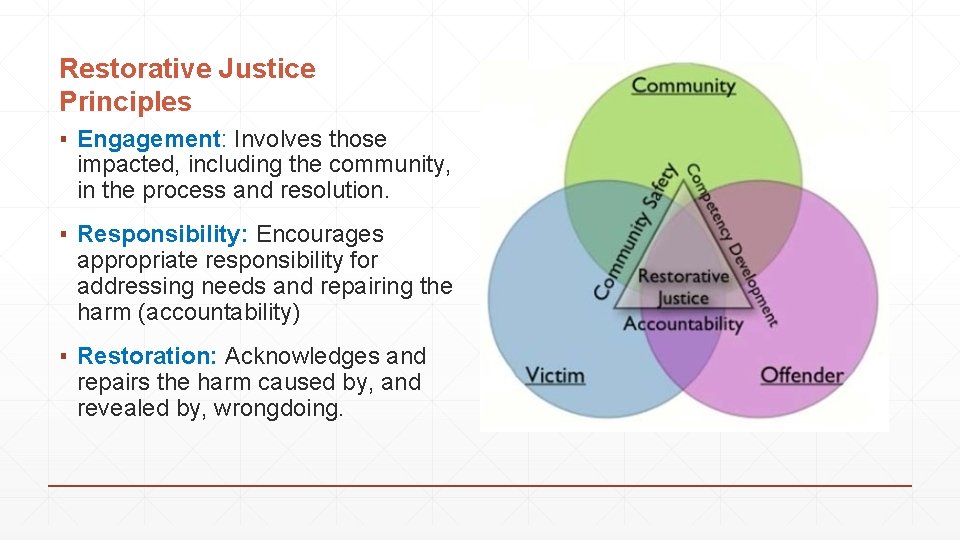
Restorative Justice Principles ▪ Engagement: Involves those impacted, including the community, in the process and resolution. ▪ Responsibility: Encourages appropriate responsibility for addressing needs and repairing the harm (accountability) ▪ Restoration: Acknowledges and repairs the harm caused by, and revealed by, wrongdoing.
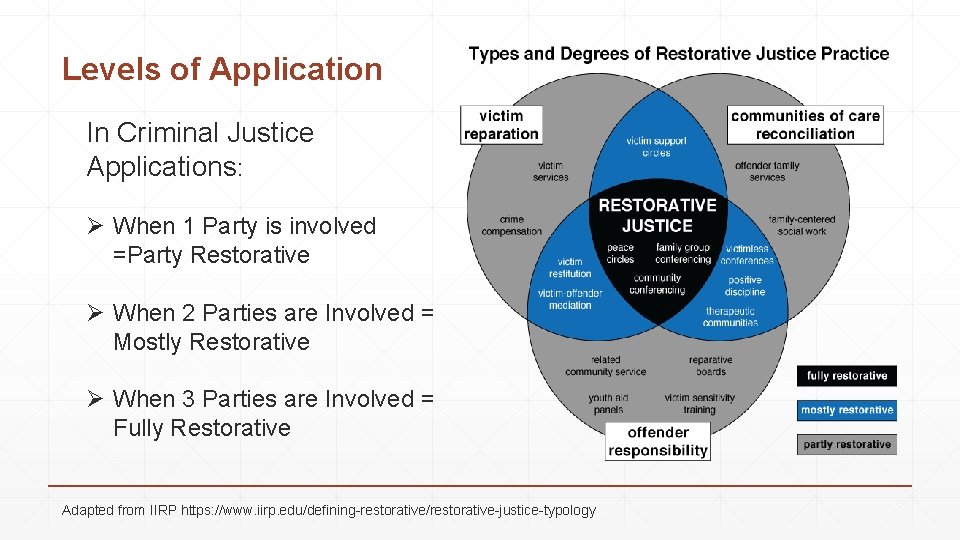
Levels of Application In Criminal Justice Applications: Ø When 1 Party is involved =Party Restorative Ø When 2 Parties are Involved = Mostly Restorative Ø When 3 Parties are Involved = Fully Restorative Adapted from IIRP https: //www. iirp. edu/defining-restorative/restorative-justice-typology
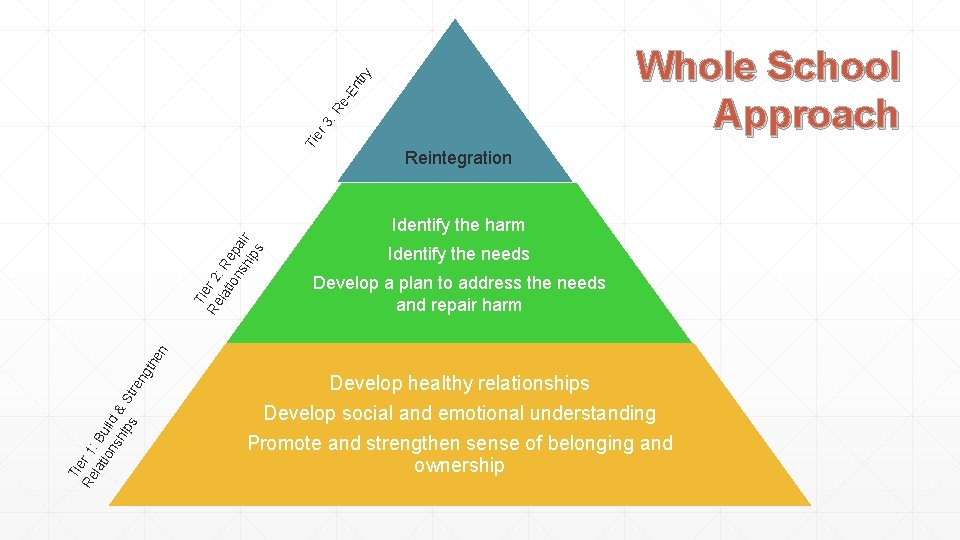
Reintegration Identify the harm Identify the needs Develop a plan to address the needs and repair harm Tie Re r 1 lat : Bu ion ild sh & ips St re ng the n Ti Re er 2 lat : R ion ep sh air ips Ti er 3 : R e. E nt ry Whole School Approach Develop healthy relationships Develop social and emotional understanding Promote and strengthen sense of belonging and ownership
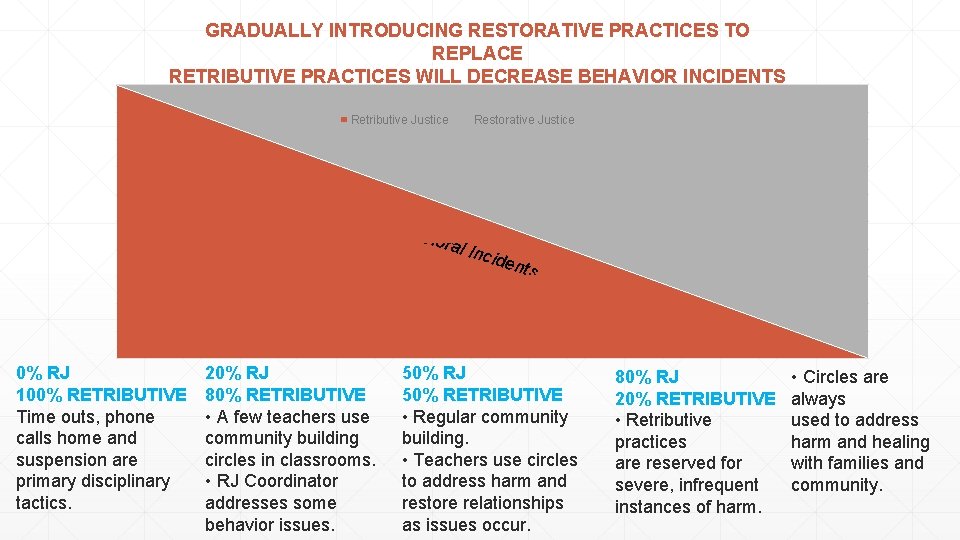
GRADUALLY INTRODUCING RESTORATIVE PRACTICES TO REPLACE RETRIBUTIVE PRACTICES WILL DECREASE BEHAVIOR INCIDENTS Retributive Justice Beh avio 0% RJ 100% RETRIBUTIVE Time outs, phone calls home and suspension are primary disciplinary tactics. 20% RJ 80% RETRIBUTIVE • A few teachers use community building circles in classrooms. • RJ Coordinator addresses some behavior issues. Restorative Justice ral In cide nts 50% RJ 50% RETRIBUTIVE • Regular community building. • Teachers use circles to address harm and restore relationships as issues occur. 80% RJ 20% RETRIBUTIVE • Retributive practices are reserved for severe, infrequent instances of harm. • Circles are always used to address harm and healing with families and community.
Community Building Circles and Planning Time
Community Building Circles and Planning Time v In small groups, review the Circle FAQs, the Circle Template, and sample Circle formats. v As a small group design a Tier 1 Circle that you can use. Pay attention to all the pieces of the set-up process. v Practice, Revise, Adapt. v Report Back.
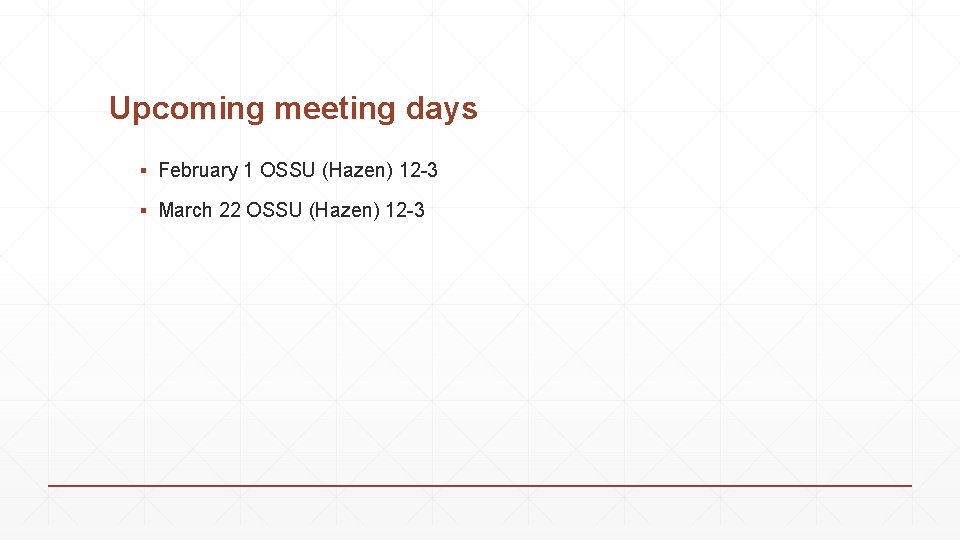
Upcoming meeting days ▪ February 1 OSSU (Hazen) 12 -3 ▪ March 22 OSSU (Hazen) 12 -3
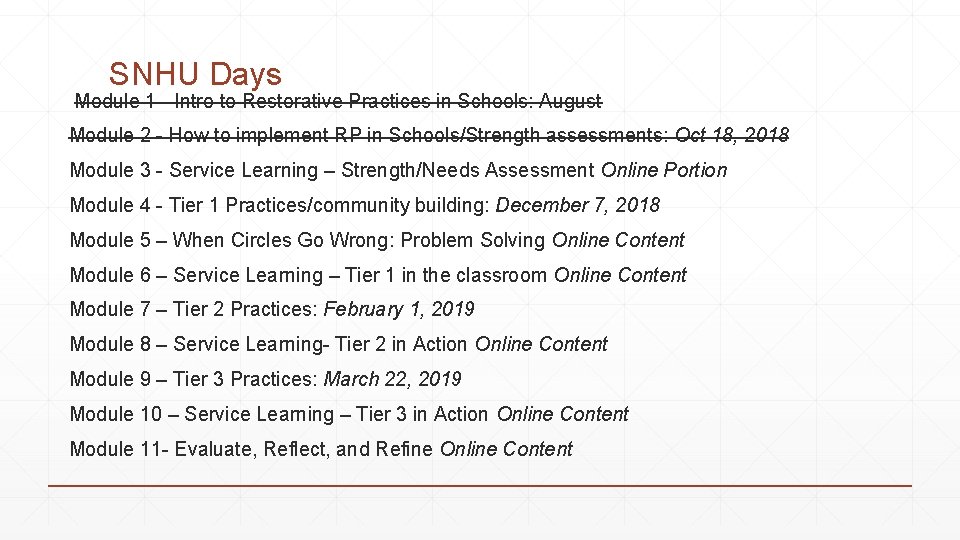
SNHU Days Module 1 - Intro to Restorative Practices in Schools: August Module 2 - How to implement RP in Schools/Strength assessments: Oct 18, 2018 Module 3 - Service Learning – Strength/Needs Assessment Online Portion Module 4 - Tier 1 Practices/community building: December 7, 2018 Module 5 – When Circles Go Wrong: Problem Solving Online Content Module 6 – Service Learning – Tier 1 in the classroom Online Content Module 7 – Tier 2 Practices: February 1, 2019 Module 8 – Service Learning- Tier 2 in Action Online Content Module 9 – Tier 3 Practices: March 22, 2019 Module 10 – Service Learning – Tier 3 in Action Online Content Module 11 - Evaluate, Reflect, and Refine Online Content
- Slides: 38