
RESTORATIVE PRACTICE BAIMBRIDGE COLLEGE WHAT IS RESTORATIVE PRACTICE
RESTORATIVE PRACTICE BAIMBRIDGE COLLEGE
WHAT IS RESTORATIVE PRACTICE • Restorative practice is not merely a discipline approach. Although it is helpful as a means of managing classrooms, when students are actively engaged and allowed to take greater responsibility, teaching and learning are also enhanced. Being restorative is about building relationships and connections with students which will positively impact academic performance. • ie: Building positive relationships can start when asking the students to contribute to the agreed classroom rules. Give everyone a positive environment. • Bill Hansberry: Storytime with Bill #1 youtube clip is worth viewing. Restorative Practice Handbook for teachers 2009
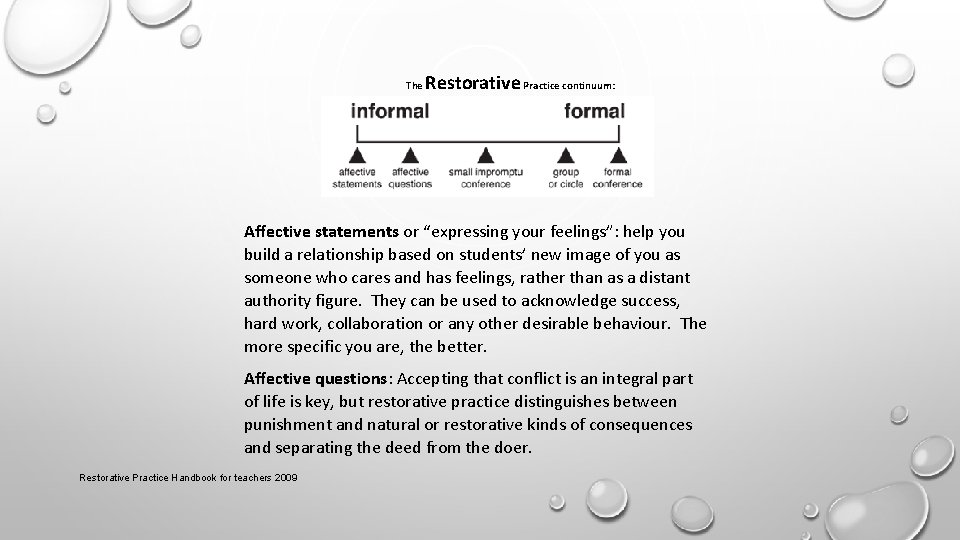
The Restorative Practice continuum: Affective statements or “expressing your feelings”: help you build a relationship based on students’ new image of you as someone who cares and has feelings, rather than as a distant authority figure. They can be used to acknowledge success, hard work, collaboration or any other desirable behaviour. The more specific you are, the better. Affective questions: Accepting that conflict is an integral part of life is key, but restorative practice distinguishes between punishment and natural or restorative kinds of consequences and separating the deed from the doer. Restorative Practice Handbook for teachers 2009
KEY QUESTIONS • WHAT HAPPENED? • WHAT WERE YOU THINKING WHEN YOU…. ? • WHAT HAVE YOU THOUGHT OF SINCE? • WHO HAS BEEN AFFECTED BY WHAT YOU HAVE DONE? IN WHAT WAY? • WHAT DO YOU THINK YOU NEED TO DO TO MAKE THINGS RIGHT?

• REFER TO HAND OUTS. • FLOW CHART • RP REFERRAL (PINK FORM) • RP REFERRAL/THINK SHEET
- Slides: 5