
Restorative Discipline in Schools Dr Hilary Cremin University
- Slides: 13
Restorative Discipline in Schools Dr Hilary Cremin University of Cambridge hc 331@cam. ac. uk
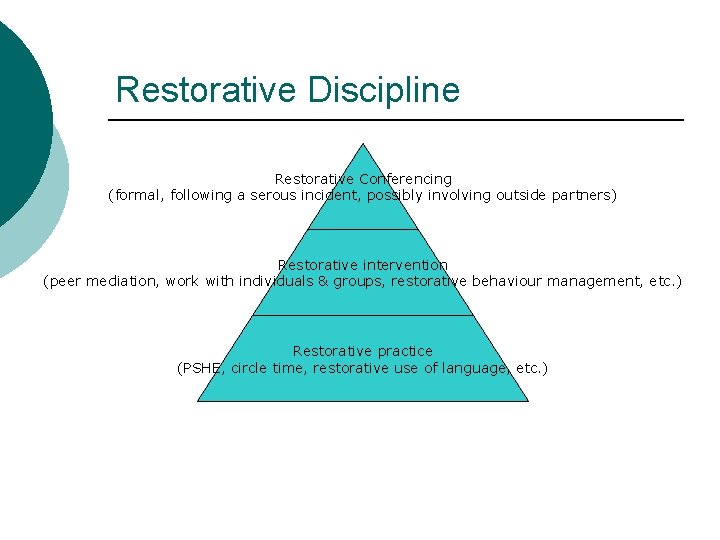
Restorative Discipline Restorative Conferencing (formal, following a serous incident, possibly involving outside partners) Restorative intervention (peer mediation, work with individuals & groups, restorative behaviour management, etc. ) Restorative practice (PSHE, circle time, restorative use of language, etc. )
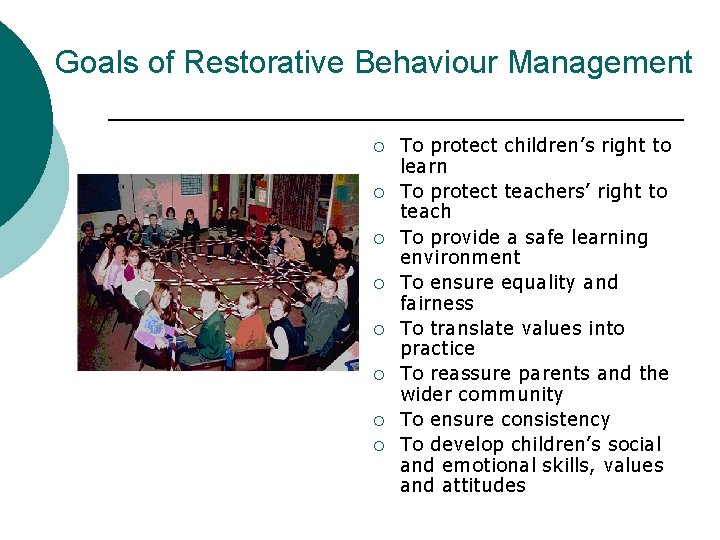
Goals of Restorative Behaviour Management ¡ ¡ ¡ ¡ To protect children’s right to learn To protect teachers’ right to teach To provide a safe learning environment To ensure equality and fairness To translate values into practice To reassure parents and the wider community To ensure consistency To develop children’s social and emotional skills, values and attitudes
Challenges of Traditional Behaviour Management Inconsistency ¡ What works for one child may not work for another ¡ Teacher personality Punishment ¡ Punishing sometimes models behaviours being punished ¡ Punishment rarely leads to changes in behaviour ¡ Teacher-imposed discipline denies opportunities to develop self-discipline ¡ SEBD ¡ Attributes that are valued outside of school can constitute SEBD in a school setting ¡ Some SEN, and SEBD in particular, have been 'created' by a curriculum that has become unbalanced
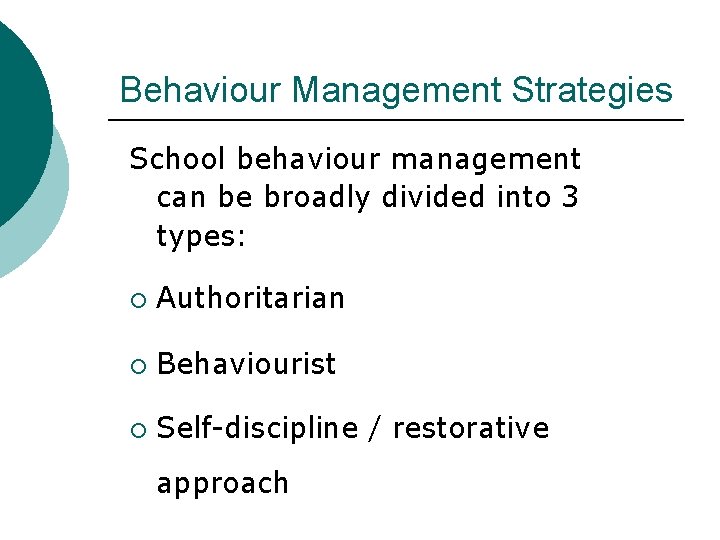
Behaviour Management Strategies School behaviour management can be broadly divided into 3 types: ¡ Authoritarian ¡ Behaviourist ¡ Self-discipline / restorative approach
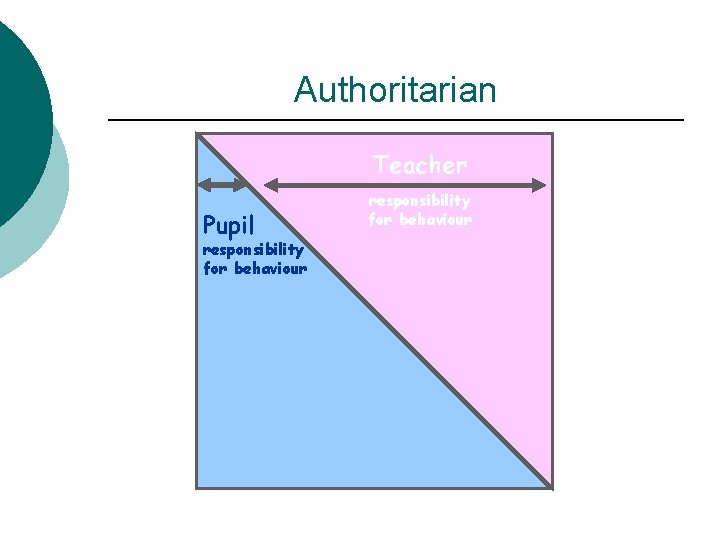
Authoritarian Teacher Pupil responsibility for behaviour
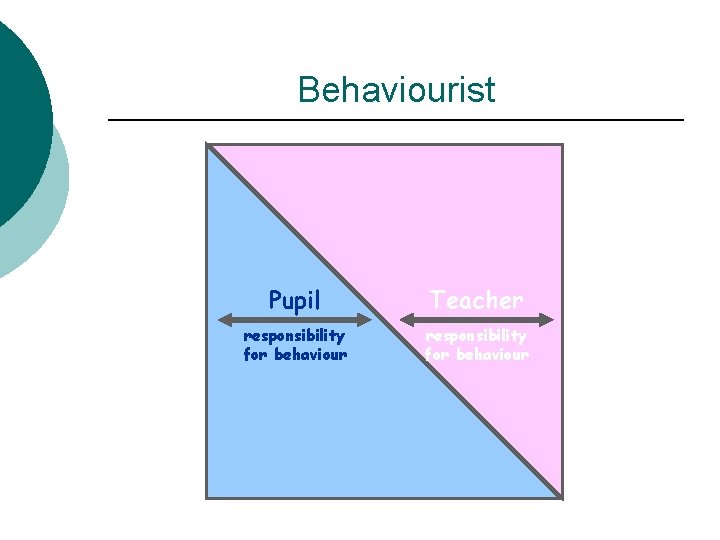
Behaviourist Pupil Teacher responsibility for behaviour
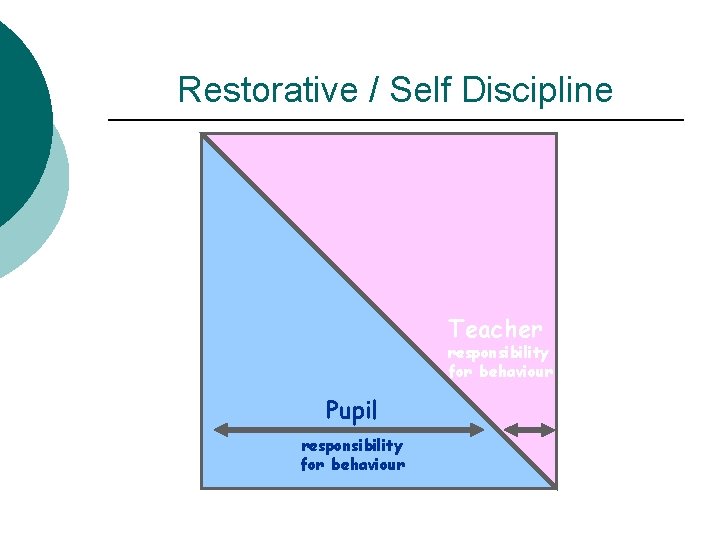
Restorative / Self Discipline Teacher responsibility for behaviour Pupil responsibility for behaviour
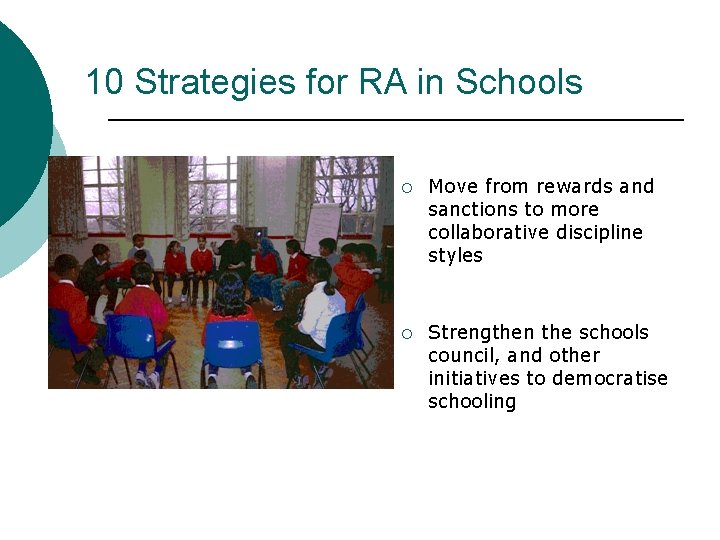
10 Strategies for RA in Schools ¡ Move from rewards and sanctions to more collaborative discipline styles ¡ Strengthen the schools council, and other initiatives to democratise schooling
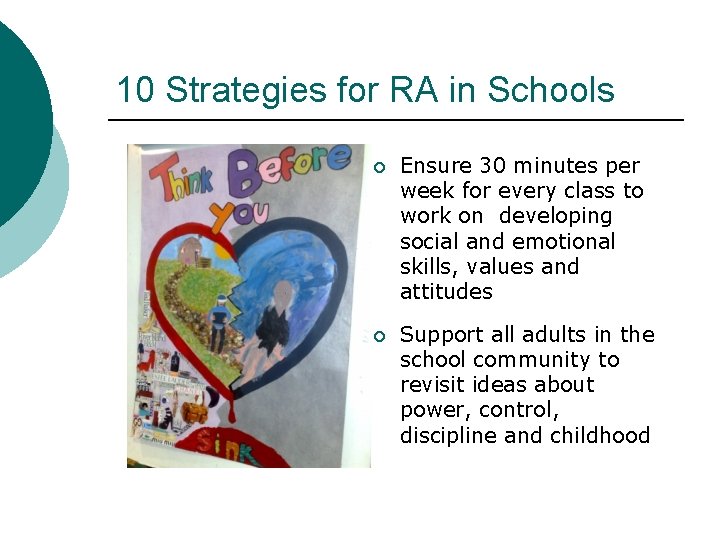
10 Strategies for RA in Schools ¡ Ensure 30 minutes per week for every class to work on developing social and emotional skills, values and attitudes ¡ Support all adults in the school community to revisit ideas about power, control, discipline and childhood
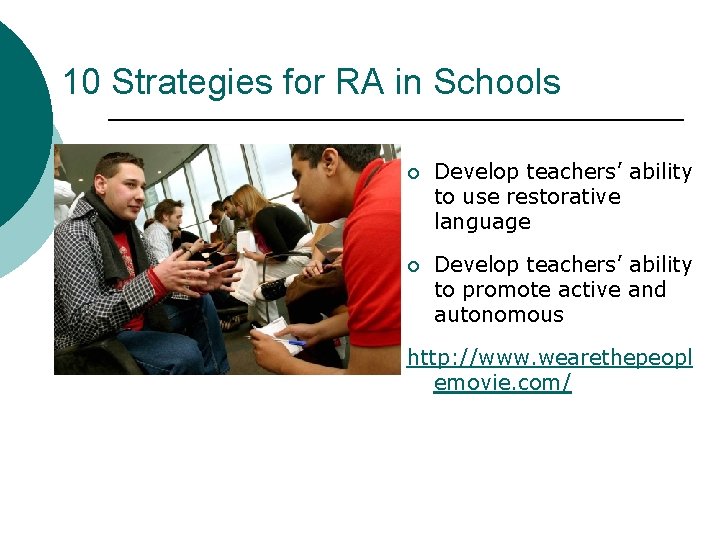
10 Strategies for RA in Schools ¡ Develop teachers’ ability to use restorative language ¡ Develop teachers’ ability to promote active and autonomous http: //www. wearethepeopl emovie. com/
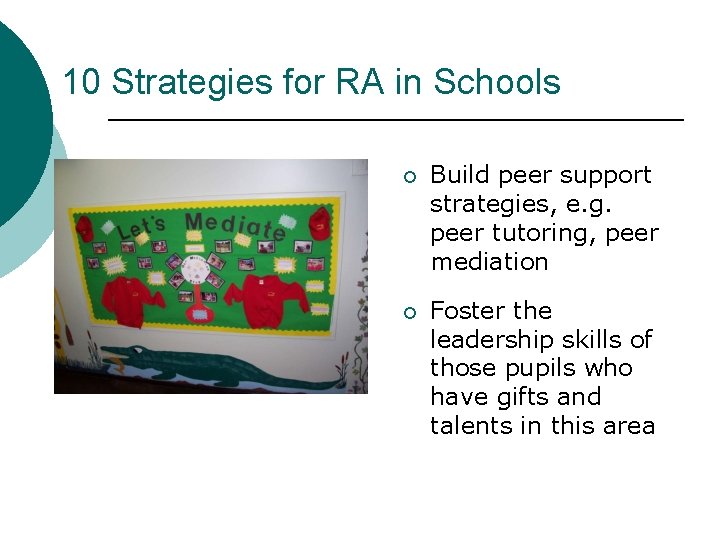
10 Strategies for RA in Schools ¡ Build peer support strategies, e. g. peer tutoring, peer mediation ¡ Foster the leadership skills of those pupils who have gifts and talents in this area
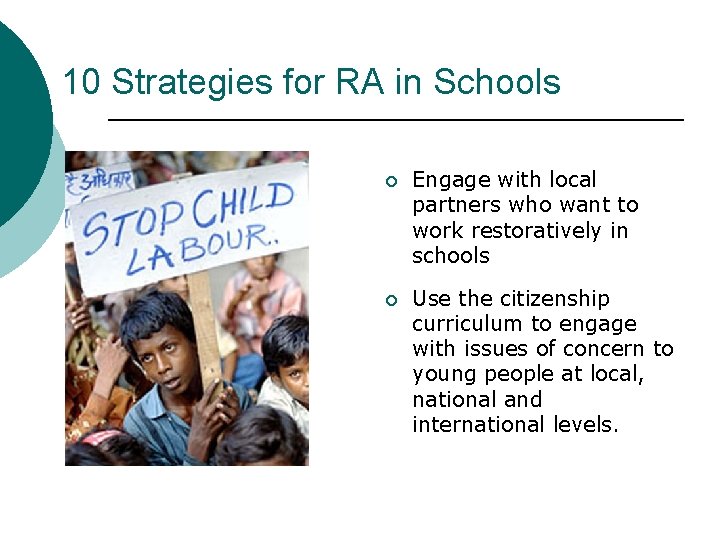
10 Strategies for RA in Schools ¡ Engage with local partners who want to work restoratively in schools ¡ Use the citizenship curriculum to engage with issues of concern to young people at local, national and international levels.