
RESPONSIBILITY UNIT 13 COMMAND CONTROL IN THE UNIFORMED

RESPONSIBILITY UNIT 13 – COMMAND CONTROL IN THE UNIFORMED PUBLIC SERVICES
INTRODUCTION…. . • All ranks carry a degree of responsibility – the higher the rank, the greater the responsibility. QUESTION: IN YOUR GROUPS ANSWER THE FOLLOWING – NAME ALL THE RESPONSIBILITIES AN ARMY OFFICER (MAJOR IN CHARGE OF A COMPANY 100 -250 SOLDIERS) WILL HAVE ON A DAY TO DAY BASIS.
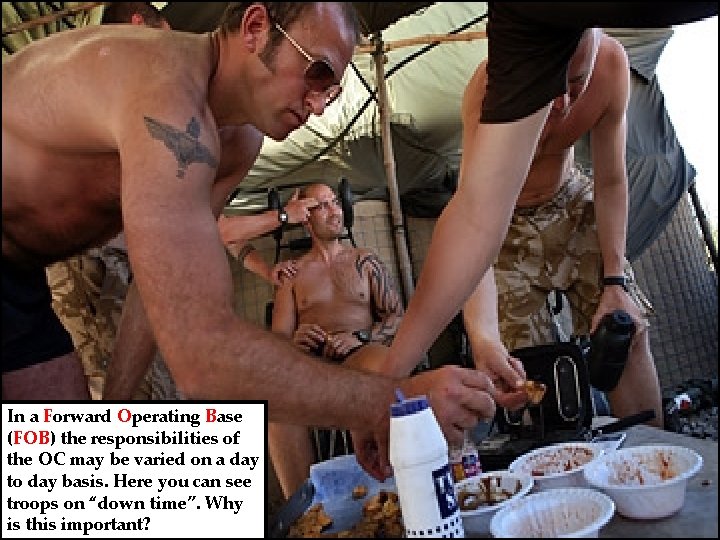
In a Forward Operating Base (FOB) the responsibilities of the OC may be varied on a day to day basis. Here you can see troops on “down time”. Why is this important?
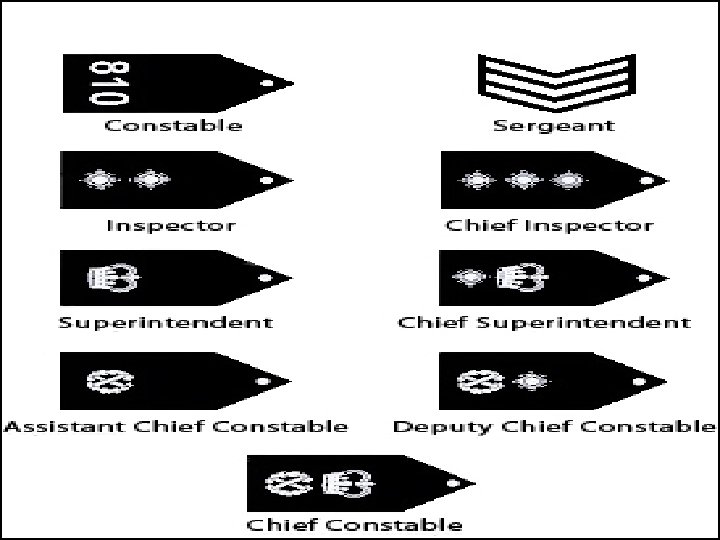
RESPONSIBILITY IN THE POLICE FORCE • For example, in the police service, a constable is responsible for carrying out the duties assigned to him, such as routine patrols, investigating crime, attending road traffic incidents, etc. • A police sergeant is responsible for the welfare and development of all police constables under his command, and needs to maintain discipline and ensure that they carry out their duties. • A police inspector is responsible for ensuring that the sergeants under his command are carrying out their duties effectively, and is also ultimately responsible for ensuring that the police constables are working effectively also. • Similarly, the Chief Inspector and Superintendent are responsible for all the officers below their ranks. • The Chief Superintendent is the head of the division, so his chain of command goes from the top to the bottom, and he will be responsible for several hundred officers in the division.
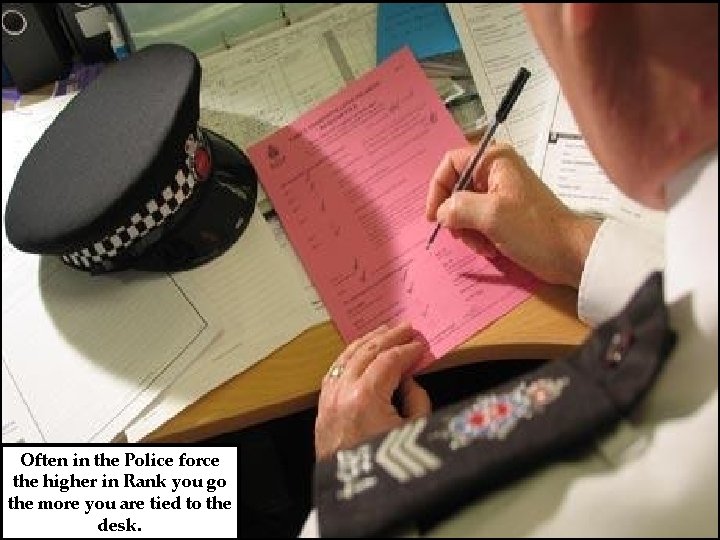
Often in the Police force the higher in Rank you go the more you are tied to the desk.

RESPONSIBILITY IN THE POLICE FORCE • The ranks above Chief Superintendent are usually based at Divisional Headquarters and are nonoperational. • This means that they are not involved in everyday police work, but are responsible for strategic planning, for implementing government policies and for achieving the targets set by central government. • The following slide shows the rank structure in the Police Service.
Joint Responsibility…… • Uniformed services frequently work together. In major emergency situations such as the London bombings of 2005, all the emergency services need to combine very quickly, and it is important that someone is in overall command of the situation. • Similarly, in situations such as Afghanistan all our armed forces need to work together, and often with services from other countries. • The chain of command needs to be very clear in order to avoid any confusion, and it may be that the commander of a service may not be the overall commander of a particular operation.
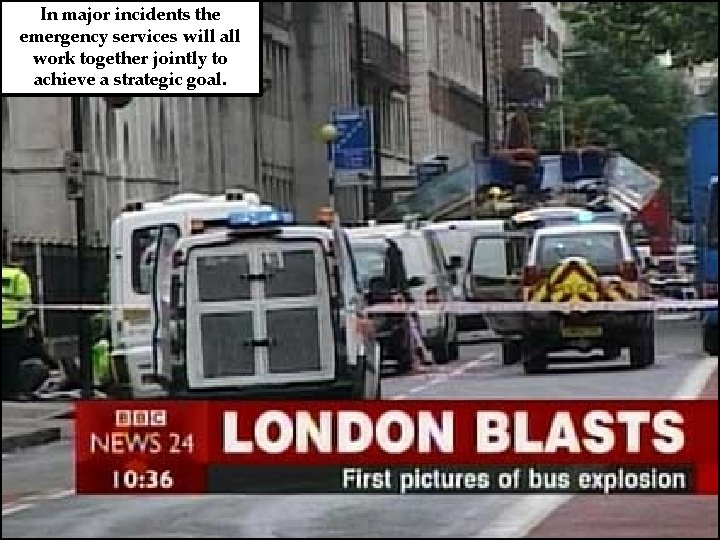
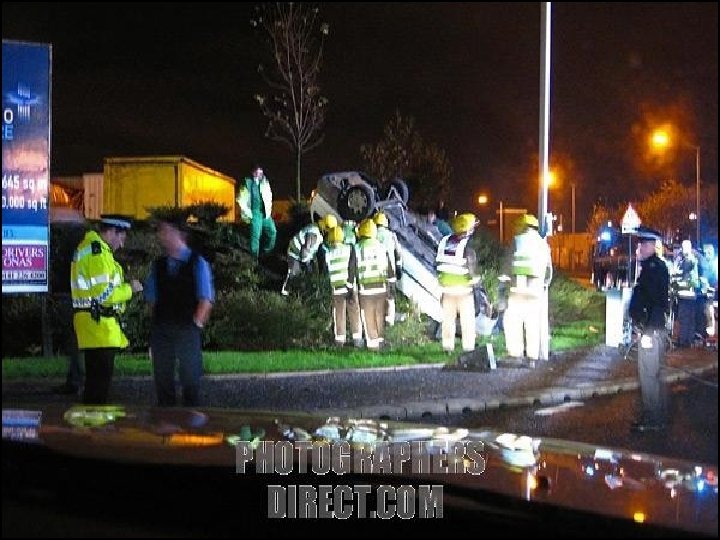
In major incidents the emergency services will all work together jointly to achieve a strategic goal.
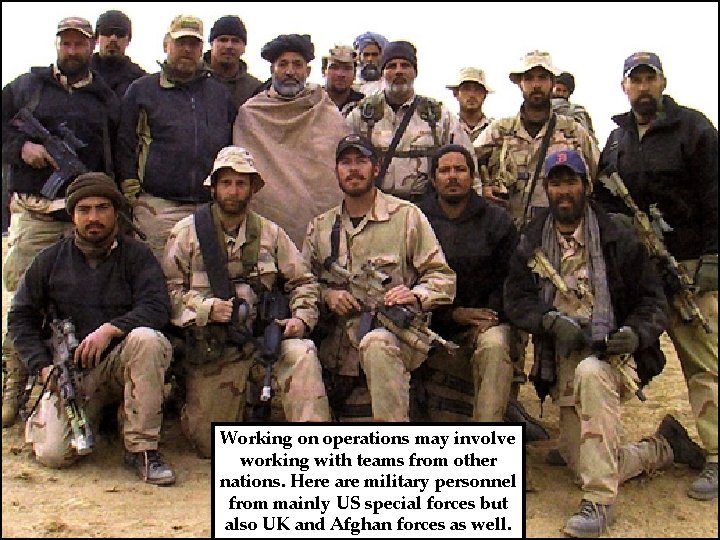
Working on operations may involve working with teams from other nations. Here are military personnel from mainly US special forces but also UK and Afghan forces as well.
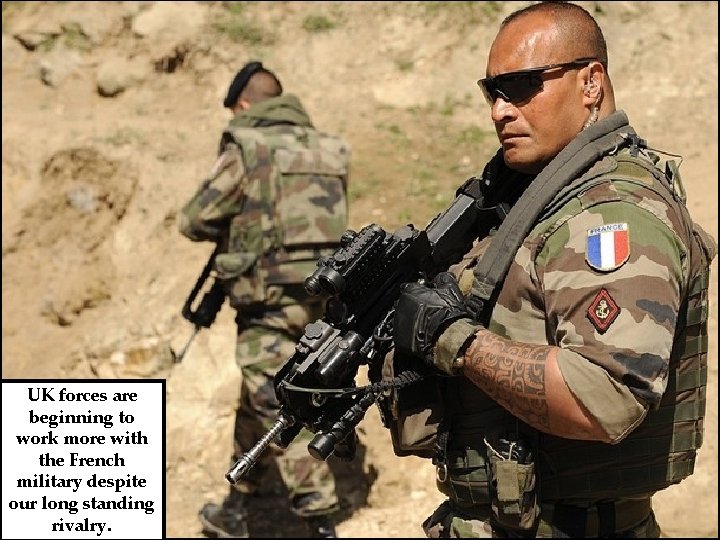
UK forces are beginning to work more with the French military despite our long standing rivalry.
Task…. . • In your groups imagine a major road incident involving multiple vehicles. • Come up with the different responsibilities each of the emergency services may have to deal with. 1. The Fire service 2. The Police 3. Ambulance • What is the common factor for all of the services? ?
Summary….
- Slides: 14