
Response to Intervention Student Supports RTI Tier I

- Slides: 34
Response to Intervention
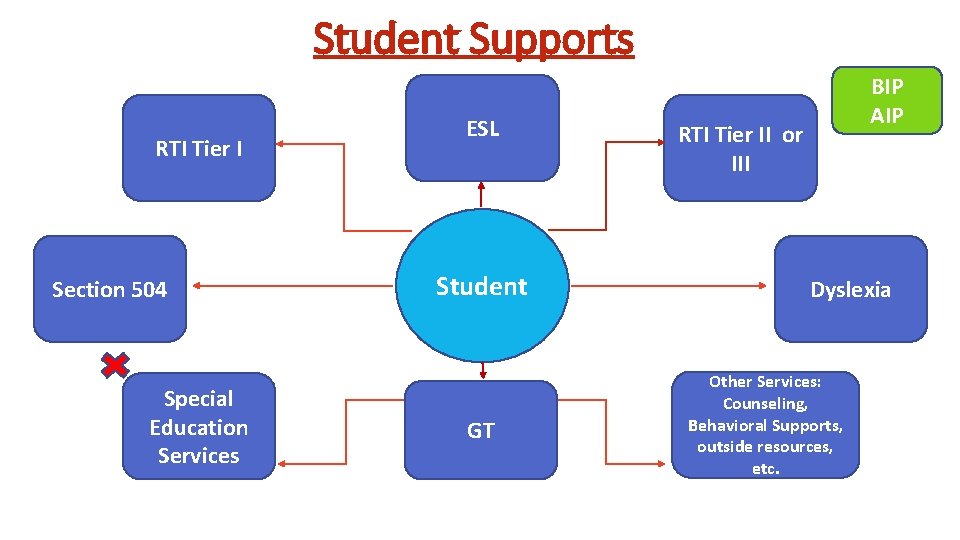
Student Supports RTI Tier I Section 504 Special Education Services ESL Student GT BIP AIP RTI Tier II or III Dyslexia Other Services: Counseling, Behavioral Supports, outside resources, etc.
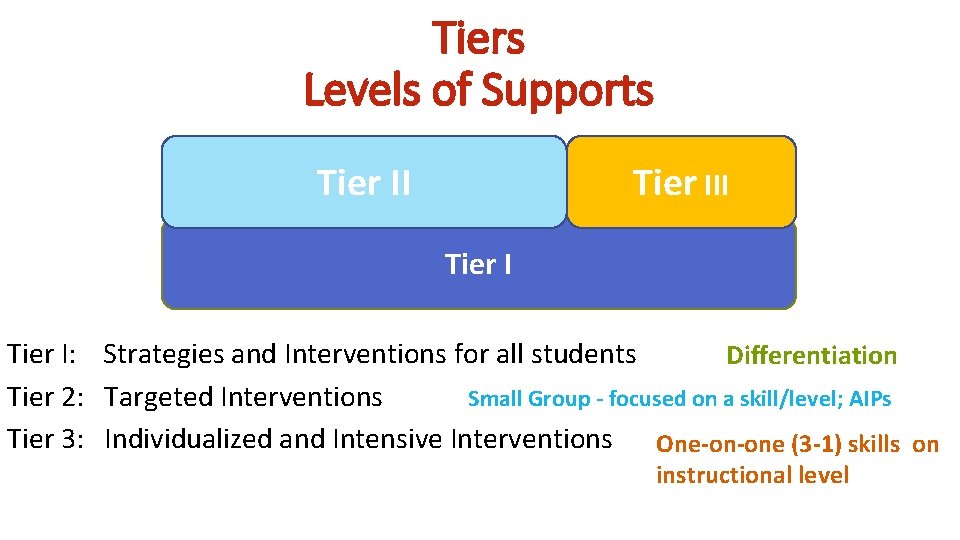
Tiers Levels of Supports Tier III Tier I: Strategies and Interventions for all students Differentiation Tier 2: Targeted Interventions Small Group - focused on a skill/level; AIPs Tier 3: Individualized and Intensive Interventions One-on-one (3 -1) skills on instructional level
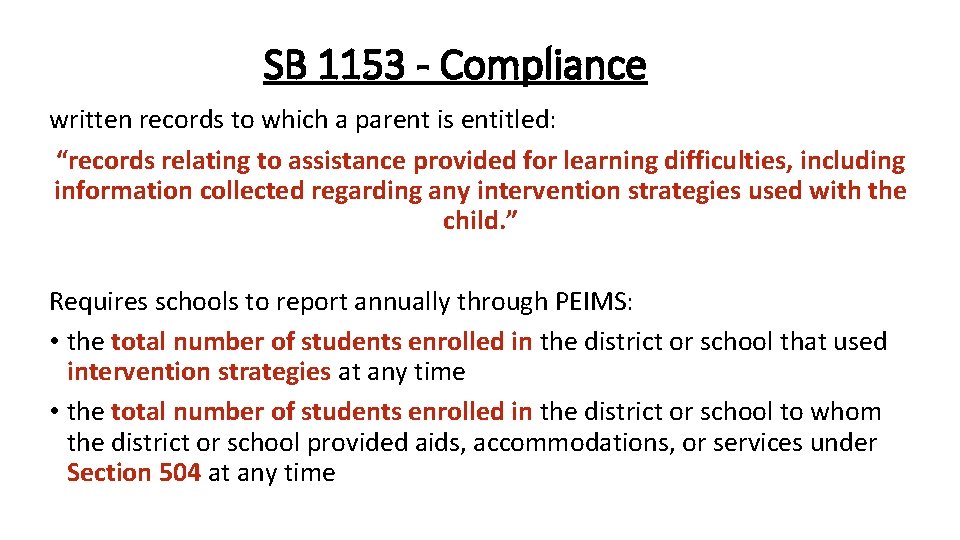
SB 1153 - Compliance written records to which a parent is entitled: “records relating to assistance provided for learning difficulties, including information collected regarding any intervention strategies used with the child. ” Requires schools to report annually through PEIMS: • the total number of students enrolled in the district or school that used intervention strategies at any time • the total number of students enrolled in the district or school to whom the district or school provided aids, accommodations, or services under Section 504 at any time
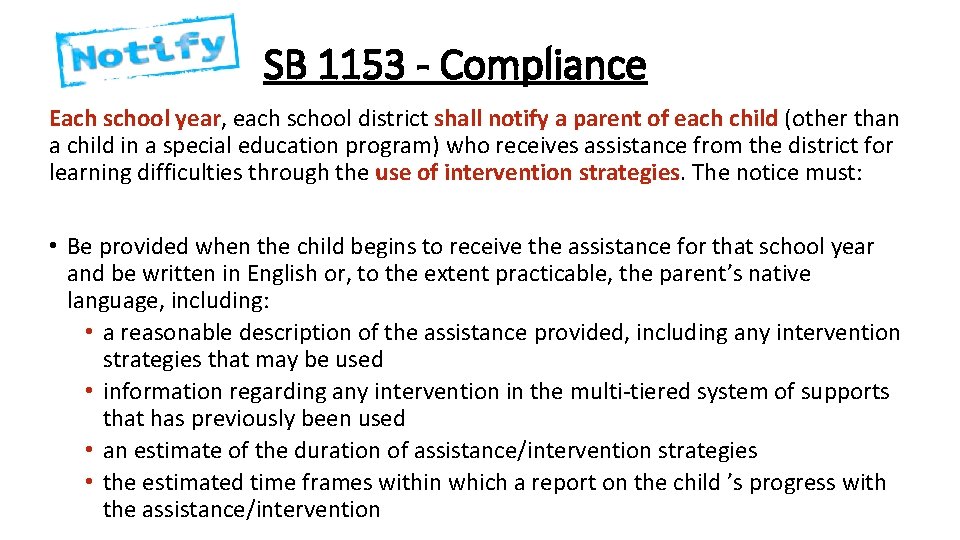
SB 1153 - Compliance Each school year, each school district shall notify a parent of each child (other than a child in a special education program) who receives assistance from the district for learning difficulties through the use of intervention strategies. The notice must: • Be provided when the child begins to receive the assistance for that school year and be written in English or, to the extent practicable, the parent’s native language, including: • a reasonable description of the assistance provided, including any intervention strategies that may be used • information regarding any intervention in the multi-tiered system of supports that has previously been used • an estimate of the duration of assistance/intervention strategies • the estimated time frames within which a report on the child ’s progress with the assistance/intervention
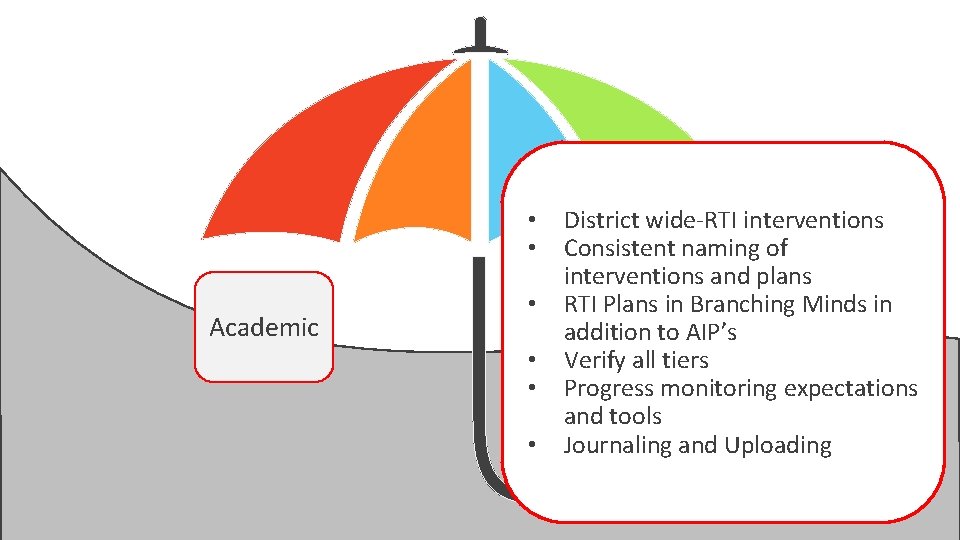
• • Academic • • District wide-RTI interventions Consistent naming of interventions and plans RTI Plans in Branching Minds in addition to AIP’s Verify all tiers Progress monitoring expectations and tools Journaling and Uploading
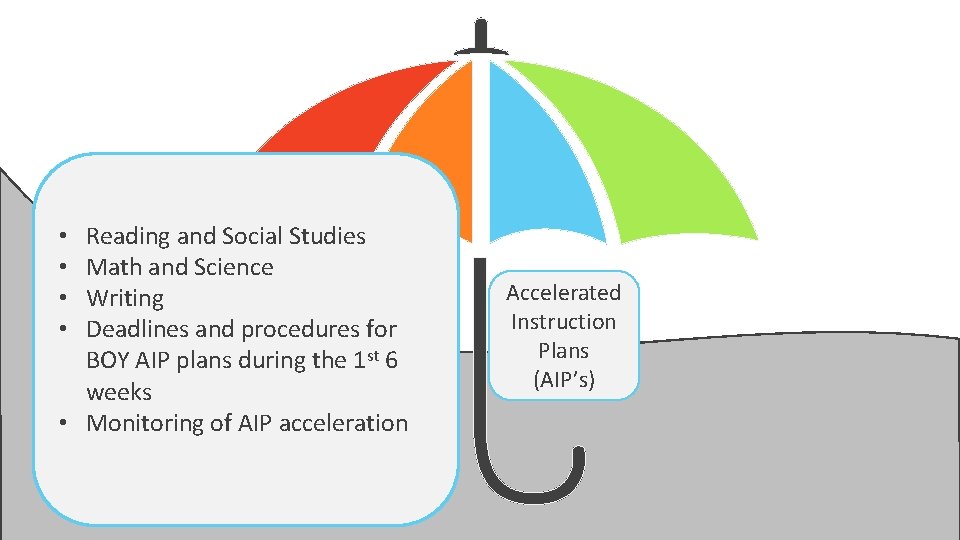
Reading and Social Studies Math and Science Writing Deadlines and procedures for BOY AIP plans during the 1 st 6 weeks • Monitoring of AIP acceleration • • Accelerated Instruction Plans (AIP’s)
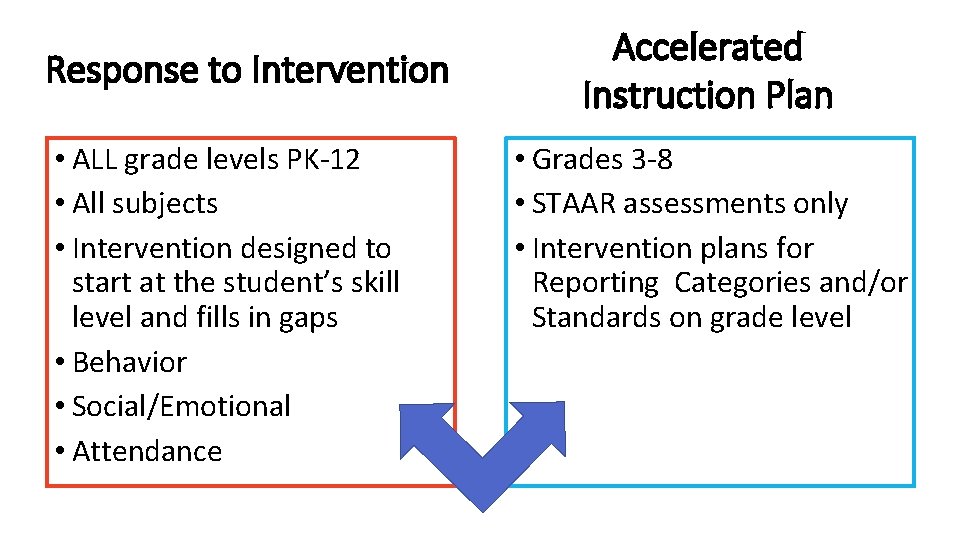
Response to Intervention • ALL grade levels PK-12 • All subjects • Intervention designed to start at the student’s skill level and fills in gaps • Behavior • Social/Emotional • Attendance Accelerated Instruction Plan • Grades 3 -8 • STAAR assessments only • Intervention plans for Reporting Categories and/or Standards on grade level
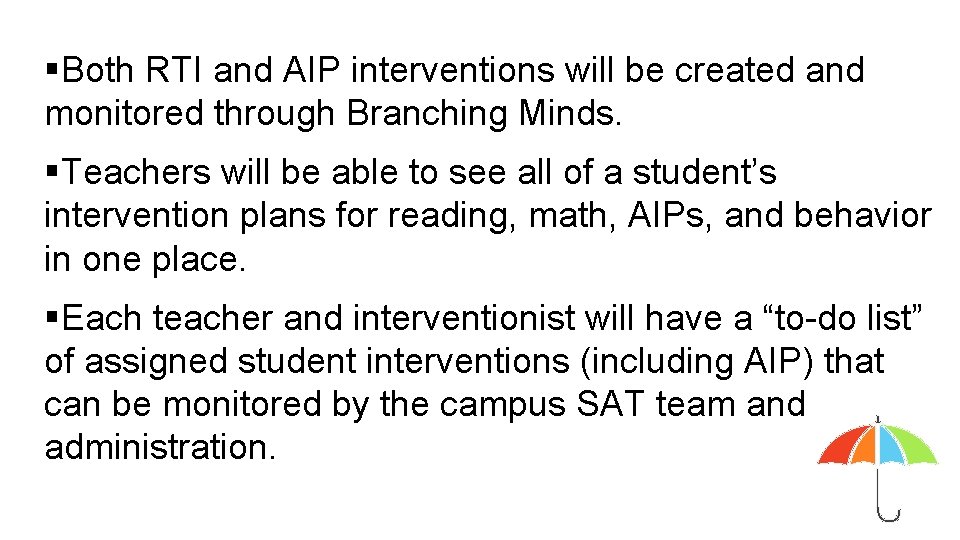
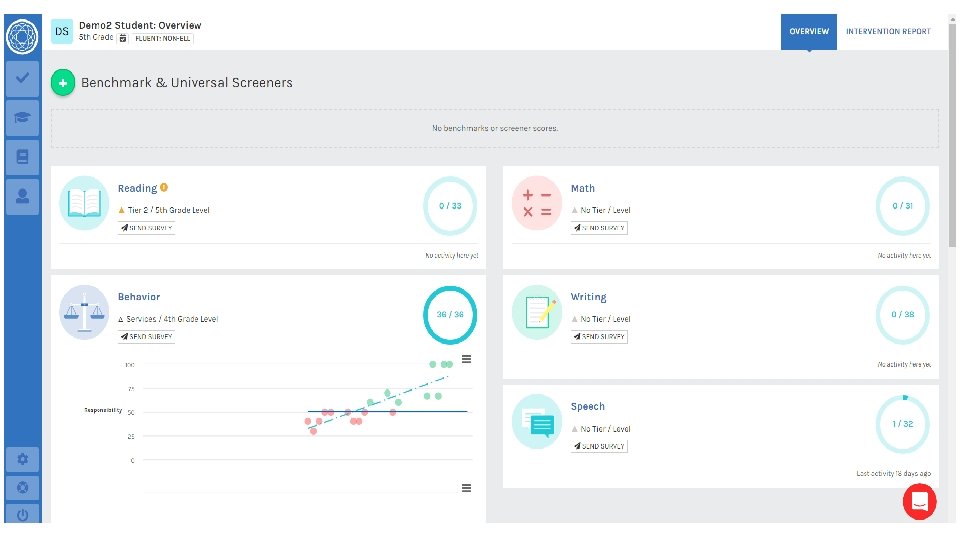
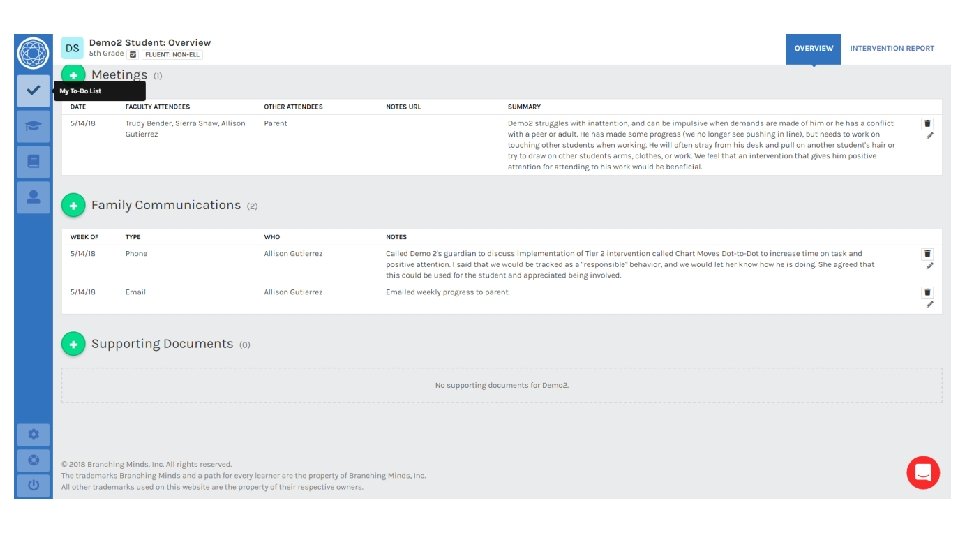
§Both RTI and AIP interventions will be created and monitored through Branching Minds. §Teachers will be able to see all of a student’s intervention plans for reading, math, AIPs, and behavior in one place. §Each teacher and interventionist will have a “to-do list” of assigned student interventions (including AIP) that can be monitored by the campus SAT team and administration.
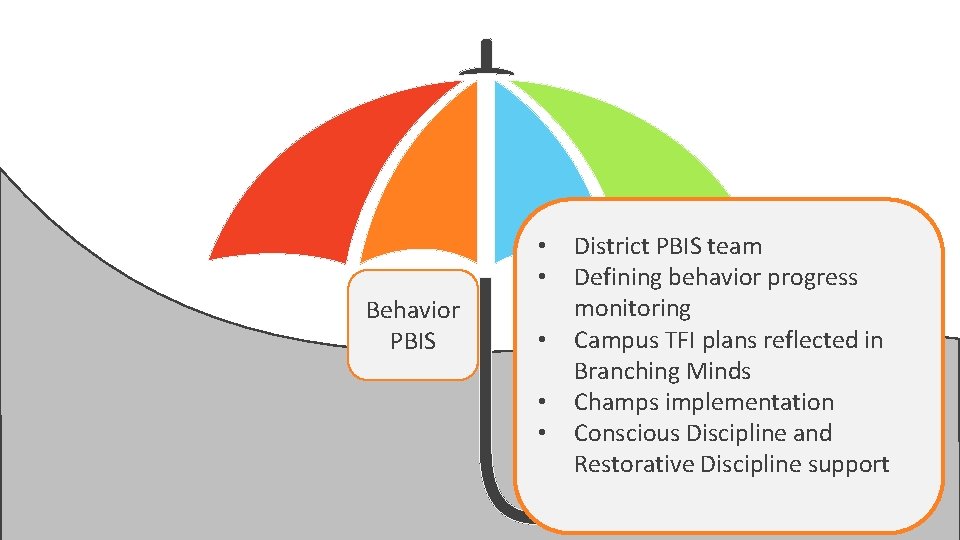
• • Behavior PBIS • • • District PBIS team Defining behavior progress monitoring Campus TFI plans reflected in Branching Minds Champs implementation Conscious Discipline and Restorative Discipline support
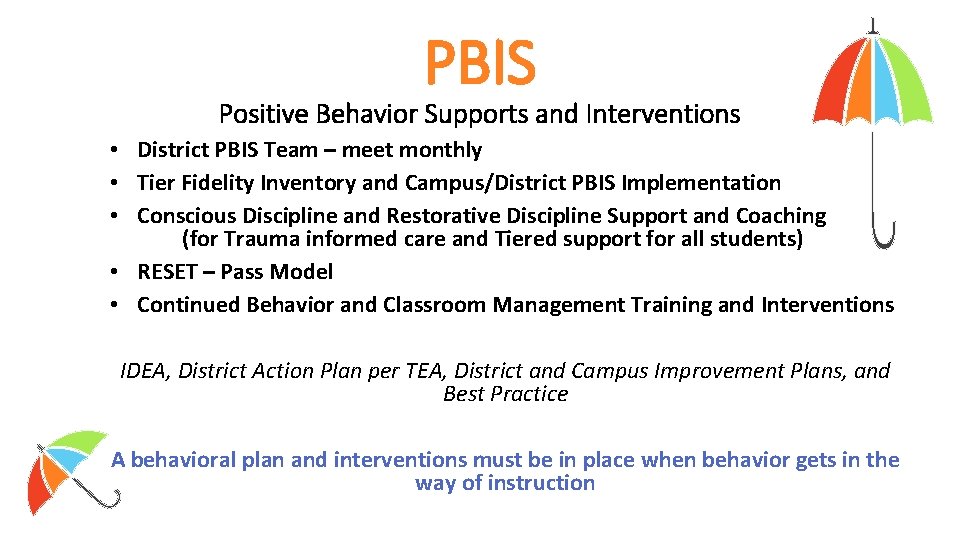
PBIS Positive Behavior Supports and Interventions • District PBIS Team – meet monthly • Tier Fidelity Inventory and Campus/District PBIS Implementation • Conscious Discipline and Restorative Discipline Support and Coaching (for Trauma informed care and Tiered support for all students) • RESET – Pass Model • Continued Behavior and Classroom Management Training and Interventions IDEA, District Action Plan per TEA, District and Campus Improvement Plans, and Best Practice A behavioral plan and interventions must be in place when behavior gets in the way of instruction
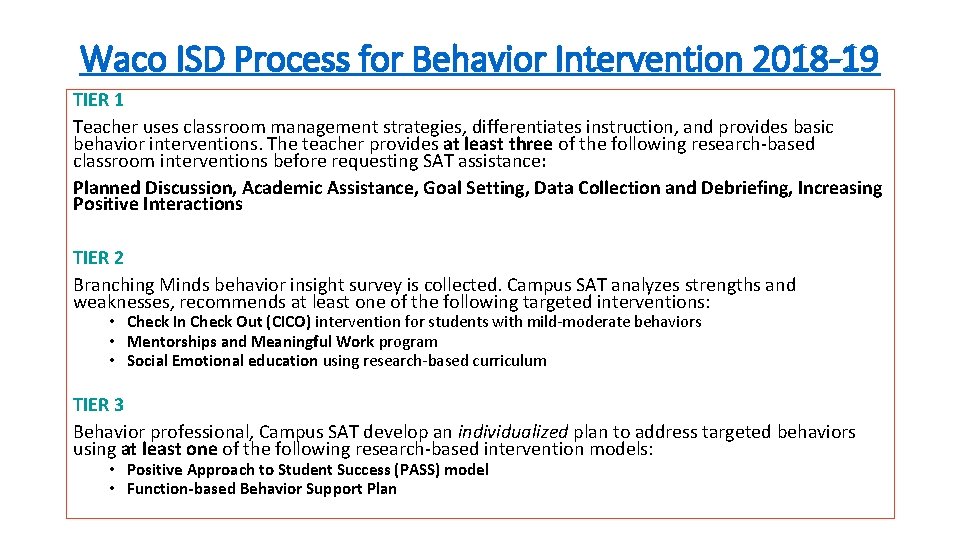
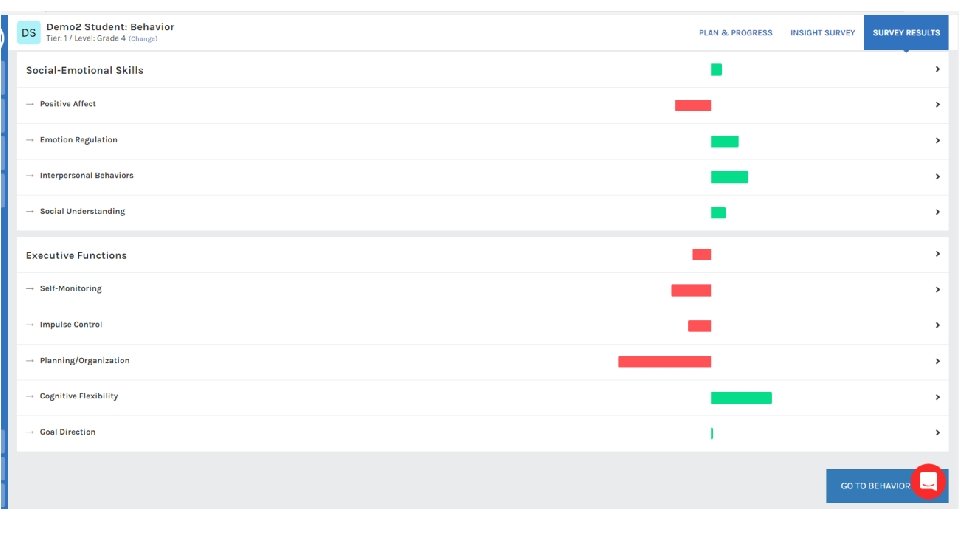
Waco ISD Process for Behavior Intervention 2018 -19 TIER 1 Teacher uses classroom management strategies, differentiates instruction, and provides basic behavior interventions. The teacher provides at least three of the following research-based classroom interventions before requesting SAT assistance: Planned Discussion, Academic Assistance, Goal Setting, Data Collection and Debriefing, Increasing Positive Interactions TIER 2 Branching Minds behavior insight survey is collected. Campus SAT analyzes strengths and weaknesses, recommends at least one of the following targeted interventions: • Check In Check Out (CICO) intervention for students with mild-moderate behaviors • Mentorships and Meaningful Work program • Social Emotional education using research-based curriculum TIER 3 Behavior professional, Campus SAT develop an individualized plan to address targeted behaviors using at least one of the following research-based intervention models: • Positive Approach to Student Success (PASS) model • Function-based Behavior Support Plan
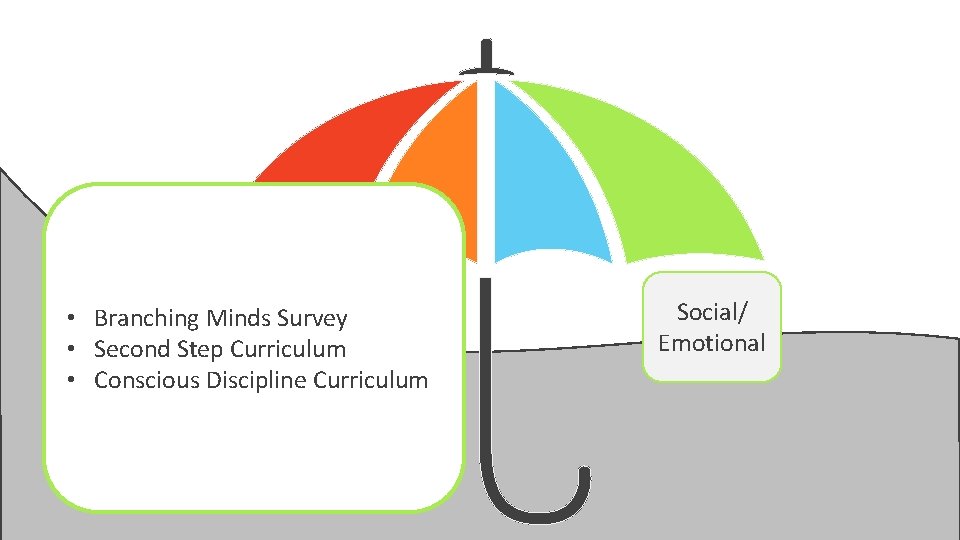
• Branching Minds Survey • Second Step Curriculum • Conscious Discipline Curriculum Social/ Emotional
TEA Action Plan Create a system to monitor Rt. I Implementation to determine if students' needs are met. Provide information about the capabilities of Branching Minds; send TEA monthly updates on the number of students in each tier of interventions by subject in each grade, including a summary of progress or lack thereof. Examine Root causes of Special Education students' performance expressed by the focus groups (listed below) and address as needed. Root Cause: Behavioral/Emotional needs of students not being met Create District PBIS Team with scheduled meetings (send to TEA); Share the plan for additional BCBA support through Baylor Interns, Explain the new Behavior Specialist position and its functions.
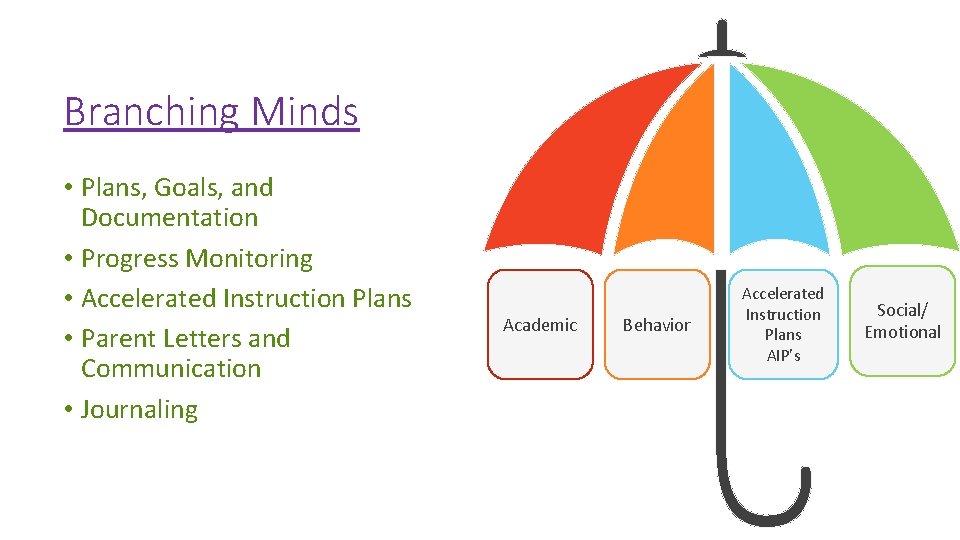
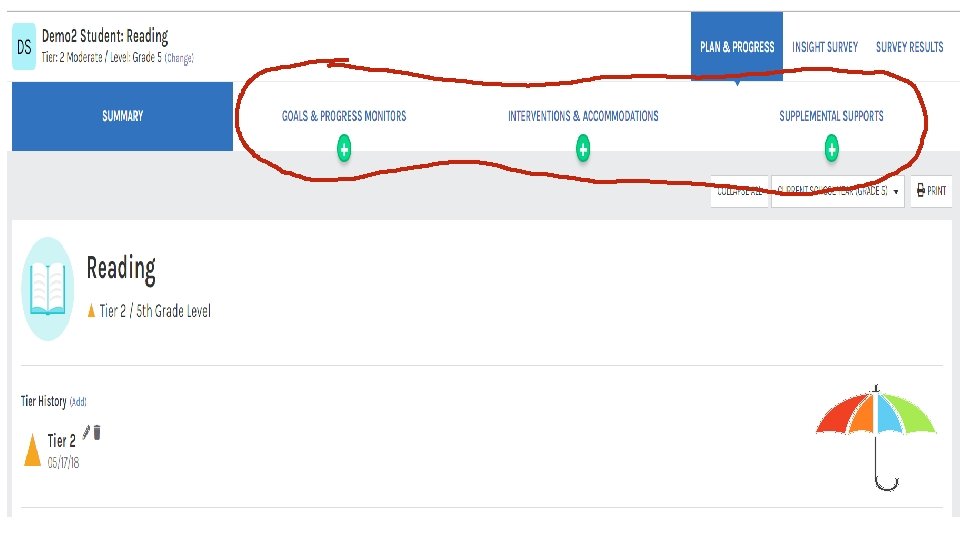
Branching Minds • Plans, Goals, and Documentation • Progress Monitoring • Accelerated Instruction Plans • Parent Letters and Communication • Journaling Academic Behavior Accelerated Instruction Plans AIP’s Social/ Emotional
https: //brm. branchingminds. com/#/login LEARNING SCIENCE + TECHNOLOGY + TEAM COLLABORATION makes RTI/MTSS EFFICIENT and EFFECTIVE @Branching. Minds
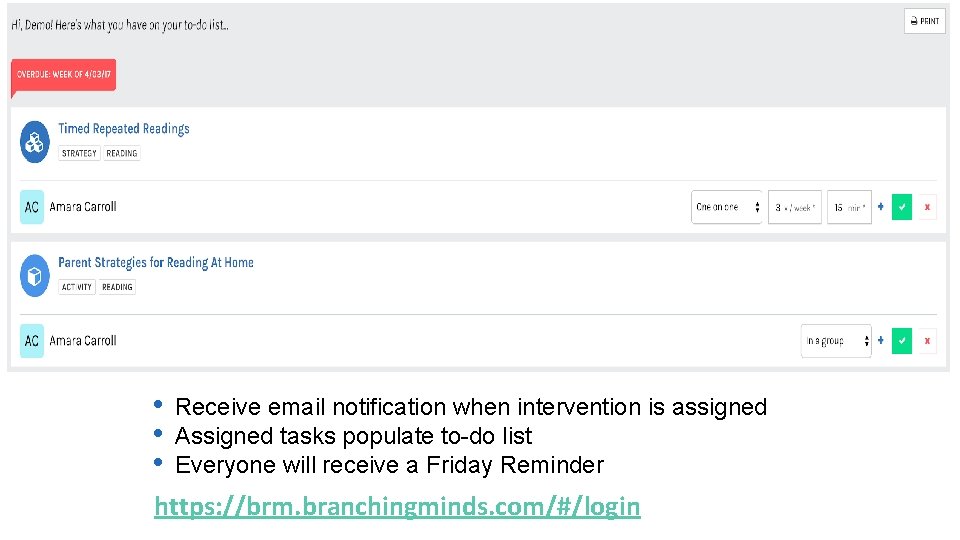
Keeping Us Organized and On Track • • • Receive email notification when intervention is assigned Assigned tasks populate to-do list Everyone will receive a Friday Reminder Email https: //brm. branchingminds. com/#/login
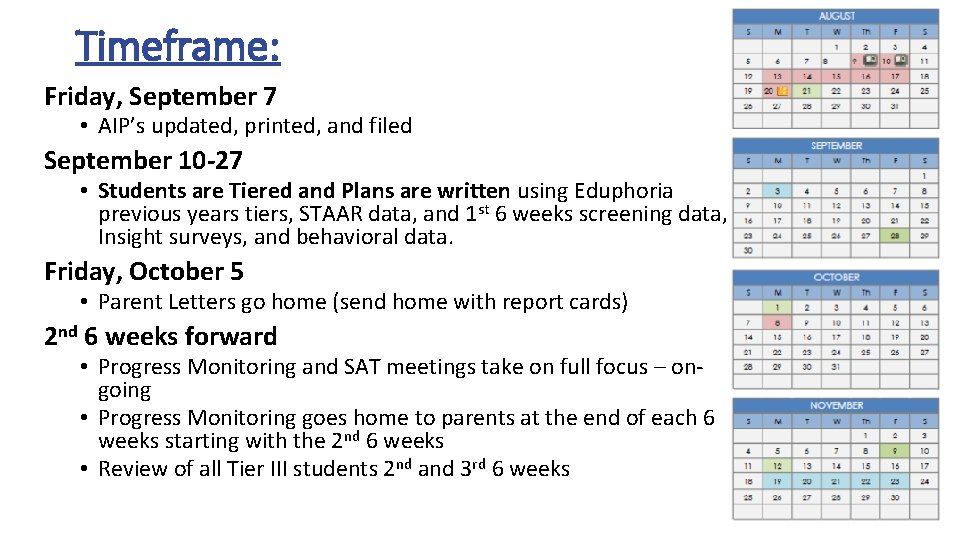
Timeframe: Friday, September 7 • AIP’s updated, printed, and filed September 10 -27 • Students are Tiered and Plans are written using Eduphoria previous years tiers, STAAR data, and 1 st 6 weeks screening data, Insight surveys, and behavioral data. Friday, October 5 • Parent Letters go home (send home with report cards) 2 nd 6 weeks forward • Progress Monitoring and SAT meetings take on full focus – ongoing • Progress Monitoring goes home to parents at the end of each 6 weeks starting with the 2 nd 6 weeks • Review of all Tier III students 2 nd and 3 rd 6 weeks
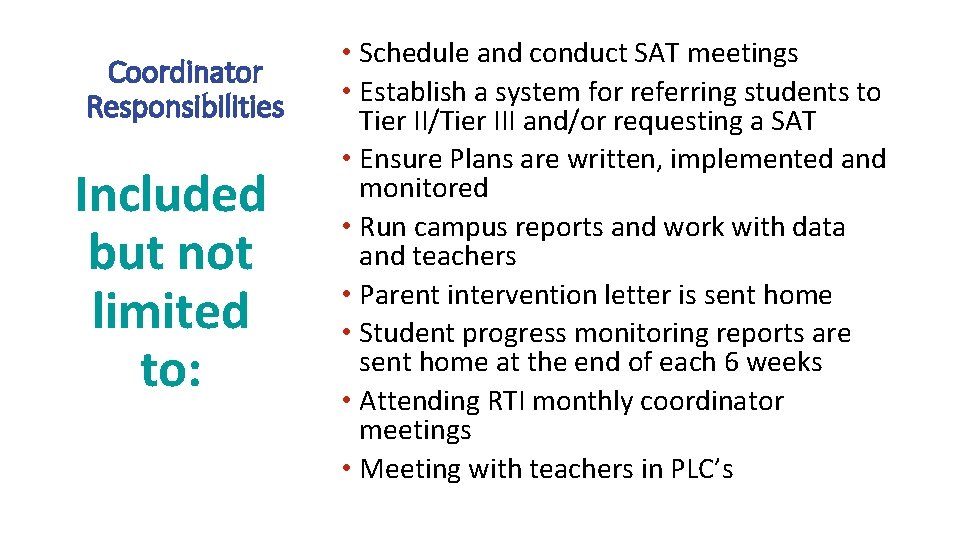
Coordinator Responsibilities Included but not limited to: • Schedule and conduct SAT meetings • Establish a system for referring students to Tier II/Tier III and/or requesting a SAT • Ensure Plans are written, implemented and monitored • Run campus reports and work with data and teachers • Parent intervention letter is sent home • Student progress monitoring reports are sent home at the end of each 6 weeks • Attending RTI monthly coordinator meetings • Meeting with teachers in PLC’s
Things to Consider • Who is on your SAT team? • When will you meet? • What interventions are you offering for Tier II and Tier III? • When will interventions for Tier III take place? • How can campus administration help teachers with Tier II interventions? • When will you meet with teachers?
If you don’t document it, it never happened. If you do document it, it better have happened.
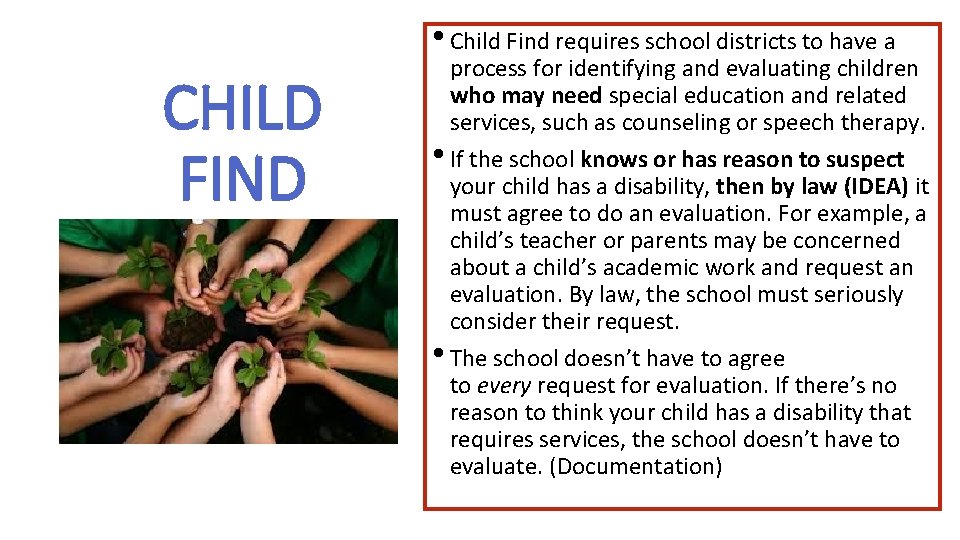
• Child Find requires school districts to have a CHILD FIND process for identifying and evaluating children who may need special education and related services, such as counseling or speech therapy. • If the school knows or has reason to suspect your child has a disability, then by law (IDEA) it must agree to do an evaluation. For example, a child’s teacher or parents may be concerned about a child’s academic work and request an evaluation. By law, the school must seriously consider their request. • The school doesn’t have to agree to every request for evaluation. If there’s no reason to think your child has a disability that requires services, the school doesn’t have to evaluate. (Documentation)
l. j. By Hudson v. Pittsburg unified school SPED Referrals
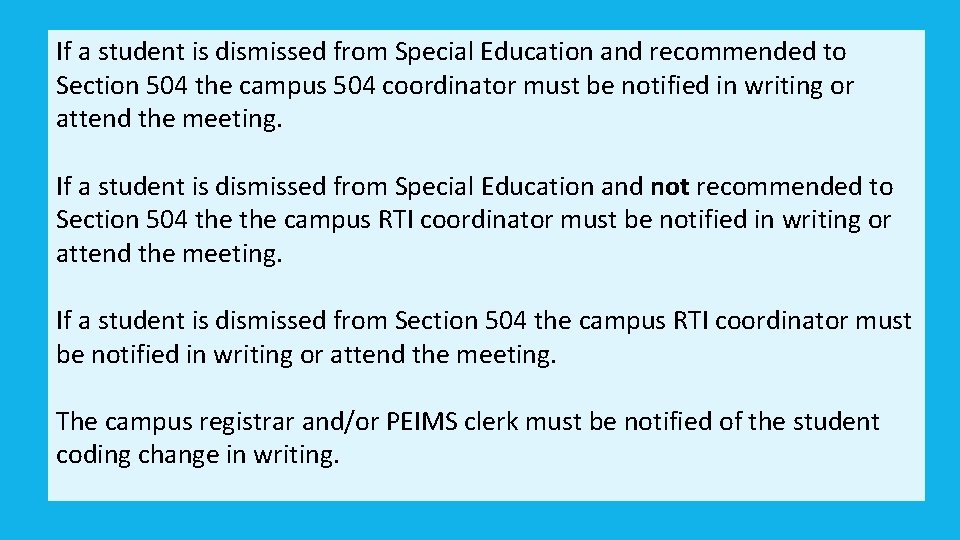
If a student is dismissed from Special Education and recommended to Section 504 the campus 504 coordinator must be notified in writing or attend the meeting. If a student is dismissed from Special Education and not recommended to Section 504 the campus RTI coordinator must be notified in writing or attend the meeting. If a student is dismissed from Section 504 the campus RTI coordinator must be notified in writing or attend the meeting. The campus registrar and/or PEIMS clerk must be notified of the student coding change in writing.
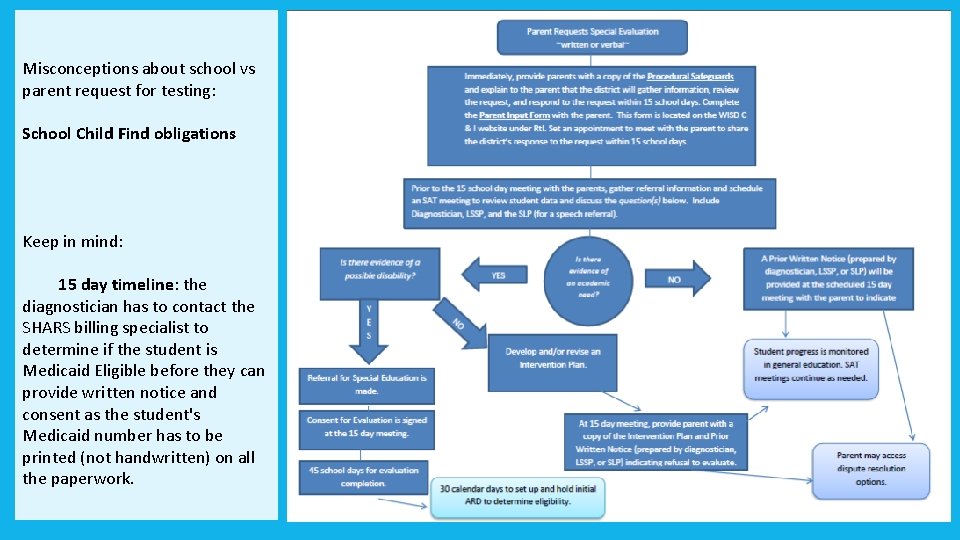
Misconceptions about school vs parent request for testing: School Child Find obligations Keep in mind: 15 day timeline: the diagnostician has to contact the SHARS billing specialist to determine if the student is Medicaid Eligible before they can provide written notice and consent as the student's Medicaid number has to be printed (not handwritten) on all the paperwork.
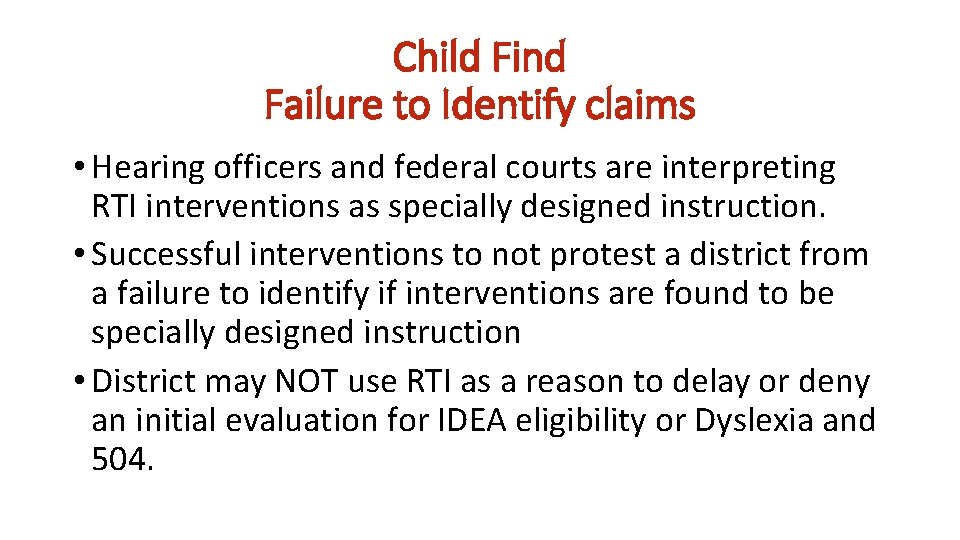
Child Find Failure to Identify claims • Hearing officers and federal courts are interpreting RTI interventions as specially designed instruction. • Successful interventions to not protest a district from a failure to identify if interventions are found to be specially designed instruction • District may NOT use RTI as a reason to delay or deny an initial evaluation for IDEA eligibility or Dyslexia and 504.
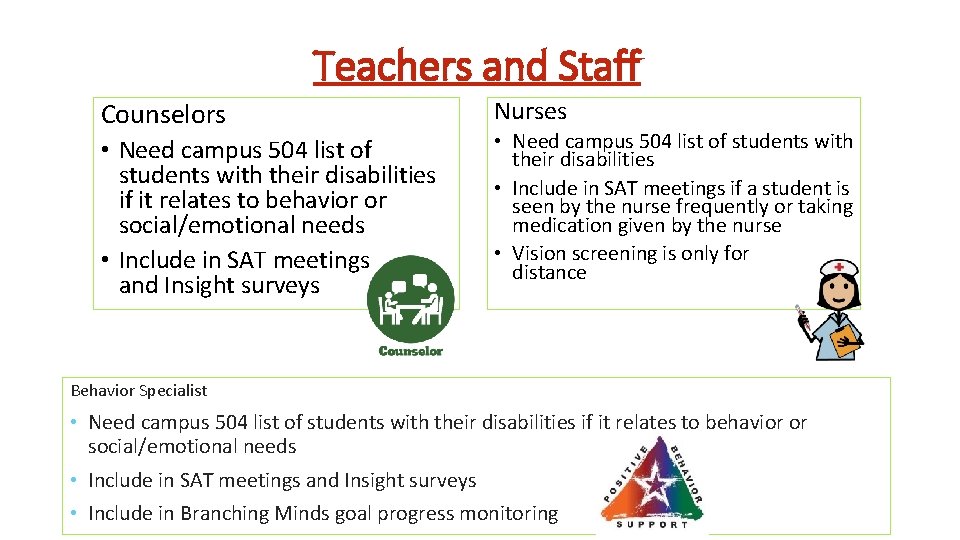
Teachers and Staff Counselors • Need campus 504 list of students with their disabilities if it relates to behavior or social/emotional needs • Include in SAT meetings and Insight surveys Nurses • Need campus 504 list of students with their disabilities • Include in SAT meetings if a student is seen by the nurse frequently or taking medication given by the nurse • Vision screening is only for distance Behavior Specialist • Need campus 504 list of students with their disabilities if it relates to behavior or social/emotional needs • Include in SAT meetings and Insight surveys • Include in Branching Minds goal progress monitoring
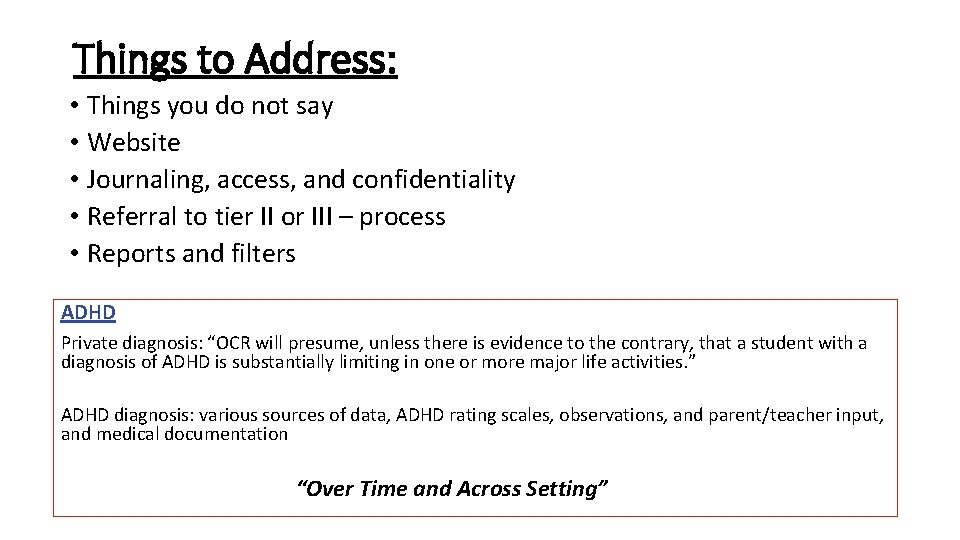
Things to Address: • Things you do not say • Website • Journaling, access, and confidentiality • Referral to tier II or III – process • Reports and filters ADHD Private diagnosis: “OCR will presume, unless there is evidence to the contrary, that a student with a diagnosis of ADHD is substantially limiting in one or more major life activities. ” ADHD diagnosis: various sources of data, ADHD rating scales, observations, and parent/teacher input, and medical documentation “Over Time and Across Setting”
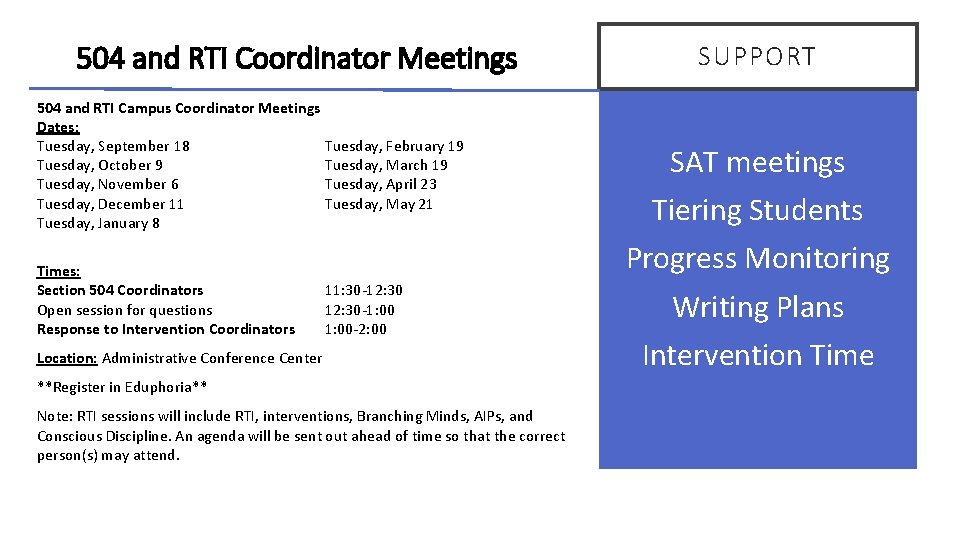
504 and RTI Coordinator Meetings 504 and RTI Campus Coordinator Meetings Dates: Tuesday, September 18 Tuesday, February 19 Tuesday, October 9 Tuesday, March 19 Tuesday, November 6 Tuesday, April 23 Tuesday, December 11 Tuesday, May 21 Tuesday, January 8 Times: Section 504 Coordinators Open session for questions Response to Intervention Coordinators SUPPORT SAT meetings Tiering Students Progress Monitoring 11: 30 -12: 30 -1: 00 -2: 00 Location: Administrative Conference Center **Register in Eduphoria** Note: RTI sessions will include RTI, interventions, Branching Minds, AIPs, and Conscious Discipline. An agenda will be sent out ahead of time so that the correct person(s) may attend. Writing Plans Intervention Time
Pennie Graeber 504 & RTI Coordinator pennie. graeber@wacoisd. org Office: 254 -750 -3928 Cell: 512 -787 -0619