
RESPONDING STYLES Fatma GZELCAN Baak AKINCI Naciye SEYREK
RESPONDING STYLES Fatma GÜZELCAN Başak AKINCI Naciye SEYREK
FATMA GÜZELCAN
WHAT IS COMMUNICATION PROCESS? A process Information is exchanged between individuals Common system of symbols, signs or behaviors
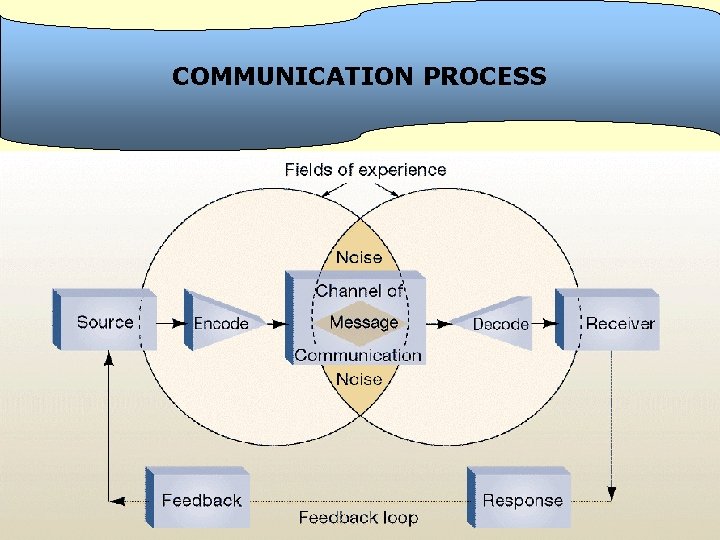
COMMUNICATION PROCESS
Receiver; must attent to interpert and response to the transmitted message To attain the goal of acceptence of the message receiver uses; Attention Comprehension
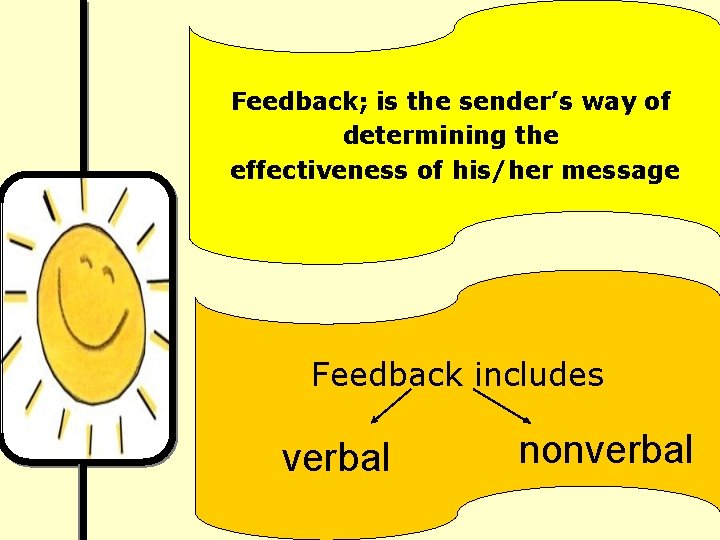
Feedback; is the sender’s way of determining the effectiveness of his/her message Feedback includes verbal nonverbal
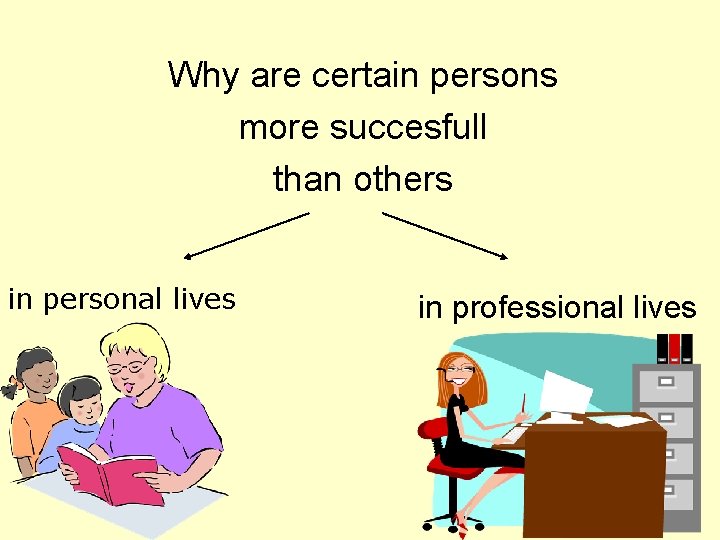
Why are certain persons more succesfull than others in personal lives in professional lives
If a communication problem happen, WHAT WENT WRONG?
“Wouldn’t is be extremely useful to have a simple formula of effective communication which can be used in all circumtances” Martin Hahn
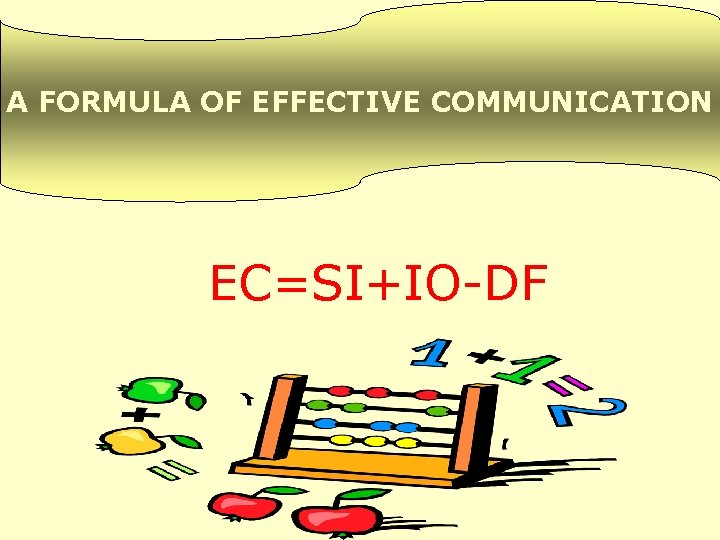
A FORMULA OF EFFECTIVE COMMUNICATION EC=SI+IO-DF

SELF-INTEREST
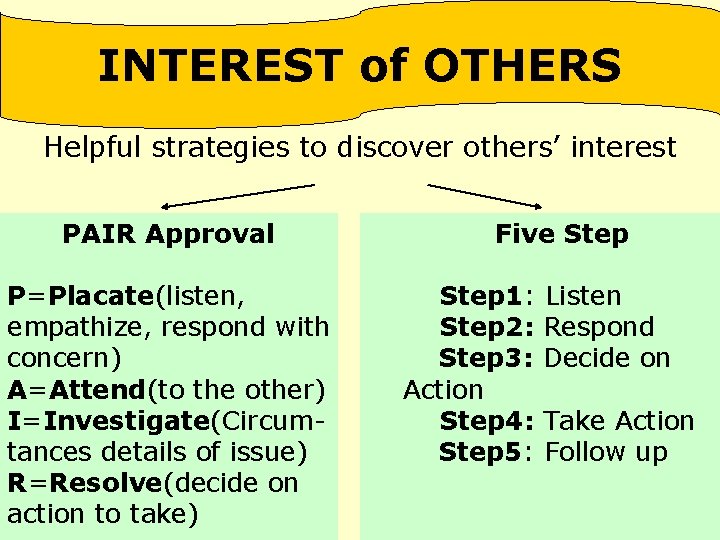
INTEREST of OTHERS Helpful strategies to discover others’ interest PAIR Approval P=Placate(listen, empathize, respond with concern) A=Attend(to the other) I=Investigate(Circumtances details of issue) R=Resolve(decide on action to take) Five Step 1: Listen Step 2: Respond Step 3: Decide on Action Step 4: Take Action Step 5: Follow up
BAŞAK AKINCI
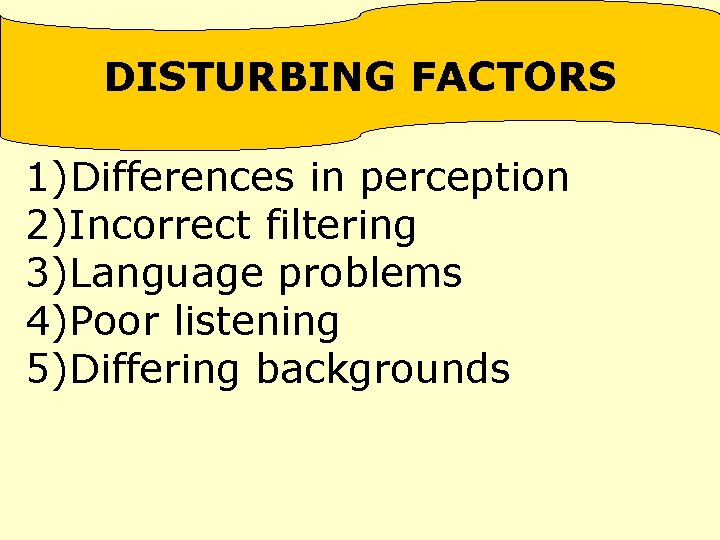
DISTURBING FACTORS 1)Differences in perception 2)Incorrect filtering 3)Language problems 4)Poor listening 5)Differing backgrounds
DIFFERENCES in PERCEPTION our mind absorbs our experiences in a unique and personal way

Selective Perception
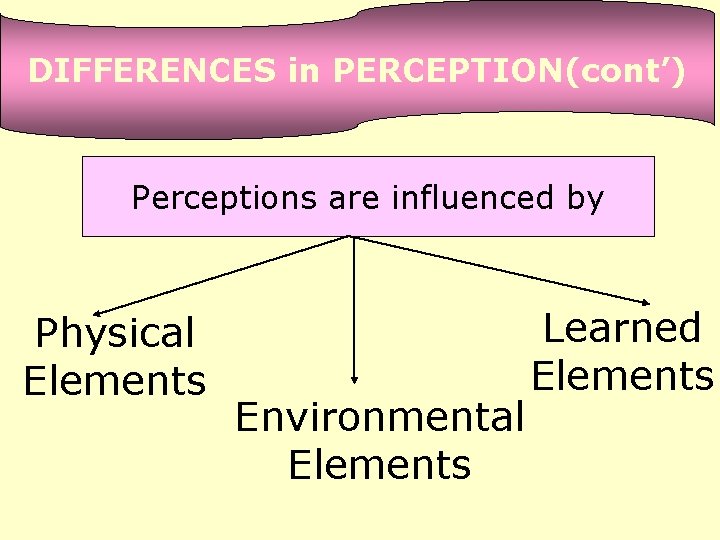
DIFFERENCES in PERCEPTION(cont’) Perceptions are influenced by Physical Elements Environmental Elements Learned Elements
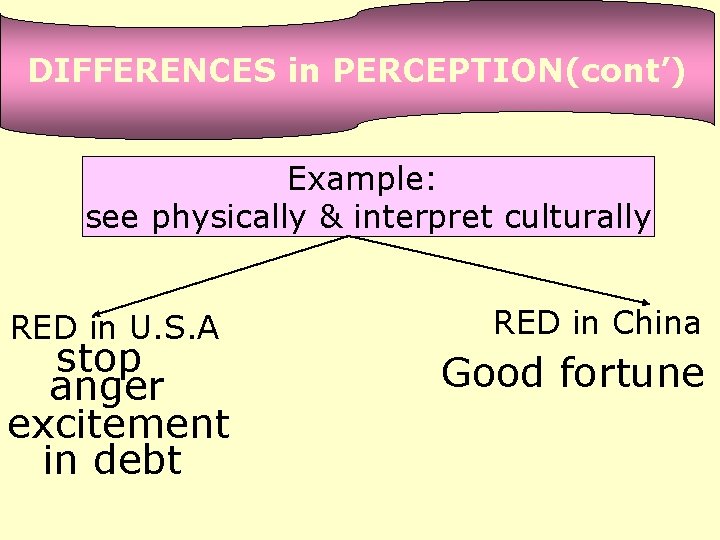
DIFFERENCES in PERCEPTION(cont’) Example: see physically & interpret culturally RED in U. S. A stop anger excitement in debt RED in China Good fortune
INCORRECT FILTERING Filtering is screening out before a message is passed on to someone else. Filters may ‘translate’ our receiver’s ideas and responses before passing them on to us.
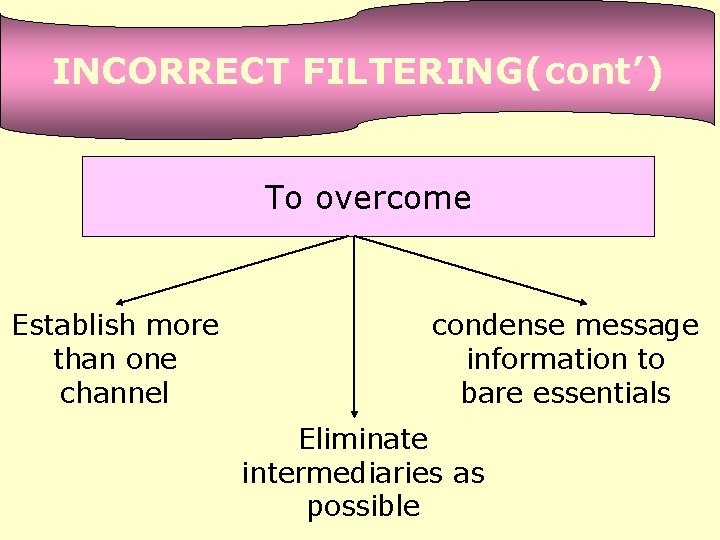
INCORRECT FILTERING(cont’) To overcome Establish more than one channel condense message information to bare essentials Eliminate intermediaries as possible
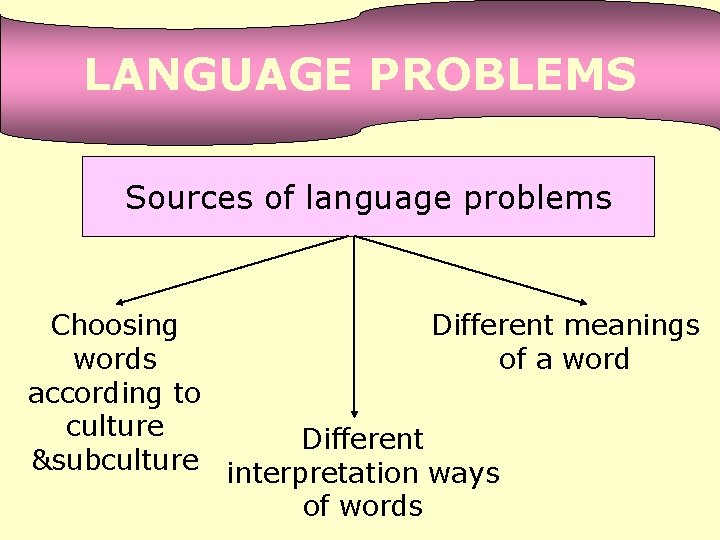
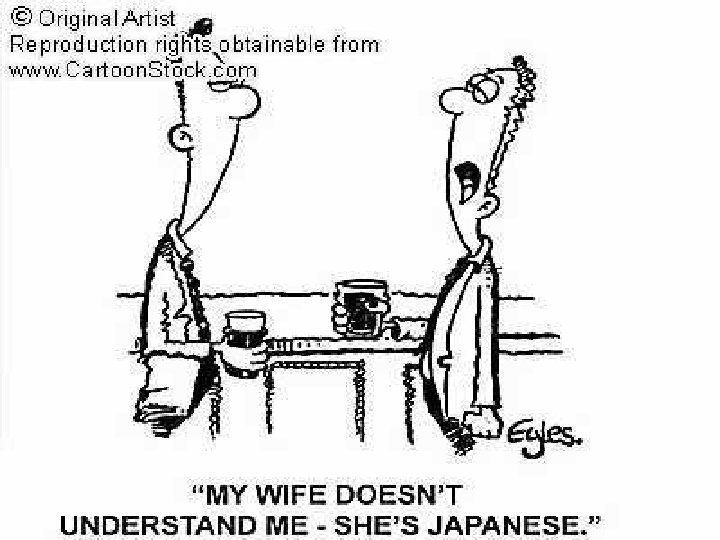
LANGUAGE PROBLEMS Sources of language problems Choosing Different meanings words of a word according to culture Different &subculture interpretation ways of words
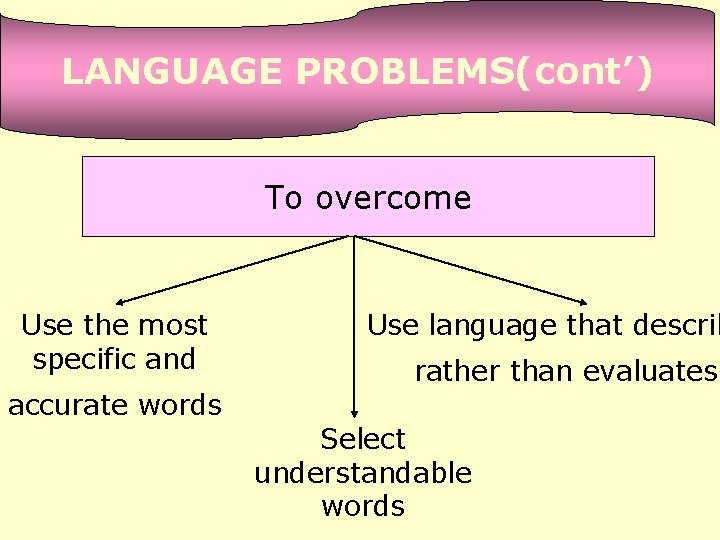
LANGUAGE PROBLEMS(cont’) To overcome Use the most specific and accurate words Use language that describ rather than evaluates Select understandable words
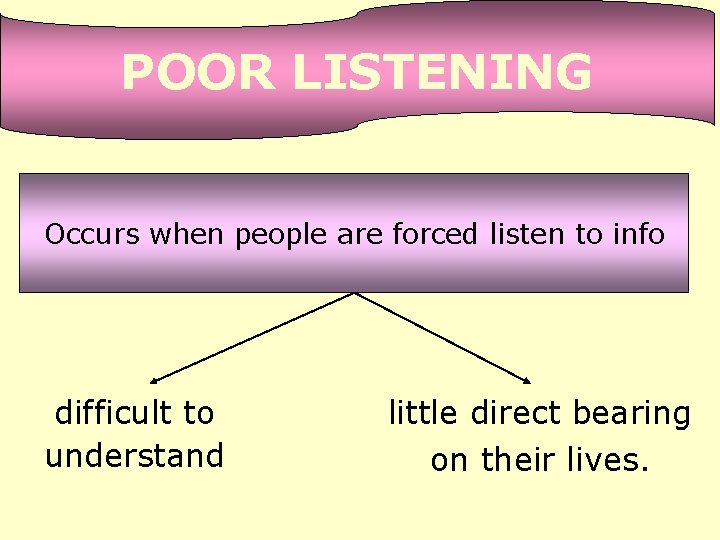
POOR LISTENING Occurs when people are forced listen to info difficult to understand little direct bearing on their lives.
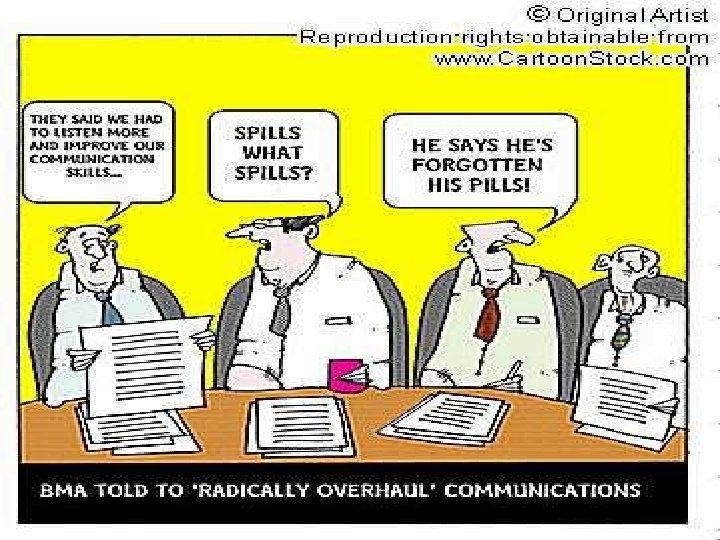
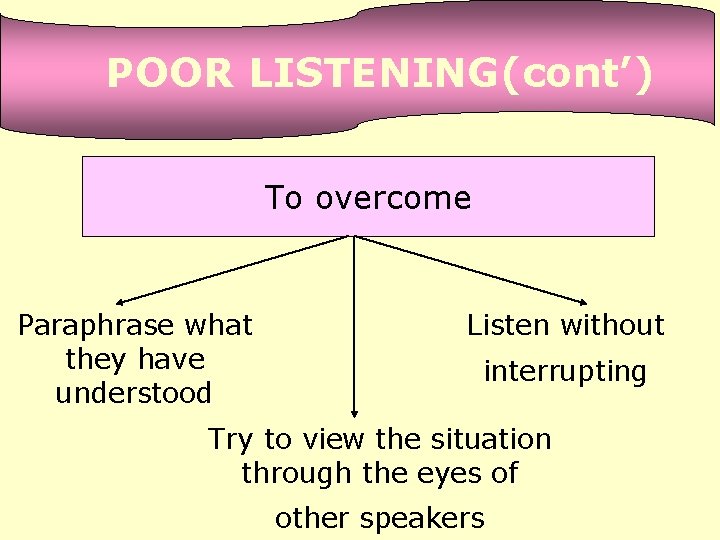
POOR LISTENING(cont’) To overcome Paraphrase what they have understood Listen without interrupting Try to view the situation through the eyes of other speakers
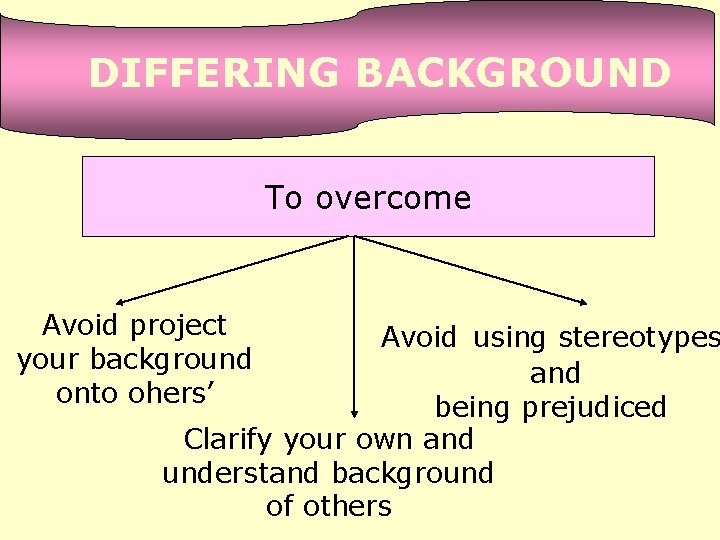
DIFFERING BACKGROUND To overcome Avoid project your background onto ohers’ Avoid using stereotypes and being prejudiced Clarify your own and understand background of others
GIVING CONSTRUCTIVE FEEDBACK Direct feedback toward behavior, not person Take needs of receiver into account first. Make use of “I” Statements
GIVING CONSTRUCTIVE FEEDBACK (cont’) Focus on actions rather than motives. Make feedback descriptive rather than judgmental. Make feedback specific rather than general
GIVING CONSTRUCTIVE FEEDBACK (cont’) Share information rather than give advice. Be sensitive to timing and selection. Check whether receiver understood your feedback.
NACİYE SEYREK
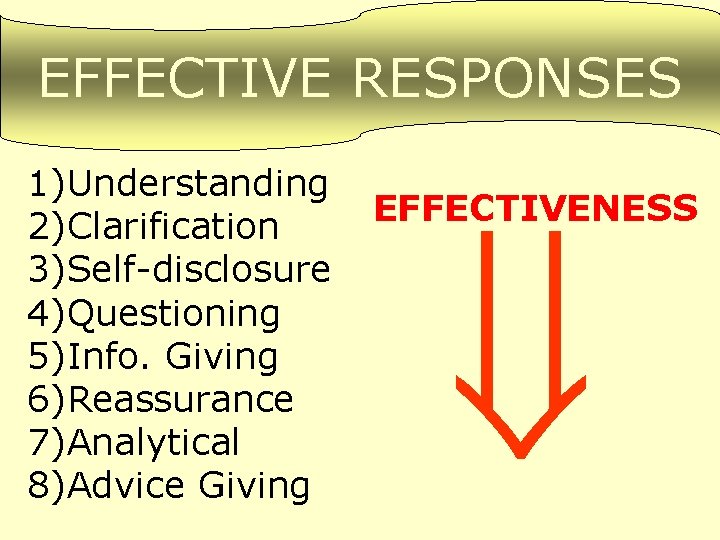
EFFECTIVE RESPONSES 1)Understanding 2)Clarification 3)Self-disclosure 4)Questioning 5)Info. Giving 6)Reassurance 7)Analytical 8)Advice Giving EFFECTIVENESS
1) UNDERSTANDING Honest & frank communication Feelings-oriented response
1) UNDERSTANDING(cont’) Sensivity&understanding Strong negative feelings “Understanding is empathy and can repair a damaged relation ”
2) CLARIFICATION What is the other person saying? Identify significant feelings significantly emerging
2) CLARIFICATION(cont’) Echoing last few words Summarizing relevant/paraphrasing point “Reinforce your desire to see from other's point of view. ”
3) SELF-DISCLOSURE Give others insight into who you are Share something about yourself
3) SELF-DISCLOSURE(cont’) Anxiety Similar problems&life concerns
4) QUESTIONING Allow others to develop a point Open Questions Closed Questions
5) INFORMATION GIVING involves relating facts in an objective manner without judgement or evaluation. useful in giving Positive Feedback Negative Feedback
6) REASSURANCE Reduce anxiety Diffuse intense feelings Express confidence

7) ANALYTICAL Analyze, explain or interpret NOT reassurance+ thougts, feelings, values
8) ADVICE GIVING Others are being measured by your personal value system and are found somehow lacking. This is a process of blaming others for their own problems.
WHAT ABOUT NEGATIVE MESSAGES? RESPONDING TO NEGATIVE MESSAGE Blame yourself Blame himself Sense others’ needs & feelings Sense your own needs & feelings
- Slides: 45