
RespondentDriven Sampling A New Form of ChainReferral Sampling



- Slides: 20
Respondent-Driven Sampling: A New Form of Chain-Referral Sampling Center for Interventions, Treatment & Addictions Research School of Medicine Wright State University School of Medicine 3640 Colonel Glenn Highway Dayton, Ohio 45435 1
Introduction • Survey Sampling. • It has been a challenge for social researchers to sample “hard to reach” or “hidden” populations. • Non-random sampling methods (e. g. , chainreferral and snowball sampling, and targeted sampling). • Respondent-driven sampling (RDS). 2
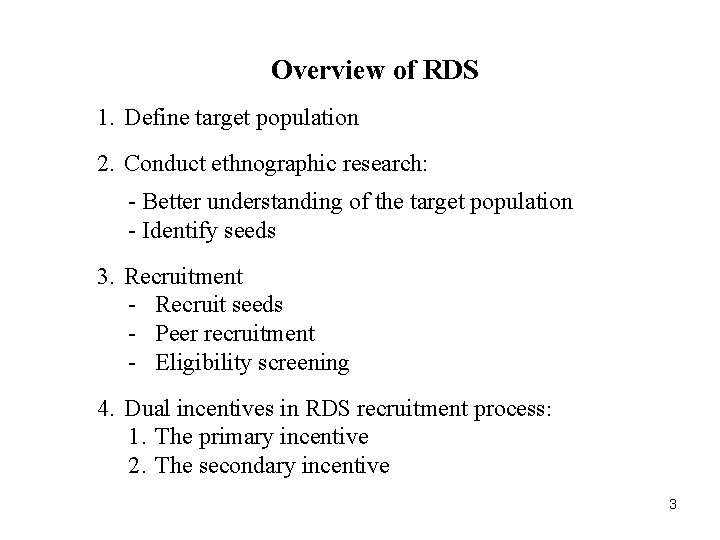
Overview of RDS 1. Define target population 2. Conduct ethnographic research: - Better understanding of the target population - Identify seeds 3. Recruitment - Recruit seeds - Peer recruitment - Eligibility screening 4. Dual incentives in RDS recruitment process: 1. The primary incentive 2. The secondary incentive 3
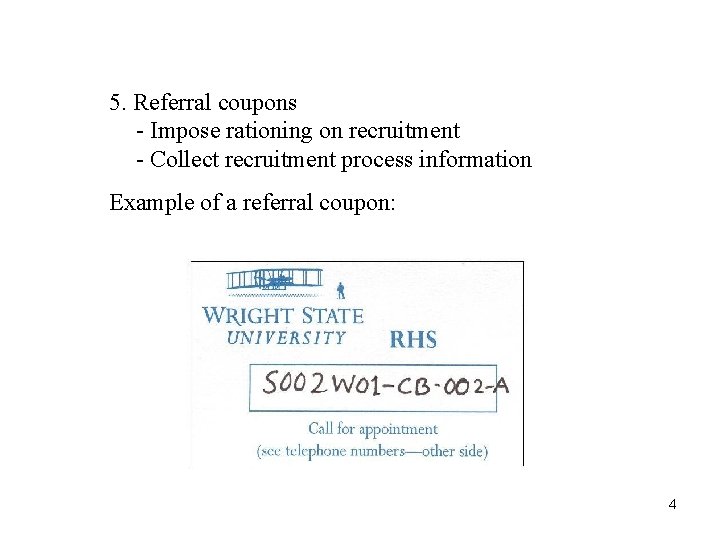
5. Referral coupons - Impose rationing on recruitment - Collect recruitment process information Example of a referral coupon: 4
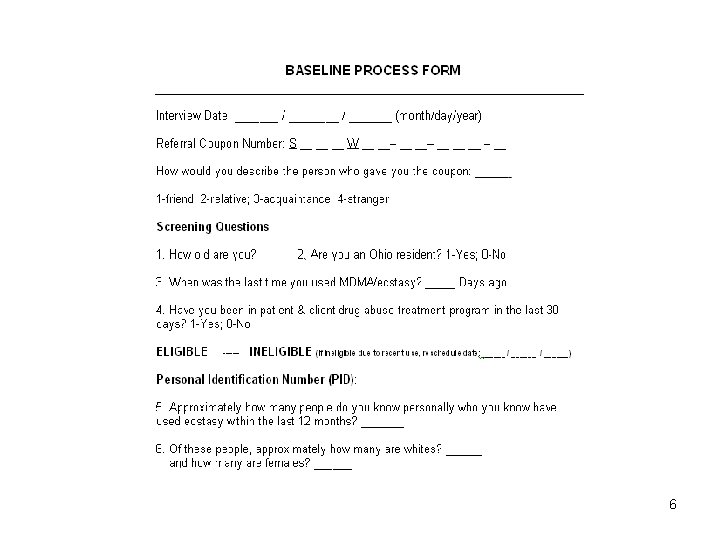
6. Other necessary information to collect during recruitment. - Network size (degree). - Network compositions. - Information on the social relationships between recruiters and recruitees. 7. Sample size 5
6
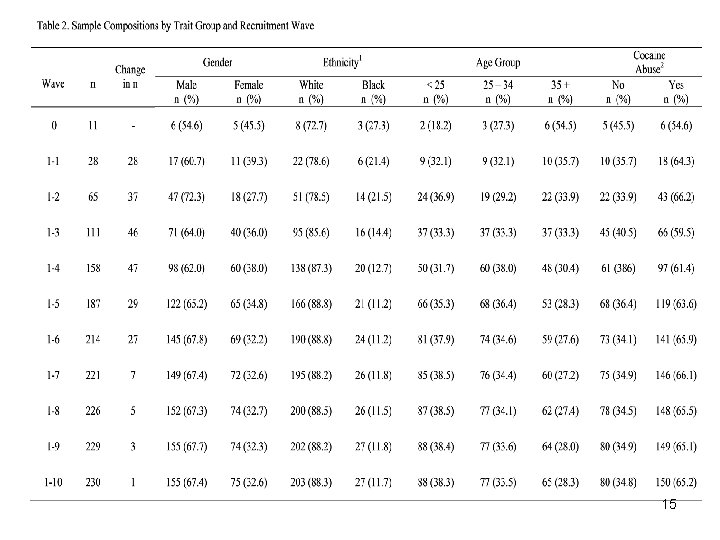
Advantages of RDS 1. Peer recruitment in RDS would minimize the issues about violation of subject confidentiality during recruitment. 2. RDS helps reduce the effects of “volunteerism. ” 3. The sample compositions will converge to reach equilibrium within a limited number of recruitment waves, independent of the characteristics of the initial sample (seeds). 4. RDS allows to estimate asymptotically unbiased population compositions. 7
5. RDS sample analysis enables to estimate unbiased sample statistics. 6. RDS sample analysis provides information for analysis of social structures. 7. RDS is cheaper, quicker, and easier to implement, compared with convenience sampling methods such as targeted sampling. 8
Limitations of RDS 1. The target population size needs to be large enough, theoretically, infinitely large, to apply RDS. 2. There must exists a contact pattern among members of the target population. 3. Assume that participants recruit randomly from their personal networks. 4. Measurement errors are not taken into account. 5. Low ratios of referrals. 6. A successful RDS sample may not necessarily be representative of the target population. 9
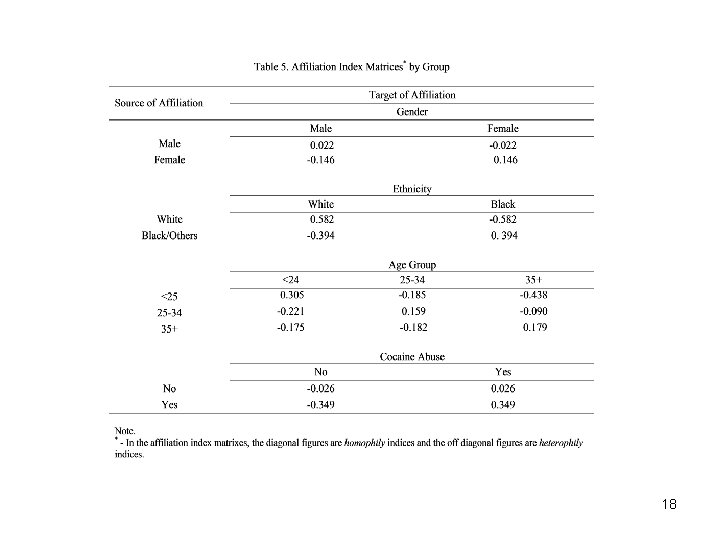
Sample Analysis 1. Assess if the sample compositions have converged to reach equilibrium. 2. Assess the effect of volunteerism and masking. 3. Analyze the social structures of the target population. 4. Estimate asymptotically unbiased population compositions. 5. Estimate sample statistics from the weighted sample. 6. Computer program (RDSAT) for RDS sample analysis is free to download from website: http: //www. respondentdrivensampling. org 10
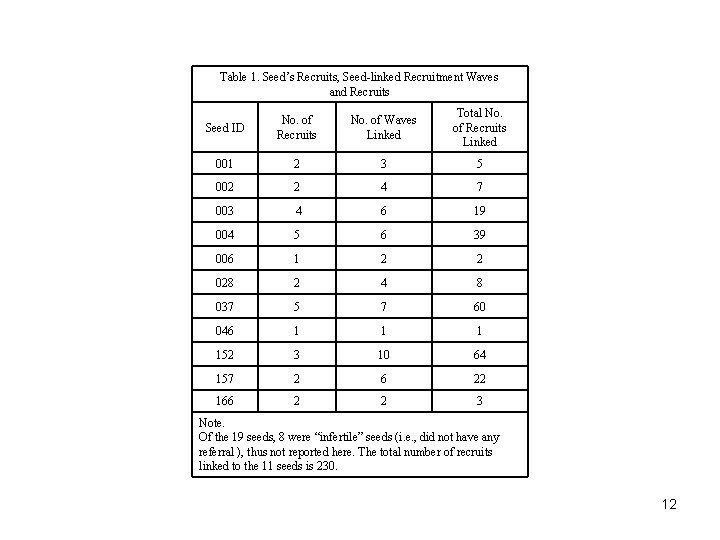
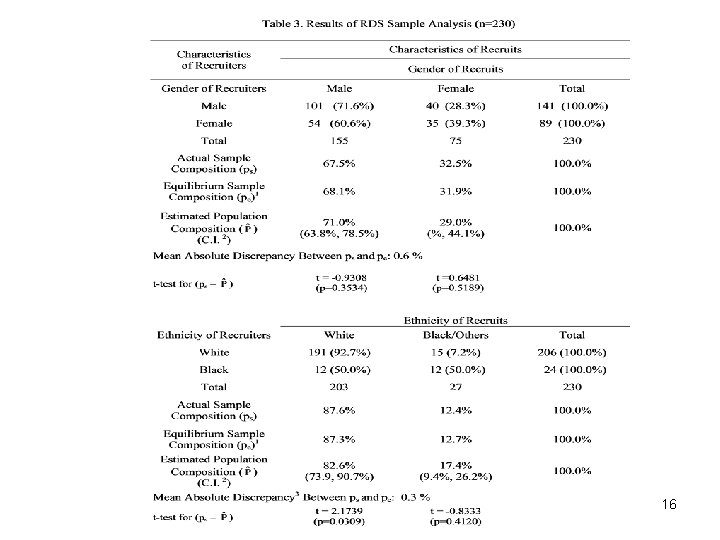
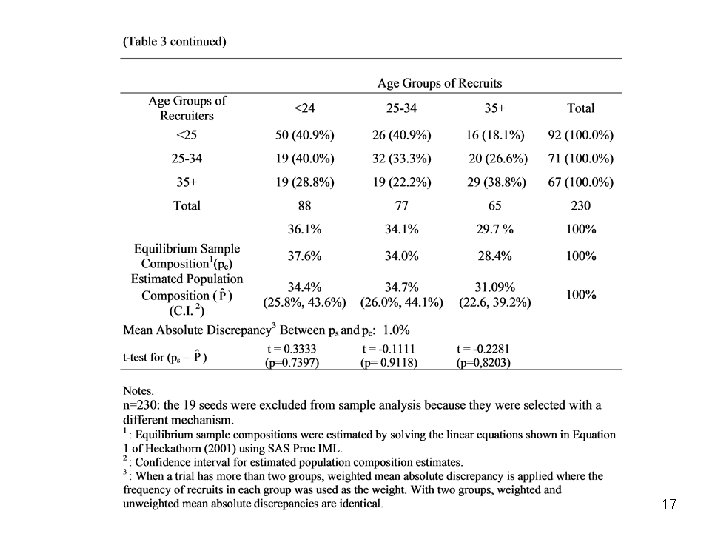
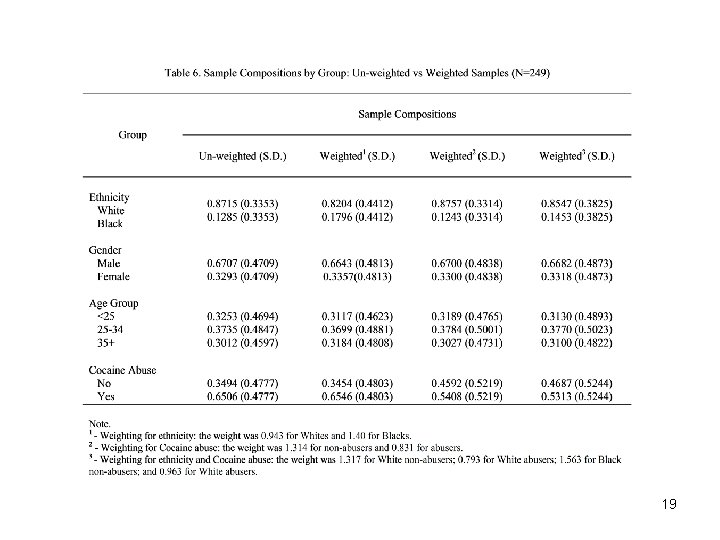
Application of RDS among Stimulant Users in Rural Ohio A sample of 249 participants was recruited between June 2002 and February 2004 in three rural counties, Ohio, U. S. A total of 19 seeds were identifies: 8 of them did not have any referral. A total of 230 respondents were recruited for the study; 88. 7% of the respondents were linked to 5 seeds (see Table 1). 11
Table 1. Seed’s Recruits, Seed-linked Recruitment Waves and Recruits Seed ID No. of Recruits No. of Waves Linked Total No. of Recruits Linked 001 2 3 5 002 2 4 7 003 4 6 19 004 5 6 39 006 1 2 2 028 2 4 8 037 5 7 60 046 1 152 3 10 64 157 2 6 22 166 2 2 3 Note. Of the 19 seeds, 8 were “infertile” seeds (i. e. , did not have any referral ), thus not reported here. The total number of recruits linked to the 11 seeds is 230. 12
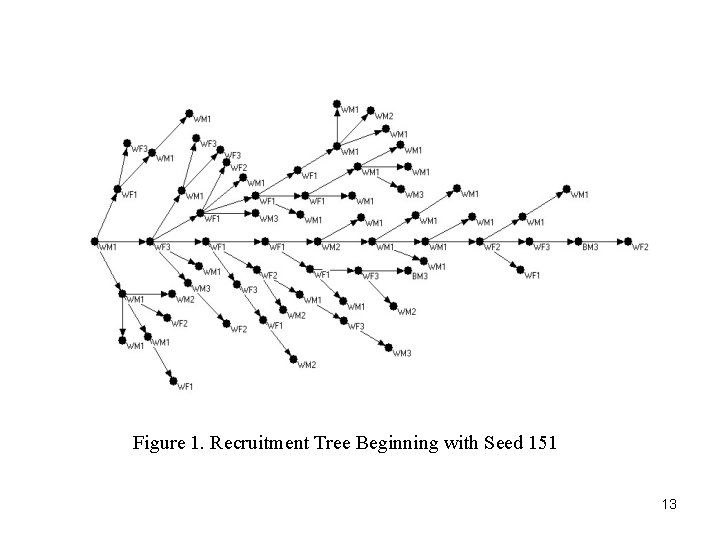
Figure 1. Recruitment Tree Beginning with Seed 151 13
14
15
16
17
18
19
References Heckathorn, D. D. 1997. Respondent-Driven Sampling: A New Approach to the Study of Hidden Populations, " Social Problems, Vol. 44, No. 2: 174 -199. Heckathorn, D. D. , Broadhead, R. S. , Anthony, D. L. , and Weakliem, D. L. (1999). AIDSand social networks: Prevention through network mobilization. Sociological Focus, 32, 159– 179. Heckathorn, D. D. & Jeffri, J. 2001. Finding the beat: Using respondent-driven sampling to study jazz musicians. Poetics, Vol. 28: 307 -329. Heckathorn, D. D. 2002. Respondent-Driven Sampling II: Deriving Valid Population Estimates from Chain-Referral Samples of Hidden Populations. Social Problems, Vol. 49, No. 1: ? ? ? -? ? ? . Heckathorn , D. D. , Semaan, S. , Broadhead, R. S. , & Hughes, J. J. 2002. Extensions of Respondent-Driven Sampling: A New Approach to the Study of Injection Drug Users Aged 18– 25. AIDS and Behavior, Vol. 6, No. 1: 55 -67. Salganik, M. J. & Heckathorn, D. D. 2004. Sampling and estimation in hidden population using Respondent-Driven Sampling. Sociology Methodology (in press). Jichuan Wang, Robert G. Carlson, Russel S. Falck, Harvey A Siegal, Ahmmed Rahman, Linna Li. Respondent-driven sampling to recruit MDMA users: A methodological assessment. Drug and Alcohol Dependence (in press). 20