
Respiratory System The respiratory system Gas laws Ventilation
- Slides: 49
Respiratory System § The respiratory system § Gas laws § Ventilation Copyright © 2007 Pearson Education, Inc. , publishing as Benjamin Cummings
Respiratory System § Exchange of gases between the atmosphere and the blood § Homeostatic regulation of body p. H § Protection from inhaled pathogens and irritating substances § Vocalization Copyright © 2007 Pearson Education, Inc. , publishing as Benjamin Cummings
Principles of Bulk Flow § Flow from regions of higher to lower pressure § Muscular pump creates pressure gradients § Resistance to flow § Diameter of tubes Copyright © 2007 Pearson Education, Inc. , publishing as Benjamin Cummings
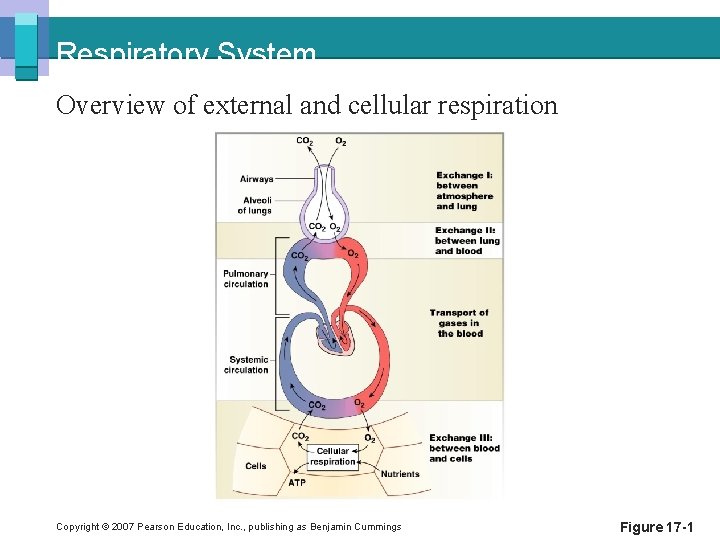
Respiratory System Overview of external and cellular respiration Copyright © 2007 Pearson Education, Inc. , publishing as Benjamin Cummings Figure 17 -1
Respiratory System § Conducting system § Alveoli § Bones and muscle of thorax Copyright © 2007 Pearson Education, Inc. , publishing as Benjamin Cummings
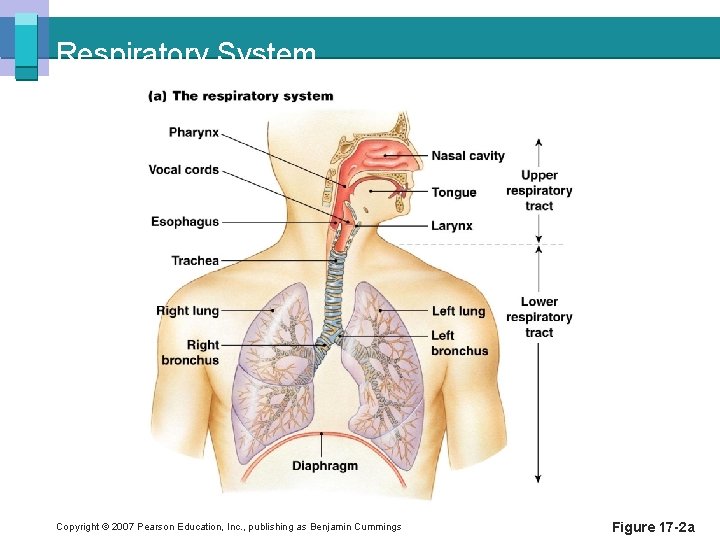
Respiratory System Copyright © 2007 Pearson Education, Inc. , publishing as Benjamin Cummings Figure 17 -2 a
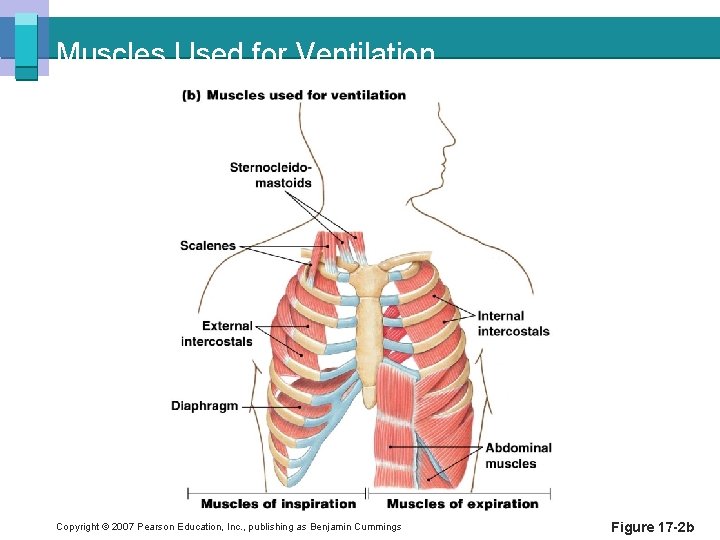
Muscles Used for Ventilation Copyright © 2007 Pearson Education, Inc. , publishing as Benjamin Cummings Figure 17 -2 b
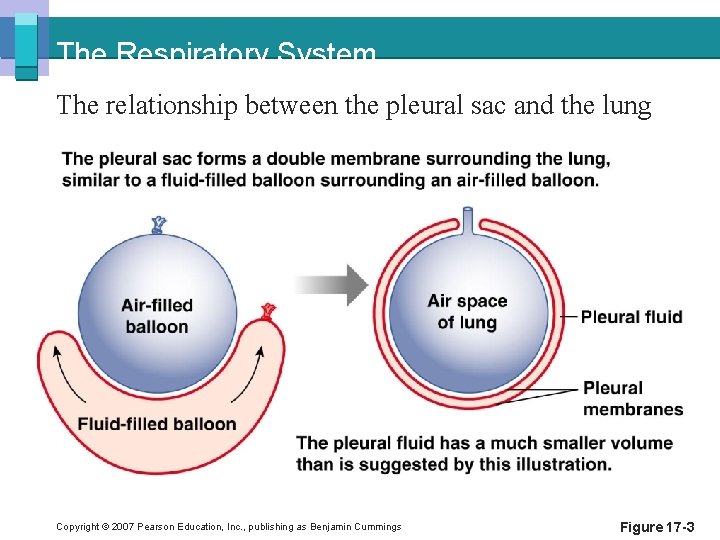
The Respiratory System The relationship between the pleural sac and the lung Copyright © 2007 Pearson Education, Inc. , publishing as Benjamin Cummings Figure 17 -3
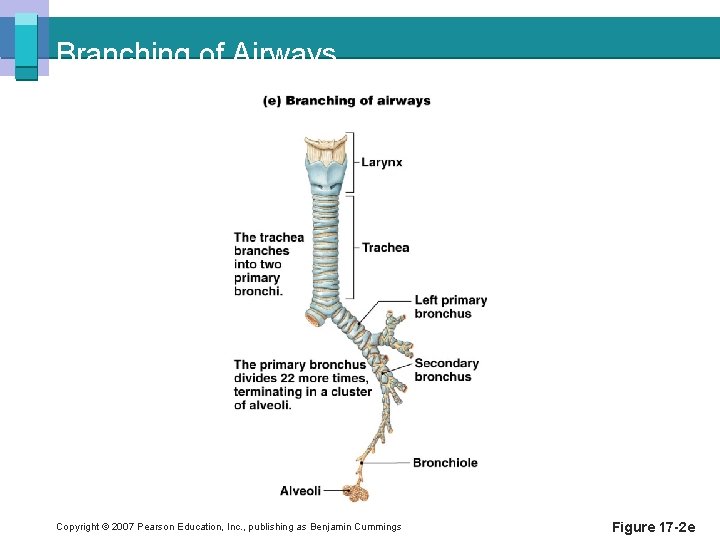
Branching of Airways Copyright © 2007 Pearson Education, Inc. , publishing as Benjamin Cummings Figure 17 -2 e
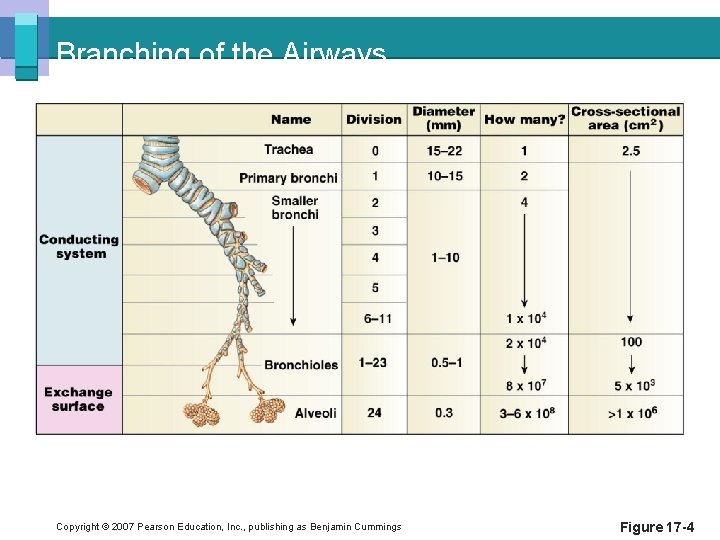
Branching of the Airways Copyright © 2007 Pearson Education, Inc. , publishing as Benjamin Cummings Figure 17 -4
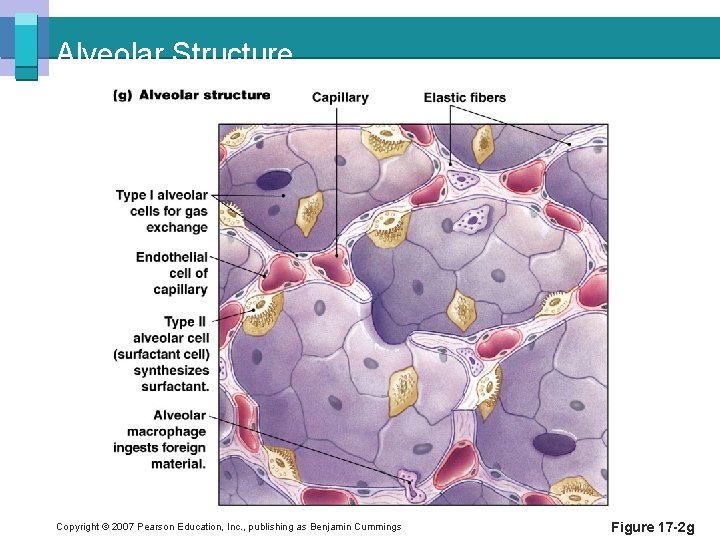
Alveolar Structure Copyright © 2007 Pearson Education, Inc. , publishing as Benjamin Cummings Figure 17 -2 g
Pulmonary Circulation § Right ventricle pulmonary trunk lungs pulmonary veins left atrium PLAY Animation: Respiratory System: Anatomy Review Copyright © 2007 Pearson Education, Inc. , publishing as Benjamin Cummings
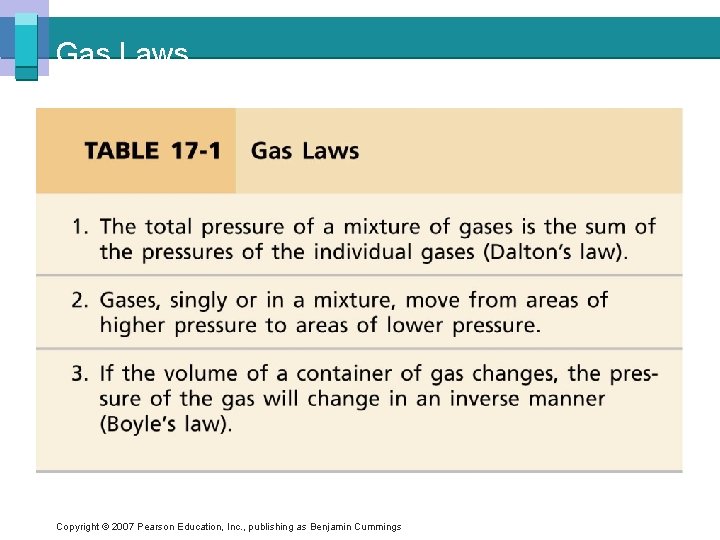
Gas Laws Copyright © 2007 Pearson Education, Inc. , publishing as Benjamin Cummings
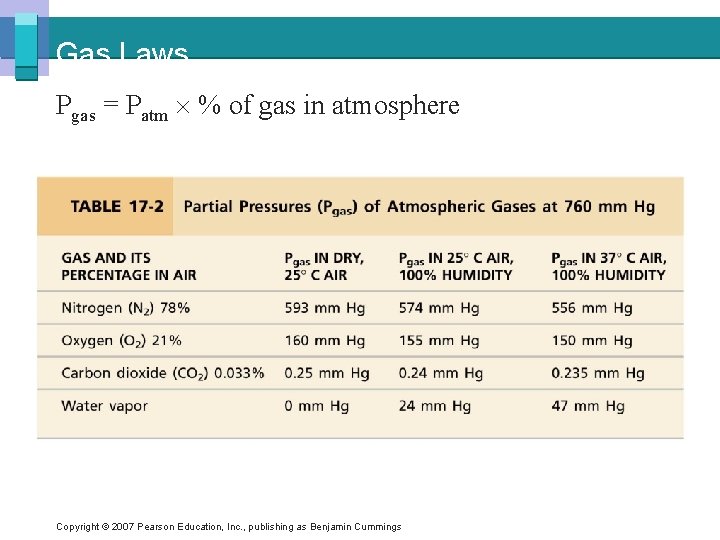
Gas Laws Pgas = Patm % of gas in atmosphere Copyright © 2007 Pearson Education, Inc. , publishing as Benjamin Cummings
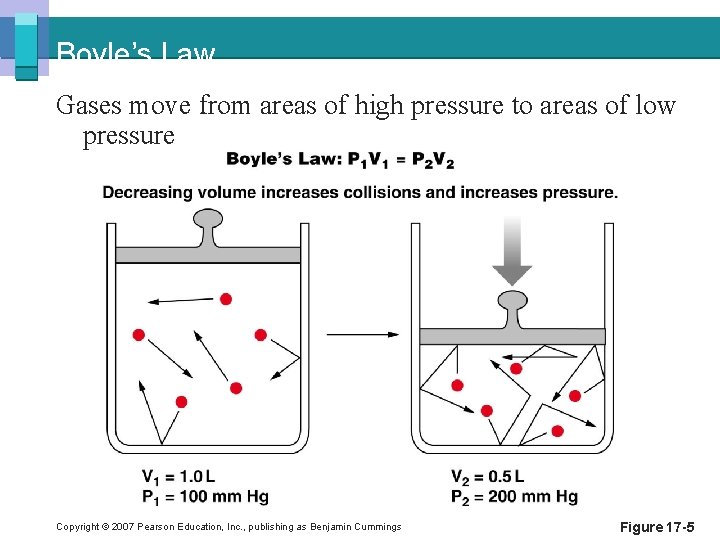
Boyle’s Law Gases move from areas of high pressure to areas of low pressure Copyright © 2007 Pearson Education, Inc. , publishing as Benjamin Cummings Figure 17 -5
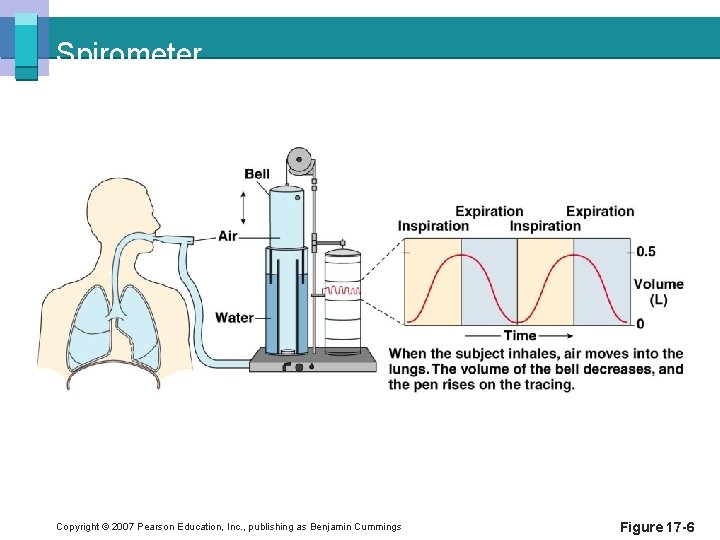
Spirometer Copyright © 2007 Pearson Education, Inc. , publishing as Benjamin Cummings Figure 17 -6
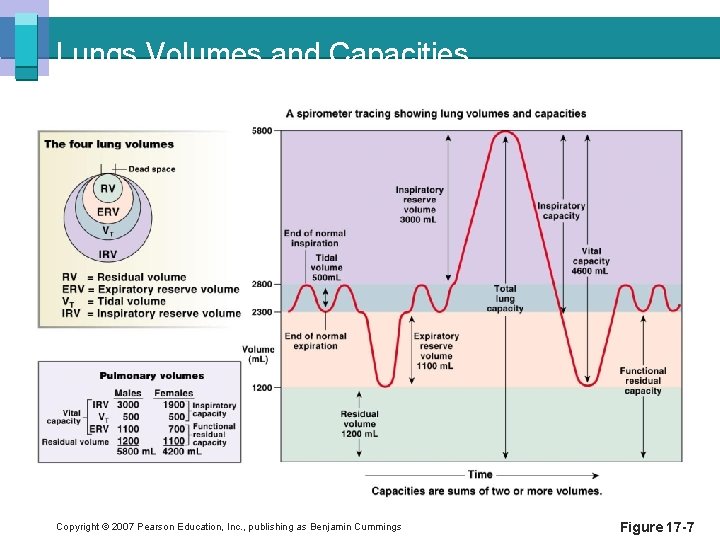
Lungs Volumes and Capacities Copyright © 2007 Pearson Education, Inc. , publishing as Benjamin Cummings Figure 17 -7
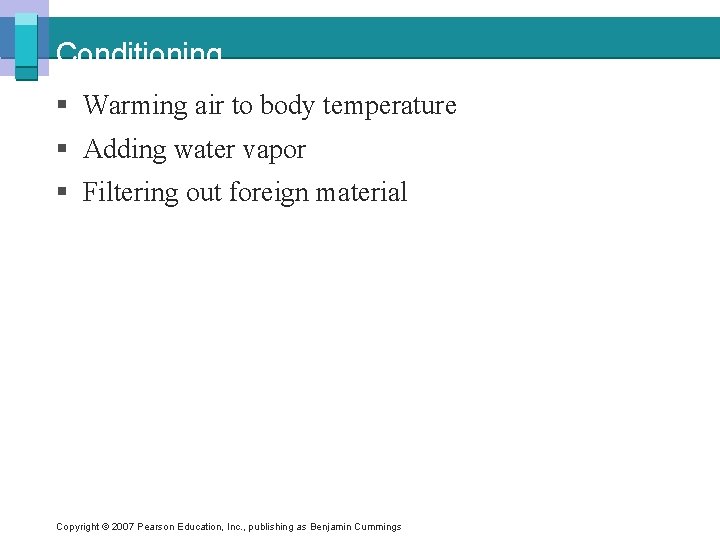
Conditioning § Warming air to body temperature § Adding water vapor § Filtering out foreign material Copyright © 2007 Pearson Education, Inc. , publishing as Benjamin Cummings
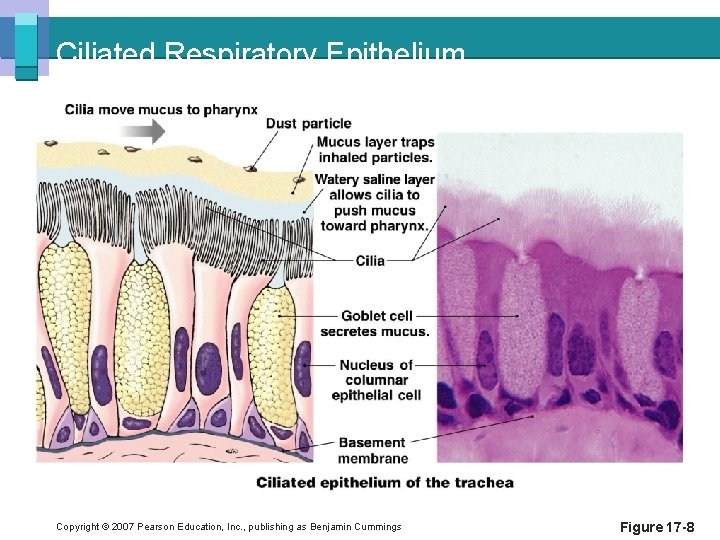
Ciliated Respiratory Epithelium Copyright © 2007 Pearson Education, Inc. , publishing as Benjamin Cummings Figure 17 -8
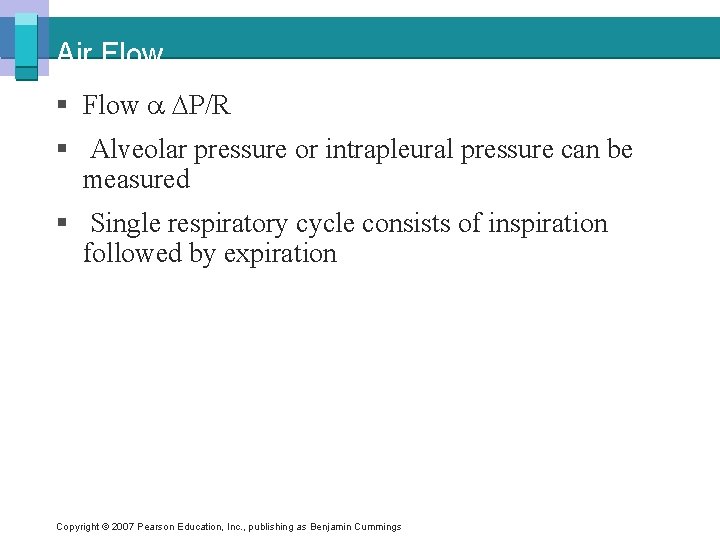
Air Flow § Flow P/R § Alveolar pressure or intrapleural pressure can be measured § Single respiratory cycle consists of inspiration followed by expiration Copyright © 2007 Pearson Education, Inc. , publishing as Benjamin Cummings
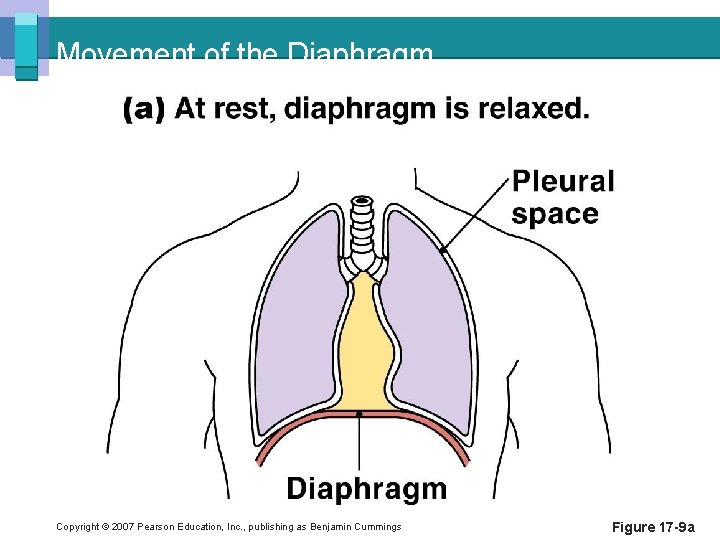
Movement of the Diaphragm Copyright © 2007 Pearson Education, Inc. , publishing as Benjamin Cummings Figure 17 -9 a
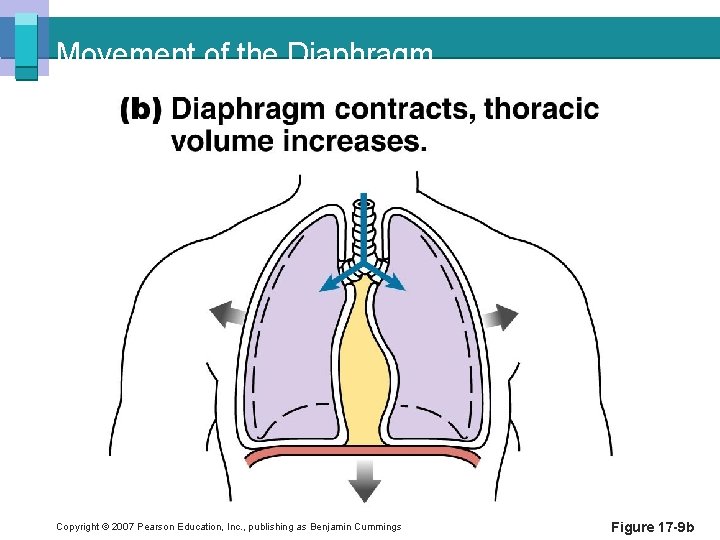
Movement of the Diaphragm Copyright © 2007 Pearson Education, Inc. , publishing as Benjamin Cummings Figure 17 -9 b
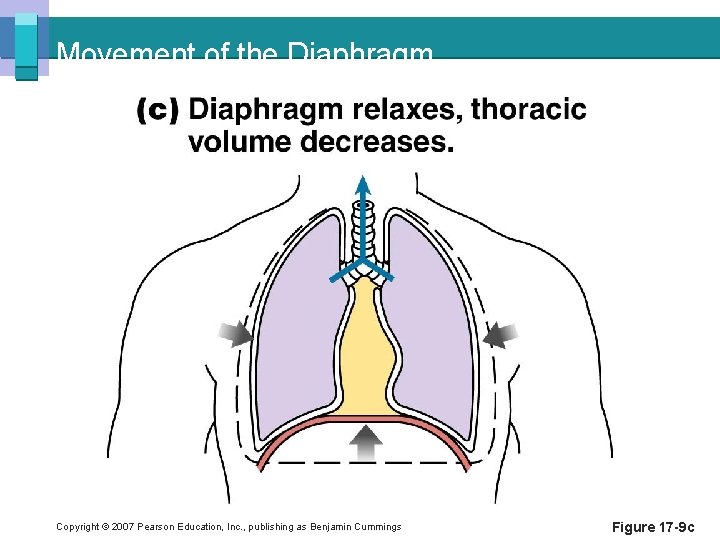
Movement of the Diaphragm Copyright © 2007 Pearson Education, Inc. , publishing as Benjamin Cummings Figure 17 -9 c
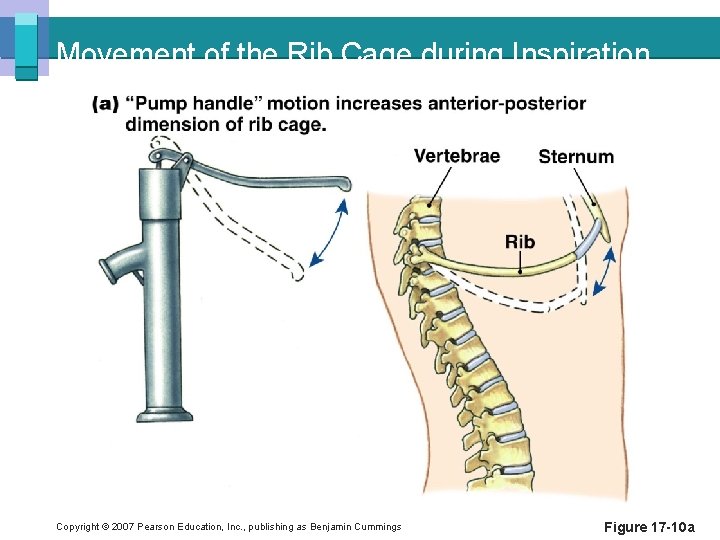
Movement of the Rib Cage during Inspiration Copyright © 2007 Pearson Education, Inc. , publishing as Benjamin Cummings Figure 17 -10 a
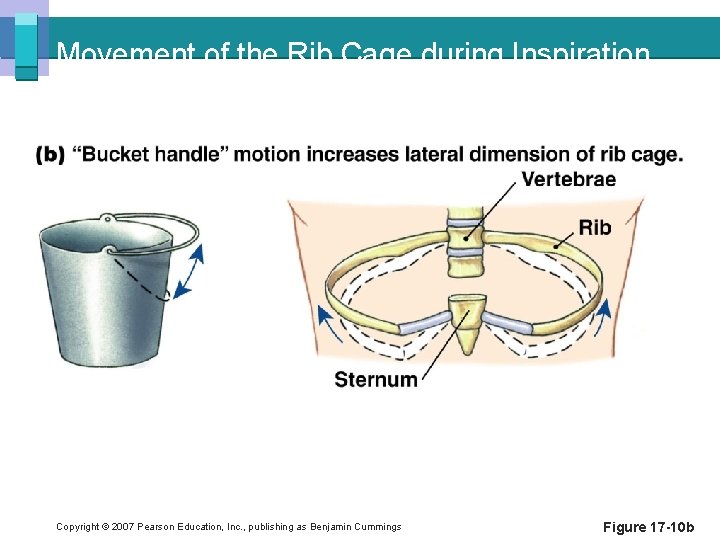
Movement of the Rib Cage during Inspiration Copyright © 2007 Pearson Education, Inc. , publishing as Benjamin Cummings Figure 17 -10 b
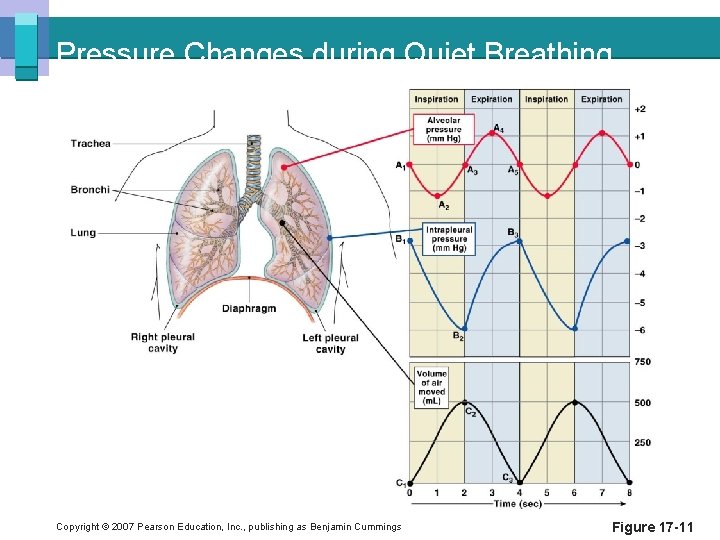
Pressure Changes during Quiet Breathing Copyright © 2007 Pearson Education, Inc. , publishing as Benjamin Cummings Figure 17 -11
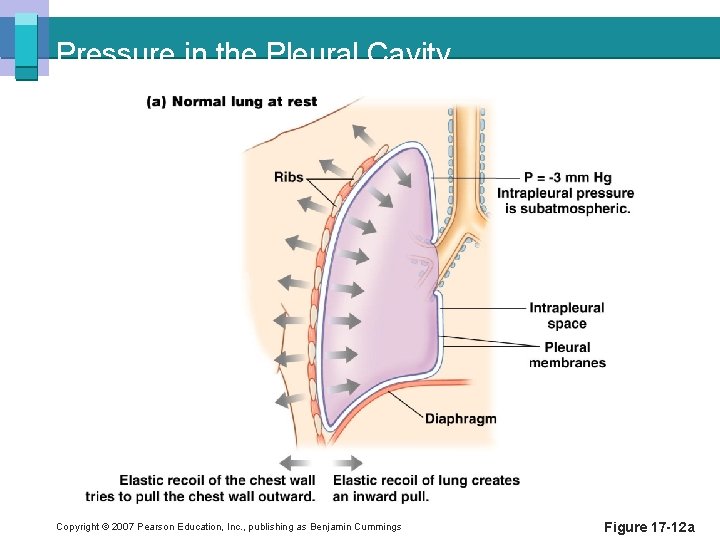
Pressure in the Pleural Cavity Copyright © 2007 Pearson Education, Inc. , publishing as Benjamin Cummings Figure 17 -12 a
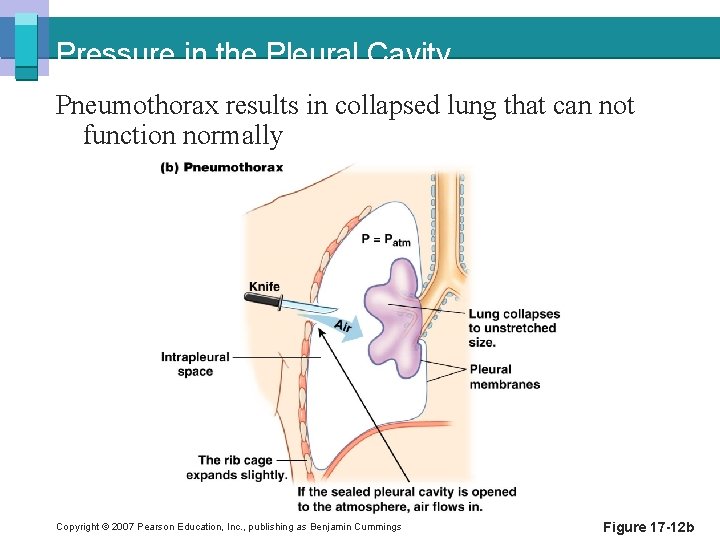
Pressure in the Pleural Cavity Pneumothorax results in collapsed lung that can not function normally Copyright © 2007 Pearson Education, Inc. , publishing as Benjamin Cummings Figure 17 -12 b
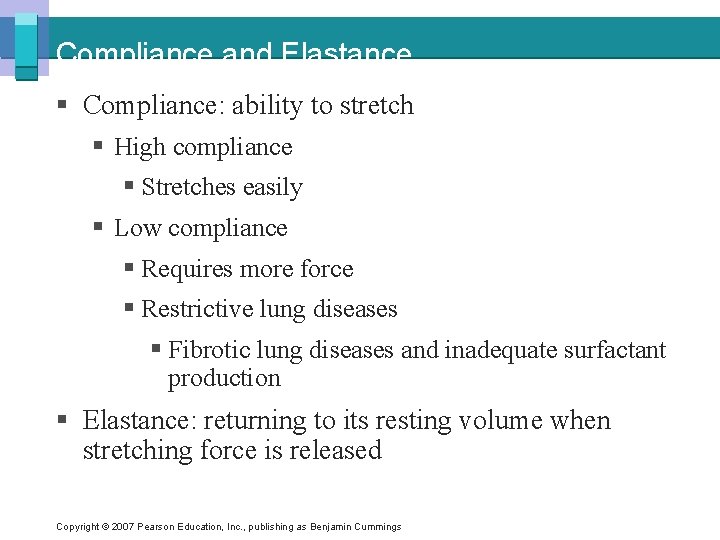
Compliance and Elastance § Compliance: ability to stretch § High compliance § Stretches easily § Low compliance § Requires more force § Restrictive lung diseases § Fibrotic lung diseases and inadequate surfactant production § Elastance: returning to its resting volume when stretching force is released Copyright © 2007 Pearson Education, Inc. , publishing as Benjamin Cummings
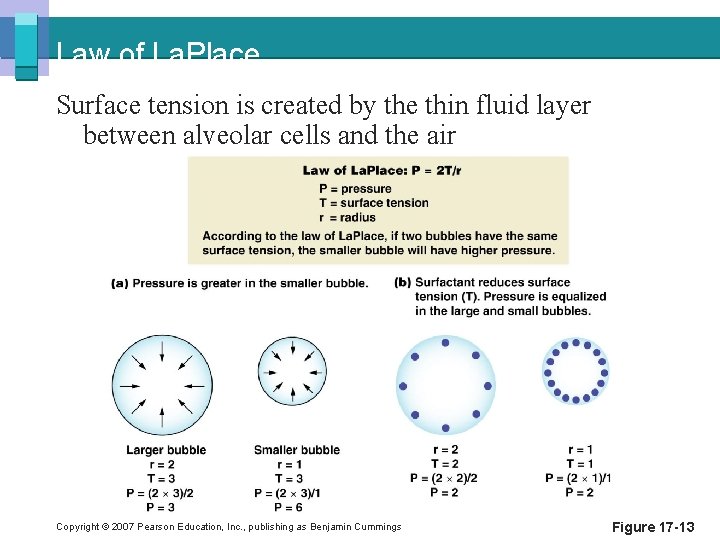
Law of La. Place Surface tension is created by the thin fluid layer between alveolar cells and the air Copyright © 2007 Pearson Education, Inc. , publishing as Benjamin Cummings Figure 17 -13
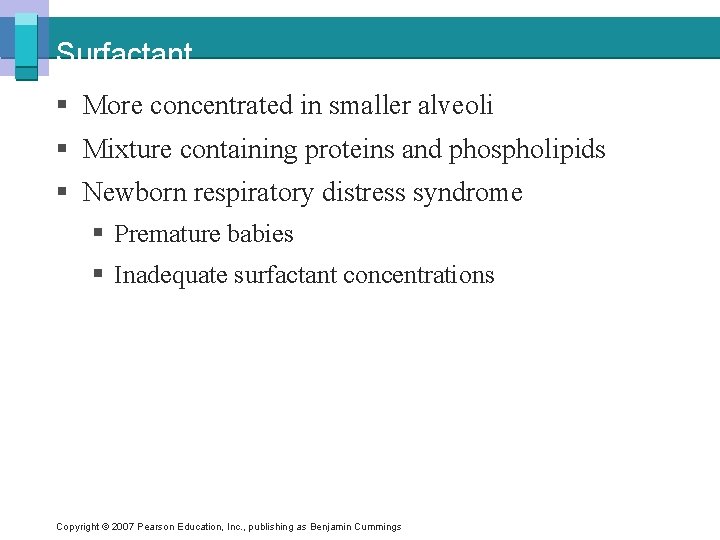
Surfactant § More concentrated in smaller alveoli § Mixture containing proteins and phospholipids § Newborn respiratory distress syndrome § Premature babies § Inadequate surfactant concentrations Copyright © 2007 Pearson Education, Inc. , publishing as Benjamin Cummings
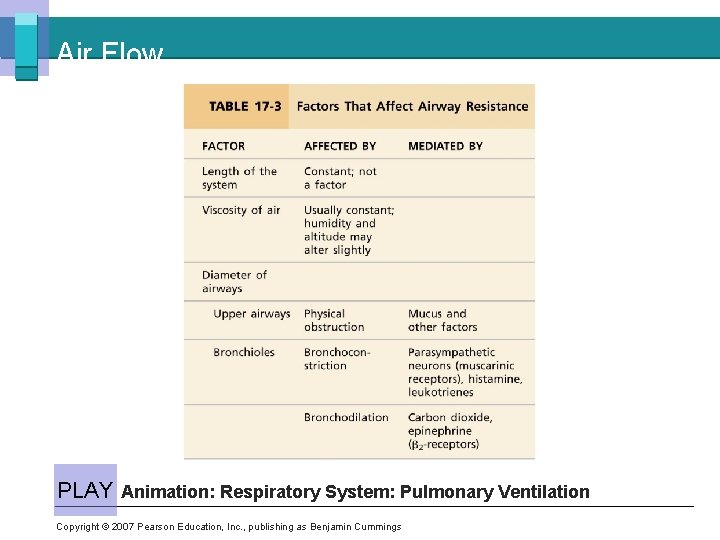
Air Flow PLAY Animation: Respiratory System: Pulmonary Ventilation Copyright © 2007 Pearson Education, Inc. , publishing as Benjamin Cummings
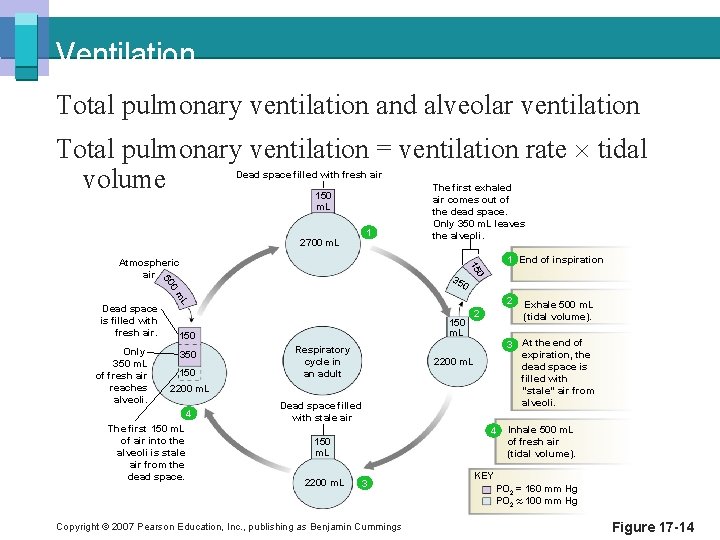
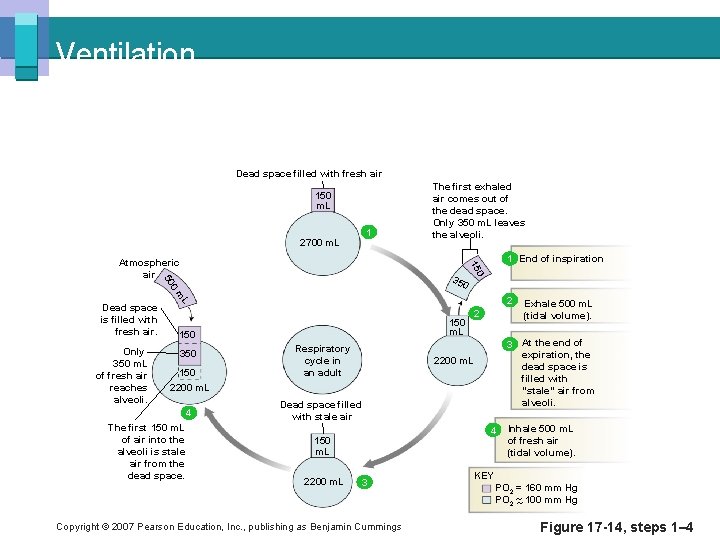
Ventilation Total pulmonary ventilation and alveolar ventilation Total pulmonary ventilation = ventilation rate tidal volume Dead space filled with fresh air 150 m. L 2700 m. L 1 0 0 L m Only 350 m. L of fresh air reaches alveoli. 0 35 50 Dead space is filled with fresh air. 1 End of inspiration 15 Atmospheric air The first exhaled air comes out of the dead space. Only 350 m. L leaves the alveoli. 2 150 m. L 150 350 150 Respiratory cycle in an adult 2 3 At the end of expiration, the dead space is filled with “stale” air from alveoli. 2200 m. L 4 The first 150 m. L of air into the alveoli is stale air from the dead space. Dead space filled with stale air 4 150 m. L 2200 m. L 3 Copyright © 2007 Pearson Education, Inc. , publishing as Benjamin Cummings Exhale 500 m. L (tidal volume). Inhale 500 m. L of fresh air (tidal volume). KEY PO 2 = 160 mm Hg PO 2 ~~ 100 mm Hg Figure 17 -14
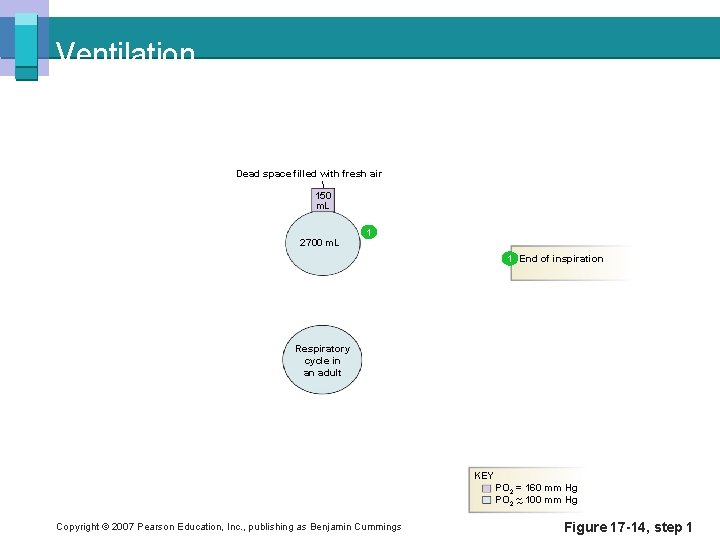
Ventilation Dead space filled with fresh air 150 m. L 2700 m. L 1 1 End of inspiration Respiratory cycle in an adult KEY PO 2 = 160 mm Hg PO 2 ~ ~ 100 mm Hg Copyright © 2007 Pearson Education, Inc. , publishing as Benjamin Cummings Figure 17 -14, step 1
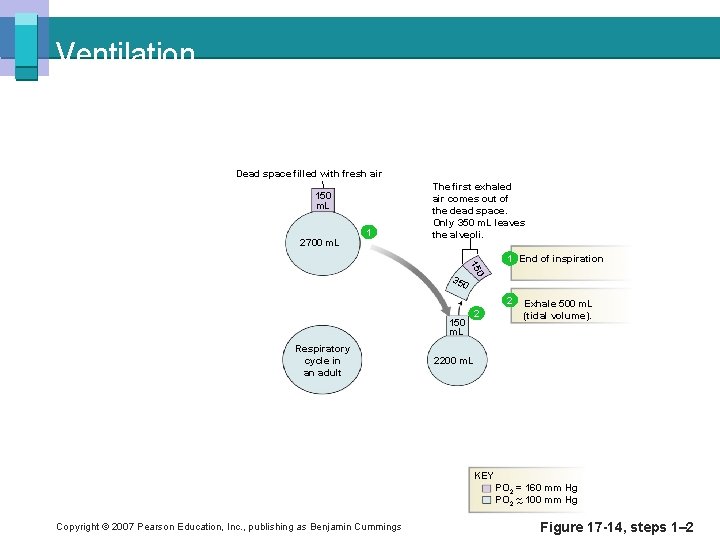
Ventilation Dead space filled with fresh air 150 m. L 2700 m. L 1 The first exhaled air comes out of the dead space. Only 350 m. L leaves the alveoli. 0 15 1 End of inspiration 35 0 2 150 m. L Respiratory cycle in an adult 2 Exhale 500 m. L (tidal volume). 2200 m. L KEY PO 2 = 160 mm Hg PO 2 ~ ~ 100 mm Hg Copyright © 2007 Pearson Education, Inc. , publishing as Benjamin Cummings Figure 17 -14, steps 1– 2
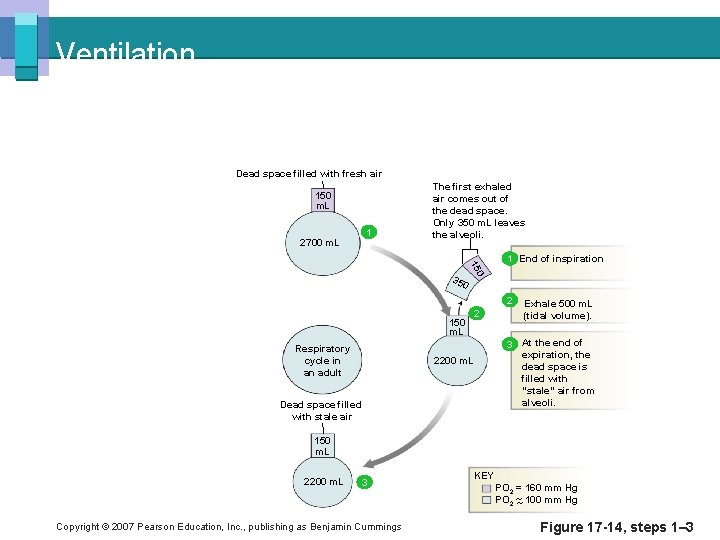
Ventilation Dead space filled with fresh air 150 m. L 2700 m. L 1 The first exhaled air comes out of the dead space. Only 350 m. L leaves the alveoli. 0 15 1 End of inspiration 35 0 2 150 m. L Respiratory cycle in an adult 2 2200 m. L Dead space filled with stale air Exhale 500 m. L (tidal volume). 3 At the end of expiration, the dead space is filled with “stale” air from alveoli. 150 m. L 2200 m. L 3 Copyright © 2007 Pearson Education, Inc. , publishing as Benjamin Cummings KEY PO 2 = 160 mm Hg PO 2 ~ ~ 100 mm Hg Figure 17 -14, steps 1– 3
Ventilation Dead space filled with fresh air 150 m. L 2700 m. L 1 0 0 L m Only 350 m. L of fresh air reaches alveoli. 0 35 50 Dead space is filled with fresh air. 1 End of inspiration 15 Atmospheric air The first exhaled air comes out of the dead space. Only 350 m. L leaves the alveoli. 2 150 m. L 150 350 150 Respiratory cycle in an adult 2 3 At the end of expiration, the dead space is filled with “stale” air from alveoli. 2200 m. L 4 The first 150 m. L of air into the alveoli is stale air from the dead space. Dead space filled with stale air 4 150 m. L 2200 m. L 3 Copyright © 2007 Pearson Education, Inc. , publishing as Benjamin Cummings Exhale 500 m. L (tidal volume). Inhale 500 m. L of fresh air (tidal volume). KEY PO 2 = 160 mm Hg PO 2 ~~ 100 mm Hg Figure 17 -14, steps 1– 4
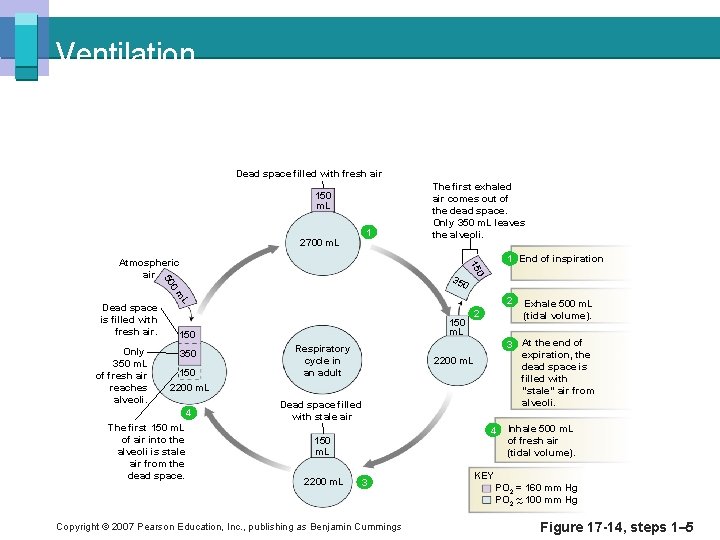
Ventilation Dead space filled with fresh air 150 m. L 2700 m. L 1 0 0 L m Only 350 m. L of fresh air reaches alveoli. 0 35 50 Dead space is filled with fresh air. 1 End of inspiration 15 Atmospheric air The first exhaled air comes out of the dead space. Only 350 m. L leaves the alveoli. 2 150 m. L 150 350 150 Respiratory cycle in an adult 2 3 At the end of expiration, the dead space is filled with “stale” air from alveoli. 2200 m. L 4 The first 150 m. L of air into the alveoli is stale air from the dead space. Dead space filled with stale air 4 150 m. L 2200 m. L 3 Copyright © 2007 Pearson Education, Inc. , publishing as Benjamin Cummings Exhale 500 m. L (tidal volume). Inhale 500 m. L of fresh air (tidal volume). KEY PO 2 = 160 mm Hg PO 2 ~~ 100 mm Hg Figure 17 -14, steps 1– 5
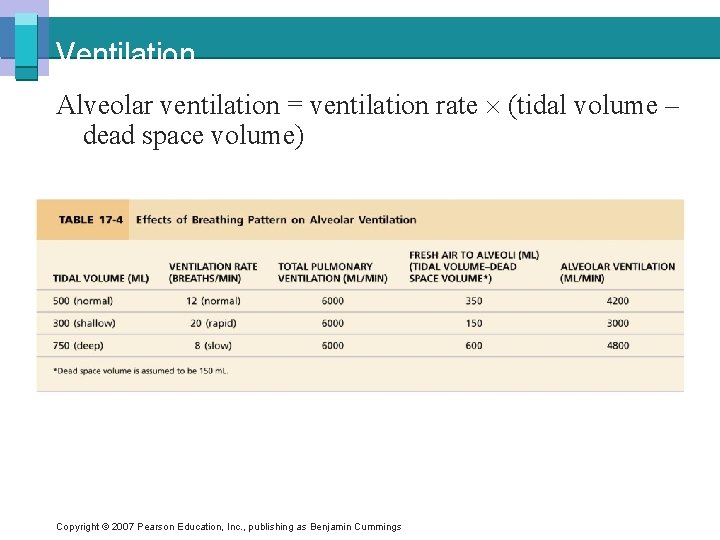
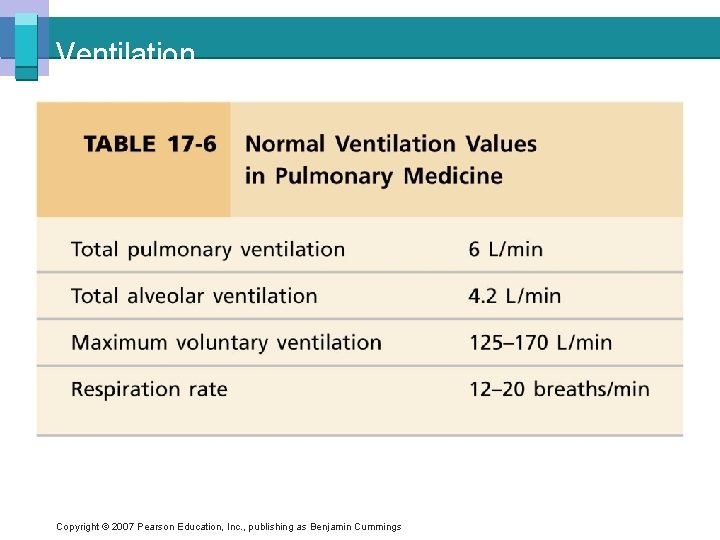
Ventilation Alveolar ventilation = ventilation rate (tidal volume – dead space volume) Copyright © 2007 Pearson Education, Inc. , publishing as Benjamin Cummings
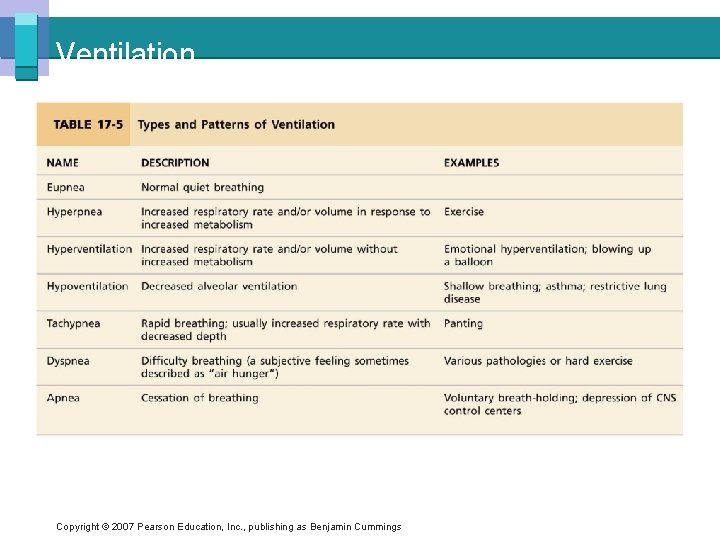
Ventilation Copyright © 2007 Pearson Education, Inc. , publishing as Benjamin Cummings
Ventilation Copyright © 2007 Pearson Education, Inc. , publishing as Benjamin Cummings
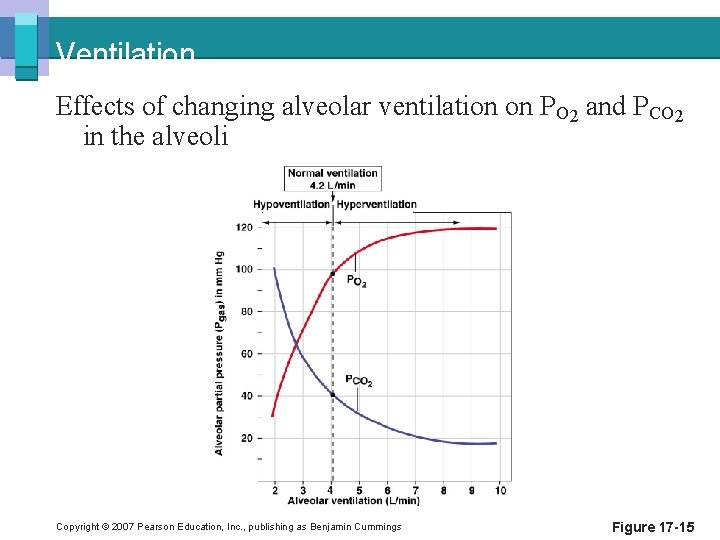
Ventilation Effects of changing alveolar ventilation on PO 2 and PCO 2 in the alveoli Copyright © 2007 Pearson Education, Inc. , publishing as Benjamin Cummings Figure 17 -15
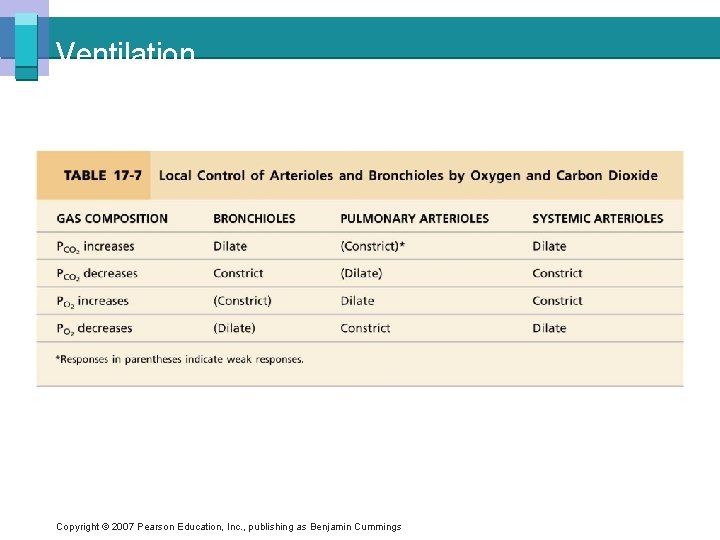
Ventilation Copyright © 2007 Pearson Education, Inc. , publishing as Benjamin Cummings
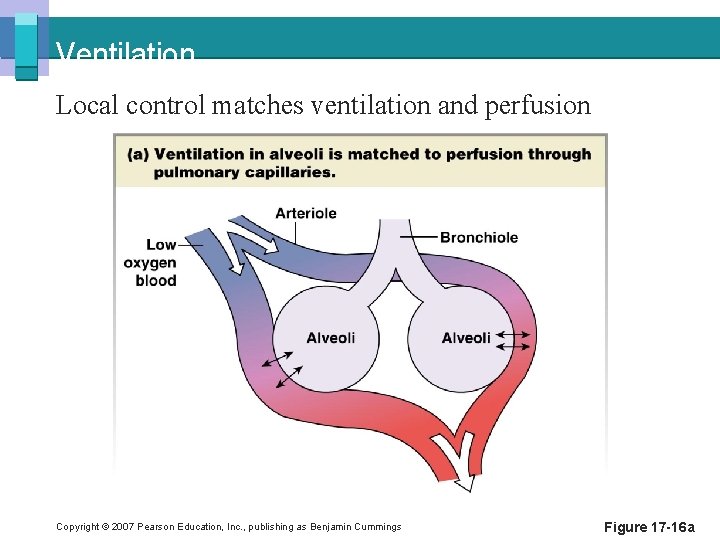
Ventilation Local control matches ventilation and perfusion Copyright © 2007 Pearson Education, Inc. , publishing as Benjamin Cummings Figure 17 -16 a
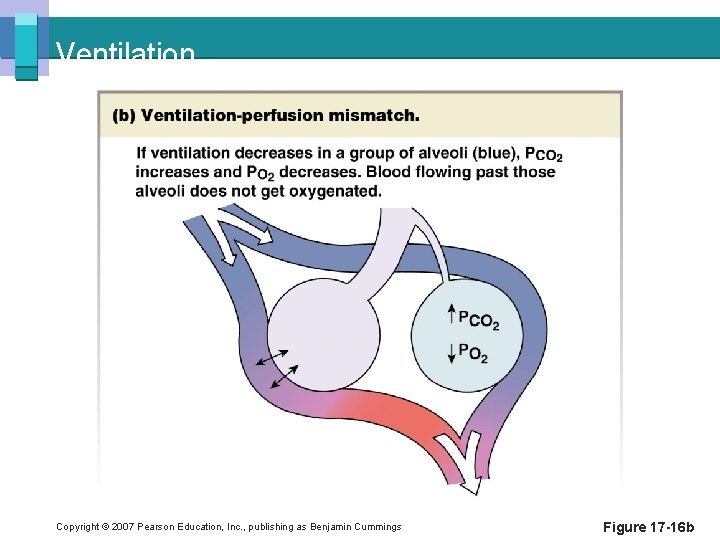
Ventilation Copyright © 2007 Pearson Education, Inc. , publishing as Benjamin Cummings Figure 17 -16 b
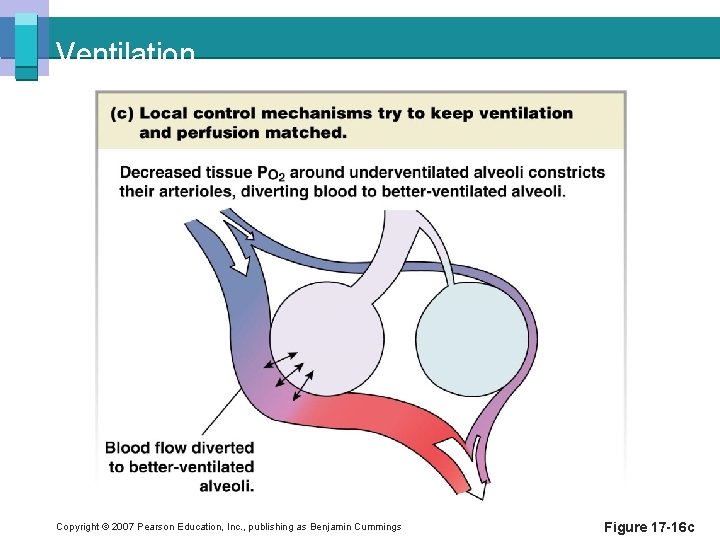
Ventilation Copyright © 2007 Pearson Education, Inc. , publishing as Benjamin Cummings Figure 17 -16 c
Ventilation § Auscultation = diagnostic technique § Obstructive lung diseases § Asthma § Emphysema § Chronic bronchitis Copyright © 2007 Pearson Education, Inc. , publishing as Benjamin Cummings
Summary § Respiratory system § Cellular respiration, external respiration, respiratory system, upper respiratory tract, pharynx, and larynx § Lower respiratory tract, trachea, bronchioles, alveoli, Type I and Type II alveolar cells § Diaphragm, intercostal muscles, lung, pleural sac, and plural fluid § Gas Laws: Dalton’s law and Boyle’s law Copyright © 2007 Pearson Education, Inc. , publishing as Benjamin Cummings
Summary § Ventilation § Tidal volume, vital capacity, residual volume, and respiratory cycle § Alveolar pressure, active expiration, intrapleural pressures, compliance, elastance, surfactant, bronchoconstriction, and bronchodilation § Total pulmonary ventilation, alveolar ventilation, hyperventilation, and hypoventilation Copyright © 2007 Pearson Education, Inc. , publishing as Benjamin Cummings