
Respiratory System The Mechanics of Breathing Breathing also
Respiratory System The Mechanics of Breathing
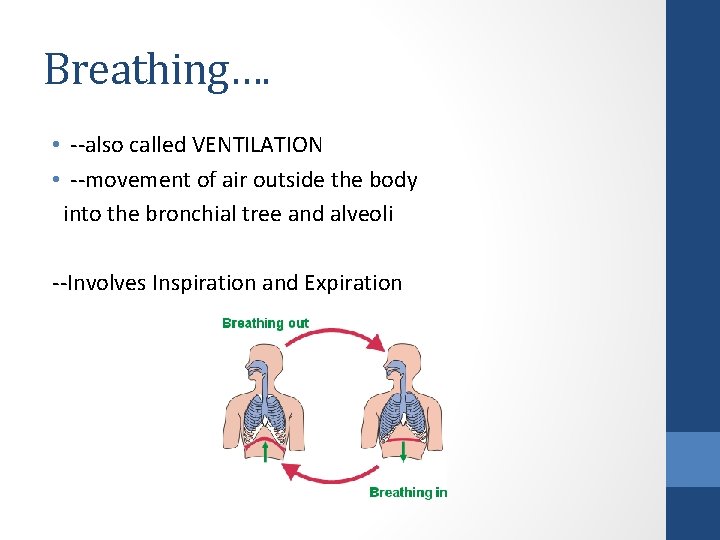
Breathing…. • --also called VENTILATION • --movement of air outside the body into the bronchial tree and alveoli --Involves Inspiration and Expiration

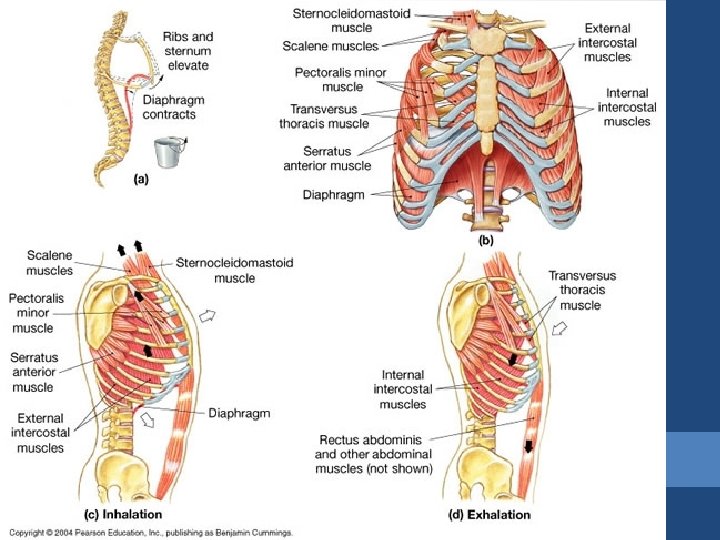
Inhalation/Inspiration – active process (muscle contraction) • Diaphragm contracts (pulls lungs down) • External intercostal muscles contract (pulls rib cage up and out). • This increases the size of the thoracic cavity (and lungs) causing a drop in pressure inside the lungs • (Boyle’s Law = volume pressure) At sea level, air pressure is 760 mm Hg. The change in size of the lungs causes the pressure inside to drop to about 758 mm Hg. • Outside air rushes in to equalize the difference in pressure.
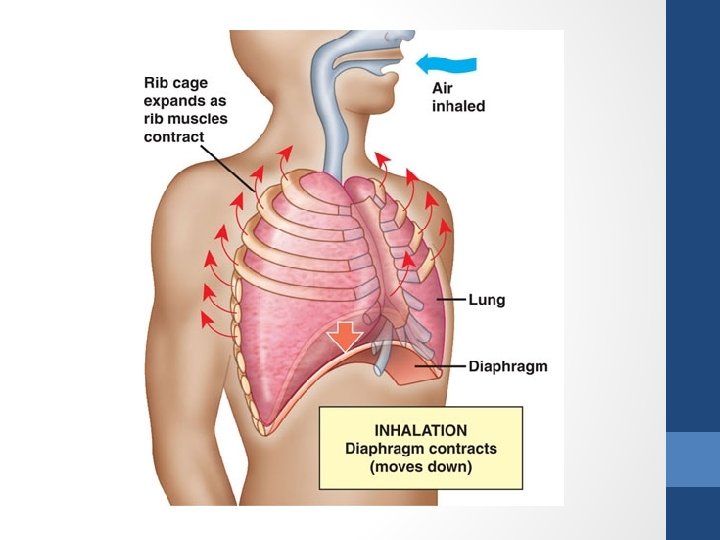
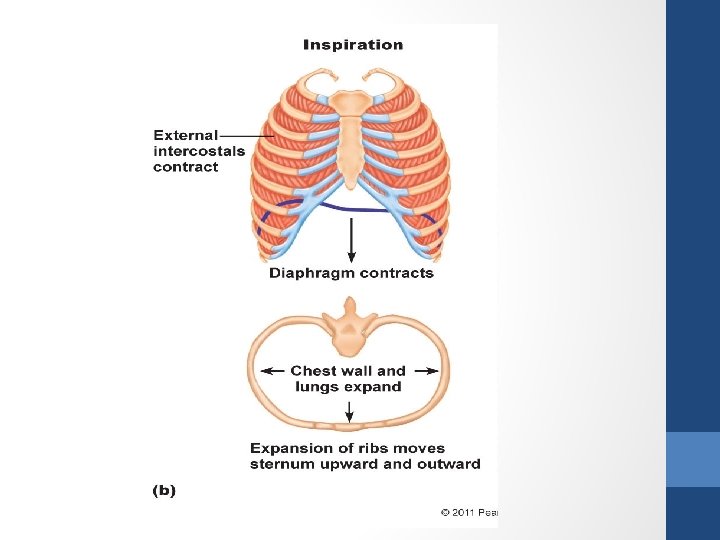

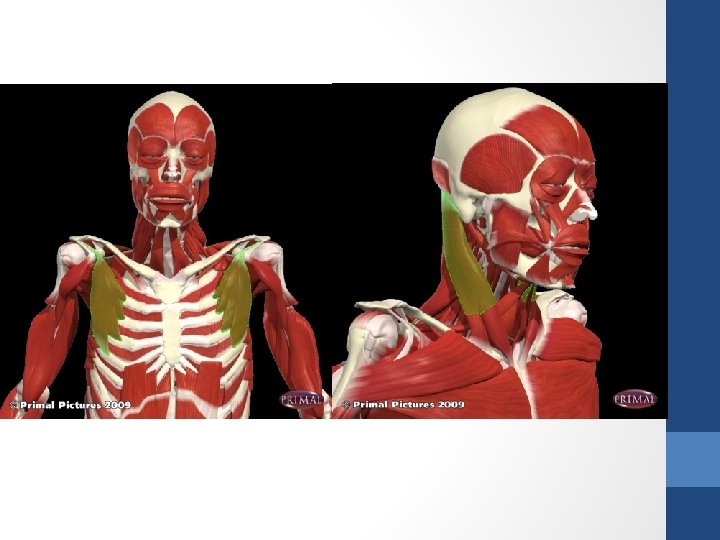
Forced Inhalation - active process (muscle contraction) • – taking a deeper breath • – requires stronger contraction of normal inspiratory muscles (diaphragm and external intercostals) • --plus help of the pectoralis minor and sternocleidomastoid (SCM) muscle.
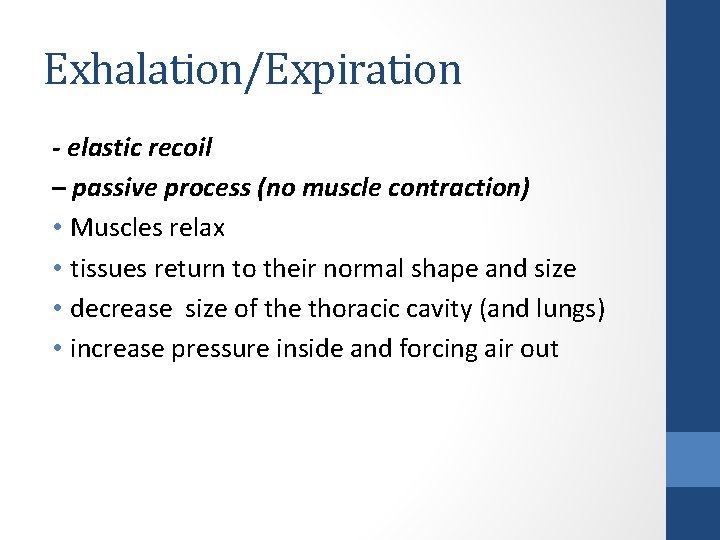
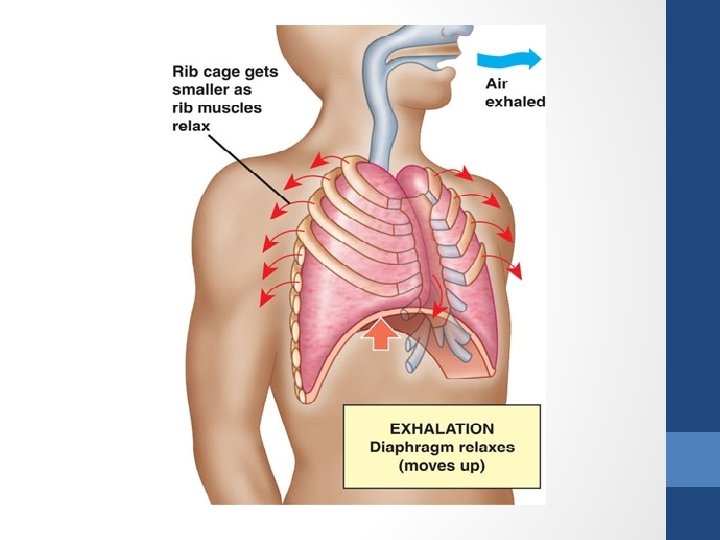
Exhalation/Expiration - elastic recoil – passive process (no muscle contraction) • Muscles relax • tissues return to their normal shape and size • decrease size of the thoracic cavity (and lungs) • increase pressure inside and forcing air out
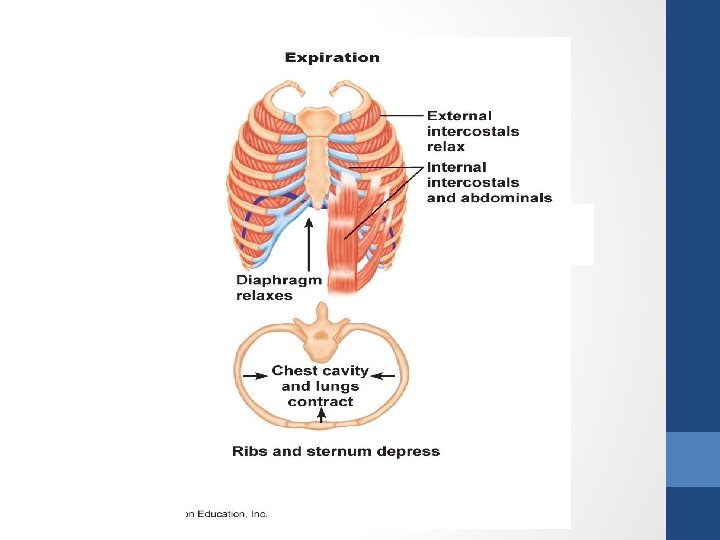
Forced Expiration • - active process (muscle contraction) • Contraction of internal intercostal muscles (pulls rib cage down) • -- abdominal muscles (pull sternum down and squeeze abdominal cavity • – this forces more air out than normal
Review…. • Why does air naturally move into the lungs ? Hint: mm. Hg • What happens when we inhale? When we force inhalation, what muscles help with that? What happens when we exhale?
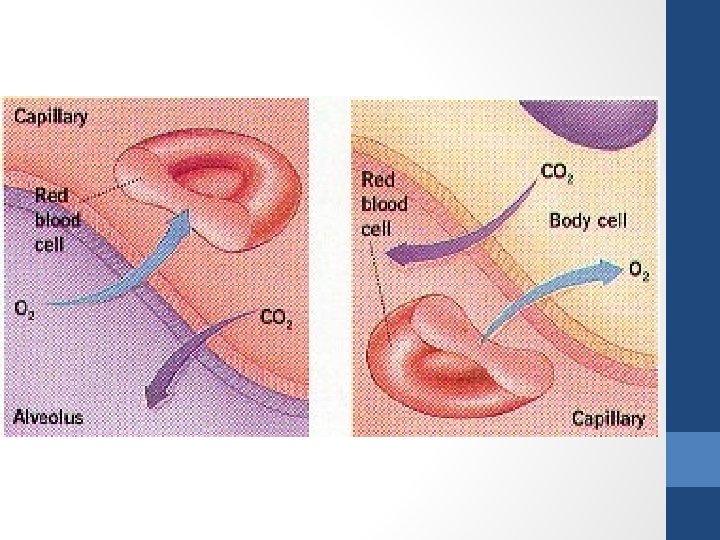
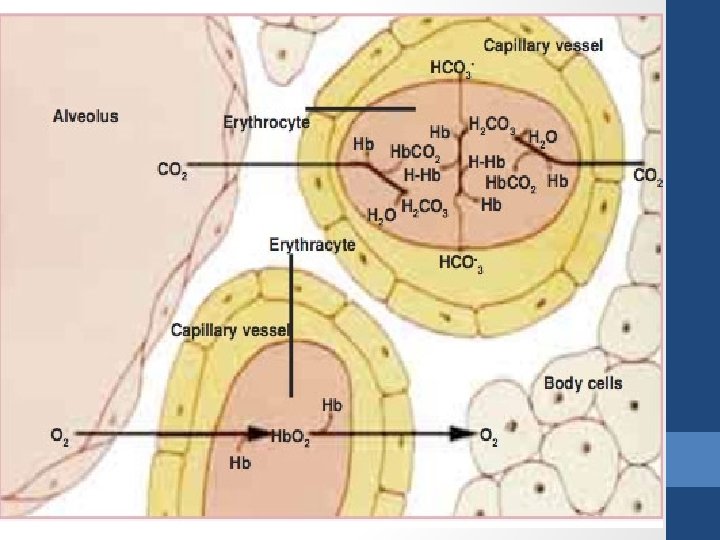
Gas Exchange • Ventilation (inhalation and exhalation) brings air into the lungs • Air contains oxygen, which diffuses from inside the alveoli into adjacent capillaries (both made of simple squamous epithelium). • Carbon dioxide diffuses in the opposite direction. • If you go up in elevation, the outside air pressure is less, so inhaled oxygen does not diffuse into the blood as easily.
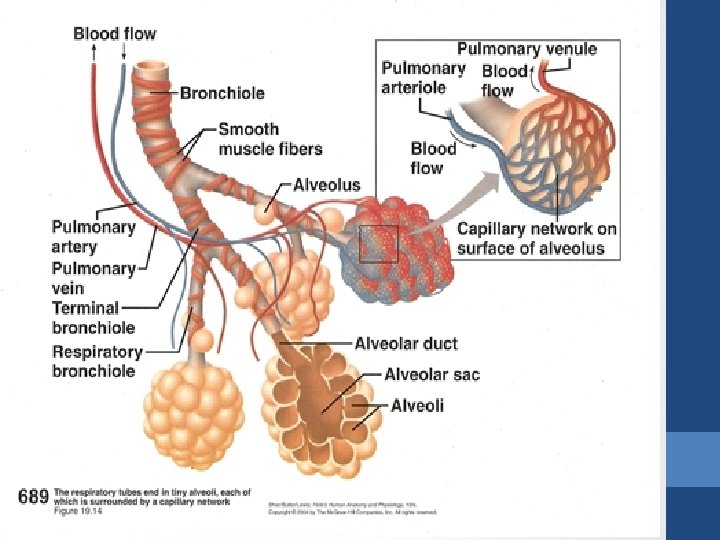
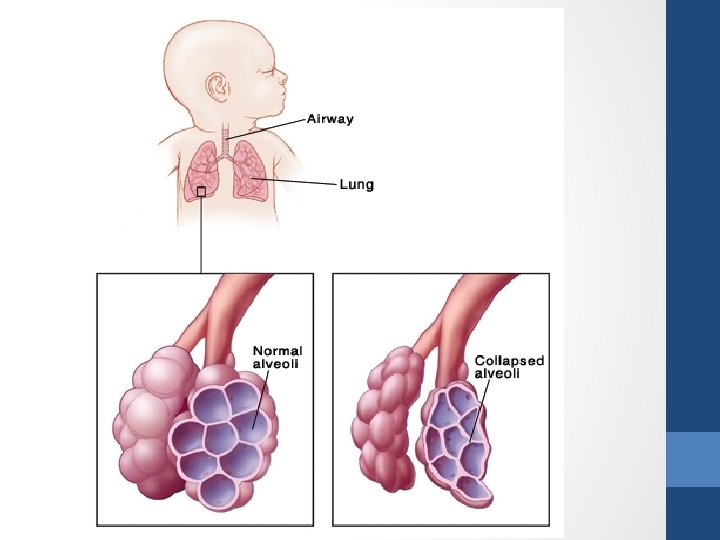
• Pressure of inhaled air is not enough by itself to inflate the individual alveoli of the lungs, which contain a very small amount of fluid. • Fluid would normally cause the alveoli walls to stick together (b/c of surface tension) • Body creates a chemical called surfactant, which disrupts surface tension inside alveoli, preventing them from sticking together. • Surfactant - not made until the 7 th month of fetal life, therefore if born prematurely, alveoli will stick together and baby cannot breathe. This is RDS (Resp. Distress Syndrome). • Baby is put on a ventilator and given artificial surfactant as long as needed
Transport of Gases Oxygen • 98% - transported bound to the hemoglobin of a RBC (oxyhemoglobin) • 2% - dissolved in plasma To stimulate the RBC to give up its oxygen to the tissues : • increase in body temp. • increase in breathing rate (hyperventilation) • increase in CO 2 concentration
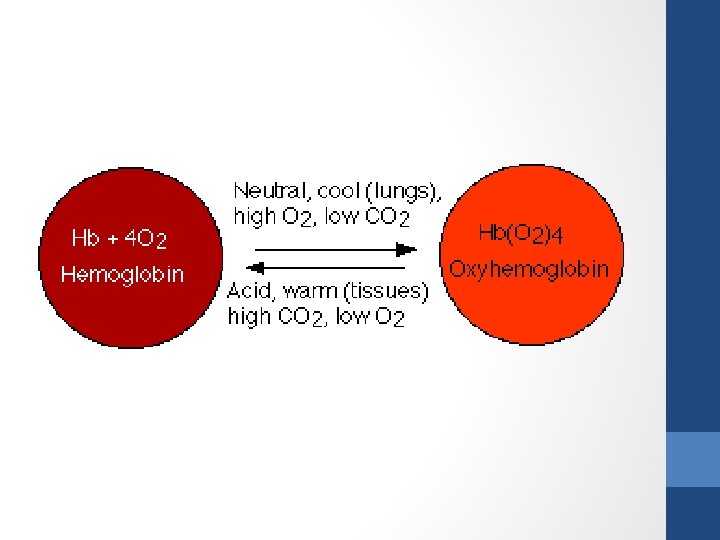
These three things are associated with exercise: • an increase in CO 2 concentration results in blood that is more acidic (lower p. H). • To counter this, a person will hyperventilate – the rapid breathing is a way to help stimulate removal of CO 2 from the blood • therefore lower the blood’s acidity (or raise the blood’s p. H)
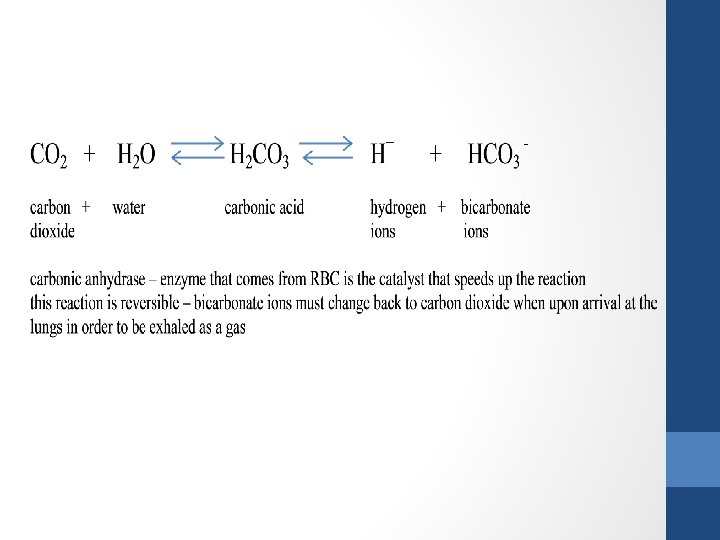
Carbon Dioxide • 23% - transported bound to the hemoglobin of a RBC (carbaminohemoglobin) • 7% - dissolved in plasma • 70% - transported as a bicarbonate ion so it doesn’t adversely affect the p. H of the blood • it must undergo a chemical change from carbon dioxide to bicarb. ions
Review • What type of tissue is found in the capillaries and alveoli? • What molecule on the RBCs does oxygen and carbon dioxide attach to? • What is that molecule called with Oxygen? With Carbon Dioxide? • What could lead to the alveoli sticking together? How is that prevented? What substance is produced by the alveoli?
Review…. • How much oxygen is transported by the RBCs? • How much carbon dioxide is tranported by RBCs? • What does CO 2 do to your blood p. H? What is its effect on breathing?
Composition of Air • Air is made up of a mixture of gases • Nitrogen= 79%, Oxygen = 21% and CO 2 =. 03% • Air pressure is 760 mm. Hg of which each of the gases contribute to that total. • Ex: . 21[760]= 160 mm. Hg partial pressure of O 2
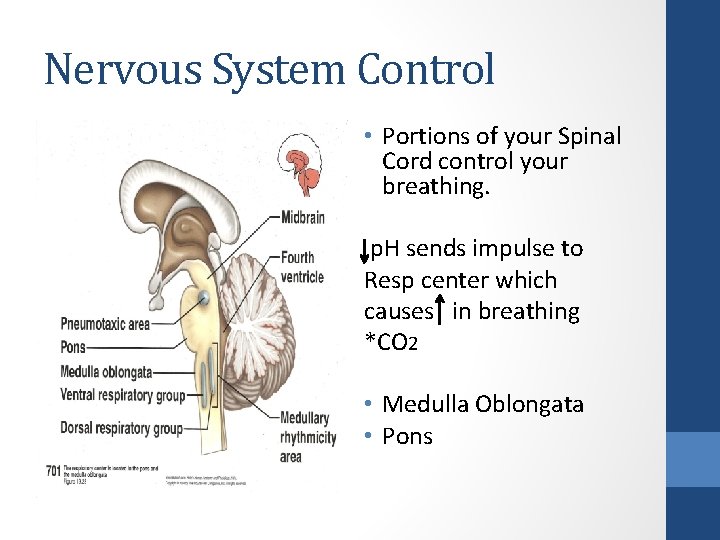
Nervous System Control • Portions of your Spinal Cord control your breathing. p. H sends impulse to Resp center which causes in breathing *CO 2 • Medulla Oblongata • Pons
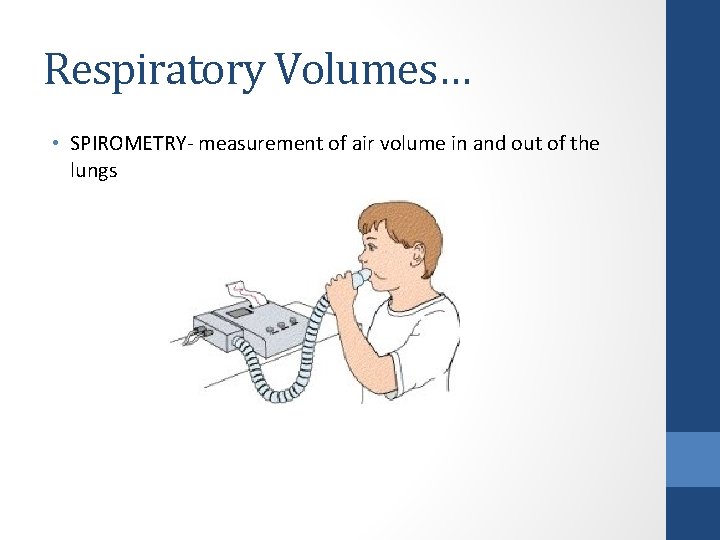
Respiratory Volumes… • SPIROMETRY- measurement of air volume in and out of the lungs
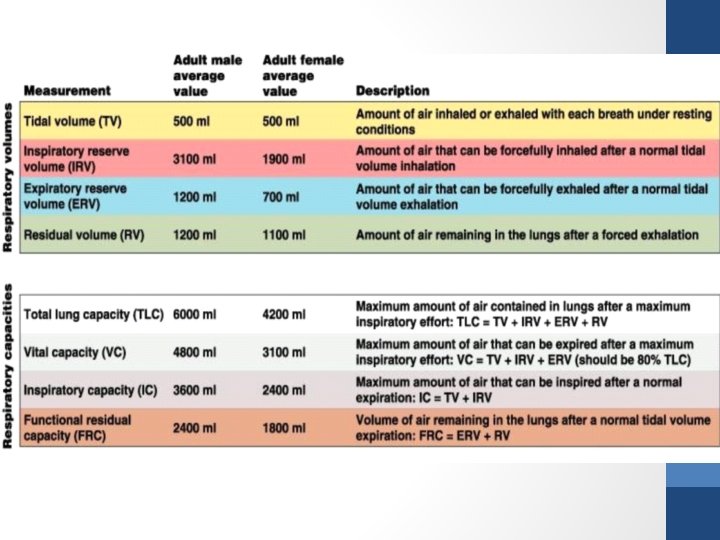
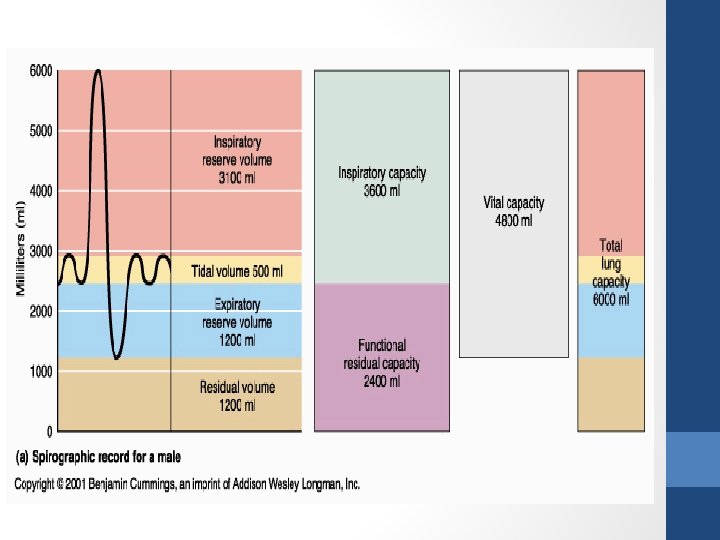
• • Tidal volume – least affected by missing all/part of a lung • – since lungs are only filled to about half capacity after normal inhalation, air can be compressed to make up for missing part of lung. • • Other resp. volumes that require forced inhalation to measure (vital capacity, inspiratory reserve) cannot be made up for with missing all/part of a lung.
- Slides: 32