
Respiratory System Respiration Unconscious exchange of air between
Respiratory System
Respiration › Unconscious exchange of air between lungs and the external environment › Breathing Two types › External Exchange of carbon dioxide and oxygen between the environment and the organism › Internal Exchange of O 2 and CO 2 between internal body fluids (Ex: blood and individual cells)
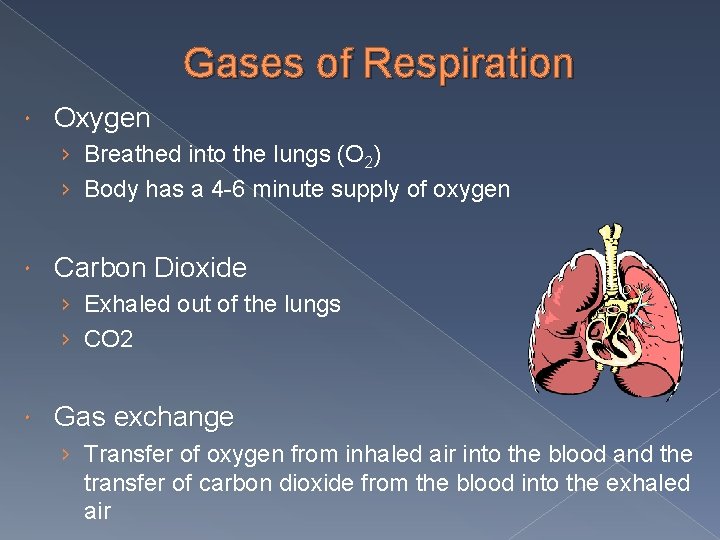
Gases of Respiration Oxygen › Breathed into the lungs (O 2) › Body has a 4 -6 minute supply of oxygen Carbon Dioxide › Exhaled out of the lungs › CO 2 Gas exchange › Transfer of oxygen from inhaled air into the blood and the transfer of carbon dioxide from the blood into the exhaled air
Structures to know Nose/mouth › Route to take in O 2 and expel CO 2. mucous membranes warm and humidify air Cilia › Tiny hairs that protect the nasal passages, trachea and bronchi › Move back and forth as air is inhaled, pushing foreign particles (dust) toward the nostrils or pharynx Pharynx › Throat http: //cache. eb. com/eb/image? id=82620&rend. Type. Id=4
Structures to Know Larynx - voicebox Trachea › Windpipe › Connects the pharynx to the lungs › Wrapped in cartilage for protection Bronchus (plural bronchi) › The trachea divides into two main bronchi (left mainstem and right mainstem) › Main airways within the lungs Bronchioles › Branch off of the bronchi. › Do not contain cartilage › Small airways within the lungs
Structures to know Alveolar sacs › › Located at the end of the bronchioles Look like a bunch of grapes Surrounded by capillaries Site of gas exchange Lungs › Right lung: 3 lobes › Left lung: 2 lobes Why is the left lung smaller than the right?
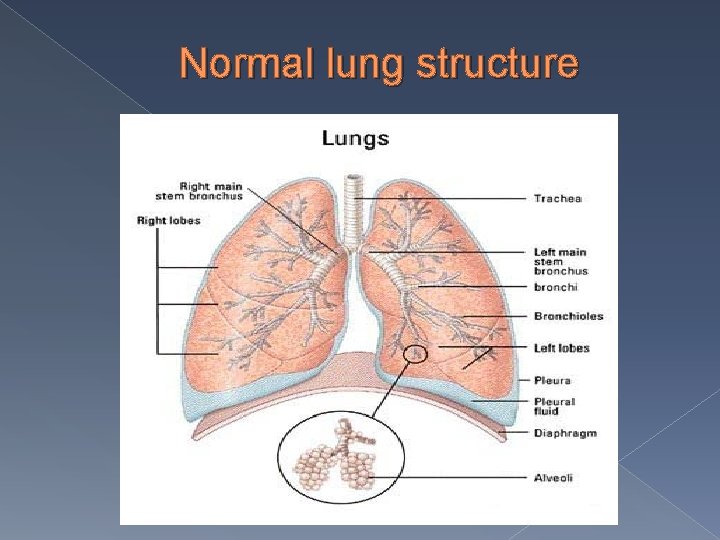
Normal lung structure
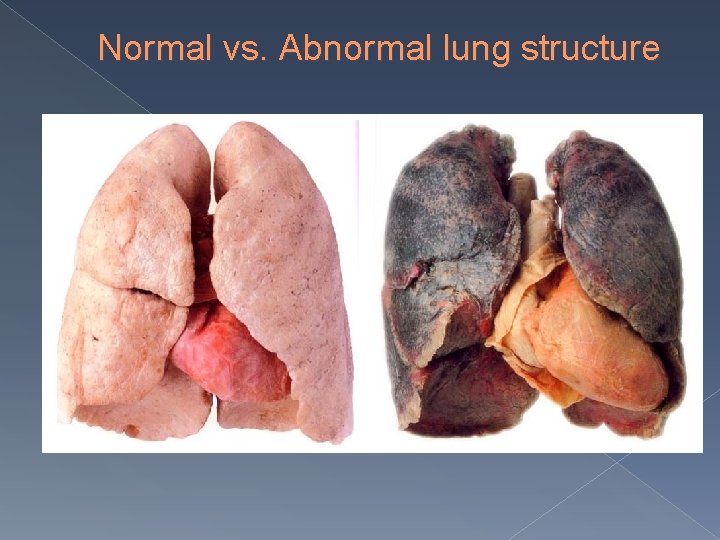
Normal vs. Abnormal lung structure
Diagnostic Terms Auscultation › Listening to sounds within the body using a stethoscope Percussion › Tapping on a surface to determine the difference in the density of the underlying tissue › “is the underlying tissue solid or filled with air? › Lungs should sound hollow when tapping over them; should NOT sound solid › http: //www. youtube. com/watch? v=Cvyr. A 8 c 5 c. Y 0&NR=1 Sputum › Mucous expelled from the respiratory tract mixed with saliva › Able to make diagnoses based on color and composition of sputum

Diagnostic Terms Rales › Clicking, rattling and crackling noises › Caused by the opening of small airways (alveoli collapse by fluid or lack of air) › Heard during inspiration where there is fluid or pus in the alveoli › Cause: pneumonia, bronchitis Wheezing › Whistling sound caused by bronchial airways being narrowed or obstructed › Cause: asthma, bronchitis

Diagnostic Terms cont’d. Rhonchi › Coarse rattling sound (like snoring) caused by sputum in the bronchial airways › Heard during inhalation and exhalation › Cause: bronchitis http: //www. stethographics. com/main/physiology_ls_ves icular. html
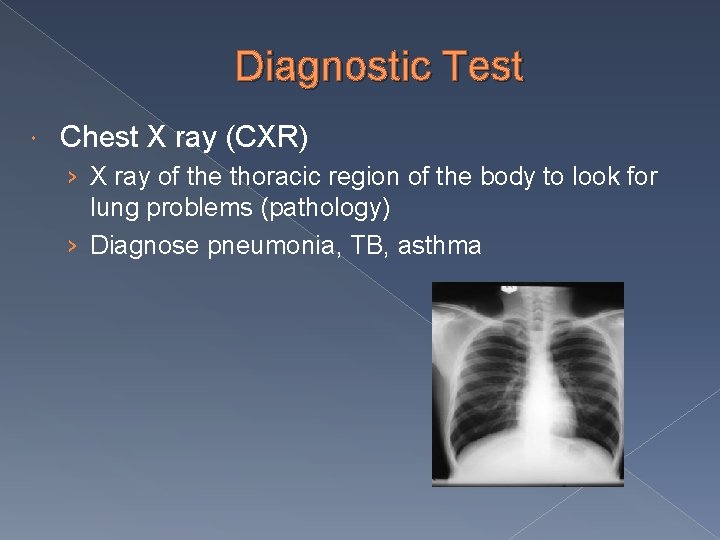
Diagnostic Test Chest X ray (CXR) › X ray of the thoracic region of the body to look for lung problems (pathology) › Diagnose pneumonia, TB, asthma
Pathology of the Respiratory System
Terms to know Hypoxemia - low levels of oxygen in the blood Dyspnea - difficult, painful breathing Shortness of breath (SOB) - difficulty “catching” your breath Intubation - placement of an endotracheal (ET) tube into the trachea of a person who is unable to breathe on their own
Intubation video http: //www. youtube. com/watch? v=e. Rkley. IJi 9 U
Upper Respiratory Disorders Upper respiratory infection (URI) › The common cold, Viral illness, highly contagious › Lasts for a week › Symptoms: runny nose, cough, fever, sore throat, congestion Would antibiotics be effective as treatment? Why/why not? Influenza › The flu, Viral illness, highly contagious › Symptoms: chills, fever, cough, sore throat, runny nose, muscle pain, fatigue › Annual vaccination is recommended for the elderly, health care workers, people with chronic diseases and pregnant women Why is a vaccine needed every year?
Emphysema § Chronic, no cure § Alveoli lose elasticity and deteriorate, CO 2 becomes trapped in alveoli and they become over expanded, gas exchange is poor § Usually caused by heavy smoking § Symptoms: dyspnea, feeling of suffocation, barrel chest, chronic cough, cyanosis § Treatment: bronchodilators, oxygen, avoiding smoking, prompt treatment of infections
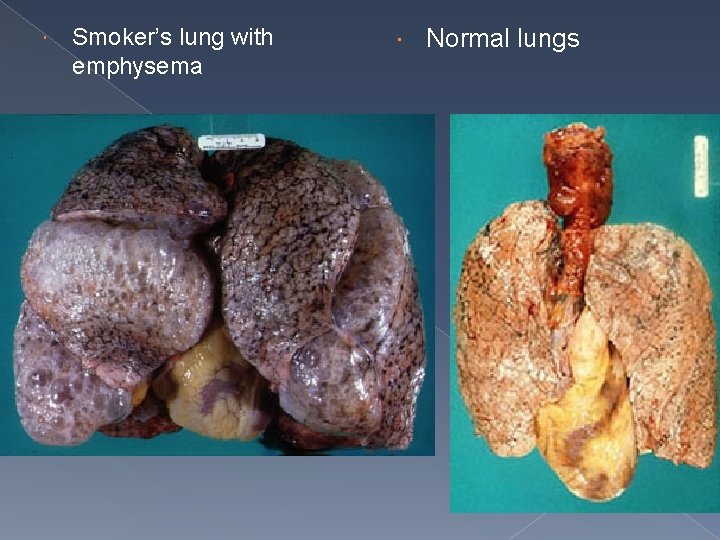
Smoker’s lung with emphysema Normal lungs

Barrel chest
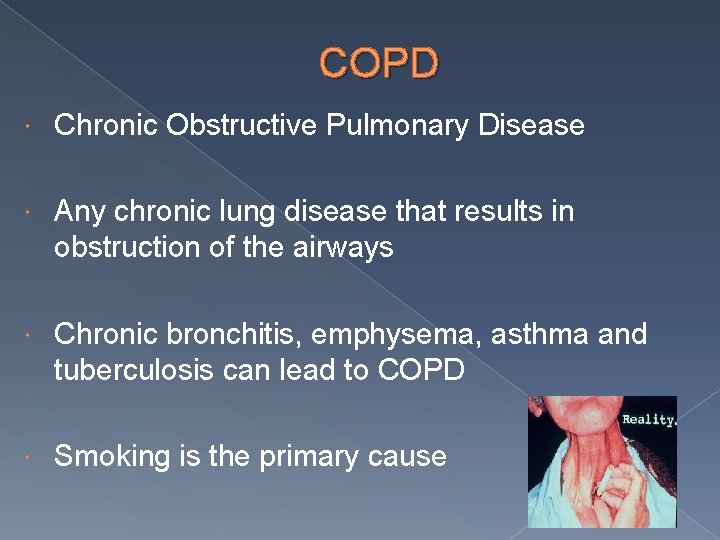
COPD Chronic Obstructive Pulmonary Disease Any chronic lung disease that results in obstruction of the airways Chronic bronchitis, emphysema, asthma and tuberculosis can lead to COPD Smoking is the primary cause
Asthma Airflow obstruction due to bronchospasm, swelling of the bronchioles and/or bronchi, and increased mucous in the airways. › Bronchospasm: severe contraction of smooth muscle covering bronchioles/bronchi Symptoms: wheezing, cough, dyspnea, chest tightness, SOB Reversible with inhaled medications that relieve the bronchospasm
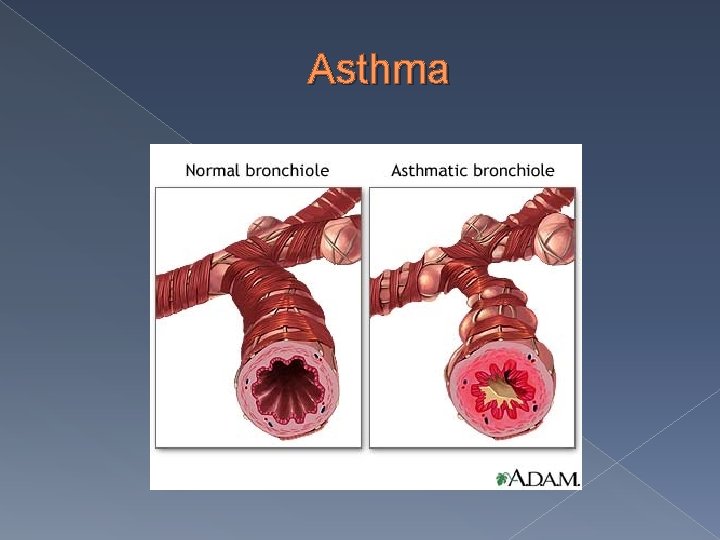
Asthma
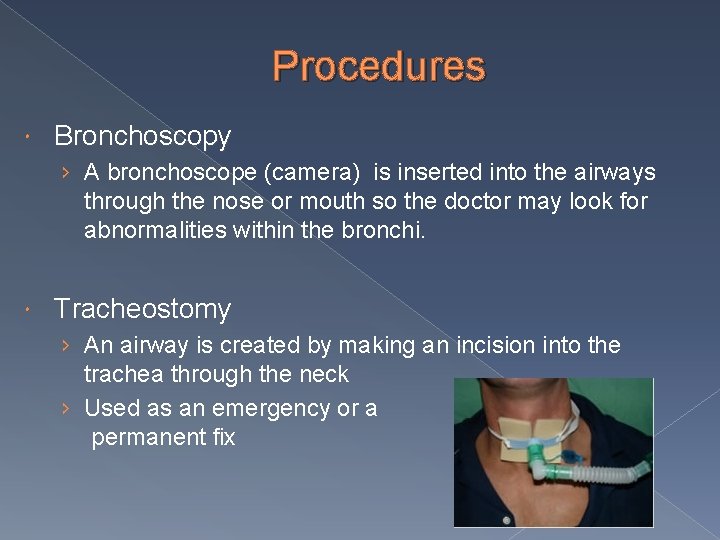
Procedures Bronchoscopy › A bronchoscope (camera) is inserted into the airways through the nose or mouth so the doctor may look for abnormalities within the bronchi. Tracheostomy › An airway is created by making an incision into the trachea through the neck › Used as an emergency or a permanent fix
- Slides: 23