
Respiratory System Respiration The job of the respiratory
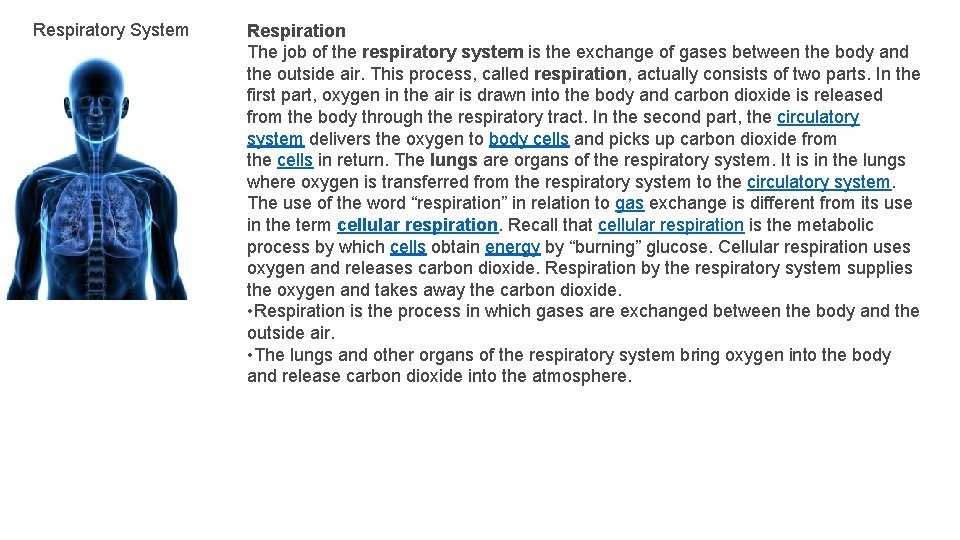
Respiratory System Respiration The job of the respiratory system is the exchange of gases between the body and the outside air. This process, called respiration, actually consists of two parts. In the first part, oxygen in the air is drawn into the body and carbon dioxide is released from the body through the respiratory tract. In the second part, the circulatory system delivers the oxygen to body cells and picks up carbon dioxide from the cells in return. The lungs are organs of the respiratory system. It is in the lungs where oxygen is transferred from the respiratory system to the circulatory system. The use of the word “respiration” in relation to gas exchange is different from its use in the term cellular respiration. Recall that cellular respiration is the metabolic process by which cells obtain energy by “burning” glucose. Cellular respiration uses oxygen and releases carbon dioxide. Respiration by the respiratory system supplies the oxygen and takes away the carbon dioxide. • Respiration is the process in which gases are exchanged between the body and the outside air. • The lungs and other organs of the respiratory system bring oxygen into the body and release carbon dioxide into the atmosphere.
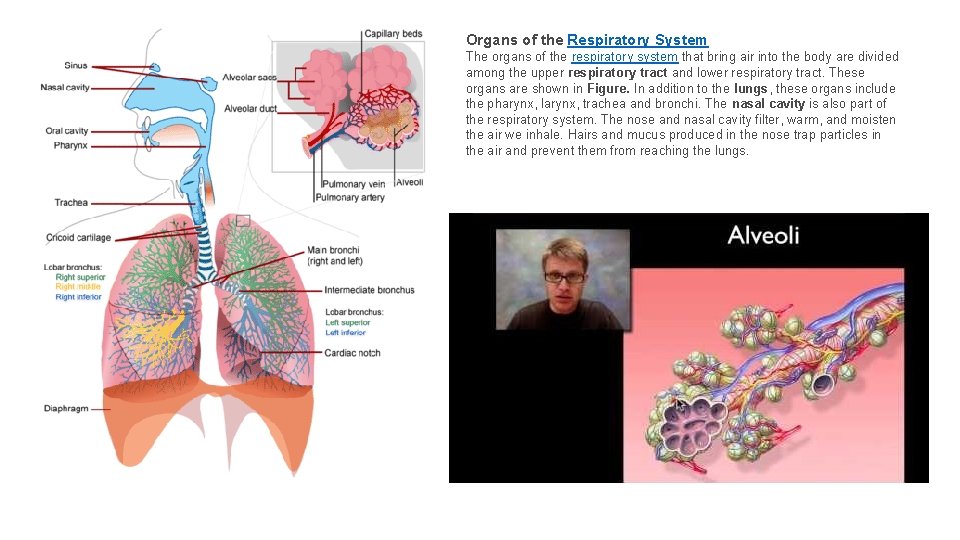
Organs of the Respiratory System The organs of the respiratory system that bring air into the body are divided among the upper respiratory tract and lower respiratory tract. These organs are shown in Figure. In addition to the lungs, these organs include the pharynx, larynx, trachea and bronchi. The nasal cavity is also part of the respiratory system. The nose and nasal cavity filter, warm, and moisten the air we inhale. Hairs and mucus produced in the nose trap particles in the air and prevent them from reaching the lungs.
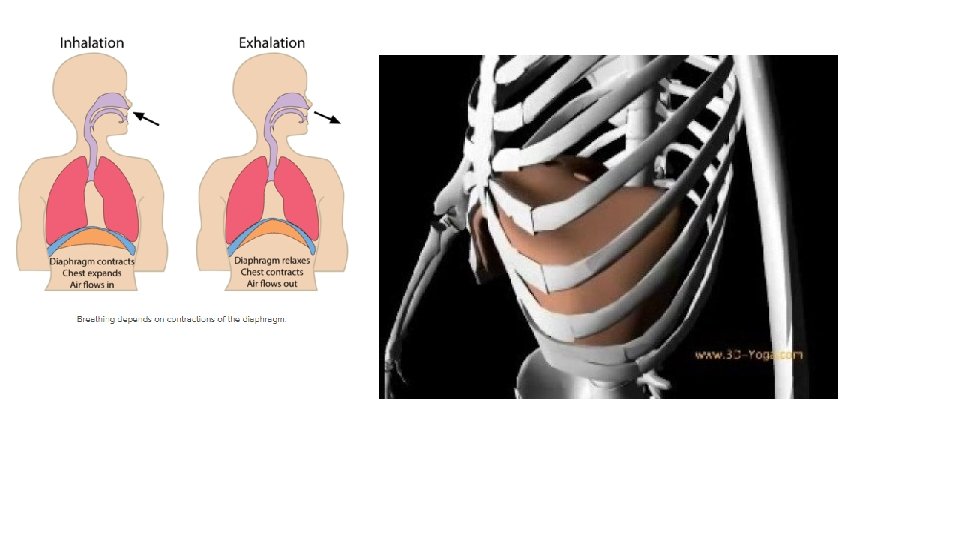
Journey of a Breath of Air Take in a big breath of air through your nose. As you inhale, you may feel the air pass down your throat and notice your chest expand. Now exhale and observe the opposite events occurring. Inhaling and exhaling may seem like simple actions, but they are just part of the complex process of respiration, which includes these four steps: 1. Ventilation 2. Pulmonary gas exchange 3. Gas transport 4. Peripheral gas exchange Ventilation Respiration begins with ventilation. This is the process of moving air in and out of the lungs. The lungs are the organs in which gas exchange takes place between blood and air. • Air enters the respiratory system through the nose. As the air passes through the nasal cavity, mucus and hairs trap any particles in the air. The air is also warmed and moistened so it won’t harm delicate tissues of the lungs. • Next, the air passes through the pharynx, a long tube that is shared with the digestive system. A flap of connective tissue called the epiglottis closes when food is swallowed to prevent choking. • From the pharynx, air next passes through the larynx, or voice box. The larynx contains vocal cords, which allow us to produce vocal sounds. • After the larynx, air moves into the trachea, or windpipe. This is a long tube that leads down to the chest. • In the chest, the trachea divides as it enters the lungs to form the right and left bronchi. The bronchi contain cartilage, which prevents them from collapsing. Mucus in the bronchi traps any remaining particles in air. Tiny, hairlike structures called cilia line the bronchi and sweep the particles and mucus toward the throat so they can be expelled from the body. • Finally, air passes from the bronchi into smaller passages called bronchioles. The bronchioles end in tiny air sacs called alveoli.
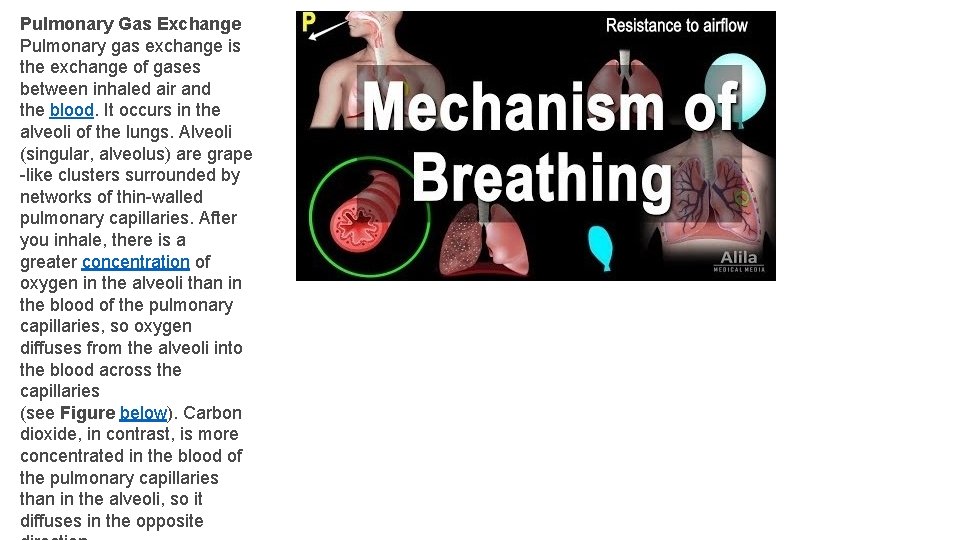
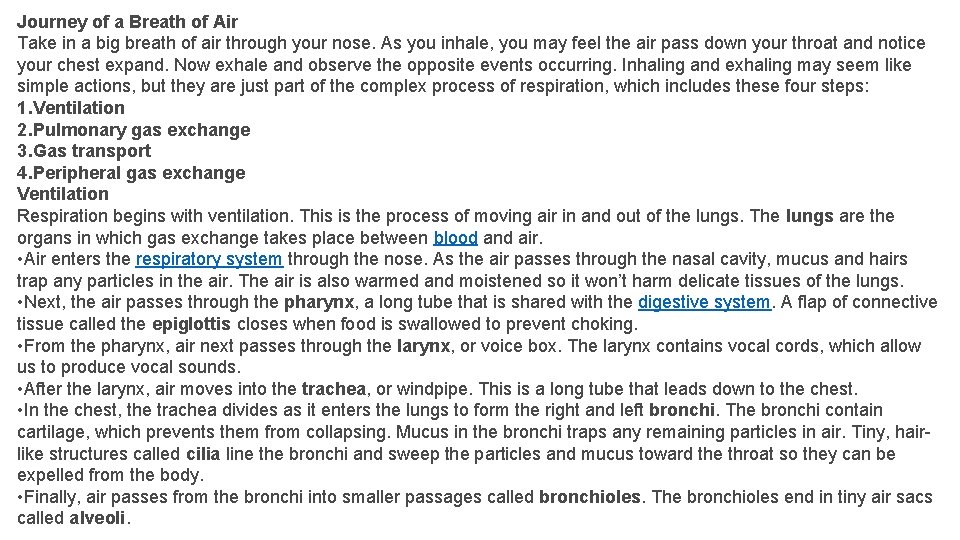
Pulmonary Gas Exchange Pulmonary gas exchange is the exchange of gases between inhaled air and the blood. It occurs in the alveoli of the lungs. Alveoli (singular, alveolus) are grape -like clusters surrounded by networks of thin-walled pulmonary capillaries. After you inhale, there is a greater concentration of oxygen in the alveoli than in the blood of the pulmonary capillaries, so oxygen diffuses from the alveoli into the blood across the capillaries (see Figure below). Carbon dioxide, in contrast, is more concentrated in the blood of the pulmonary capillaries than in the alveoli, so it diffuses in the opposite
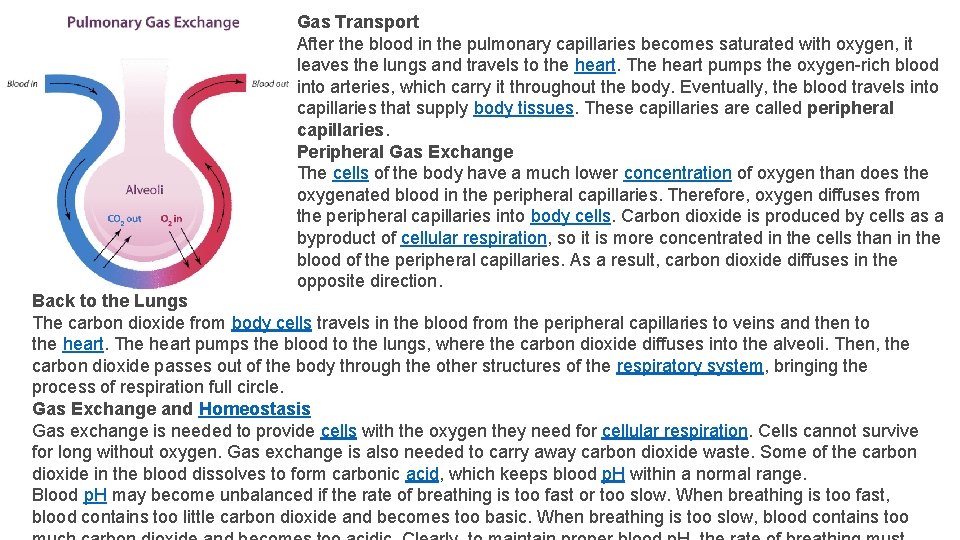
Gas Transport After the blood in the pulmonary capillaries becomes saturated with oxygen, it leaves the lungs and travels to the heart. The heart pumps the oxygen-rich blood into arteries, which carry it throughout the body. Eventually, the blood travels into capillaries that supply body tissues. These capillaries are called peripheral capillaries. Peripheral Gas Exchange The cells of the body have a much lower concentration of oxygen than does the oxygenated blood in the peripheral capillaries. Therefore, oxygen diffuses from the peripheral capillaries into body cells. Carbon dioxide is produced by cells as a byproduct of cellular respiration, so it is more concentrated in the cells than in the blood of the peripheral capillaries. As a result, carbon dioxide diffuses in the opposite direction. Back to the Lungs The carbon dioxide from body cells travels in the blood from the peripheral capillaries to veins and then to the heart. The heart pumps the blood to the lungs, where the carbon dioxide diffuses into the alveoli. Then, the carbon dioxide passes out of the body through the other structures of the respiratory system, bringing the process of respiration full circle. Gas Exchange and Homeostasis Gas exchange is needed to provide cells with the oxygen they need for cellular respiration. Cells cannot survive for long without oxygen. Gas exchange is also needed to carry away carbon dioxide waste. Some of the carbon dioxide in the blood dissolves to form carbonic acid, which keeps blood p. H within a normal range. Blood p. H may become unbalanced if the rate of breathing is too fast or too slow. When breathing is too fast, blood contains too little carbon dioxide and becomes too basic. When breathing is too slow, blood contains too
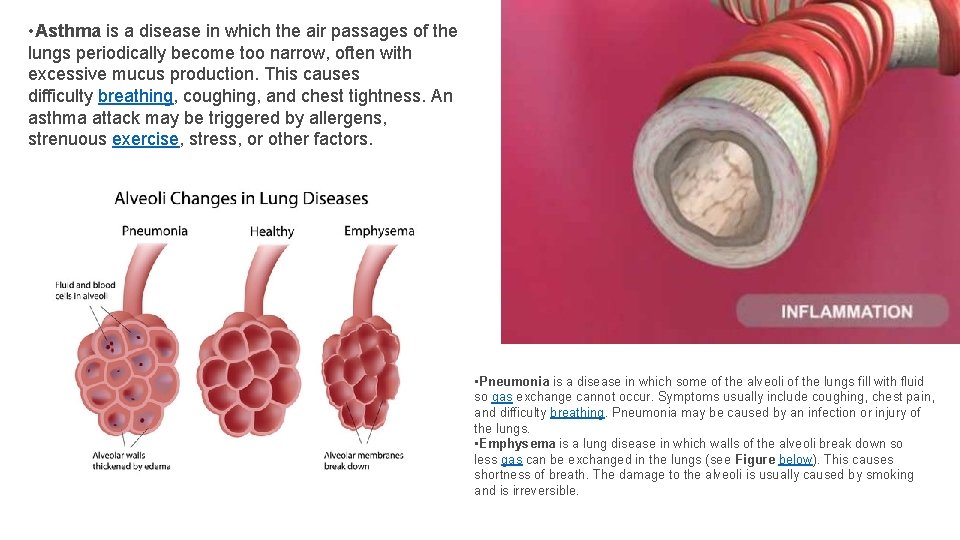
• Asthma is a disease in which the air passages of the lungs periodically become too narrow, often with excessive mucus production. This causes difficulty breathing, coughing, and chest tightness. An asthma attack may be triggered by allergens, strenuous exercise, stress, or other factors. • Pneumonia is a disease in which some of the alveoli of the lungs fill with fluid so gas exchange cannot occur. Symptoms usually include coughing, chest pain, and difficulty breathing. Pneumonia may be caused by an infection or injury of the lungs. • Emphysema is a lung disease in which walls of the alveoli break down so less gas can be exchanged in the lungs (see Figure below). This causes shortness of breath. The damage to the alveoli is usually caused by smoking and is irreversible.
- Slides: 8