
Respiratory System Purpose Gas exchange of O 2

- Slides: 24
Respiratory System
Purpose- § Gas exchange of O 2 and CO 2 between the organism and the outside environment
Requirements for Gas exchange at the respiratory surface: 1. Thin-walled –(so gases can freely diffuse across) 2. Moist- (O 2 and CO 2 must be in solution or dissolved) 3. In contact with O 2 source-(outside environment) 4. In contact with transport system carrying dissolved gases (Circulatory system/Blood)
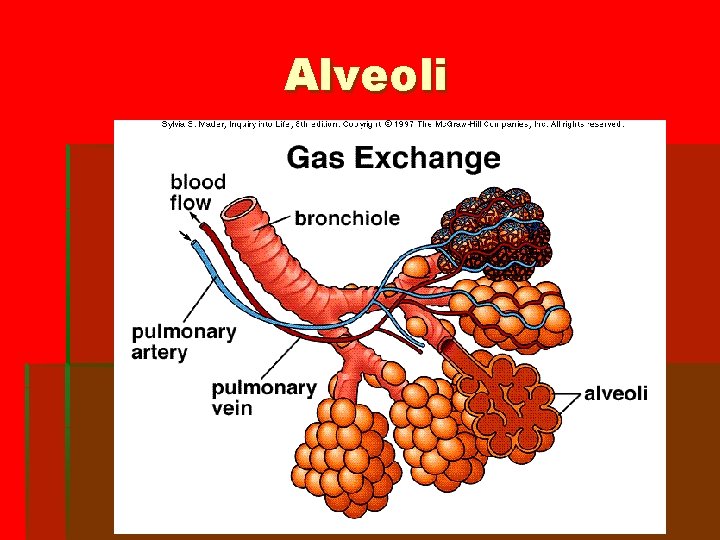
Human Respiratory System § Surface: Moist air sacs (alveoli) § Method: diffusion across air sacs into blood stream (use hemoglobin to increase amount of O 2 that blood can carry)
Alveoli
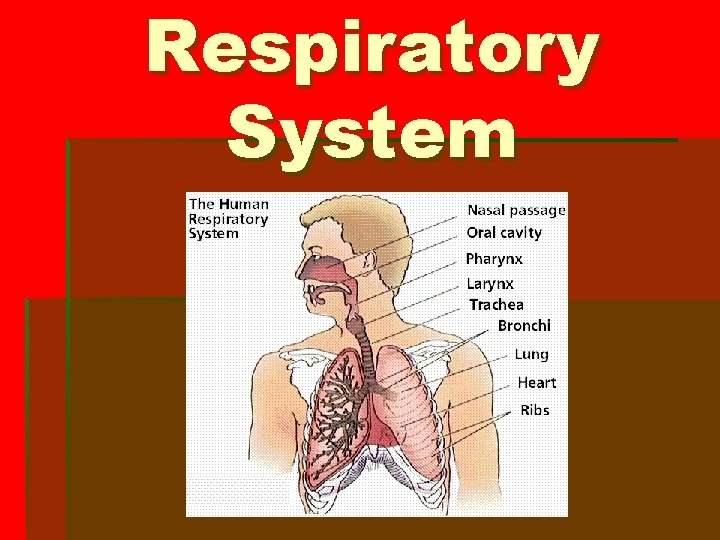
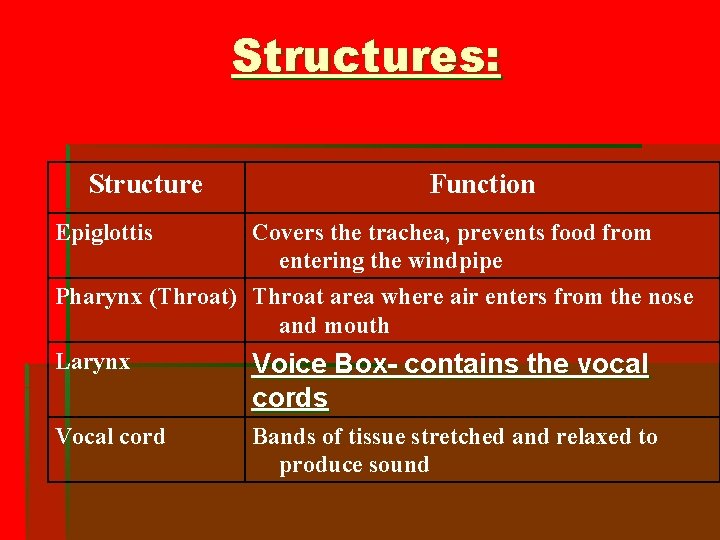
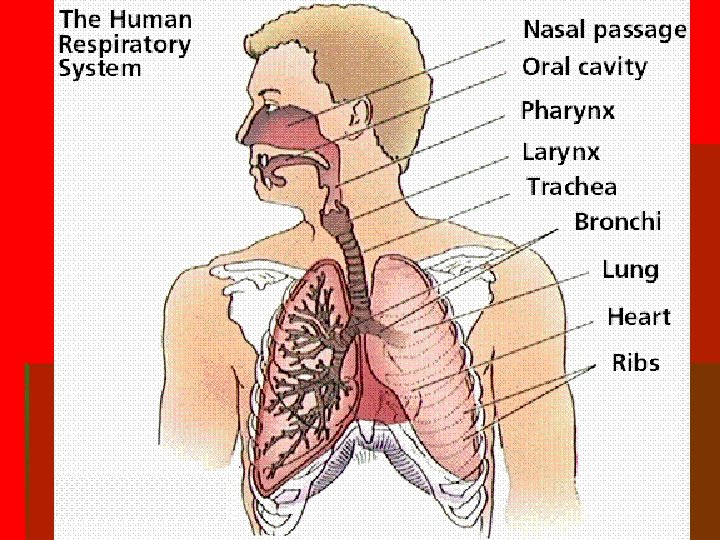
Structures: Structure Function Epiglottis Covers the trachea, prevents food from entering the windpipe Pharynx (Throat) Throat area where air enters from the nose and mouth Larynx Voice Box- contains the vocal cords Vocal cord Bands of tissue stretched and relaxed to produce sound
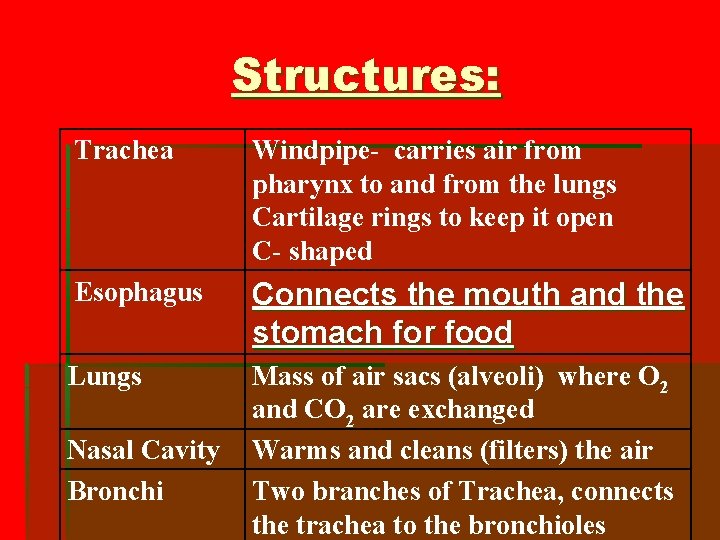
Structures: Trachea Windpipe- carries air from pharynx to and from the lungs Cartilage rings to keep it open C- shaped Esophagus Connects the mouth and the stomach for food Lungs Mass of air sacs (alveoli) where O 2 and CO 2 are exchanged Warms and cleans (filters) the air Two branches of Trachea, connects the trachea to the bronchioles Nasal Cavity Bronchi
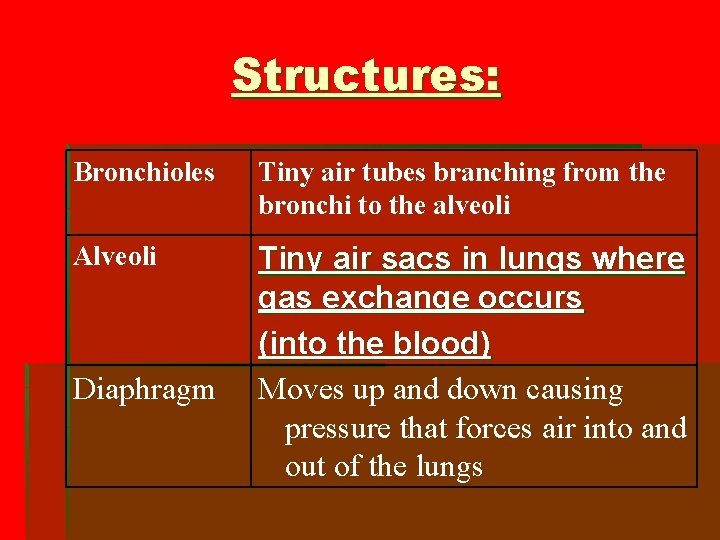
Structures: Bronchioles Tiny air tubes branching from the bronchi to the alveoli Alveoli Tiny air sacs in lungs where gas exchange occurs (into the blood) Moves up and down causing pressure that forces air into and out of the lungs Diaphragm
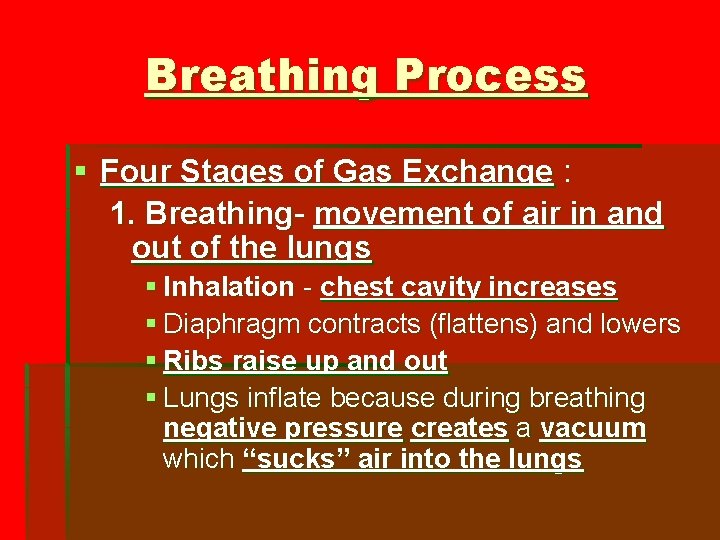
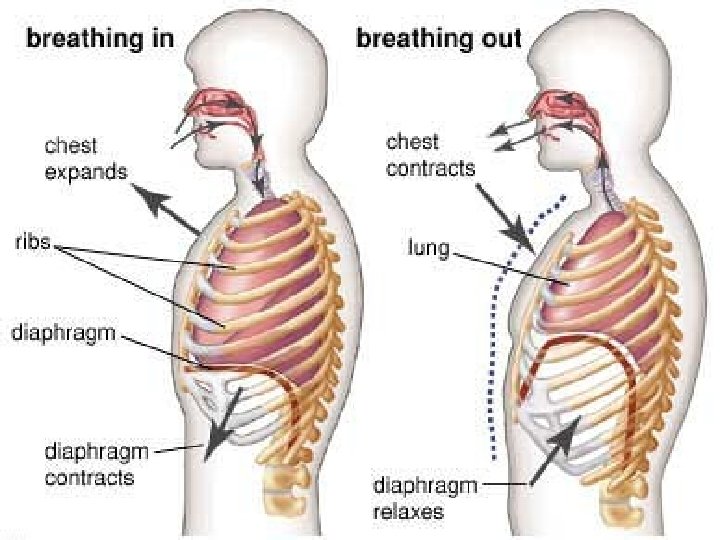
Breathing Process § Four Stages of Gas Exchange : 1. Breathing- movement of air in and out of the lungs § Inhalation - chest cavity increases § Diaphragm contracts (flattens) and lowers § Ribs raise up and out § Lungs inflate because during breathing negative pressure creates a vacuum which “sucks” air into the lungs
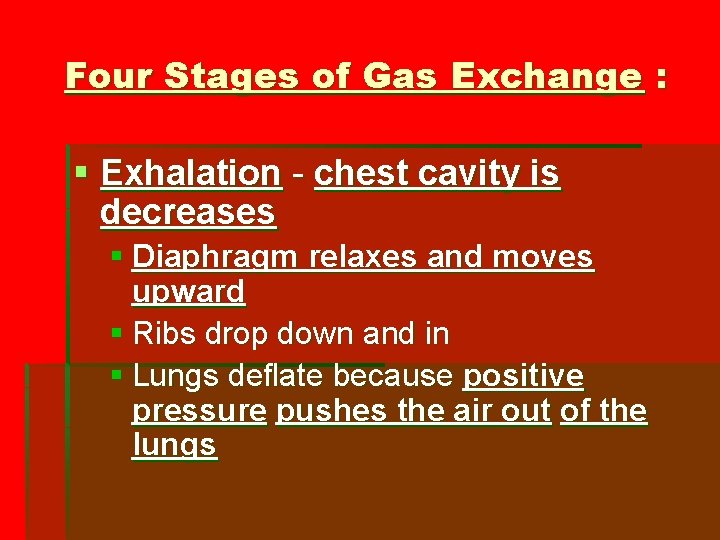
Four Stages of Gas Exchange : § Exhalation - chest cavity is decreases § Diaphragm relaxes and moves upward § Ribs drop down and in § Lungs deflate because positive pressure pushes the air out of the lungs
Four Stages of Gas Exchange : 2. External respiration- exchange of gases between outside air and bloodstream in the air sacs § Mucus coats air sacs (alveoli) to moisten them § O 2 diffuses across air sacs into capillaries of air sacs and CO 2 diffuses in the opposite direction § O 2 attaches itself to hemoglobin on the red blood cells
Four Stages of Gas Exchange : 3. Transport- movement of gases in the blood between the cells to the lungs (circulatory system) 4. Internal respiration- exchange of gases between the blood stream and the cells of the body § At the capillaries, O 2 diffuses into the intracellular fluid and then into the body cells & CO 2 diffuses in the opposite direction
CO 2 Transport § 80% of CO 2 dissolves in the Plasma and/or combines with water in the plasma to make carbonic acid (H 2 CO 3) § 20% of CO 2 is carried by hemoglobin back to lungs
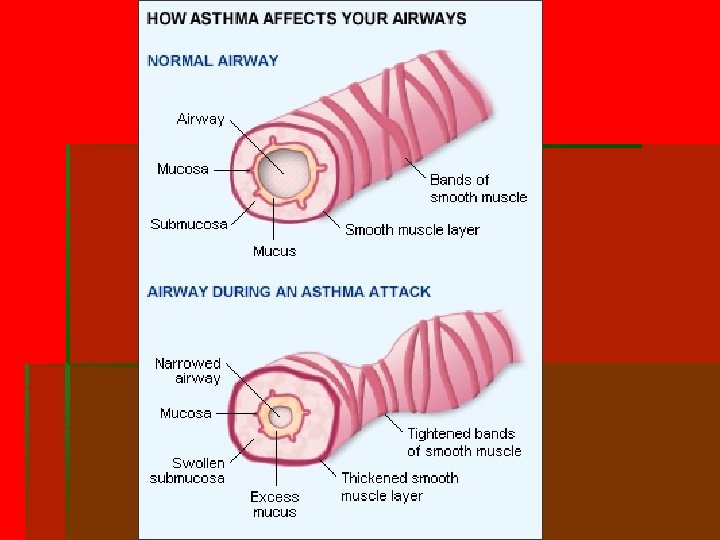
Respiratory Disorders § Asthma- severe allergic reaction where bronchioles go into spasm and squeeze air passages making it difficult to breathe § Treatment- medication (inhaler)
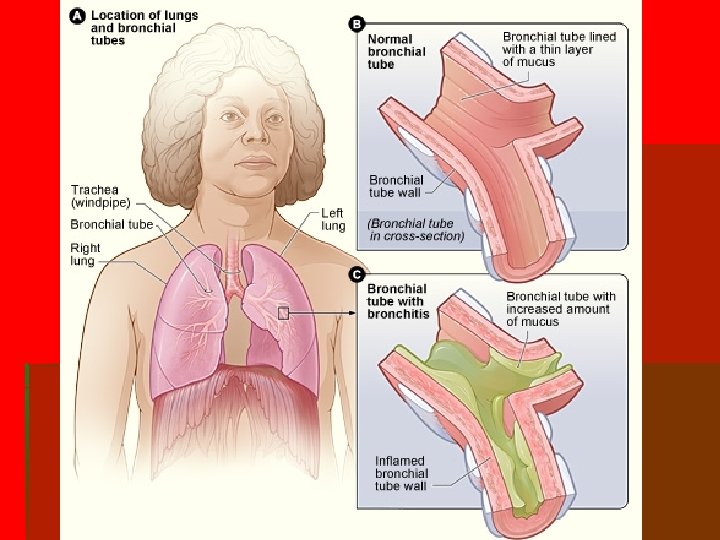
Respiratory Disorders § Bronchitis- Bronchial tubes become irritated and swollen, and alveoli become swollen and clogged with mucus making it difficult to breathe § Treatment- antibiotics if bacterial infection
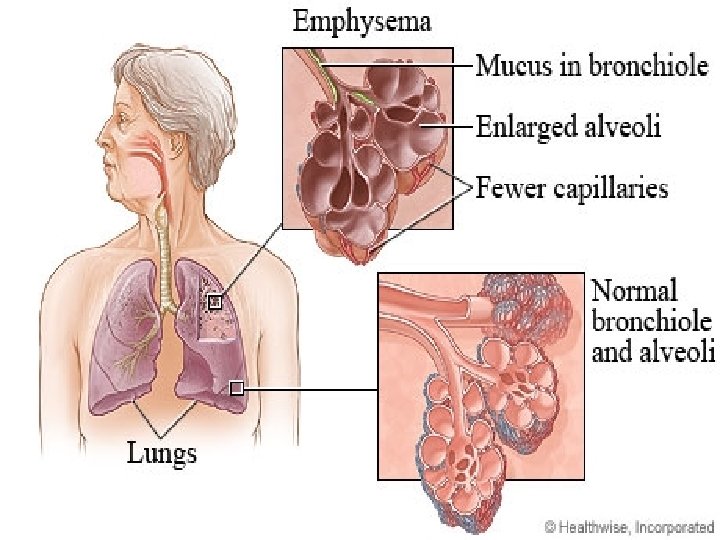
Respiratory Disorders § Emphysema- lungs lose their elasticity and the air sacs become damaged and it leads to shallow breathing and even death. Most disease is caused by years of smoking. § Treatment- stop smoking and use of O 2 tank for additional help
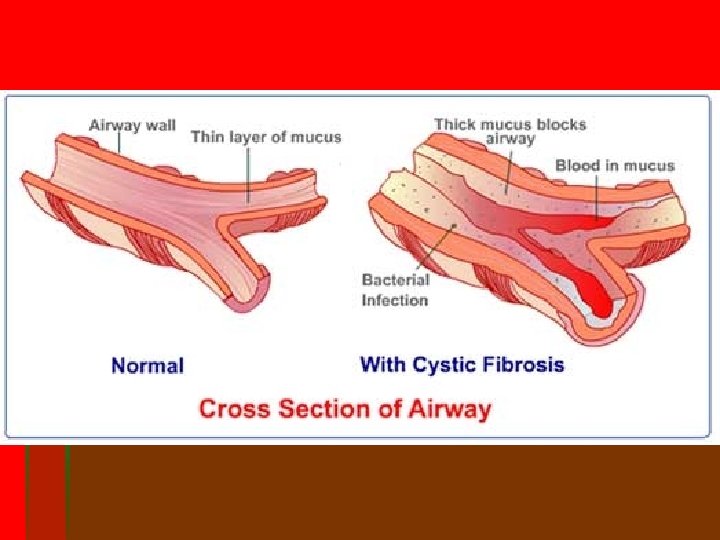
Respiratory Disorders § Cystic Fibrosis- Body produces too much mucus and the person is unable to breathe and have frequent infections § Treatment- gene therapy