
Respiratory System Physiology Breathing Pulmonary Ventilation Inspiration in
Respiratory System Physiology “Breathing”

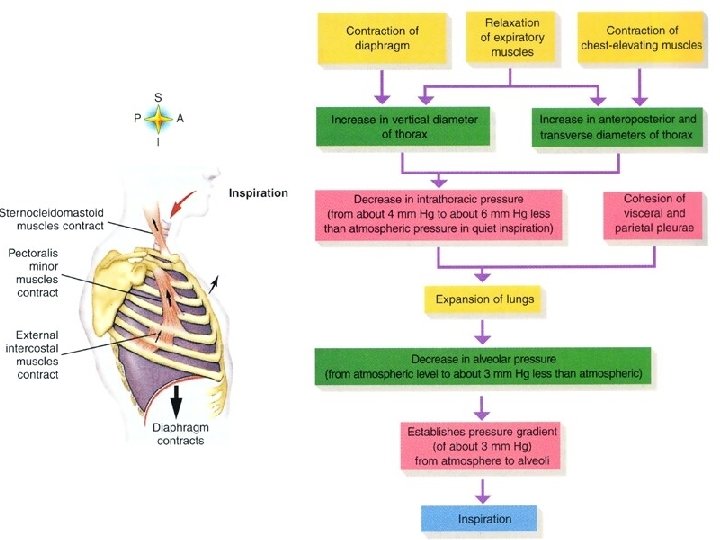
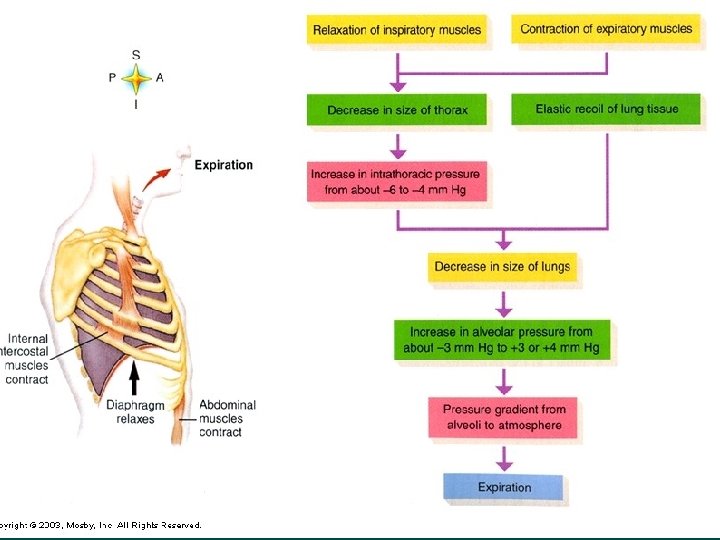
Pulmonary Ventilation Inspiration- in Expiration- out • Breathing occurs because of a pressure gradient between the lungs and exterior environment • Respiratory muscles control the size of the thoracic cavity setting up the gradient
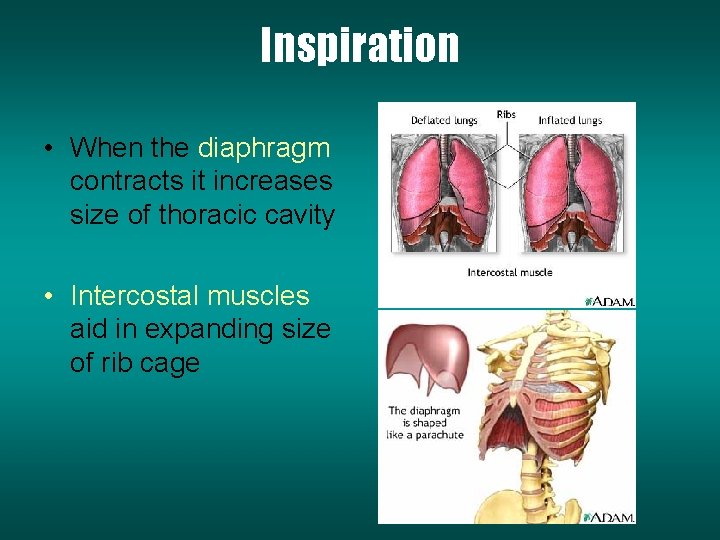
Inspiration • When the diaphragm contracts it increases size of thoracic cavity • Intercostal muscles aid in expanding size of rib cage
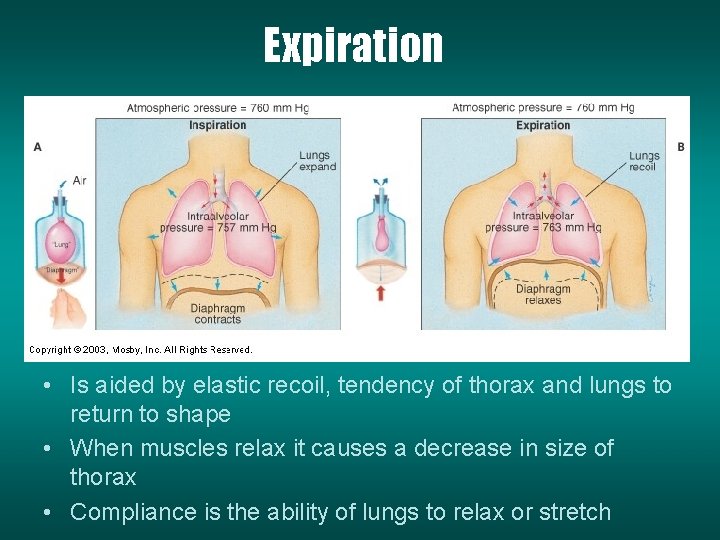
Expiration • Is aided by elastic recoil, tendency of thorax and lungs to return to shape • When muscles relax it causes a decrease in size of thorax • Compliance is the ability of lungs to relax or stretch
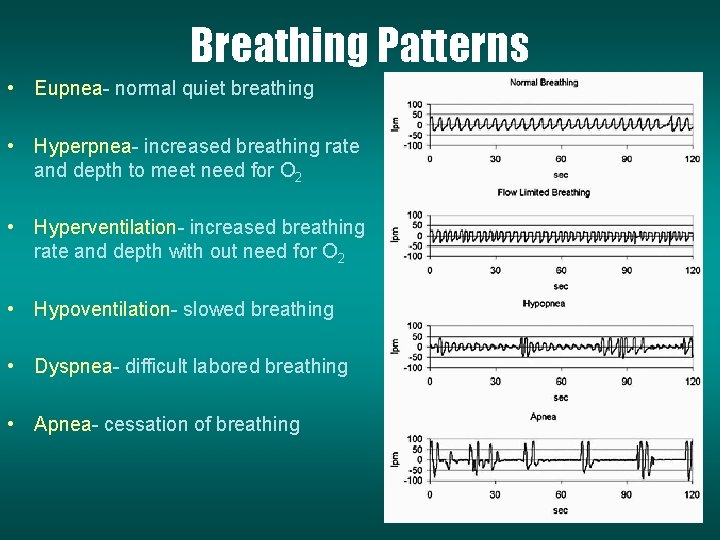
Breathing Patterns • Eupnea- normal quiet breathing • Hyperpnea- increased breathing rate and depth to meet need for O 2 • Hyperventilation- increased breathing rate and depth with out need for O 2 • Hypoventilation- slowed breathing • Dyspnea- difficult labored breathing • Apnea- cessation of breathing
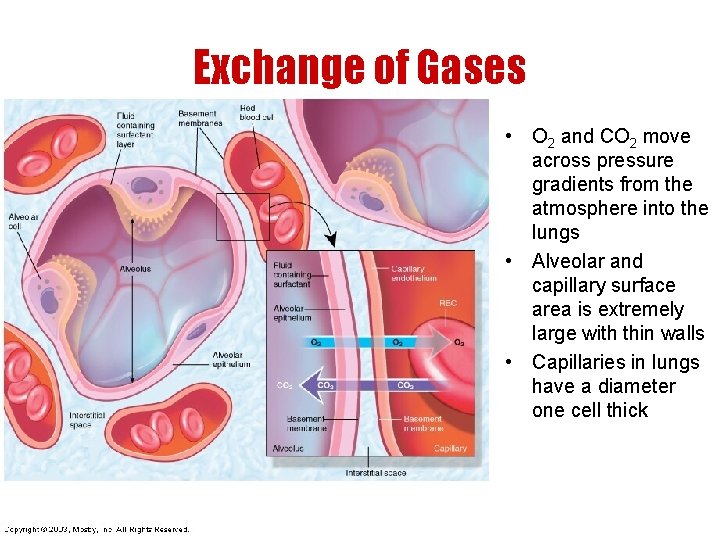
Exchange of Gases • O 2 and CO 2 move across pressure gradients from the atmosphere into the lungs • Alveolar and capillary surface area is extremely large with thin walls • Capillaries in lungs have a diameter one cell thick
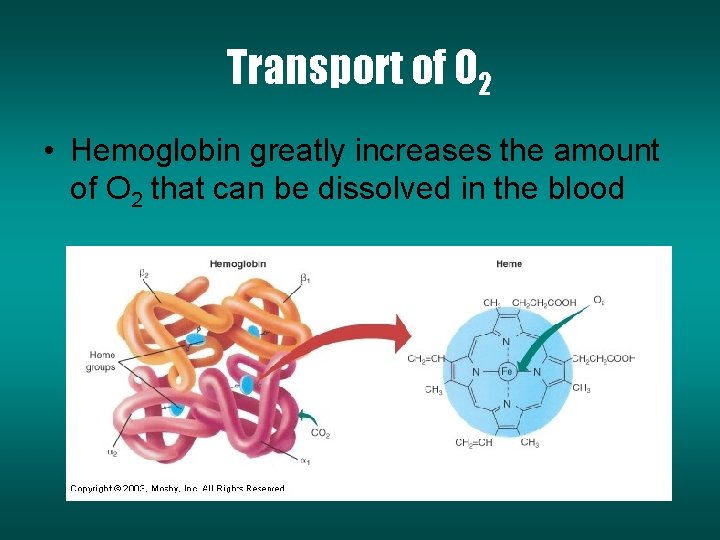
Transport of O 2 • Hemoglobin greatly increases the amount of O 2 that can be dissolved in the blood
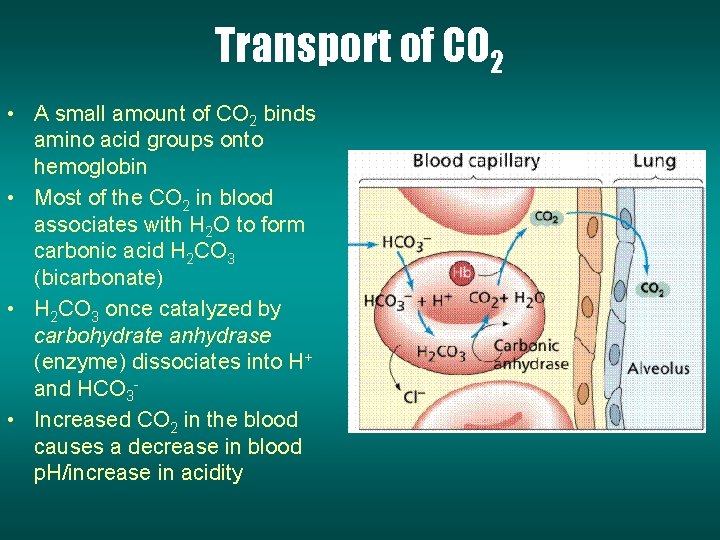
Transport of CO 2 • A small amount of CO 2 binds amino acid groups onto hemoglobin • Most of the CO 2 in blood associates with H 2 O to form carbonic acid H 2 CO 3 (bicarbonate) • H 2 CO 3 once catalyzed by carbohydrate anhydrase (enzyme) dissociates into H+ and HCO 3 • Increased CO 2 in the blood causes a decrease in blood p. H/increase in acidity
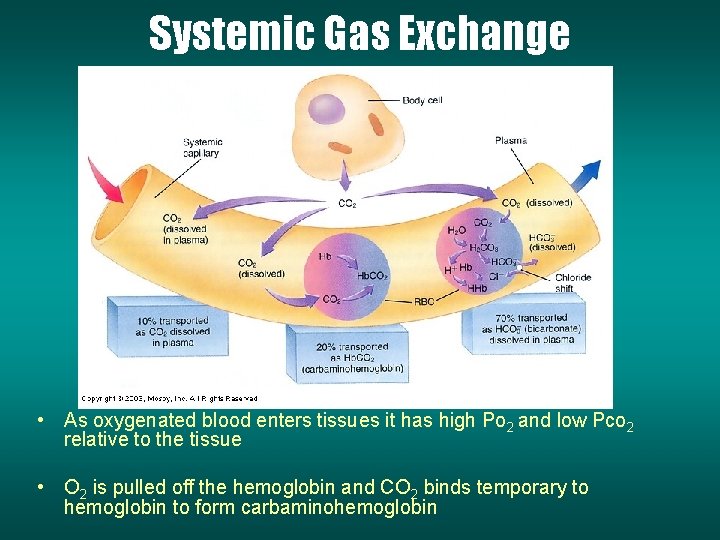
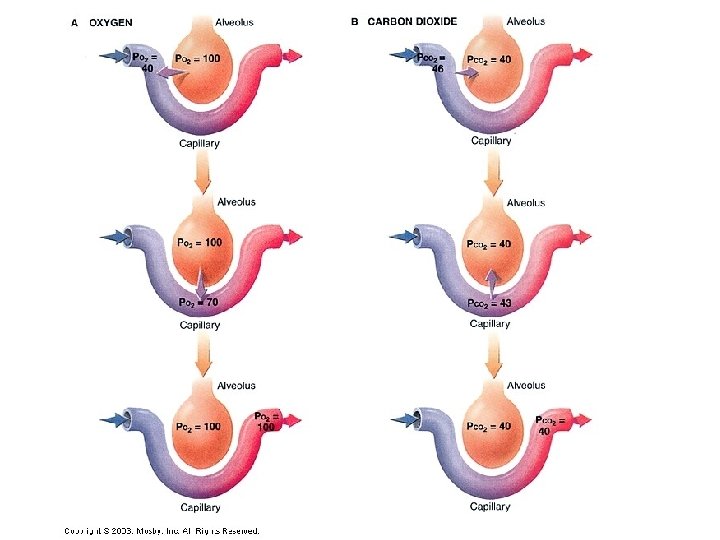
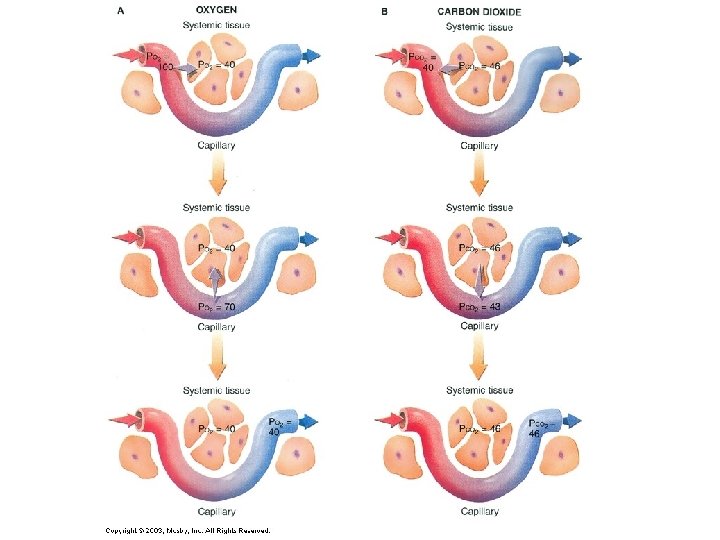
Systemic Gas Exchange • As oxygenated blood enters tissues it has high Po 2 and low Pco 2 relative to the tissue • O 2 is pulled off the hemoglobin and CO 2 binds temporary to hemoglobin to form carbaminohemoglobin
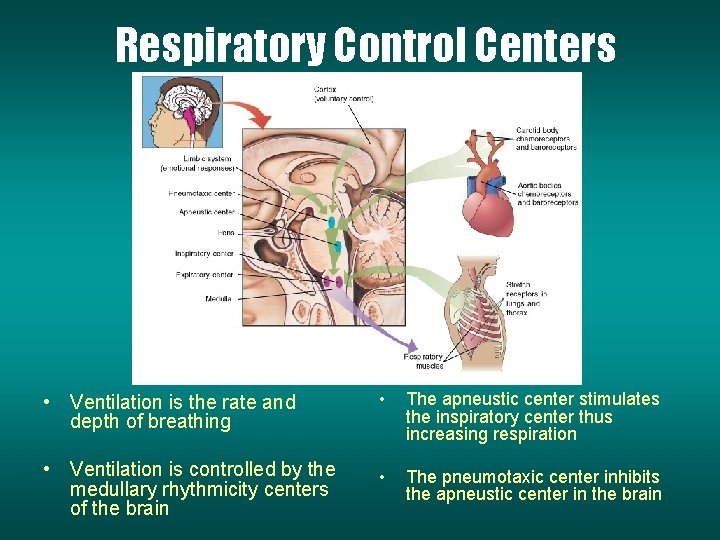
Respiratory Control Centers • Ventilation is the rate and depth of breathing • The apneustic center stimulates the inspiratory center thus increasing respiration • Ventilation is controlled by the medullary rhythmicity centers of the brain • The pneumotaxic center inhibits the apneustic center in the brain
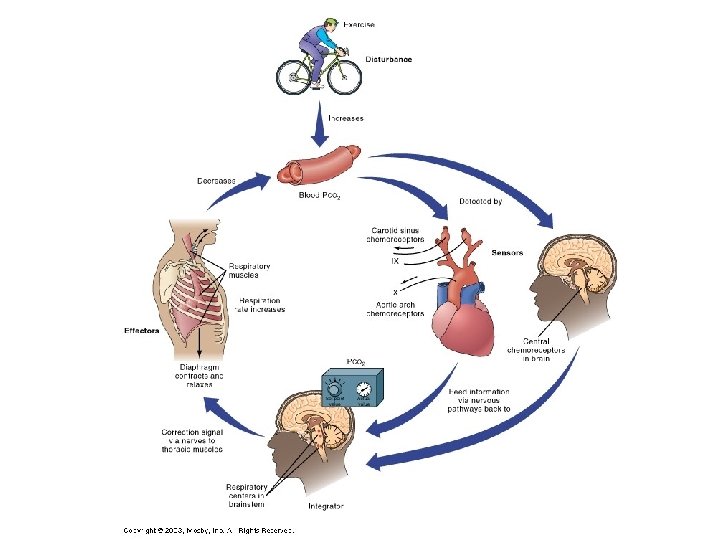
Factors that influence Breathing • Chemoreceptors in the medulla measure levels of CO 2 • Low levels of CO 2 will decrease rate and depth of breathing • High levels of CO 2 increase rate and depth of breathing • p. H plays a small role in controlling breath • Blood levels of O 2 seem to have little effect on breathing rate

Breathing Reflexes • Hering-Breuer reflex maintains normal breath depth • Once tidal volume is reached, inhalation stretch receptors trigger inhibitory impulses to the inspiratory centers of the brain
Breathing Reflexes Breathing can be controlled voluntarily to a certain extent • You cannot hold your breath till you die, CO 2 is too strong a stimulant • Sudden stimulation - reflex apnea • Sudden cold stimuli - reflex apnea • Stimulation of pharynx or larynx causes choking reflex • Breathing can be affected by emotions
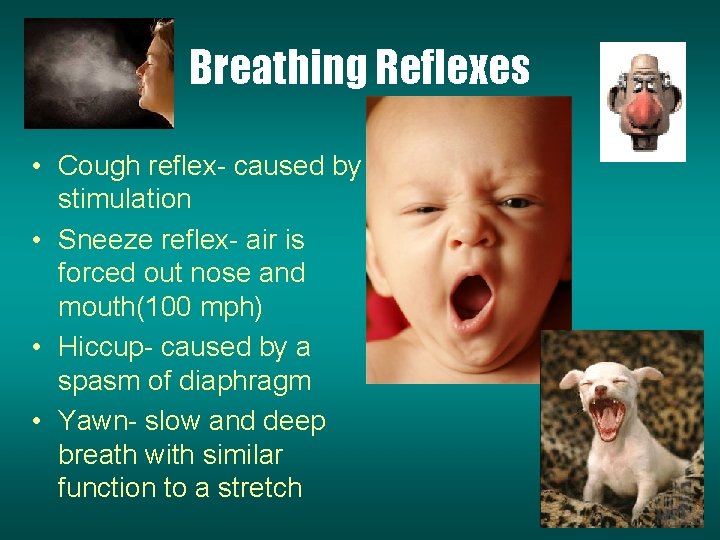
Breathing Reflexes • Cough reflex- caused by stimulation • Sneeze reflex- air is forced out nose and mouth(100 mph) • Hiccup- caused by a spasm of diaphragm • Yawn- slow and deep breath with similar function to a stretch
- Slides: 19