
Respiratory System Pathology Obstructive Lung Disease II Ghadeer

Respiratory System Pathology: Obstructive Lung Disease II Ghadeer Hayel, M. D. 18/10/2020
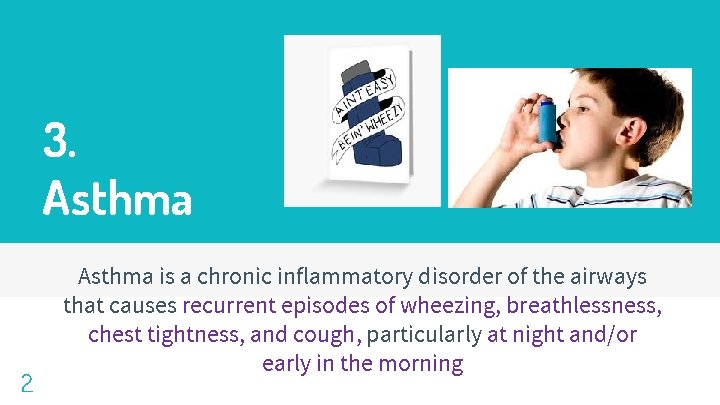
3. Asthma 2 Asthma is a chronic inflammatory disorder of the airways that causes recurrent episodes of wheezing, breathlessness, chest tightness, and cough, particularly at night and/or early in the morning
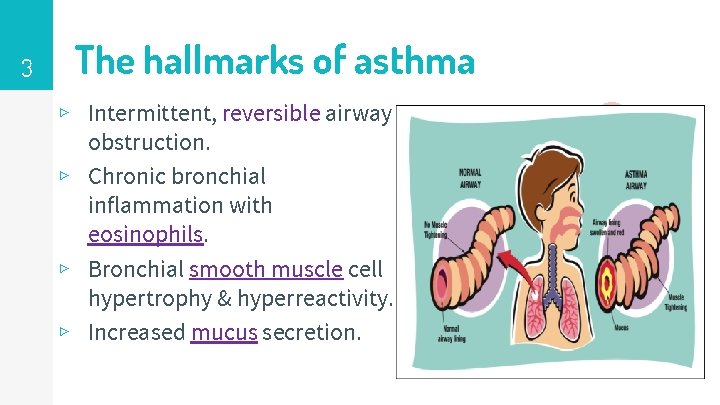
3 The hallmarks of asthma ▹ Intermittent, reversible airway obstruction. ▹ Chronic bronchial inflammation with eosinophils. ▹ Bronchial smooth muscle cell hypertrophy & hyperreactivity. ▹ Increased mucus secretion.

4 Asthma - PFT
5 Asthma main categories: Atopic ▹ Most common ▹ Evidence of allergen sensitization. ▹ Usually begins in childhood. ▹ +ve family history. ▹ Ig. E-mediated (type I) hypersensitivity reaction. ▹ triggered by environmental allergens, eg. dusts, pollens. ▹ Ass/w allergic rhinitis, urticaria, or eczema.
6 Asthma main categories: Non-Atopic Drug-Induced ▹ No evidence of allergen sensitization. ▹ Triggers: Viral Respiratory infections & inhaled air pollutants ▹ Less common family Hx. Several pharmacologic agents provoke asthma. Aspirin is the most striking e. g. Occupational Triggered by fumes, organic & chemical dusts (wood, cotton, platinum), gases, & other chemicals
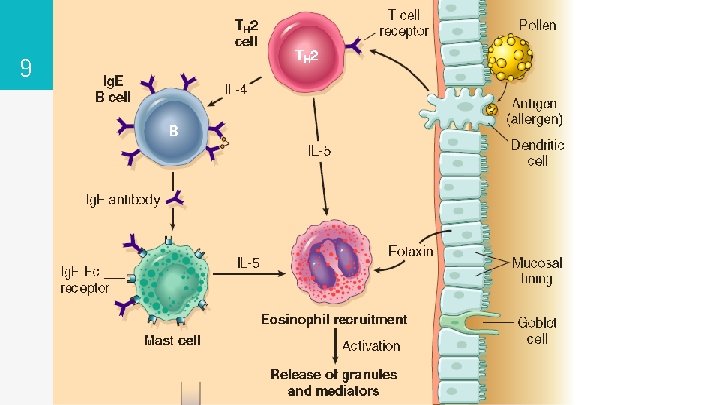
7 Asthma – Pathogenesis TH 2 Responses, Ig. E & Inflammation: ▹ A fundamental abnormality in asthma is an exaggerated TH 2 response to normally harmless environmental antigens (in genetically predisposed individuals. ). ▹ TH 2 cells secrete cytokines promote inflammation & stimulate B cells to produce Ig. E & other antibodies: IL-4: stimulates Ig. E production IL-13: stimulates mucus secretion & promotes Ig. E production by B cells. IL-5: activates eosinophils.

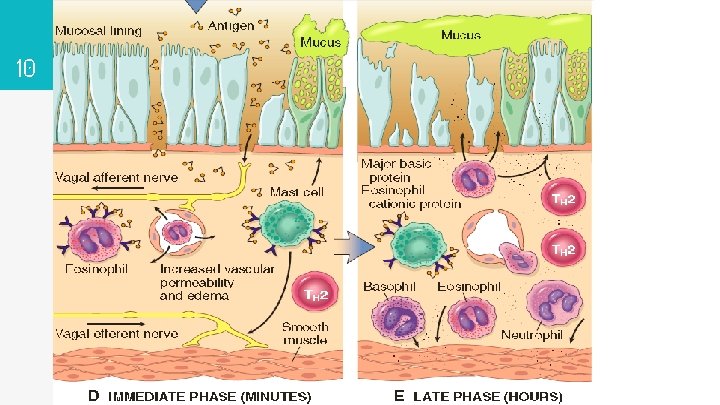
8 Asthma – Pathogenesis Ig. E coats submucosal mast cells on exposure to allergen release their granule contents (cytokines & mediators) two reaction: ▹ Early (immediate) phase reaction: dominated by (bronchoconstriction, ↑mucus production, & vasodilation) Bronchoconstriction is triggered by mediators & also by reflex neural pathways. ▹ Late-phase reaction: Inflammatory in nature; mediators stimulate epithelial to produce chemokines recruitment of TH 2 cells, eosinophils & other leukocytes amplifying the inflammatory reaction.
9
10
11 Asthma – Pathogenesis Airway remodeling: Repeated bouts of inflammation structural changes in the bronchial wall called airway remodeling: ▹ Thickening of airway wall ▹ Subbasement membrane fibrosis (deposition collagen) ▹ Increased vascularity ▹ ↑ in size of submucosal glands & number of goblet cells ▹ Hypertrophy and/or hyperplasia of bronchial wall muscle
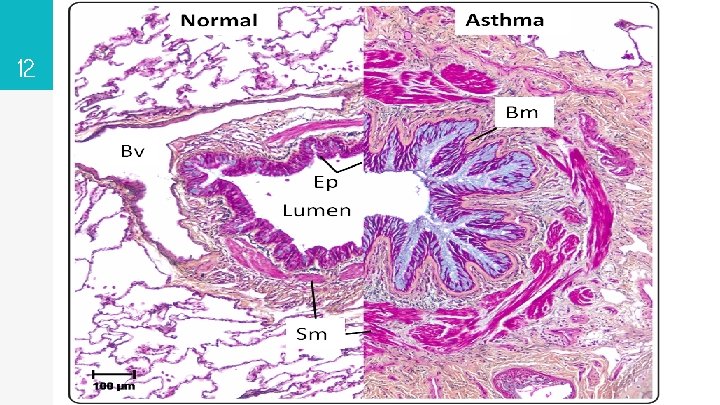
12
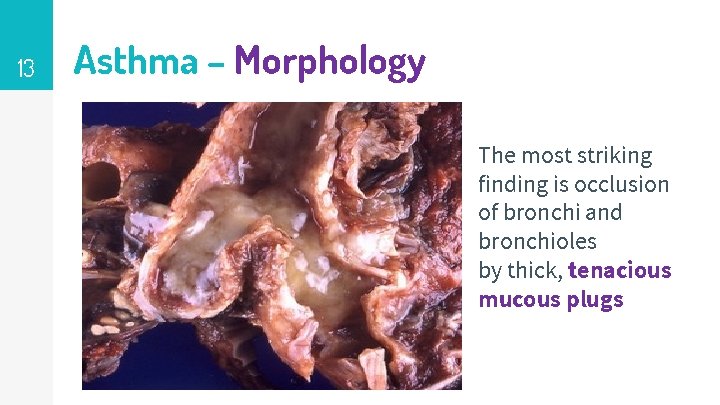
13 Asthma – Morphology The most striking finding is occlusion of bronchi and bronchioles by thick, tenacious mucous plugs
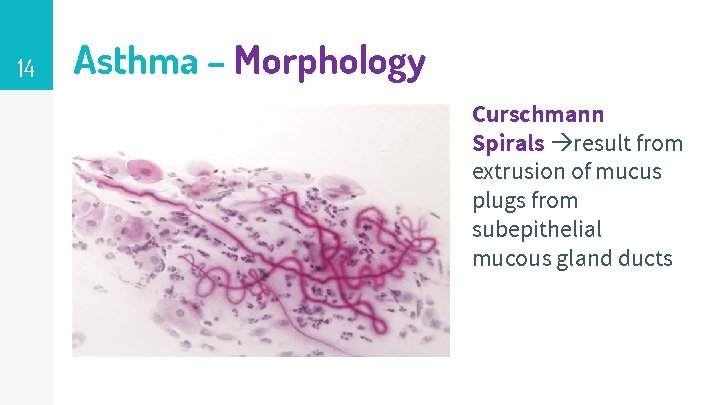
14 Asthma – Morphology Curschmann Spirals result from extrusion of mucus plugs from subepithelial mucous gland ducts
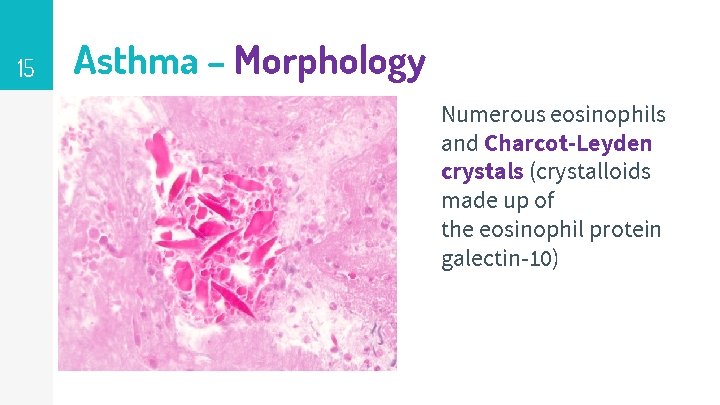
15 Asthma – Morphology Numerous eosinophils and Charcot-Leyden crystals (crystalloids made up of the eosinophil protein galectin-10)
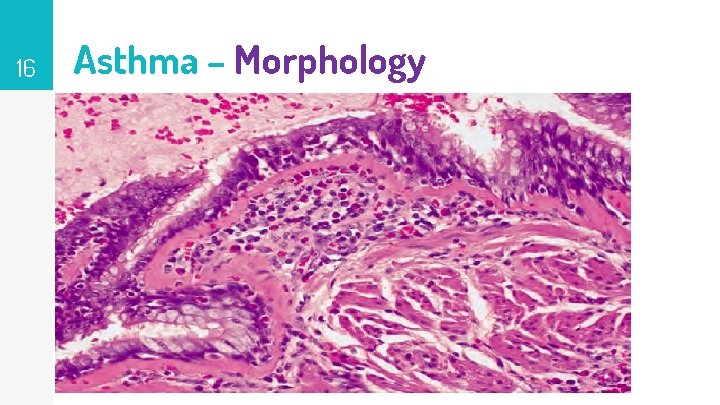
16 Asthma – Morphology
17 Asthma – Clinical features ▹ Classic asthmatic attack: chest tightness, dyspnea, wheezing, & coughing (with or w/out sputum) due to bronchoconstriction & mucus plugging trapping of air in distal airspaces & progressive hyperinflation of lungs. ▹ Intervals between attacks are characteristically free from overt respiratory difficulties. (early disease) ▹ Occasionally a severe paroxysm occurs that does not respond to therapy and persists for days and even weeks (status asthmaticus) ass/w hypercapnia, acidosis, and severe hypoxia may be fatal.
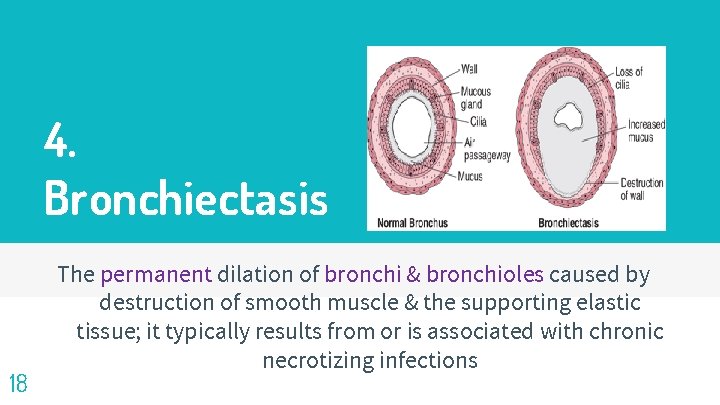
4. Bronchiectasis 18 The permanent dilation of bronchi & bronchioles caused by destruction of smooth muscle & the supporting elastic tissue; it typically results from or is associated with chronic necrotizing infections
19 Bronchiectasis ▹ Not a primary disorder always occurs secondary to persistent infection or obstruction caused by a variety of conditions. ▹ Characteristic symptom complex: cough & expectoration of copious amounts of purulent sputum. ▹ Diagnosis: appropriate history & radiographic demonstration of bronchial dilation.
20 Conditions predispose to Bronchiectasis ▹ Bronchial obstruction: caused by tumors, foreign bodies, & impaction of mucus. (localized to the obstructed lung segment). ▹ Congenital or hereditary conditions: 1. Cystic fibrosis: widespread severe bronchiectasis results from obstruction caused by abnormally viscid mucus and secondary infections. 2. Immunodeficiency states: develops because of recurrent bacterial infections.
21 Conditions predispose to Bronchiectasis 3. Primary ciliary dyskinesia: (immotile cilia syndrome): Rare AR disorder ass/w bronchiectasis & sterility in males. Caused by inherited abnormalities of cilia impair mucociliary clearance of the airways persistent infections. ▹ Necrotizing, or suppurative, pneumonia: particularly with virulent organisms such as Staphylococcus aureus or Klebsiella spp. , predispose affected patients to development of bronchiectasis.
22 Bronchiectasis - Pathogenesis ▹ Two intertwined processes contribute to bronchiectasis: obstruction and chronic infection. Either may be the initiator: ▹ E. g. , obstruction by a foreign body impairs clearance of secretions a favorable substrate for superimposed infection inflammatory damage to bronchial wall & accumulating exudate distend the airways irreversible dilation. ▹ E. g. , Persistent necrotizing infection in bronchi or bronchioles poor clearance of secretions, obstruction, & inflammation with peribronchial fibrosis and traction on the bronchi, culminating again in full-blown bronchiectasis
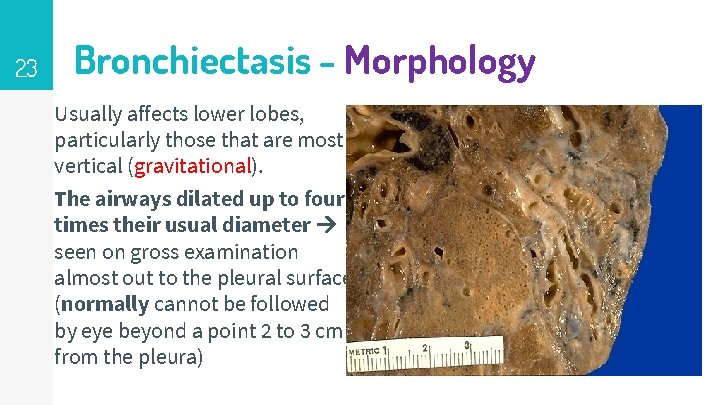
23 Bronchiectasis - Morphology Usually affects lower lobes, particularly those that are most vertical (gravitational). The airways dilated up to four times their usual diameter seen on gross examination almost out to the pleural surface (normally cannot be followed by eye beyond a point 2 to 3 cm from the pleura)
24 Bronchiectasis - Morphology ▹ The histological changes vary with the severity and duration of the disease. ▹ In an active full-blown disease: an intense acute & chronic inflammatory exudates within the wall of the bronchi & bronchioles seen & desequamation of lining epithelium cause extensive ulceration. ▹ In severe cases abnormal dilatation occurs due to necrosis & fibrosis of muscle coat with associated peribronchial fibrosis. ▹ In severe cases lung abscesses may develop.
25 Bronchiectasis – Clinical features ▹ Symptoms: severe, persistent cough ass/w expectoration of mucopurulent sputum. ▹ Other symptoms: dyspnea, rhinosinusitis, and hemoptysis. (precipitated by upper respiratory tract infections). ▹ Severe, widespread bronchiectasis significant obstructive ventilatory defects hypoxemia, hypercapnia, pulmonary hypertension & cor pulmonale. ▹ Current treatment outcomes improved severe complications of bronchiectasis (brain abscess, amyloidosis & cor pulmonale) occur less frequently now than in the past.

Questions? Thanx! ‘ Things get bad for all of us, almost continually, and what we do under the constant stress reveals who/what we are. ' 26 ”
- Slides: 26