
Respiratory System Main Function The exchange of oxygen
- Slides: 16
Respiratory System
Main Function The exchange of oxygen and carbon dioxide between the body and the outside world. Breathing allows oxygen to enter the body and carbon dioxide to leave.
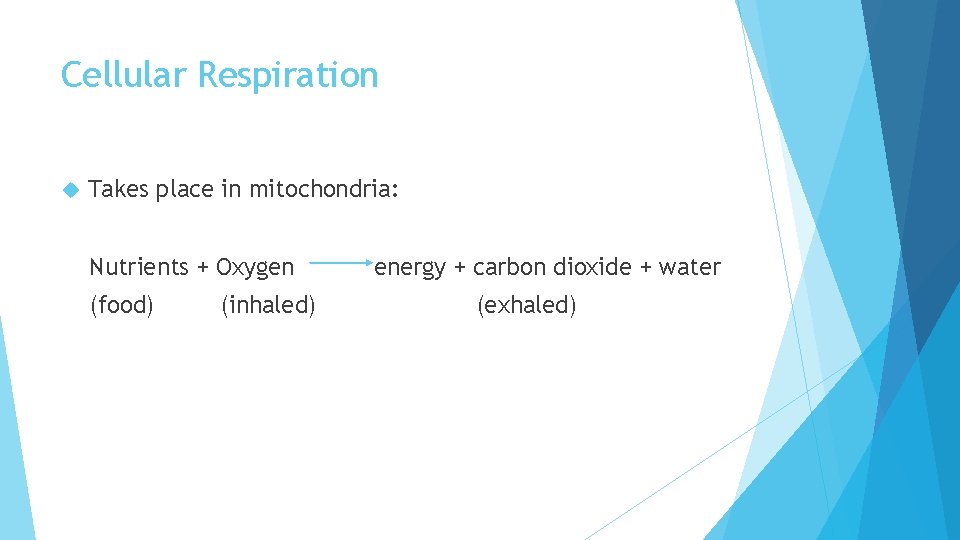
Cellular Respiration Takes place in mitochondria: Nutrients + Oxygen (food) (inhaled) energy + carbon dioxide + water (exhaled)
Respiratory System
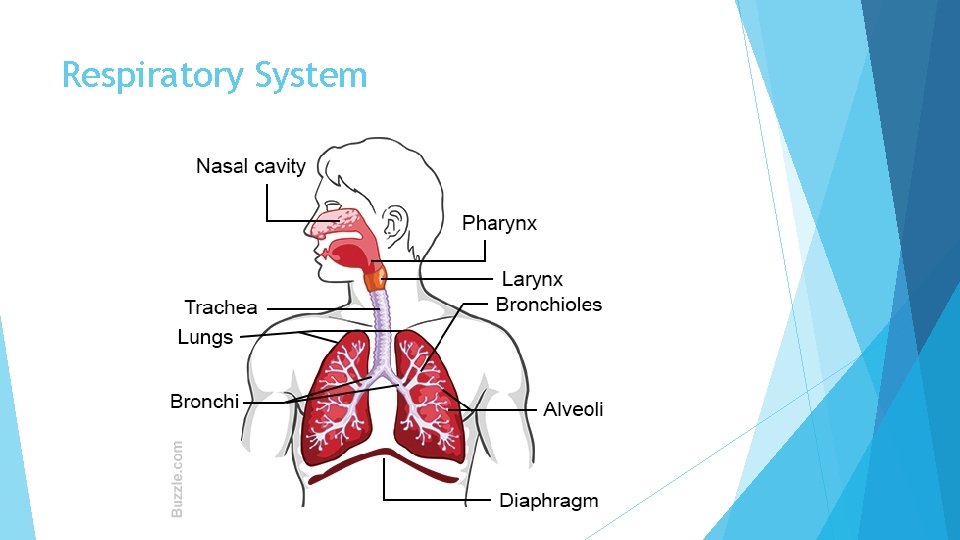
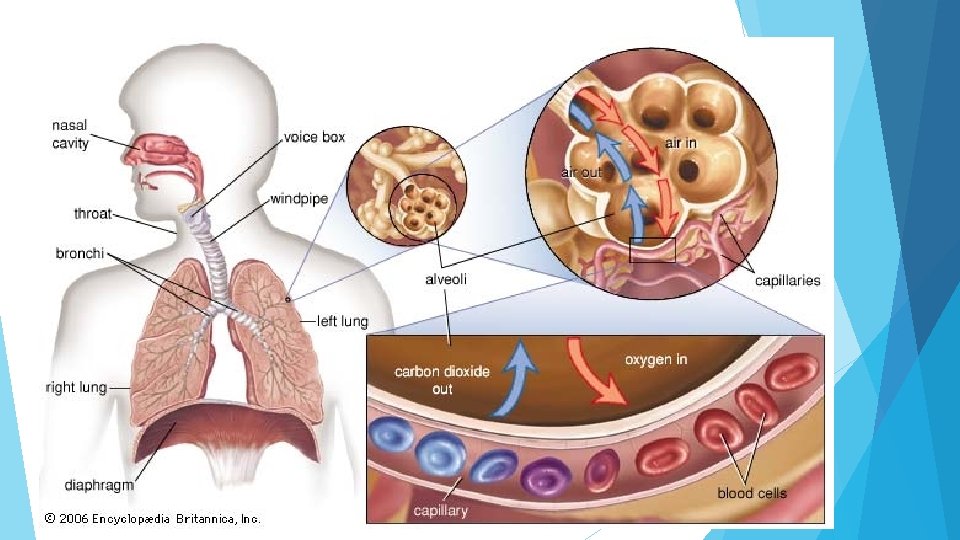
Structures 1. Nasal Passages(cavity) : open to outside through nostrils to pharynx Function: - filters air with hairs that line cavities - warm & moisten air with mucus(secreted by glands) 2. Pharynx (throat): common between respiration and digestion Function: - air toward trachea, food to esophagus - epiglottis seals trachea 3. Larynx: upper trachea, cartilages, vocal cords Function: - carries air, produces sound (voice)
4. Trachea: cartilaginous rings hold open passage, in front Function: - filters air with cilia (hair-like) - warms and moistens with mucus - brings air to bronchi 5. Bronchi: division of trachea to left and right lung, cartilaginous rings to hold open, branching into bronchioles Function: carry air to lungs
6. Lungs: Spongy, elastic, enclosed in rib cage millions of air sacs called alveoli for gas exchange Function: gas exchange between body and outside
Gas Exchanges Extract oxygen from the air and expel carbon dioxide
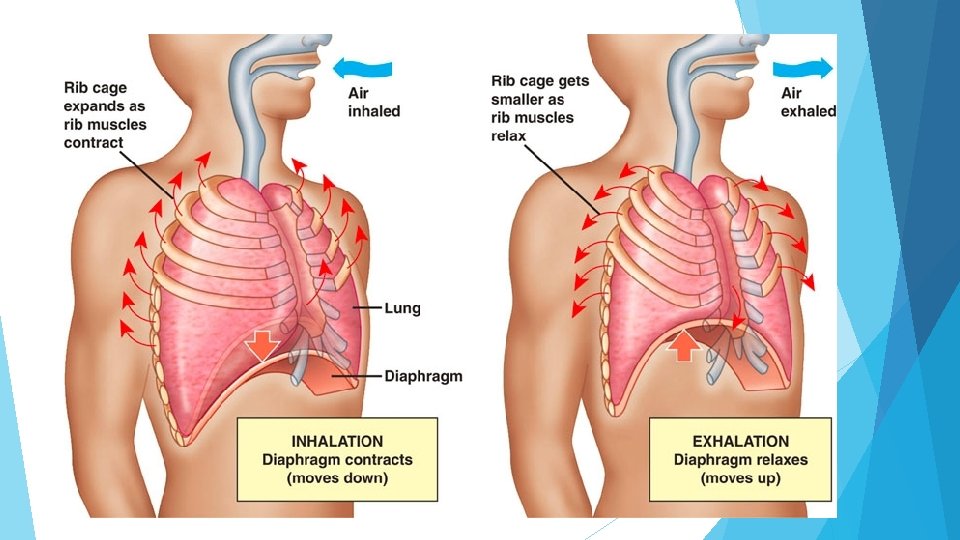
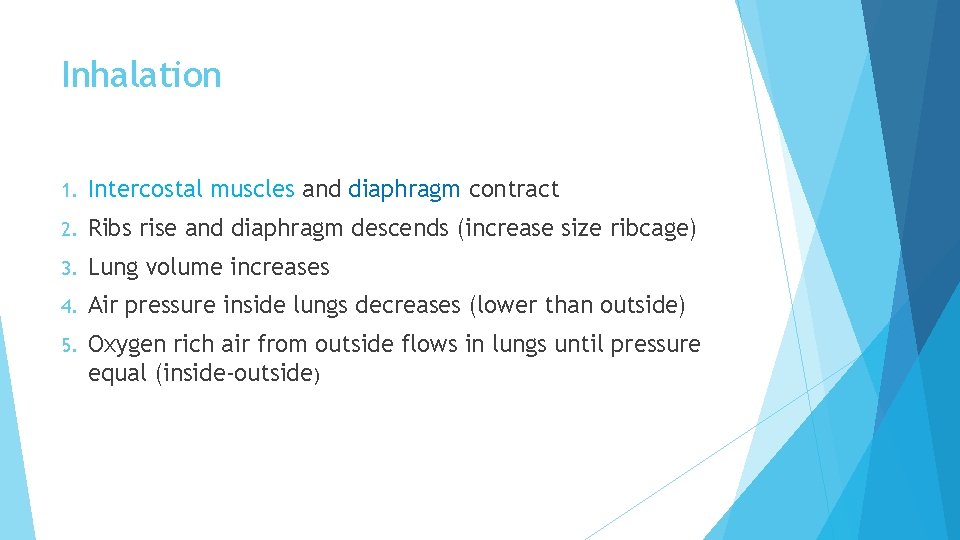
Inhalation 1. Intercostal muscles and diaphragm contract 2. Ribs rise and diaphragm descends (increase size ribcage) 3. Lung volume increases 4. Air pressure inside lungs decreases (lower than outside) 5. Oxygen rich air from outside flows in lungs until pressure equal (inside-outside)
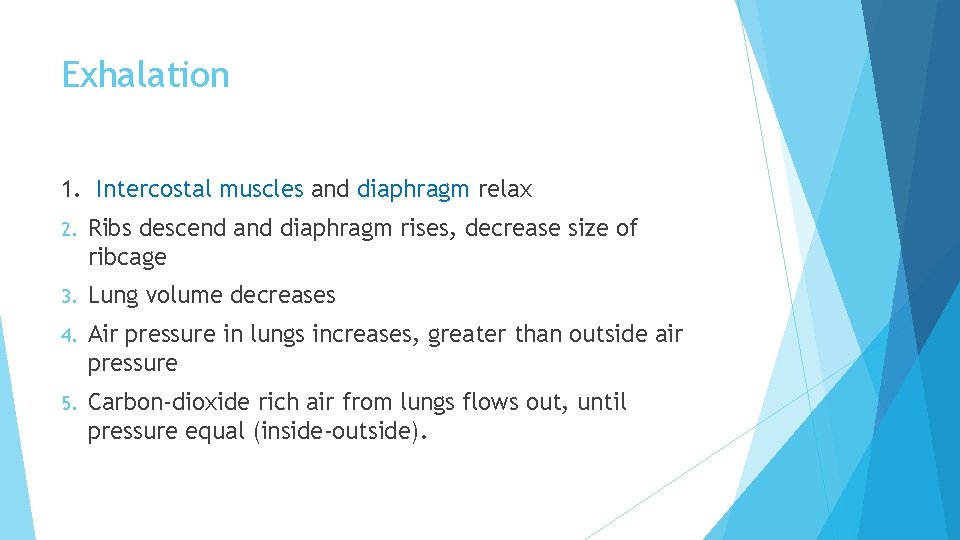
Exhalation 1. Intercostal muscles and diaphragm relax 2. Ribs descend and diaphragm rises, decrease size of ribcage 3. Lung volume decreases 4. Air pressure in lungs increases, greater than outside air pressure 5. Carbon-dioxide rich air from lungs flows out, until pressure equal (inside-outside).
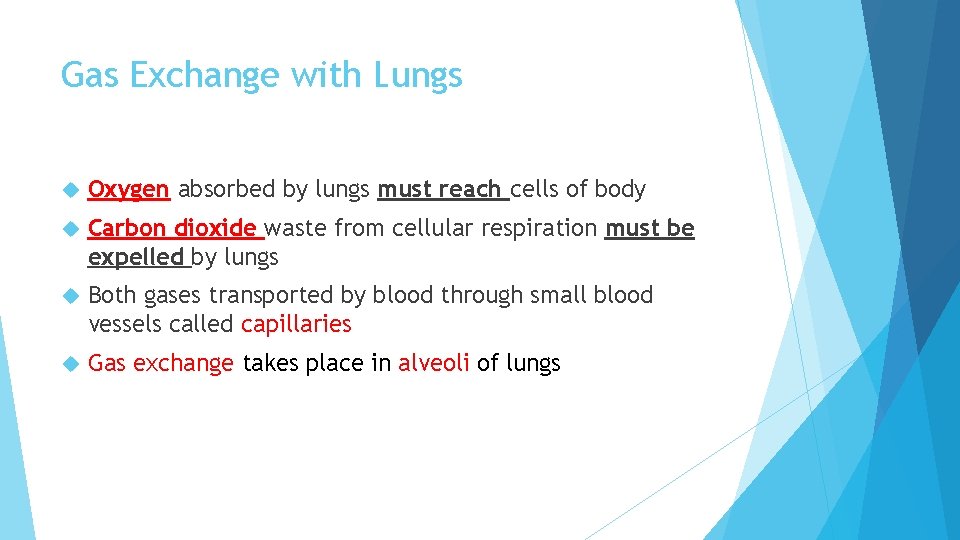
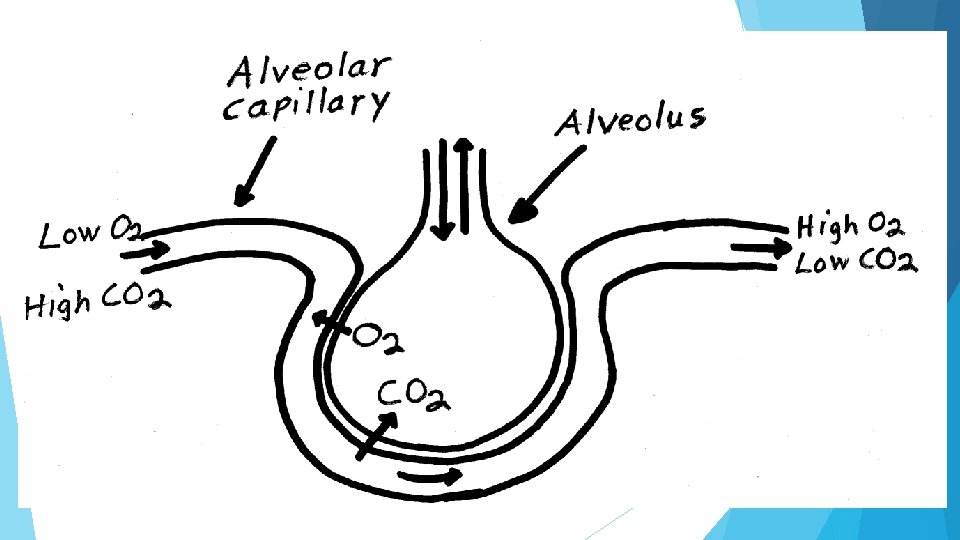
Gas Exchange with Lungs Oxygen absorbed by lungs must reach cells of body Carbon dioxide waste from cellular respiration must be expelled by lungs Both gases transported by blood through small blood vessels called capillaries Gas exchange takes place in alveoli of lungs
Diffusion Transport of molecules of a solute from region of higher concentration to one of lower concentration Remember cells?
Concentration of O 2 is higher in alveolar air than in the capillary blood, so it diffuses from alveoli to blood. Concentration of CO 2 is higher in the capillary blood than in alveolar air, so it diffuses from blood to alveoli.