
RESPIRATORY SYSTEM Link PRIMARY FUNCTIONS Exchange gases oxygen




- Slides: 44
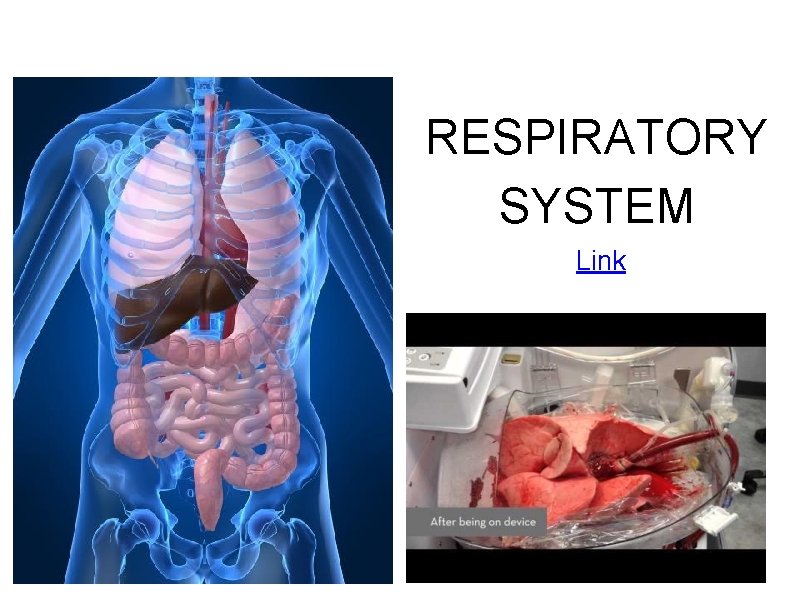
RESPIRATORY SYSTEM Link
PRIMARY FUNCTIONS ● Exchange gases (oxygen and CO 2) ● Produce vocal sounds ● Sense of smell ● Regulation of blood PH
Respiration - process of gas exchange 1. Movement of air into lungs 2. Gas exchange between blood and air (external respiration) 3. Gas transport in blood 4. Gas exchange between blood and body cells (internal respiration) *Cellular Respiration - oxygen use and CO 2 production at a cellular level
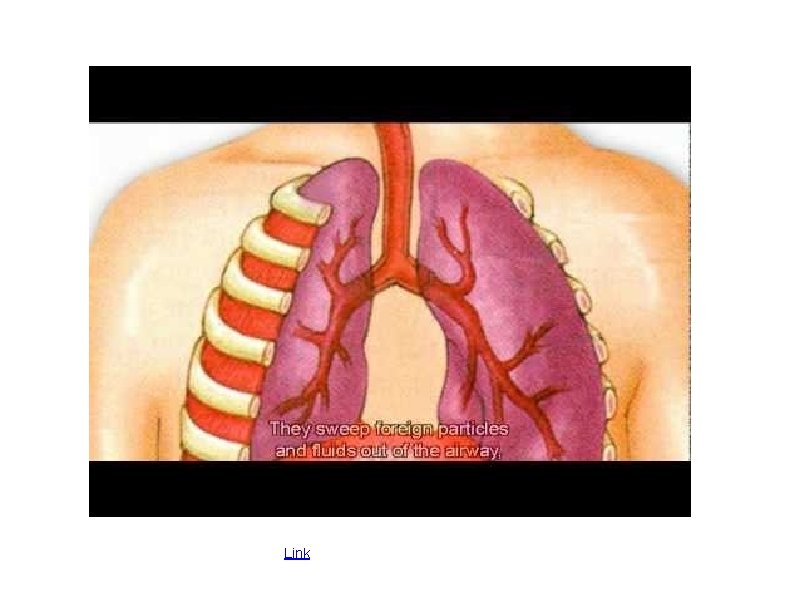
Link
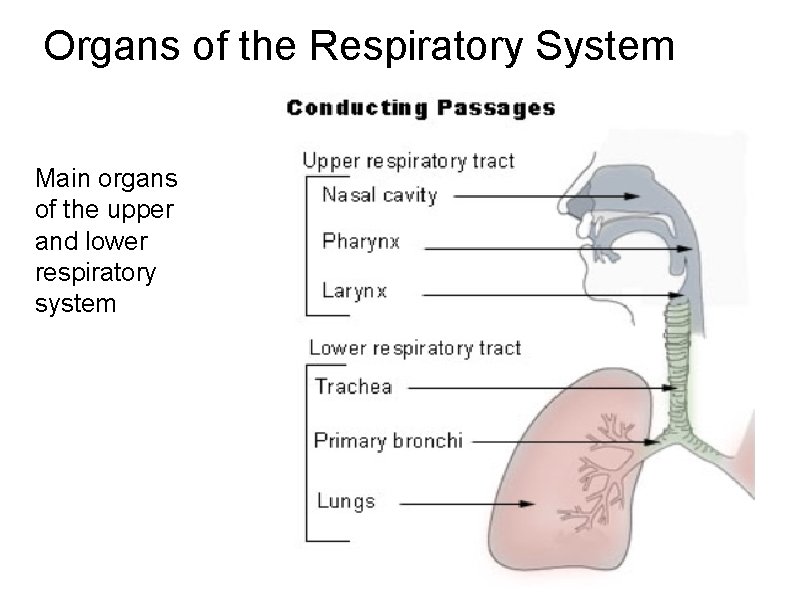
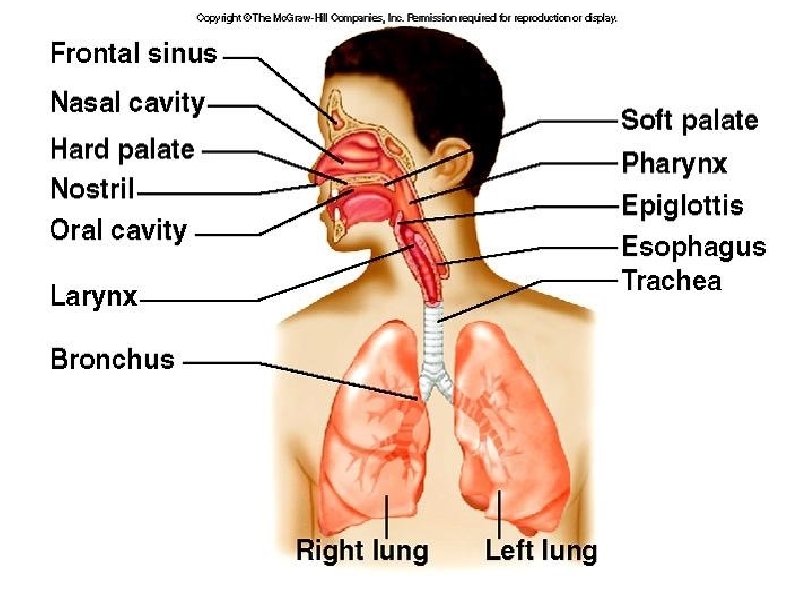
Organs of the Respiratory System Main organs of the upper and lower respiratory system
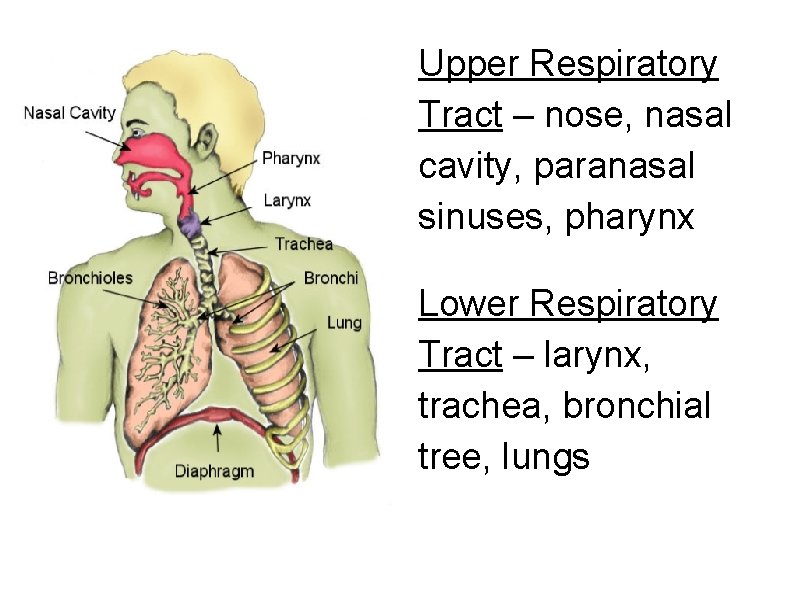
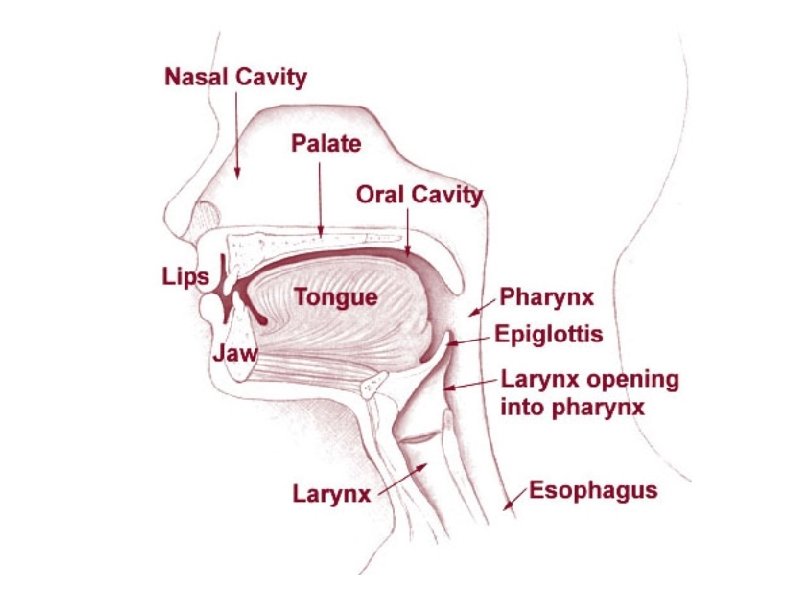
Upper Respiratory Tract – nose, nasal cavity, paranasal sinuses, pharynx Lower Respiratory Tract – larynx, trachea, bronchial tree, lungs
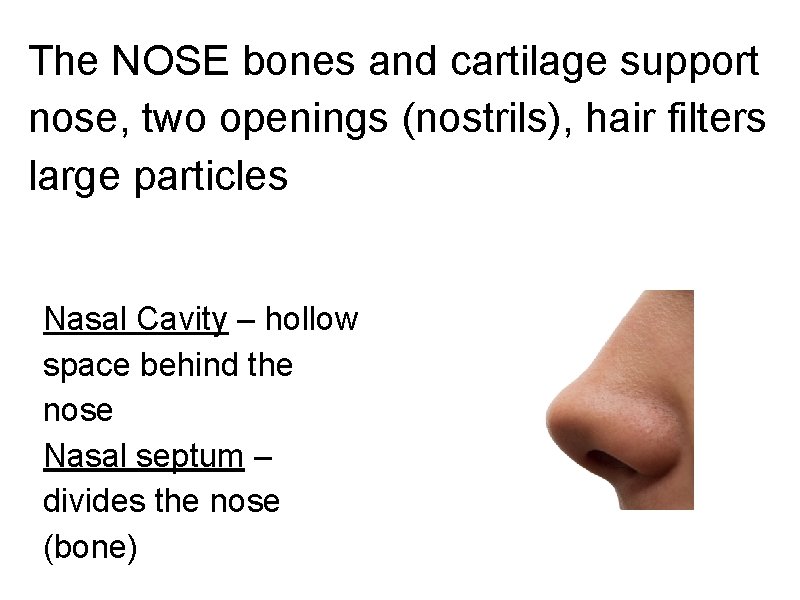
The NOSE bones and cartilage support nose, two openings (nostrils), hair filters large particles Nasal Cavity – hollow space behind the nose Nasal septum – divides the nose (bone)
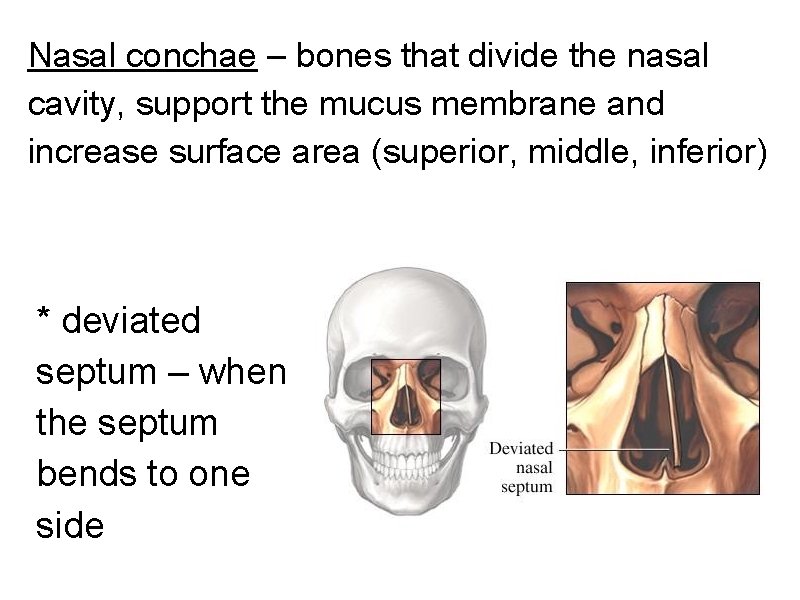
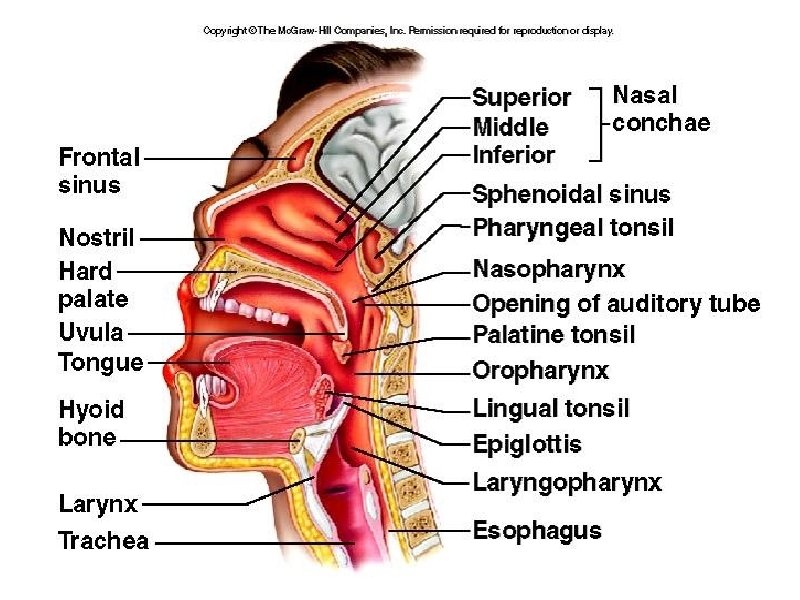
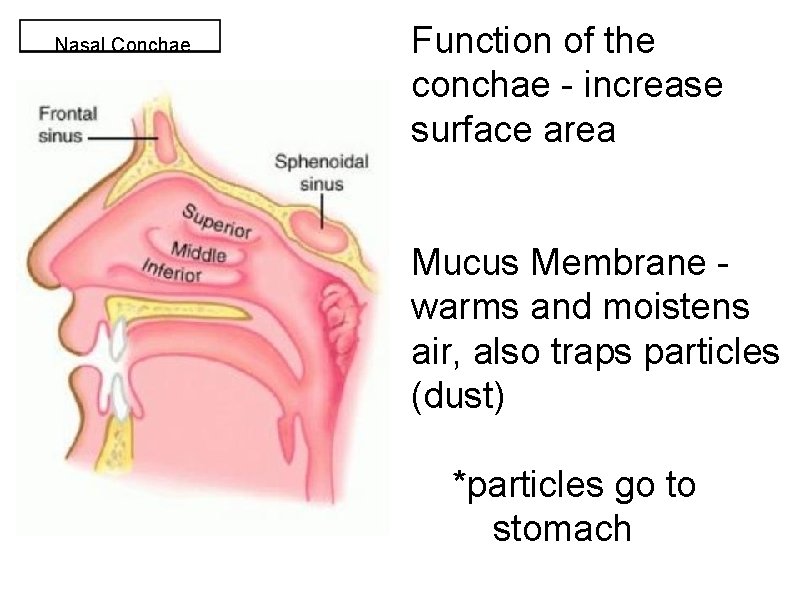
Nasal conchae – bones that divide the nasal cavity, support the mucus membrane and increase surface area (superior, middle, inferior) * deviated septum – when the septum bends to one side
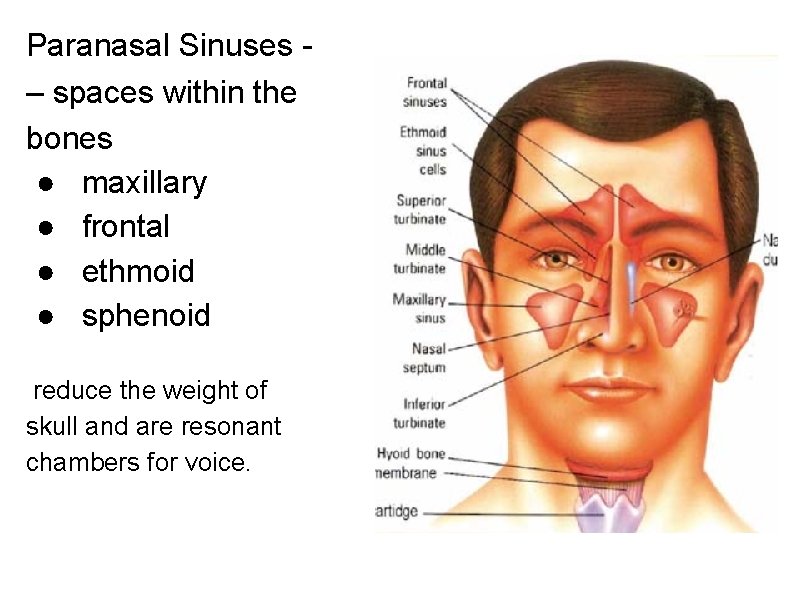
Paranasal Sinuses – spaces within the bones ● maxillary ● frontal ● ethmoid ● sphenoid reduce the weight of skull and are resonant chambers for voice.
Nasal Conchae Function of the conchae - increase surface area Mucus Membrane warms and moistens air, also traps particles (dust) *particles go to stomach
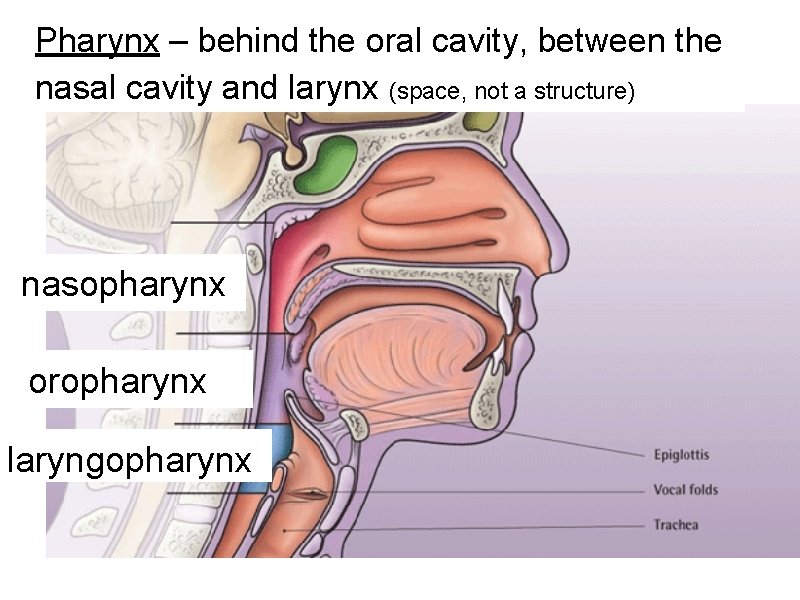
Pharynx – behind the oral cavity, between the nasal cavity and larynx (space, not a structure) nasopharynx oropharynx laryngopharynx
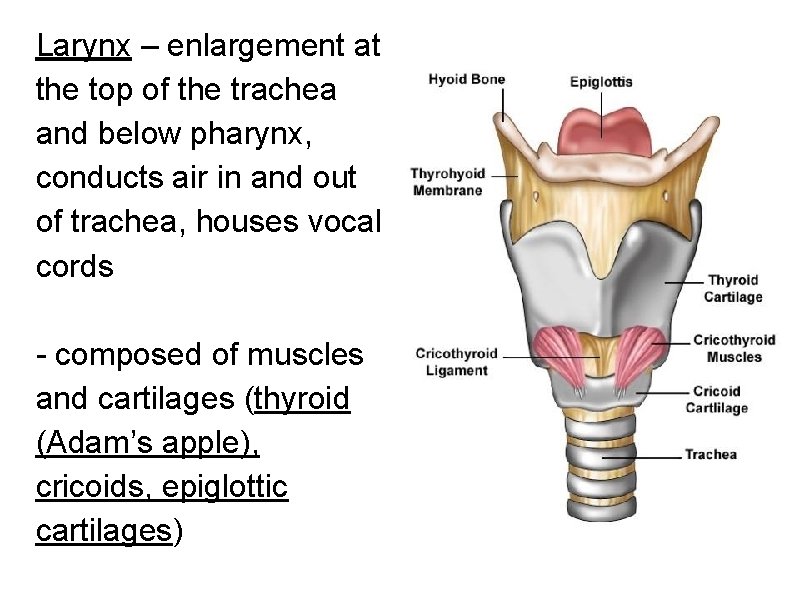
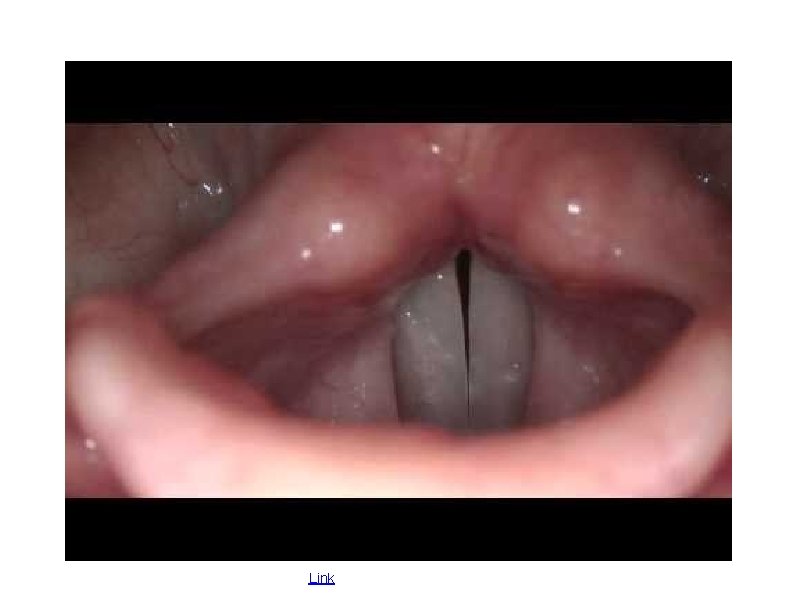
Larynx – enlargement at the top of the trachea and below pharynx, conducts air in and out of trachea, houses vocal cords - composed of muscles and cartilages (thyroid (Adam’s apple), cricoids, epiglottic cartilages)
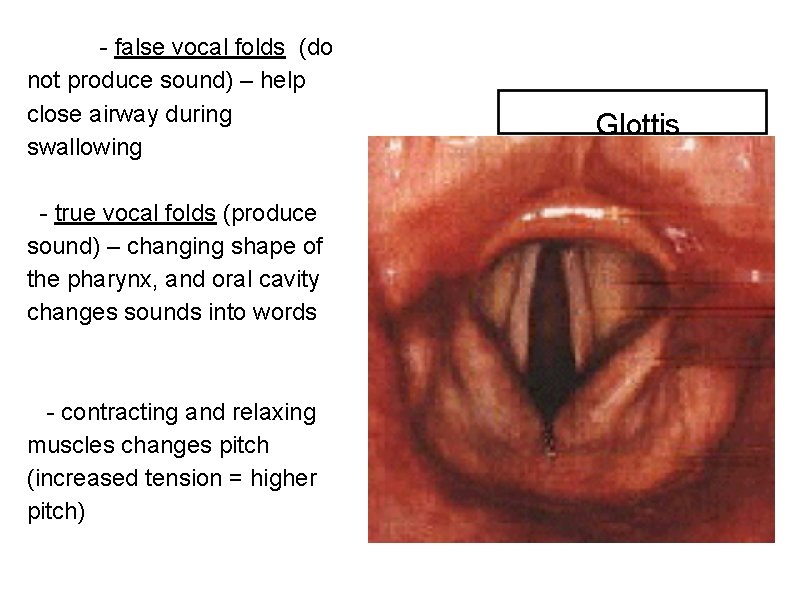
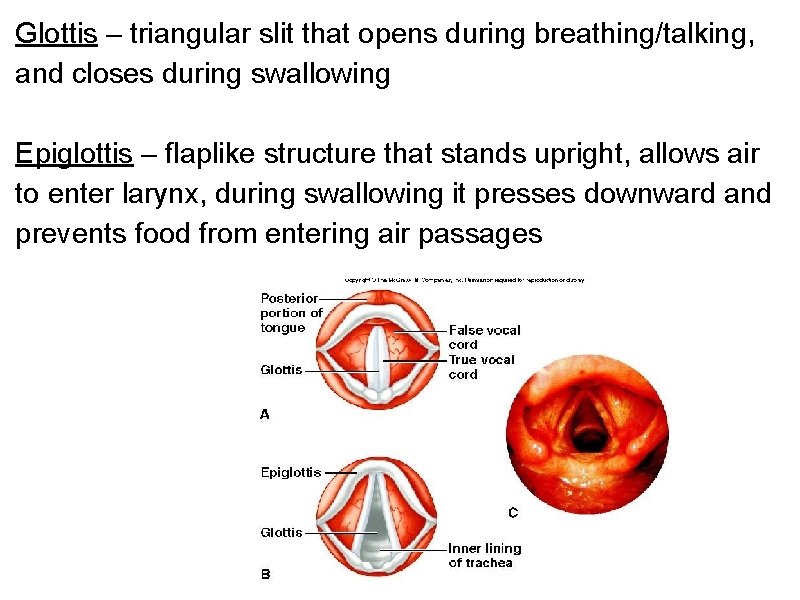
- false vocal folds (do not produce sound) – help close airway during swallowing - true vocal folds (produce sound) – changing shape of the pharynx, and oral cavity changes sounds into words - contracting and relaxing muscles changes pitch (increased tension = higher pitch) Glottis
Link
Glottis – triangular slit that opens during breathing/talking, and closes during swallowing Epiglottis – flaplike structure that stands upright, allows air to enter larynx, during swallowing it presses downward and prevents food from entering air passages
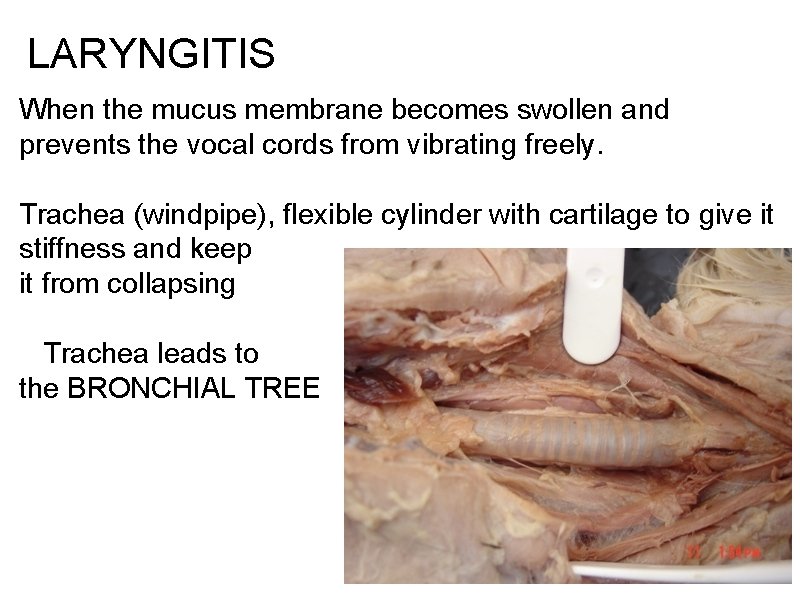
LARYNGITIS When the mucus membrane becomes swollen and prevents the vocal cords from vibrating freely. Trachea (windpipe), flexible cylinder with cartilage to give it stiffness and keep it from collapsing Trachea leads to the BRONCHIAL TREE
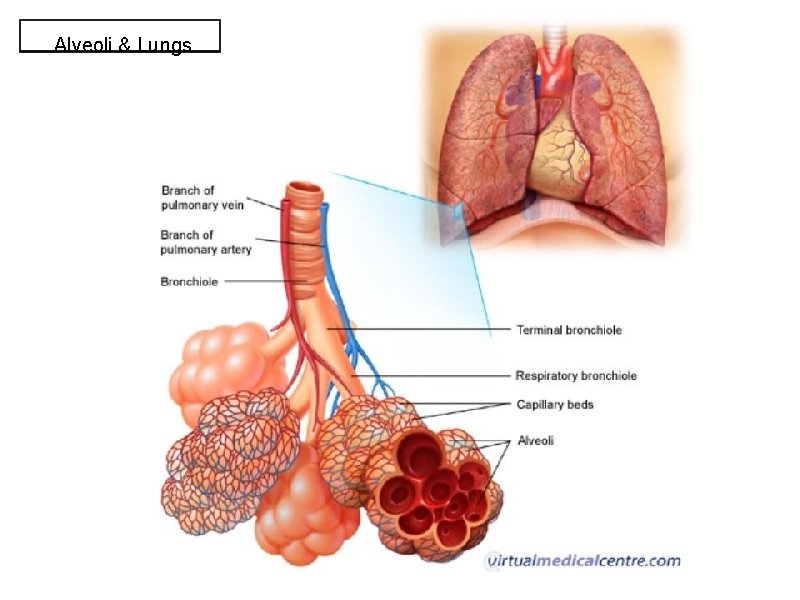
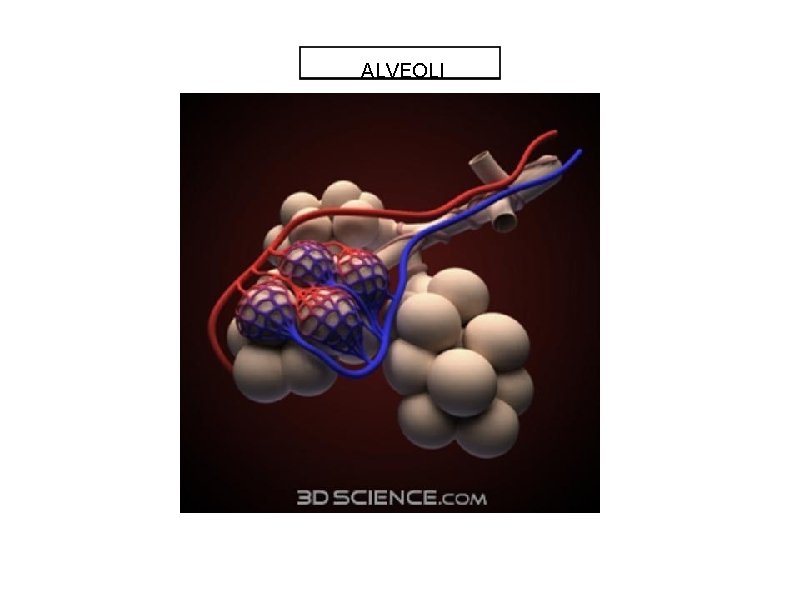
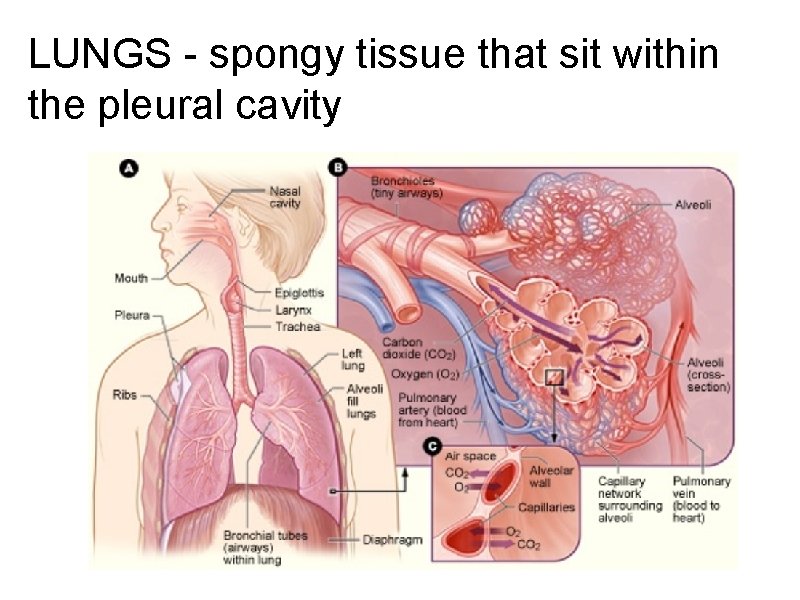
Primary bronchii --> bronchioles --> alveolar ducts --> sacs --> alveoli *gas exchange
Alveoli & Lungs
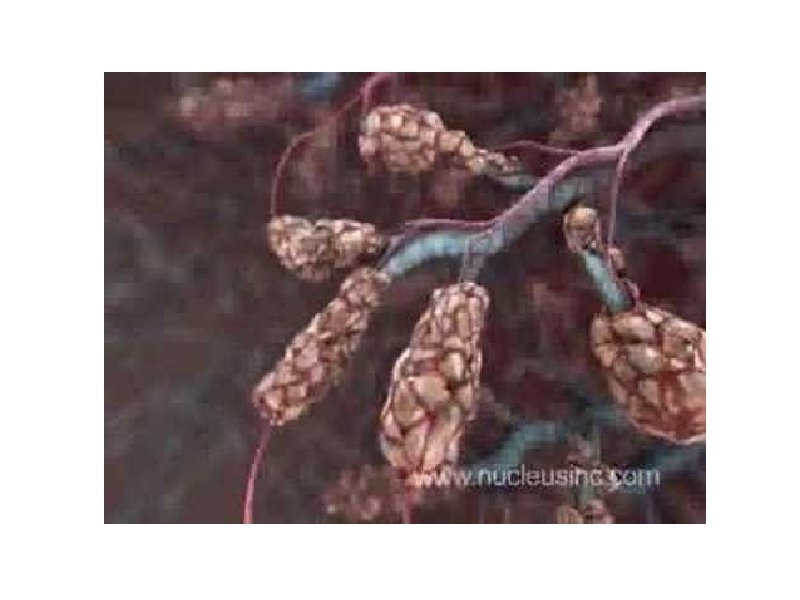
ALVEOLI
LUNGS - spongy tissue that sit within the pleural cavity
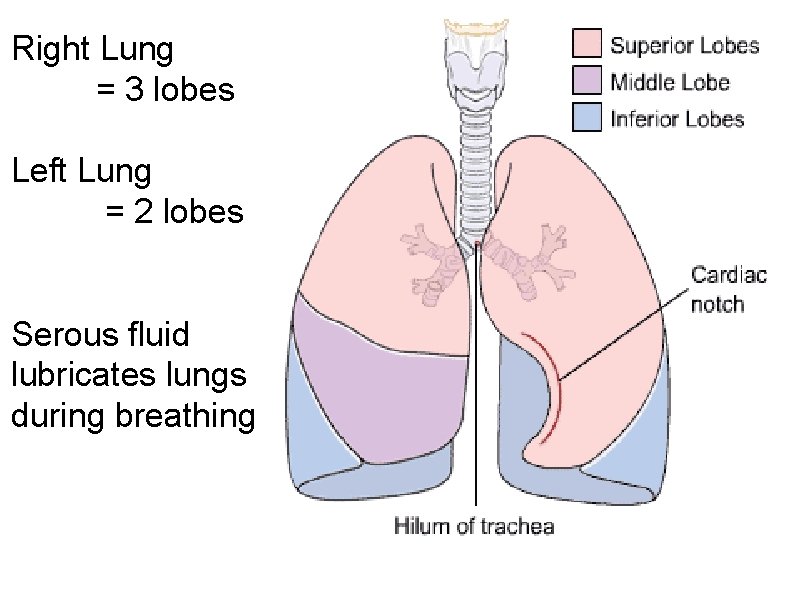
Right Lung = 3 lobes Left Lung = 2 lobes Serous fluid lubricates lungs during breathing
Quick Quiz 1. What do you call the bones found within the nasal cavity? 2. What specific bone divides the nasal cavity into two sides? 3. The space at the back of the mouth is the____. 4. The spaces within the bones of the skull are called the ___________ 5. What structure is known as the windpipe? ______ 6. What is the triangular slit that opens during breathing and talking? 7. In what structures does gas exchange occur? 8. During swallowing, this flap closes to prevent food from entering the airway: ___________
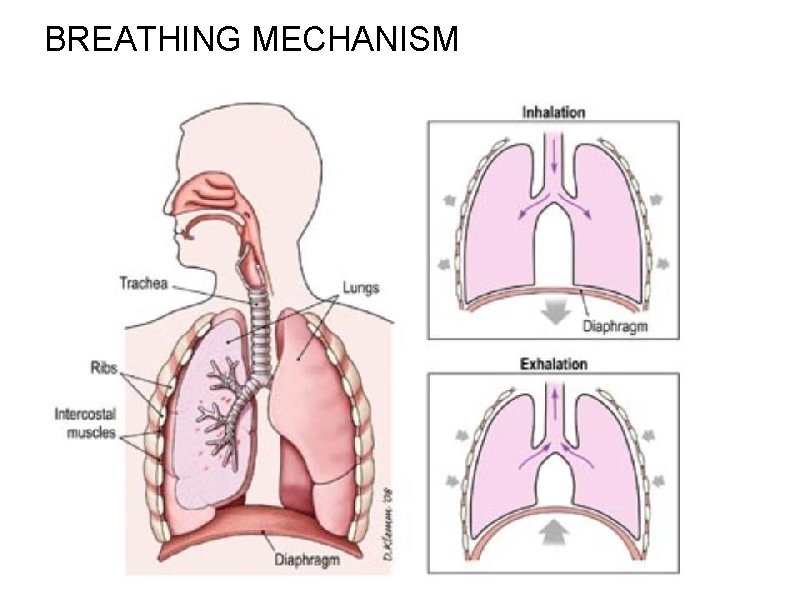
BREATHING MECHANISM
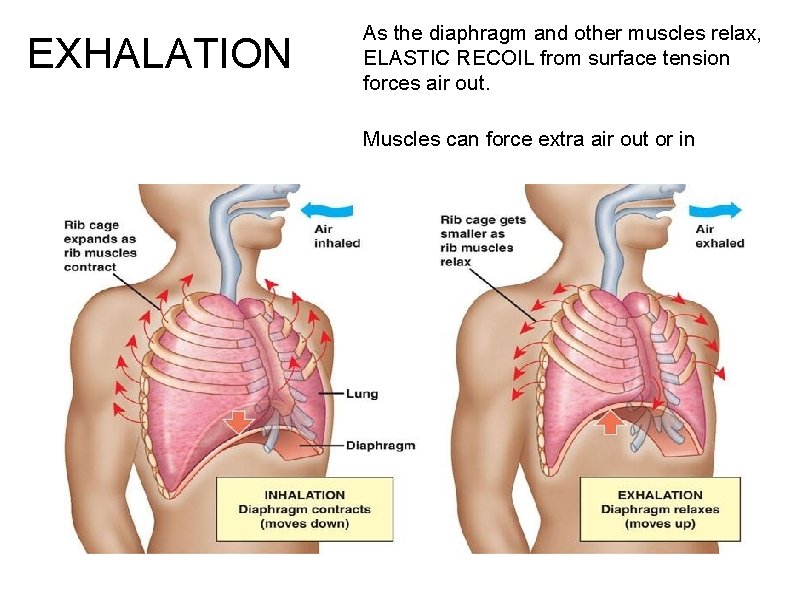
1. Diaphragm moves down, forcing air into airways 2. Intercostals contract, enlarging cavity even more 3. Membranes move with the contractions 4. Surface tension in alveoli and surfactant keep them from collapsing 5. Other muscles (pectoralis minor and sternocleidomastoid) can force a deeper breath 6. The first breath in newborns is the hardest due to lack of surfactant
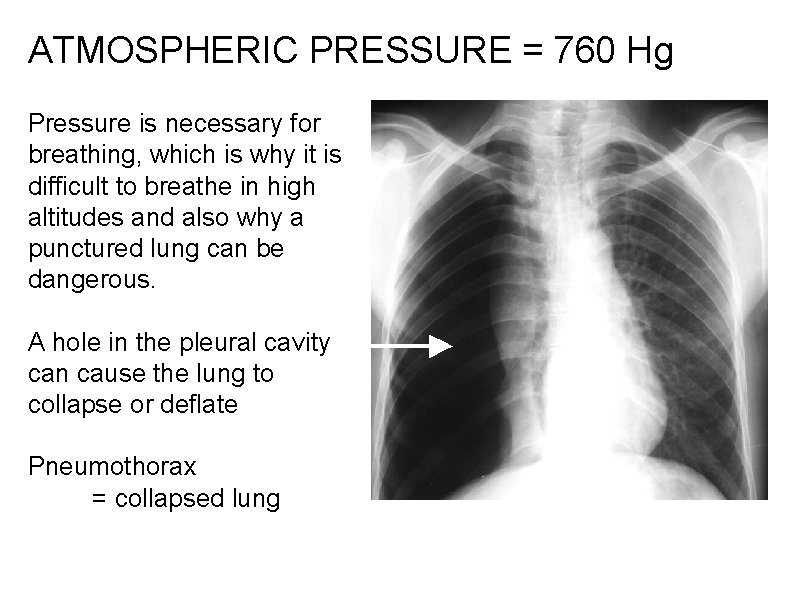
ATMOSPHERIC PRESSURE = 760 Hg Pressure is necessary for breathing, which is why it is difficult to breathe in high altitudes and also why a punctured lung can be dangerous. A hole in the pleural cavity can cause the lung to collapse or deflate Pneumothorax = collapsed lung
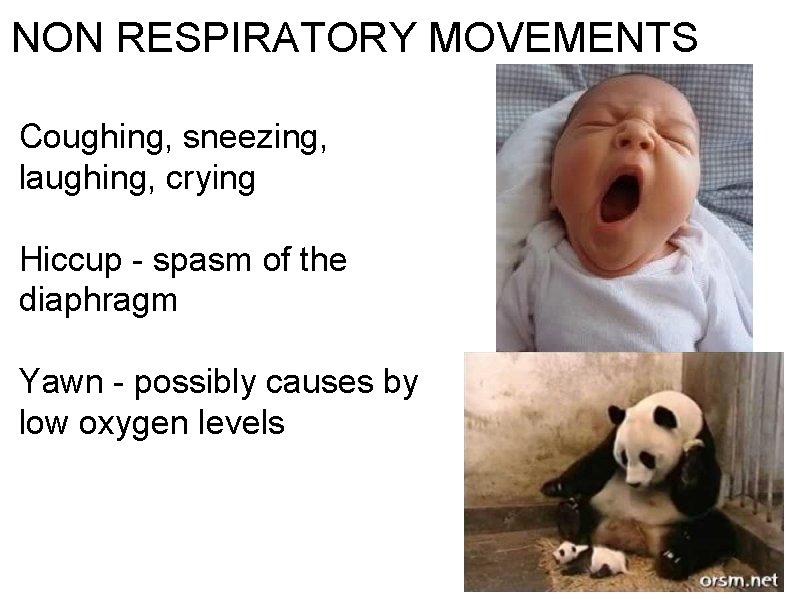
NON RESPIRATORY MOVEMENTS Coughing, sneezing, laughing, crying Hiccup - spasm of the diaphragm Yawn - possibly causes by low oxygen levels
EXHALATION As the diaphragm and other muscles relax, ELASTIC RECOIL from surface tension forces air out. Muscles can force extra air out or in
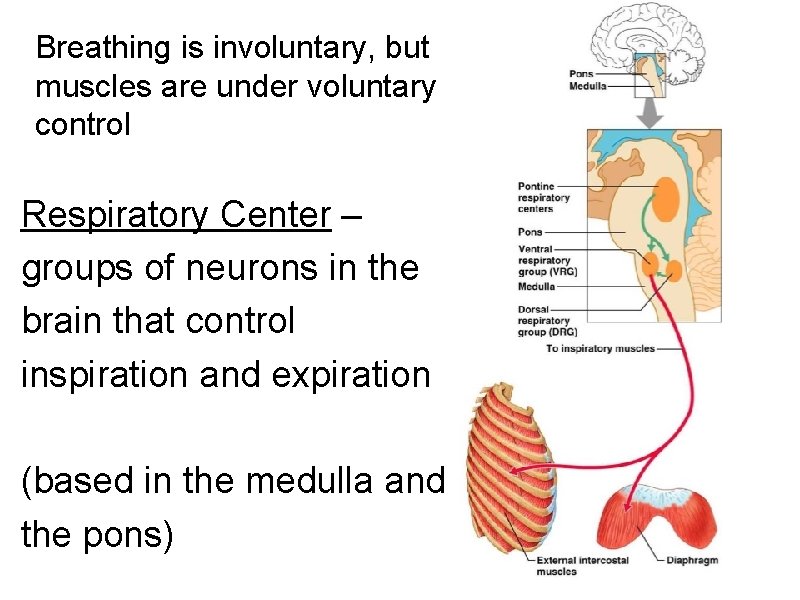
Breathing is involuntary, but muscles are under voluntary control Respiratory Center – groups of neurons in the brain that control inspiration and expiration (based in the medulla and the pons)
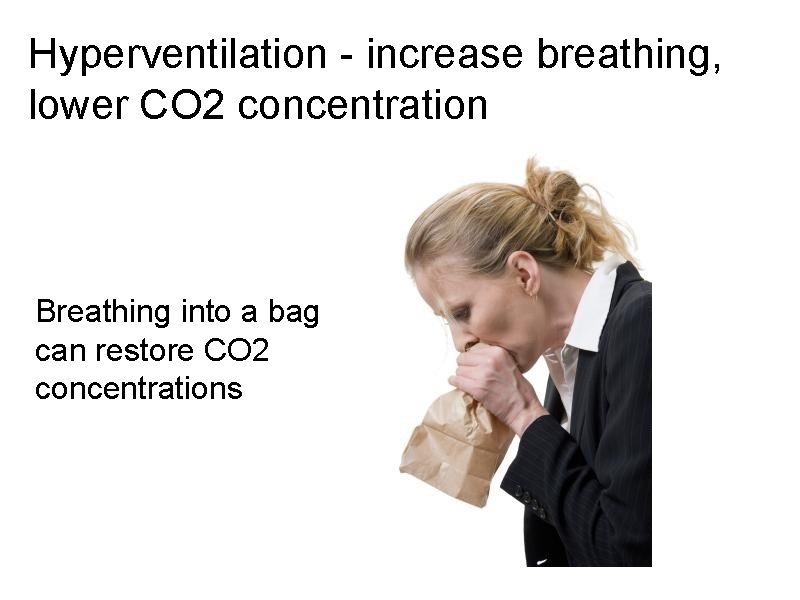
Hyperventilation - increase breathing, lower CO 2 concentration Breathing into a bag can restore CO 2 concentrations
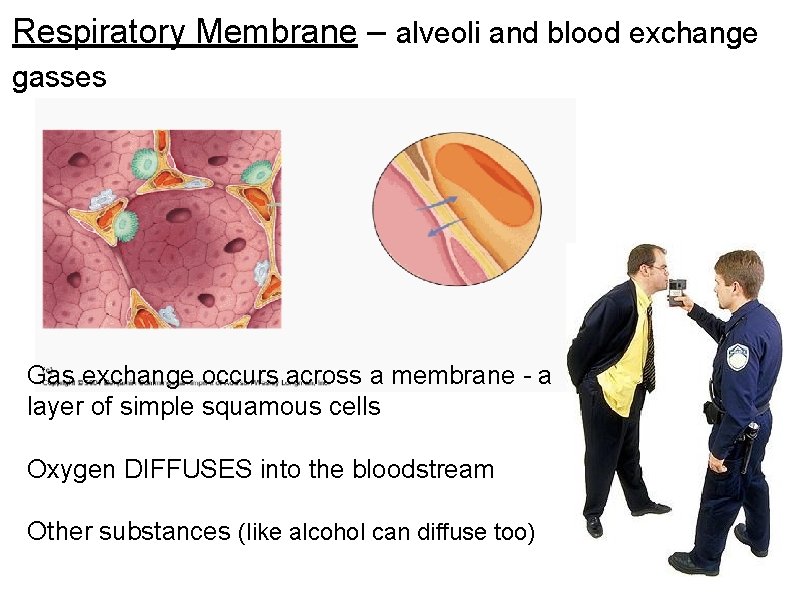
Respiratory Membrane – alveoli and blood exchange gasses Gas exchange occurs across a membrane - a layer of simple squamous cells Oxygen DIFFUSES into the bloodstream Other substances (like alcohol can diffuse too)
ILLNESSES RELATED TO THE RESPIRATORY SYSTEM 1. Cystic Fibrosis (genetic) 2. Asthma 3. Bronchitis 4. Apnea 5. Emphysema 6. Lung Cancer 7. Altitude Sickness 8. Chronic Obstructive Pulmonary Disease (COPD) 9. Sinusitis 10. Bacterial or Viral Infections (cold, flu, pneumonia)
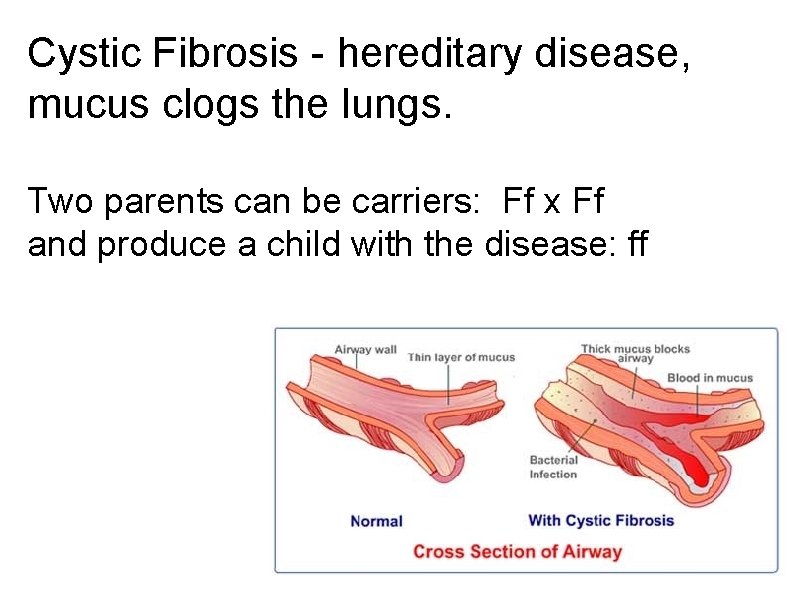
Cystic Fibrosis - hereditary disease, mucus clogs the lungs. Two parents can be carriers: Ff x Ff and produce a child with the disease: ff
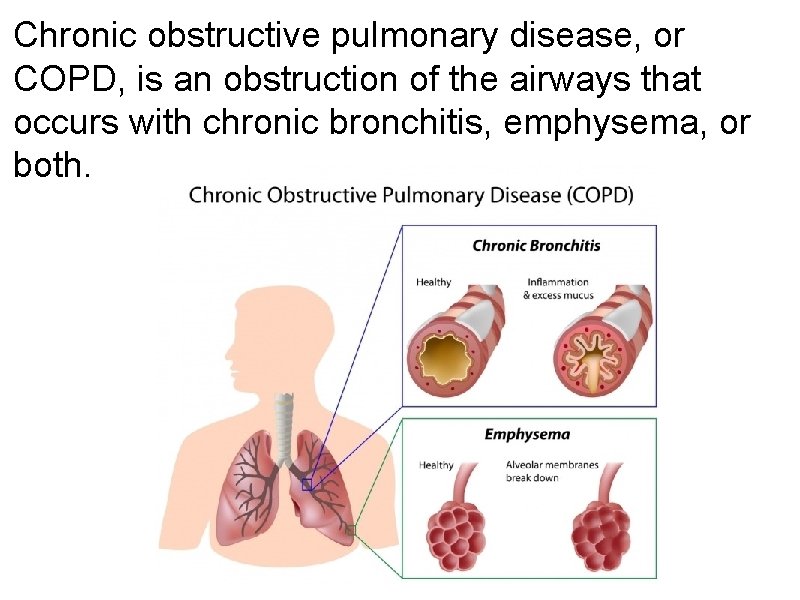
Chronic obstructive pulmonary disease, or COPD, is an obstruction of the airways that occurs with chronic bronchitis, emphysema, or both.
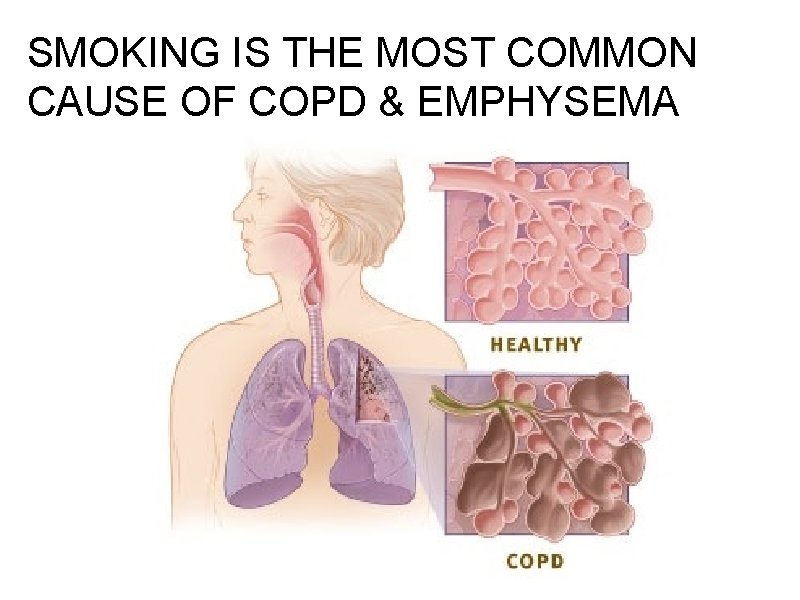
SMOKING IS THE MOST COMMON CAUSE OF COPD & EMPHYSEMA
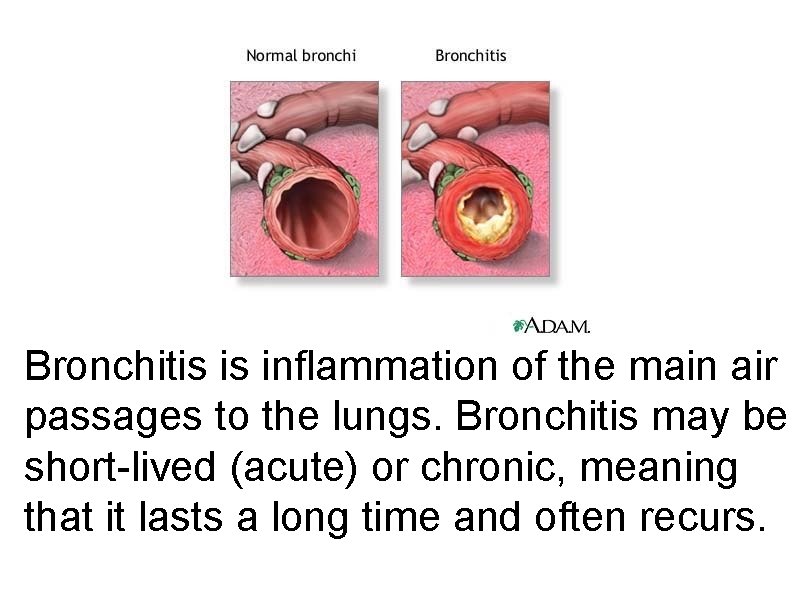
Bronchitis is inflammation of the main air passages to the lungs. Bronchitis may be short-lived (acute) or chronic, meaning that it lasts a long time and often recurs.
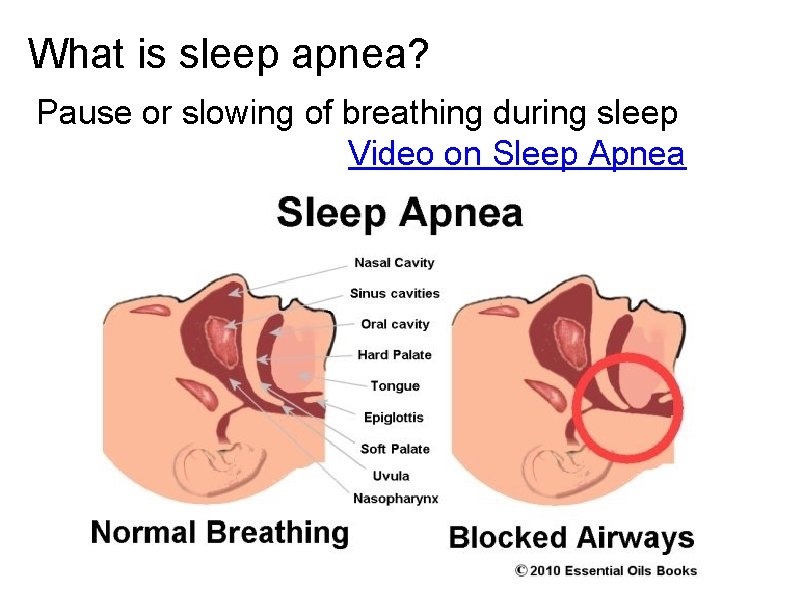
What is sleep apnea? Pause or slowing of breathing during sleep Video on Sleep Apnea
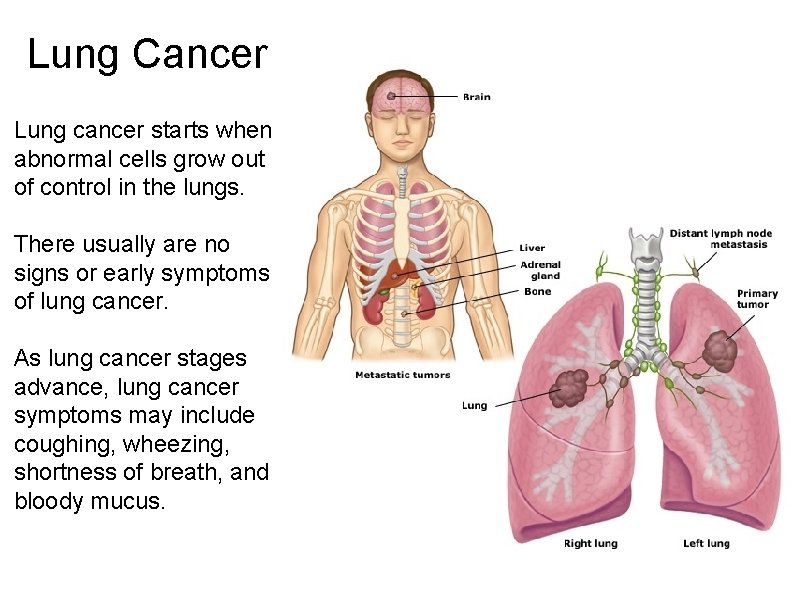
Lung Cancer Lung cancer starts when abnormal cells grow out of control in the lungs. There usually are no signs or early symptoms of lung cancer. As lung cancer stages advance, lung cancer symptoms may include coughing, wheezing, shortness of breath, and bloody mucus.
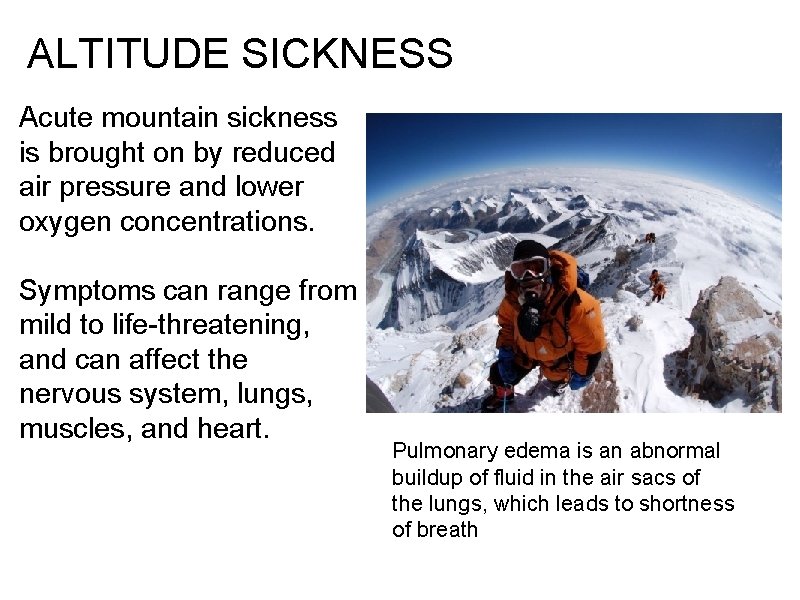
ALTITUDE SICKNESS Acute mountain sickness is brought on by reduced air pressure and lower oxygen concentrations. Symptoms can range from mild to life-threatening, and can affect the nervous system, lungs, muscles, and heart. Pulmonary edema is an abnormal buildup of fluid in the air sacs of the lungs, which leads to shortness of breath
Bacteria / Viral Infection Pneumonia-Infection that inflames air sacs in one or both lungs, which may fill with fluid. Tuberculosis-A potentially serious infectious bacterial disease that mainly affects the lungs causing a chronic cough.
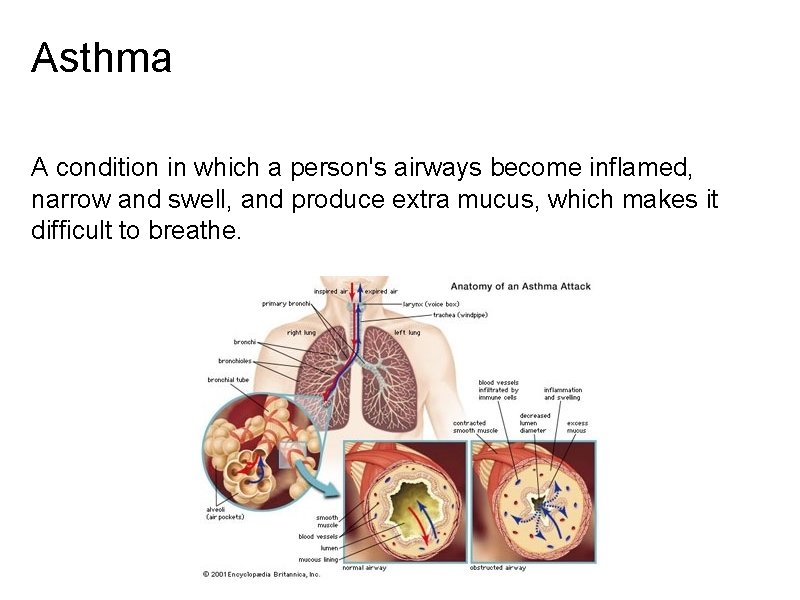
Asthma A condition in which a person's airways become inflamed, narrow and swell, and produce extra mucus, which makes it difficult to breathe.