
Respiratory System Lecture 4 Outline Breathing Basics Bigger
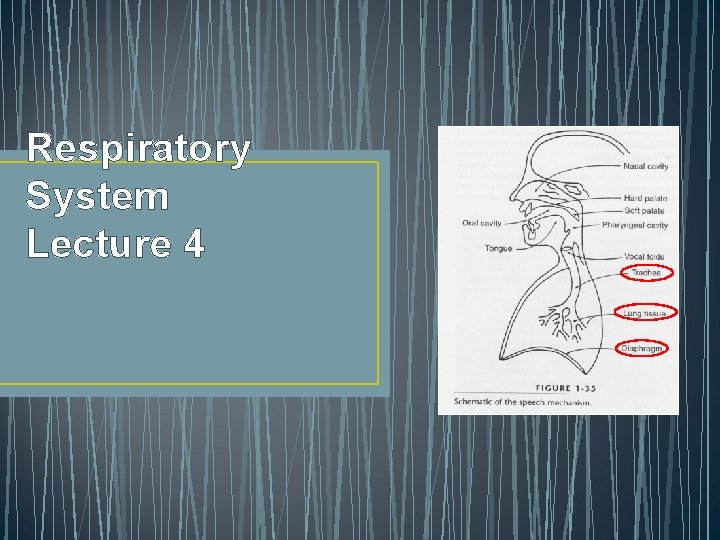
Respiratory System Lecture 4
Outline • Breathing Basics • Bigger Breaths • Breathing for Speech

Inspiration Diaphragm External Intercostal s Accessory Muscles Expiration Abdominal Muscles Internal Intercostal s Accessory Muscles?
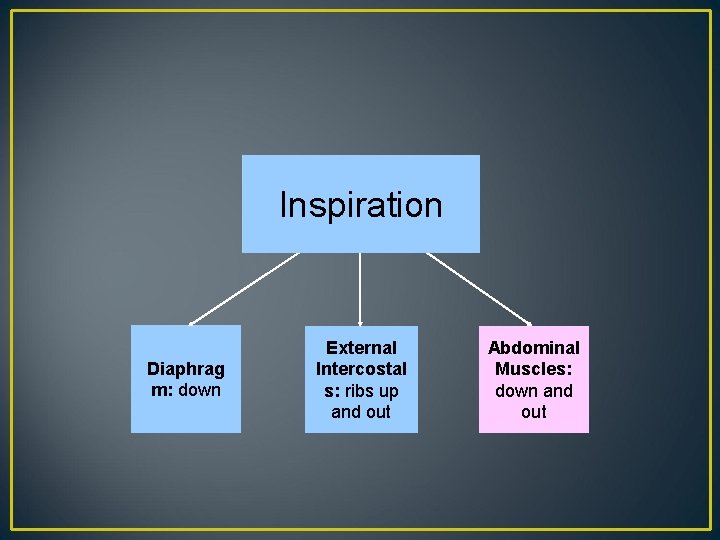
Inspiration Diaphrag m: down External Intercostal s: ribs up and out Abdominal Muscles: down and out

Accessory Muscles • Sternocleidomasto id • Origins: manubrium of sternum and clavicle • Unite and course upward • Insertion: mastoid process of temporal bone • Contract: when head is fixed, bilateral contraction elevates http: //www. anatomyexpert. com/structure_detail/508 sternum, clavicle, Hixon, T. J. , et al. (2008). Pg. 1
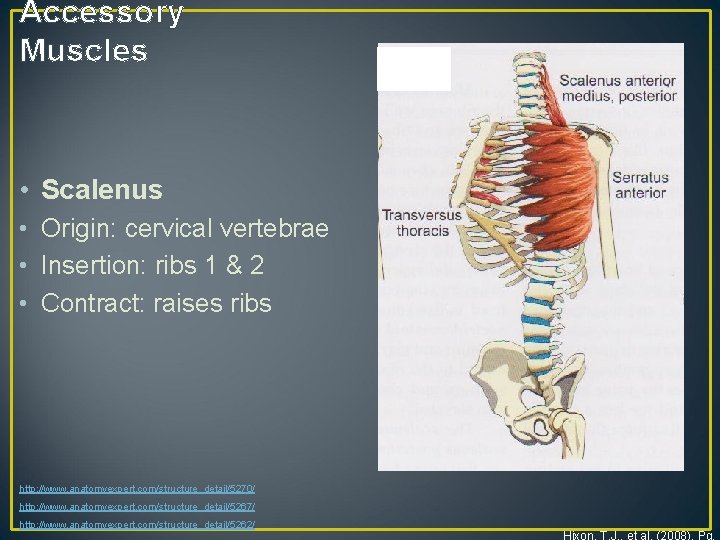
Accessory Muscles • Scalenus • Origin: cervical vertebrae • Insertion: ribs 1 & 2 • Contract: raises ribs http: //www. anatomyexpert. com/structure_detail/5270/ http: //www. anatomyexpert. com/structure_detail/5267/ http: //www. anatomyexpert. com/structure_detail/5262/ Hixon, T. J. , et al. (2008). Pg. 1
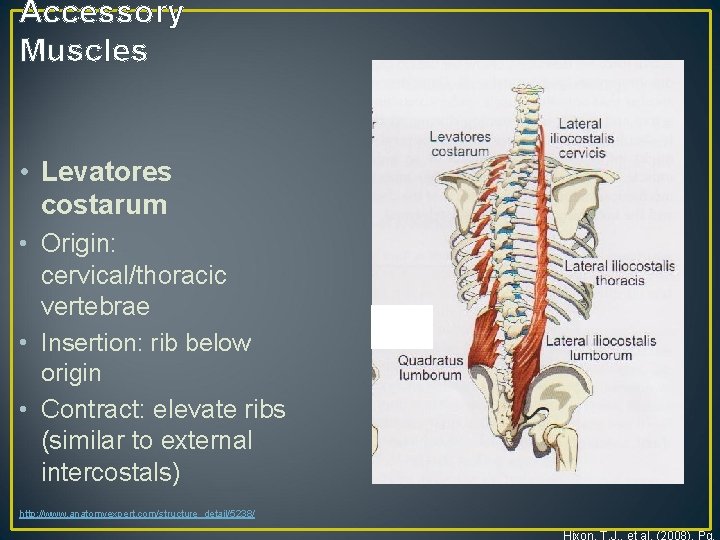
Accessory Muscles • Levatores costarum • Origin: cervical/thoracic vertebrae • Insertion: rib below origin • Contract: elevate ribs (similar to external intercostals) http: //www. anatomyexpert. com/structure_detail/5238/ Hixon, T. J. , et al. (2008). Pg. 1
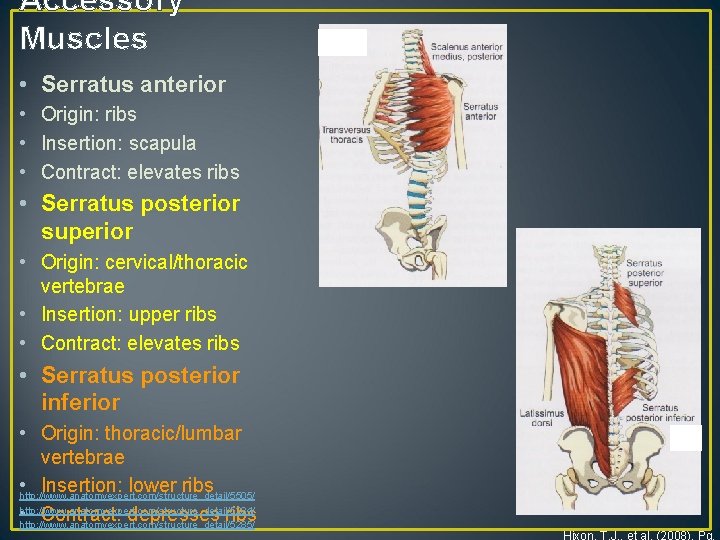
Accessory Muscles • Serratus anterior • Origin: ribs • Insertion: scapula • Contract: elevates ribs • Serratus posterior superior • Origin: cervical/thoracic vertebrae • Insertion: upper ribs • Contract: elevates ribs • Serratus posterior inferior • Origin: thoracic/lumbar vertebrae • http: //www. anatomyexpert. com/structure_detail/5505/ Insertion: lower ribs http: //www. anatomyexpert. com/structure_detail/5284/ • http: //www. anatomyexpert. com/structure_detail/5285/ Contract: depresses ribs Hixon, T. J. , et al. (2008). Pg. 1
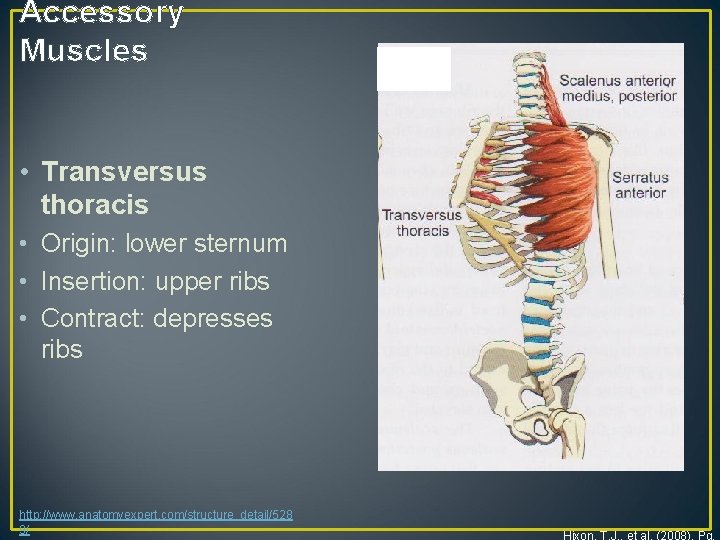
Accessory Muscles • Transversus thoracis • Origin: lower sternum • Insertion: upper ribs • Contract: depresses ribs http: //www. anatomyexpert. com/structure_detail/528 9/ Hixon, T. J. , et al. (2008). Pg. 1
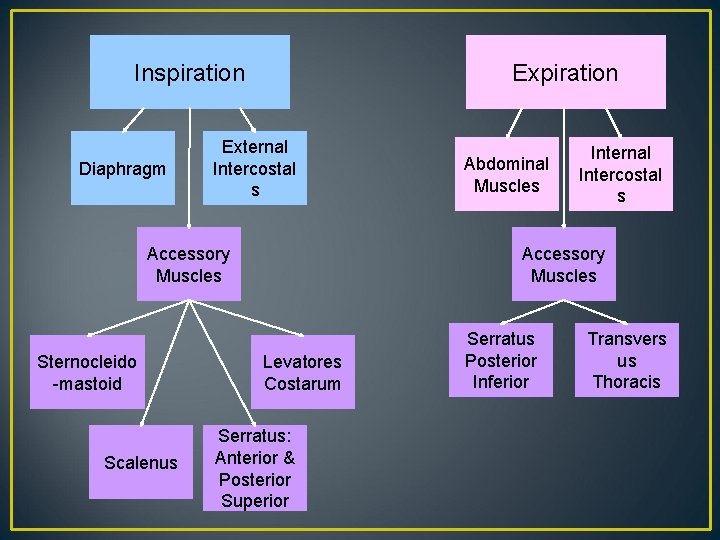
Inspiration Diaphragm Expiration External Intercostal s Accessory Muscles Sternocleido -mastoid Scalenus Abdominal Muscles Internal Intercostal s Accessory Muscles Levatores Costarum Serratus: Anterior & Posterior Superior Serratus Posterior Inferior Transvers us Thoracis
Outline • Breathing Basics • Bigger Breaths • Breathing for Speech
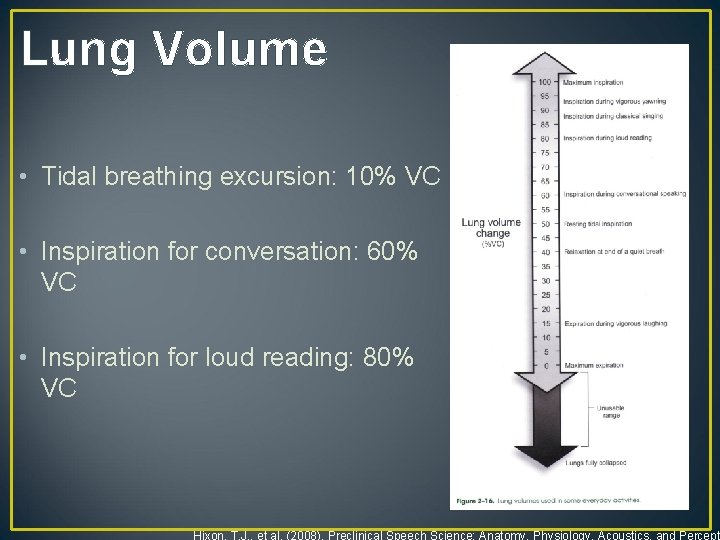
Lung Volume • Tidal breathing excursion: 10% VC • Inspiration for conversation: 60% VC • Inspiration for loud reading: 80% VC Hixon, T. J. , et al. (2008). Preclinical Speech Science: Anatomy, Physiology, Acoustics, and Percept
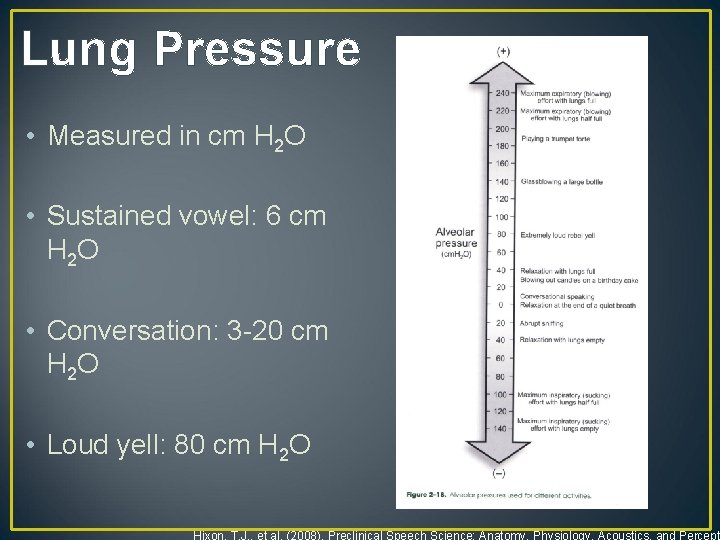
Lung Pressure • Measured in cm H 2 O • Sustained vowel: 6 cm H 2 O • Conversation: 3 -20 cm H 2 O • Loud yell: 80 cm H 2 O Hixon, T. J. , et al. (2008). Preclinical Speech Science: Anatomy, Physiology, Acoustics, and Percept
Why can you generate larger pressures at larger lung volumes? • Boyle’s Law: PV = constant
Sustained Vowel Phonation • How do we maintain the same expiratory pressure for speech when lung volumes are changing? • Passive forces • Muscle effort starts at 55% VC Zemlin, W. R. (1998). Pg. 91
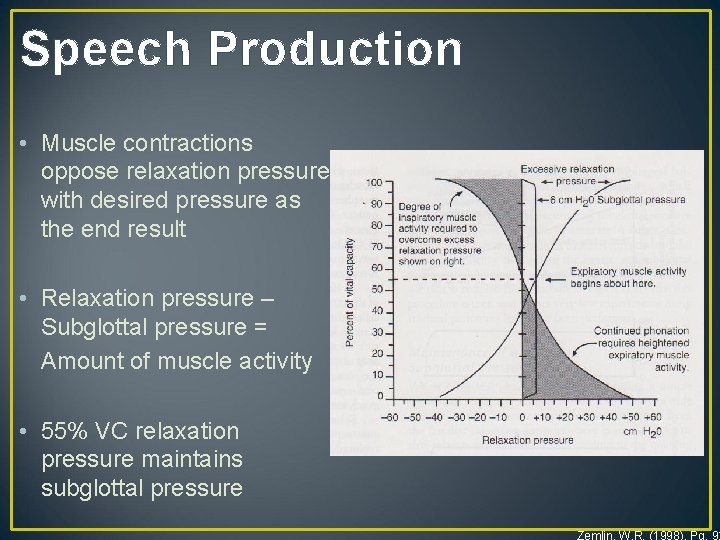
Speech Production • Muscle contractions oppose relaxation pressure with desired pressure as the end result • Relaxation pressure – Subglottal pressure = Amount of muscle activity • 55% VC relaxation pressure maintains subglottal pressure Zemlin, W. R. (1998). Pg. 92
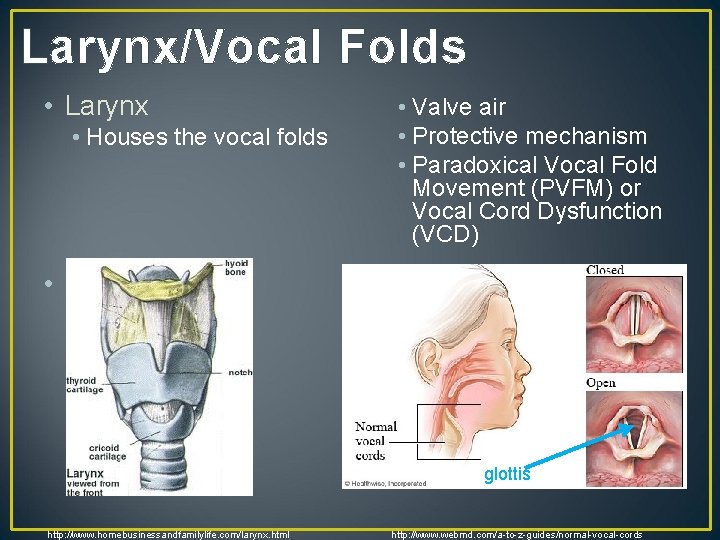
Larynx/Vocal Folds • Larynx • Houses the vocal folds • Valve air • Protective mechanism • Paradoxical Vocal Fold Movement (PVFM) or Vocal Cord Dysfunction (VCD) • Vocal folds glottis http: //www. homebusinessandfamilylife. com/larynx. html http: //www. webmd. com/a-to-z-guides/normal-vocal-cords
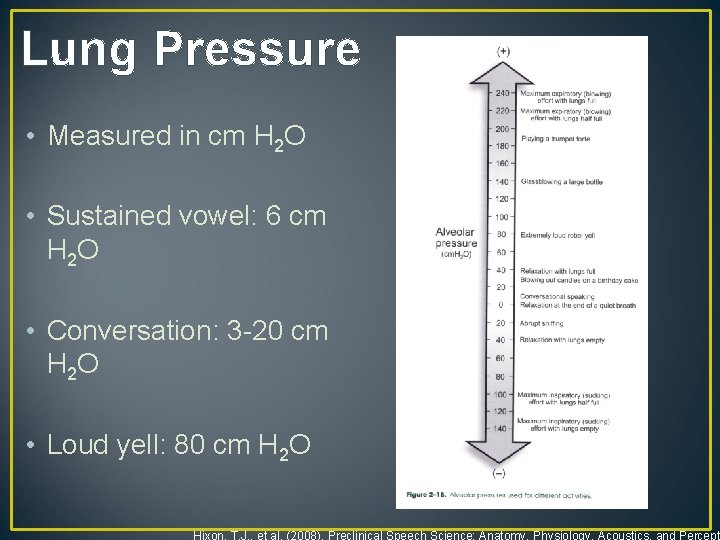
Lung Pressure • Measured in cm H 2 O • Sustained vowel: 6 cm H 2 O • Conversation: 3 -20 cm H 2 O • Loud yell: 80 cm H 2 O Hixon, T. J. , et al. (2008). Preclinical Speech Science: Anatomy, Physiology, Acoustics, and Percept
Types of Breathing • Clavicular: shoulders move up and down during breathing • Thoracic: balance of movement during breathing between the thoracic and abdominal regions • Diaphragmatic (Abdominal): most of the movement during breathing occurs in the abdominal area
Movie- Charity (Physiology) http: //www. youtube. com/watch? v=v. YPv 69 FEK 2 M
- Slides: 20