
RESPIRATORY SYSTEM I Histology of the Upper Respiratory

- Slides: 23
RESPIRATORY SYSTEM ( I ) Histology of the Upper Respiratory Tract, and Trachea & Primary bonchi
Objectives: By the end of this lecture the student should be able to describe the microscopic structures of: • Vestibule of the nasal cavity. • Respiratory mucosa of the nasal cavity. • Nasal septum. • Olfactory mucosa of the nasal cavity. • Mucosa of the paranasal sinuses. • Larynx. - The microscopic structures of the wall of: • Trachea. • Primary or extra-pulmonary bronchi.
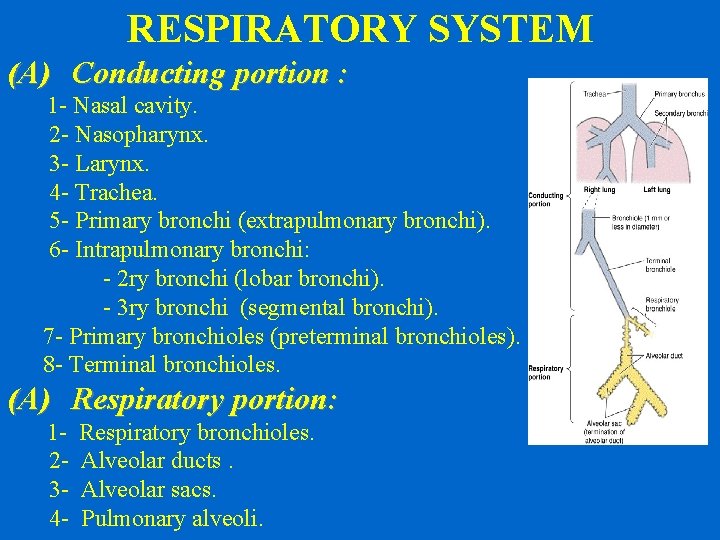
RESPIRATORY SYSTEM (A) Conducting portion : 1 - Nasal cavity. 2 - Nasopharynx. 3 - Larynx. 4 - Trachea. 5 - Primary bronchi (extrapulmonary bronchi). 6 - Intrapulmonary bronchi: - 2 ry bronchi (lobar bronchi). - 3 ry bronchi (segmental bronchi). 7 - Primary bronchioles (preterminal bronchioles). 8 - Terminal bronchioles. (A) Respiratory portion: 1234 - Respiratory bronchioles. Alveolar ducts. Alveolar sacs. Pulmonary alveoli.
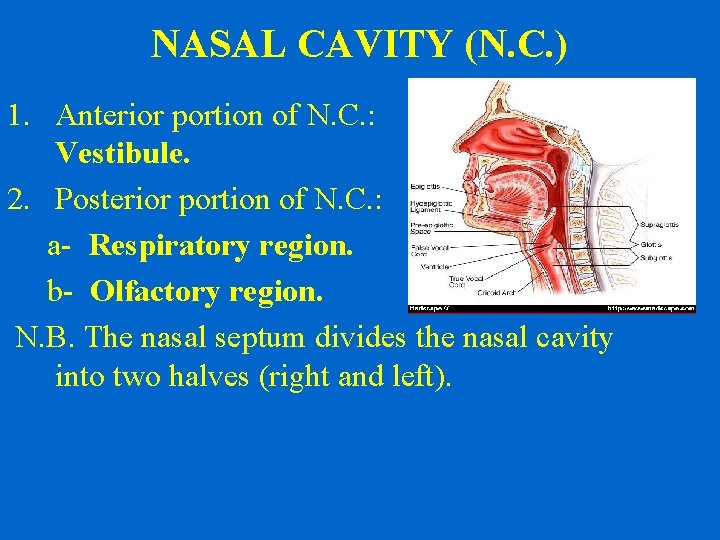
NASAL CAVITY (N. C. ) 1. Anterior portion of N. C. : Vestibule. 2. Posterior portion of N. C. : a- Respiratory region. b- Olfactory region. N. B. The nasal septum divides the nasal cavity into two halves (right and left).
VESTIBULE OF N. C. Lining: is lined with thin skin. 1 - Epidermis: (Keratinized stratified Squamous epithelium). 2 - Dermis. Contents: 1 - Vibrissae: stiff hairs. 2 - Sebaceous glands. 3 - Sweat glands. Wall: 1 - Hyaline cartilage. 2 - Cancellous (spongy) bone.
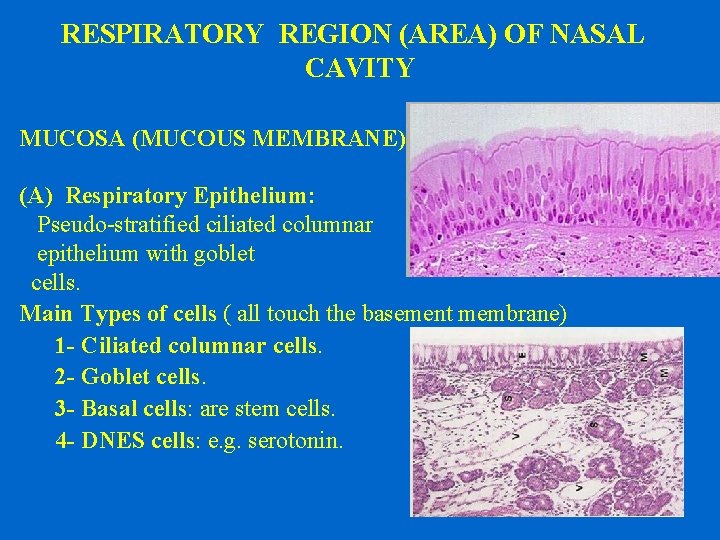
RESPIRATORY REGION (AREA) OF NASAL CAVITY MUCOSA (MUCOUS MEMBRANE): (A) Respiratory Epithelium: Pseudo-stratified ciliated columnar epithelium with goblet cells. Main Types of cells ( all touch the basement membrane) 1 - Ciliated columnar cells. 2 - Goblet cells. 3 - Basal cells: are stem cells. 4 - DNES cells: e. g. serotonin.
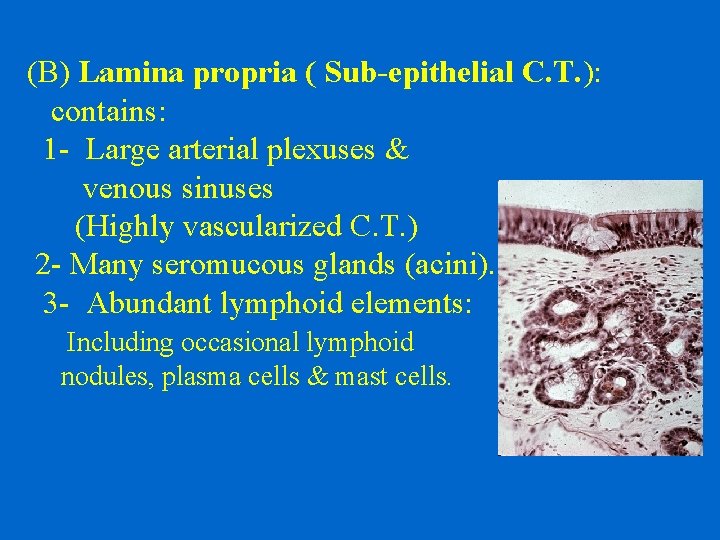
(B) Lamina propria ( Sub-epithelial C. T. ): contains: 1 - Large arterial plexuses & venous sinuses (Highly vascularized C. T. ) 2 - Many seromucous glands (acini). 3 - Abundant lymphoid elements: Including occasional lymphoid nodules, plasma cells & mast cells.
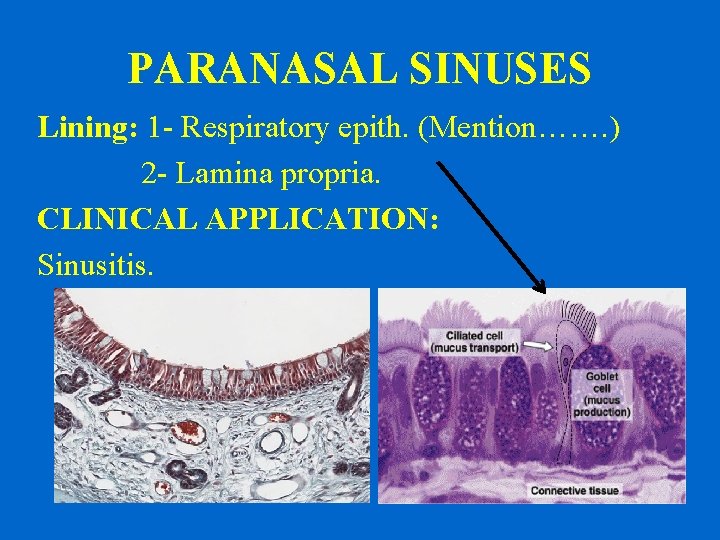
PARANASAL SINUSES Lining: 1 - Respiratory epith. (Mention……. ) 2 - Lamina propria. CLINICAL APPLICATION: Sinusitis.
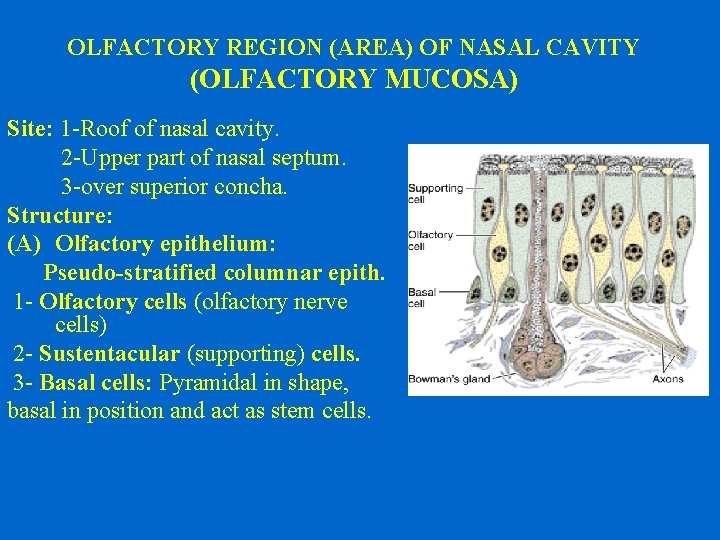
OLFACTORY REGION (AREA) OF NASAL CAVITY (OLFACTORY MUCOSA) Site: 1 -Roof of nasal cavity. 2 -Upper part of nasal septum. 3 -over superior concha. Structure: (A) Olfactory epithelium: Pseudo-stratified columnar epith. 1 - Olfactory cells (olfactory nerve cells) 2 - Sustentacular (supporting) cells. 3 - Basal cells: Pyramidal in shape, basal in position and act as stem cells.
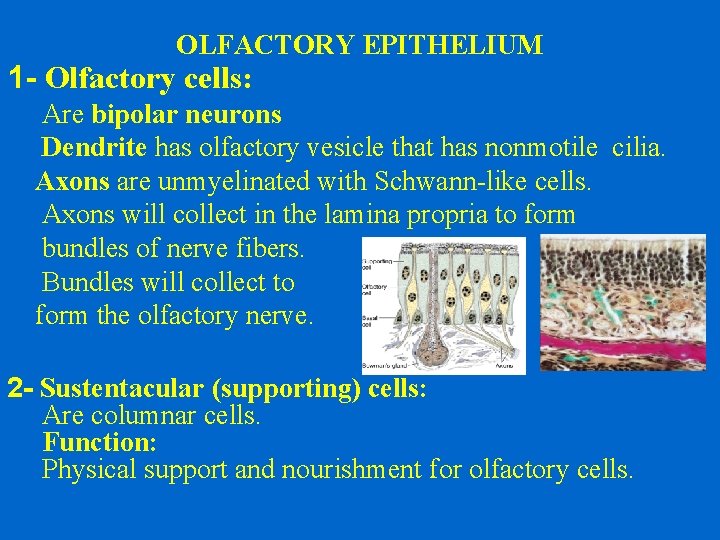
OLFACTORY EPITHELIUM 1 - Olfactory cells: Are bipolar neurons Dendrite has olfactory vesicle that has nonmotile cilia. Axons are unmyelinated with Schwann-like cells. Axons will collect in the lamina propria to form bundles of nerve fibers. Bundles will collect to form the olfactory nerve. 2 - Sustentacular (supporting) cells: Are columnar cells. Function: Physical support and nourishment for olfactory cells.
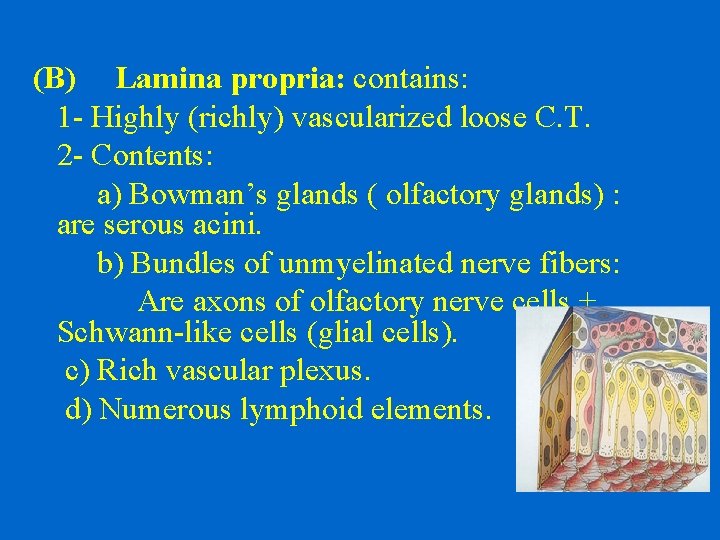
(B) Lamina propria: contains: 1 - Highly (richly) vascularized loose C. T. 2 - Contents: a) Bowman’s glands ( olfactory glands) : are serous acini. b) Bundles of unmyelinated nerve fibers: Are axons of olfactory nerve cells + Schwann-like cells (glial cells). c) Rich vascular plexus. d) Numerous lymphoid elements.
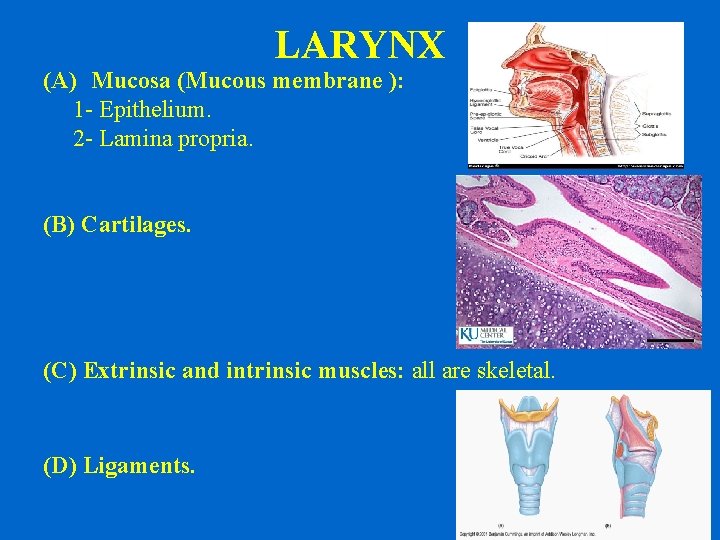
LARYNX (A) Mucosa (Mucous membrane ): 1 - Epithelium. 2 - Lamina propria. (B) Cartilages. (C) Extrinsic and intrinsic muscles: all are skeletal. (D) Ligaments.
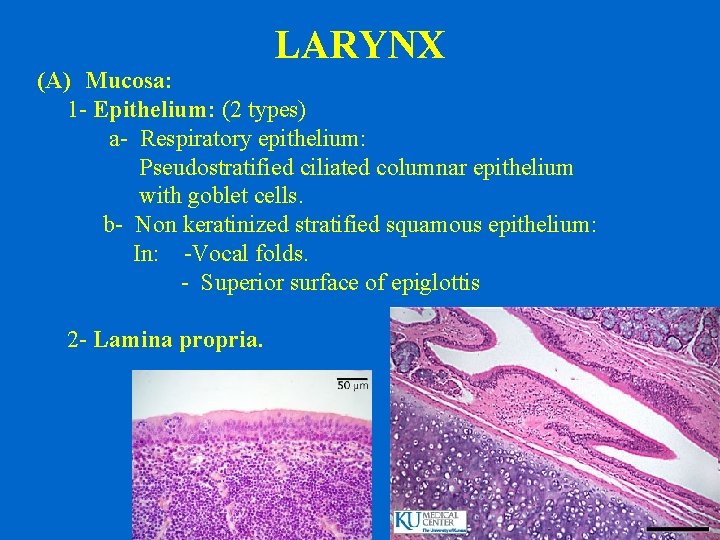
LARYNX (A) Mucosa: 1 - Epithelium: (2 types) a- Respiratory epithelium: Pseudostratified ciliated columnar epithelium with goblet cells. b- Non keratinized stratified squamous epithelium: In: -Vocal folds. - Superior surface of epiglottis 2 - Lamina propria.
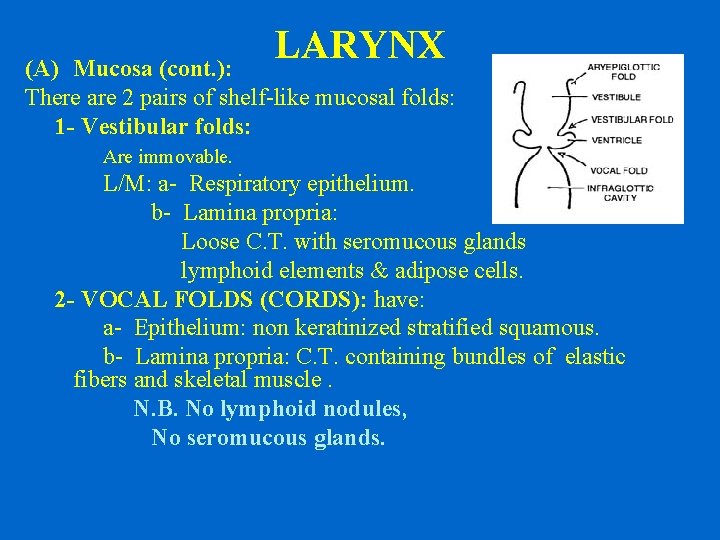
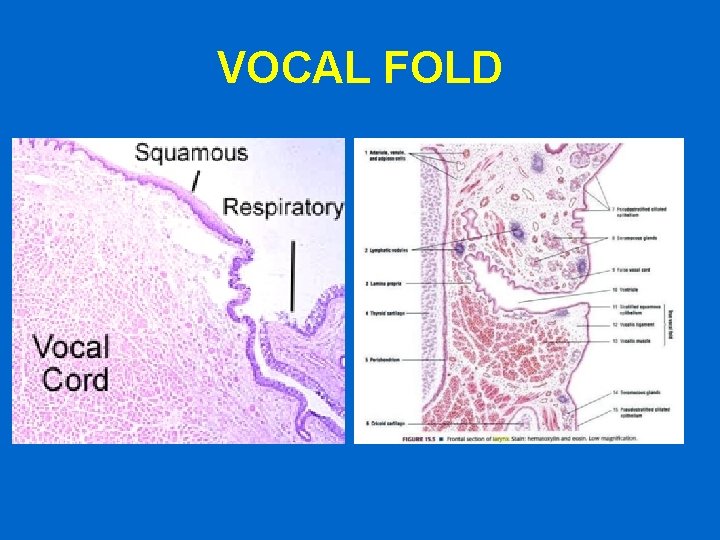
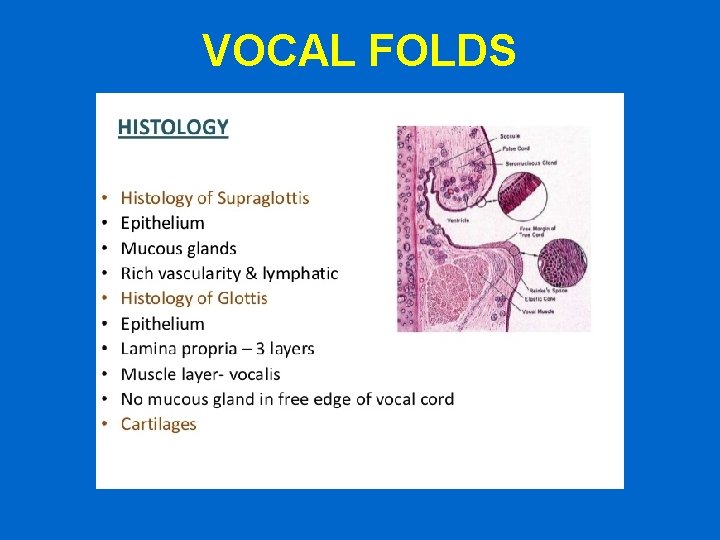
LARYNX (A) Mucosa (cont. ): There are 2 pairs of shelf-like mucosal folds: 1 - Vestibular folds: Are immovable. L/M: a- Respiratory epithelium. b- Lamina propria: Loose C. T. with seromucous glands lymphoid elements & adipose cells. 2 - VOCAL FOLDS (CORDS): have: a- Epithelium: non keratinized stratified squamous. b- Lamina propria: C. T. containing bundles of elastic fibers and skeletal muscle. N. B. No lymphoid nodules, No seromucous glands.
VOCAL FOLD
VOCAL FOLDS
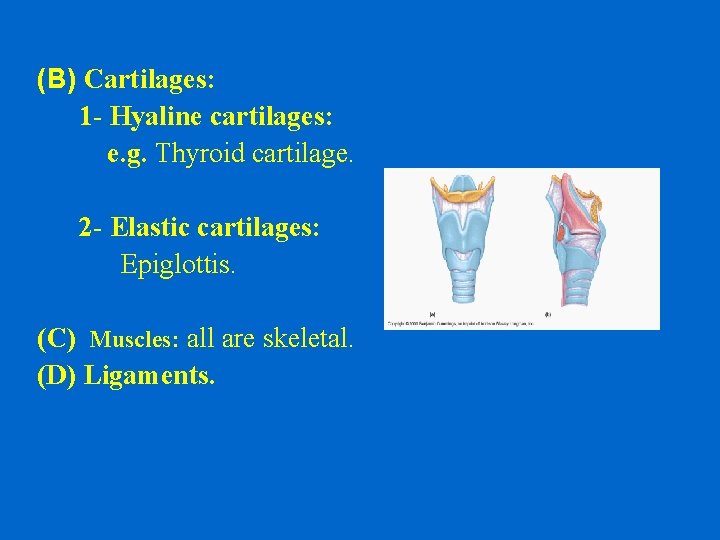
(B) Cartilages: 1 - Hyaline cartilages: e. g. Thyroid cartilage. 2 - Elastic cartilages: Epiglottis. (C) Muscles: all are skeletal. (D) Ligaments.
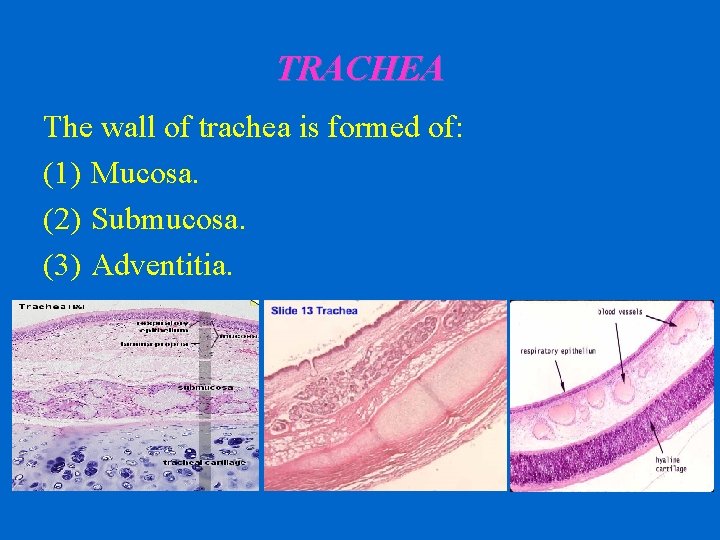
TRACHEA The wall of trachea is formed of: (1) Mucosa. (2) Submucosa. (3) Adventitia.
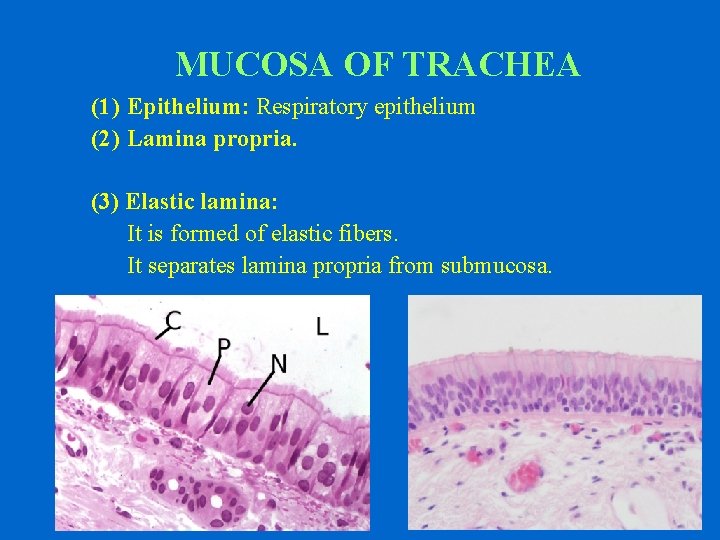
MUCOSA OF TRACHEA (1) Epithelium: Respiratory epithelium (2) Lamina propria. (3) Elastic lamina: It is formed of elastic fibers. It separates lamina propria from submucosa.
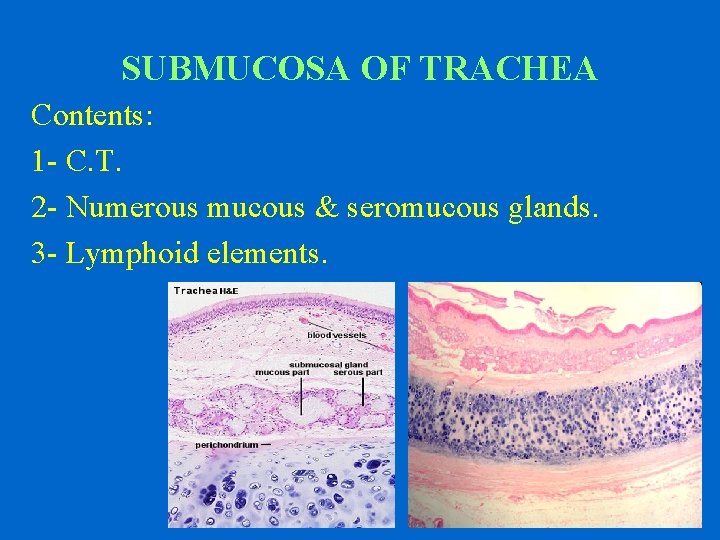
SUBMUCOSA OF TRACHEA Contents: 1 - C. T. 2 - Numerous mucous & seromucous glands. 3 - Lymphoid elements.
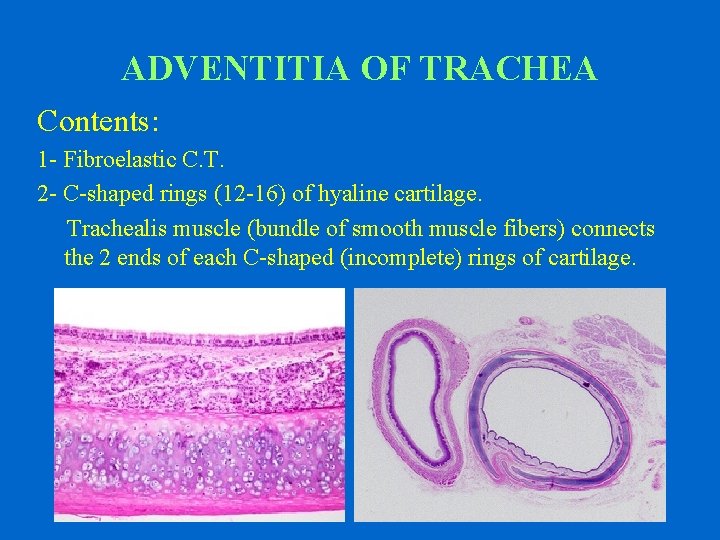
ADVENTITIA OF TRACHEA Contents: 1 - Fibroelastic C. T. 2 - C-shaped rings (12 -16) of hyaline cartilage. Trachealis muscle (bundle of smooth muscle fibers) connects the 2 ends of each C-shaped (incomplete) rings of cartilage.
EXTRAPULMONARY BRONCHUS (1 ry BRONCHUS) Generally have the same histological appearance as the trachea.
THANK YOU