
Respiratory System Health Careers Canadian Valley Technology Center

















- Slides: 49
Respiratory System Health Careers Canadian Valley Technology Center
Respiratory system • Complex organs and structures that perform 1. pulmonary ventilation (external respiration) - process of inhaling and exhaling air 2. cellular respiration (internal respiration) - process of oxygen carried by the blood passing into the cells and being used by the cells
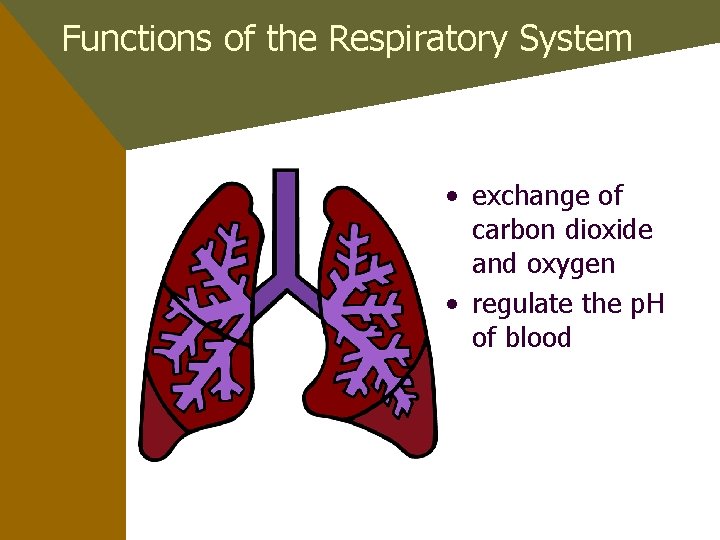
Functions of the Respiratory System • exchange of carbon dioxide and oxygen • regulate the p. H of blood
Characteristics of pulmonary ventilation • Mechanical portion is breathing • Two stages - inhalation/exhalation • Contolled by - medulla oblongata - pons • Sends impulses to phrenic nerve - out to diaphragm
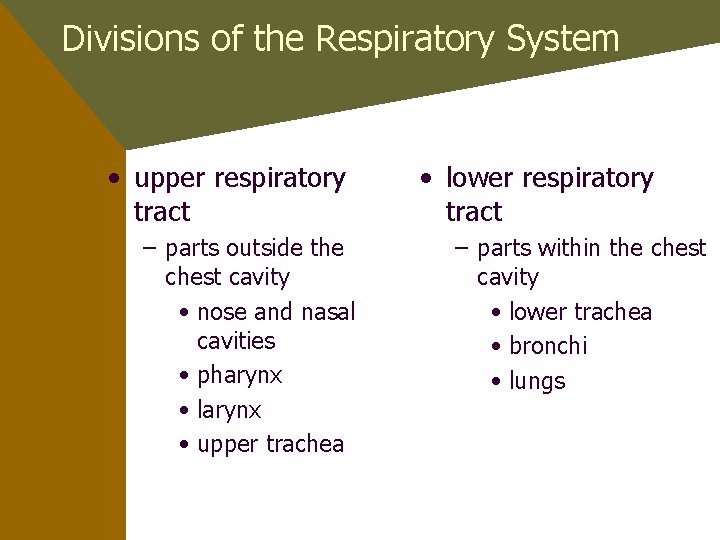
Divisions of the Respiratory System • upper respiratory tract – parts outside the chest cavity • nose and nasal cavities • pharynx • larynx • upper trachea • lower respiratory tract – parts within the chest cavity • lower trachea • bronchi • lungs
Nose and Nasal Cavities • bone and cartilage • two nasal cavities – divided by the nasal septum • palate forms the floor of the nasal cavity – hard palate • anterior portion – soft palate • posterior portion
• soft palate ends in a projection called the uvula – directs food into the oropharynx • nasal mucosa consists of ciliated epithelium – filters the air – produces mucus that traps foreign material – cilia propels mucus with trapped particles toward the pharynx where it is swallowed • gastric juices in the stomach will then destroy most of the microorganisms
Nasal Conchae • three bony ridges, called nasal conchae are found on the lateral wall of each nasal cavity – superior, middle, inferior – increase the surface area of the cavity – warm and moisten the air and to direct air flow
Paranasal Sinuses • air-filled cavities open into the nasal cavity • frontal, maxillae, ethmoid, and sphenoid bones • functions of paranasal sinues are to: – reduce the weight of the skull – produce mucus – influence voice quality
• olfactory receptors – upper nasal cavities – detect vaporized chemicals – olfactory nerves pass through the ethmoid bone to the brain
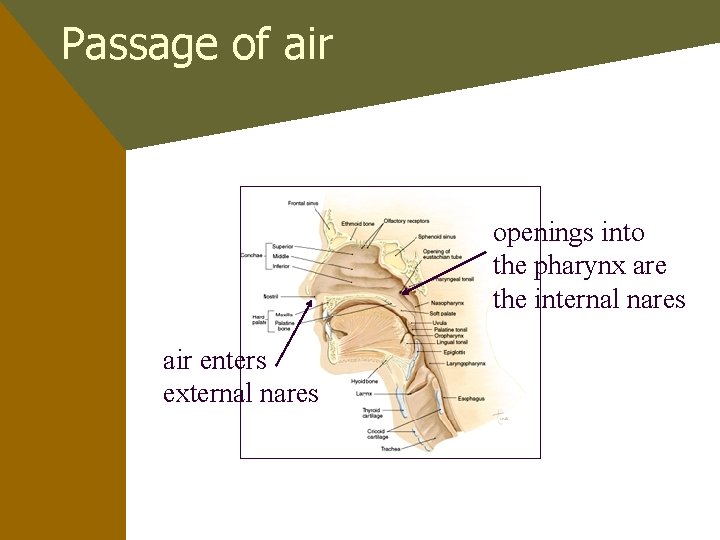
Passage of air openings into the pharynx are the internal nares air enters external nares
Functions of the Nose • • passageway for air going to the lungs warms, moistens, and filters air of impurities organ of smell aids in phonation
Pharnyx • “throat” • muscular tube-like structure, 5 inches – extends from base of the skull to 6 th cervical vertebrae • lined with mucous membrane • passageway for air • three regions – nasopharynx – oropharynx – laryngopharynx
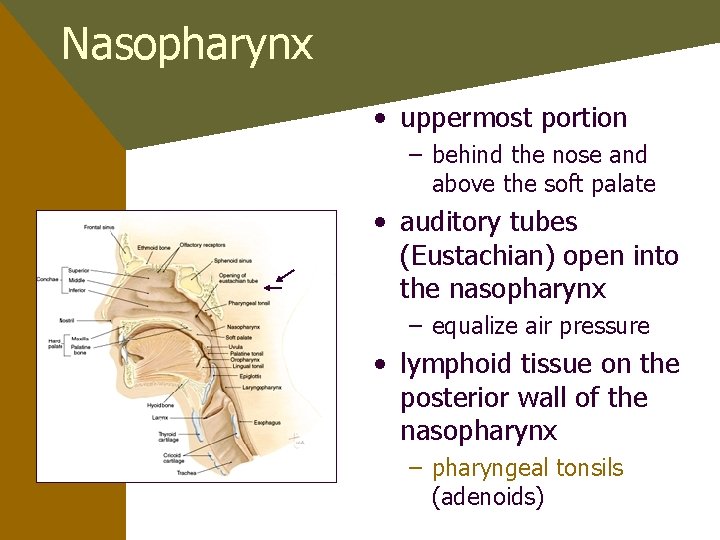
Nasopharynx • uppermost portion – behind the nose and above the soft palate • auditory tubes (Eustachian) open into the nasopharynx – equalize air pressure • lymphoid tissue on the posterior wall of the nasopharynx – pharyngeal tonsils (adenoids)
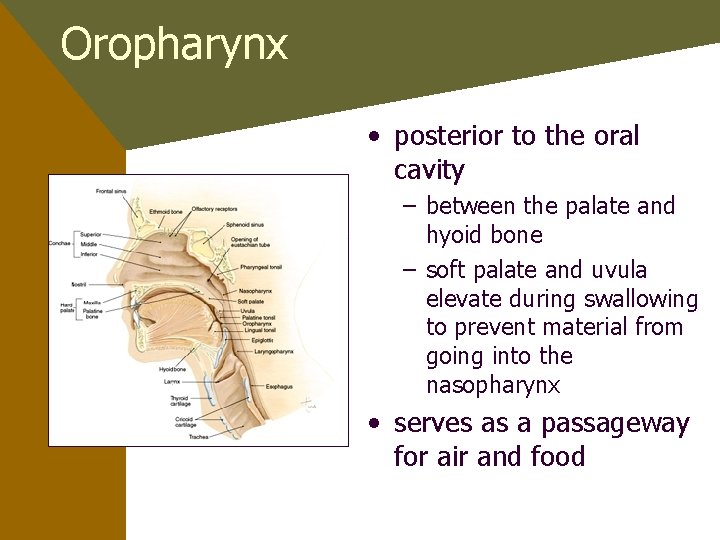
Oropharynx • posterior to the oral cavity – between the palate and hyoid bone – soft palate and uvula elevate during swallowing to prevent material from going into the nasopharynx • serves as a passageway for air and food
• contains masses of lymphoid tissues called tonsils – palantine tonsils – lingual tonsils lingual palantine
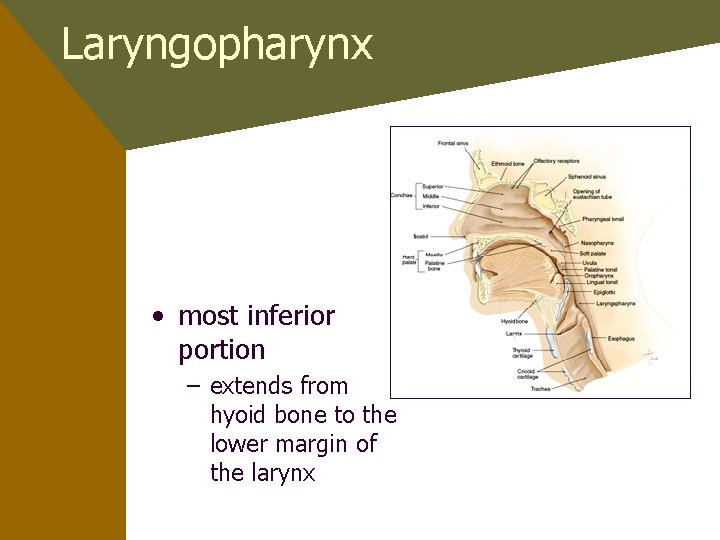
Laryngopharynx • most inferior portion – extends from hyoid bone to the lower margin of the larynx
Larynx • “voice box” • passageway for air between the pharynx and trachea – extends from the 4 th to 6 th cervical vertebrae • mucosa is ciliated epithelium except for vocal cords
• formed by nine cartilages – thyroid • Adam’s apple – cricoid – epiglottis • uppermost cartilage • during swallowing, closes to prevent entry of food into larynx
Vocal Cords • two pair of ligaments • upper pair – vestibular folds (false vocal cords) – prevent particles from entering larynx • lower pair – true vocal cords – sound production • opening between the true vocal cords is the glottis – leads to trachea
• muscles control length and tension of the true vocal cords – relaxed during normal breathing – when speaking, muscles pull the vocal cords across the glottis • exhaled air vibrates the vocal cords to produce sounds for speech – length of vocal cord determines pitch – force of air regulates loudness
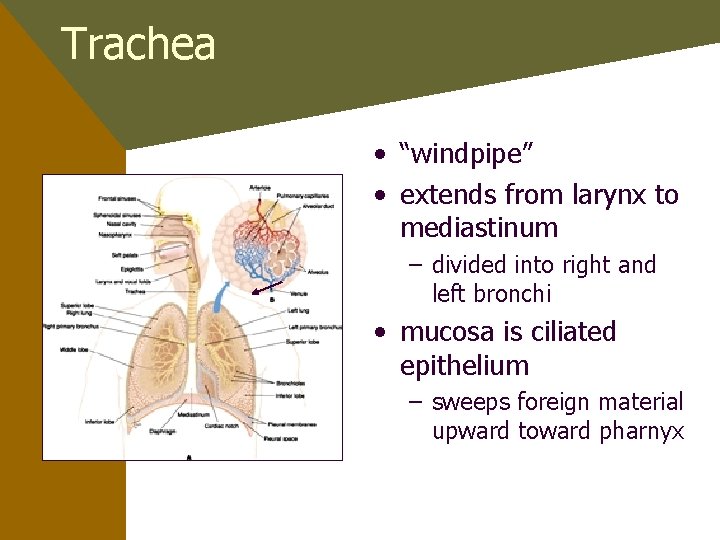
Trachea • “windpipe” • extends from larynx to mediastinum – divided into right and left bronchi • mucosa is ciliated epithelium – sweeps foreign material upward toward pharnyx
• supported by 15 to 20 C-shaped pieces of hyaline cartilage – holds trachea open • posterior part consists of smooth muscle and connective tissue – allows for expansion of the esophagus • provides passageway for air from larynx to bronchi
Bronchi • trachea branches into right and left primary bronchi as it enters the lungs – 5 th thoracic vertebrae – hilum • blood vessels, nerves, and lymphatics • branches into secondary bronchi
• secondary bronchi branch to form tertiary bronchi and then into bronchioles • terminal bronchioles branch into smaller bronchioles when then lead into microscopic alveolar ducts • alveolar ducts terminate in clusters of tiny air sacs called alveoli
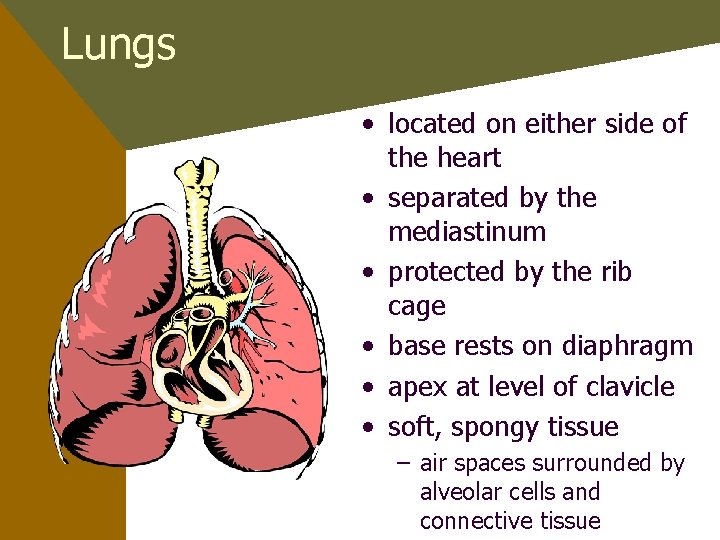
Lungs • located on either side of the heart • separated by the mediastinum • protected by the rib cage • base rests on diaphragm • apex at level of clavicle • soft, spongy tissue – air spaces surrounded by alveolar cells and connective tissue
Right Lung • shorter, broader • greater volume than left lung • divided into three lobes by two fissures – superior (upper) – middle (middle) – inferior (lower) • each lobe is supplied by one of the secondary bronchi
Left Lung • longer and narrower • indentation called the cardiac notch – apex of the heart • divided into two lobes be a fissure – upper – lower
Functions of the Lungs • essential organs for respiration • site where gaseous exchanges occur • excretory organ
Pleural Membranes • each lung is enclosed by a double layered serous membrane, called the pleura – visceral pleura • attached to surface of lung – parietal pleura • lines the wall of the thorax • space between visceral and parietal pleura is the pleural cavity – reduces friction
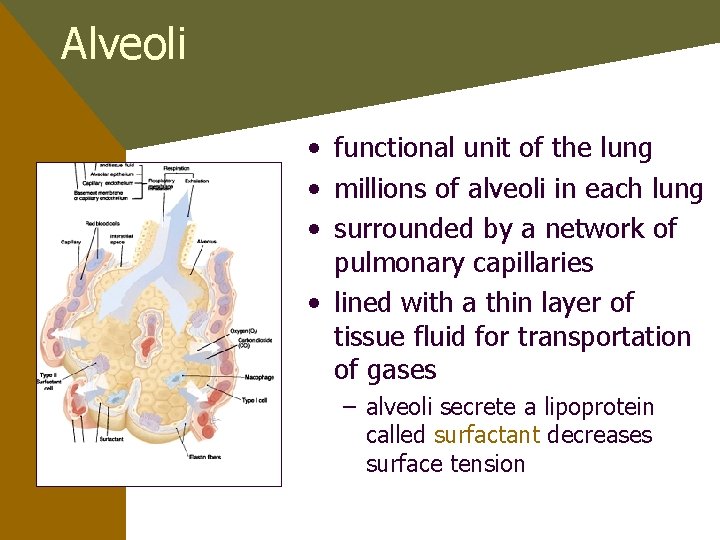
Alveoli • functional unit of the lung • millions of alveoli in each lung • surrounded by a network of pulmonary capillaries • lined with a thin layer of tissue fluid for transportation of gases – alveoli secrete a lipoprotein called surfactant decreases surface tension
Mechanics of Ventilation • pulmonary ventilation is commonly called “breathing” • air flowing into the lungs during inspiration and out of the lungs during expiration • 14 to 20 breaths/minute • air flows because of pressure differences between the atmosphere and the gases in the lungs
Pressures in Pulmonary Ventilation • atmospheric pressure – pressure of the air around us • intrapleural pressure – pressure within the pleural space – slightly lower than atmospheric pressure • intrapulmonic pressure – pressure within the bronchial tree and alveoli – fluctuates below and above atmospheric
Respiratory Muscles • diaphragm – dome shaped muscle located below the lungs • external and internal intercostal muscles – between the ribs
Inspiration • motor impulses from medulla along the phrenic nerves and intercostal nerves – diaphragm contracts, moves downward and expands chest cavity from top to bottom – external intercostal muscles pulls ribs up and out to expand chest cavity from side to side and front to back – parietal pleura expands and intrapleural pressure becomes even more negative – visceral pleura expands, followed by expansion of the lungs
– intrapulmonic pressure falls below atmospheric pressure – air enters nose and travels to alveoli – continues until intrapulmonic pressure is equal to atmospheric pressure
Expiration • impulse stops • diaphragm and external intercostal muscles relax • chest cavity becomes smaller, lungs are compressed, alveoli compresses • intrapulmonic pressure rises above atmospheric pressure, air is forced out until two pressures are equal
Exchange of Gases • two sites – lungs • External Respiration • exchange of oxygen and carbon dioxide between the air in the lungs and the blood surrounding the capillaries – tissues of the body • Internal Respiration • exchange of gases between the tissue cells and the blood in the tissue capillaries
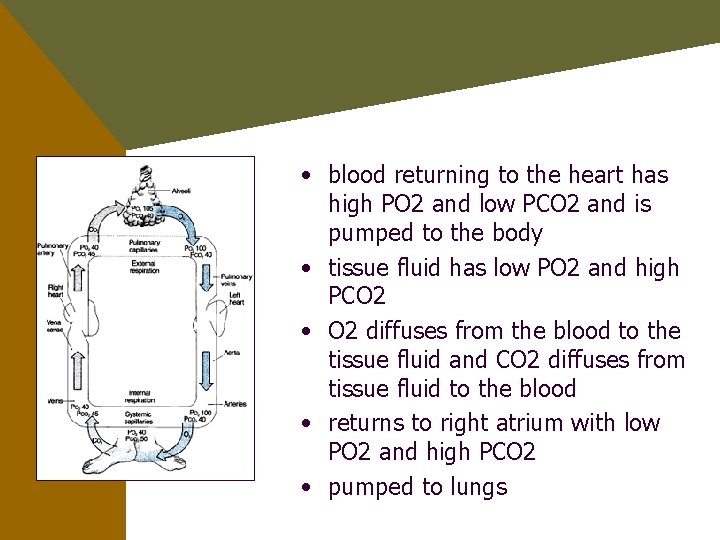
Partial Pressures • concentration of each gas in a particular site is expressed in a value called partial pressures – air in the alveoli has a high PO 2 and a low PCO 2 – blood in the capillaries has low PO 2 and high PCO 2 • gas will diffuse from an area of higher concentration to an area of lesser concentration • O 2 diffuses from the air in the alveoli to the blood and CO 2 diffuses from the blood to the air in the alveoli
• blood returning to the heart has high PO 2 and low PCO 2 and is pumped to the body • tissue fluid has low PO 2 and high PCO 2 • O 2 diffuses from the blood to the tissue fluid and CO 2 diffuses from tissue fluid to the blood • returns to right atrium with low PO 2 and high PCO 2 • pumped to lungs
Transport of Gases • Oxygen transportation – carried in the blood bonded to the hemoglobin in red blood cells (oxygen-hemoglobin) which is formed in the lungs – passes through tissue bond is broken and oxygen is released into the tissues • Carbon Dioxide transportation – some is dissolved in the plasma – some is carried by hemoglobin (carbaminohemoglobin) – most is carried in the plasma in the form of HCO 3 ions
• CO 2 enters the blood • presence of the enzyme, carbonic anhydrase – catalyzes the reaction of CO 2 and H 2 O to form carbonic acid – CO 2 + H 2 O H 2 CO 3 (carbonic acid) • carbonic acid then dissociates – H 2 CO 3 H + HCO 3 (bicarbonate) • bicarbonate diffuse out of red blood cells into the plasma, leaving H ions in the red blood cells – neutralized by hemoglobin
• HCO 3 reaches the lungs – combine with H ions to form carbonic acid – HCO 3 + H H 2 CO 3 (carbonic acid) • carbonic acid dissociates into H 2 O and CO 2 – H 2 CO 3 H 2 O + CO 2 – CO 2 diffuses into the alveoli and is exhaled
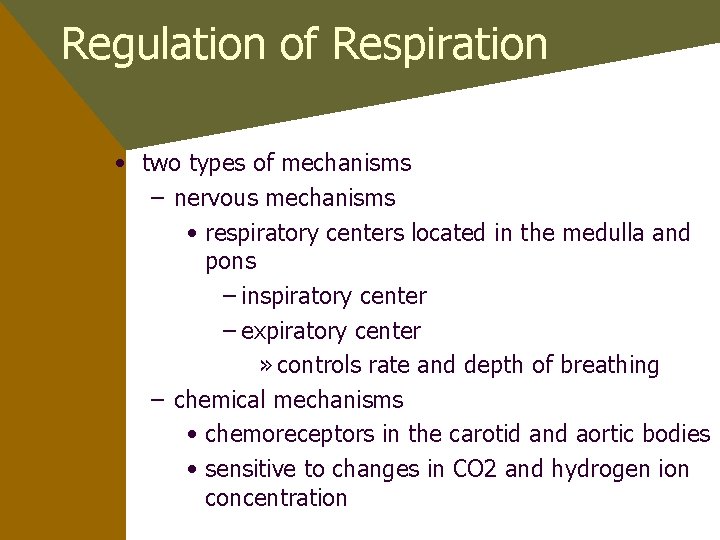
Regulation of Respiration • two types of mechanisms – nervous mechanisms • respiratory centers located in the medulla and pons – inspiratory center – expiratory center » controls rate and depth of breathing – chemical mechanisms • chemoreceptors in the carotid and aortic bodies • sensitive to changes in CO 2 and hydrogen ion concentration
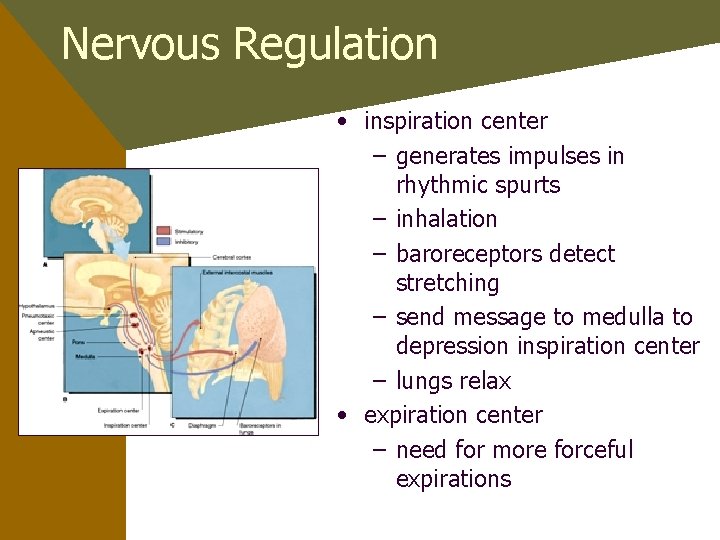
Nervous Regulation • inspiration center – generates impulses in rhythmic spurts – inhalation – baroreceptors detect stretching – send message to medulla to depression inspiration center – lungs relax • expiration center – need for more forceful expirations
• two respiratory centers in the pons work with inspiration center to produce normal rhythm – apneustic center • prolongs inhalation – pneumotaxic center • interrupts stimulus from apneustic center
Chemical Regulation • decrease in oxygen is detected • chemoreceptors send sensory impulses along the glassopharyngeal and vagus nerves to the medulla • responds by increasing respiratory rate or depth
Breathing Disturbances • eupnea – ordinary quiet respirations • dyspnea – painful, difficult, and labored breathing • hyperpnea – increase rate and/or depth of respirations • apnea – lack of breathing • anoxia – absence of oxygen
• hypoxia – decreased amount of oxygen reaching the body cells • suffocation – stoppage of respirations caused by strangulation, aspiration, foreign object, or drowning • Cheyne-Stokes – alternating cycles of hyperpnea and apnea • cyanosis – bluish gray discoloration – indicates insufficient amount of oxygen