
Respiratory System Functions of Respiratory System Gas exchange
- Slides: 54
Respiratory System Functions of Respiratory System • Gas exchange between blood and air • Move air to and from exchange surfaces • Protect exchange surfaces from environmental variations and pathogens • Produce sound • Detect olfactory stimuli • Produce ACE (Angiotensin Converting Enzyme)
Respiratory System Organization Components of the Respiratory System • • • Nose, nasal cavity, and paranasal sinuses Pharynx Larynx Trachea, bronchi Lungs • Bronchioles • Alveoli (gas exchange)
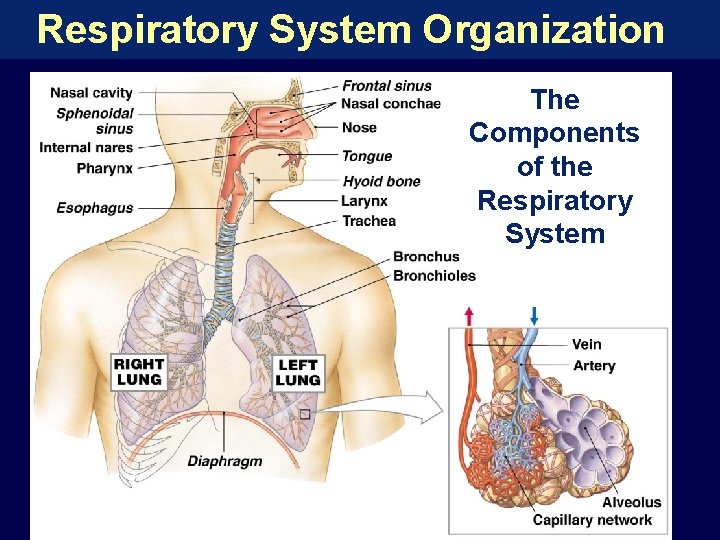
Respiratory System Organization The Components of the Respiratory System
Respiratory System Organization The Respiratory Tract • Conducting portion • Conduct the air movement • From nares to small bronchioles • Respiratory portion • Gas exchange region • Respiratory bronchioles and alveoli
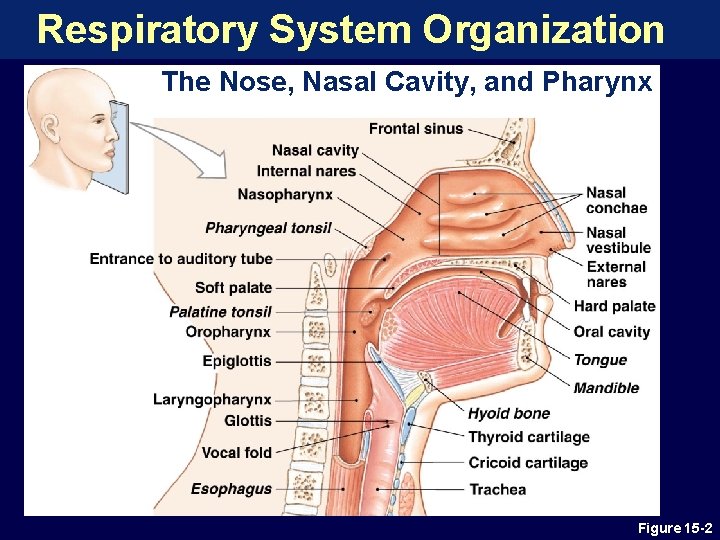
Respiratory System Organization The Nose • External nares (nostrils) admit air • Nasal vestibule lined with hairs to filter air • Vestibule opens into nasal cavity • Hard palate separates nasal and oral cavities • Cavity continues through internal nares to nasopharynx • Soft palate underlies nasopharynx • Respiratory epithelium lines the airways
Respiratory System Organization The Nose, Nasal Cavity, and Pharynx Figure 15 -2
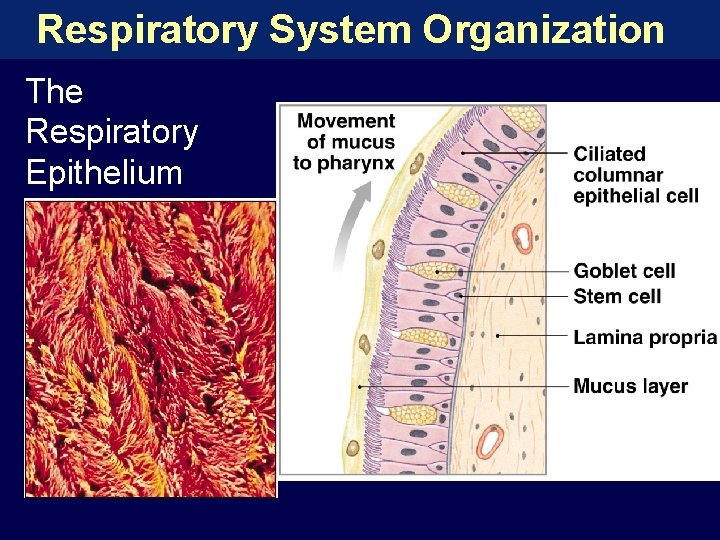
Respiratory System Organization Respiratory Mucosa • Respiratory epithelium plus supporting connective tissue with mucous glands • Lines nasal cavity and most of airways • Goblet and gland cells secrete mucus • Mucus traps inhaled dirt, pathogens, etc. • Ciliated cells sweep the mucus out of the airways into pharynx • Irritants stimulate secretion • Causes “runny nose”
Respiratory System Organization The Respiratory Epithelium
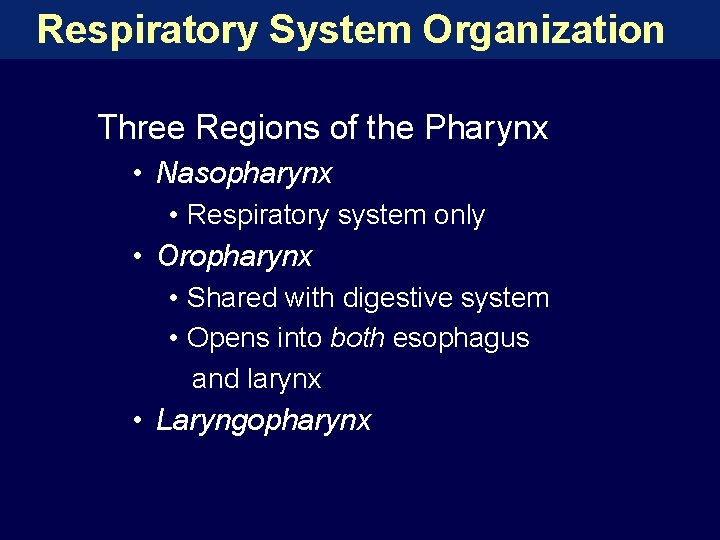
Respiratory System Organization Three Regions of the Pharynx • Nasopharynx • Respiratory system only • Oropharynx • Shared with digestive system • Opens into both esophagus and larynx • Laryngopharynx
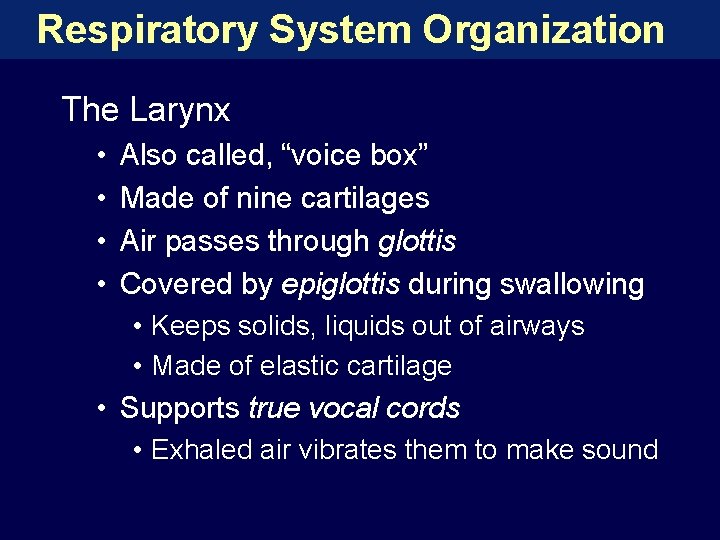
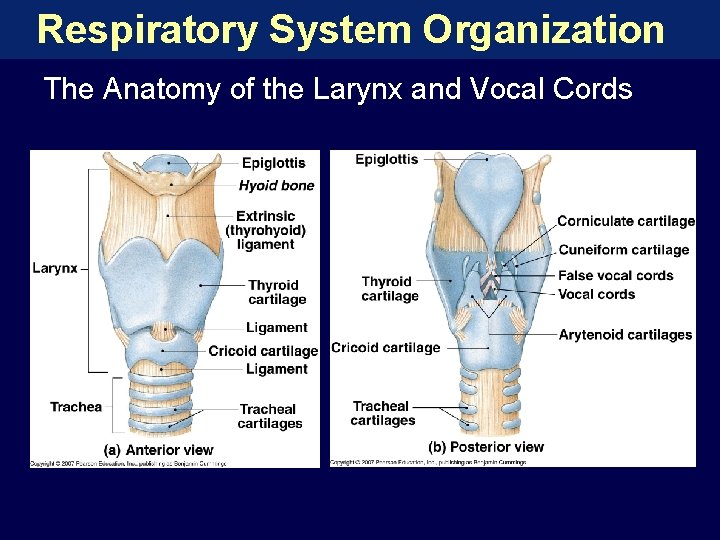
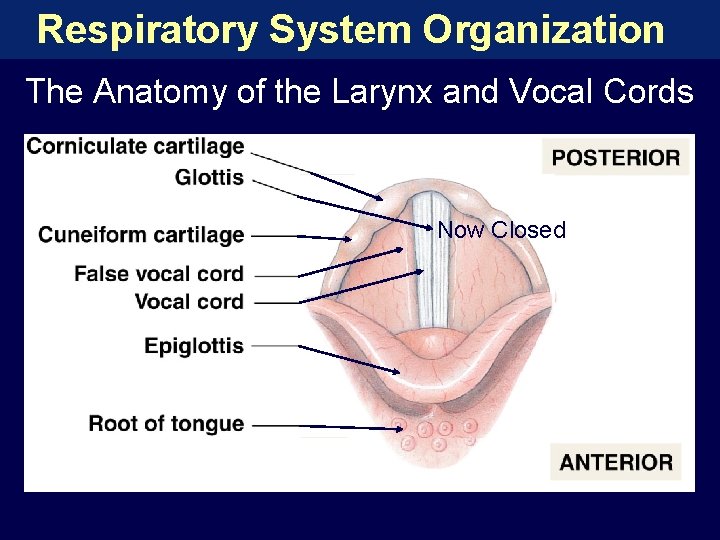
Respiratory System Organization The Larynx • • Also called, “voice box” Made of nine cartilages Air passes through glottis Covered by epiglottis during swallowing • Keeps solids, liquids out of airways • Made of elastic cartilage • Supports true vocal cords • Exhaled air vibrates them to make sound
Respiratory System Organization The Anatomy of the Larynx and Vocal Cords
Respiratory System Organization The Anatomy of the Larynx and Vocal Cords Now Closed
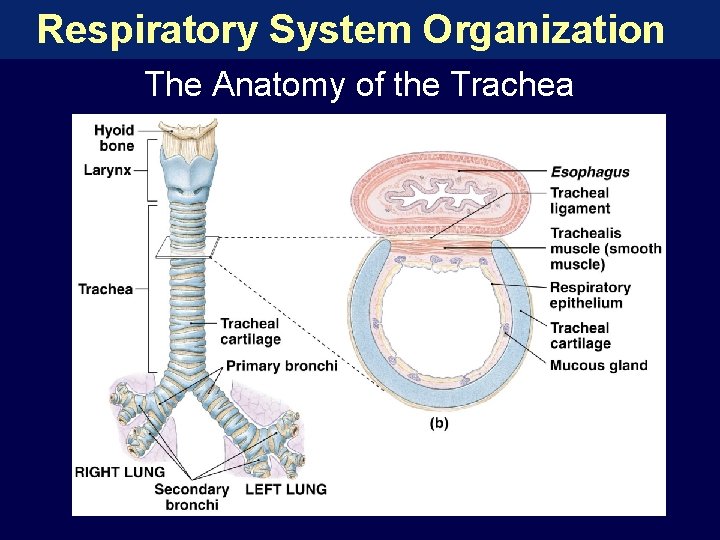
Respiratory System Organization The Trachea • Also called “windpipe” • Stiffened by C-shaped cartilage rings • Esophagus stuck to posterior surface • Cartilage missing there • Trachea distorted by balls of food as they pass down esophagus to stomach
Respiratory System Organization The Anatomy of the Trachea
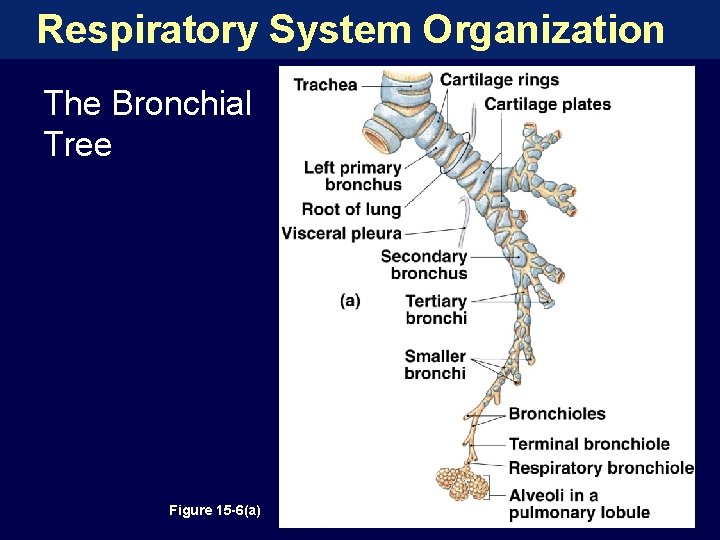
Respiratory System Organization The Bronchi • Trachea forms two branches • Right and left primary bronchi • Primary bronchi branch • Form secondary bronchi • Each ventilates a lobe • Secondary bronchi branch • Form tertiary bronchi • Tertiary bronchi branch repeatedly • Cartilage decreases, smooth muscle increases
Respiratory System Organization The Bronchioles • Cartilage absent • Diameter < 1. 0 mm • Terminal bronchioles deliver air to a single lobule • Smooth muscle in wall controlled by ANS • Sympathetic causes bronchodilation • Parasympathetic causes bronchoconstriction • Excess bronchoconstriction is asthma
Respiratory System Organization The Bronchial Tree Figure 15 -6(a)
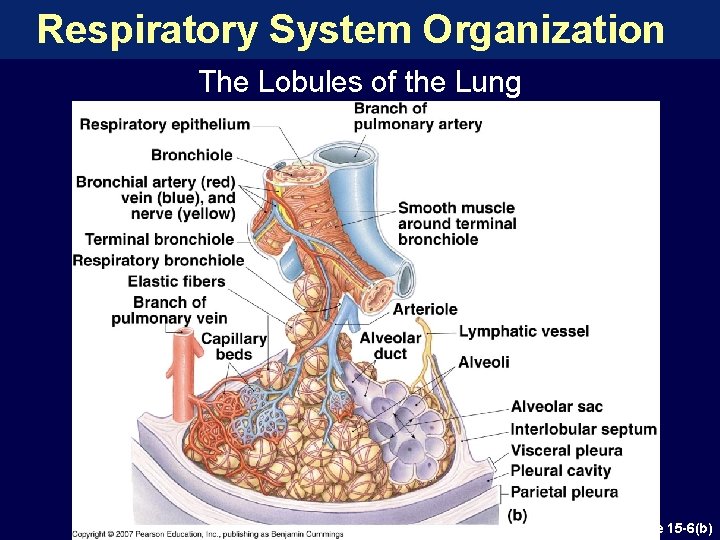
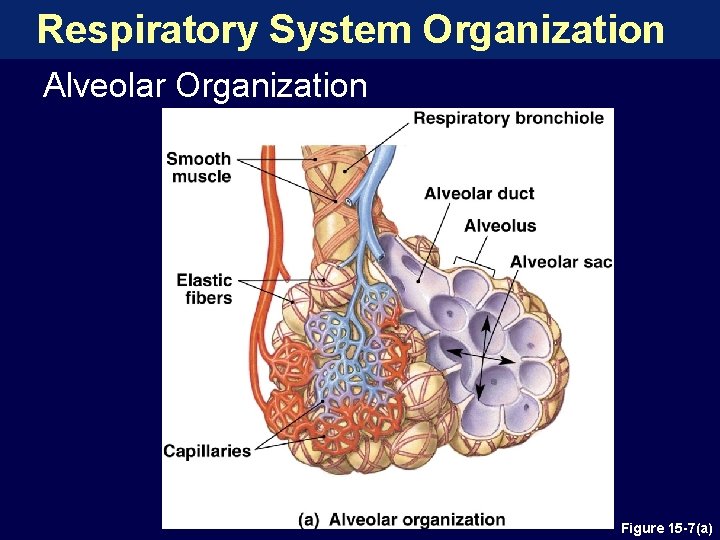
Respiratory System Organization The Alveolar Ducts and Alveoli • Gas exchange regions of lung • Respiratory bronchioles lead into alveolar ducts • Ducts lead into alveolar sacs • Sacs are clusters of interconnected alveoli • Gives lung an open, spongy look • About 150 million/lung
Respiratory System Organization The Lobules of the Lung Figure 15 -6(b)
Respiratory System Organization Alveolar Organization Figure 15 -7(a)
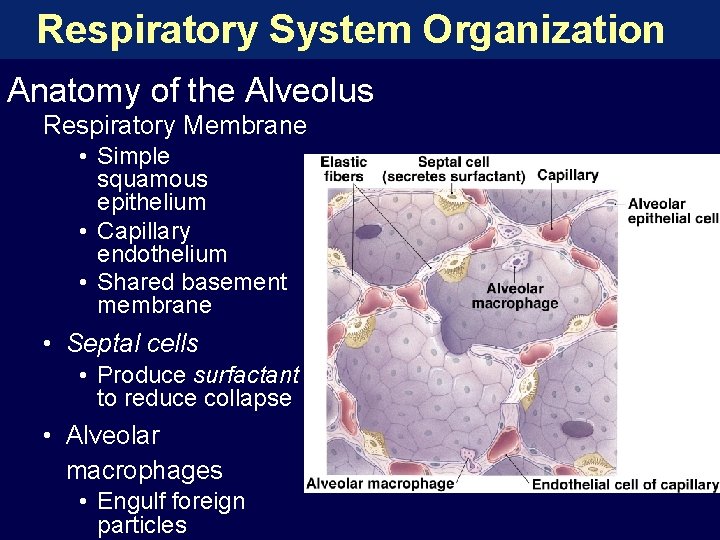
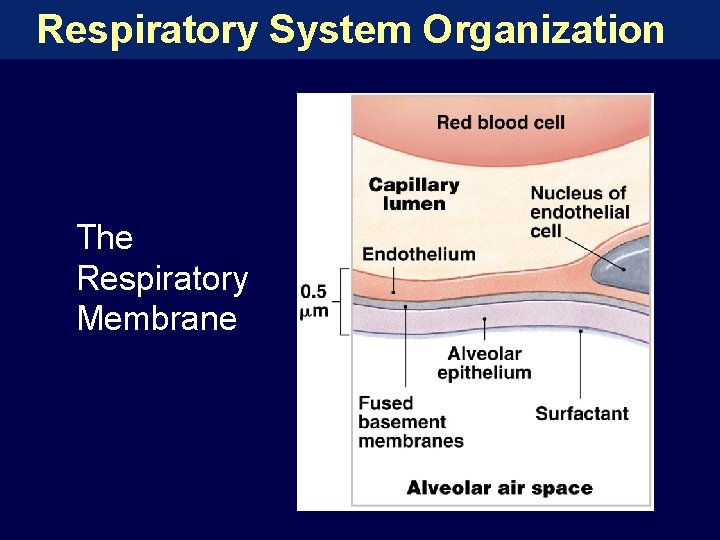
Respiratory System Organization Anatomy of the Alveolus Respiratory Membrane • Simple squamous epithelium • Capillary endothelium • Shared basement membrane • Septal cells • Produce surfactant to reduce collapse • Alveolar macrophages • Engulf foreign particles
Respiratory System Organization The Respiratory Membrane
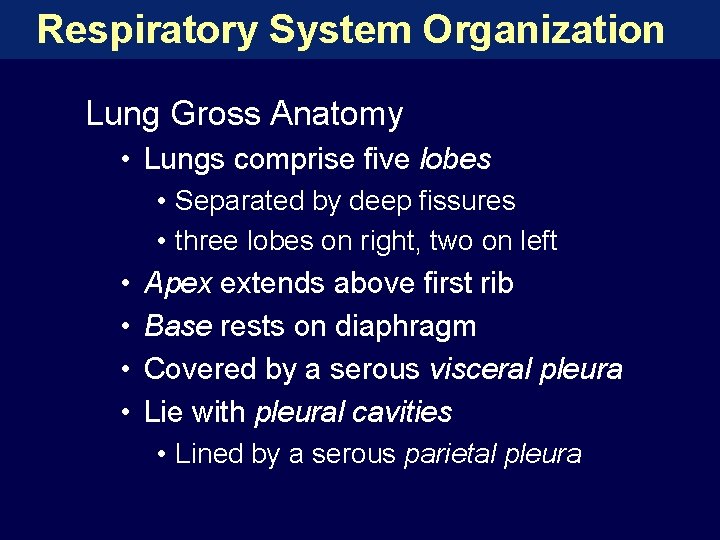
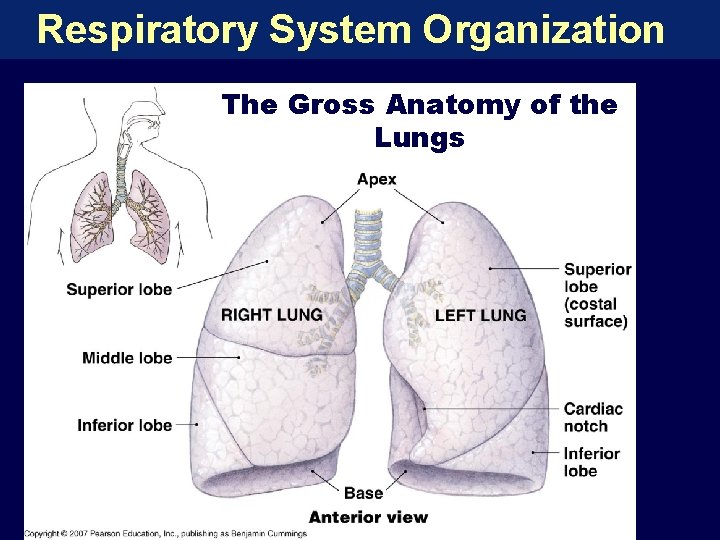
Respiratory System Organization Lung Gross Anatomy • Lungs comprise five lobes • Separated by deep fissures • three lobes on right, two on left • • Apex extends above first rib Base rests on diaphragm Covered by a serous visceral pleura Lie with pleural cavities • Lined by a serous parietal pleura
Respiratory System Organization The Gross Anatomy of the Lungs
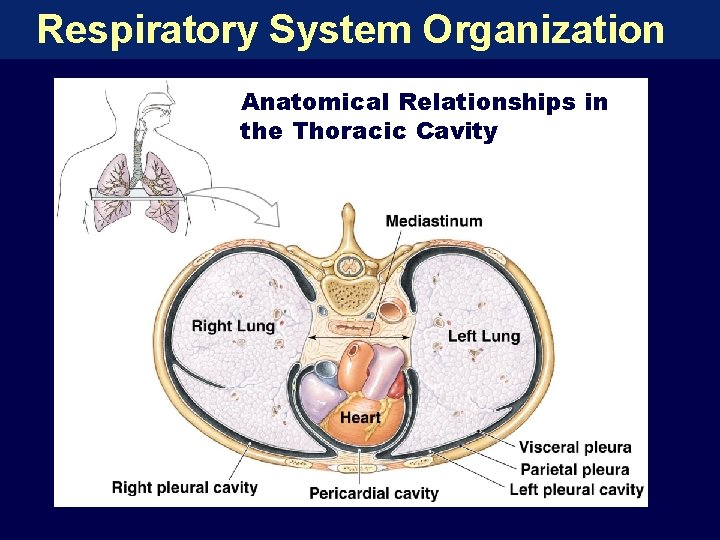
Respiratory System Organization Anatomical Relationships in the Thoracic Cavity
Respiratory Physiology Three Integrated Processes • Pulmonary ventilation—Moving air into and out of the respiratory tract; breathing • Gas exchange —Diffusion between alveoli and circulating blood, and between blood and interstitial fluids • Gas transport—Movement of oxygen from alveoli to cells, and carbon dioxide from cells to alveoli
Respiratory Physiology Pulmonary Ventilation • Respiratory cycle—A single breath consisting of inspiration (inhalation) and expiration (exhalation) • Respiratory rate—Number of cycles per minute • Adult normal rate 12 to 18 breaths/minute • Child normal rate 18 to 20 breaths/minute • Alveolar ventilation—Movement of air into and out of the alveoli
Respiratory Physiology Key Note The direction of air flow is determined by the relationship of atmospheric pressure and pressure inside the respiratory tract. Flow is always from higher to lower pressure.
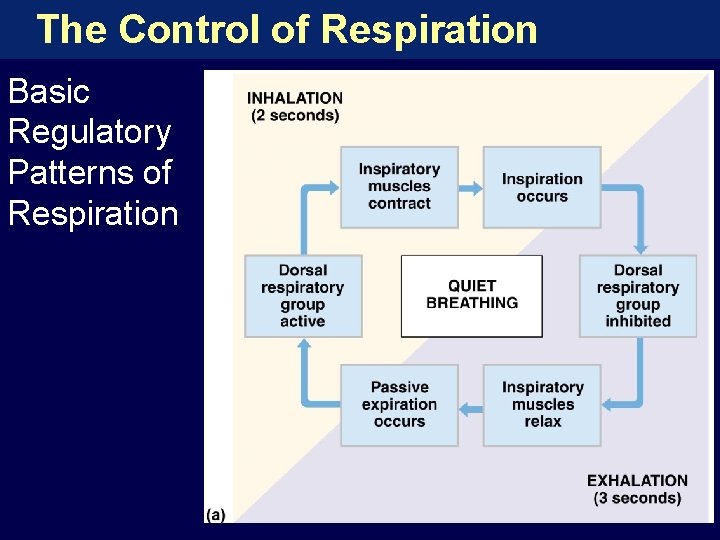
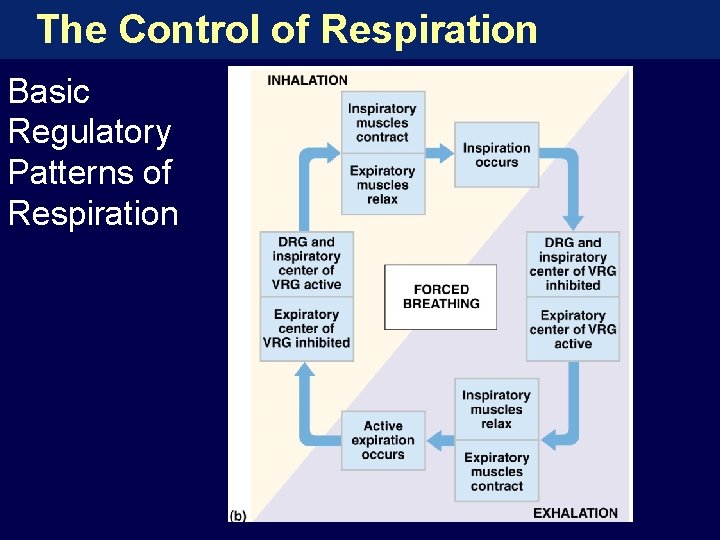
Respiratory Physiology Quiet versus Forced Breathing • Quiet breathing—Diaphragm and external intercostals are involved. Expiration is passive. • Forced breathing—Accessory muscles become active during the entire breathing cycle. Expiration is active.
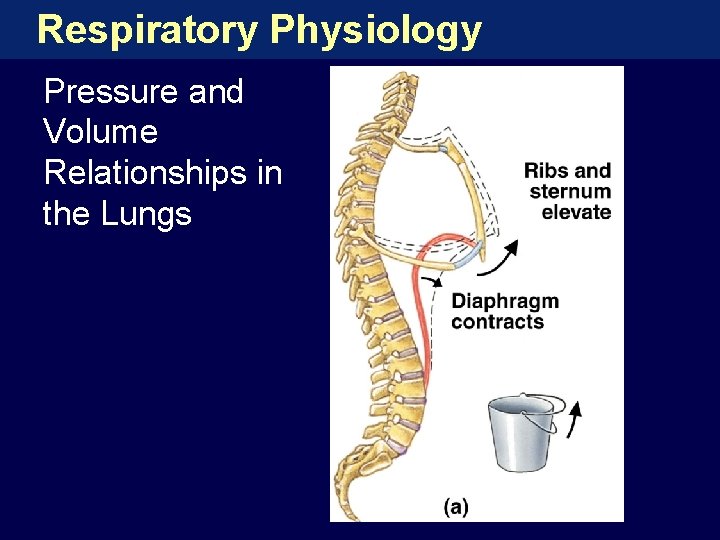
Respiratory Physiology Pressure and Volume Relationships in the Lungs
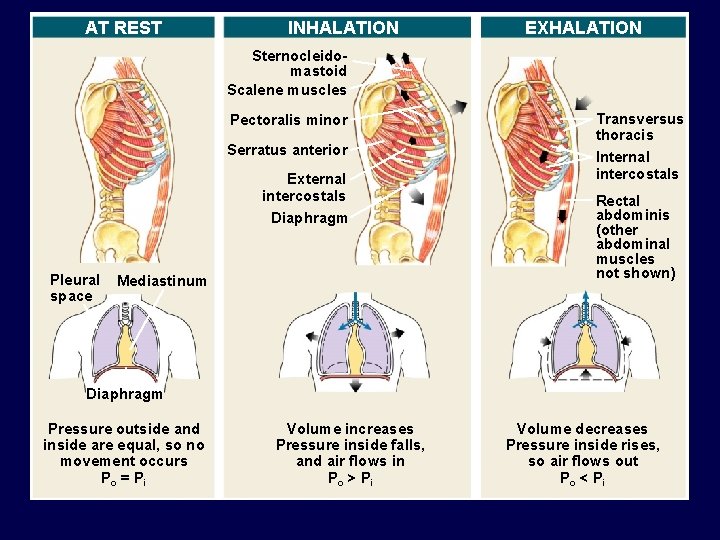
AT REST INHALATION EXHALATION Sternocleidomastoid Scalene muscles Pectoralis minor Serratus anterior External intercostals Diaphragm Pleural space Mediastinum Transversus thoracis Internal intercostals Rectal abdominis (other abdominal muscles not shown) Diaphragm Pressure outside and inside are equal, so no movement occurs Po = P i Volume increases Pressure inside falls, and air flows in Po > P i Volume decreases Pressure inside rises, so air flows out Po < P i
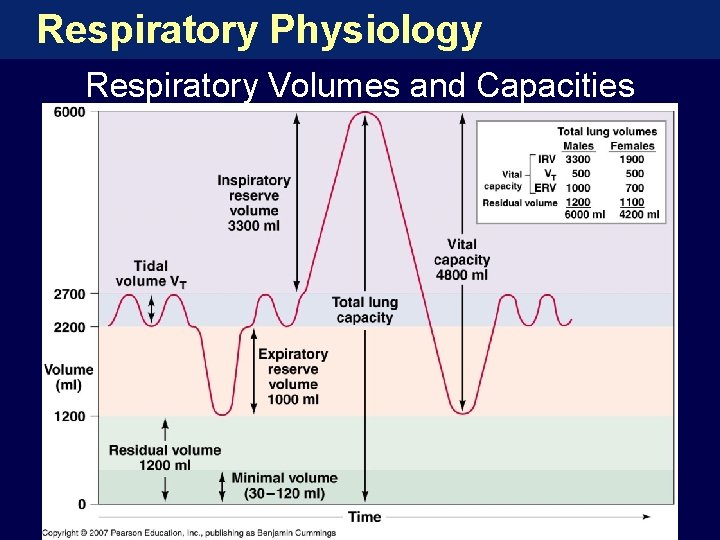
Respiratory Physiology Capacities and Volumes • Vital capacity—Tidal volume + expiratory reserve volume + inspiratory volume VC = TV + ERV + IRV • Residual volume—Volume of air remaining in the lung after a forced expiration
Respiratory Physiology Respiratory Volumes and Capacities
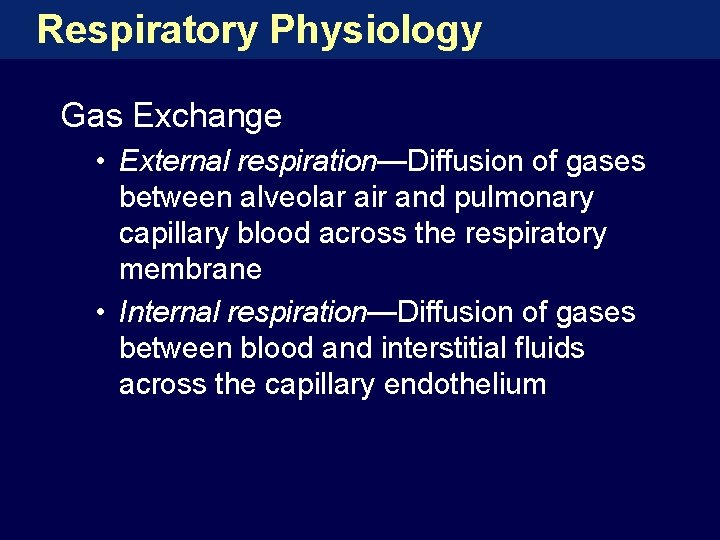
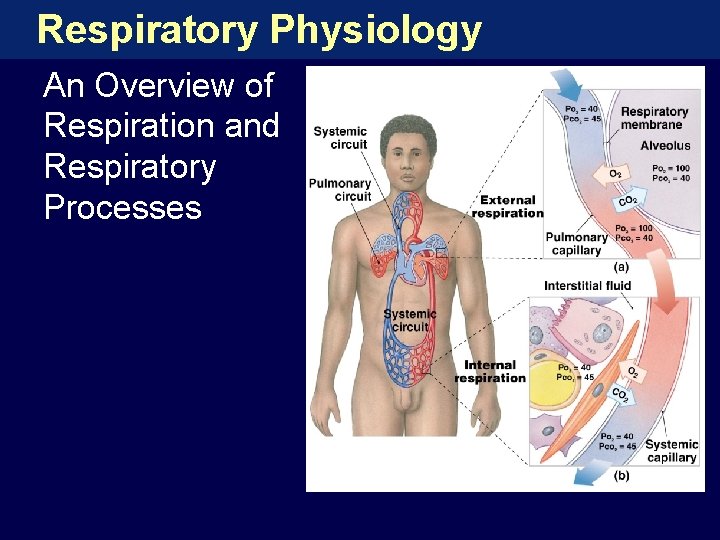
Respiratory Physiology Gas Exchange • External respiration—Diffusion of gases between alveolar air and pulmonary capillary blood across the respiratory membrane • Internal respiration—Diffusion of gases between blood and interstitial fluids across the capillary endothelium
Respiratory Physiology An Overview of Respiration and Respiratory Processes
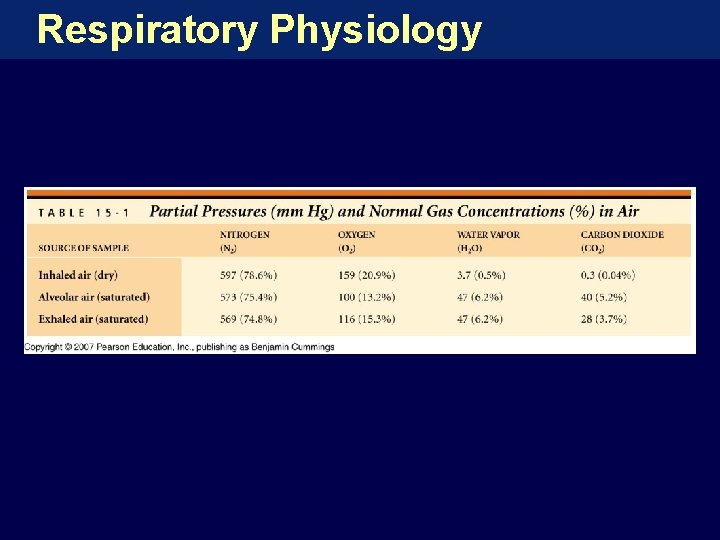
Respiratory Physiology
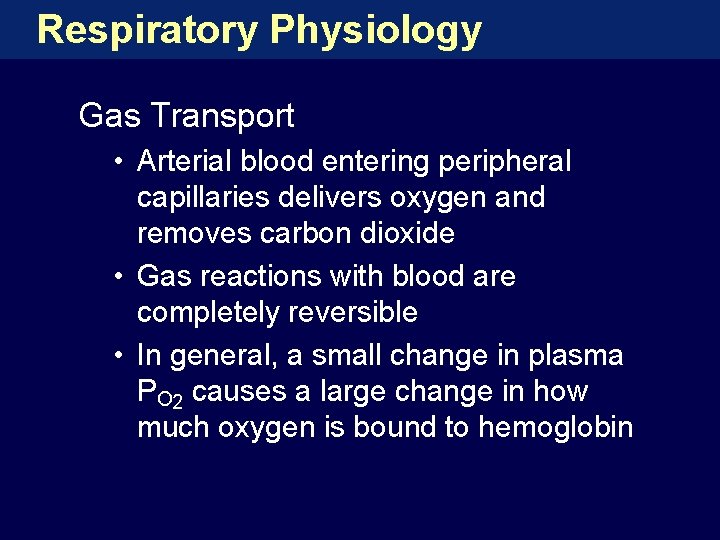
Respiratory Physiology Gas Transport • Arterial blood entering peripheral capillaries delivers oxygen and removes carbon dioxide • Gas reactions with blood are completely reversible • In general, a small change in plasma PO 2 causes a large change in how much oxygen is bound to hemoglobin
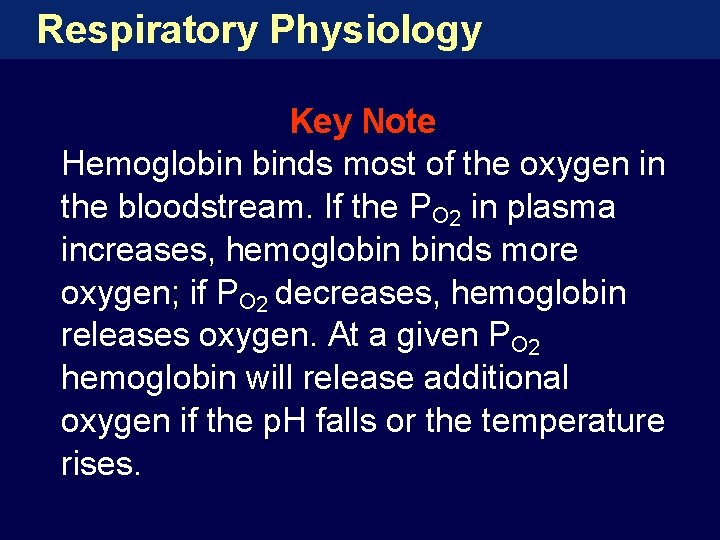
Respiratory Physiology Key Note Hemoglobin binds most of the oxygen in the bloodstream. If the PO 2 in plasma increases, hemoglobin binds more oxygen; if PO 2 decreases, hemoglobin releases oxygen. At a given PO 2 hemoglobin will release additional oxygen if the p. H falls or the temperature rises.
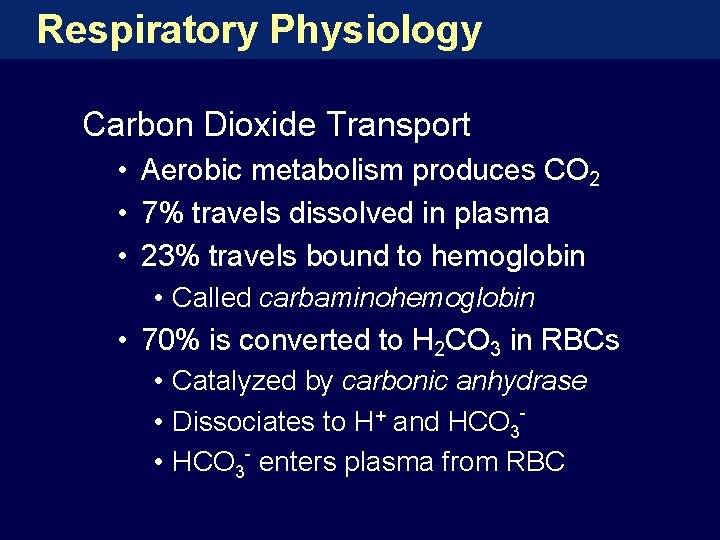
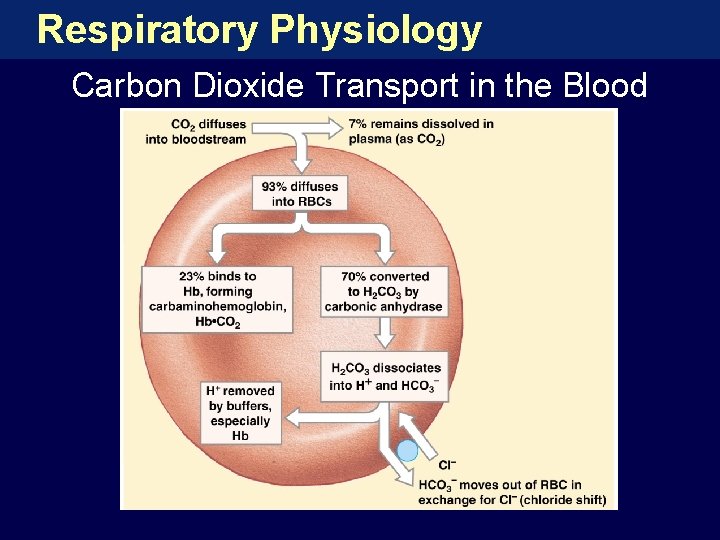
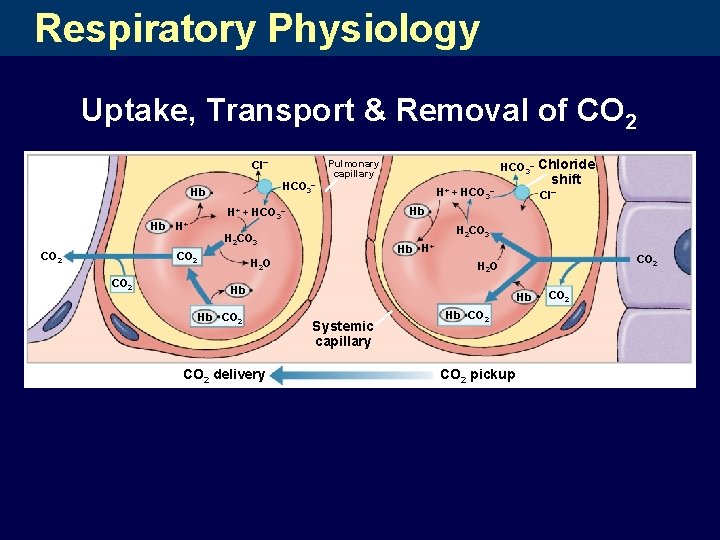
Respiratory Physiology Carbon Dioxide Transport • Aerobic metabolism produces CO 2 • 7% travels dissolved in plasma • 23% travels bound to hemoglobin • Called carbaminohemoglobin • 70% is converted to H 2 CO 3 in RBCs • Catalyzed by carbonic anhydrase • Dissociates to H+ and HCO 3 • HCO 3 - enters plasma from RBC
Respiratory Physiology Carbon Dioxide Transport in the Blood
Respiratory Physiology Key Note Carbon dioxide (CO 2) primarily travels in the bloodstream as bicarbonate ions (HCO 3 -), which form through dissociation of the carbonic acid (H 2 CO 3) produced by carbonic anhydrase inside RBCs. Lesser amounts of CO 2 are bound to hemoglobin or dissolved in plasma.
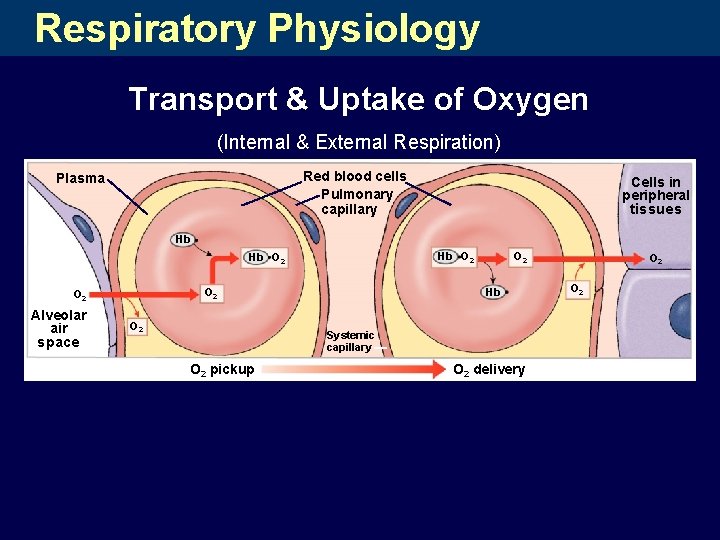
Respiratory Physiology Transport & Uptake of Oxygen (Internal & External Respiration) Red blood cells Pulmonary capillary Plasma Cells in peripheral tissues Hb Hb O 2 Alveolar air space Hb O 2 O 2 Systemic capillary O 2 pickup O 2 delivery O 2
Respiratory Physiology Uptake, Transport & Removal of CO 2 Cl– Hb CO 2 H+ + HCO 3– Hb H+ H 2 O CO 2 H 2 O Hb CO 2 delivery Cl– H 2 CO 3 Hb CO 2 Chloride shift Hb H+ + HCO 3– CO 2 HCO 3– Hb H+ Pulmonary capillary Hb Systemic capillary Hb CO 2 pickup CO 2
The Control of Respiration Meeting the Changing Demand for Oxygen • Requires integration cardiovascular and respiratory responses • Depends on both: • Local control of respiration • Control by brain respiratory centers
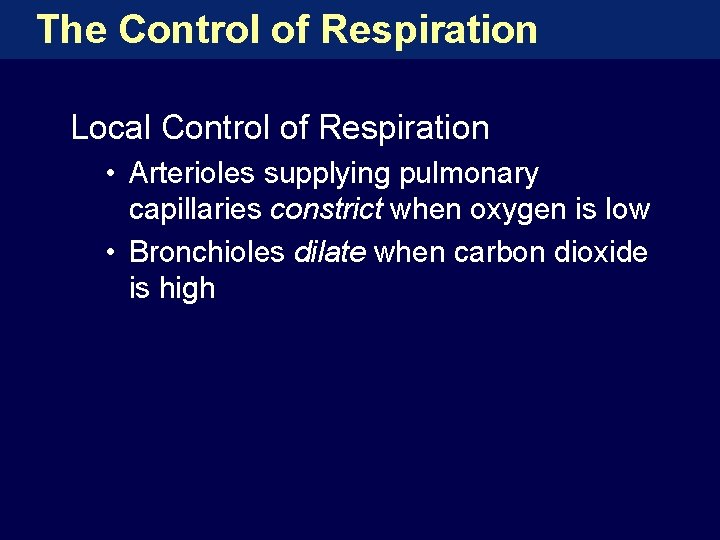
The Control of Respiration Local Control of Respiration • Arterioles supplying pulmonary capillaries constrict when oxygen is low • Bronchioles dilate when carbon dioxide is high
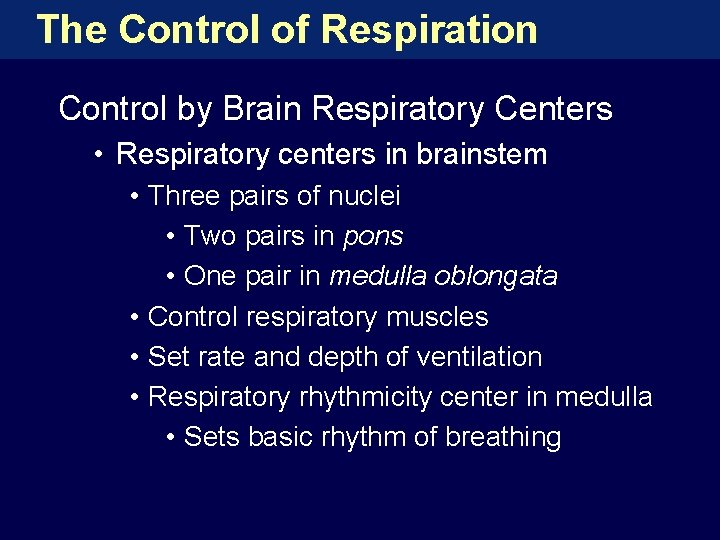
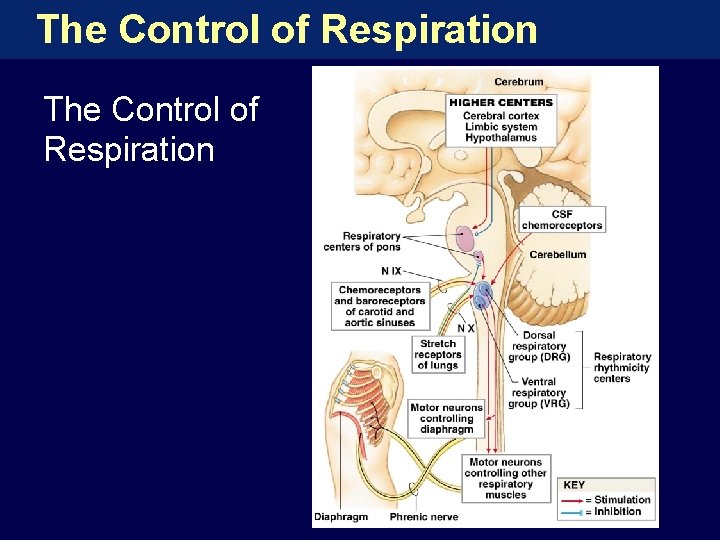
The Control of Respiration Control by Brain Respiratory Centers • Respiratory centers in brainstem • Three pairs of nuclei • Two pairs in pons • One pair in medulla oblongata • Control respiratory muscles • Set rate and depth of ventilation • Respiratory rhythmicity center in medulla • Sets basic rhythm of breathing
The Control of Respiration Basic Regulatory Patterns of Respiration
The Control of Respiration Basic Regulatory Patterns of Respiration
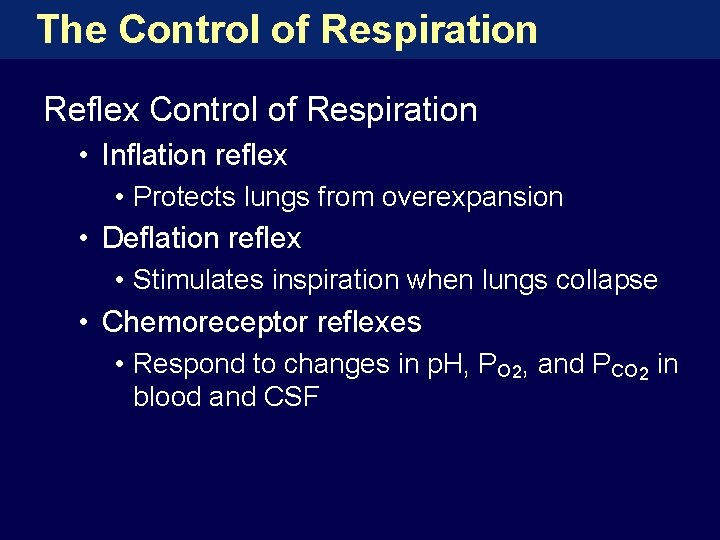
The Control of Respiration Reflex Control of Respiration • Inflation reflex • Protects lungs from overexpansion • Deflation reflex • Stimulates inspiration when lungs collapse • Chemoreceptor reflexes • Respond to changes in p. H, PO 2, and PCO 2 in blood and CSF
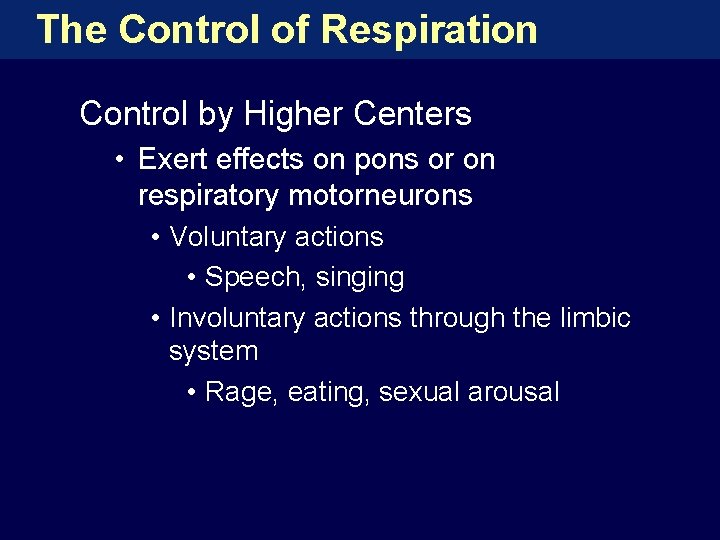
The Control of Respiration Control by Higher Centers • Exert effects on pons or on respiratory motorneurons • Voluntary actions • Speech, singing • Involuntary actions through the limbic system • Rage, eating, sexual arousal
The Control of Respiration Key Note Interplay between respiratory centers in the pons and medulla oblongata sets the basic pace of breathing, as modified by input from chemoreceptors, baroreceptors, and stretch receptors. CO 2 level, rather than O 2 level, is the main driver for breathing. Protective reflexes can interrupt breathing and conscious control of respiratory muscles can act as well.
The Control of Respiration
Respiratory Changes at Birth Conditions Before Birth • • Pulmonary arterial resistance is high Rib cage is compressed Lungs are collapsed Airways, alveoli are filled with fluid Conditions After Birth • An heroic breath fills lungs with air, displaces fluid, and opens alveoli • Surfactant stabilizes open alveoli
Respiratory System and Aging Respiratory System Loses Efficiency • Elastic tissue deteriorates • Lowers vital capacity • Rib cage movement restricted • Arthritic changes • Costal cartilages loses flexibility • Some emphysema usually appears