
Respiratory System Function of the Respiratory System Move

- Slides: 29
Respiratory System
Function of the Respiratory System Move oxygen from outside into the body to help carry out cellular respiration. Remove CO 2 and H 2 O, by-products of cellular respiration, from the body.
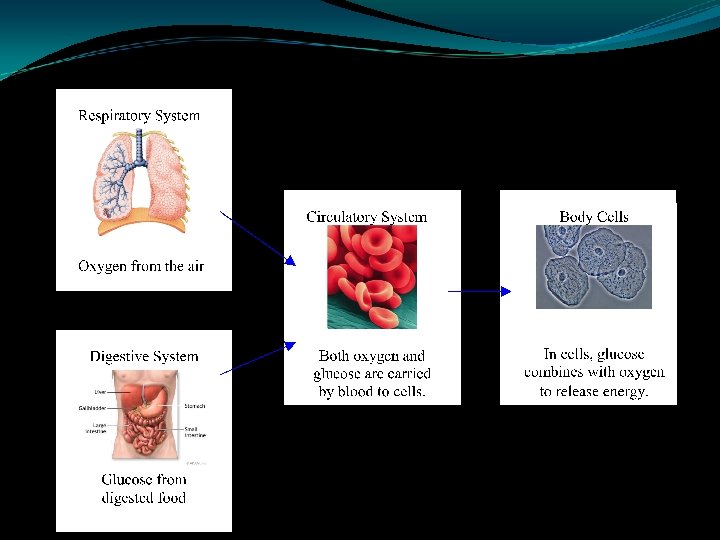
What is Cellular Respiration? The process in which oxygen and glucose undergo a complex series of chemical reactions inside cells. The chemical reactions release the energy that fuels growth and other cell processes. Besides releasing energy, respiration produces carbon dioxide and water.
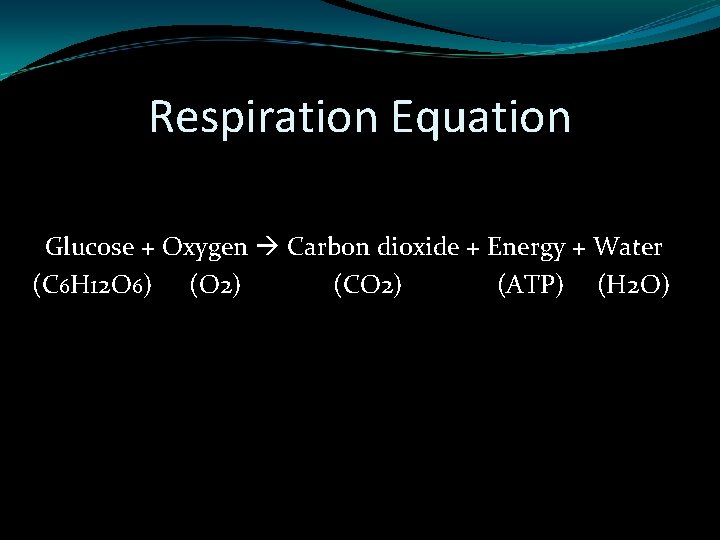
Respiration Equation Glucose + Oxygen Carbon dioxide + Energy + Water (C 6 H 12 O 6) (O 2) (CO 2) (ATP) (H 2 O)
Where does oxygen come from? The air we breathe Where does glucose come from? Digested food What delivers these two substances to the cells? Circulatory System
Respiration vs. Breathing Respiration Chemical reactions inside cells. Breathing Moving air into and out of lungs.
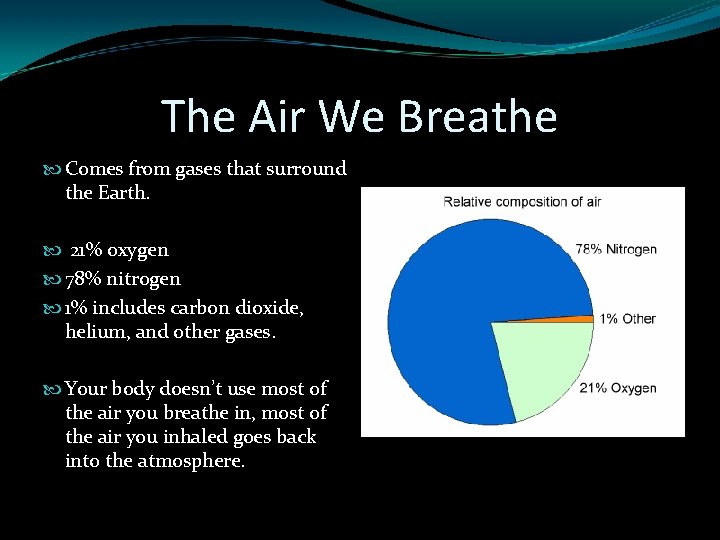
The Air We Breathe Comes from gases that surround the Earth. 21% oxygen 78% nitrogen 1% includes carbon dioxide, helium, and other gases. Your body doesn’t use most of the air you breathe in, most of the air you inhaled goes back into the atmosphere.
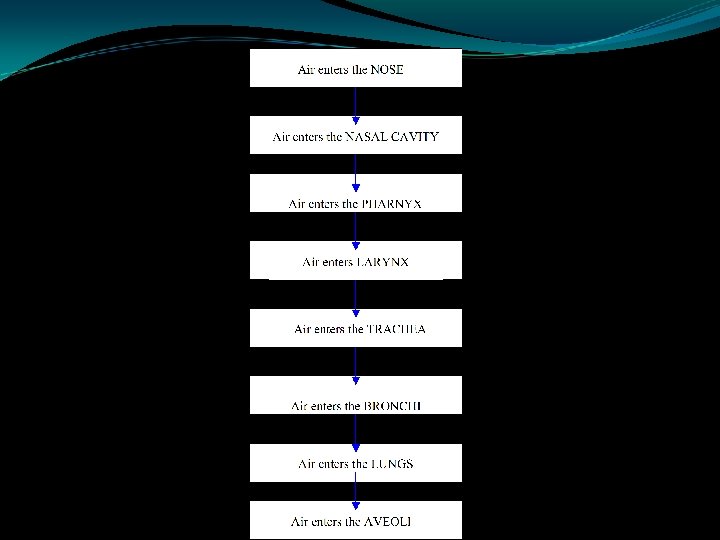
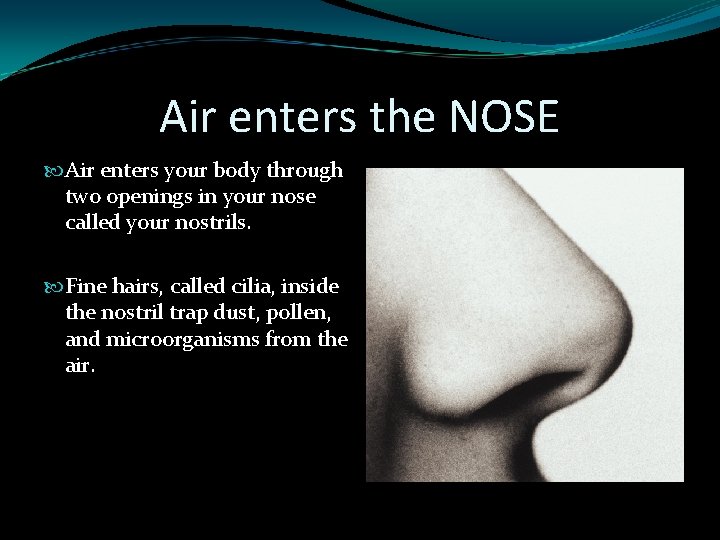
Air enters the NOSE Air enters your body through two openings in your nose called your nostrils. Fine hairs, called cilia, inside the nostril trap dust, pollen, and microorganisms from the air.
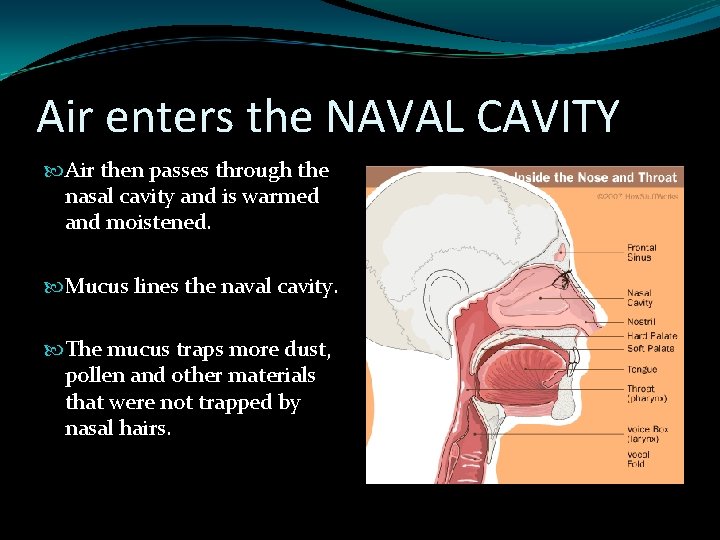
Air enters the NAVAL CAVITY Air then passes through the nasal cavity and is warmed and moistened. Mucus lines the naval cavity. The mucus traps more dust, pollen and other materials that were not trapped by nasal hairs.
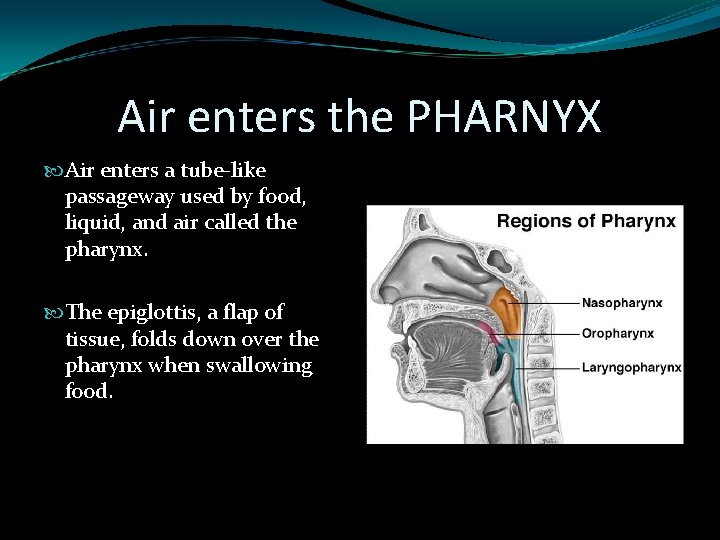
Air enters the PHARNYX Air enters a tube-like passageway used by food, liquid, and air called the pharynx. The epiglottis, a flap of tissue, folds down over the pharynx when swallowing food.
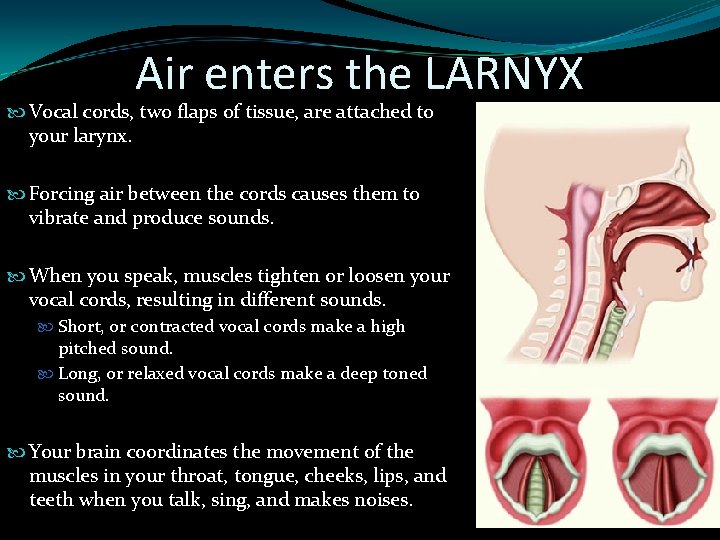
Air enters the LARNYX Vocal cords, two flaps of tissue, are attached to your larynx. Forcing air between the cords causes them to vibrate and produce sounds. When you speak, muscles tighten or loosen your vocal cords, resulting in different sounds. Short, or contracted vocal cords make a high pitched sound. Long, or relaxed vocal cords make a deep toned sound. Your brain coordinates the movement of the muscles in your throat, tongue, cheeks, lips, and teeth when you talk, sing, and makes noises.
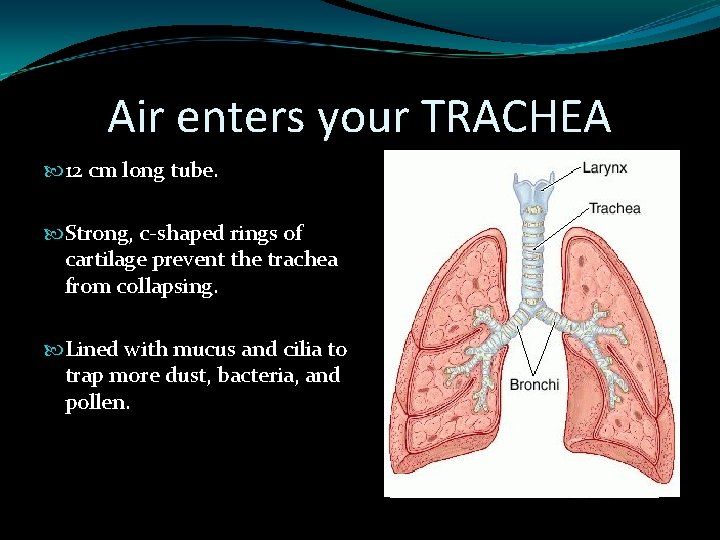
Air enters your TRACHEA 12 cm long tube. Strong, c-shaped rings of cartilage prevent the trachea from collapsing. Lined with mucus and cilia to trap more dust, bacteria, and pollen.
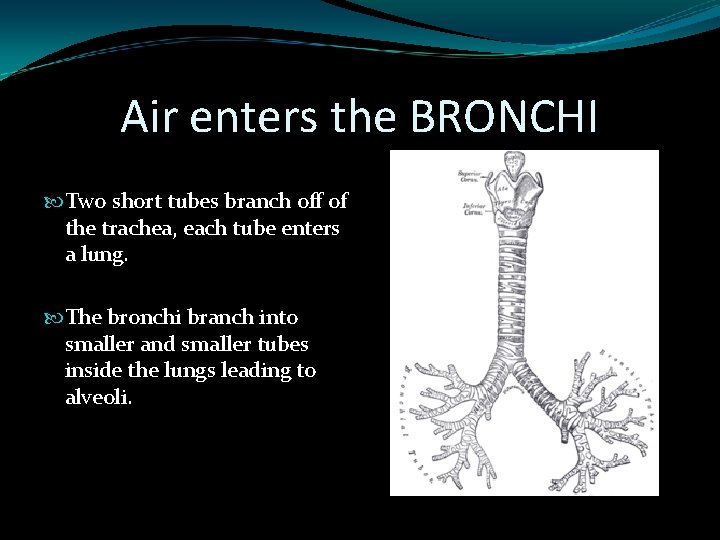
Air enters the BRONCHI Two short tubes branch off of the trachea, each tube enters a lung. The bronchi branch into smaller and smaller tubes inside the lungs leading to alveoli.
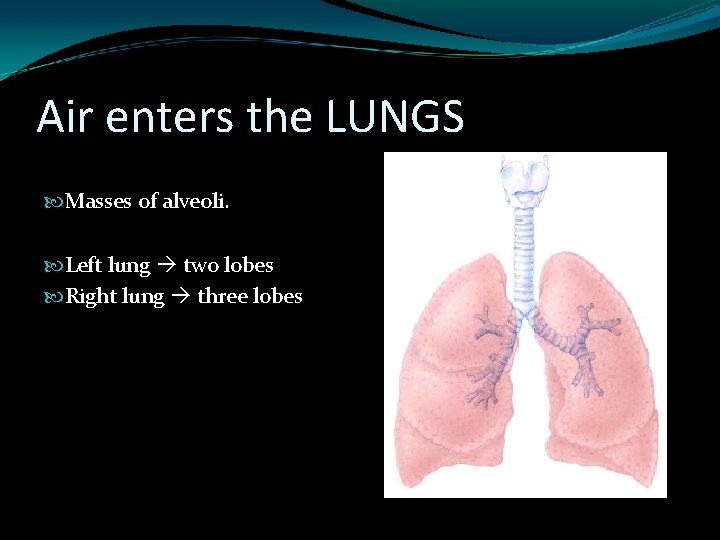
Air enters the LUNGS Masses of alveoli. Left lung two lobes Right lung three lobes
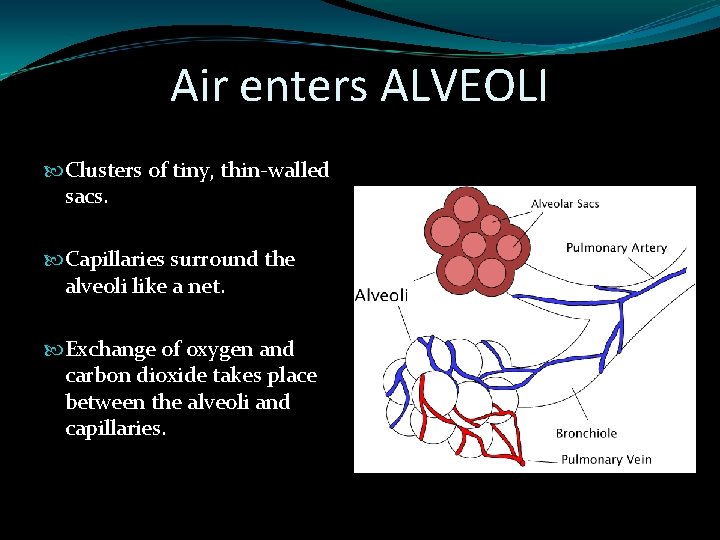
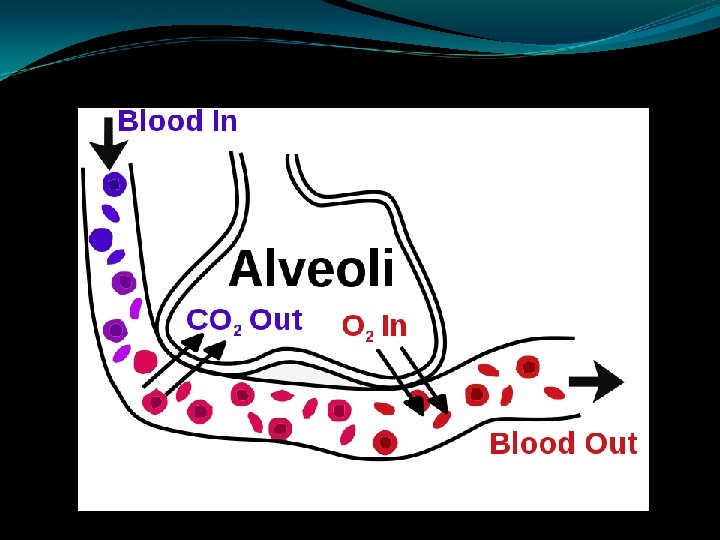
Air enters ALVEOLI Clusters of tiny, thin-walled sacs. Capillaries surround the alveoli like a net. Exchange of oxygen and carbon dioxide takes place between the alveoli and capillaries.
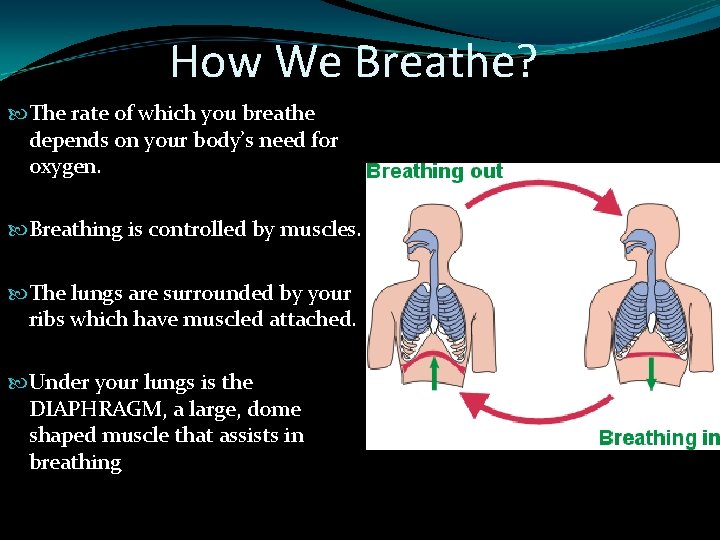
How We Breathe? The rate of which you breathe depends on your body’s need for oxygen. Breathing is controlled by muscles. The lungs are surrounded by your ribs which have muscled attached. Under your lungs is the DIAPHRAGM, a large, dome shaped muscle that assists in breathing
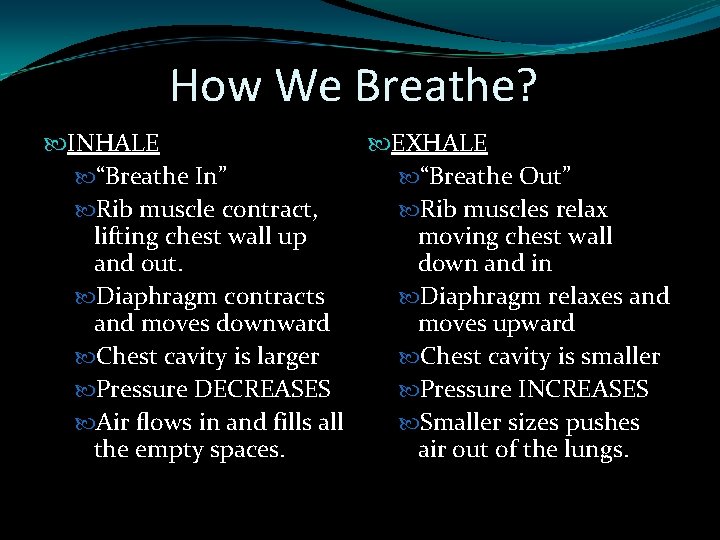
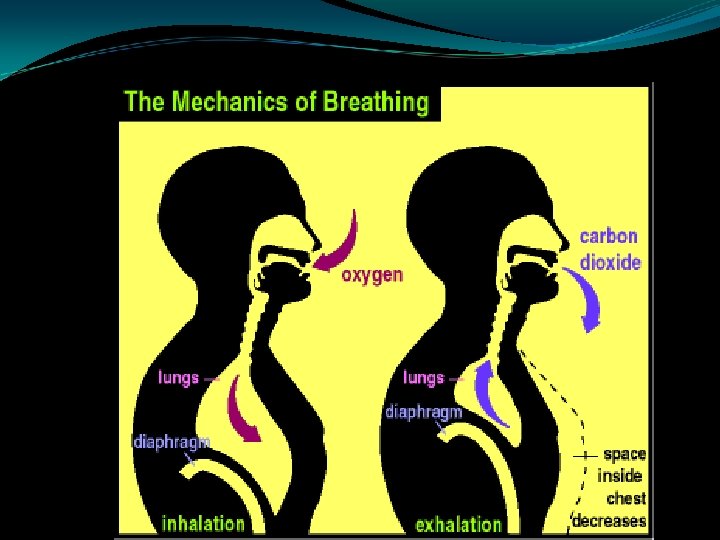
How We Breathe? INHALE EXHALE “Breathe In” “Breathe Out” Rib muscle contract, Rib muscles relax lifting chest wall up moving chest wall and out. down and in Diaphragm contracts Diaphragm relaxes and moves downward moves upward Chest cavity is larger Chest cavity is smaller Pressure DECREASES Pressure INCREASES Air flows in and fills all Smaller sizes pushes the empty spaces. air out of the lungs.
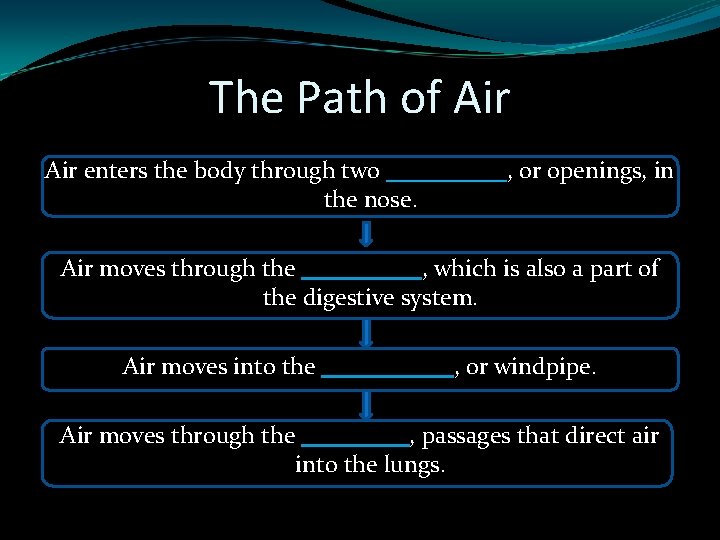
The Path of Air enters the body through two _____, or openings, in the nose. Air moves through the _____, which is also a part of the digestive system. Air moves into the ______, or windpipe. Air moves through the _____, passages that direct air into the lungs.
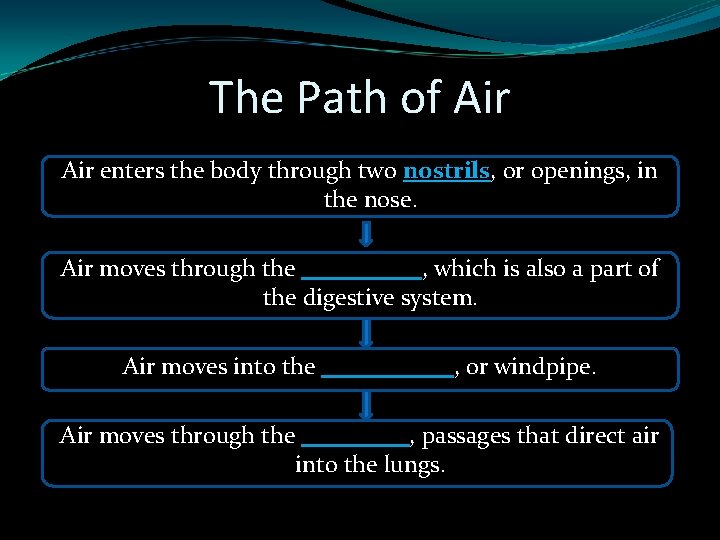
The Path of Air enters the body through two nostrils, or openings, in the nose. Air moves through the _____, which is also a part of the digestive system. Air moves into the ______, or windpipe. Air moves through the _____, passages that direct air into the lungs.
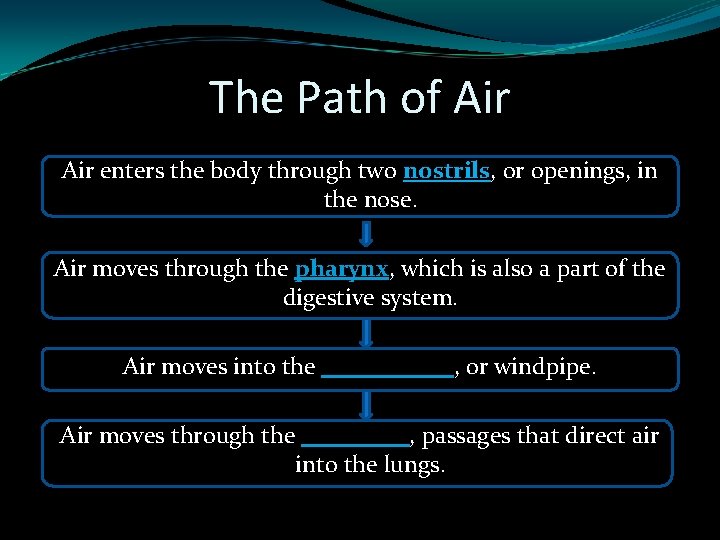
The Path of Air enters the body through two nostrils, or openings, in the nose. Air moves through the pharynx, which is also a part of the digestive system. Air moves into the ______, or windpipe. Air moves through the _____, passages that direct air into the lungs.
The Path of Air enters the body through two nostrils, or openings, in the nose. Air moves through the pharynx, which is also a part of the digestive system. Air moves into the trachea, or windpipe. Air moves through the _____, passages that direct air into the lungs.
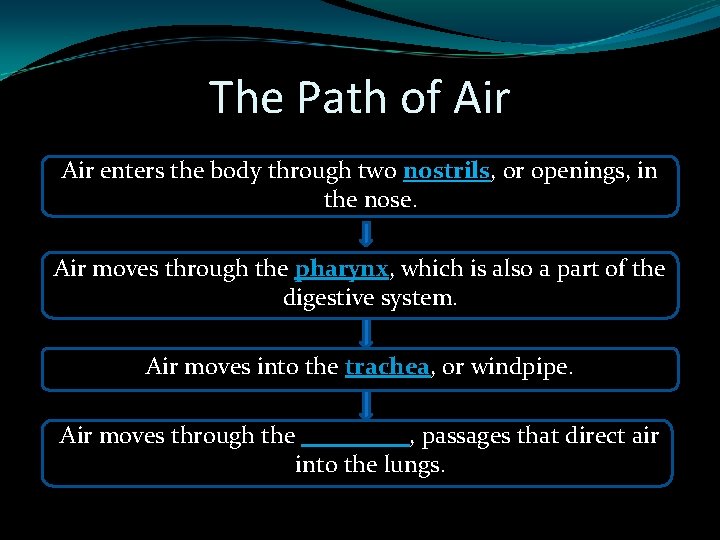
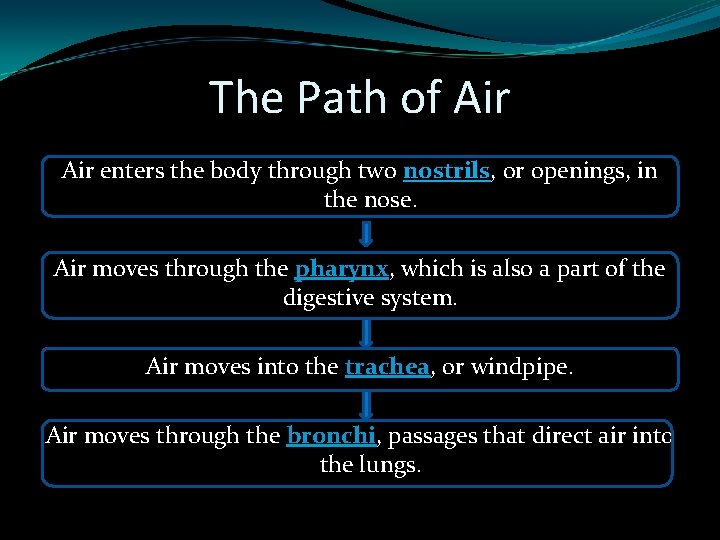
The Path of Air enters the body through two nostrils, or openings, in the nose. Air moves through the pharynx, which is also a part of the digestive system. Air moves into the trachea, or windpipe. Air moves through the bronchi, passages that direct air into the lungs.
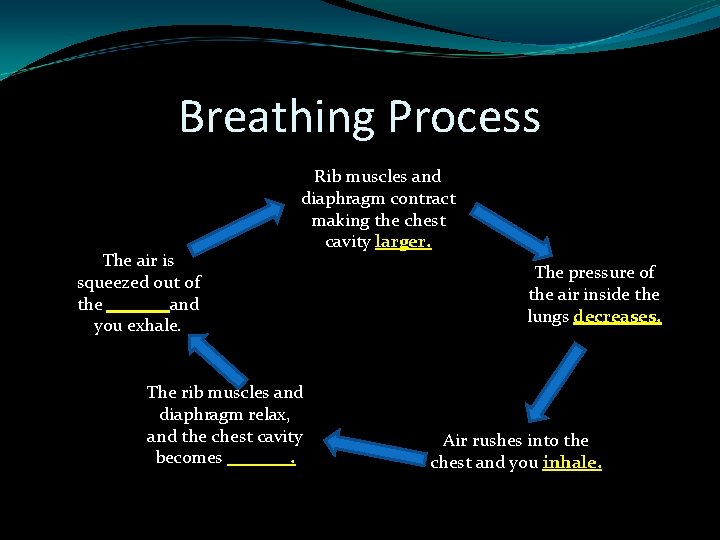
Breathing Process The air is squeezed out of the _______and you exhale. Rib muscles and diaphragm contract making the chest cavity larger. The rib muscles and diaphragm relax, and the chest cavity becomes _______. The pressure of the air inside the lungs decreases. Air rushes into the chest and you inhale.
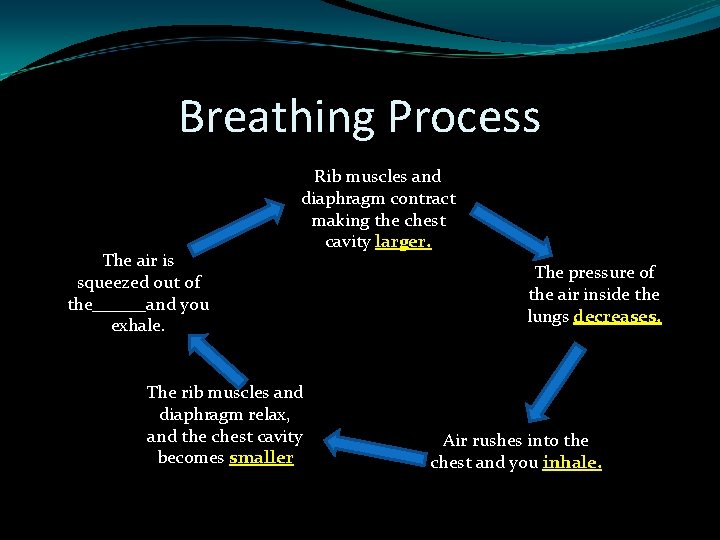
Breathing Process The air is squeezed out of the______and you exhale. Rib muscles and diaphragm contract making the chest cavity larger. The rib muscles and diaphragm relax, and the chest cavity becomes smaller The pressure of the air inside the lungs decreases. Air rushes into the chest and you inhale.
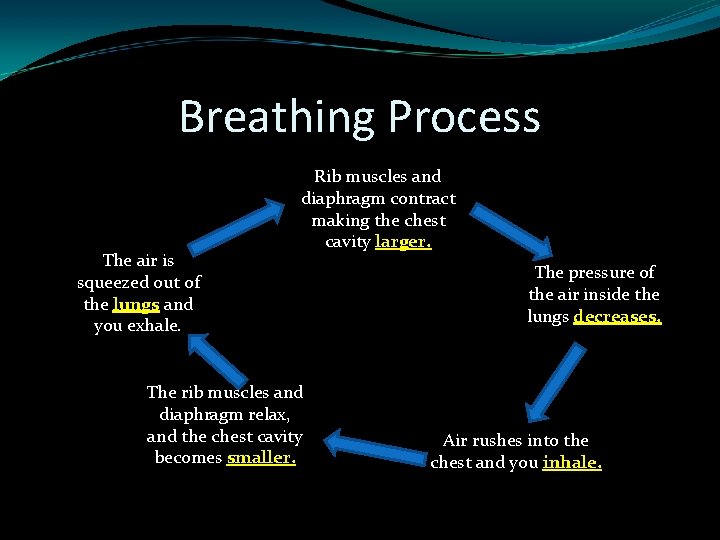
Breathing Process The air is squeezed out of the lungs and you exhale. Rib muscles and diaphragm contract making the chest cavity larger. The rib muscles and diaphragm relax, and the chest cavity becomes smaller. The pressure of the air inside the lungs decreases. Air rushes into the chest and you inhale.