
Respiratory System Function Brings Oxygen O 2 into
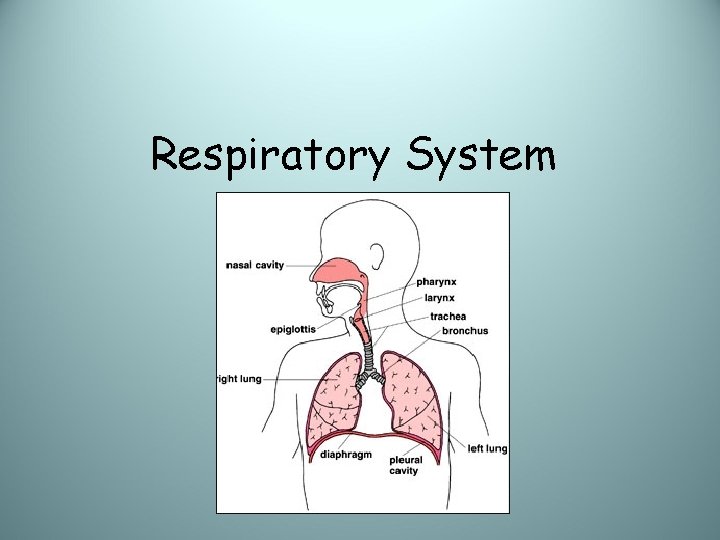
Respiratory System

Function • Brings Oxygen( O 2) into the lungs. • Removes Carbon Dioxide (CO 2) from the lungs.

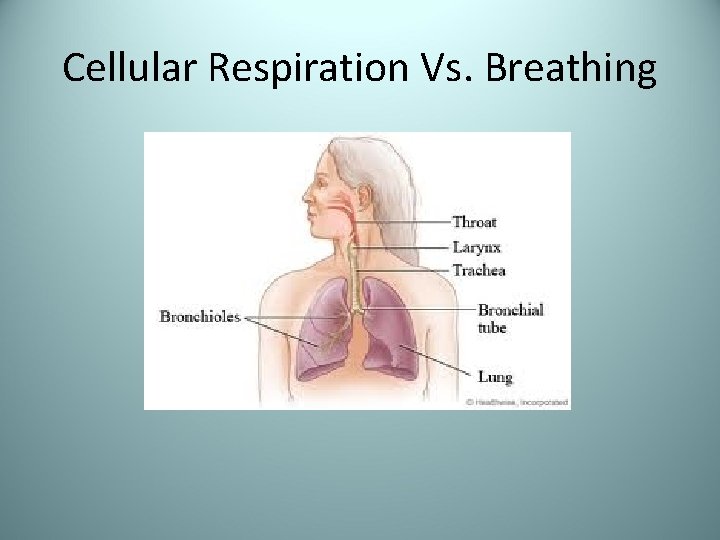
Structures • • • Nose/Nasal Cavity Pharynx (Throat) & Epiglottis Trachea (Windpipe) Larynx (Voice box) Bronchi & Lungs Air Sacs (alveoli)
Nose/Nasal Cavity • Nostrilslined with hairs that trap dust and germs to clean the air. • Nasal Cavity. Moist lining traps particles that got past the nose hairs. – Warms and moistens the air. • Are entering through the mouth is not cleaned.
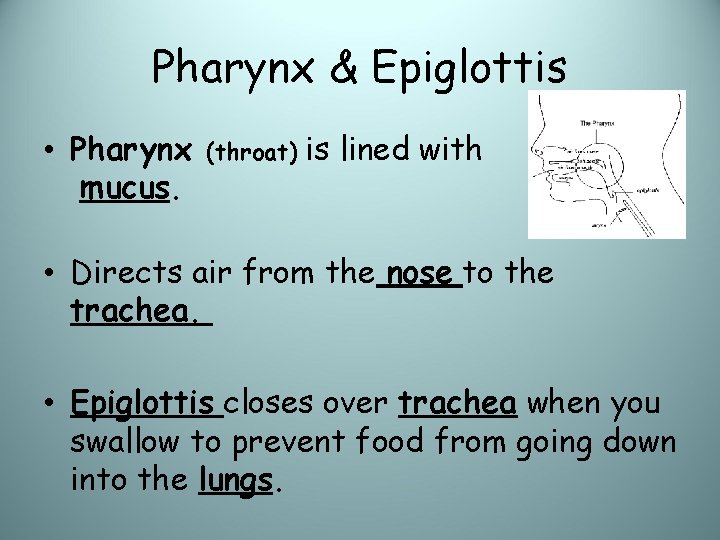
Pharynx & Epiglottis • Pharynx mucus. (throat) is lined with • Directs air from the nose to the trachea. • Epiglottis closes over trachea when you swallow to prevent food from going down into the lungs.

Trachea (windpipe) • Held open by C-shaped rings of Cartilage. • Mucus traps dust and bacteria.
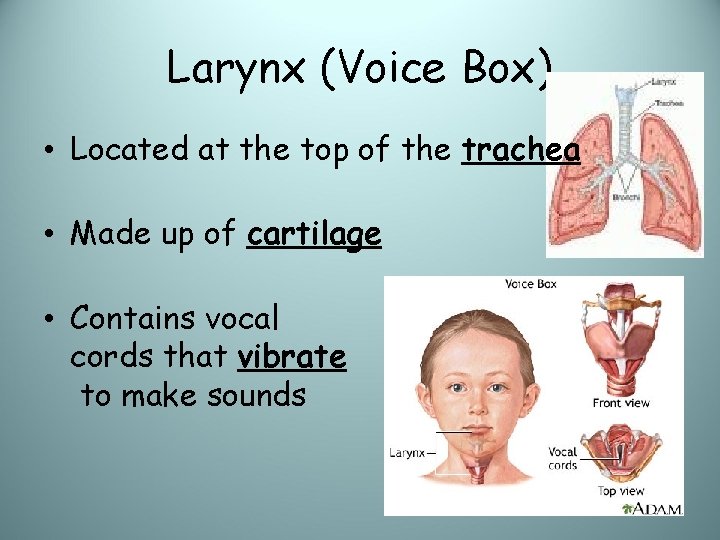
Larynx (Voice Box) • Located at the top of the trachea • Made up of cartilage • Contains vocal cords that vibrate to make sounds
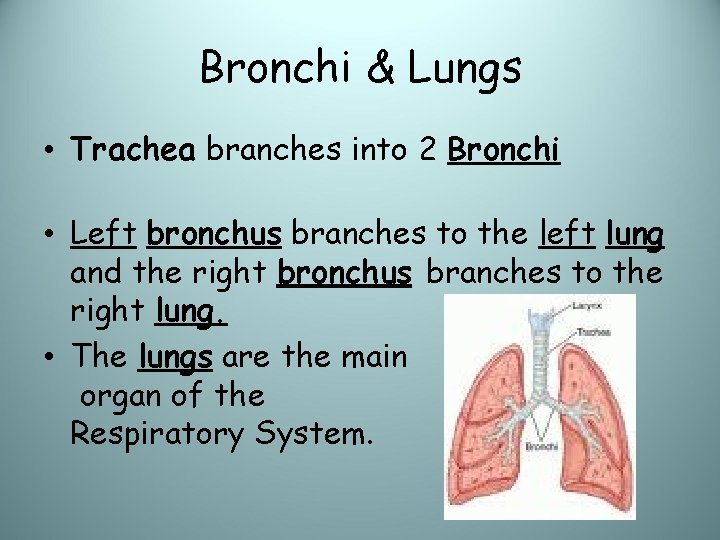
Bronchi & Lungs • Trachea branches into 2 Bronchi • Left bronchus branches to the left lung and the right bronchus branches to the right lung. • The lungs are the main organ of the Respiratory System.
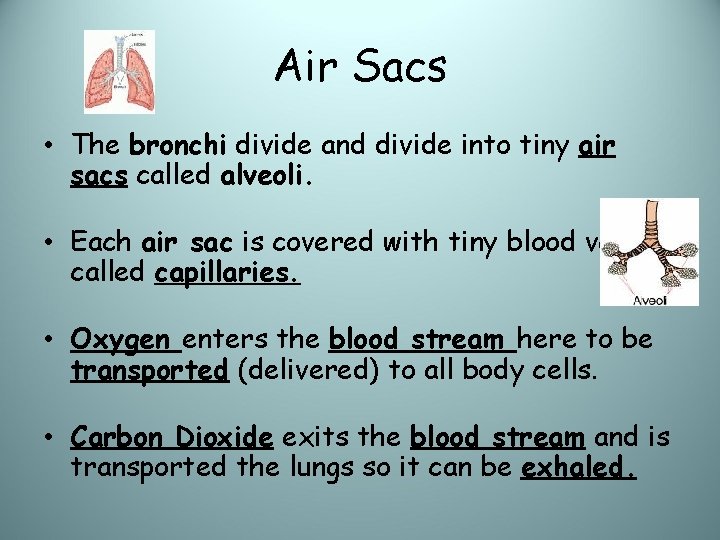
Air Sacs • The bronchi divide and divide into tiny air sacs called alveoli. • Each air sac is covered with tiny blood vessels called capillaries. • Oxygen enters the blood stream here to be transported (delivered) to all body cells. • Carbon Dioxide exits the blood stream and is transported the lungs so it can be exhaled.
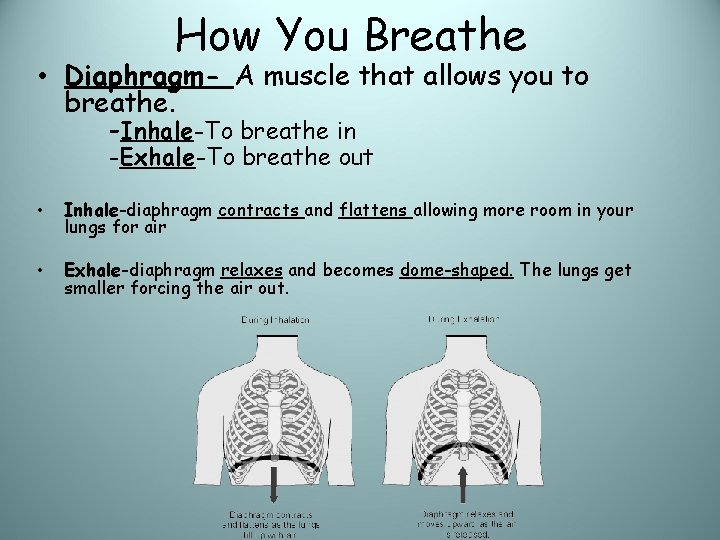
How You Breathe • Diaphragm- A muscle that allows you to breathe. -Inhale-To breathe in -Exhale-To breathe out • Inhale-diaphragm contracts and flattens allowing more room in your lungs for air • Exhale-diaphragm relaxes and becomes dome-shaped. The lungs get smaller forcing the air out.
Let’s watch a few videos on the Respiratory System! • http: //kidshealth. org/kid/htbw/_bfs_RSmovie source. html • http: //www. brainpop. com/health/bodysyste ms/respiratorysystem/ • http: //www. safeshare. tv/v/Xcx. Ee 4 h 3 c. D 8
Do you remember the Function? • Delivers Oxygen O 2 • Removes Carbon Dioxide CO 2
Do you remember the Structures? • • • Nose/Nasal Cavity Pharynx & Epiglottis Trachea (Windpipe) Larynx (Voice box) Bronchi & Lungs Air Sacs

Save the next 2 slides for the day when you do problems with the respiratory system
Cellular Respiration Vs. Breathing
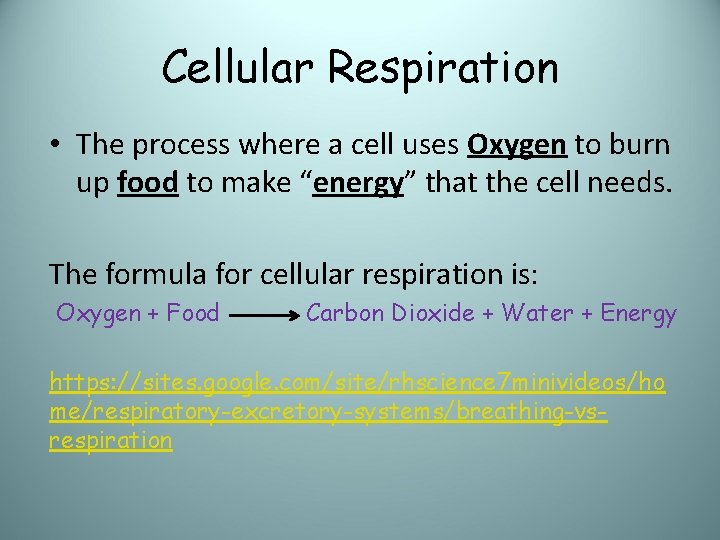
Cellular Respiration • The process where a cell uses Oxygen to burn up food to make “energy” that the cell needs. The formula for cellular respiration is: Oxygen + Food Carbon Dioxide + Water + Energy https: //sites. google. com/site/rhscience 7 minivideos/ho me/respiratory-excretory-systems/breathing-vsrespiration
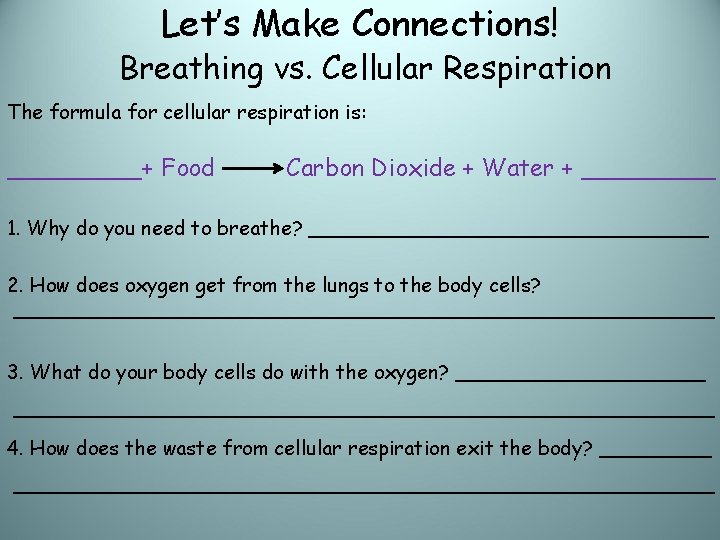
Let’s Make Connections! Breathing vs. Cellular Respiration The formula for cellular respiration is: _____+ Food Carbon Dioxide + Water + _____ 1. Why do you need to breathe? ________________ 2. How does oxygen get from the lungs to the body cells? ____________________________ 3. What do your body cells do with the oxygen? ______________________________________ 4. How does the waste from cellular respiration exit the body? _________________________________
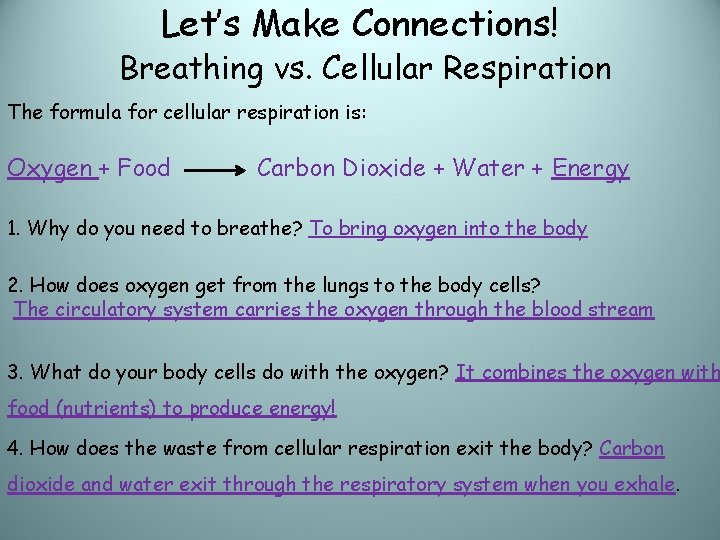
Let’s Make Connections! Breathing vs. Cellular Respiration The formula for cellular respiration is: Oxygen + Food Carbon Dioxide + Water + Energy 1. Why do you need to breathe? To bring oxygen into the body 2. How does oxygen get from the lungs to the body cells? The circulatory system carries the oxygen through the blood stream 3. What do your body cells do with the oxygen? It combines the oxygen with food (nutrients) to produce energy! 4. How does the waste from cellular respiration exit the body? Carbon dioxide and water exit through the respiratory system when you exhale.
- Slides: 19