
Respiratory System Dr Archna Ghildiyal Associate Professor Department



- Slides: 29
Respiratory System Dr Archna Ghildiyal Associate Professor Department of Physiology KGMU
LECTURE: 9 Contents • Chemical control of Respiration • Chemoreceptors-Central -Peripheral • Effect of PCO 2 and p. H on Ventilation • Lung receptors • Cough Reflex
Learning Objectives • Chemical Control of Respiration • Chemoreceptors: Functional organization • Ventilatory Responses: To changes in acid-base balance To CO 2 excess To Oxygen lack
Chemical control of respiration Chemoreceptors • Central: Chemosensitive Area -Beneath ventral surface of medulla -Located bilaterally • Peripheral: Aortic & Carotid Body
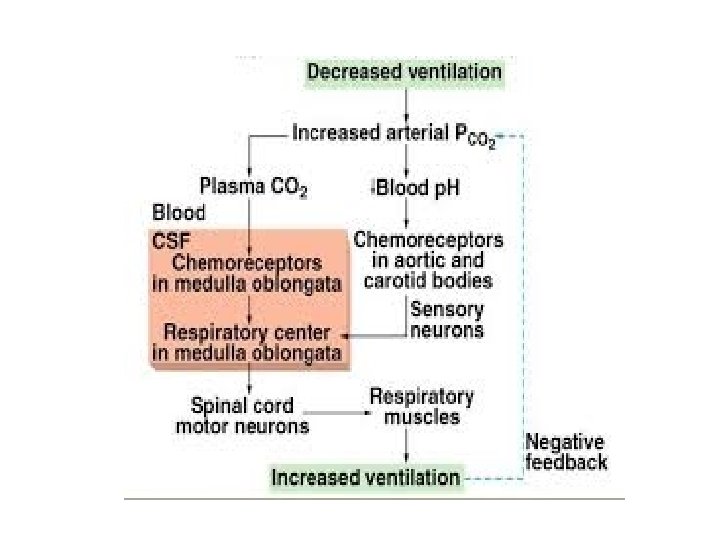
Functional Organization of Chemoreceptors • A rise in PCO 2, a fall in p. H or PO 2 of arterial blood increases respiratory neuron activity in the medulla. • Stimulus: a change in blood chemistry • Sensed by: receptors called chemoreceptors • Response: rate & depth of breathing ( minute ventilation)
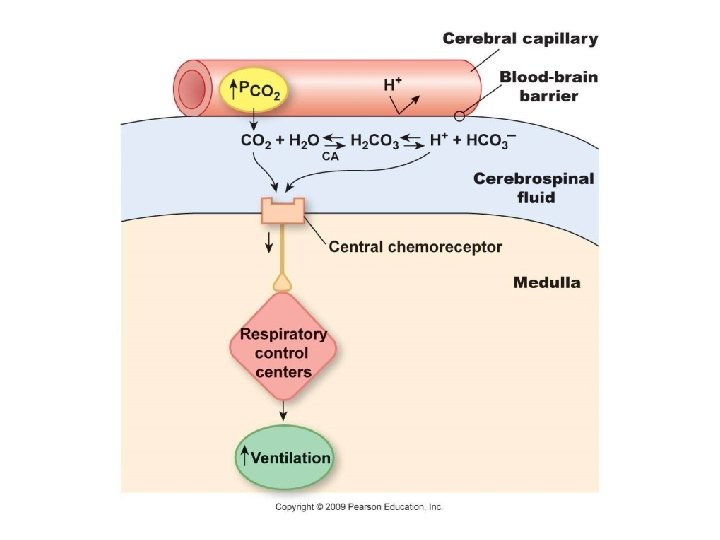
Central chemoreceptors (medullary chemoreceptors) • Location: brain stem, ventral surface of medulla, near I neurons • Project to respiratory neurons • Mainly sensitive to changes in Pa. CO 2 • A rise in Pa. CO 2 effectively stimulates central chemoreceptors
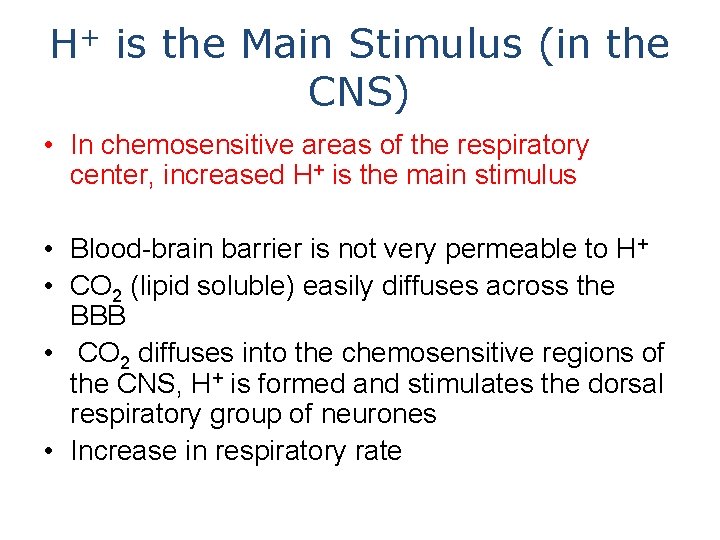
H+ is the Main Stimulus (in the CNS) • In chemosensitive areas of the respiratory center, increased H+ is the main stimulus • Blood-brain barrier is not very permeable to H+ • CO 2 (lipid soluble) easily diffuses across the BBB • CO 2 diffuses into the chemosensitive regions of the CNS, H+ is formed and stimulates the dorsal respiratory group of neurones • Increase in respiratory rate
Contd… • Central respiratory response to elevated PCO 2 does not continue beyond few days • Due to Renal readjustment of H+ ion conc in circulating blood
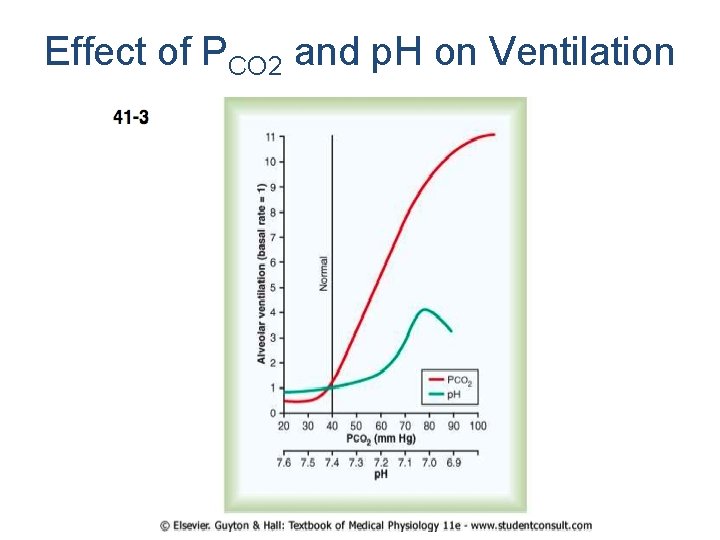
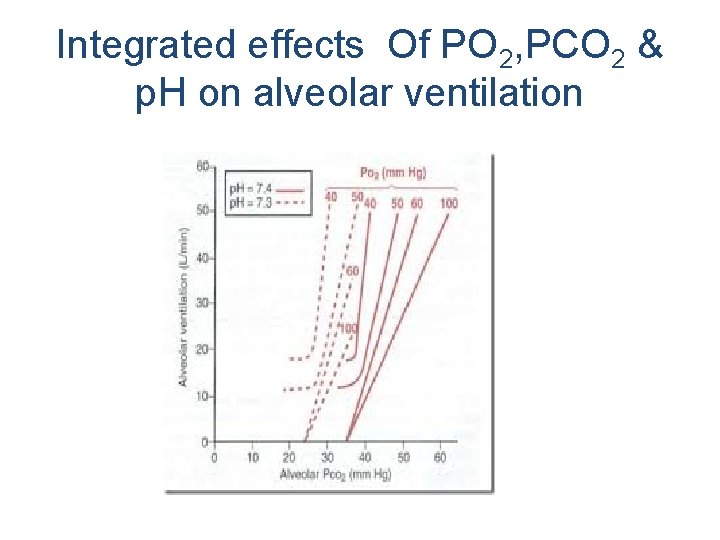
Effect of PCO 2 and p. H on Ventilation
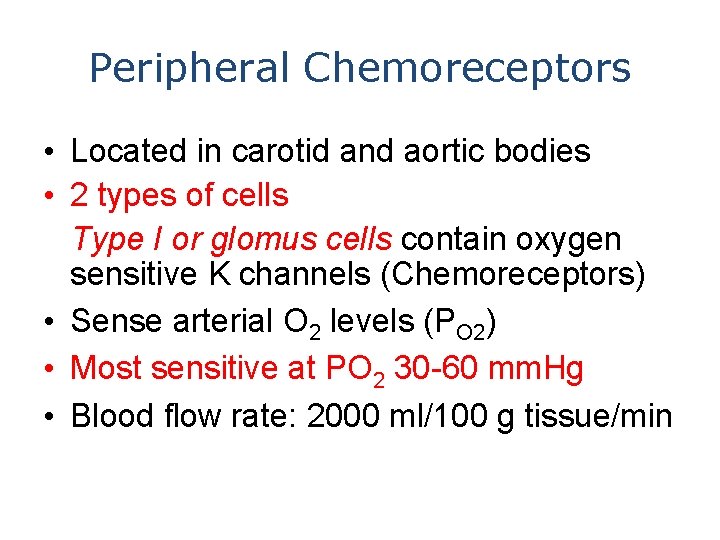
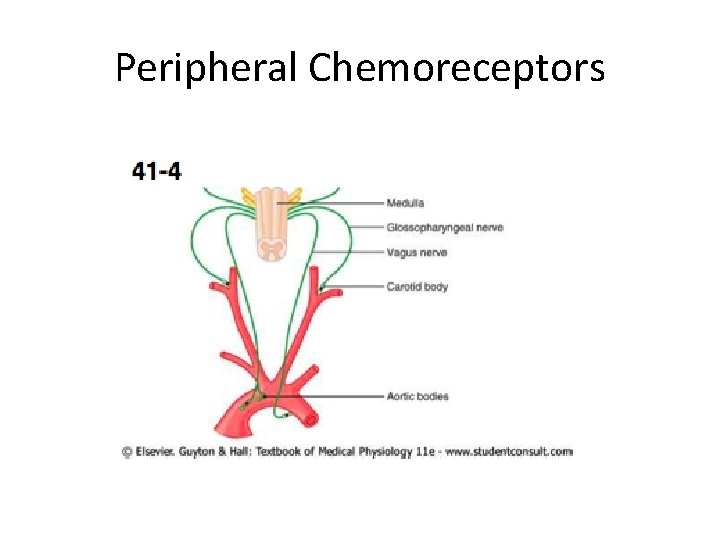
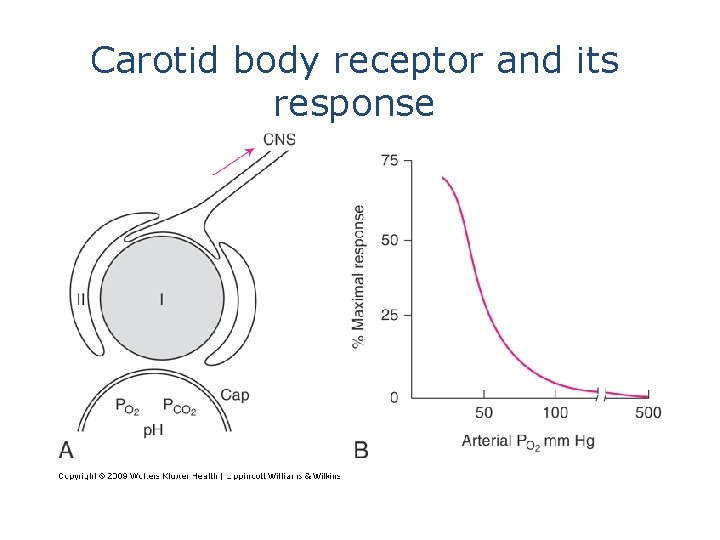
Peripheral Chemoreceptors • Located in carotid and aortic bodies • 2 types of cells Type I or glomus cells contain oxygen sensitive K channels (Chemoreceptors) • Sense arterial O 2 levels (PO 2) • Most sensitive at PO 2 30 -60 mm. Hg • Blood flow rate: 2000 ml/100 g tissue/min
Peripheral Chemoreceptors
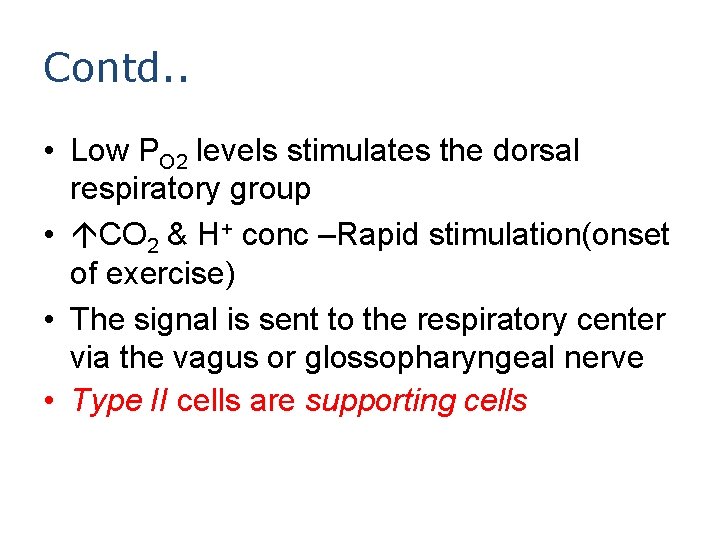
Contd. . • Low PO 2 levels stimulates the dorsal respiratory group • CO 2 & H+ conc –Rapid stimulation(onset of exercise) • The signal is sent to the respiratory center via the vagus or glossopharyngeal nerve • Type II cells are supporting cells
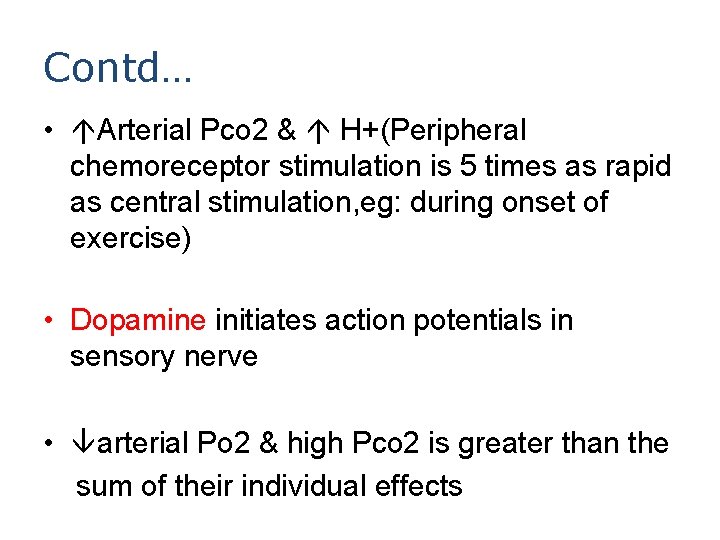
Contd… • Arterial Pco 2 & H+(Peripheral chemoreceptor stimulation is 5 times as rapid as central stimulation, eg: during onset of exercise) • Dopamine initiates action potentials in sensory nerve • arterial Po 2 & high Pco 2 is greater than the sum of their individual effects
Carotid body receptor and its response
Integrated effects Of PO 2, PCO 2 & p. H on alveolar ventilation
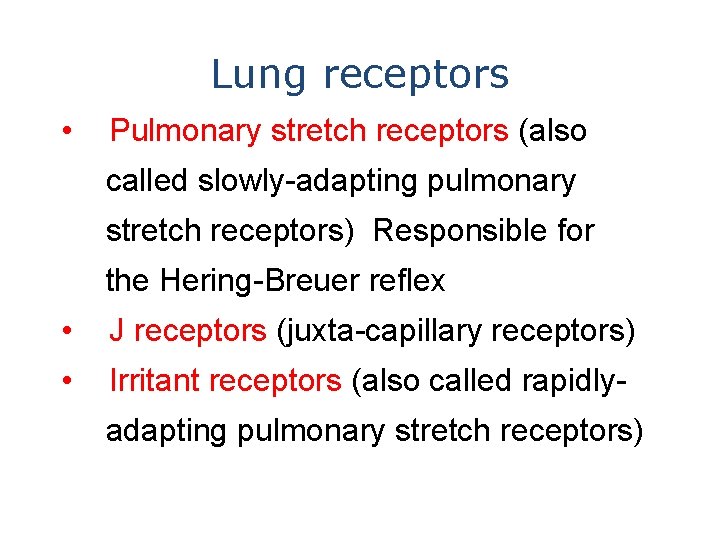
Lung receptors • Pulmonary stretch receptors (also called slowly-adapting pulmonary stretch receptors) Responsible for the Hering-Breuer reflex • J receptors (juxta-capillary receptors) • Irritant receptors (also called rapidlyadapting pulmonary stretch receptors)
Irritant receptors • Location: Trachea, major airways, mostly in Larynx & Carina(point where trachea divides into bronchi) • Stimulus: Cold air, Mucus, Dust • Via Vagus to CNS • Response: Bronchoconstriction, Hyperpnoea(deepr & rapid breathing than normal), Cough
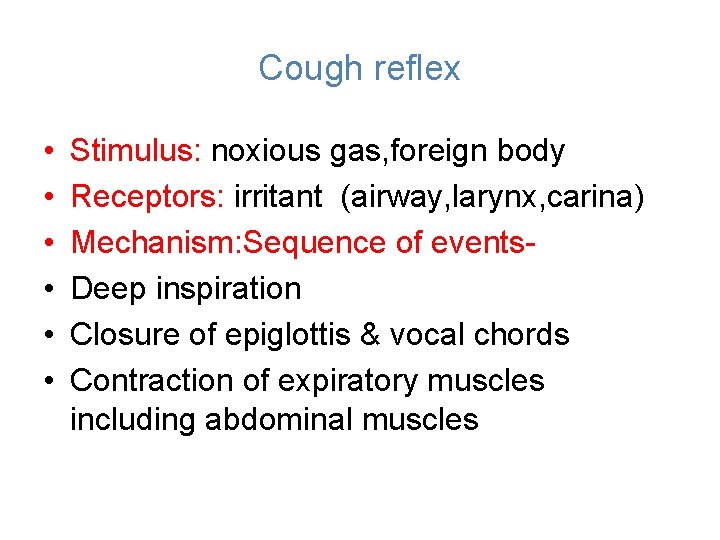
Cough reflex • • • Stimulus: noxious gas, foreign body Receptors: irritant (airway, larynx, carina) Mechanism: Sequence of events. Deep inspiration Closure of epiglottis & vocal chords Contraction of expiratory muscles including abdominal muscles
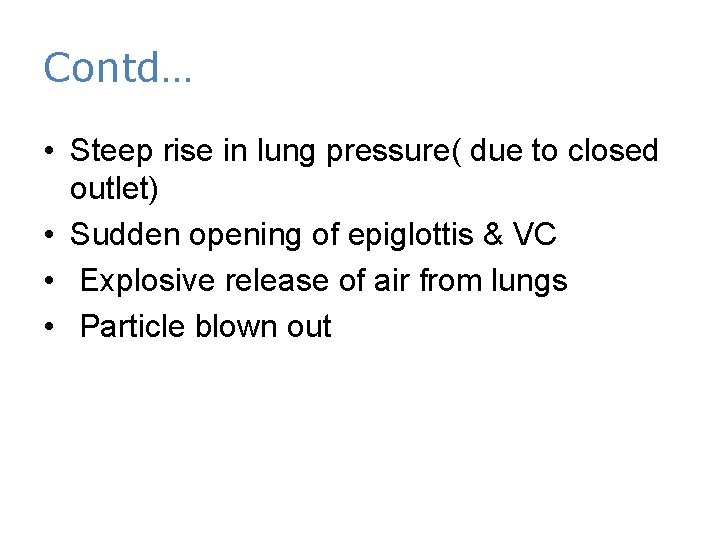
Contd… • Steep rise in lung pressure( due to closed outlet) • Sudden opening of epiglottis & VC • Explosive release of air from lungs • Particle blown out
References • Guyton & Hall. Text book of Medical Physiology • Ganong’s Review of Medical Physiology • Berne & Levy Physiology • http: //meded. ucsd. edu/ifp/jwest/resp_ phys/student_files. html
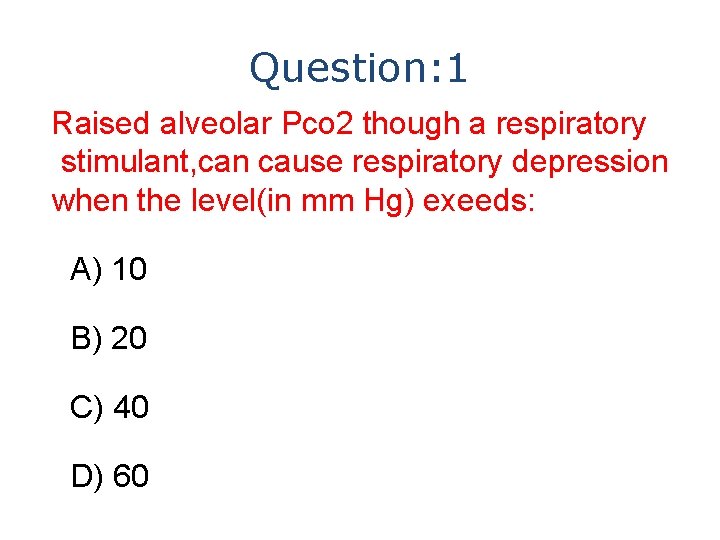
Question: 1 Raised alveolar Pco 2 though a respiratory stimulant, can cause respiratory depression when the level(in mm Hg) exeeds: A) 10 B) 20 C) 40 D) 60
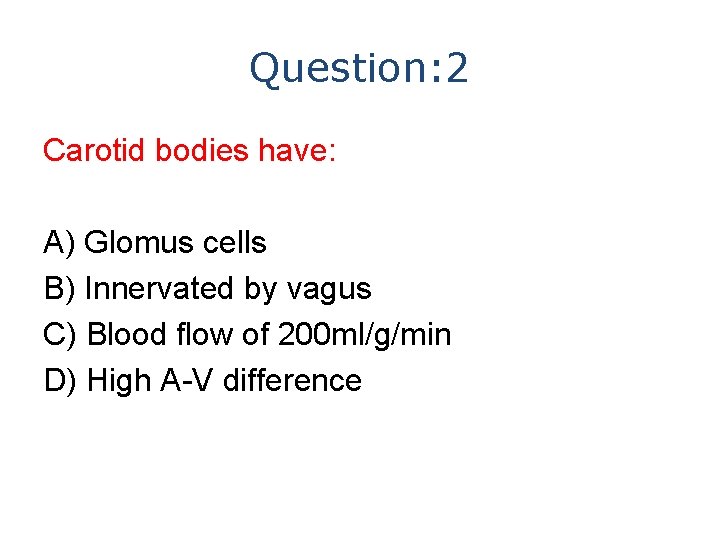
Question: 2 Carotid bodies have: A) Glomus cells B) Innervated by vagus C) Blood flow of 200 ml/g/min D) High A-V difference
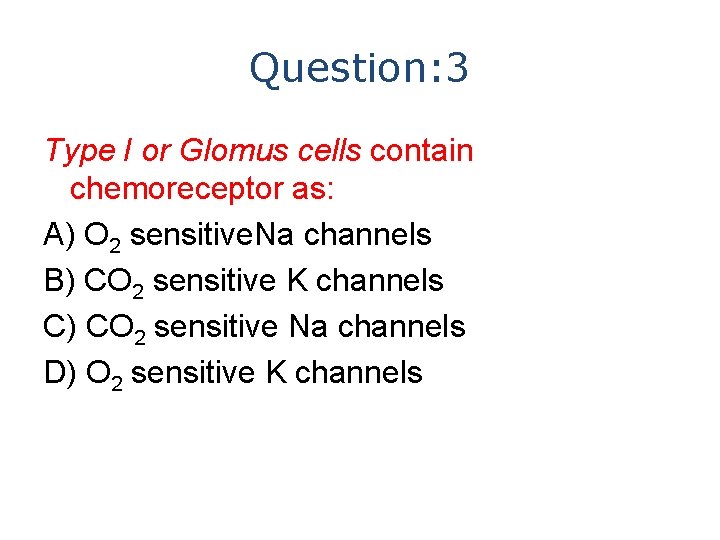
Question: 3 Type I or Glomus cells contain chemoreceptor as: A) O 2 sensitive. Na channels B) CO 2 sensitive K channels C) CO 2 sensitive Na channels D) O 2 sensitive K channels
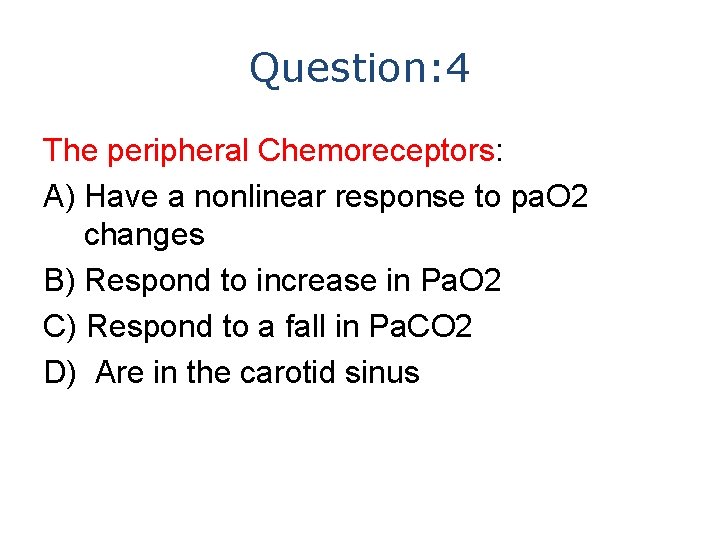
Question: 4 The peripheral Chemoreceptors: A) Have a nonlinear response to pa. O 2 changes B) Respond to increase in Pa. O 2 C) Respond to a fall in Pa. CO 2 D) Are in the carotid sinus
Question: 5 Highest density of Irritant receptors is present at A)Trachea B)Bronchioles C)Alveoli D)Larynx
Answers 1 - D 2 - A 3 - D 4 - A 5 - D