
Respiratory System Amazing Lung Facts At rest a
- Slides: 14
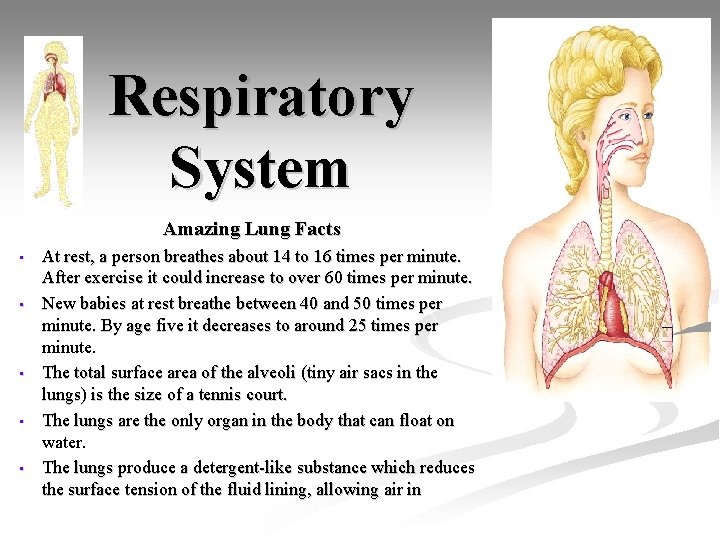
Respiratory System Amazing Lung Facts • • • At rest, a person breathes about 14 to 16 times per minute. After exercise it could increase to over 60 times per minute. New babies at rest breathe between 40 and 50 times per minute. By age five it decreases to around 25 times per minute. The total surface area of the alveoli (tiny air sacs in the lungs) is the size of a tennis court. The lungs are the only organ in the body that can float on water. The lungs produce a detergent-like substance which reduces the surface tension of the fluid lining, allowing air in
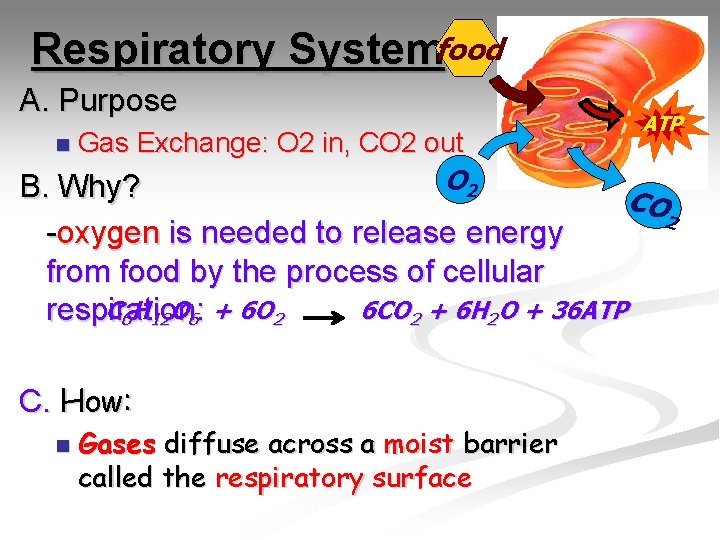
Respiratory Systemfood A. Purpose n Gas Exchange: O 2 in, CO 2 out ATP O 2 B. Why? CO 2 -oxygen is needed to release energy from food by the process of cellular C 6 H 12 O 6 + 6 O 2 6 CO 2 + 6 H 2 O + 36 ATP respiration: C. How: n Gases diffuse across a moist barrier called the respiratory surface
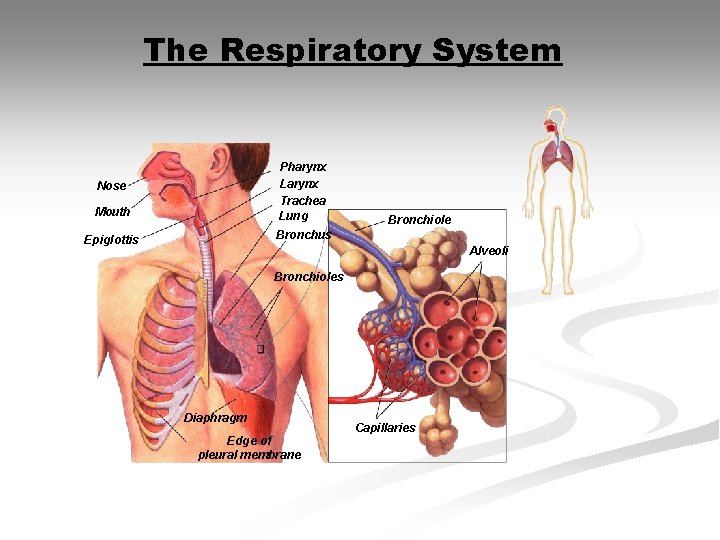
The Respiratory System Mouth Pharynx Larynx Trachea Lung Epiglottis Bronchus Nose Bronchiole Alveoli Bronchioles Diaphragm Edge of pleural membrane Capillaries
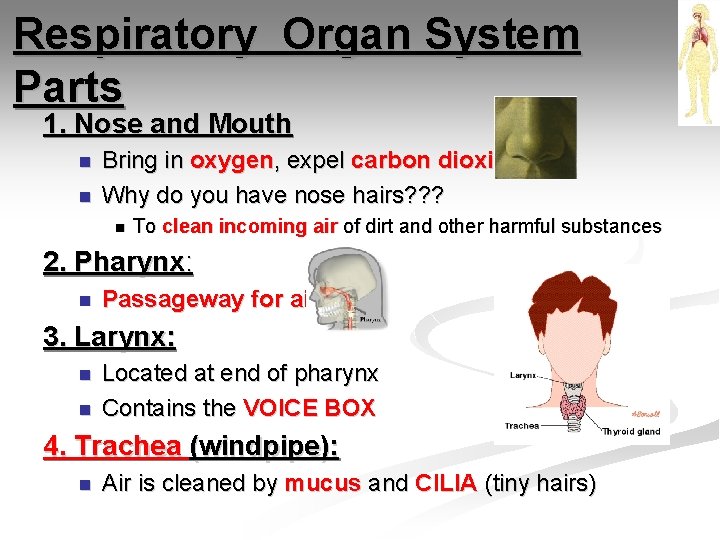
Respiratory Organ System Parts 1. Nose and Mouth n n Bring in oxygen, expel carbon dioxide Why do you have nose hairs? ? ? n To clean incoming air of dirt and other harmful substances 2. Pharynx: n Passageway for air 3. Larynx: n n Located at end of pharynx Contains the VOICE BOX 4. Trachea (windpipe): n Air is cleaned by mucus and CILIA (tiny hairs)
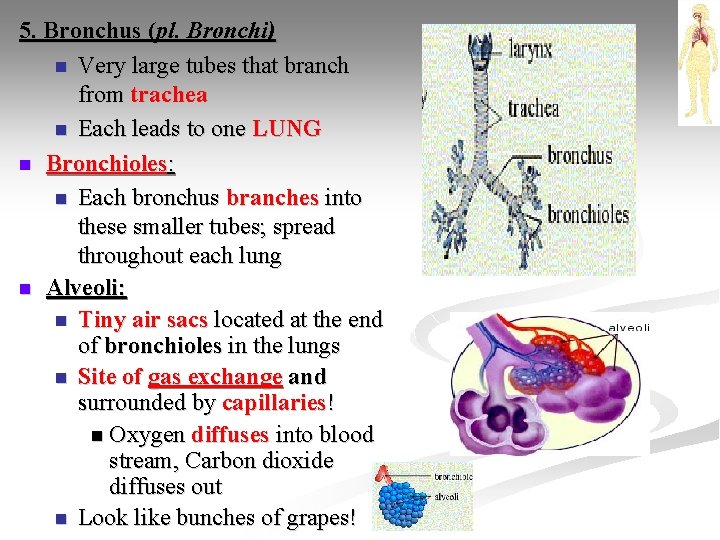
5. Bronchus (pl. Bronchi) n Very large tubes that branch from trachea n Each leads to one LUNG n Bronchioles: n Each bronchus branches into these smaller tubes; spread throughout each lung n Alveoli: n Tiny air sacs located at the end of bronchioles in the lungs n Site of gas exchange and surrounded by capillaries! n Oxygen diffuses into blood stream, Carbon dioxide diffuses out n Look like bunches of grapes!
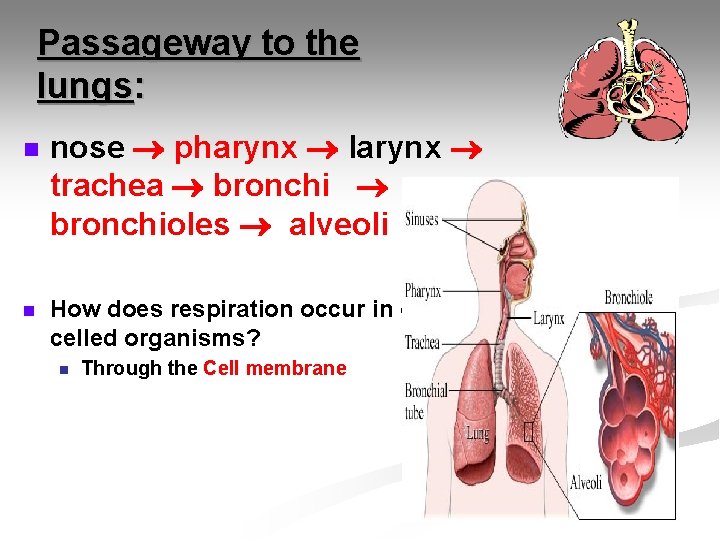
Passageway to the lungs: n n nose pharynx larynx trachea bronchioles alveoli How does respiration occur in one celled organisms? n Through the Cell membrane
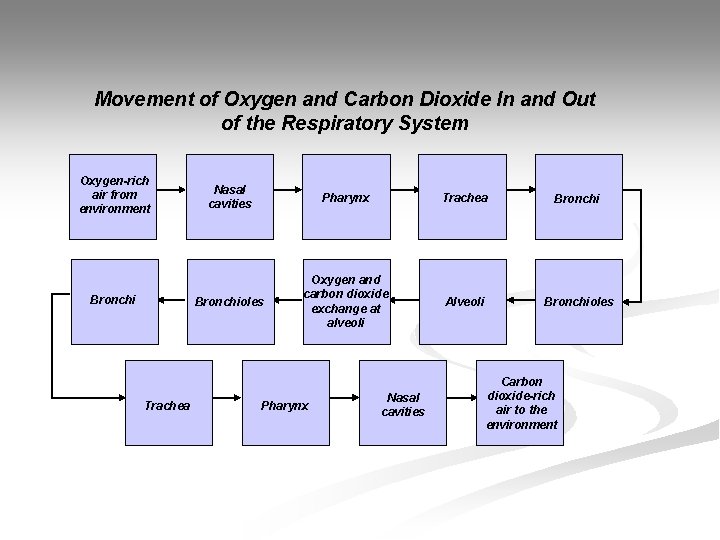
Movement of Oxygen and Carbon Dioxide In and Out of the Respiratory System Oxygen-rich air from environment Bronchi Trachea Nasal cavities Pharynx Trachea Bronchioles Oxygen and carbon dioxide exchange at alveoli Alveoli Bronchioles Pharynx Nasal cavities Carbon dioxide-rich air to the environment
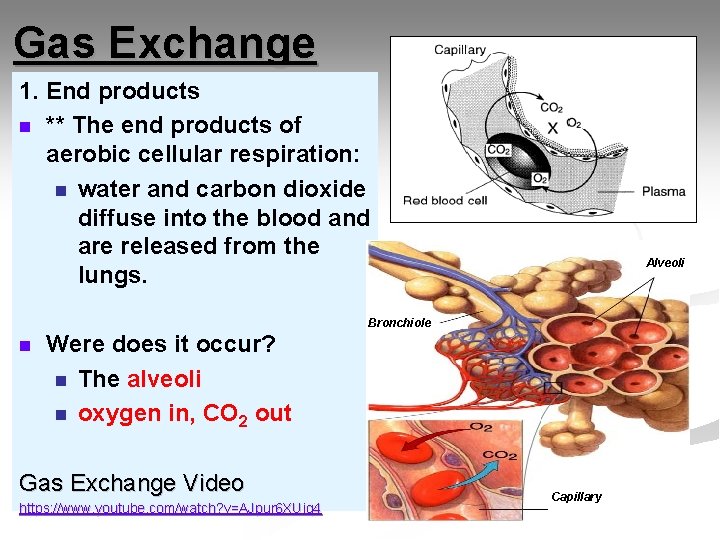
Gas Exchange 1. End products n ** The end products of aerobic cellular respiration: n water and carbon dioxide diffuse into the blood and are released from the lungs. Alveoli Bronchiole n Were does it occur? n The alveoli n oxygen in, CO 2 out Gas Exchange Video https: //www. youtube. com/watch? v=AJpur 6 XUiq 4 Capillary
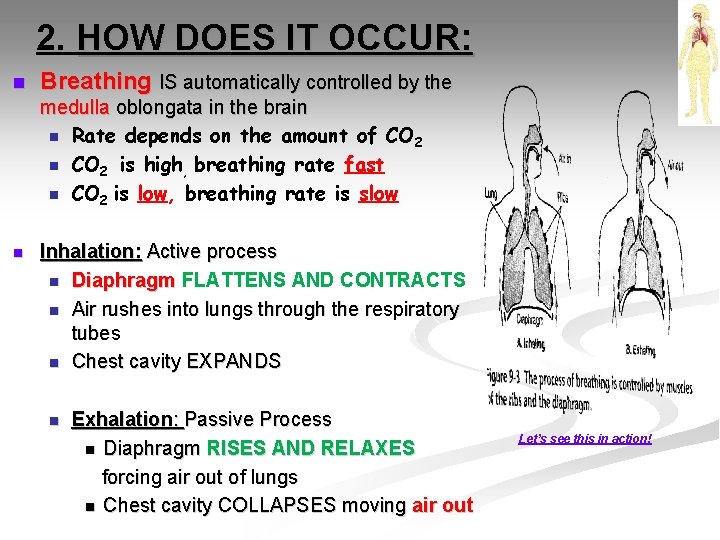
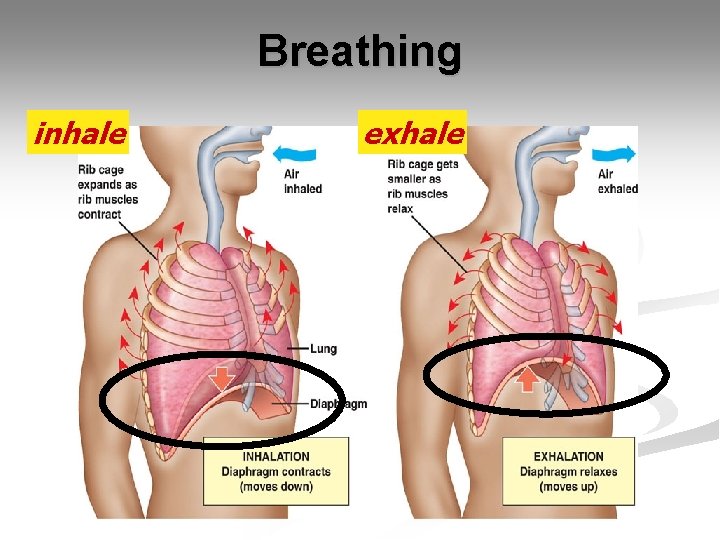
2. HOW DOES IT OCCUR: n Breathing IS automatically controlled by the medulla oblongata in the brain n Rate depends on the amount of CO 2 n CO 2 is high, breathing rate fast n CO 2 is low, breathing rate is slow n Inhalation: Active process n Diaphragm FLATTENS AND CONTRACTS n Air rushes into lungs through the respiratory tubes n Chest cavity EXPANDS n Exhalation: Passive Process n Diaphragm RISES AND RELAXES forcing air out of lungs n Chest cavity COLLAPSES moving air out Let’s see this in action!
Breathing inhale exhale
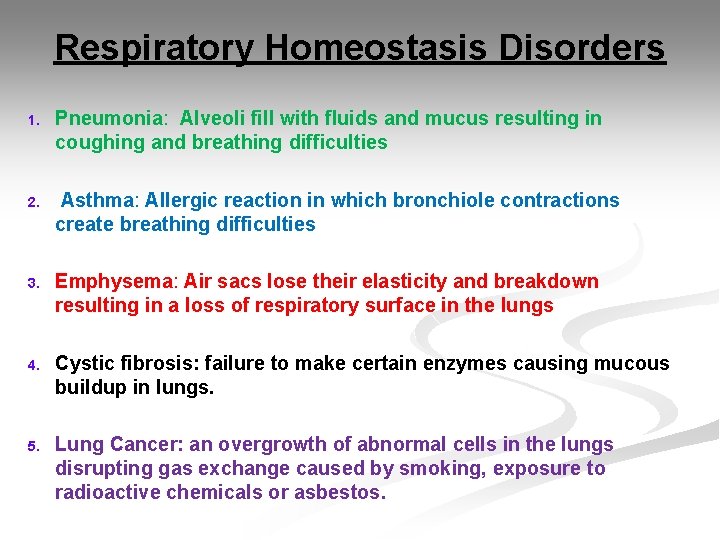
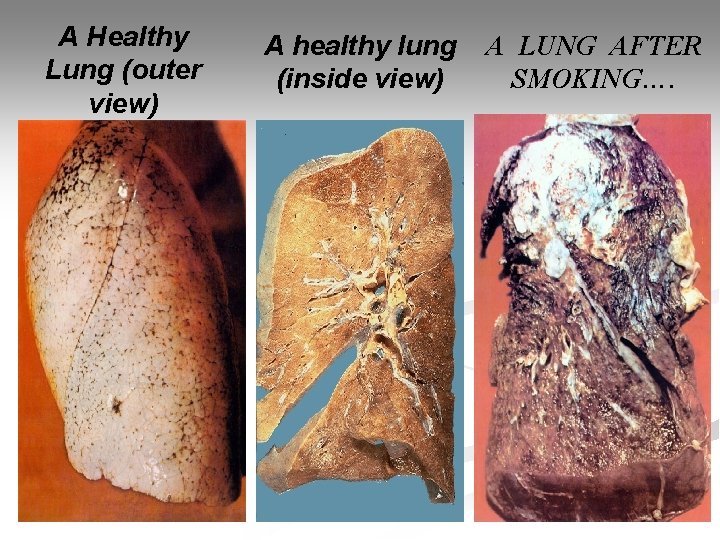
Respiratory Homeostasis Disorders 1. Pneumonia: Alveoli fill with fluids and mucus resulting in coughing and breathing difficulties 2. Asthma: Allergic reaction in which bronchiole contractions create breathing difficulties 3. Emphysema: Air sacs lose their elasticity and breakdown resulting in a loss of respiratory surface in the lungs 4. Cystic fibrosis: failure to make certain enzymes causing mucous buildup in lungs. 5. Lung Cancer: an overgrowth of abnormal cells in the lungs disrupting gas exchange caused by smoking, exposure to radioactive chemicals or asbestos.
A Healthy Lung (outer view) A healthy lung (inside view) A LUNG AFTER SMOKING….
PREVENTING RESPIRATORY DISEASE 1. 2. 3. Not smoking – both first and second hand smoke are damaging Stay away from pollutants – ie. asbestos Wash hands when possible
MTV Real Life Emphysema Video – Pam Laffin n “I can’t breathe” http: //vimeo. com/26971447