
RESPIRATORY PROTECTION SILICA AWARENESS OSHA 29 CFR 1926

- Slides: 24
RESPIRATORY PROTECTION & SILICA AWARENESS OSHA 29 CFR 1926. 103 (1910. 134)
HOW TO REDUCE YOUR RISK ■ ENGINEERING CONTROLS – Physically Moving the Hazard – Enclose the Hazard so it’s Not exposed – Establish Barriers/Ventilate to Minimize Exposure ■ ADMINISTRATIVE CONTROLS – Necessary Precautions – Site Specific Work Plans
Why do People Continue to Make Choices Proven to Severely Injury & Kill Themselves?
3 Most Common Reasons for Bad Choices 1. PERCEPTIONS 2. HABITS 3. BARRIERS
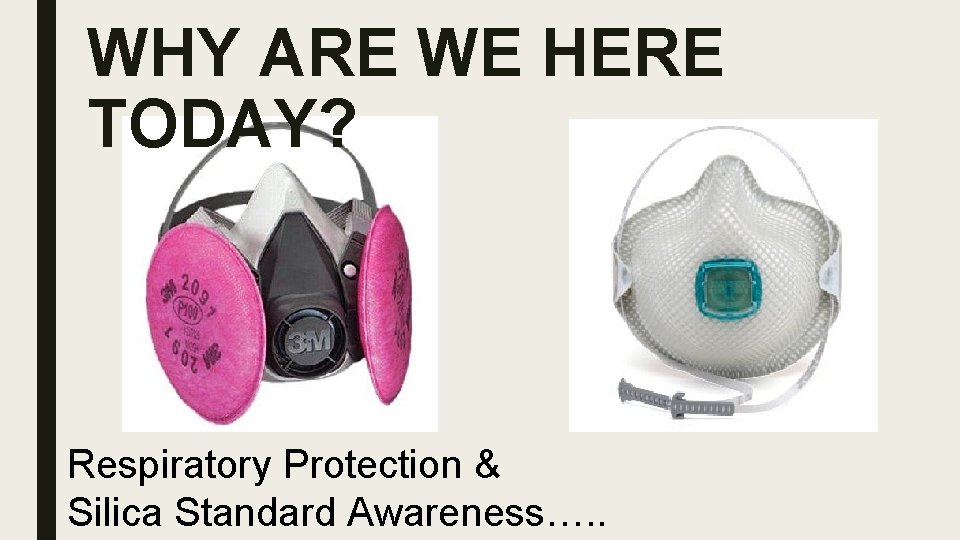
WHY ARE WE HERE TODAY? Respiratory Protection & Silica Standard Awareness…. .
ENGAGEMENT OF THE PLAN DOES NOT REQUIRE ENFORCEMENT OF THE PLAN…….
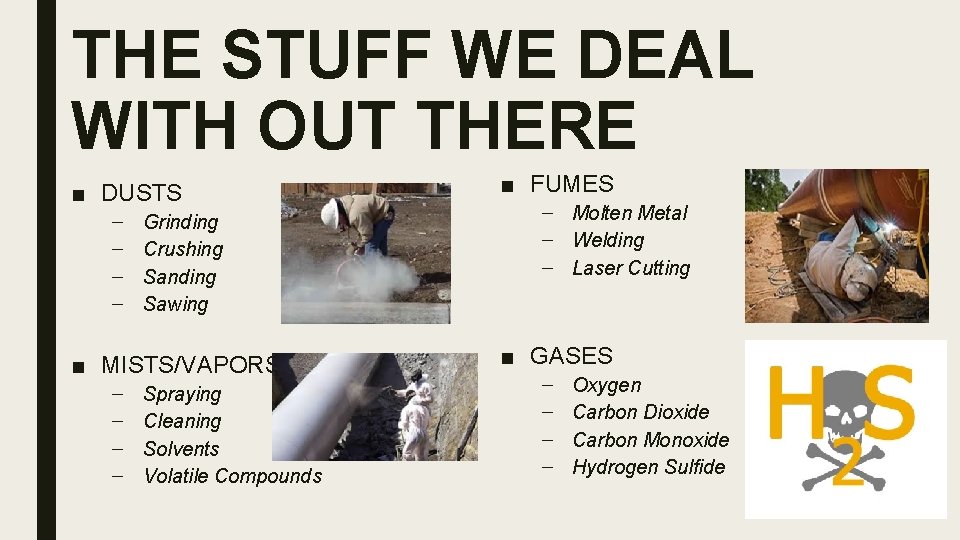
THE STUFF WE DEAL WITH OUT THERE ■ DUSTS – – Grinding Crushing Sanding Sawing ■ MISTS/VAPORS – – Spraying Cleaning Solvents Volatile Compounds ■ FUMES – Molten Metal – Welding – Laser Cutting ■ GASES – – Oxygen Carbon Dioxide Carbon Monoxide Hydrogen Sulfide
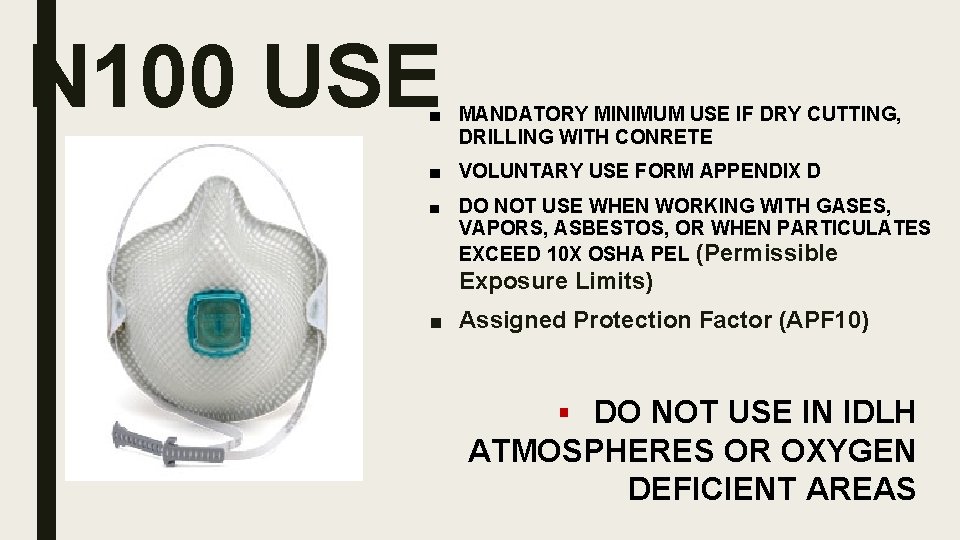
N 100 USE ■ MANDATORY MINIMUM USE IF DRY CUTTING, DRILLING WITH CONRETE ■ VOLUNTARY USE FORM APPENDIX D ■ DO NOT USE WHEN WORKING WITH GASES, VAPORS, ASBESTOS, OR WHEN PARTICULATES EXCEED 10 X OSHA PEL (Permissible Exposure Limits) ■ Assigned Protection Factor (APF 10) § DO NOT USE IN IDLH ATMOSPHERES OR OXYGEN DEFICIENT AREAS
Mandatory Employee Information: Voluntary Use Appendix D – 29 CFR 1910. 134 Please Read This Document Any
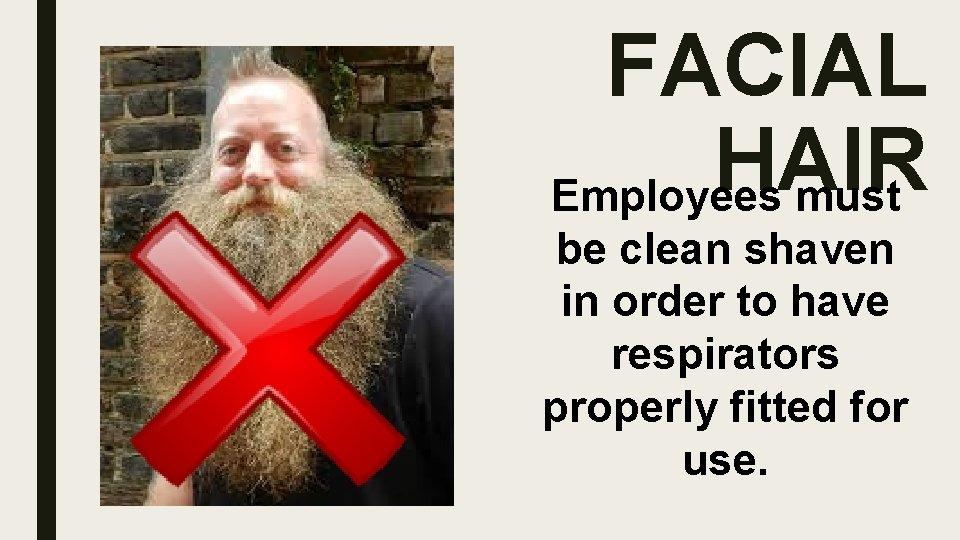
FACIAL HAIR Employees must be clean shaven in order to have respirators properly fitted for use.
■ AUTHORIZED USE ONLY! – If you have to ask if you are qualified to wear, you probably aren’t qualified to wear a respirator. ■ DO NOT BRING YOUR OWN RESPIRTATORS
Standard Respiratory Program ■ Online Medical Exam – 3 M Questionnaire – Determines Eligibility Based on Health Inquiry – Follow-up Physical with Medical Dr. may be Necessary ■ Power. Point Presentation – Review of PSC Standards – OSHA Requirement ■ Respirator Fit Test – Bitrex “Smoke” Test
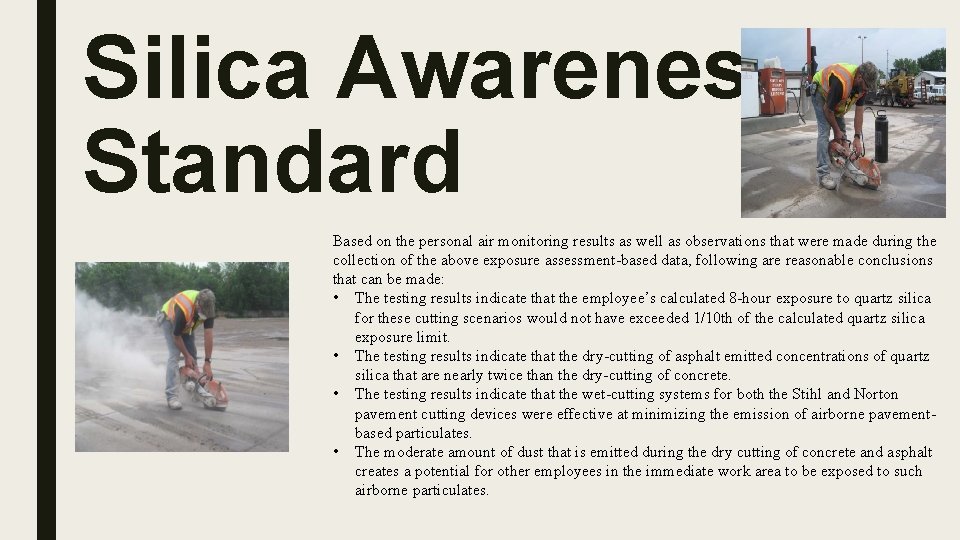
Silica Awareness Standard Based on the personal air monitoring results as well as observations that were made during the collection of the above exposure assessment-based data, following are reasonable conclusions that can be made: • The testing results indicate that the employee’s calculated 8 -hour exposure to quartz silica for these cutting scenarios would not have exceeded 1/10 th of the calculated quartz silica exposure limit. • The testing results indicate that the dry-cutting of asphalt emitted concentrations of quartz silica that are nearly twice than the dry-cutting of concrete. • The testing results indicate that the wet-cutting systems for both the Stihl and Norton pavement cutting devices were effective at minimizing the emission of airborne pavementbased particulates. • The moderate amount of dust that is emitted during the dry cutting of concrete and asphalt creates a potential for other employees in the immediate work area to be exposed to such airborne particulates.
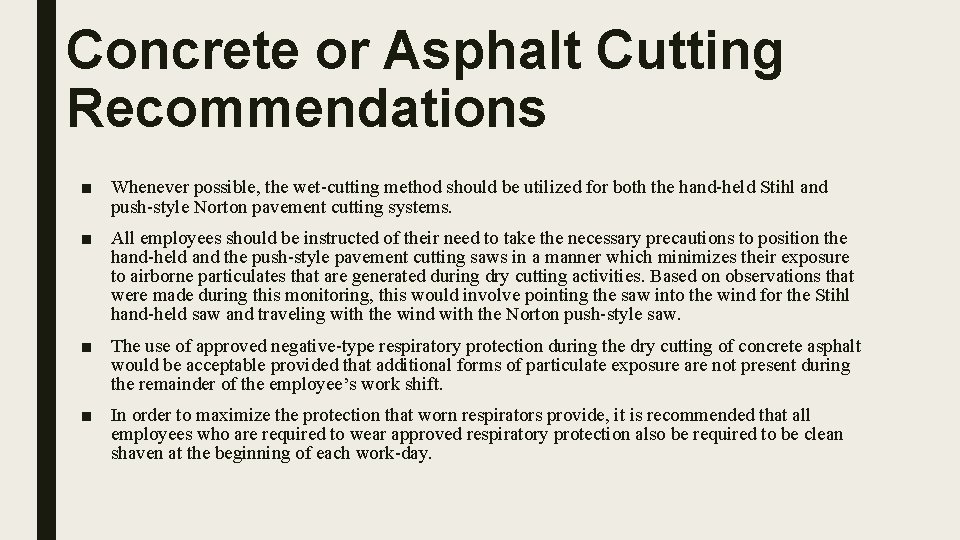
Concrete or Asphalt Cutting Recommendations ■ Whenever possible, the wet-cutting method should be utilized for both the hand-held Stihl and push-style Norton pavement cutting systems. ■ All employees should be instructed of their need to take the necessary precautions to position the hand-held and the push-style pavement cutting saws in a manner which minimizes their exposure to airborne particulates that are generated during dry cutting activities. Based on observations that were made during this monitoring, this would involve pointing the saw into the wind for the Stihl hand-held saw and traveling with the wind with the Norton push-style saw. ■ The use of approved negative-type respiratory protection during the dry cutting of concrete asphalt would be acceptable provided that additional forms of particulate exposure are not present during the remainder of the employee’s work shift. ■ In order to maximize the protection that worn respirators provide, it is recommended that all employees who are required to wear approved respiratory protection also be required to be clean shaven at the beginning of each work-day.
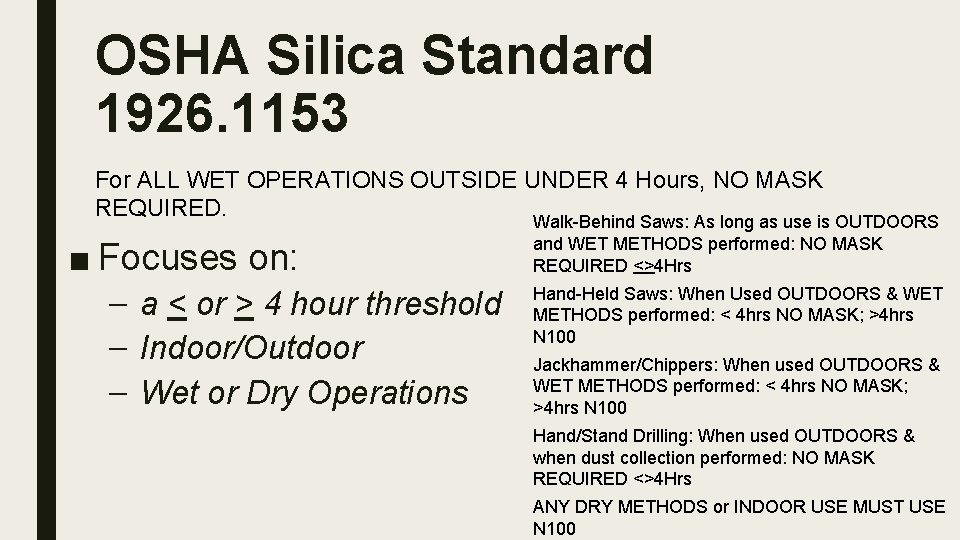
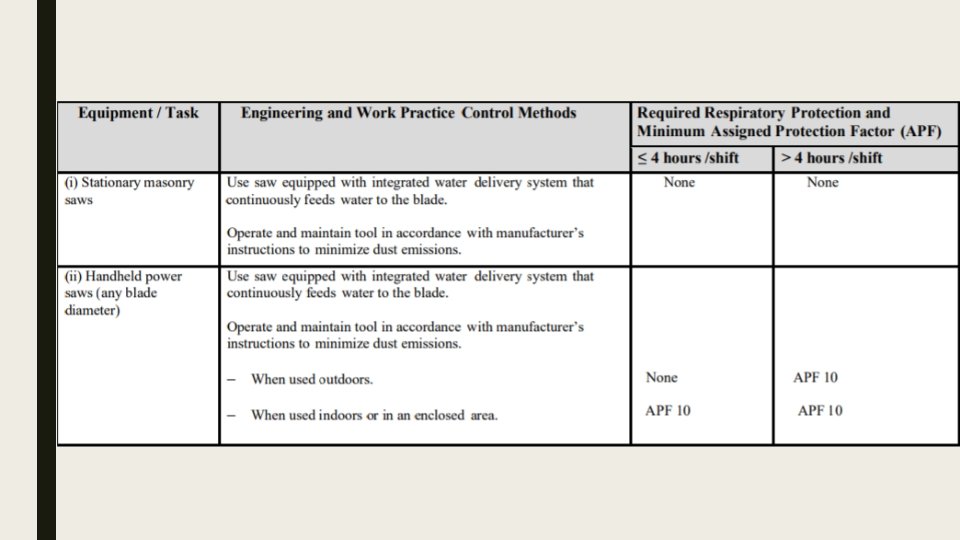
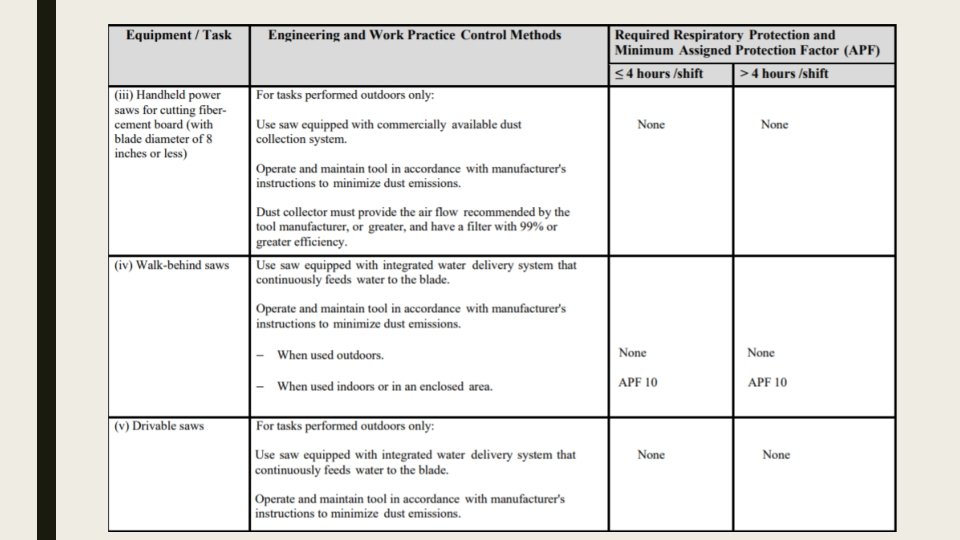
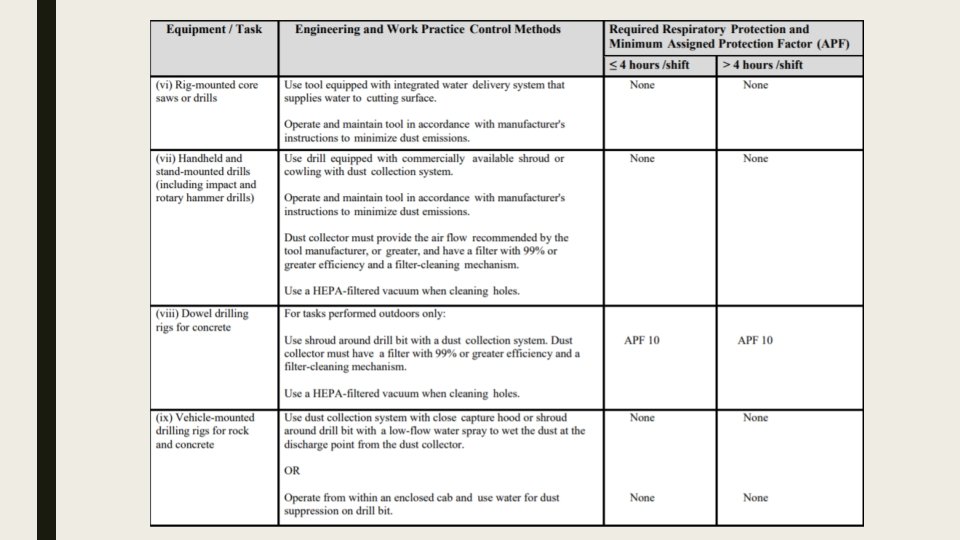
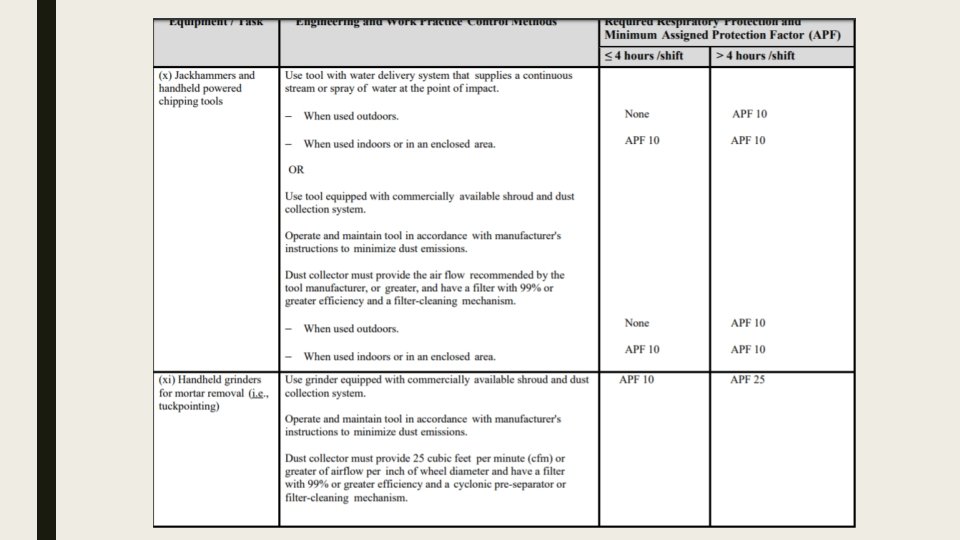
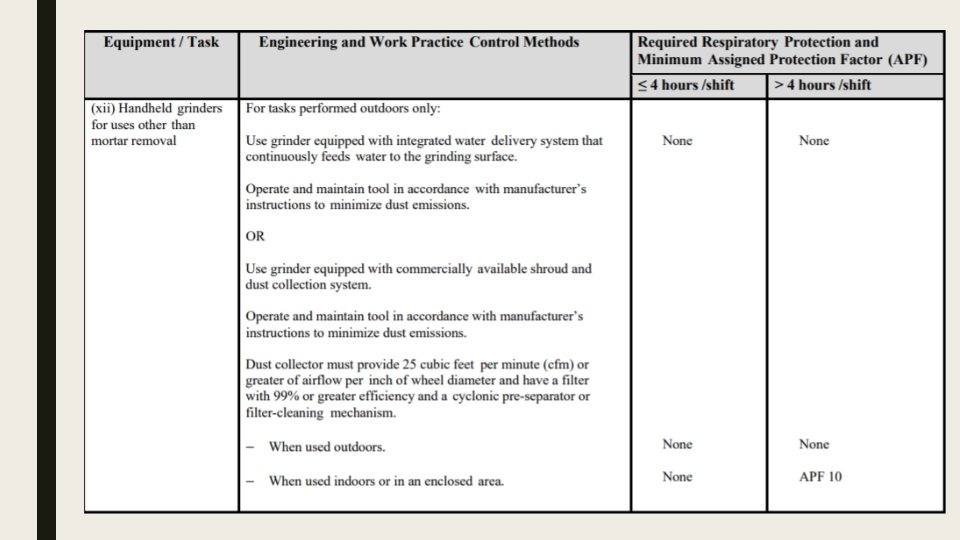
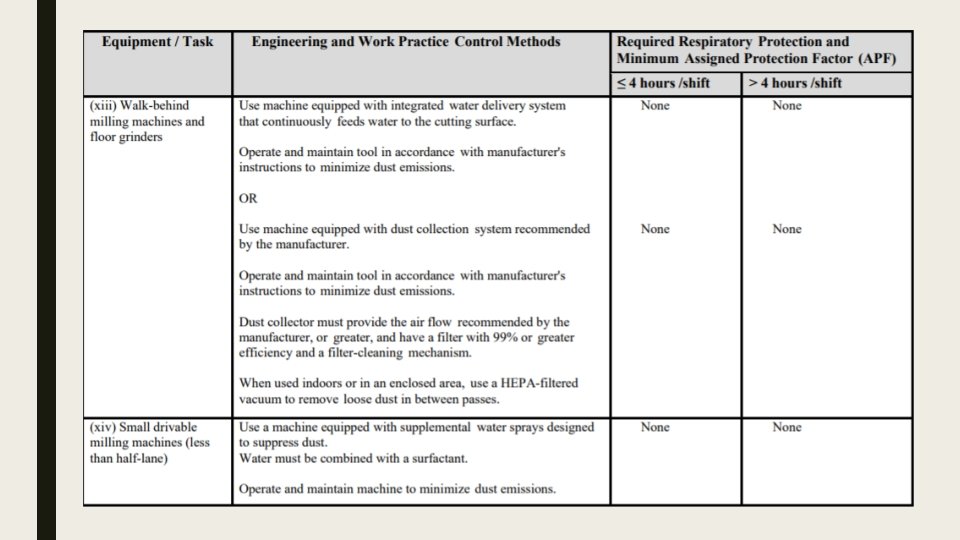
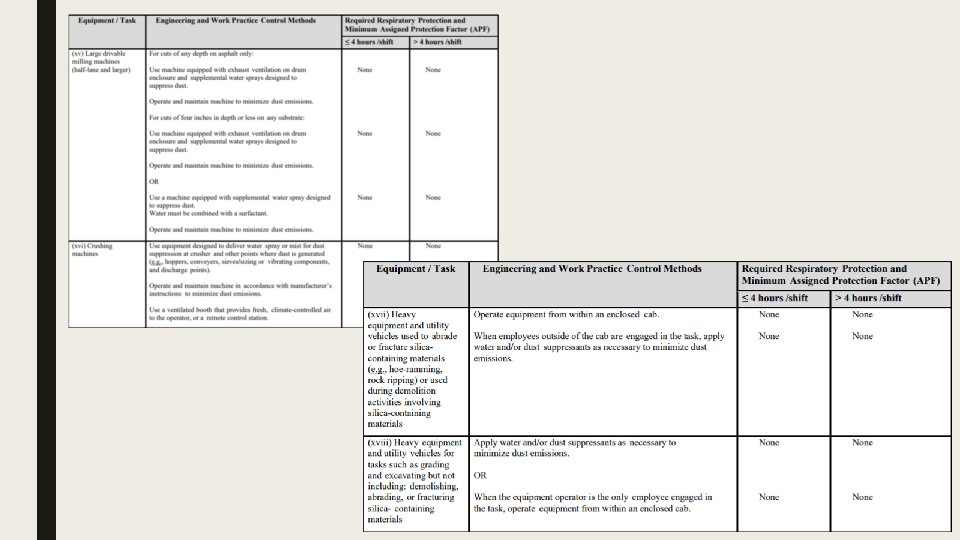
OSHA Silica Standard 1926. 1153 For ALL WET OPERATIONS OUTSIDE UNDER 4 Hours, NO MASK REQUIRED. Walk-Behind Saws: As long as use is OUTDOORS ■ Focuses on: – a < or > 4 hour threshold – Indoor/Outdoor – Wet or Dry Operations and WET METHODS performed: NO MASK REQUIRED <>4 Hrs Hand-Held Saws: When Used OUTDOORS & WET METHODS performed: < 4 hrs NO MASK; >4 hrs N 100 Jackhammer/Chippers: When used OUTDOORS & WET METHODS performed: < 4 hrs NO MASK; >4 hrs N 100 Hand/Stand Drilling: When used OUTDOORS & when dust collection performed: NO MASK REQUIRED <>4 Hrs ANY DRY METHODS or INDOOR USE MUST USE N 100
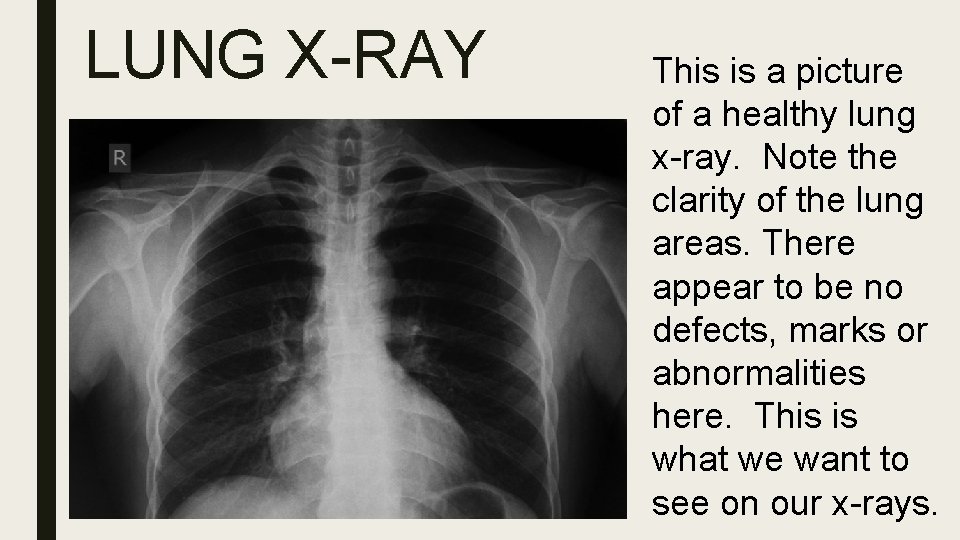
LUNG X-RAY This is a picture of a healthy lung x-ray. Note the clarity of the lung areas. There appear to be no defects, marks or abnormalities here. This is what we want to see on our x-rays.
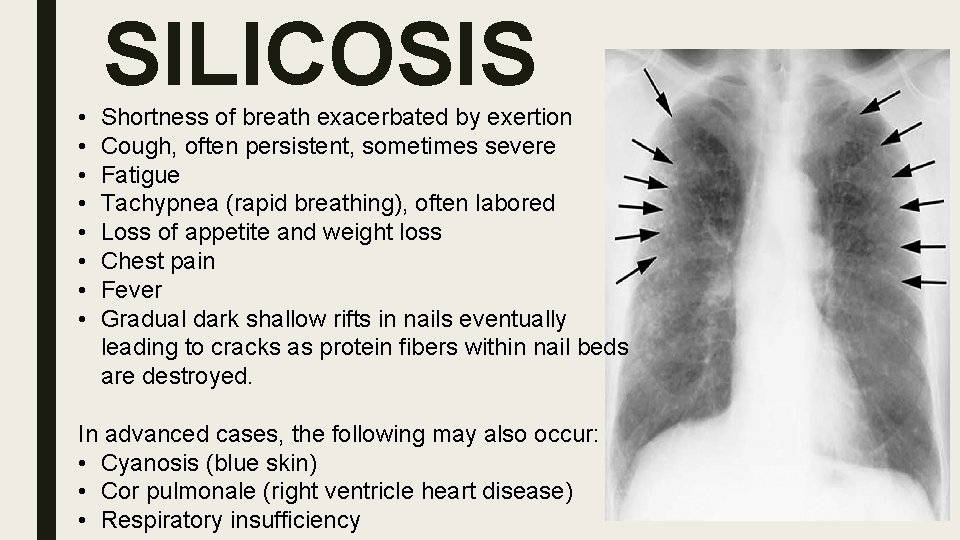
• • SILICOSIS Shortness of breath exacerbated by exertion Cough, often persistent, sometimes severe Fatigue Tachypnea (rapid breathing), often labored Loss of appetite and weight loss Chest pain Fever Gradual dark shallow rifts in nails eventually leading to cracks as protein fibers within nail beds are destroyed. In advanced cases, the following may also occur: • Cyanosis (blue skin) • Cor pulmonale (right ventricle heart disease) • Respiratory insufficiency