
Respiratory Protection Respirator Selection When a respirator is
- Slides: 12
Respiratory Protection
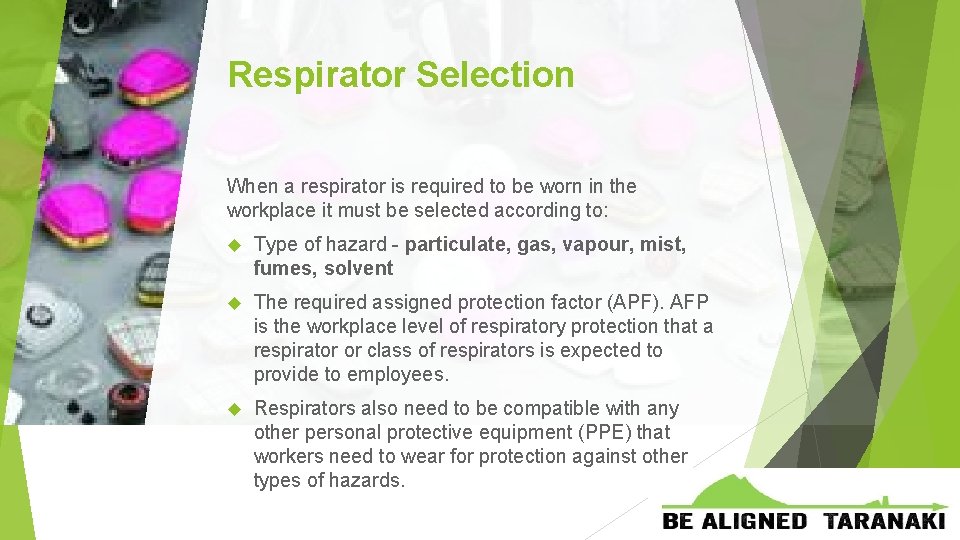
Respirator Selection When a respirator is required to be worn in the workplace it must be selected according to: Type of hazard - particulate, gas, vapour, mist, fumes, solvent The required assigned protection factor (APF). AFP is the workplace level of respiratory protection that a respirator or class of respirators is expected to provide to employees. Respirators also need to be compatible with any other personal protective equipment (PPE) that workers need to wear for protection against other types of hazards.
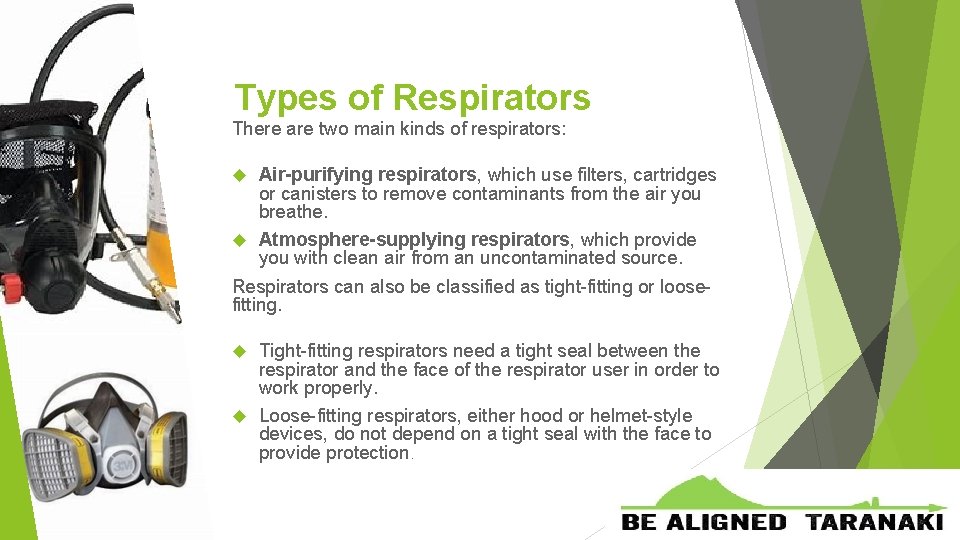
Types of Respirators There are two main kinds of respirators: Air-purifying respirators, which use filters, cartridges or canisters to remove contaminants from the air you breathe. Atmosphere-supplying respirators, which provide you with clean air from an uncontaminated source. Respirators can also be classified as tight-fitting or loosefitting. Tight-fitting respirators need a tight seal between the respirator and the face of the respirator user in order to work properly. Loose-fitting respirators, either hood or helmet-style devices, do not depend on a tight seal with the face to provide protection.
Common Types of Respirators Common types of respirators include: Filtering facepiece respirator Half-facepiece elastomeric respirator Full facepiece elastomeric respirator Powered air-purifying respirator (PAPR) Airline respirator Self-contained breathing apparatus (SCBA ONLY atmosphere-supplying respirators, such as an airline respirator or a SCBA, can be used in IDLH atmospheres.
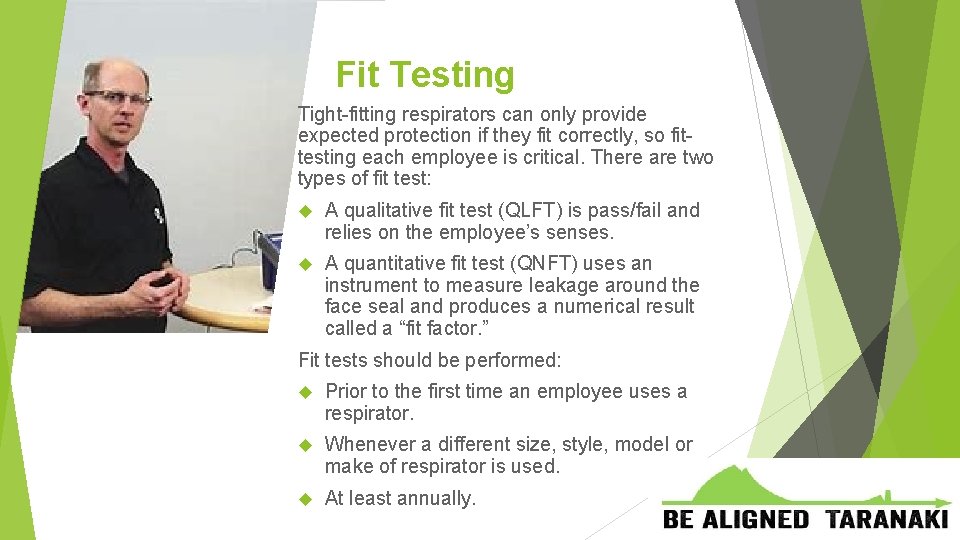
Fit Testing Tight-fitting respirators can only provide expected protection if they fit correctly, so fittesting each employee is critical. There are two types of fit test: A qualitative fit test (QLFT) is pass/fail and relies on the employee’s senses. A quantitative fit test (QNFT) uses an instrument to measure leakage around the face seal and produces a numerical result called a “fit factor. ” Fit tests should be performed: Prior to the first time an employee uses a respirator. Whenever a different size, style, model or make of respirator is used. At least annually.
Medical Evaluations As per Australian/New Zealand Standard (AS/NZS 1715: 2009 section 6. 1 Medical Assessment) "Persons who are routinely required to wear respirators should have an initial medial assessment prior to use to determine if they are able to wear respirators. " Wearing any type of respirator could physically or mentally stress you. For example: You could feel claustrophobia, isolation or anxiety when wearing helmet, hood or full facepieces. Training programmes may help to overcome these feelings. Non-powered air purifying RPE can impose an extra burden on heart and lungs – especially for people who wear RPE for long periods and suffer from: emphysema asthma heart disease anaemia epileptic seizures
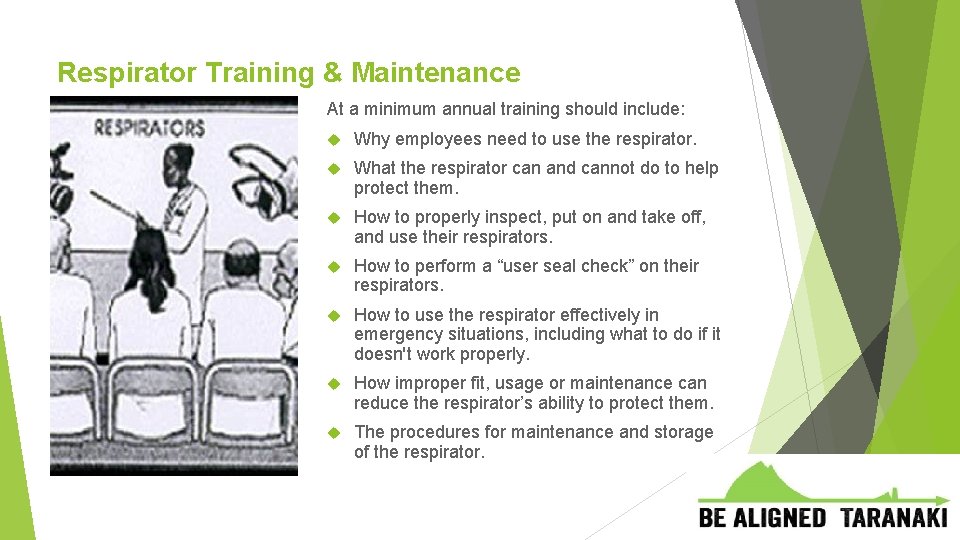
Respirator Training & Maintenance At a minimum annual training should include: Why employees need to use the respirator. What the respirator can and cannot do to help protect them. How to properly inspect, put on and take off, and use their respirators. How to perform a “user seal check” on their respirators. How to use the respirator effectively in emergency situations, including what to do if it doesn't work properly. How improper fit, usage or maintenance can reduce the respirator’s ability to protect them. The procedures for maintenance and storage of the respirator.
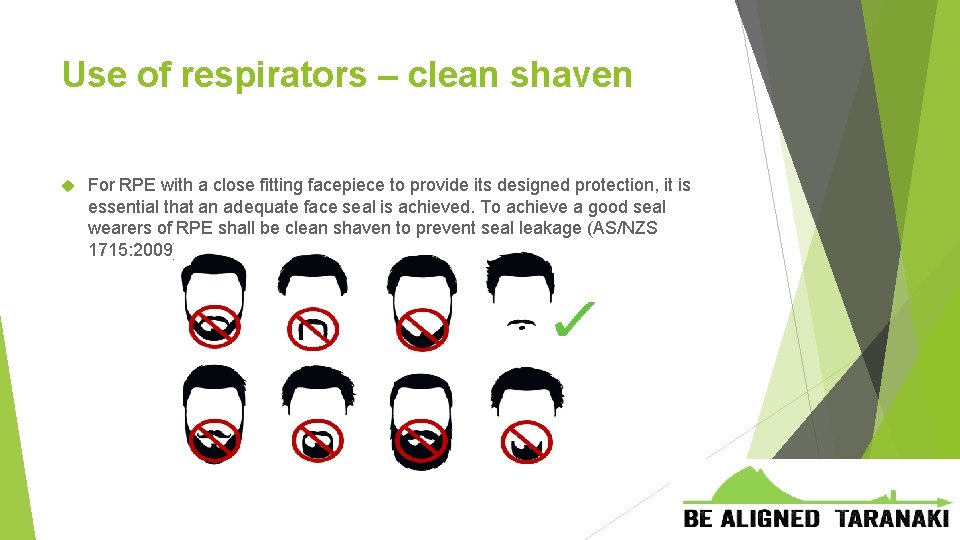
Use of respirators – clean shaven For RPE with a close fitting facepiece to provide its designed protection, it is essential that an adequate face seal is achieved. To achieve a good seal wearers of RPE shall be clean shaven to prevent seal leakage (AS/NZS 1715: 2009):
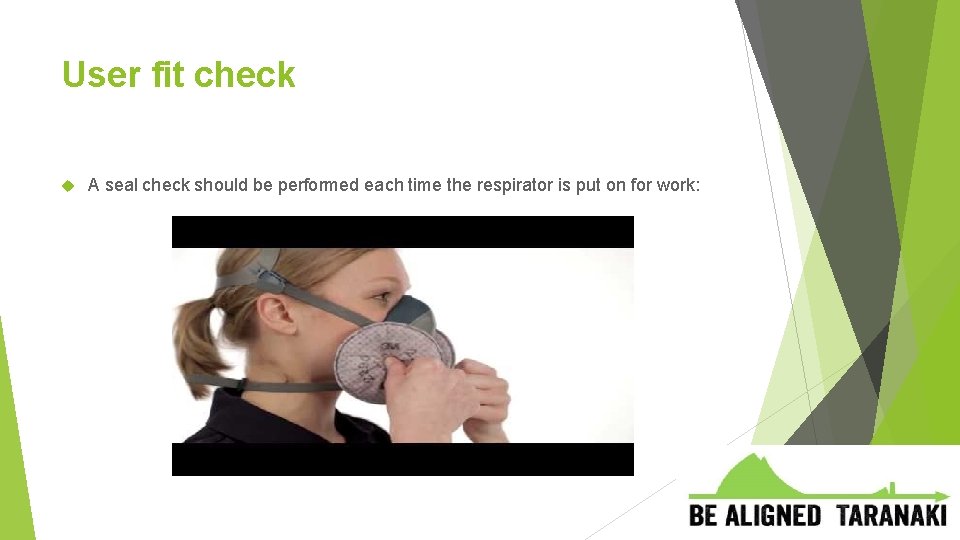
User fit check A seal check should be performed each time the respirator is put on for work:
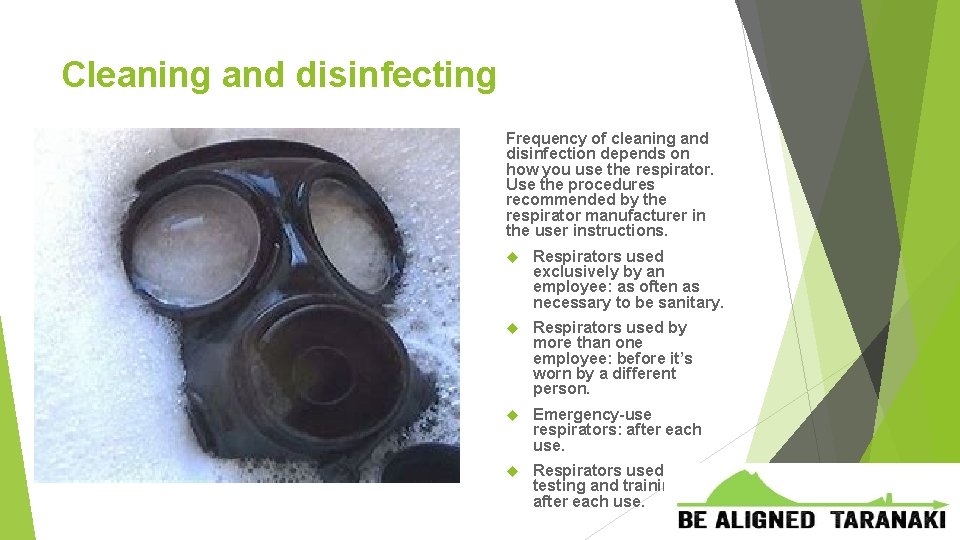
Cleaning and disinfecting Frequency of cleaning and disinfection depends on how you use the respirator. Use the procedures recommended by the respirator manufacturer in the user instructions. Respirators used exclusively by an employee: as often as necessary to be sanitary. Respirators used by more than one employee: before it’s worn by a different person. Emergency-use respirators: after each use. Respirators used in fit testing and training: after each use.
Inspection of Respirators Make sure to have your respirators inspected before each use and during cleaning. All respirators maintained for use in emergency situations should be inspected at least monthly and in accordance with the manufacturer’s recommendations, and checked for proper function before and after each use. Be sure to inspect emergency escape-only respirators before use. Respirator inspections should include a check of: Respirator function. Tightness of connections. Pliability of elastomeric parts. The condition of the various parts including the facepiece, head straps, valves, connecting tube, cartridges, canisters or filters.
Respiratory protection is the last line of defense. Final Note Worksafe New Zealand specifies before you resort to respirators for workers, you must first try to eliminate the hazard from the workplace and try to limit worker exposure. If it’s not feasible to remove the risk in your workplace, then respiratory protection is required — and vital to help protect your workers from the airborne hazards they face.