
Respiratory Physiology Ventilation Gas exchange Oxygen uptake utilization
- Slides: 55
Respiratory Physiology Ventilation Gas exchange Oxygen uptake & utilization & removal of carbondioxide
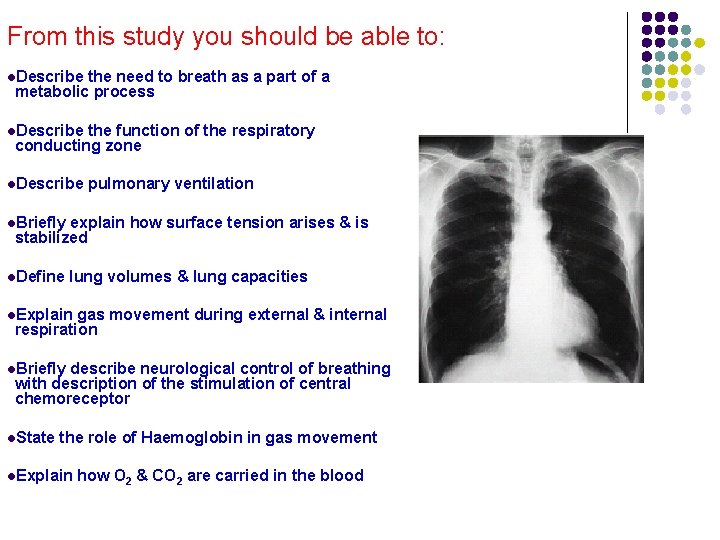
From this study you should be able to: l. Describe the need to breath as a part of a metabolic process l. Describe the function of the respiratory conducting zone l. Describe pulmonary ventilation l. Briefly explain how surface tension arises & is stabilized l. Define lung volumes & lung capacities l. Explain gas movement during external & internal respiration l. Briefly describe neurological control of breathing with description of the stimulation of central chemoreceptor l. State the role of Haemoglobin in gas movement l. Explain how O 2 & CO 2 are carried in the blood
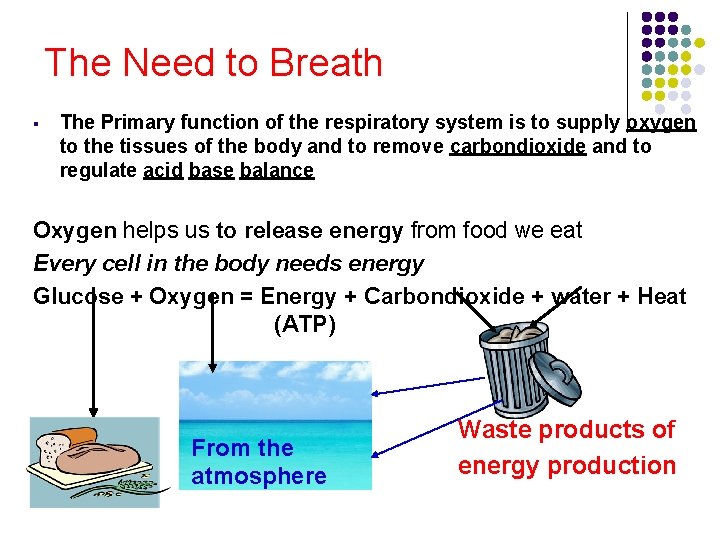
The Need to Breath § The Primary function of the respiratory system is to supply oxygen to the tissues of the body and to remove carbondioxide and to regulate acid base balance Oxygen helps us to release energy from food we eat Every cell in the body needs energy Glucose + Oxygen = Energy + Carbondioxide + water + Heat (ATP) From the atmosphere Waste products of energy production
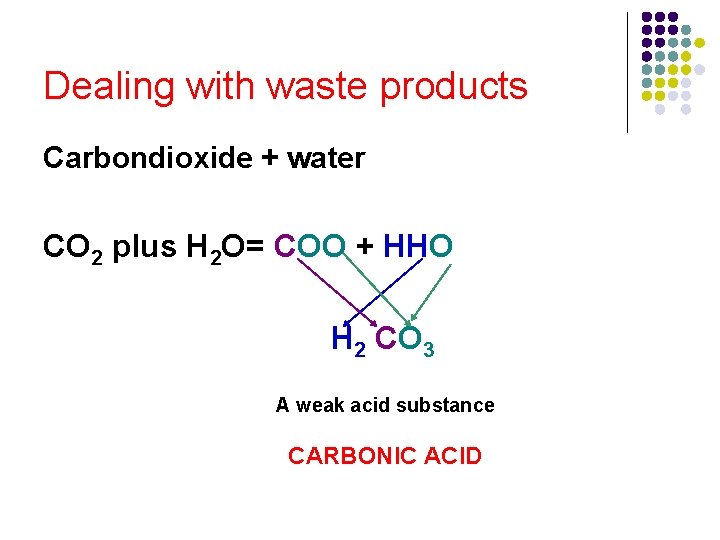
Dealing with waste products Carbondioxide + water CO 2 plus H 2 O= COO + HHO H 2 CO 3 A weak acid substance CARBONIC ACID
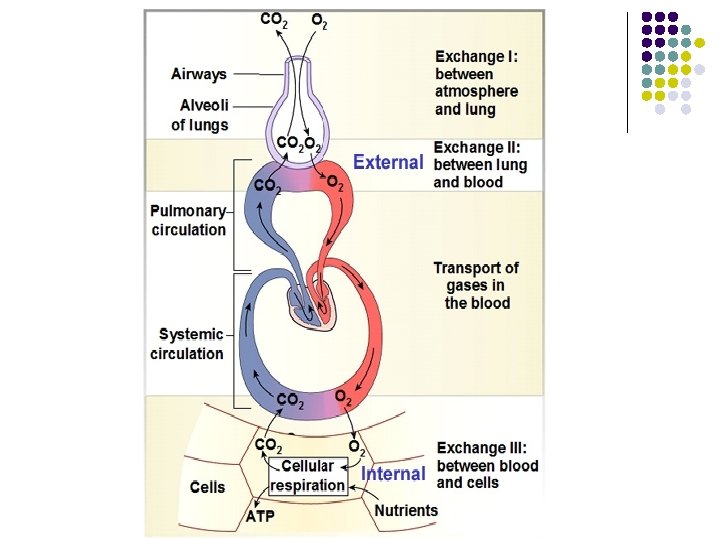
Respiration l Ventilation: l l Gas exchange: l l l Breathing. Occurs between air and blood in the lungs. Occurs between blood and tissues. Oxygen (02 ) utilization: l Cellular respiration and removal of carbondioxide
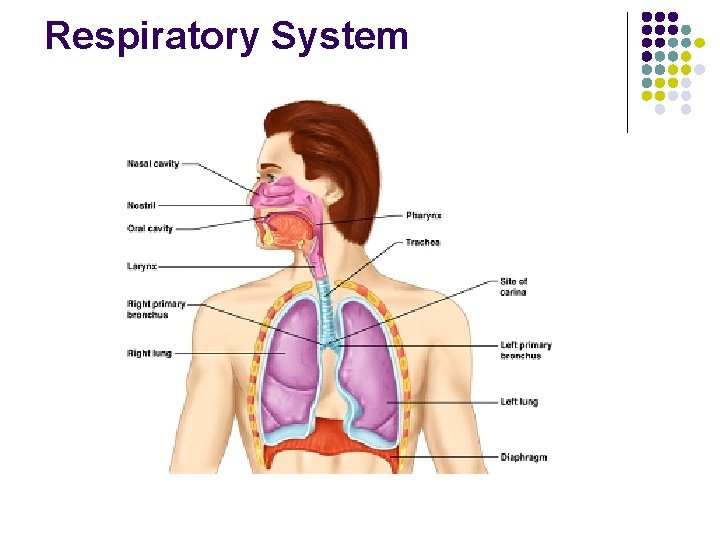
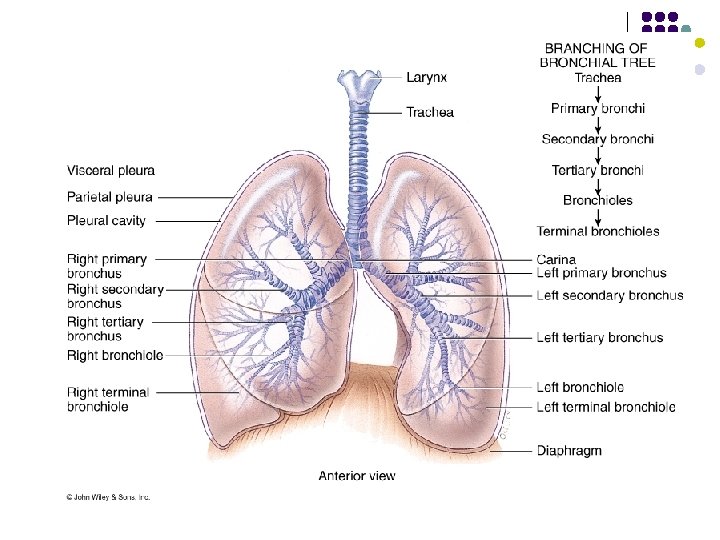
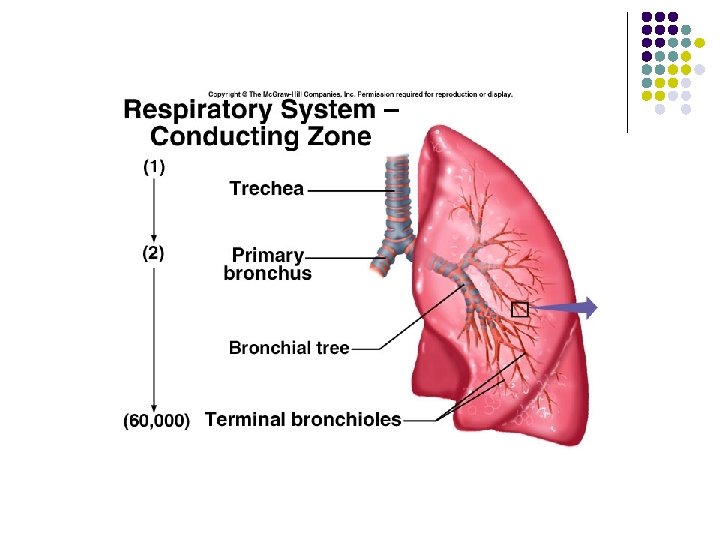
Respiratory System
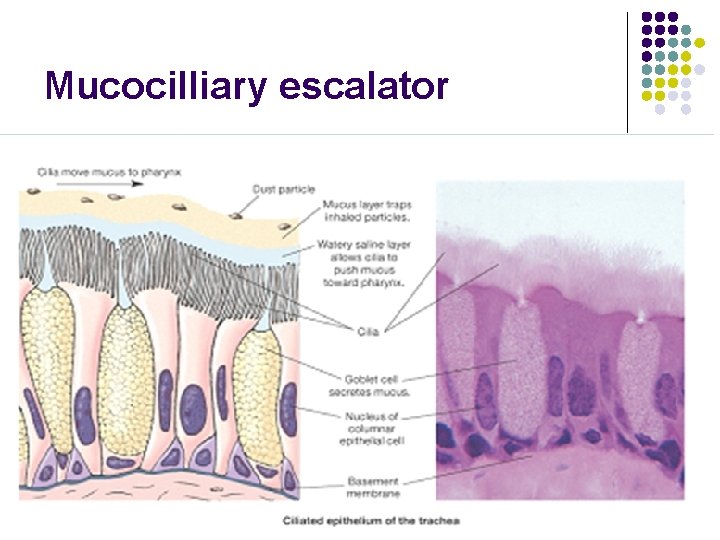
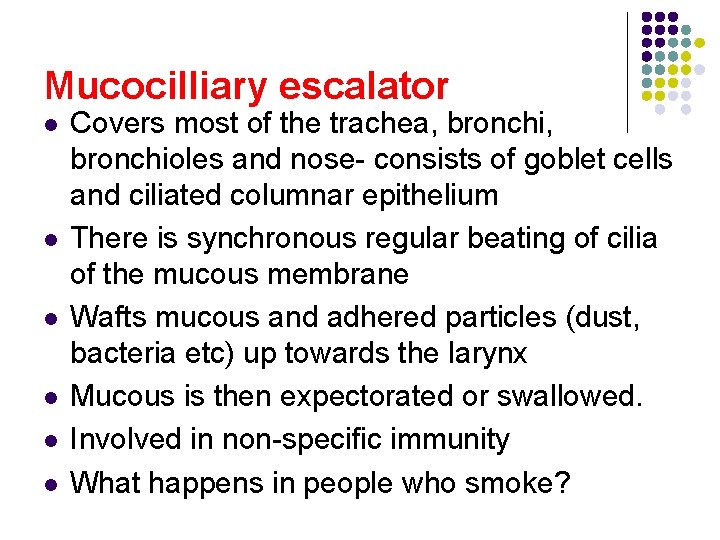
Mucocilliary escalator
Mucocilliary escalator l l l Covers most of the trachea, bronchioles and nose- consists of goblet cells and ciliated columnar epithelium There is synchronous regular beating of cilia of the mucous membrane Wafts mucous and adhered particles (dust, bacteria etc) up towards the larynx Mucous is then expectorated or swallowed. Involved in non-specific immunity What happens in people who smoke?
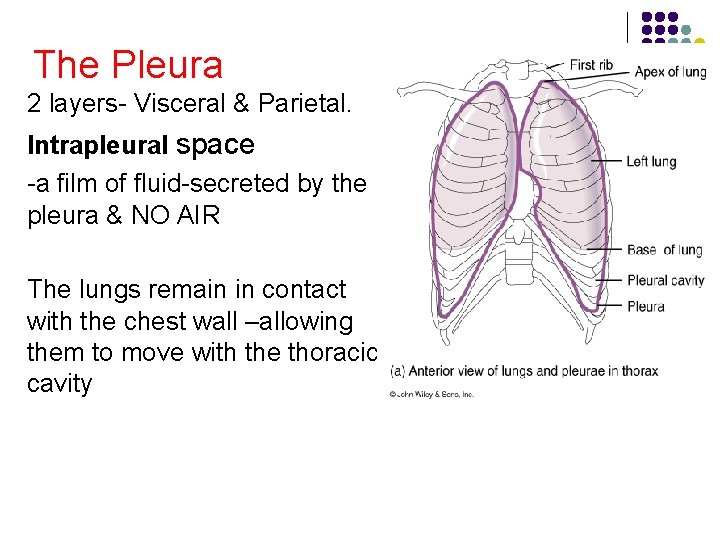
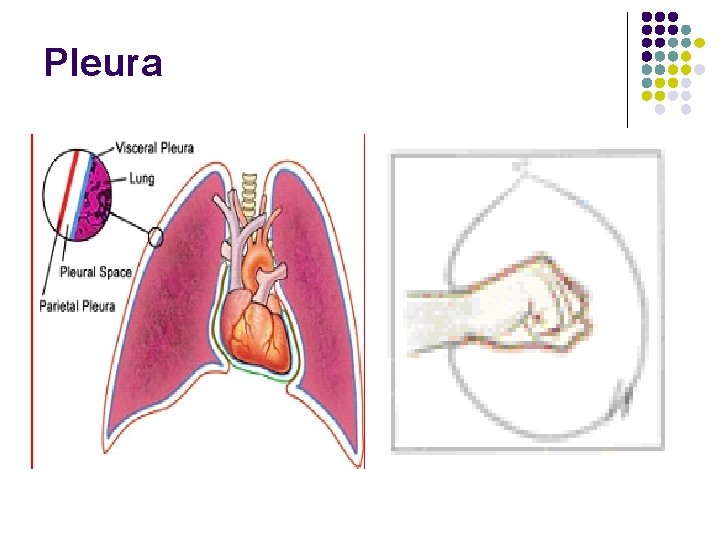
The Pleura 2 layers- Visceral & Parietal. Intrapleural space -a film of fluid-secreted by the pleura & NO AIR The lungs remain in contact with the chest wall –allowing them to move with the thoracic cavity
Pleura
Pulmonary Ventilation: Inspiration and expiration
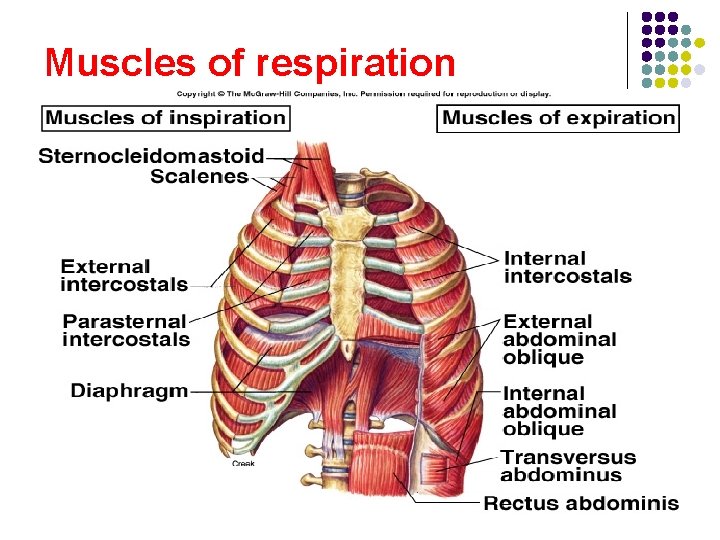
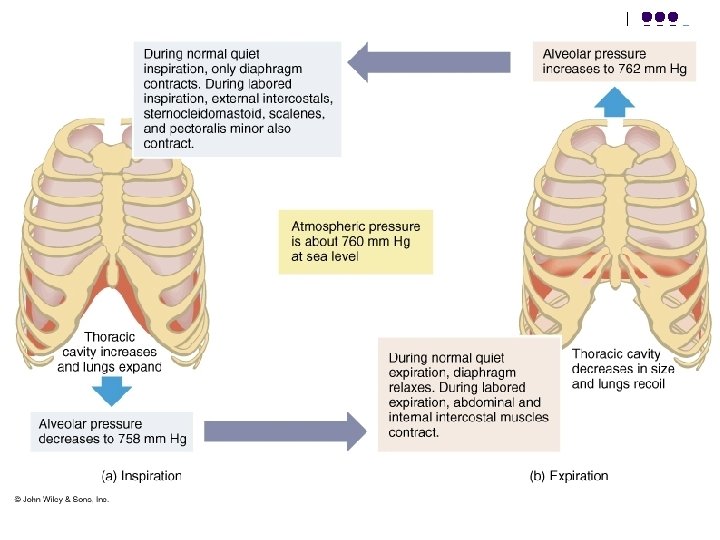
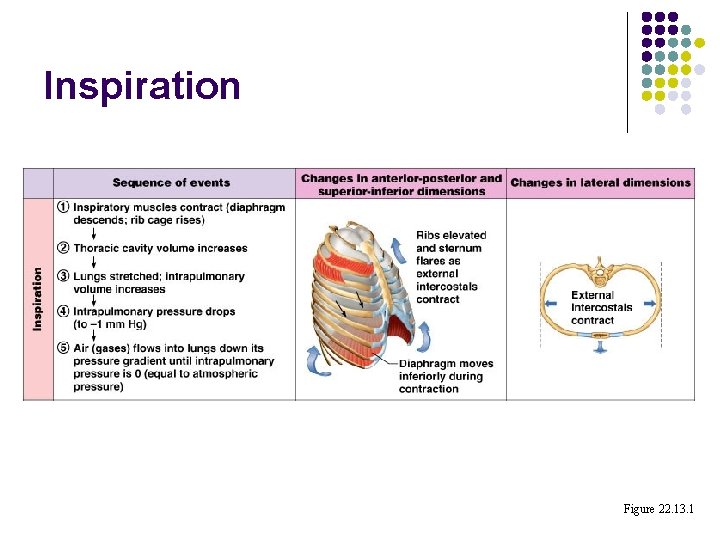
Quiet Inspiration - Process l Contract your diaphragm, to achieve vertical expansion of your lungs. l Contract your Intercostal Muscles, to increase thoracic volume laterally.
Muscles of respiration
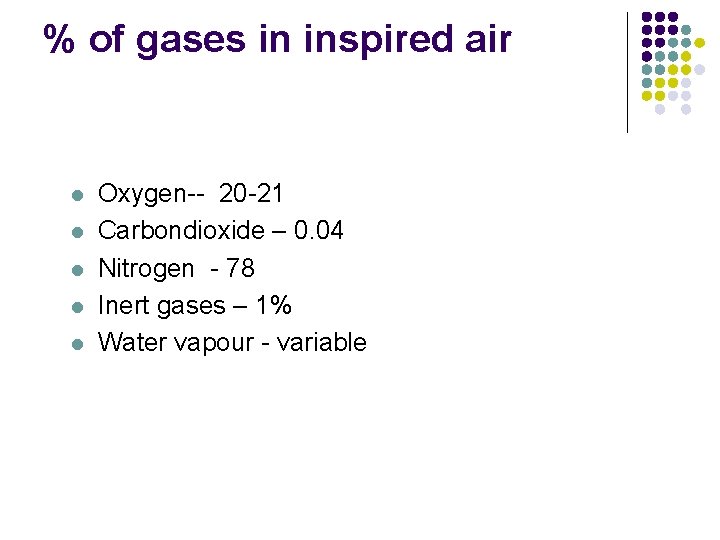
% of gases in inspired air l l l Oxygen-- 20 -21 Carbondioxide – 0. 04 Nitrogen - 78 Inert gases – 1% Water vapour - variable
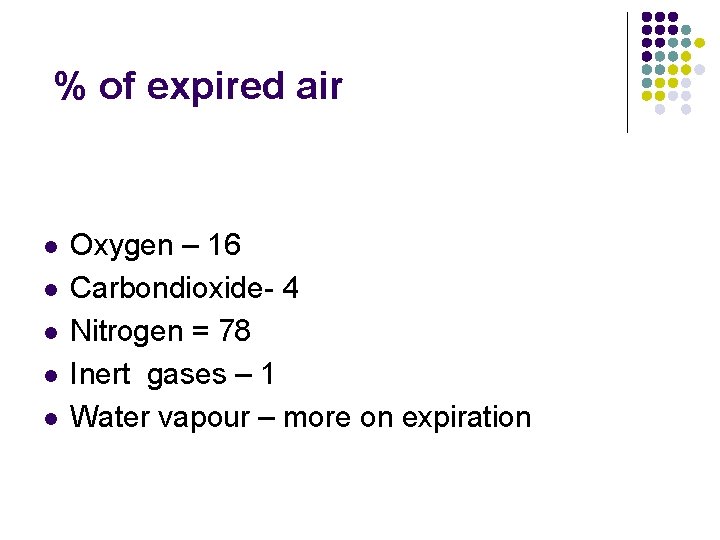
% of expired air l l l Oxygen – 16 Carbondioxide- 4 Nitrogen = 78 Inert gases – 1 Water vapour – more on expiration
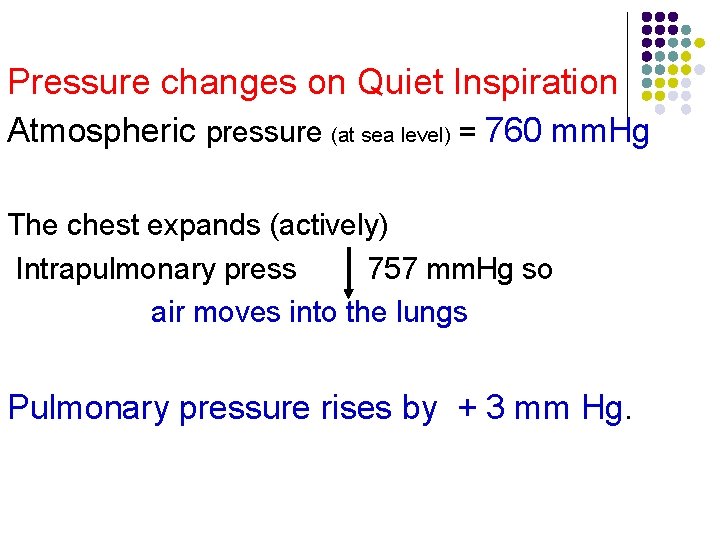
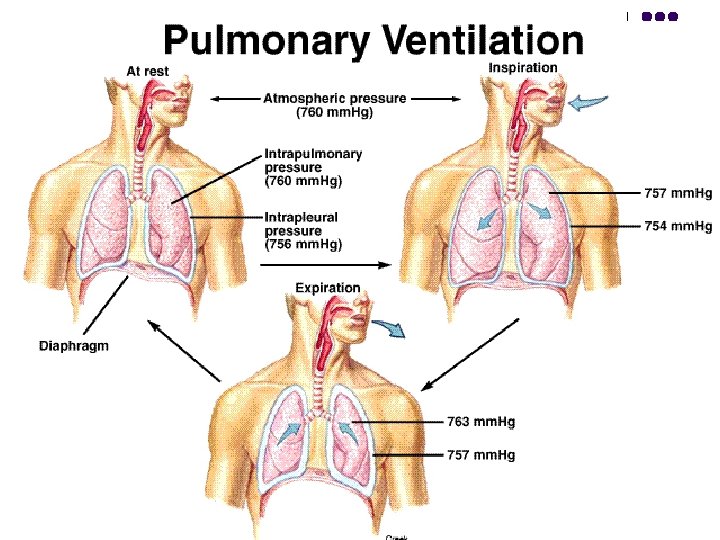
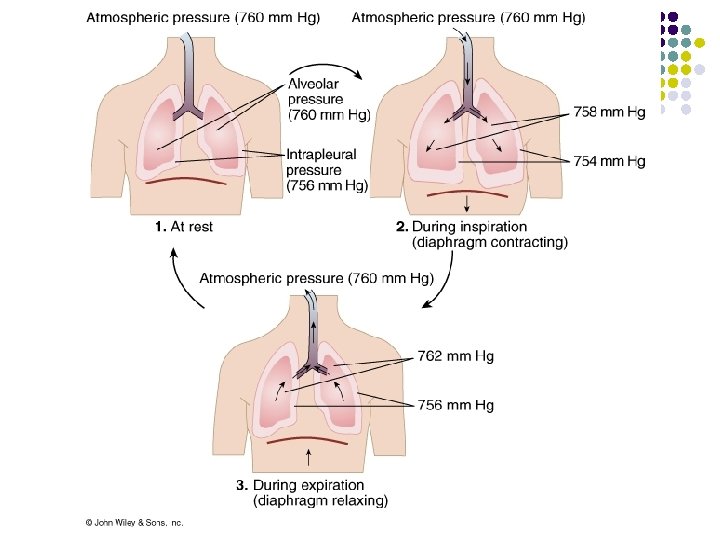
Pressure changes on Quiet Inspiration Atmospheric pressure (at sea level) = 760 mm. Hg The chest expands (actively) Intrapulmonary press 757 mm. Hg so air moves into the lungs Pulmonary pressure rises by + 3 mm Hg.
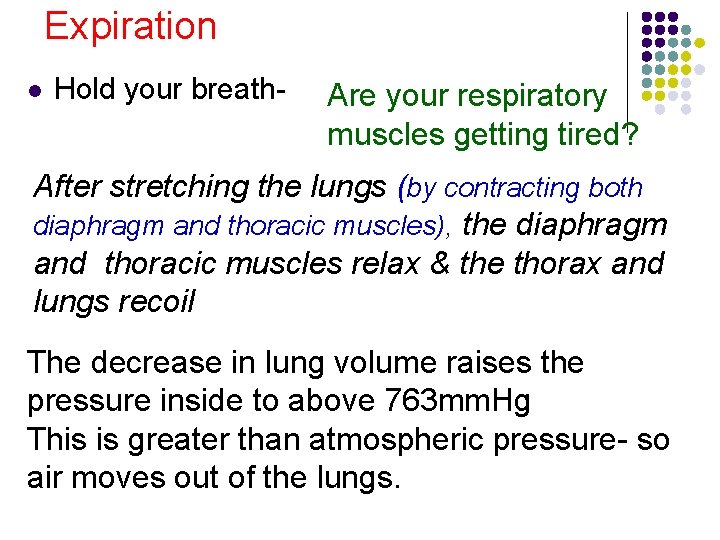
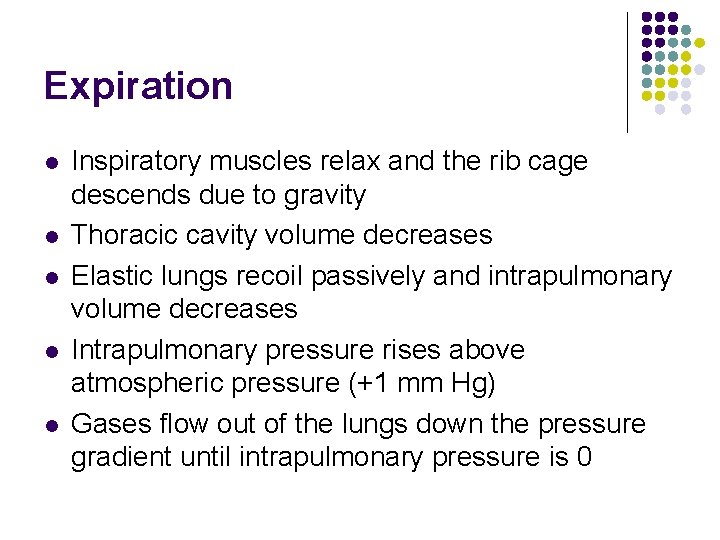
Expiration l Hold your breath- Are your respiratory muscles getting tired? After stretching the lungs (by contracting both diaphragm and thoracic muscles), the diaphragm and thoracic muscles relax & the thorax and lungs recoil The decrease in lung volume raises the pressure inside to above 763 mm. Hg This is greater than atmospheric pressure- so air moves out of the lungs.
Recap
Inspiration Figure 22. 13. 1
Expiration l l l Inspiratory muscles relax and the rib cage descends due to gravity Thoracic cavity volume decreases Elastic lungs recoil passively and intrapulmonary volume decreases Intrapulmonary pressure rises above atmospheric pressure (+1 mm Hg) Gases flow out of the lungs down the pressure gradient until intrapulmonary pressure is 0
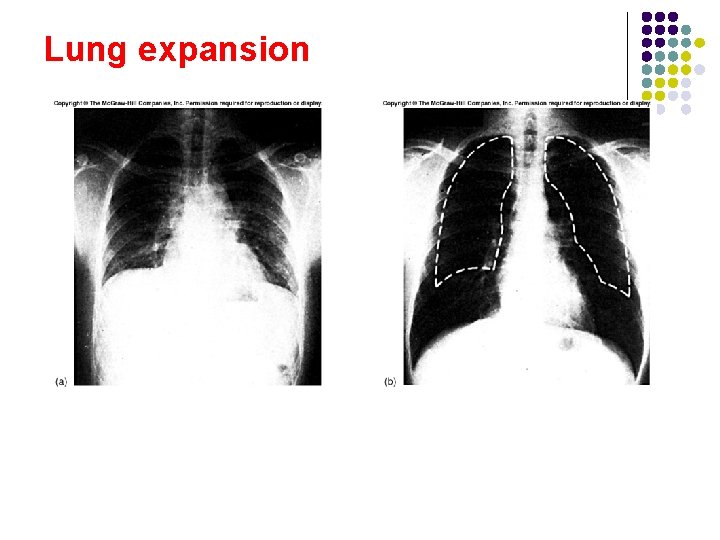
Lung expansion
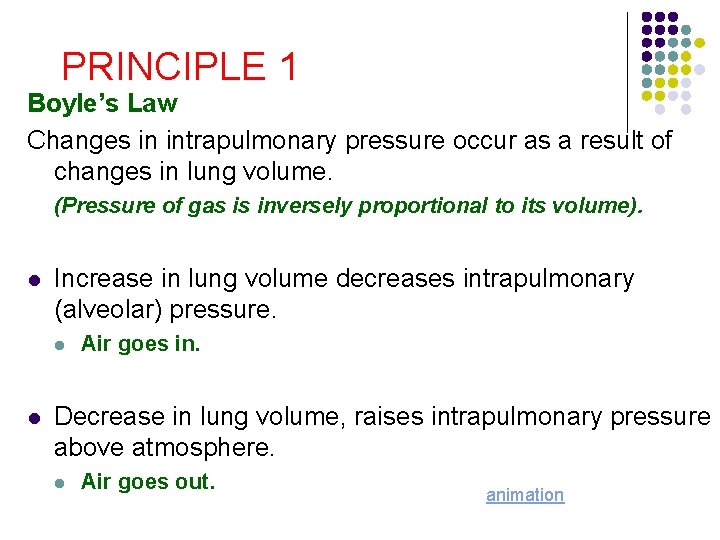
BOYLE’S LAW. THE RELATIONSHIP BETWEEN THE PRESSURE AND VOLUME OF GASES IS GIVEN BY BOYLE’S LAW. IT STATES THAT WHEN THE TEMPERATURE IS CONSTANT, THE PRESSURE OF A GAS VARIES INVERSELY WITH ITS VOLUME
PRINCIPLE 1 Boyle’s Law Changes in intrapulmonary pressure occur as a result of changes in lung volume. (Pressure of gas is inversely proportional to its volume). l Increase in lung volume decreases intrapulmonary (alveolar) pressure. l l Air goes in. Decrease in lung volume, raises intrapulmonary pressure above atmosphere. l Air goes out. animation
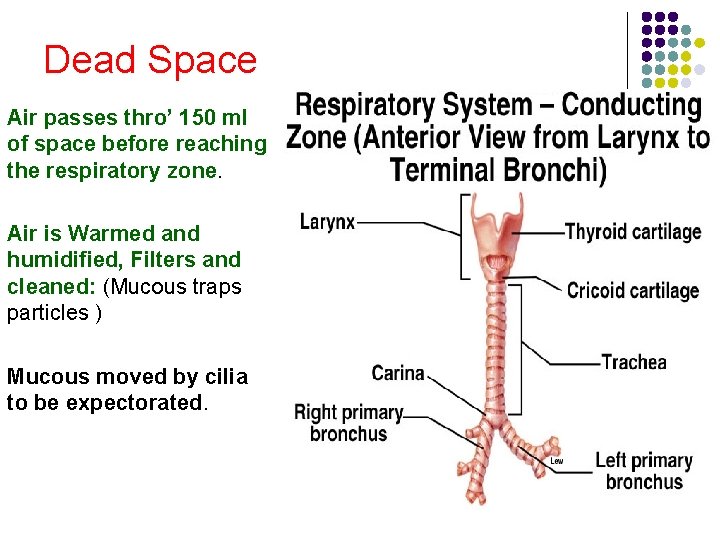
Dead Space Air passes thro’ 150 ml of space before reaching the respiratory zone. Air is Warmed and humidified, Filters and cleaned: (Mucous traps particles ) Mucous moved by cilia to be expectorated.
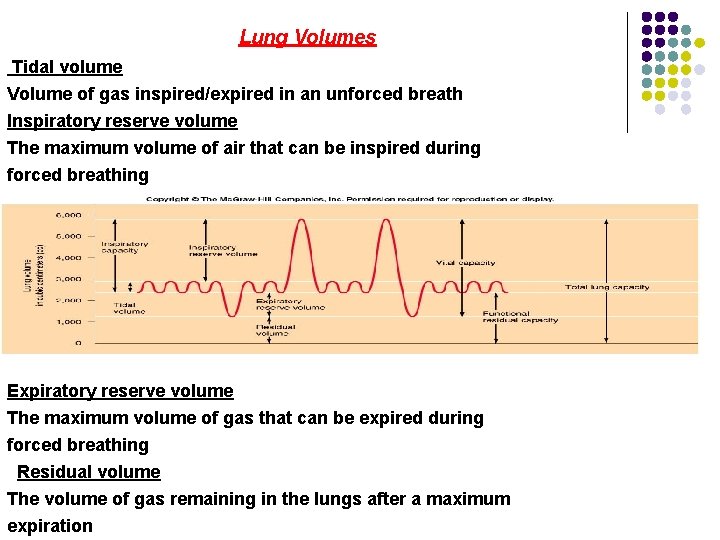
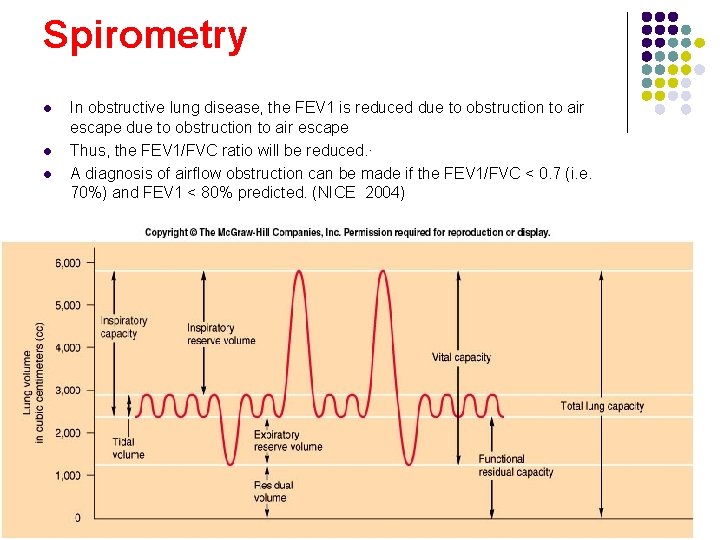
Lung Volumes Tidal volume Volume of gas inspired/expired in an unforced breath Inspiratory reserve volume The maximum volume of air that can be inspired during forced breathing Expiratory reserve volume The maximum volume of gas that can be expired during forced breathing Residual volume The volume of gas remaining in the lungs after a maximum expiration
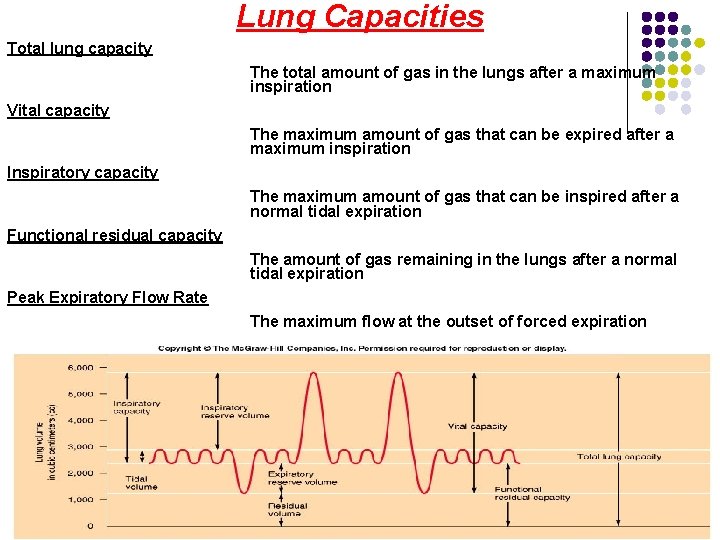
Lung Capacities Total lung capacity The total amount of gas in the lungs after a maximum inspiration Vital capacity The maximum amount of gas that can be expired after a maximum inspiration Inspiratory capacity The maximum amount of gas that can be inspired after a normal tidal expiration Functional residual capacity The amount of gas remaining in the lungs after a normal tidal expiration Peak Expiratory Flow Rate The maximum flow at the outset of forced expiration
Spirometry l l l In obstructive lung disease, the FEV 1 is reduced due to obstruction to air escape Thus, the FEV 1/FVC ratio will be reduced. . A diagnosis of airflow obstruction can be made if the FEV 1/FVC < 0. 7 (i. e. 70%) and FEV 1 < 80% predicted. (NICE 2004)
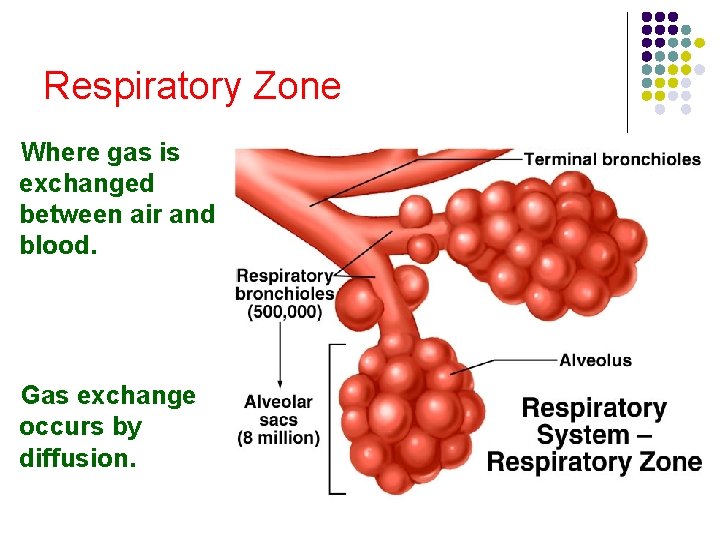
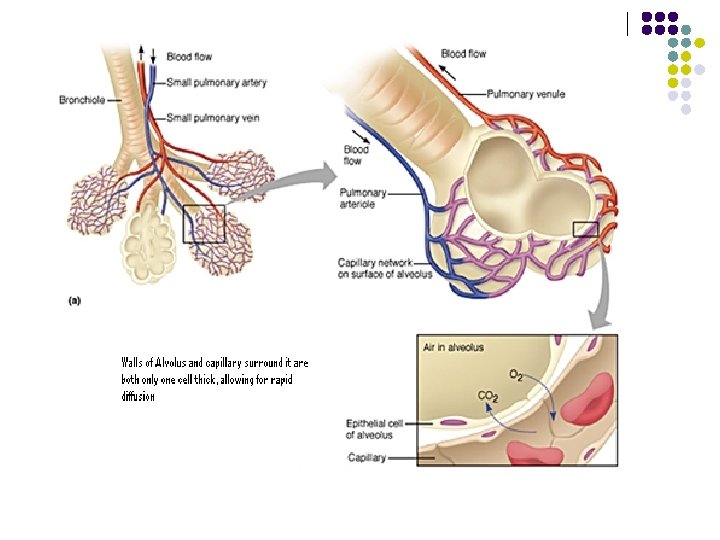
Respiratory Zone Where gas is exchanged between air and blood. Gas exchange occurs by diffusion.
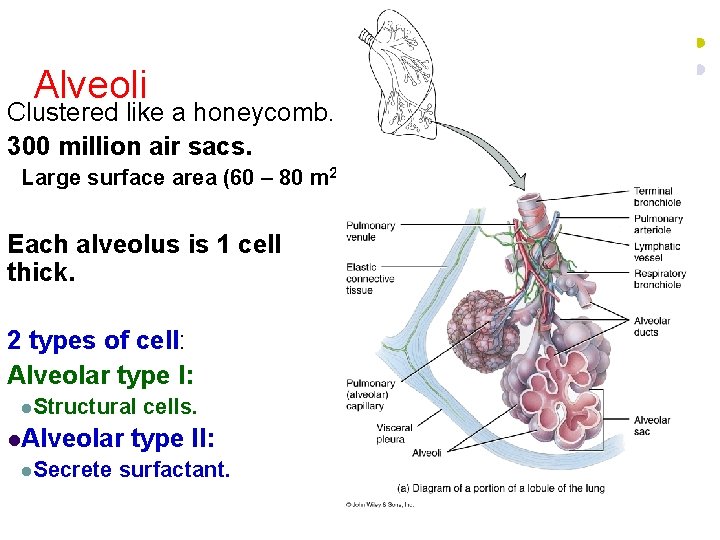
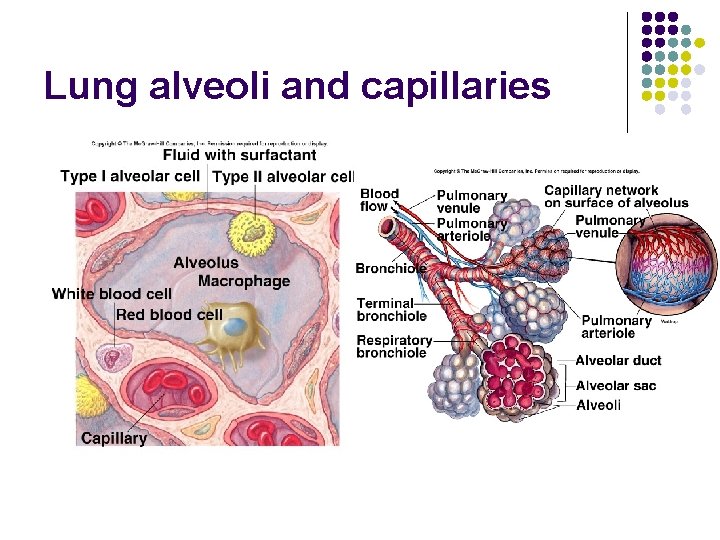
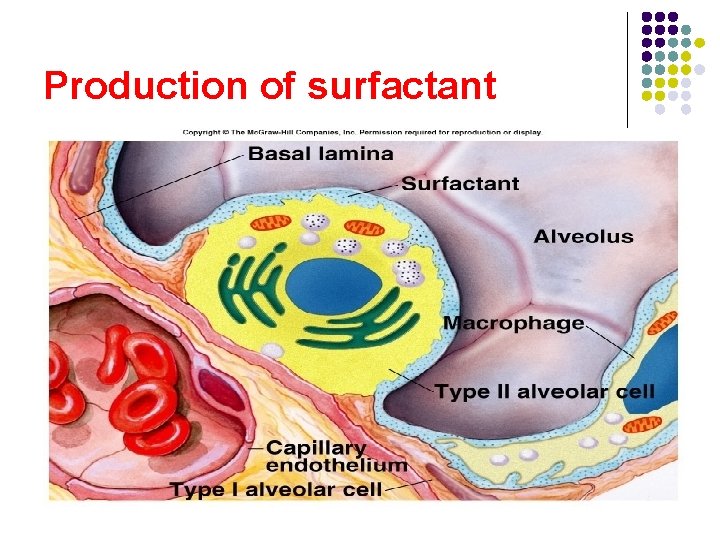
Alveoli Clustered like a honeycomb. 300 million air sacs. Large surface area (60 – 80 m 2). Each alveolus is 1 cell thick. 2 types of cell: Alveolar type I: l. Structural l. Alveolar l. Secrete cells. type II: surfactant.
Lung alveoli and capillaries
Production of surfactant
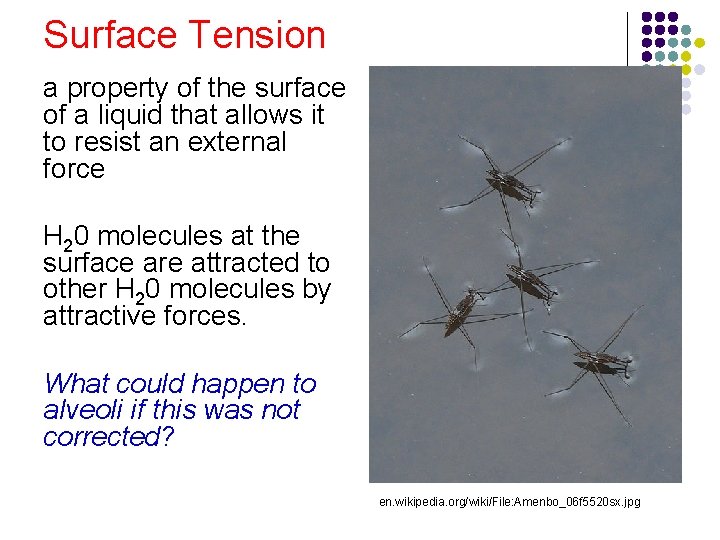
Surface Tension a property of the surface of a liquid that allows it to resist an external force H 20 molecules at the surface are attracted to other H 20 molecules by attractive forces. What could happen to alveoli if this was not corrected? en. wikipedia. org/wiki/File: Amenbo_06 f 5520 sx. jpg
Surfactant- reduces surface tension A phospholipid produced by alveolar type II cells. Function: Lowers surface tension. Think of a detergent l Reduces attractive forces between H 20 molecules. As alveoli radius decreases, surfactant’s ability to lower surface tension increases- so the alveolus does not collapse
Principle 2 l Gases move from an area of high concentration to an area of low concentration l This movement is termed diffusion ( a passive process) Gas movement relies on concentration gradients
Diffusion of gases l If I set off a stink bomb in the lecture theatre, those unfortunate to be near the front (an area of high concentration) would smell it. After a while the gases would attempt to fill the whole lecture theatre- the gases would diffuse from an area of high concentration to an area of low concentration (e. g. the back of the lecture theatre) when this occurs the molecules would be so far apart that no one would smell it.
Principle 3 Gas Exchange: Dalton’s Law l Total pressure of a gas mixture is = to the sum of the pressures that each gas in the mixture would exert independently. l Think of being in a crowded lift l Now think of Partial Pressure
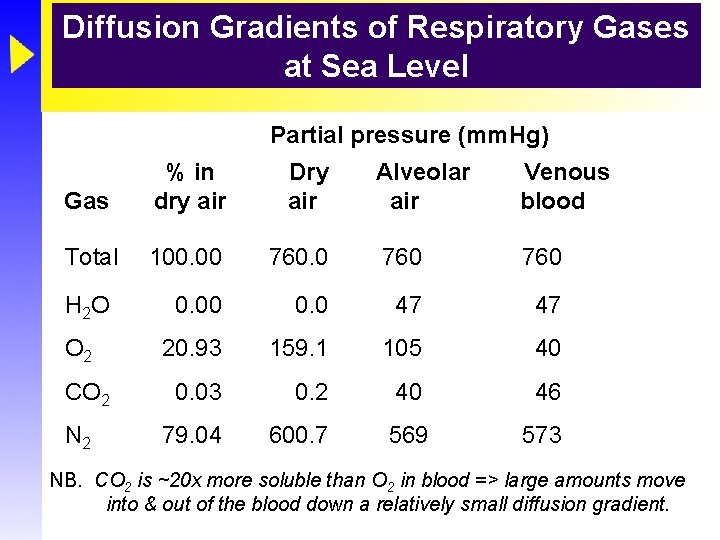
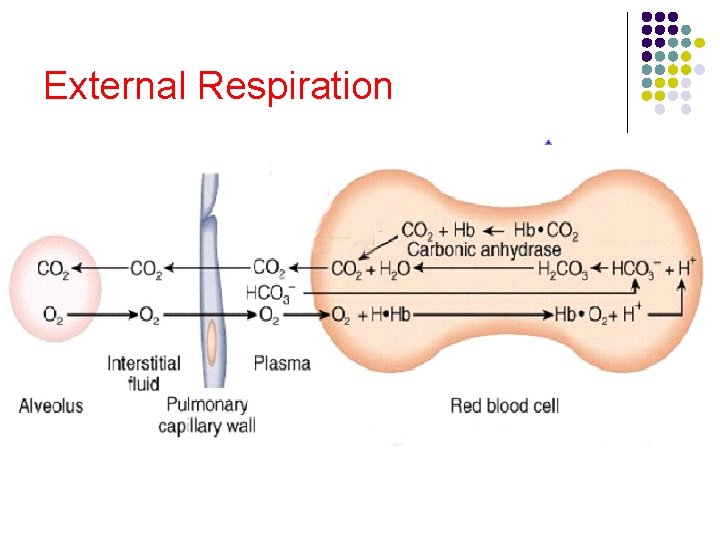
Diffusion Gradients of Respiratory Gases at Sea Level Partial pressure (mm. Hg) Gas % in dry air Dry air Total 100. 00 H 2 O O 2 CO 2 N 2 Alveolar air Venous blood 760. 0 760 0. 0 47 47 20. 93 159. 1 105 40 0. 03 0. 2 40 46 79. 04 600. 7 569 573 NB. CO 2 is ~20 x more soluble than O 2 in blood => large amounts move into & out of the blood down a relatively small diffusion gradient. 43
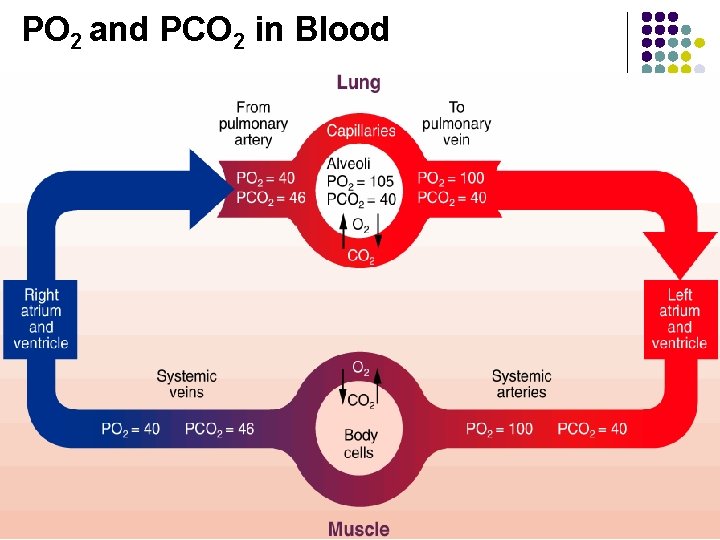
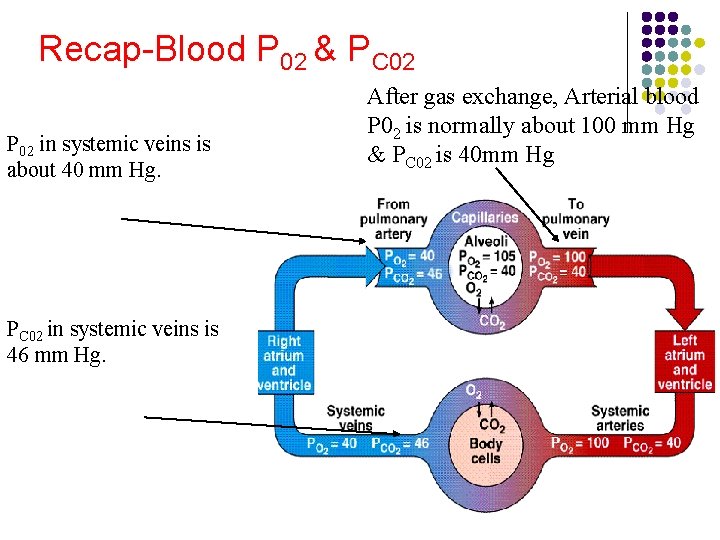
PO 2 and PCO 2 in Blood 44
External Respiration
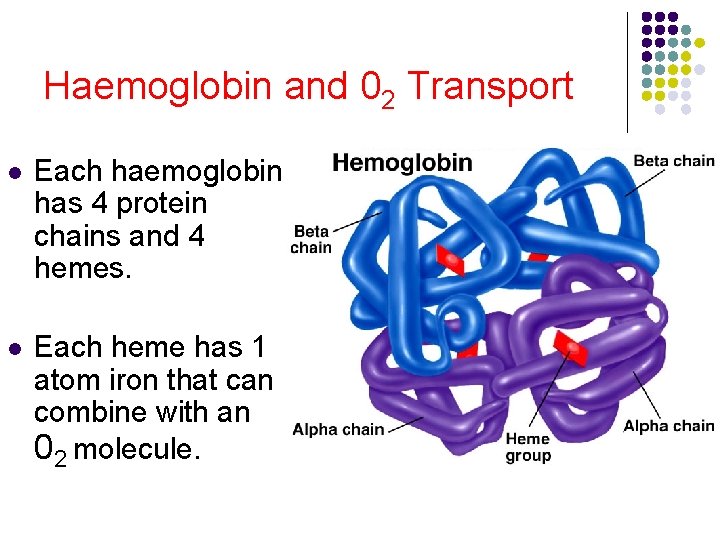
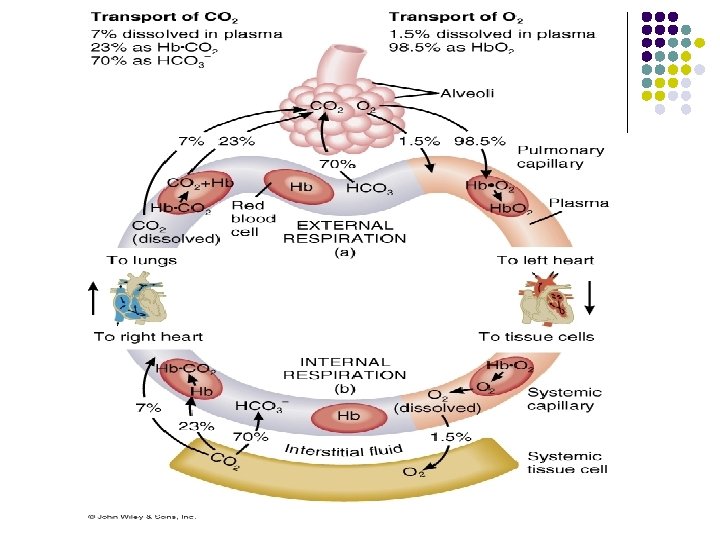
Haemoglobin and 02 Transport l Each haemoglobin has 4 protein chains and 4 hemes. l Each heme has 1 atom iron that can combine with an 02 molecule.
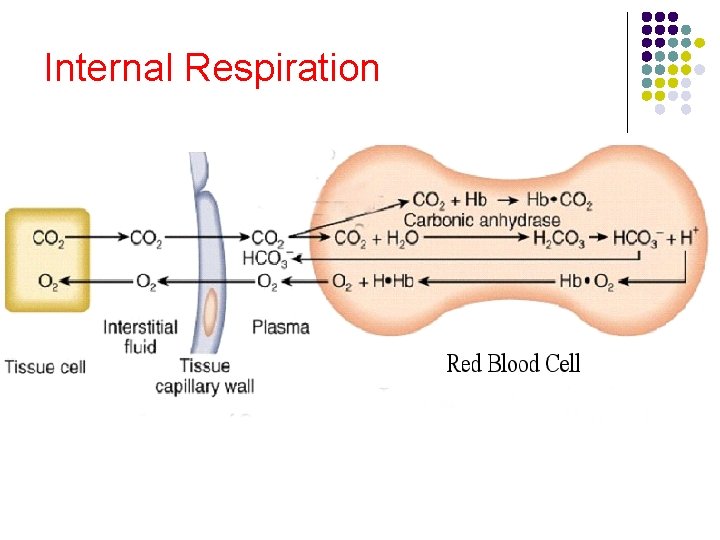
C 02 Transport l C 02 transported in the blood: l HC 03 - (70%). l Dissolved C 02 (10%). l Carbaminohemoglobin (20%). CO 2 is ~20 x more soluble than O 2 in blood. There for large amounts of CO 2 move into & out of the blood more easity
Internal Respiration
Recap-Blood P 02 & PC 02 P 02 in systemic veins is about 40 mm Hg. PC 02 in systemic veins is 46 mm Hg. After gas exchange, Arterial blood P 02 is normally about 100 mm Hg & PC 02 is 40 mm Hg
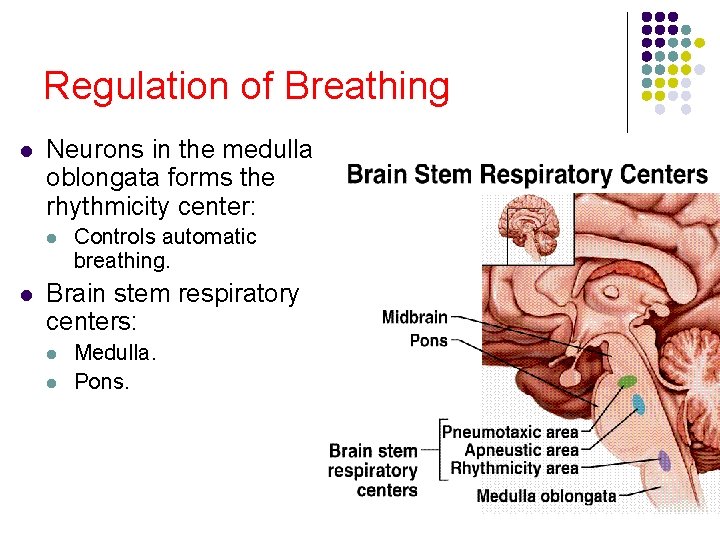
Regulation of Breathing l Neurons in the medulla oblongata forms the rhythmicity center: l l Controls automatic breathing. Brain stem respiratory centers: l l Medulla. Pons.
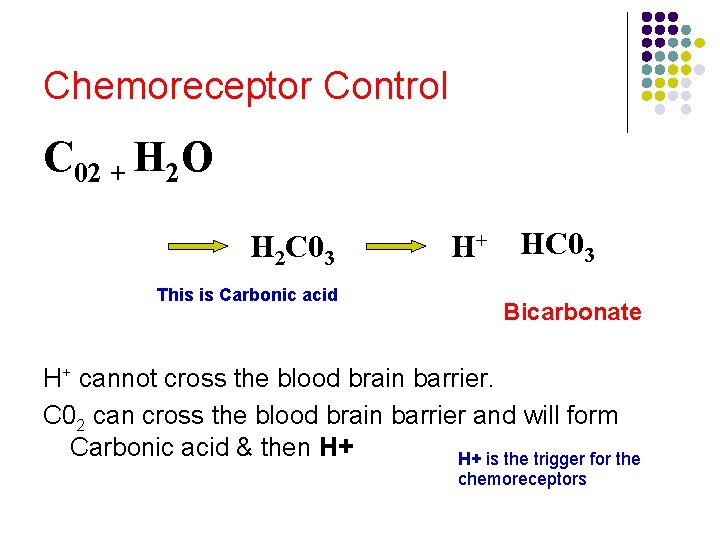
Chemoreceptor Control C 02 + H 2 O H 2 C 03 This is Carbonic acid H+ HC 03 What Bicarbonate is this? H+ cannot cross the blood brain barrier. C 02 can cross the blood brain barrier and will form Carbonic acid & then H+ H+ is the trigger for the chemoreceptors
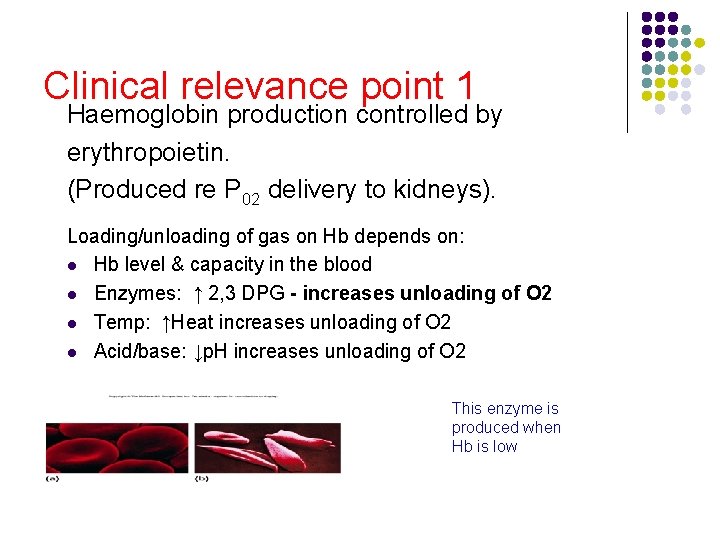
Clinical relevance point 1 Haemoglobin production controlled by erythropoietin. (Produced re P 02 delivery to kidneys). Loading/unloading of gas on Hb depends on: l Hb level & capacity in the blood l Enzymes: ↑ 2, 3 DPG - increases unloading of O 2 l Temp: ↑Heat increases unloading of O 2 l Acid/base: ↓p. H increases unloading of O 2 This enzyme is produced when Hb is low
Questions l l l l What are three functions of the respiratory system? In order, list all of the components of the respiratory system What is the function of epiglottis? What is the function of the cilia in the trachea? What surrounds the trachea and helps to keep it open? What is the role of surfactant in the lungs? What is the composition of air in %. Which law governs movement of gases in out of the lungs? A) Boyles law or b) process of diffusion Where are the chemo-receptors situated? How does the respiratory system respond to increase in CO 2 in the blood? In what form, can carbondioxide be carried in the blood? – see slide no 49 for answer In what form can Oxygen be carried in the blood? – see slide no 49 for answer What is the name of chemical produced by the kidneys which stimulates production of Red Blood Cells from Red Marrow?