
Respiratory physiology Respiration Ventilation Movement of air into
- Slides: 55
Respiratory physiology:
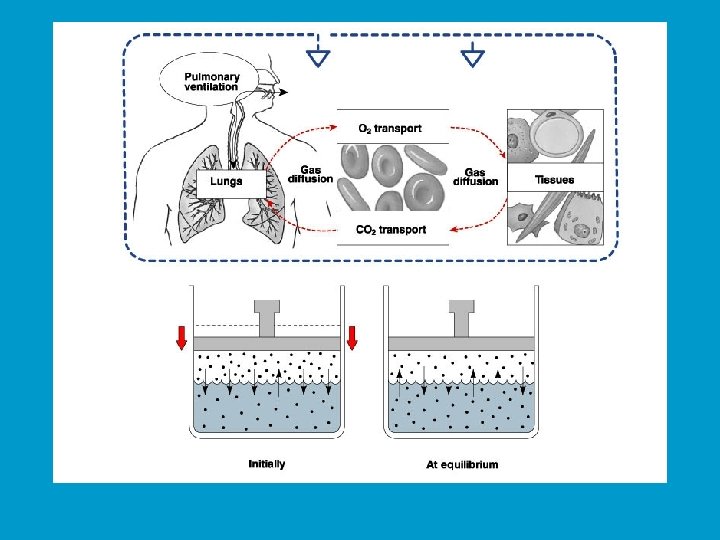
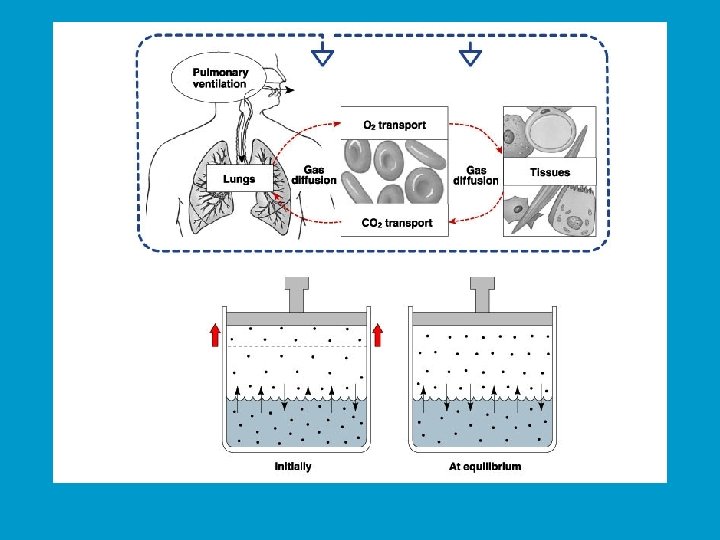
Respiration Ventilation: Movement of air into and out of lungs n External respiration: Gas exchange between air in lungs and blood n Transport of oxygen and carbon dioxide in the blood n Internal respiration: Gas exchange between the blood and tissues n
Respiratory System Functions n n n Gas exchange: Oxygen enters blood and carbon dioxide leaves Regulation of blood p. H: Altered by changing blood carbon dioxide levels Voice production: Movement of air past vocal folds makes sound and speech Olfaction: Smell occurs when airborne molecules drawn into nasal cavity Protection: Against microorganisms by preventing entry and removing them
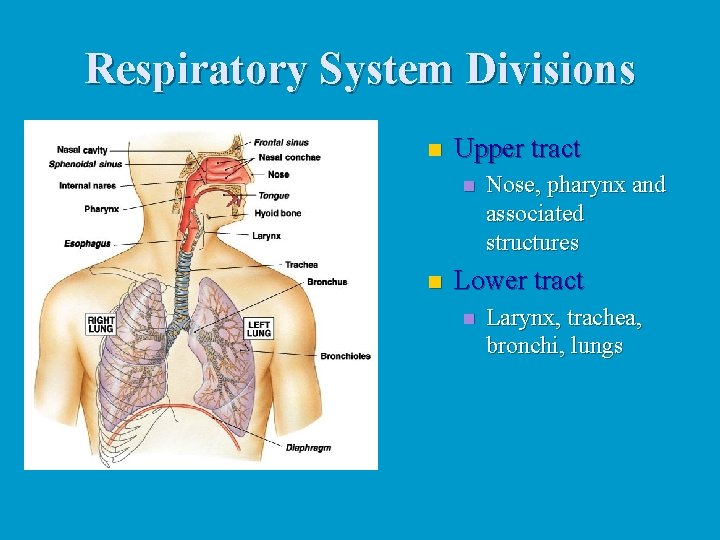
Respiratory System Divisions n Upper tract n n Nose, pharynx and associated structures Lower tract n Larynx, trachea, bronchi, lungs
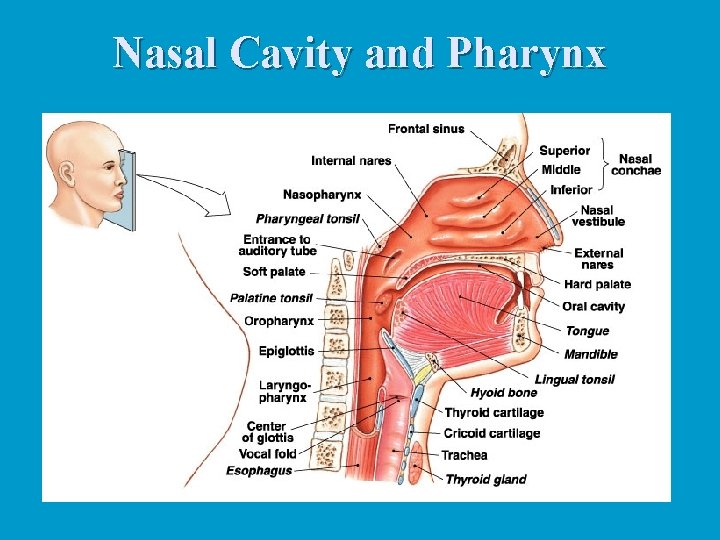
Nasal Cavity and Pharynx
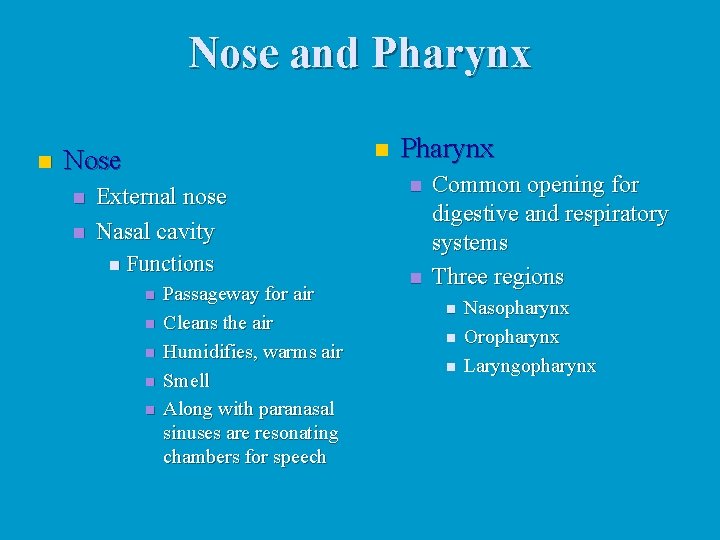
Nose and Pharynx n n Nose n n External nose Nasal cavity n Functions n n n Passageway for air Cleans the air Humidifies, warms air Smell Along with paranasal sinuses are resonating chambers for speech Pharynx n n Common opening for digestive and respiratory systems Three regions n n n Nasopharynx Oropharynx Laryngopharynx
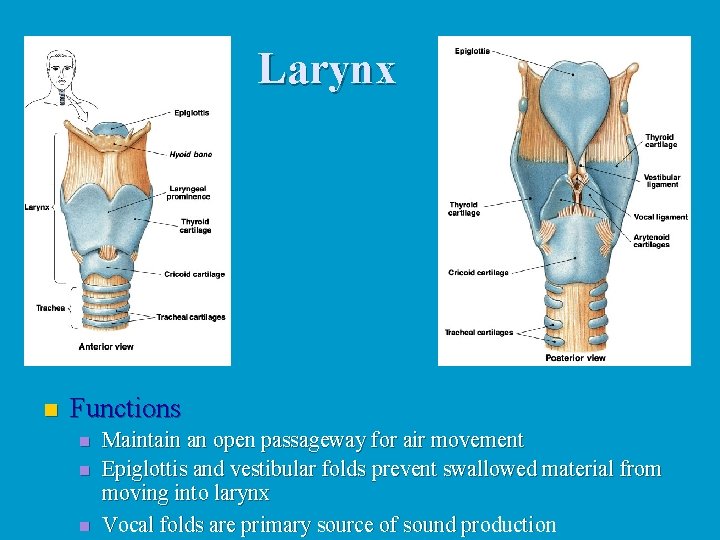
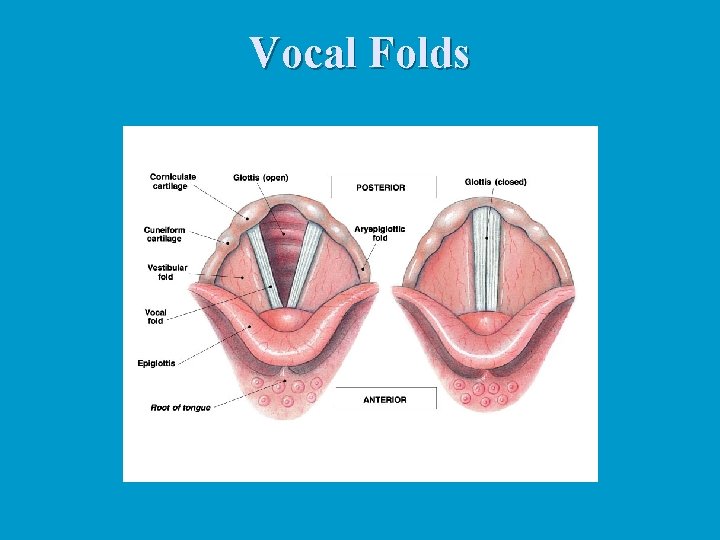
Larynx n Functions n n n Maintain an open passageway for air movement Epiglottis and vestibular folds prevent swallowed material from moving into larynx Vocal folds are primary source of sound production
Vocal Folds
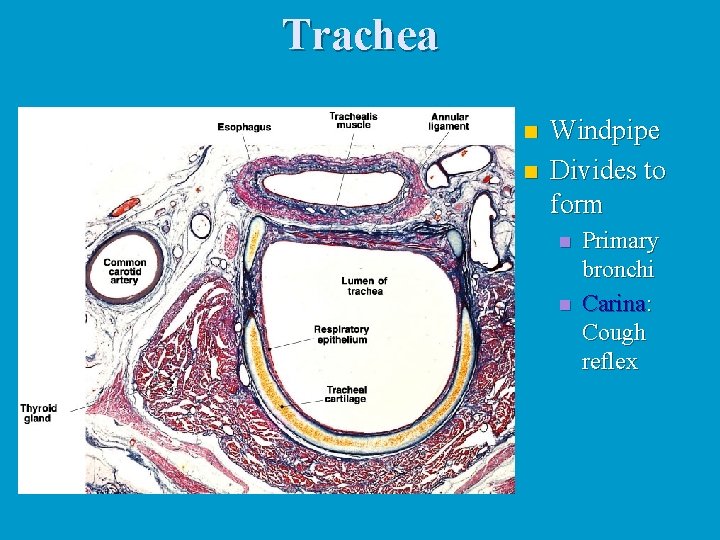
Trachea n n Windpipe Divides to form n n Primary bronchi Carina: Cough reflex
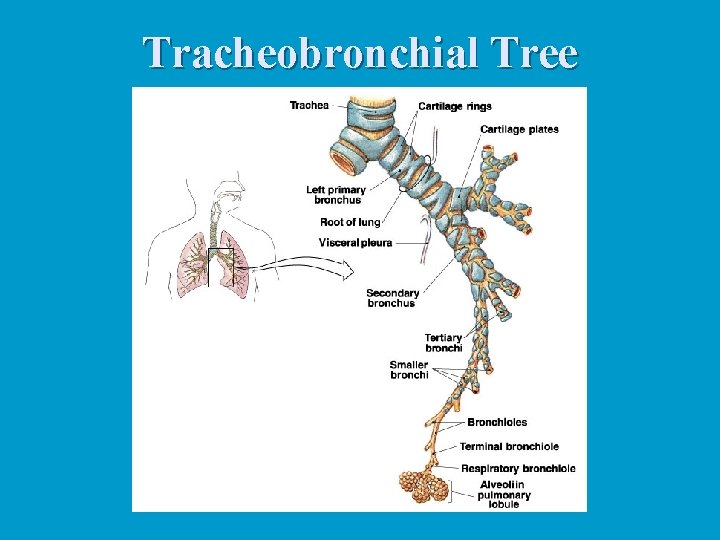
Tracheobronchial Tree n Conducting zone Trachea to terminal bronchioles which is ciliated for removal of debris n Passageway for air movement n Cartilage holds tube system open and smooth muscle controls tube diameter n n Respiratory zone Respiratory bronchioles to alveoli n Site for gas exchange n
Tracheobronchial Tree
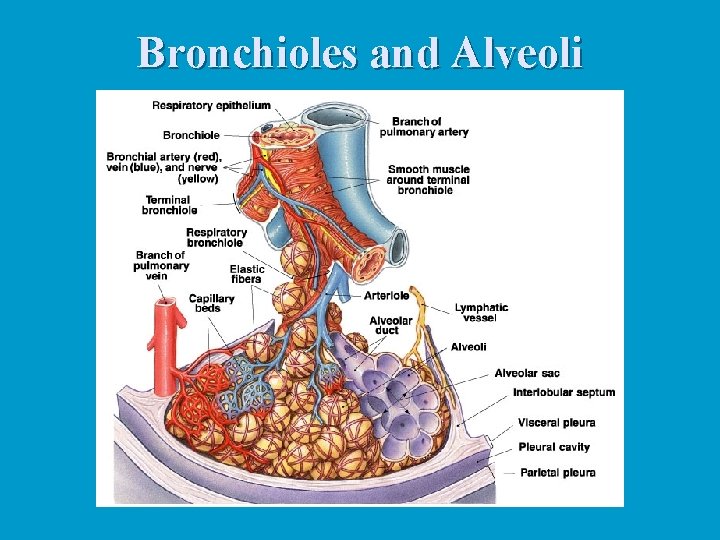
Bronchioles and Alveoli
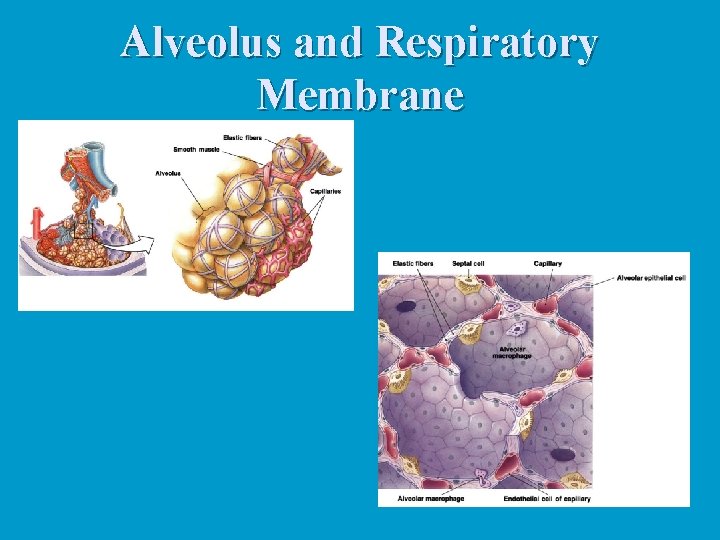
Alveolus and Respiratory Membrane
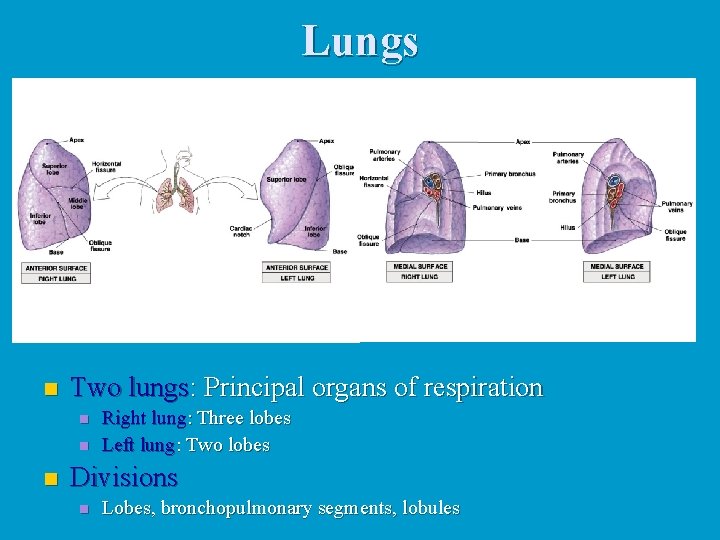
Lungs n Two lungs: Principal organs of respiration n Right lung: Three lobes Left lung: Two lobes Divisions n Lobes, bronchopulmonary segments, lobules
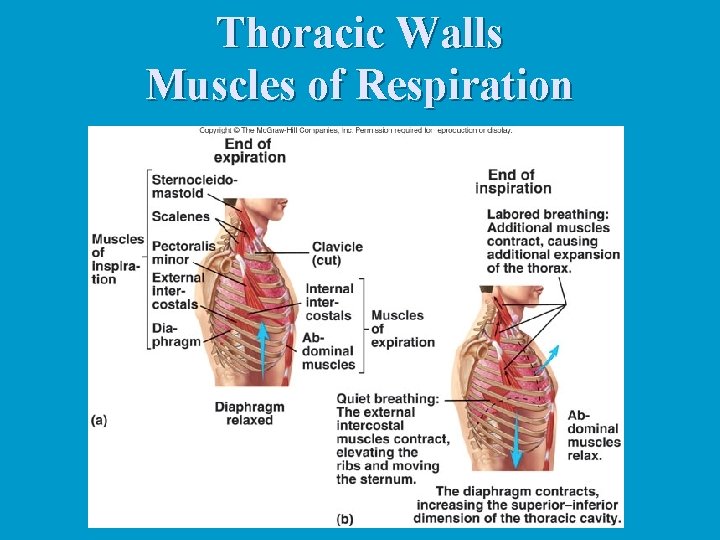
Thoracic Walls Muscles of Respiration
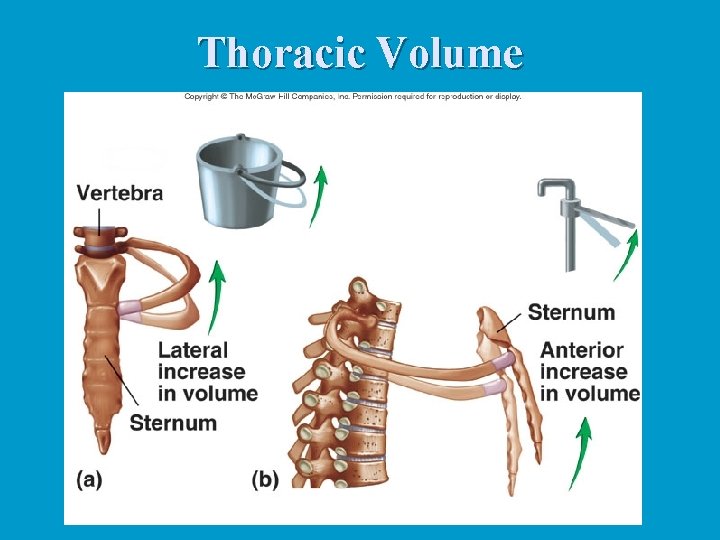
Thoracic Volume
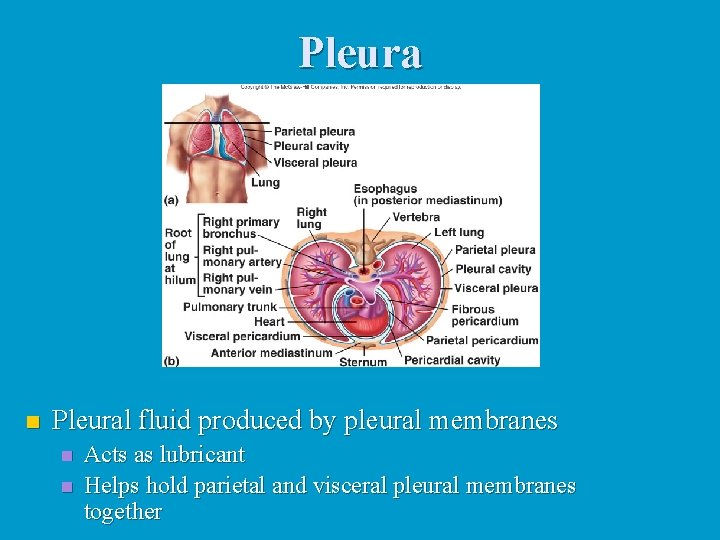
Pleura n Pleural fluid produced by pleural membranes n n Acts as lubricant Helps hold parietal and visceral pleural membranes together
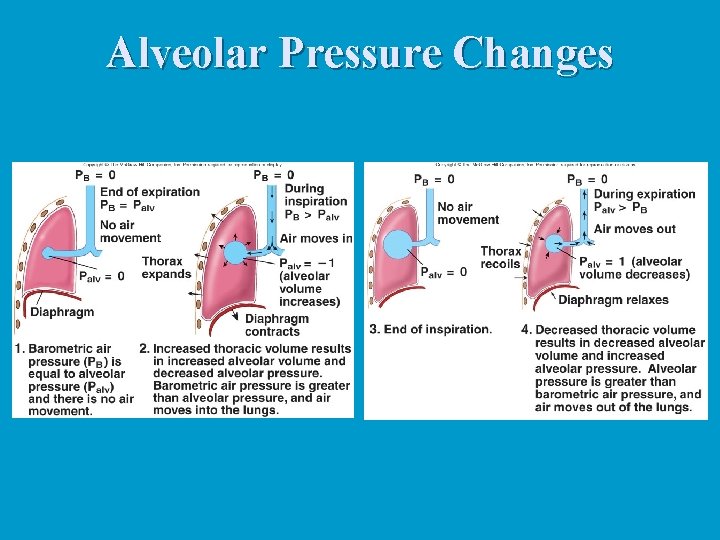
Ventilation Movement of air into and out of lungs n Air moves from area of higher pressure to area of lower pressure n Pressure is inversely related to volume n
Alveolar Pressure Changes
Changing Alveolar Volume n Lung recoil n Causes alveoli to collapse resulting from n Elastic recoil and surface tension n n Surfactant: Reduces tendency of lungs to collapse Pleural pressure Negative pressure can cause alveoli to expand n Pneumothorax is an opening between pleural cavity and air that causes a loss of pleural pressure n
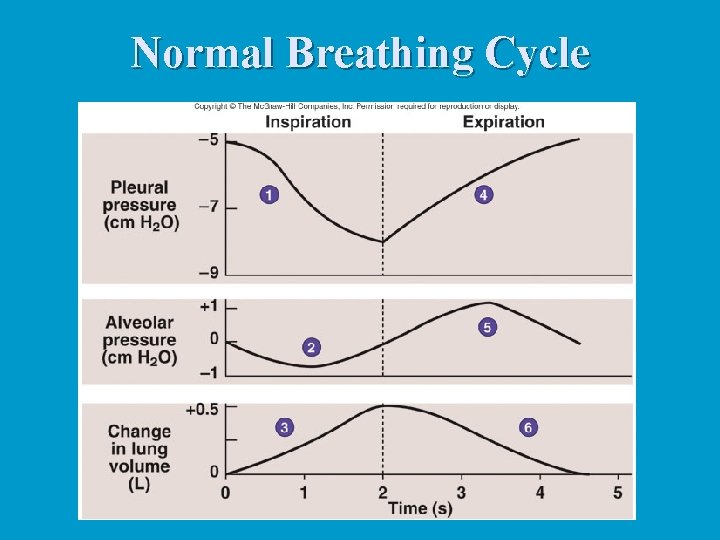
Normal Breathing Cycle
Compliance n Measure of the ease with which lungs and thorax expand The greater the compliance, the easier it is for a change in pressure to cause expansion n A lower-than-normal compliance means the lungs and thorax are harder to expand n n Conditions that decrease compliance n n n Pulmonary fibrosis Pulmonary edema Respiratory distress syndrome
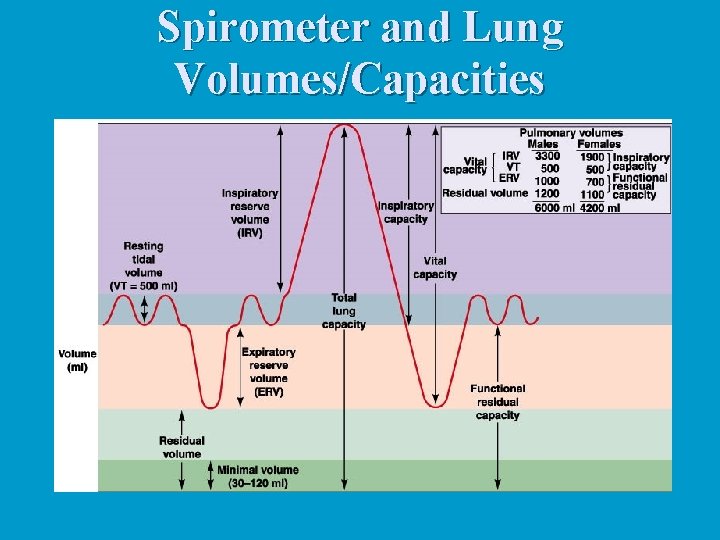
Pulmonary Volumes n Tidal volume n n Inspiratory reserve volume n n Amount of air inspired forcefully after inspiration of normal tidal volume Expiratory reserve volume n n Volume of air inspired or expired during a normal inspiration or expiration Amount of air forcefully expired after expiration of normal tidal volume Residual volume n Volume of air remaining in respiratory passages and lungs after the most forceful expiration
Pulmonary Capacities n Inspiratory capacity n n Functional residual capacity n n Expiratory reserve volume plus the residual volume Vital capacity n n Tidal volume plus inspiratory reserve volume Sum of inspiratory reserve volume, tidal volume, and expiratory reserve volume Total lung capacity n Sum of inspiratory and expiratory reserve volumes plus the tidal volume and residual volume
Spirometer and Lung Volumes/Capacities
Minute and Alveolar Ventilation Minute ventilation: Total amount of air moved into and out of respiratory system per minute n Respiratory rate or frequency: Number of breaths taken per minute n Anatomic dead space: Part of respiratory system where gas exchange does not take place n Alveolar ventilation: How much air per minute enters the parts of the respiratory system in which gas exchange takes place n
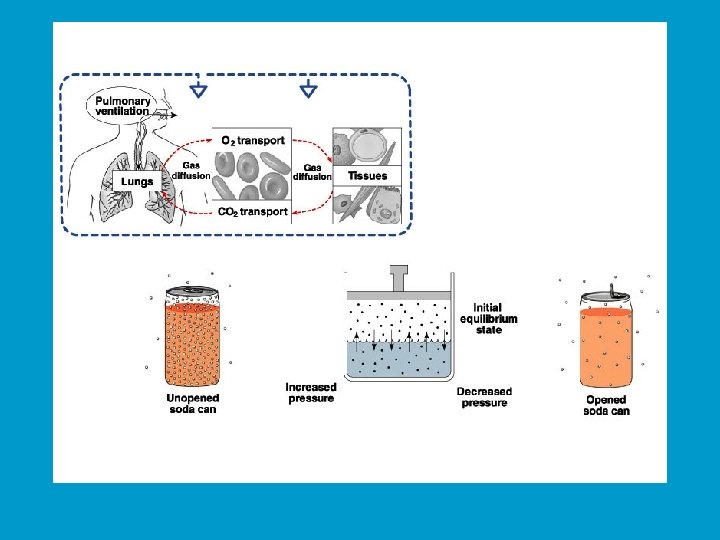
Physical Principles of Gas Exchange n Partial pressure n n The pressure exerted by each type of gas in a mixture Dalton’s law Water vapor pressure Diffusion of gases through liquids n n Concentration of a gas in a liquid is determined by its partial pressure and its solubility coefficient Henry’s law
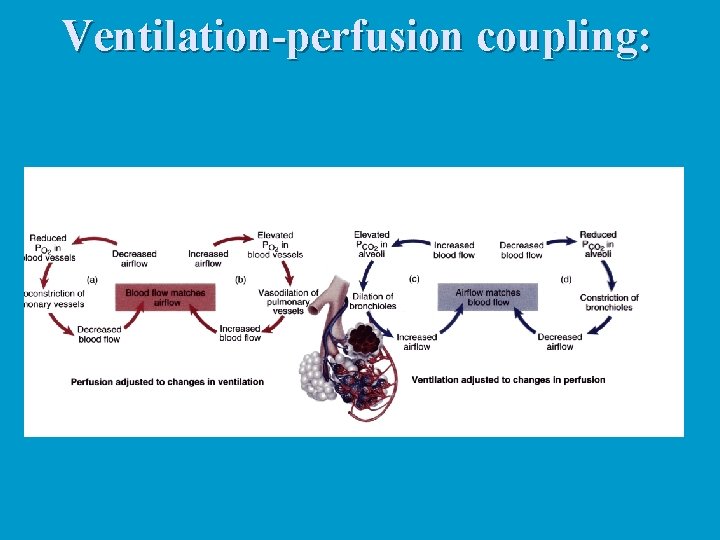
Physical Principles of Gas Exchange n Diffusion of gases through the respiratory membrane n n Depends on membrane’s thickness, the diffusion coefficient of gas, surface areas of membrane, partial pressure of gases in alveoli and blood Relationship between ventilation and pulmonary capillary flow n n Increased ventilation or increased pulmonary capillary blood flow increases gas exchange Physiologic shunt is deoxygenated blood returning from lungs
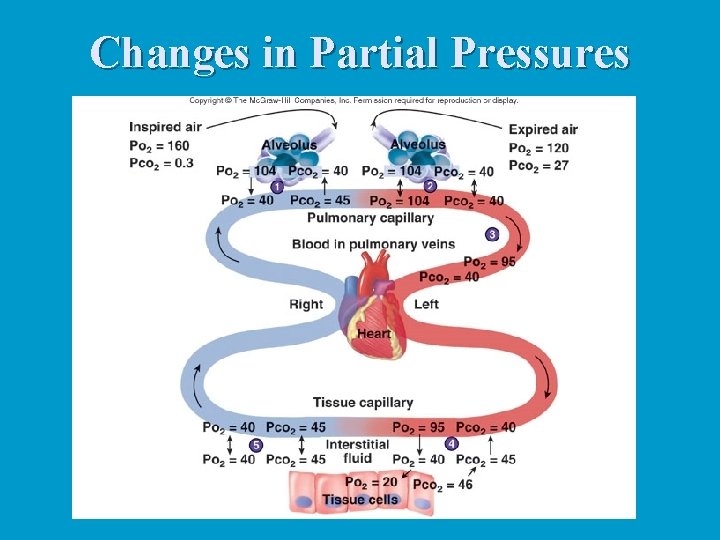
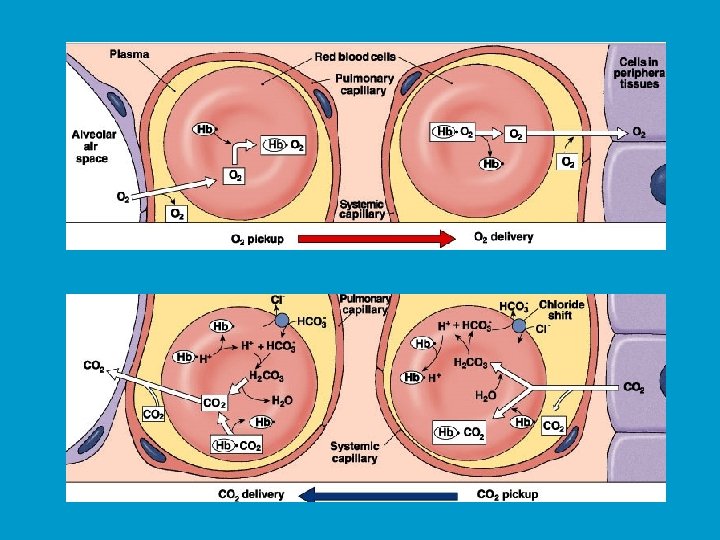
Oxygen and Carbon Dioxide Diffusion Gradients n Oxygen n Moves from alveoli into blood. Blood is almost completely saturated with oxygen when it leaves the capillary P 02 in blood decreases because of mixing with deoxygenated blood Oxygen moves from tissue capillaries into the tissues n Carbon dioxide n n Moves from tissues into tissue capillaries Moves from pulmonary capillaries into the alveoli
Changes in Partial Pressures
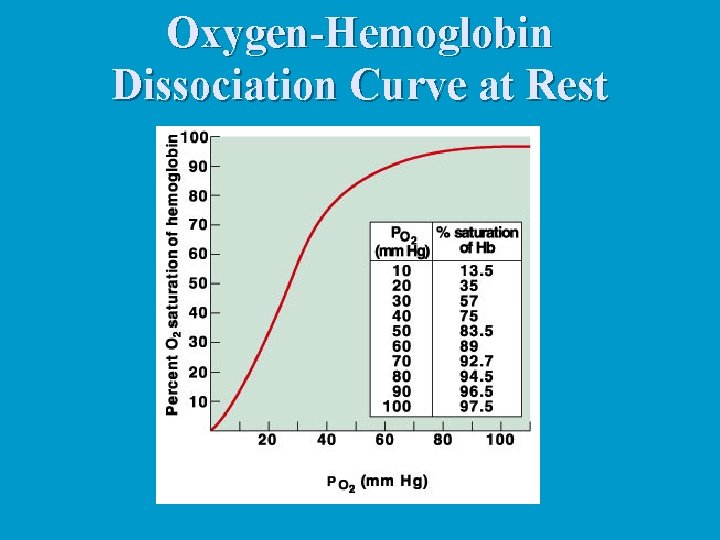
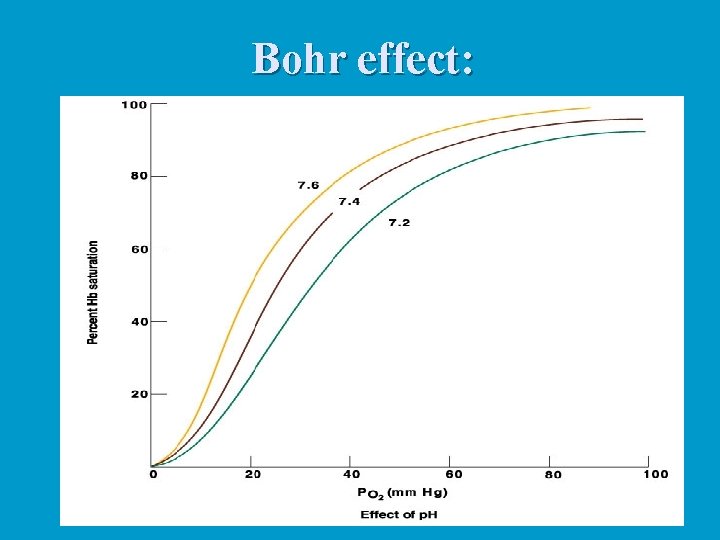
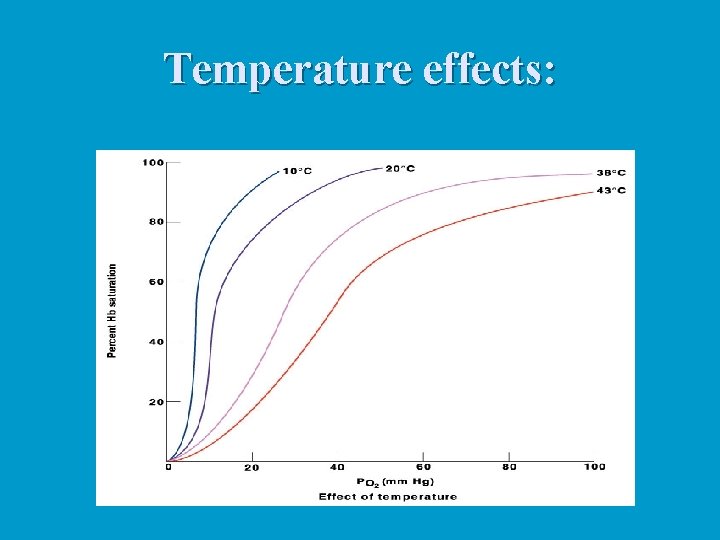
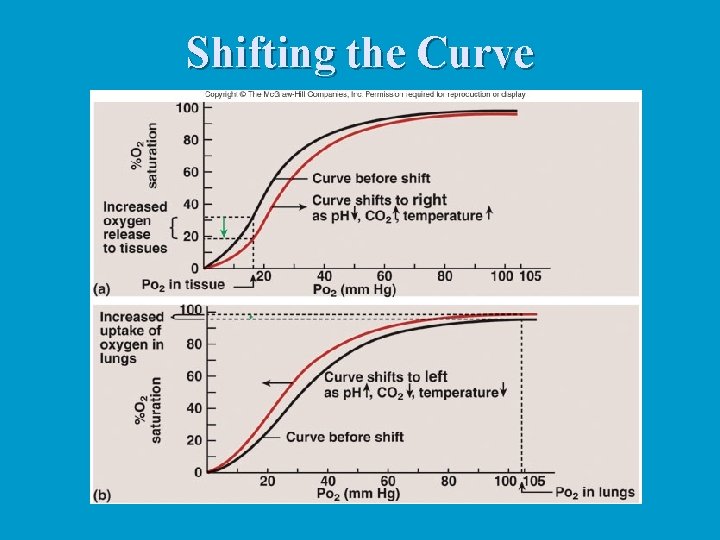
Hemoglobin and Oxygen Transport n n n Oxygen is transported by hemoglobin (98. 5%) and is dissolved in plasma (1. 5%) Oxygen-hemoglobin dissociation curve shows that hemoglobin is almost completely saturated when P 02 is 80 mm Hg or above. At lower partial pressures, the hemoglobin releases oxygen. A shift of the curve to the left because of an increase in p. H, a decrease in carbon dioxide, or a decrease in temperature results in an increase in the ability of hemoglobin to hold oxygen
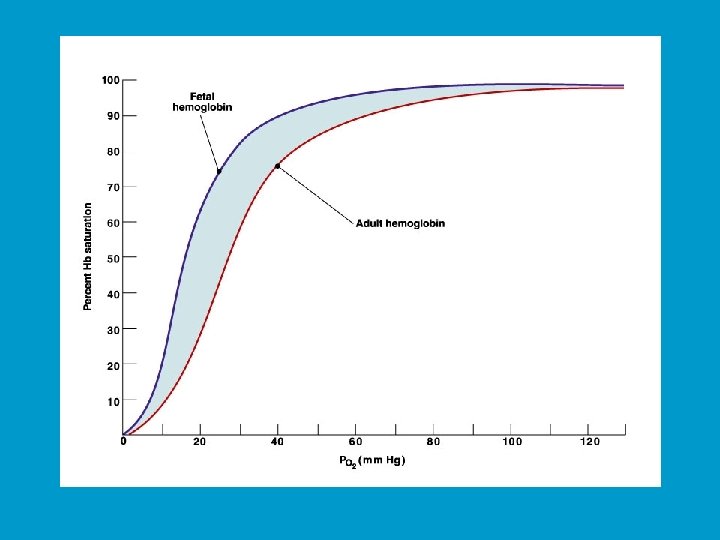
Hemoglobin and Oxygen Transport n n n A shift of the curve to the right because of a decrease in p. H, an increase in carbon dioxide, or an increase in temperature results in a decrease in the ability of hemoglobin to hold oxygen The substance 2. 3 -bisphoglycerate increases the ability of hemoglobin to release oxygen Fetal hemoglobin has a higher affinity for oxygen than does maternal
Oxygen-Hemoglobin Dissociation Curve at Rest
Bohr effect:
Temperature effects:
Shifting the Curve
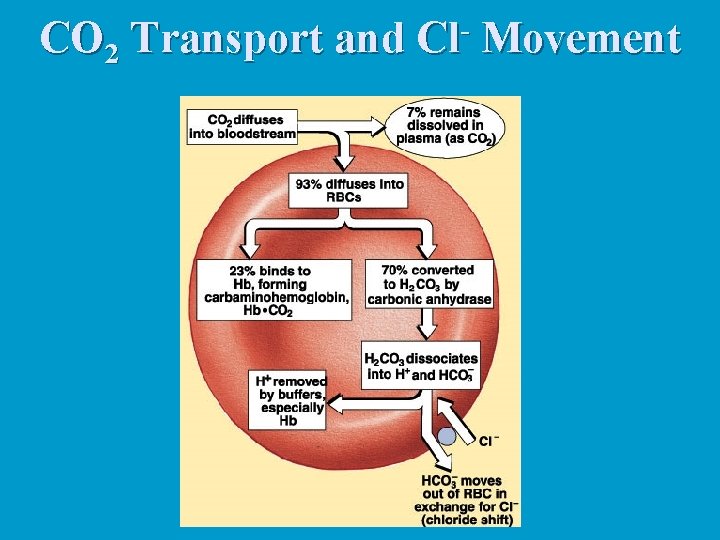
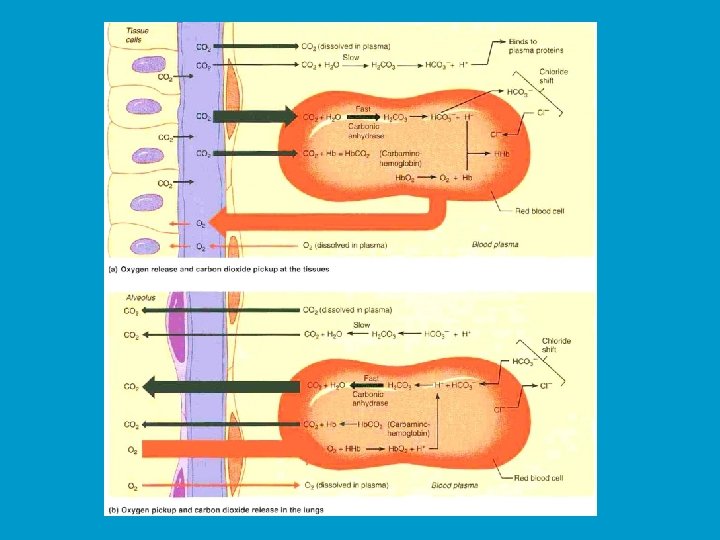
Transport of Carbon Dioxide n n n Carbon dioxide is transported as bicarbonate ions (70%) in combination with blood proteins (23%) and in solution with plasma (7%) Hemoglobin that has released oxygen binds more readily to carbon dioxide than hemoglobin that has oxygen bound to it (Haldane effect) In tissue capillaries, carbon dioxide combines with water inside RBCs to form carbonic acid which dissociates to form bicarbonate ions and hydrogen ions
Transport of Carbon Dioxide n n In lung capillaries, bicarbonate ions and hydrogen ions move into RBCs and chloride ions move out. Bicarbonate ions combine with hydrogen ions to form carbonic acid. The carbonic acid is converted to carbon dioxide and water. The carbon dioxide diffuses out of the RBCs. Increased plasma carbon dioxide lowers blood p. H. The respiratory system regulates blood p. H by regulating plasma carbon dioxide levels
CO 2 Transport and Cl Movement
Ventilation-perfusion coupling:
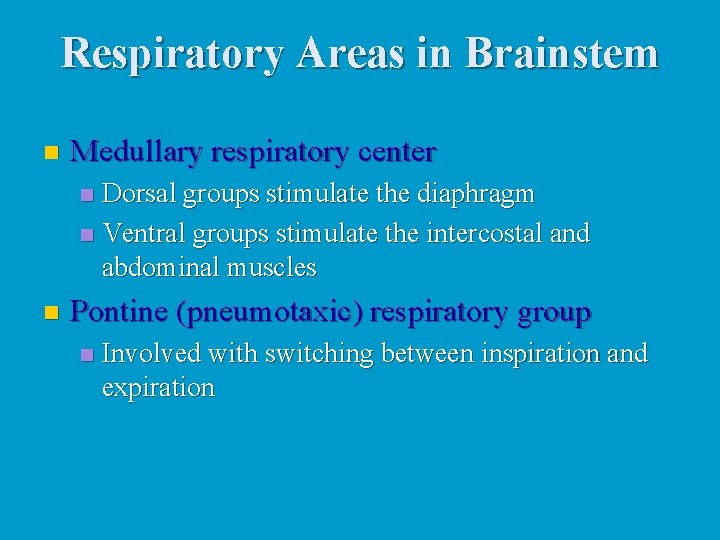
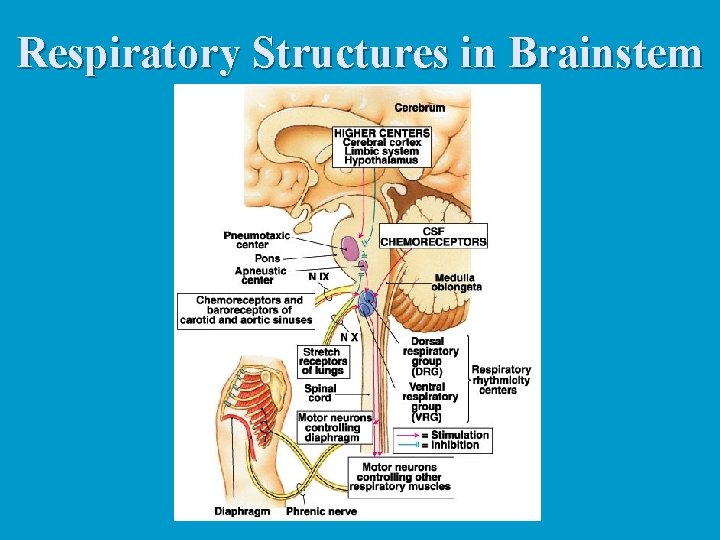
Respiratory Areas in Brainstem n Medullary respiratory center Dorsal groups stimulate the diaphragm n Ventral groups stimulate the intercostal and abdominal muscles n n Pontine (pneumotaxic) respiratory group n Involved with switching between inspiration and expiration
Respiratory Structures in Brainstem
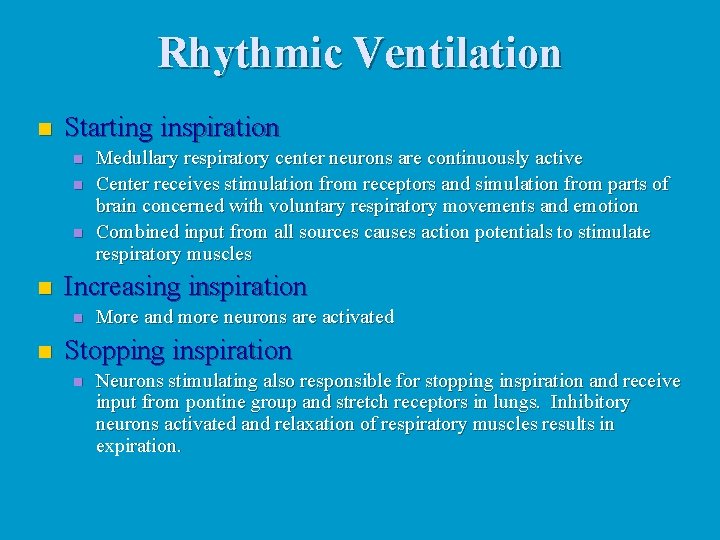
Rhythmic Ventilation n Starting inspiration n n Increasing inspiration n n Medullary respiratory center neurons are continuously active Center receives stimulation from receptors and simulation from parts of brain concerned with voluntary respiratory movements and emotion Combined input from all sources causes action potentials to stimulate respiratory muscles More and more neurons are activated Stopping inspiration n Neurons stimulating also responsible for stopping inspiration and receive input from pontine group and stretch receptors in lungs. Inhibitory neurons activated and relaxation of respiratory muscles results in expiration.
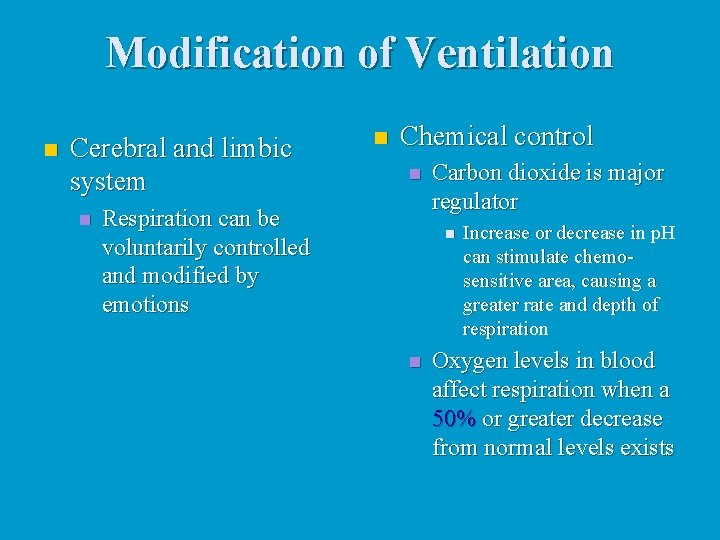
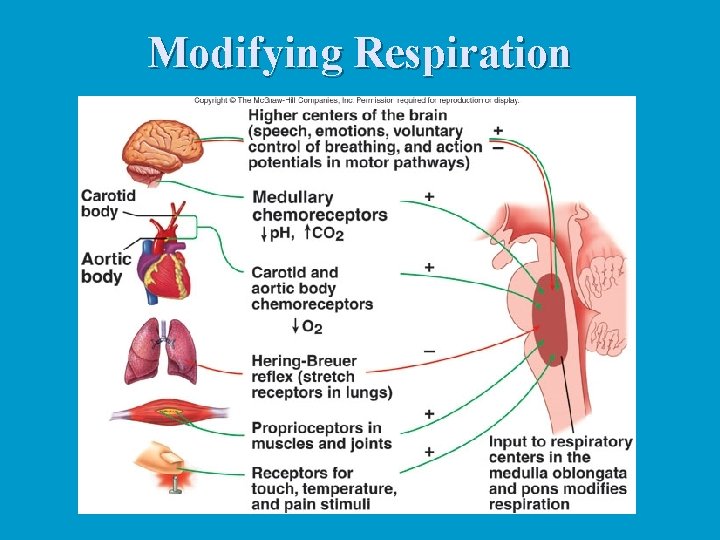
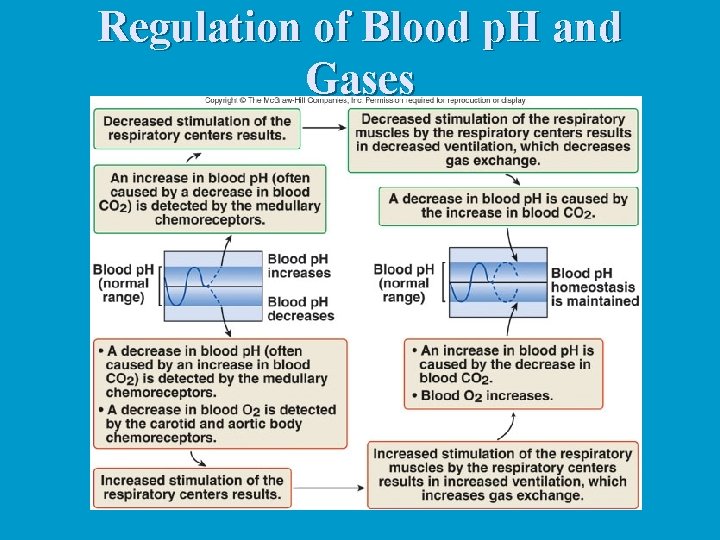
Modification of Ventilation n Cerebral and limbic system n n Chemical control n Respiration can be voluntarily controlled and modified by emotions Carbon dioxide is major regulator n n Increase or decrease in p. H can stimulate chemosensitive area, causing a greater rate and depth of respiration Oxygen levels in blood affect respiration when a 50% or greater decrease from normal levels exists
Modifying Respiration
Regulation of Blood p. H and Gases
Herring-Breuer Reflex n Limits the degree of inspiration and prevents overinflation of the lungs n Infants n Reflex plays a role in regulating basic rhythm of breathing and preventing overinflation of lungs n Adults n Reflex important only when tidal volume large as in exercise
Ventilation in Exercise n Ventilation increases abruptly At onset of exercise n Movement of limbs has strong influence n Learned component n n Ventilation increases gradually After immediate increase, gradual increase occurs (4 -6 minutes) n Anaerobic threshold is highest level of exercise without causing significant change in blood p. H n n If exceeded, lactic acid produced by skeletal muscles
Effects of Aging Vital capacity and maximum minute ventilation decrease n Residual volume and dead space increase n Ability to remove mucus from respiratory passageways decreases n Gas exchange across respiratory membrane is reduced n