
Respiratory Physiology more than just spirometry Philip Lawrence



- Slides: 41
Respiratory Physiology – more than just spirometry Philip Lawrence Senior Respiratory Physiologist Inspired by Children
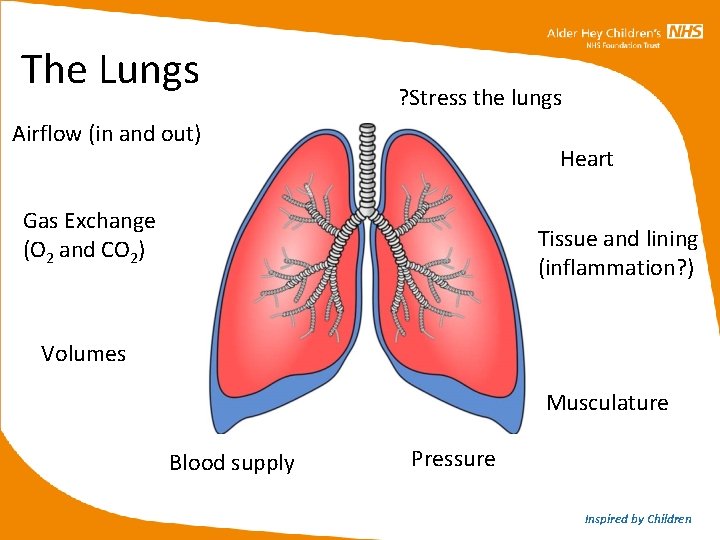
The Lungs ? Stress the lungs Airflow (in and out) Heart Gas Exchange (O 2 and CO 2) Tissue and lining (inflammation? ) Volumes Musculature Blood supply Pressure Inspired by Children
Respiratory Physiology - Can we test this organ and identify patterns of normality or abnormality? - Can we use this to guide our management? Does the physiology change? Physiology is just a snapshot of the lungs at that moment in time Added with clinical history, patient observations – we can better understand treat a patient. Inspired by Children
Spirometry Inspired by Children
“Spirometry is invaluable as a screening test of general respiratory health in the same way that blood pressure provides important information about general cardiovascular health. ” ATS/ERS Standardisation of Spirometry (2005) Inspired by Children
Spirometry Airflow in the lungs - Normal - Obstructive Mixed - Restrictive Simple for patients and operator Inspired by Children
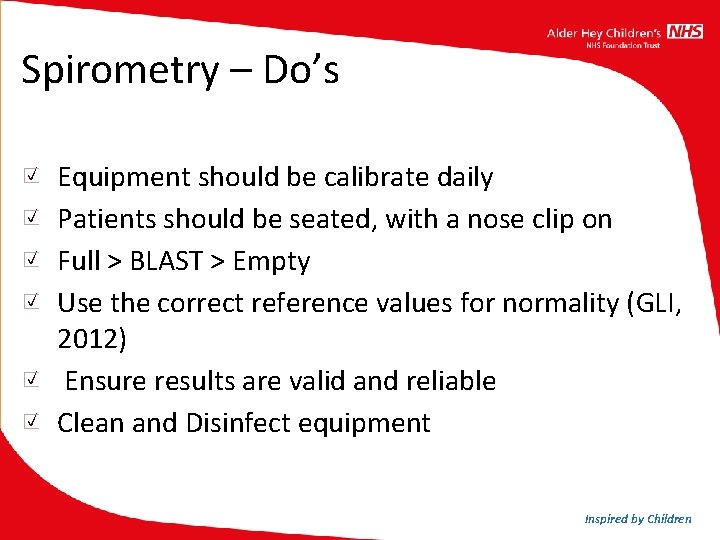
Spirometry – Do’s Equipment should be calibrate daily Patients should be seated, with a nose clip on Full > BLAST > Empty Use the correct reference values for normality (GLI, 2012) Ensure results are valid and reliable Clean and Disinfect equipment Inspired by Children
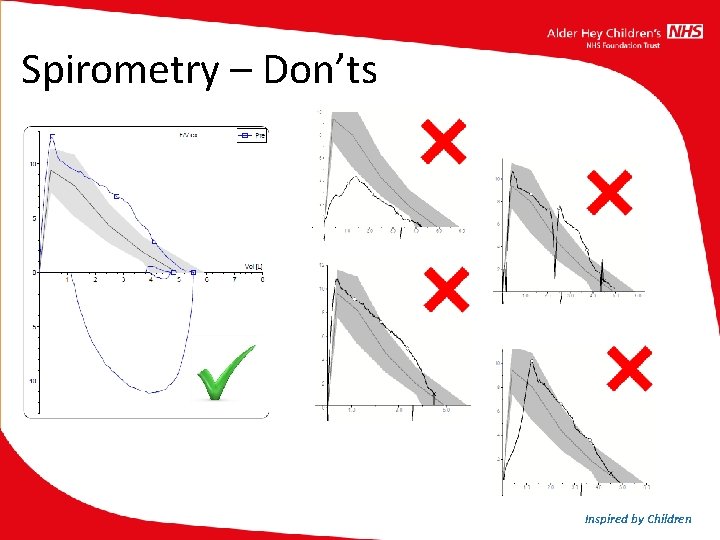
Spirometry – Don’ts Inspired by Children
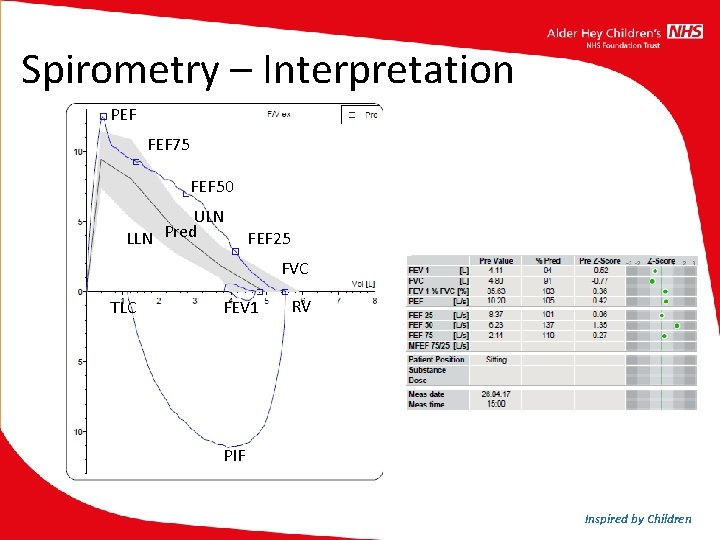
Spirometry – Interpretation PEF FEF 75 FEF 50 ULN LLN Pred FEF 25 FVC TLC FEV 1 RV PIF Inspired by Children
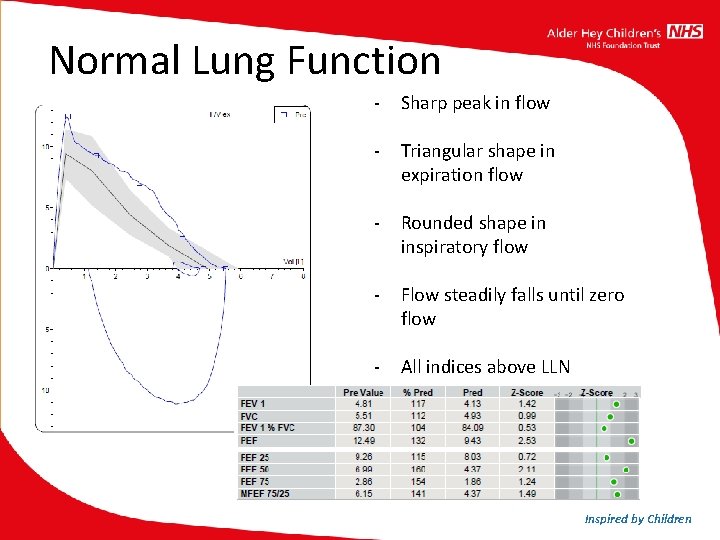
Normal Lung Function - Sharp peak in flow - Triangular shape in expiration flow - Rounded shape in inspiratory flow - Flow steadily falls until zero flow - All indices above LLN Inspired by Children
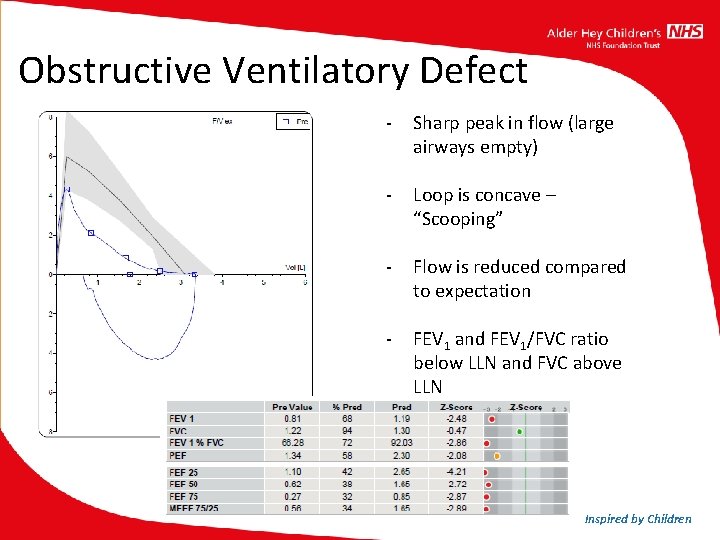
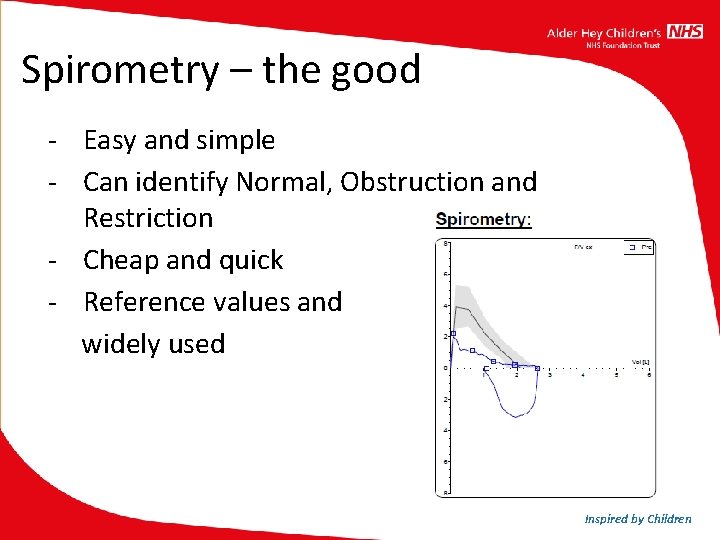
Obstructive Ventilatory Defect - Sharp peak in flow (large airways empty) - Loop is concave – “Scooping” - Flow is reduced compared to expectation - FEV 1 and FEV 1/FVC ratio below LLN and FVC above LLN Inspired by Children
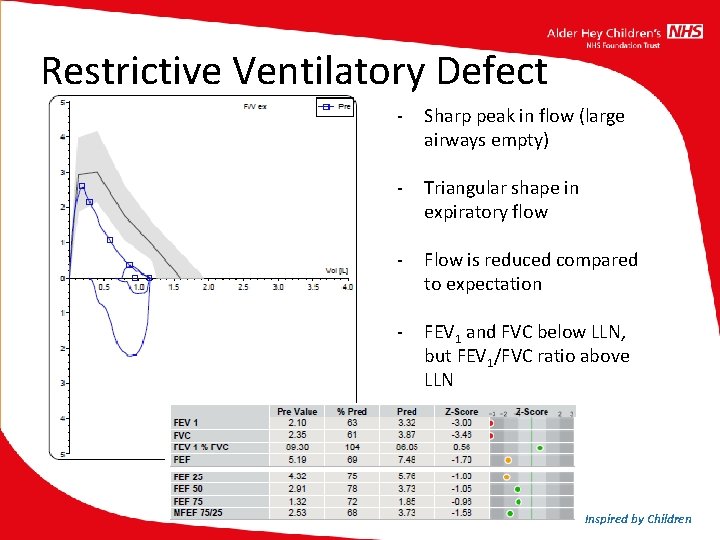
Restrictive Ventilatory Defect - Sharp peak in flow (large airways empty) - Triangular shape in expiratory flow - Flow is reduced compared to expectation - FEV 1 and FVC below LLN, but FEV 1/FVC ratio above LLN Inspired by Children
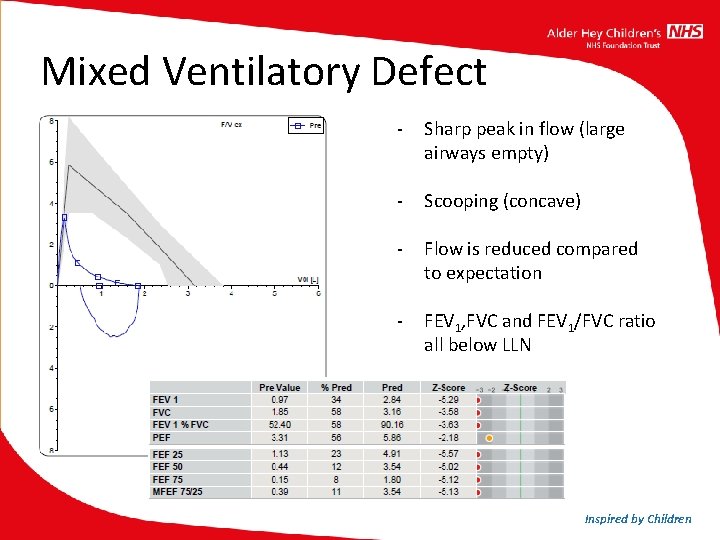
Mixed Ventilatory Defect - Sharp peak in flow (large airways empty) - Scooping (concave) - Flow is reduced compared to expectation - FEV 1, FVC and FEV 1/FVC ratio all below LLN Inspired by Children
Spirometry – the good - Easy and simple - Can identify Normal, Obstruction and Restriction - Cheap and quick - Reference values and widely used Inspired by Children
Spirometry – the bad - Airflow is not the whole story… Volume? Gas Exchange? Stress the Lungs? Airway inflammation? - Unnatural test - FEV 1 = only first 8 generations of the lungs (disease occurs in the small airways) Inspired by Children
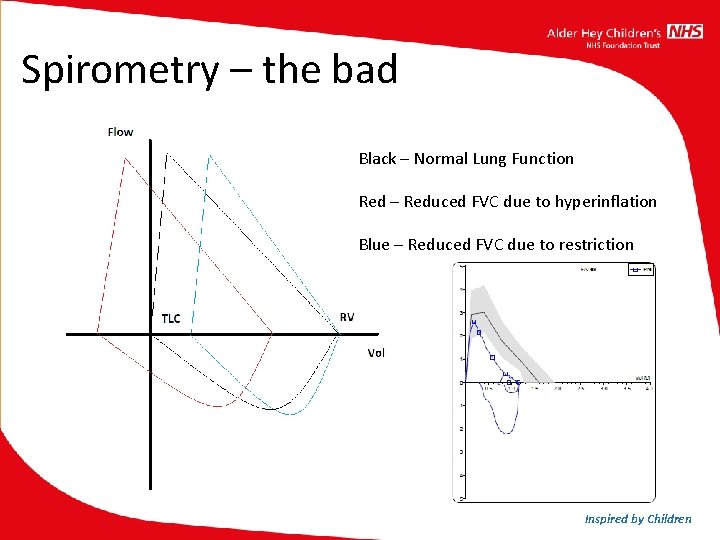
Spirometry – the bad Black – Normal Lung Function Red – Reduced FVC due to hyperinflation Blue – Reduced FVC due to restriction Inspired by Children
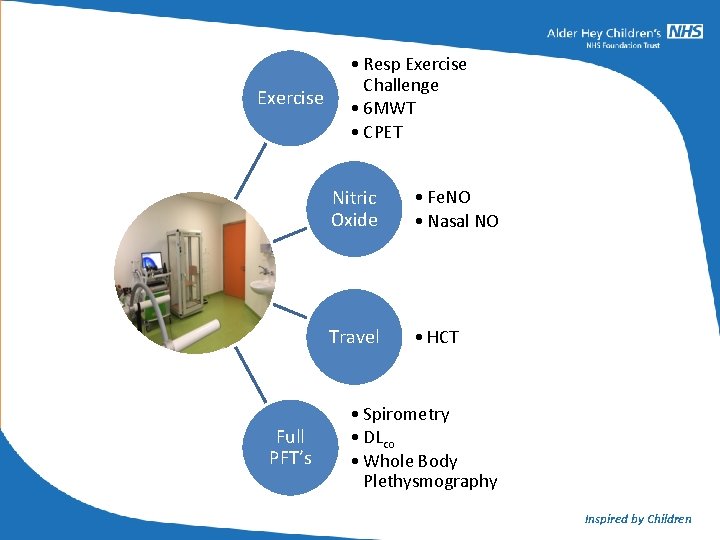
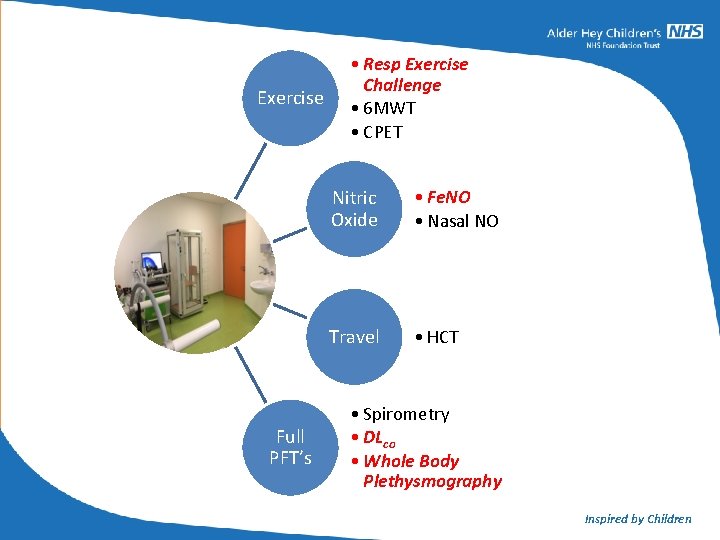
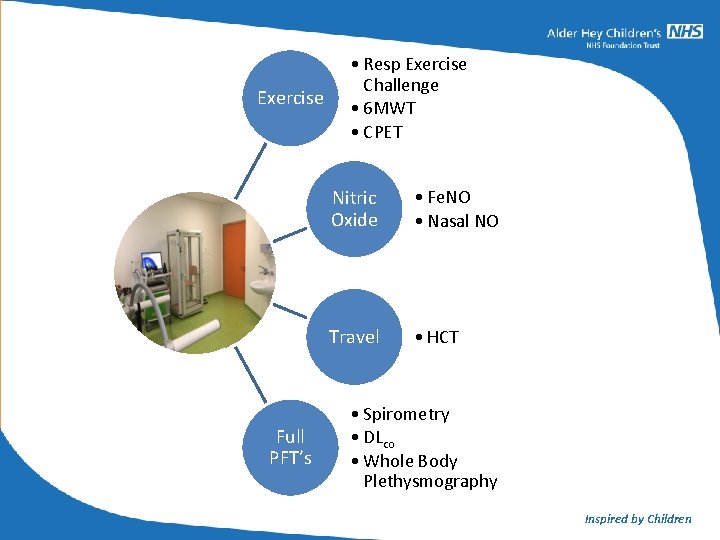
Exercise Full PFT’s • Resp Exercise Challenge • 6 MWT • CPET Nitric Oxide • Fe. NO • Nasal NO Travel • HCT • Spirometry • DLco • Whole Body Plethysmography Inspired by Children
Exercise Full PFT’s • Resp Exercise Challenge • 6 MWT • CPET Nitric Oxide • Fe. NO • Nasal NO Travel • HCT • Spirometry • DLco • Whole Body Plethysmography Inspired by Children
Whole Body Plethysmography Inspired by Children
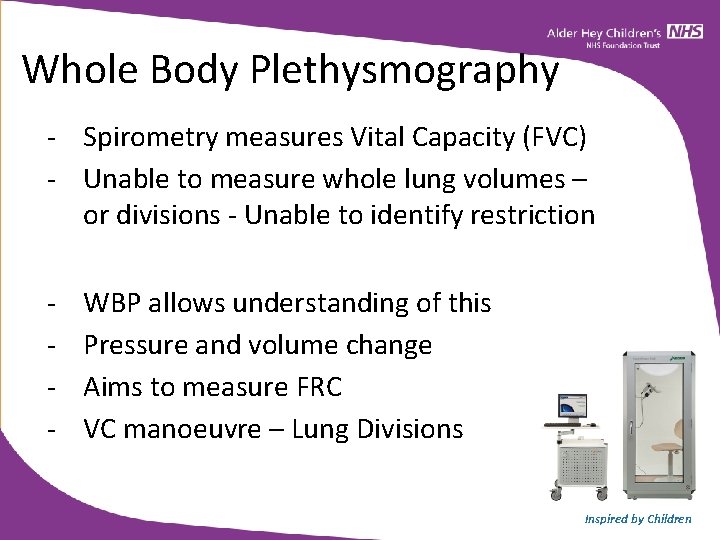
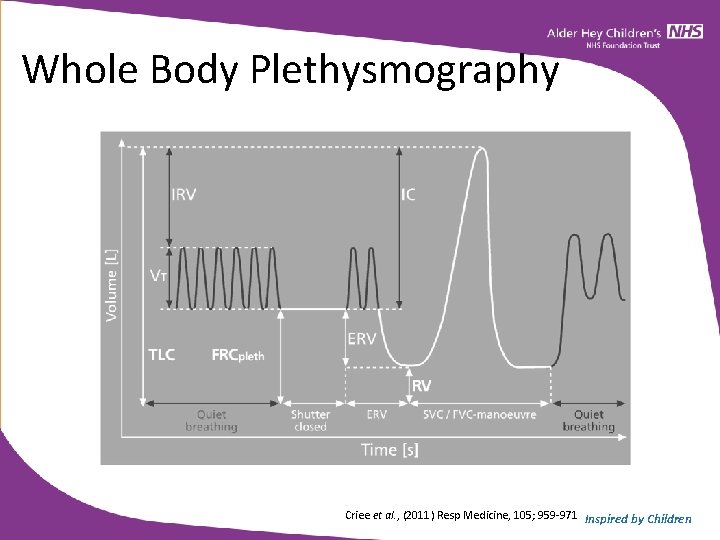
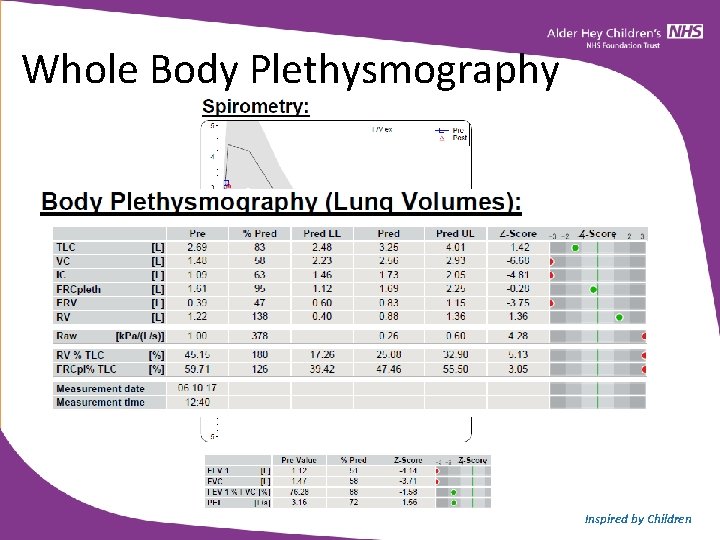
Whole Body Plethysmography - Spirometry measures Vital Capacity (FVC) - Unable to measure whole lung volumes – or divisions - Unable to identify restriction - WBP allows understanding of this Pressure and volume change Aims to measure FRC VC manoeuvre – Lung Divisions Inspired by Children
Whole Body Plethysmography Criee et al. , (2011) Resp Medicine, 105; 959 -971 Inspired by Children
Whole Body Plethysmography - Confirm the patient is Restricted (either Physical or Muscular Defect) - Confirm the patient has Gas Trapping – indication of airways closing off and trapping air - ? breathlessness - Confirm hyperinflation. If FRC is high (normal breathing) patients are breathing away from Respiratory Zone toward Conducting Zone. Inspired by Children
Whole Body Plethysmography Inspired by Children
Gas Transfer (DLco) Inspired by Children
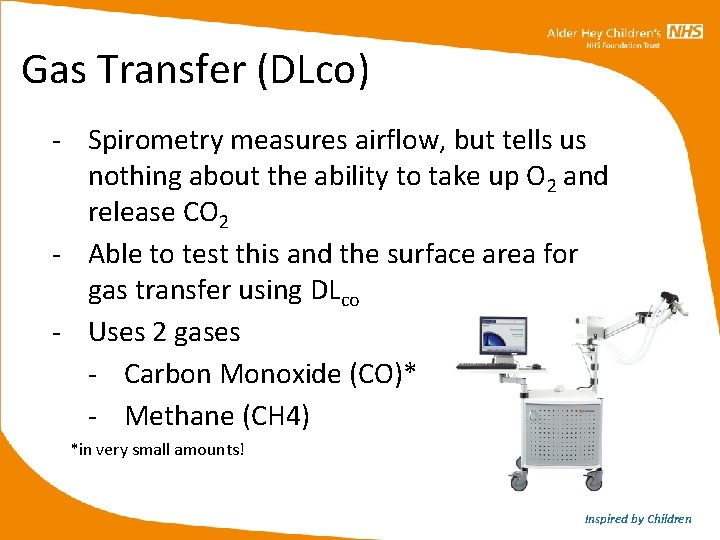
Gas Transfer (DLco) - Spirometry measures airflow, but tells us nothing about the ability to take up O 2 and release CO 2 - Able to test this and the surface area for gas transfer using DLco - Uses 2 gases - Carbon Monoxide (CO)* - Methane (CH 4) *in very small amounts! Inspired by Children
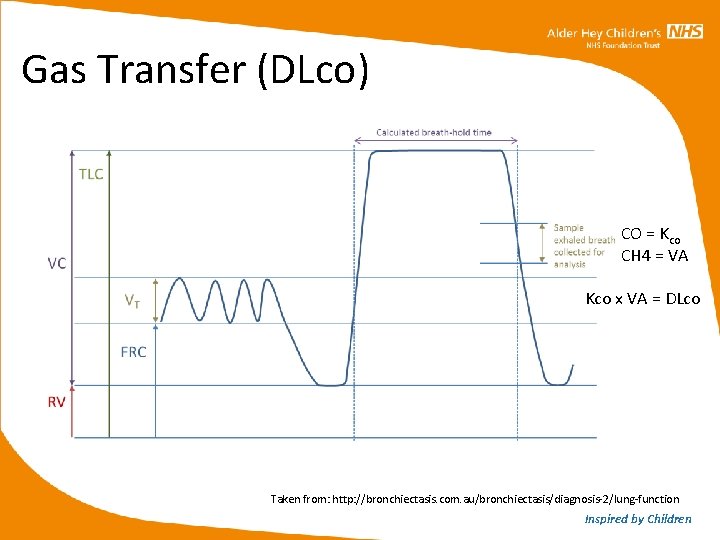
Gas Transfer (DLco) CO = Kco CH 4 = VA Kco x VA = DLco Taken from: http: //bronchiectasis. com. au/bronchiectasis/diagnosis-2/lung-function Inspired by Children
Gas Transfer (DLco) - High KCO, Low VA = Lack of lung expansion or loss of units - Normal KCO, Low VA = Compensation for low alveolar volume (mild alveolar damage) - Low KCO, Low VA = Moderate to severe alveolar damage Inspired by Children
Fractional Exhaled Nitric Oxide (Fe. NO) Inspired by Children
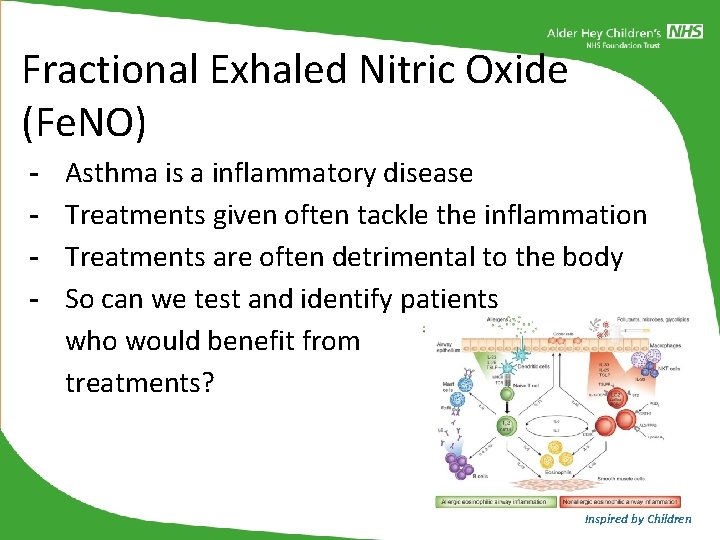
Fractional Exhaled Nitric Oxide (Fe. NO) - Asthma is a inflammatory disease Treatments given often tackle the inflammation Treatments are often detrimental to the body So can we test and identify patients who would benefit from treatments? Inspired by Children
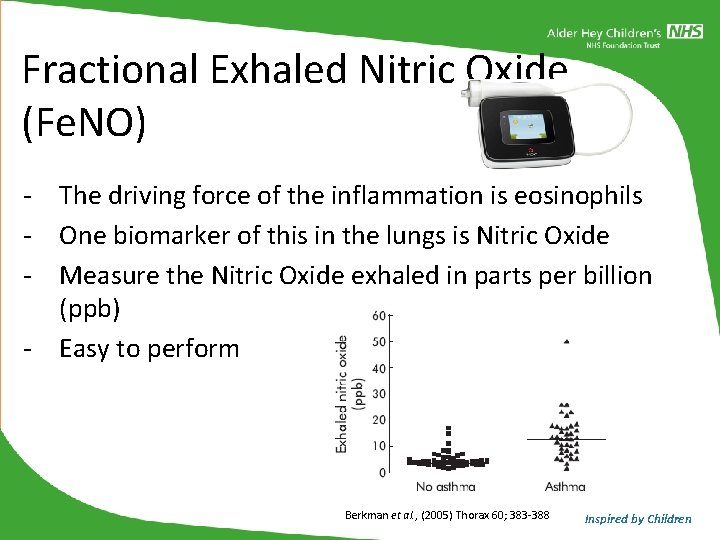
Fractional Exhaled Nitric Oxide (Fe. NO) - The driving force of the inflammation is eosinophils - One biomarker of this in the lungs is Nitric Oxide - Measure the Nitric Oxide exhaled in parts per billion (ppb) - Easy to perform Berkman et al. , (2005) Thorax 60; 383 -388 Inspired by Children
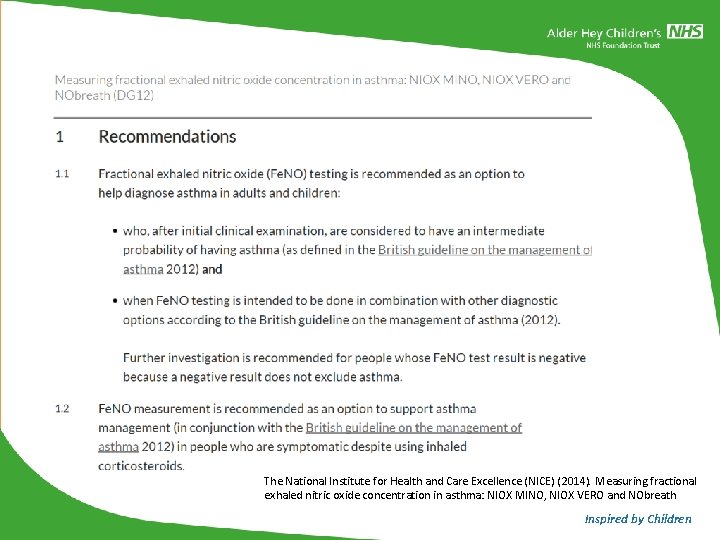
The National Institute for Health and Care Excellence (NICE) (2014). Measuring fractional exhaled nitric oxide concentration in asthma: NIOX MINO, NIOX VERO and NObreath Inspired by Children
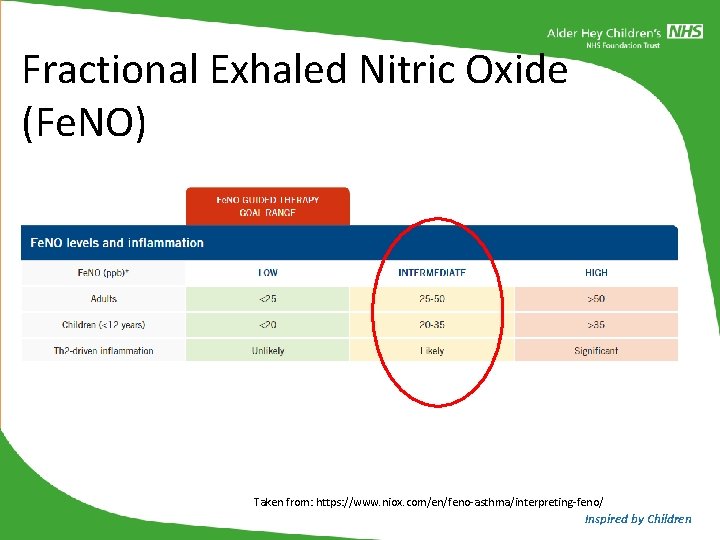
Fractional Exhaled Nitric Oxide (Fe. NO) Taken from: https: //www. niox. com/en/feno-asthma/interpreting-feno/ Inspired by Children
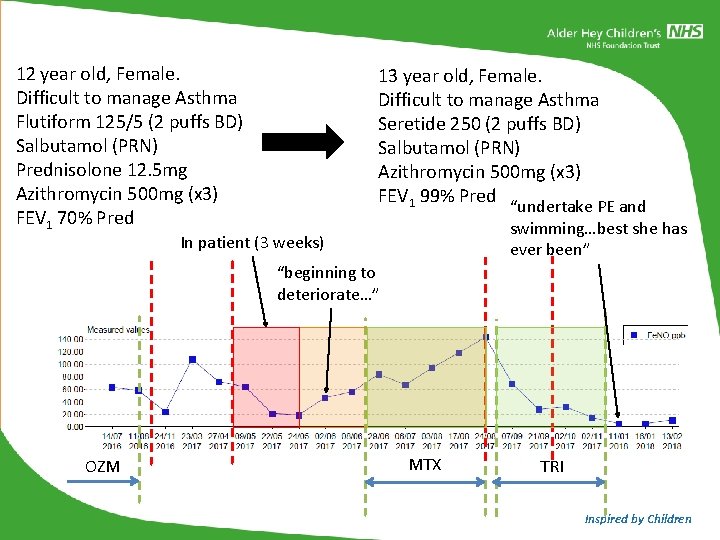
12 year old, Female. Difficult to manage Asthma Flutiform 125/5 (2 puffs BD) Salbutamol (PRN) Prednisolone 12. 5 mg Azithromycin 500 mg (x 3) FEV 1 70% Pred 13 year old, Female. Difficult to manage Asthma Seretide 250 (2 puffs BD) Salbutamol (PRN) Azithromycin 500 mg (x 3) FEV 1 99% Pred “undertake PE and swimming…best she has ever been” In patient (3 weeks) “beginning to deteriorate…” OZM MTX TRI Inspired by Children
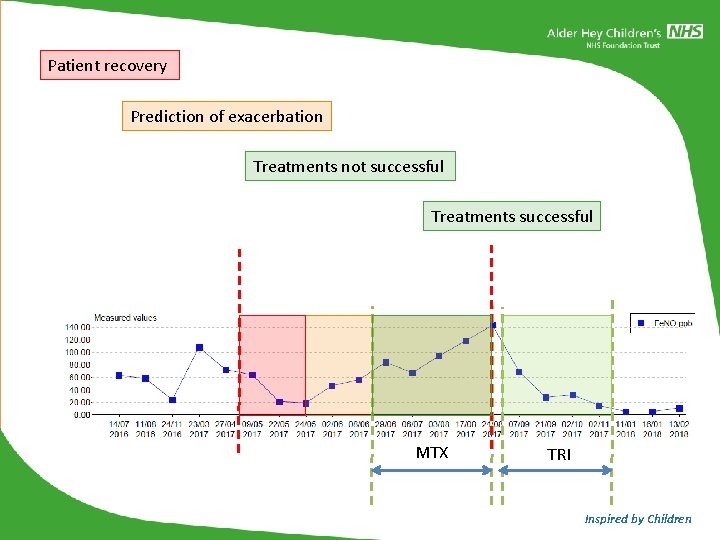
Patient recovery Prediction of exacerbation Treatments not successful Treatments successful MTX TRI Inspired by Children
Respiratory Exercise Challenge Inspired by Children
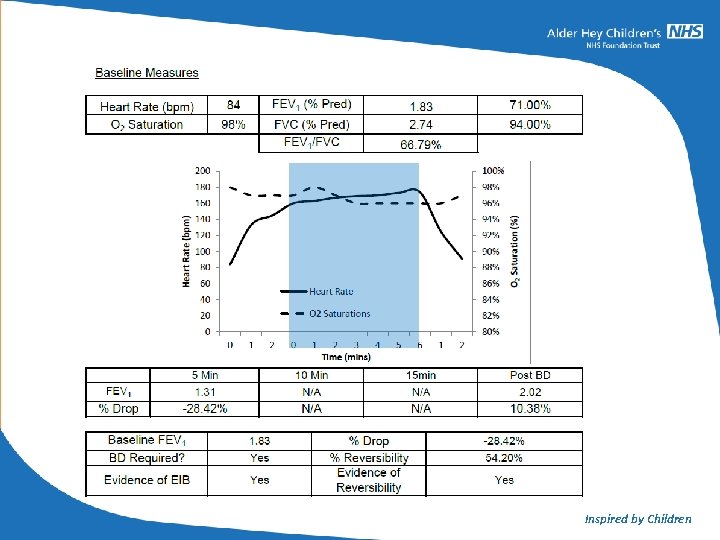
Respiratory Exercise Challenge - Asthma is often a reversible condition - When a patient presents to clinic can we test the severity of their asthma by bronchostriction? - Many methods - Direct (Methacholine, Histamine) - Indirect (Dry air, Exercise) Inspired by Children
Respiratory Exercise Challenge Can be used to answer other questions: - SOB due to fitness or bronchostriction? (Off treatment) - Asthma control - does their medication work? (On treatment) Inspired by Children
Respiratory Exercise Challenge - Baseline spirometry Exercise on treadmill Warm up - 6 mins exercise at 80% HR max Spirometry 5, 10 and 15 min post exercise >10% drop in FEV 1 significant drop Salbutamol given - spirometry 20 mins to test reversibility - Easy to perform, however not direct. Inspired by Children
Inspired by Children
Exercise Full PFT’s • Resp Exercise Challenge • 6 MWT • CPET Nitric Oxide • Fe. NO • Nasal NO Travel • HCT • Spirometry • DLco • Whole Body Plethysmography Inspired by Children
Thank you – Any Questions? philip. lawrence@alderhey. nhs. uk Inspired by Children