
Respiratory Monitoring Basic Mechanism of PPV Gas Exchange
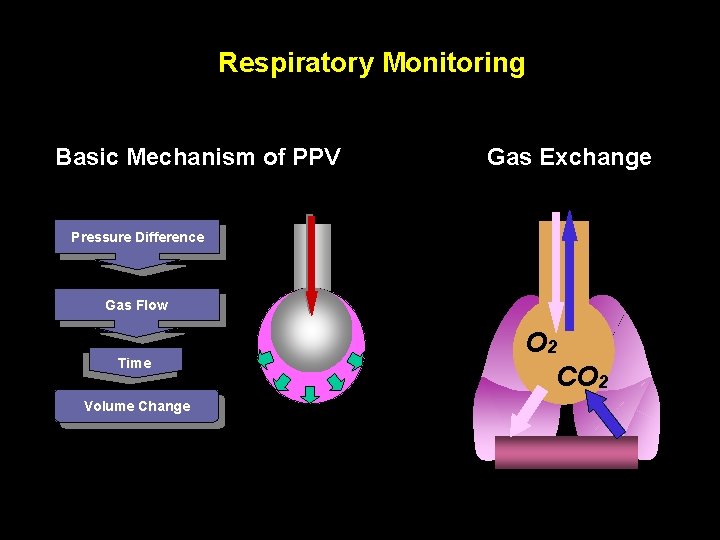
Respiratory Monitoring Basic Mechanism of PPV Gas Exchange Pressure Difference Gas Flow Time Volume Change O 2 CO 2
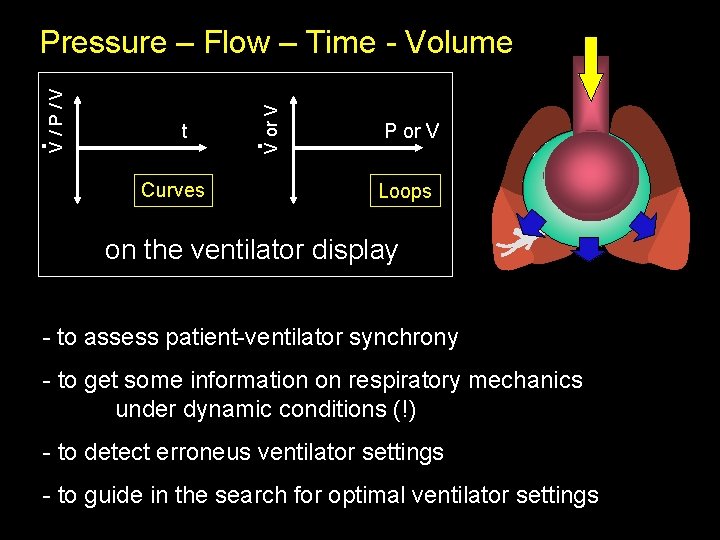
t Curves . V or V . V / P / V Pressure – Flow – Time - Volume P or V Loops on the ventilator display - to assess patient-ventilator synchrony - to get some information on respiratory mechanics under dynamic conditions (!) - to detect erroneus ventilator settings - to guide in the search for optimal ventilator settings
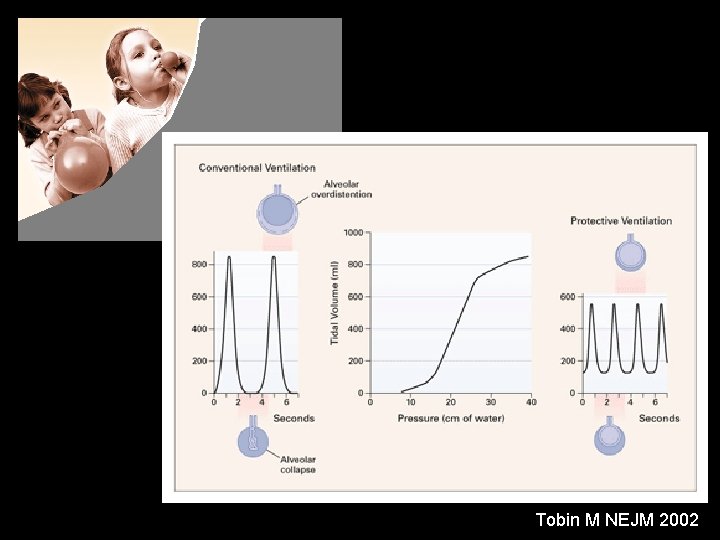
Tobin M NEJM 2002
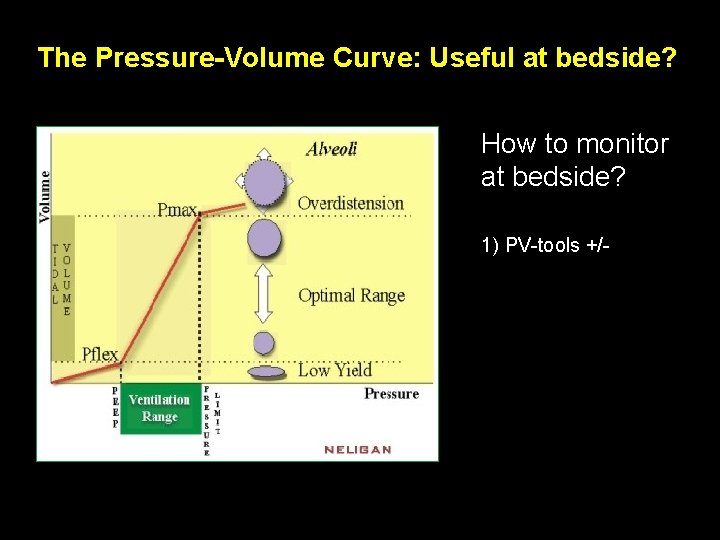
The Pressure-Volume Curve: Useful at bedside? How to monitor at bedside? 1) PV-tools +/-
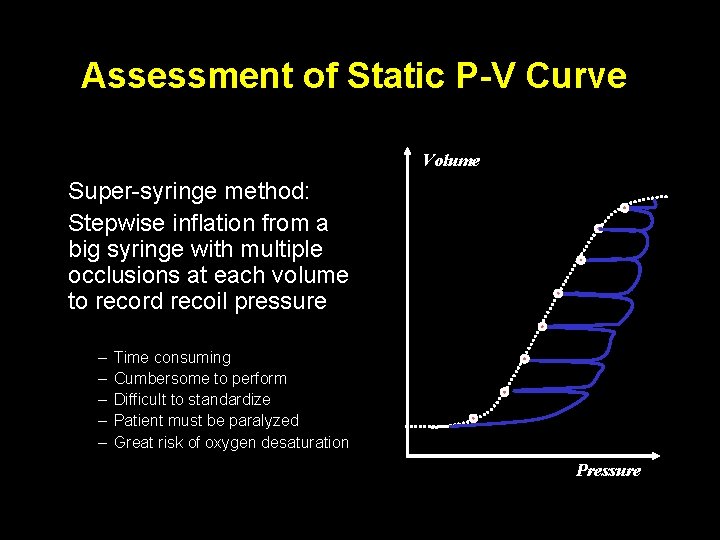
Assessment of Static P-V Curve Volume Super-syringe method: Stepwise inflation from a big syringe with multiple occlusions at each volume to record recoil pressure – – – Time consuming Cumbersome to perform Difficult to standardize Patient must be paralyzed Great risk of oxygen desaturation Pressure
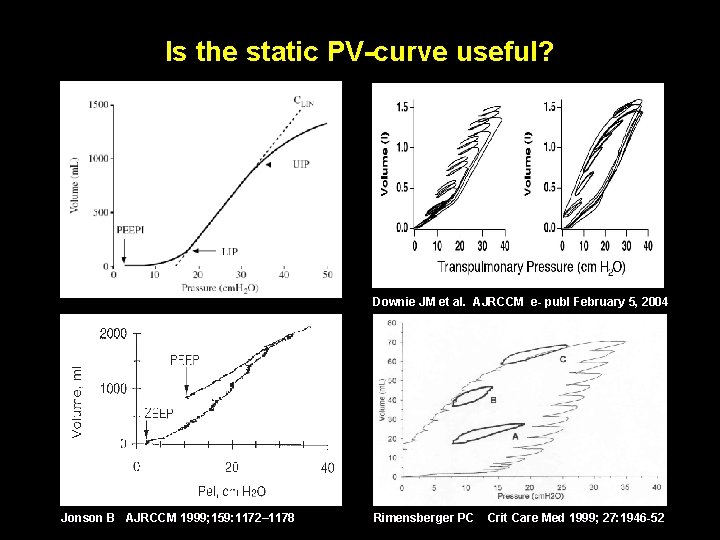
Is the static PV-curve useful? Downie JM et al. AJRCCM e- publ February 5, 2004 Jonson B AJRCCM 1999; 159: 1172– 1178 Rimensberger PC Crit Care Med 1999; 27: 1946 -52
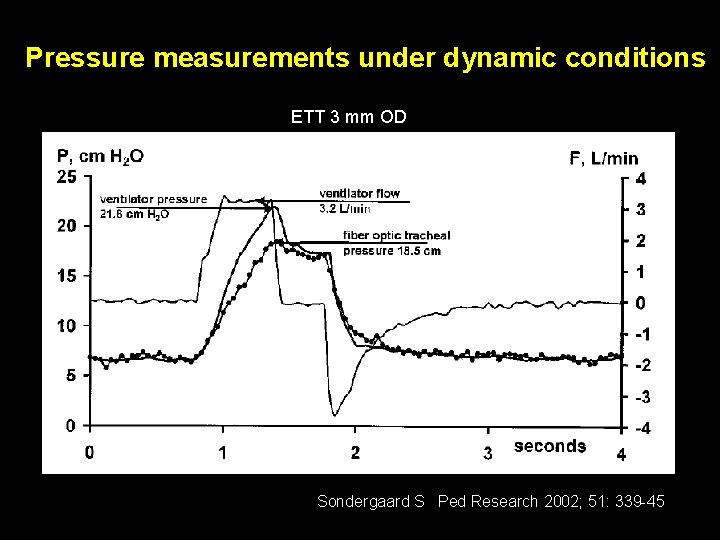
Pressure measurements under dynamic conditions ETT 3 mm OD Sondergaard S Ped Research 2002; 51: 339 -45
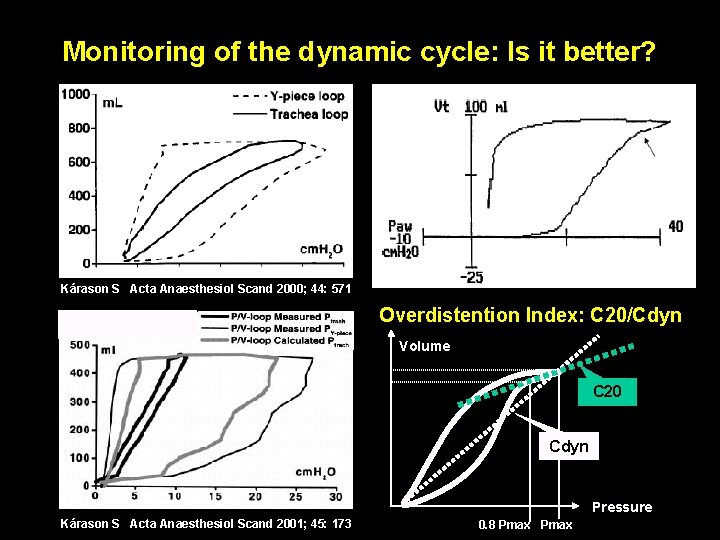
Monitoring of the dynamic cycle: Is it better? Kárason S Acta Anaesthesiol Scand 2000; 44: 571 Overdistention Index: C 20/Cdyn Volume C 20 Cdyn Pressure Kárason S Acta Anaesthesiol Scand 2001; 45: 173 0. 8 Pmax
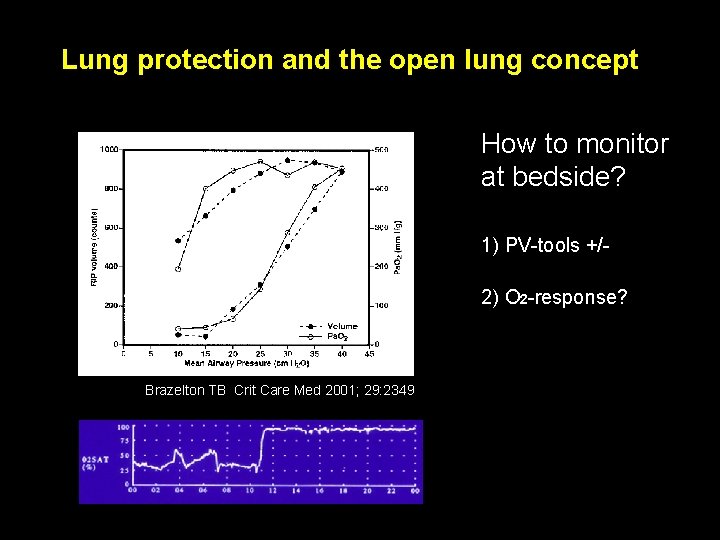
Lung protection and the open lung concept How to monitor at bedside? 1) PV-tools +/2) O 2 -response? Brazelton TB Crit Care Med 2001; 29: 2349
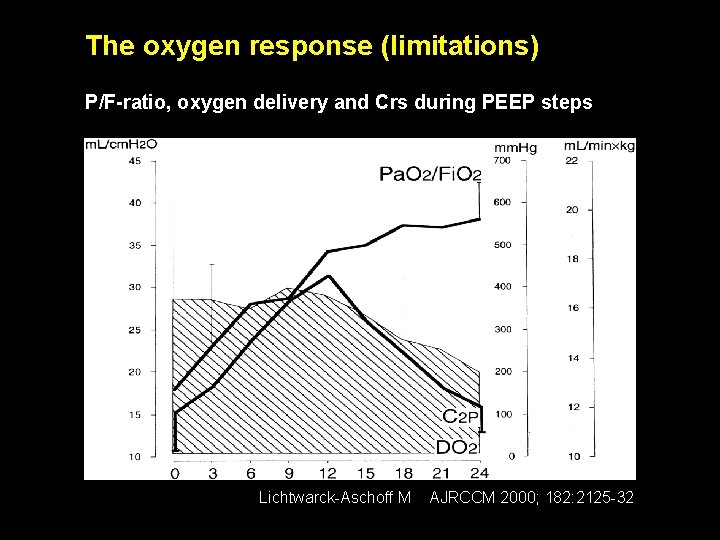
The oxygen response (limitations) P/F-ratio, oxygen delivery and Crs during PEEP steps Lichtwarck-Aschoff M AJRCCM 2000; 182: 2125 -32
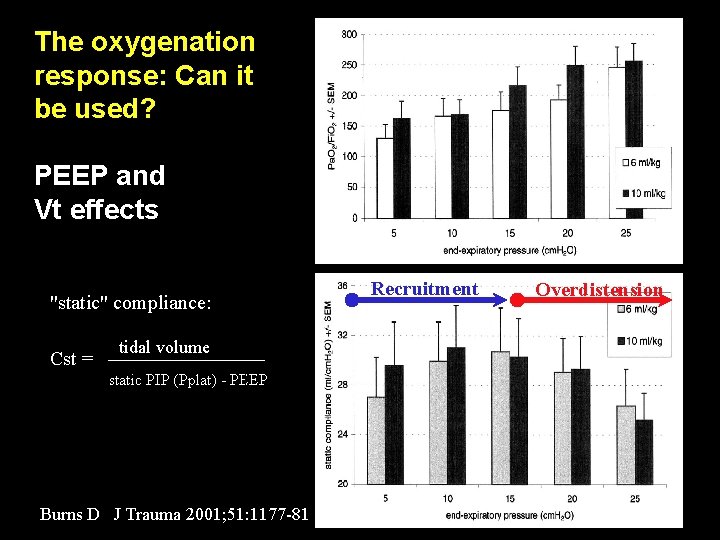
The oxygenation response: Can it be used? PEEP and Vt effects in ALI "static" compliance: Cst = tidal volume static PIP (Pplat) - PEEP Burns D J Trauma 2001; 51: 1177 -81 Recruitment Overdistension
![Constant VT : Plateau - PEEP [ ] PEEP Plateau Airway pressure [cm. H](http://slidetodoc.com/presentation_image_h/b828c3353d50f703ddc5d39298689f27/image-12.jpg "Constant VT : Plateau - PEEP [ ] PEEP Plateau Airway pressure [cm. H")
Constant VT : Plateau - PEEP [ ] PEEP Plateau Airway pressure [cm. H 2 O] 50 Prevalent overdistention Balance Prevalent recruitment 40 25 30 15 20 15 10 15 20 0 0 5 10 15 20 PEEP [cm H 2 O] L. Gattinoni, 2003
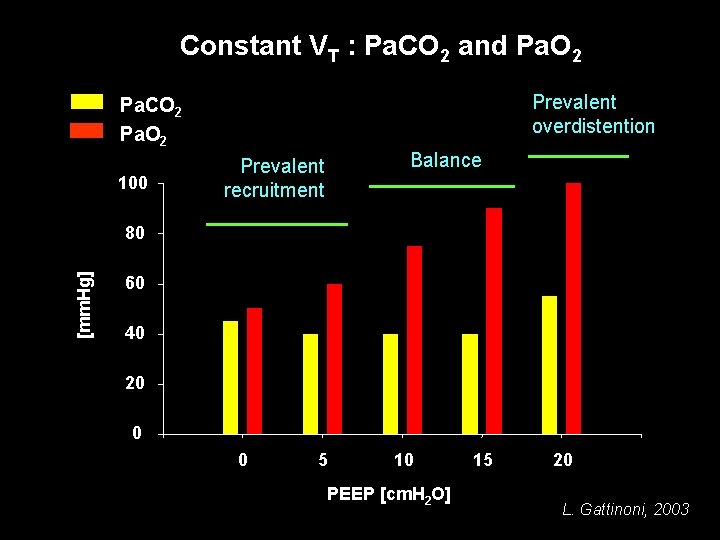
Constant VT : Pa. CO 2 and Pa. O 2 Prevalent overdistention Pa. CO 2 Pa. O 2 100 Balance Prevalent recruitment [mm. Hg] 80 60 40 20 0 0 5 10 PEEP [cm. H 2 O] 15 20 L. Gattinoni, 2003
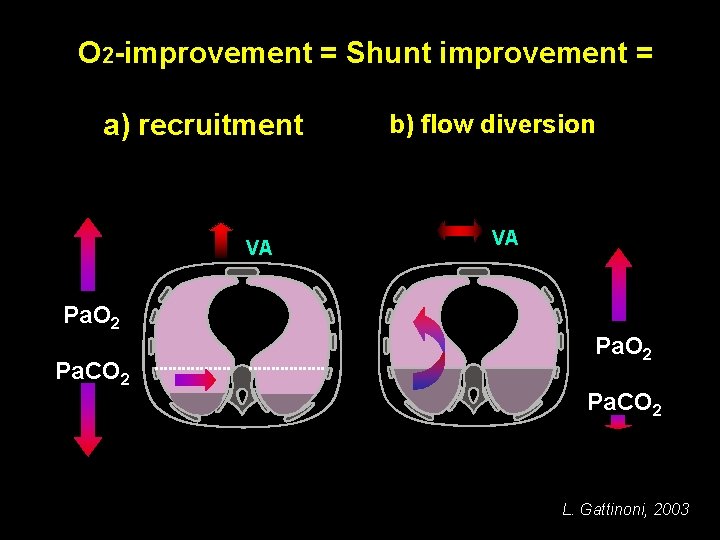
O 2 -improvement = Shunt improvement = a) recruitment VA Pa. O 2 Pa. CO 2 b) flow diversion VA Pa. O 2 Pa. CO 2 L. Gattinoni, 2003
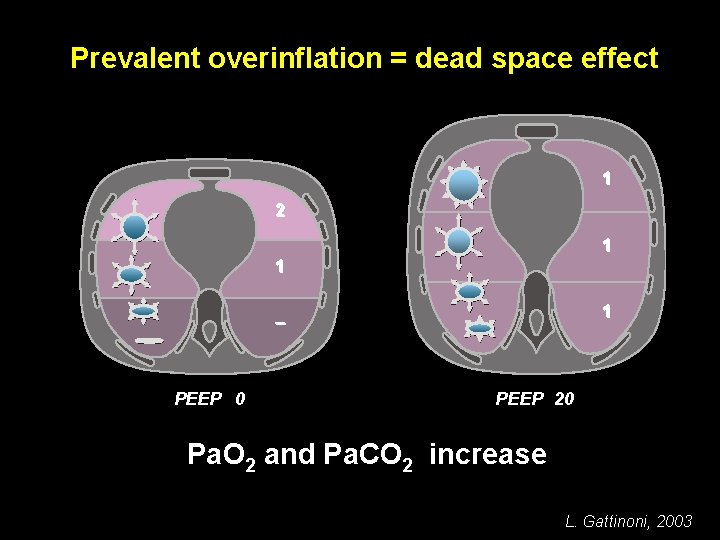
Prevalent overinflation = dead space effect 1 2 1 1 1 – PEEP 0 PEEP 20 Pa. O 2 and Pa. CO 2 increase L. Gattinoni, 2003
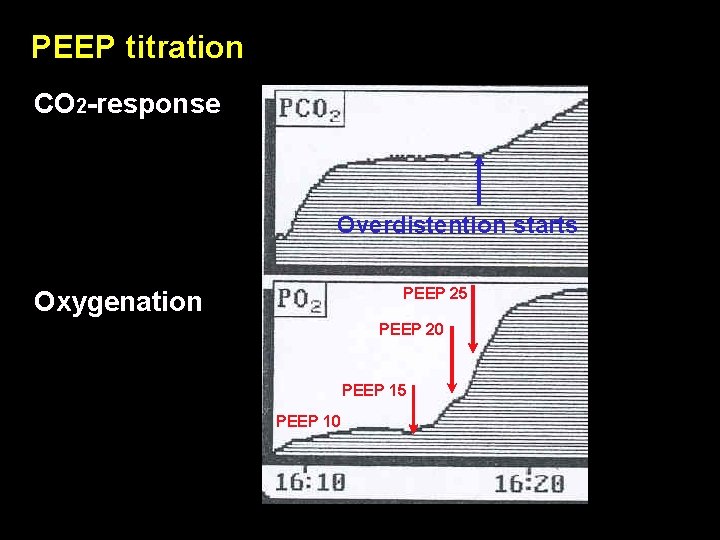
PEEP titration CO 2 -response Overdistention starts PEEP 25 Oxygenation PEEP 20 PEEP 15 PEEP 10
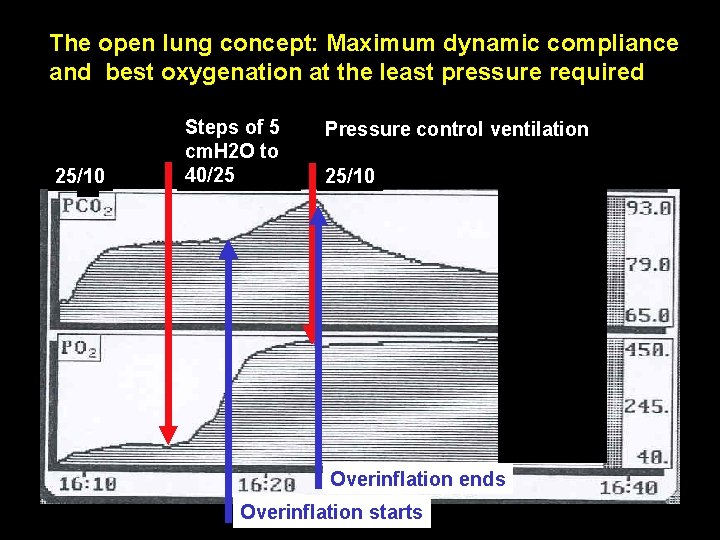
The open lung concept: Maximum dynamic compliance and best oxygenation at the least pressure required 25/10 Steps of 5 cm. H 2 O to 40/25 Pressure control ventilation 25/10 Overinflation ends Overinflation starts
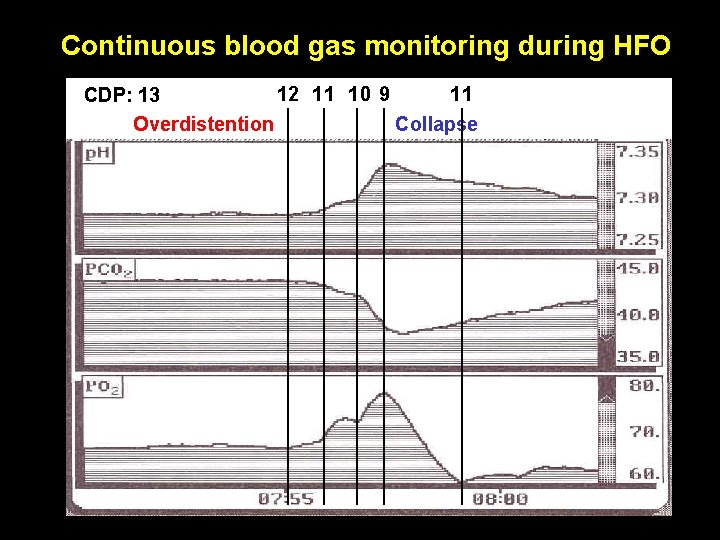
Continuous blood gas monitoring during HFO 12 11 10 9 11 CDP: 13 Overdistention Collapse
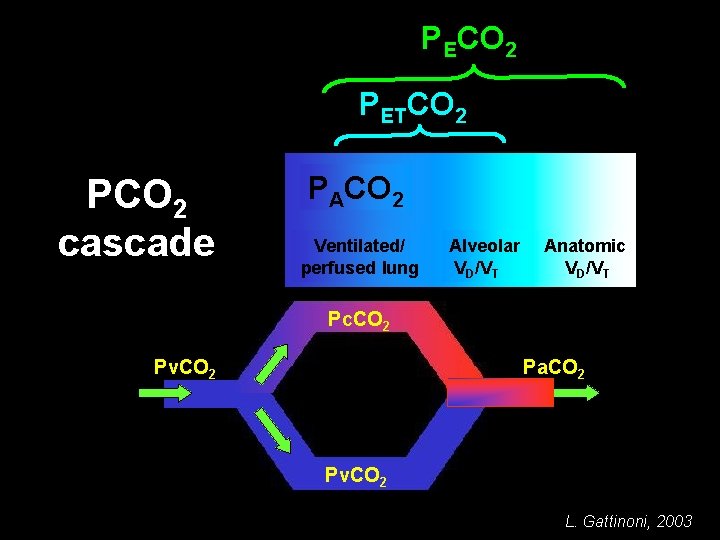
PECO 2 PETCO 2 PCO 2 cascade PACO 2 Ventilated/ perfused lung Pc. CO 2 Pv. CO 2 Alveolar VD/VT Anatomic VD/VT VCO 2 Pa. CO 2 Pv. CO 2 L. Gattinoni, 2003
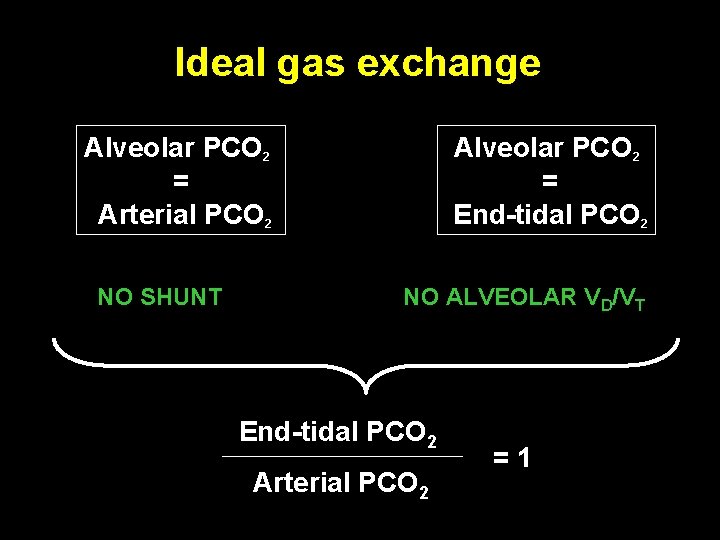
Ideal gas exchange Alveolar PCO 2 = Arterial PCO 2 NO SHUNT Alveolar PCO 2 = End-tidal PCO 2 NO ALVEOLAR VD/VT End-tidal PCO 2 Arterial PCO 2 = 1
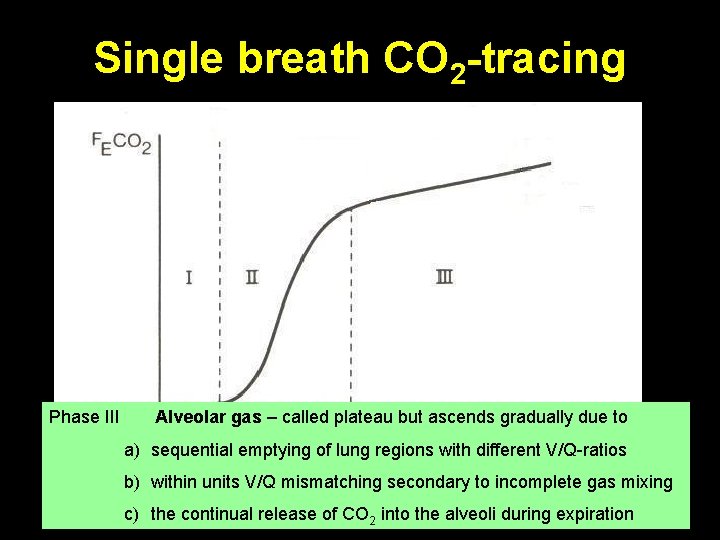
Single breath CO 2 -tracing Phase III II Alveolar gas Phase Rapid S-shape upswing I –CO called plateau = gas = but from washout ascends airways of convective gradually due airway to 2 -free with alveolar gas a) sequential emptying of lung regions with different V/Q-ratios b) within units V/Q mismatching secondary to incomplete gas mixing Modified from “The Single breath test for carbon dioxide” by Roger Fletcher (1986) c) the continual release of CO 2 into the alveoli during expiration
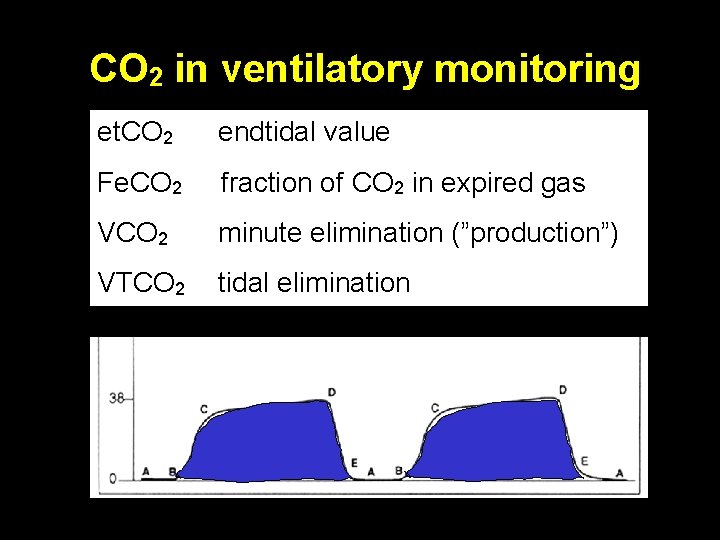
CO 2 in ventilatory monitoring et. CO 2 endtidal value Fe. CO 2 fraction of CO 2 in expired gas VCO 2 minute elimination (”production”) VTCO 2 tidal elimination
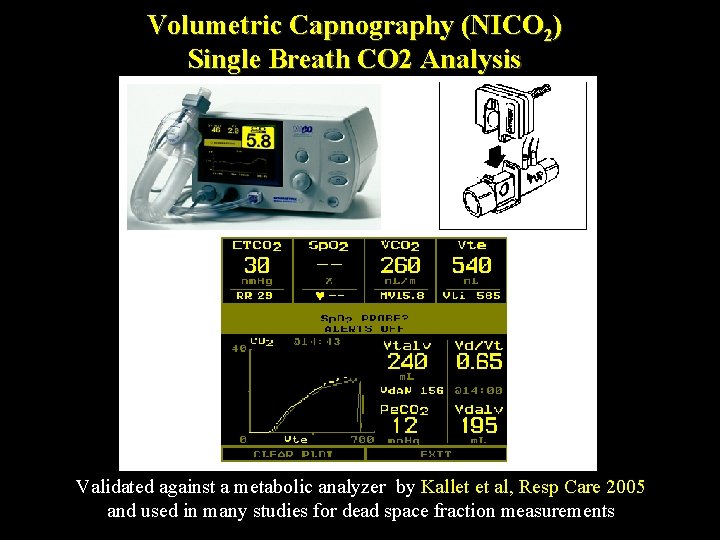
Volumetric Capnography (NICO 2) Single Breath CO 2 Analysis Validated against a metabolic analyzer by Kallet et al, Resp Care 2005 and used in many studies for dead space fraction measurements
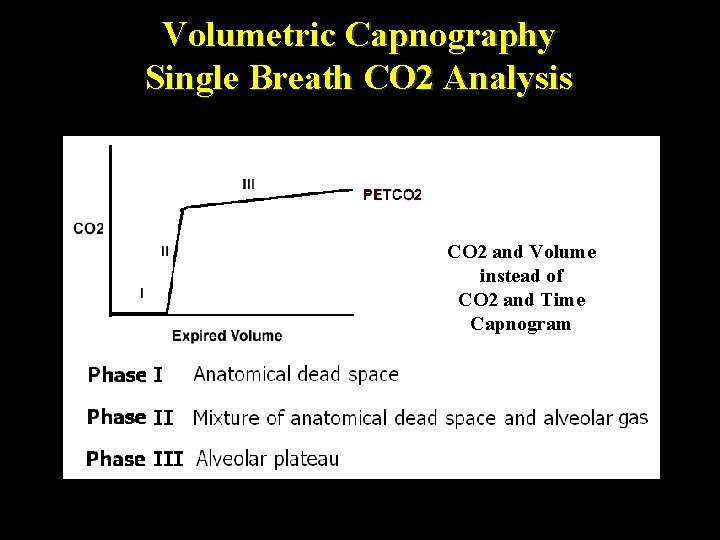
Volumetric Capnography Single Breath CO 2 Analysis CO 2 and Volume instead of CO 2 and Time Capnogram
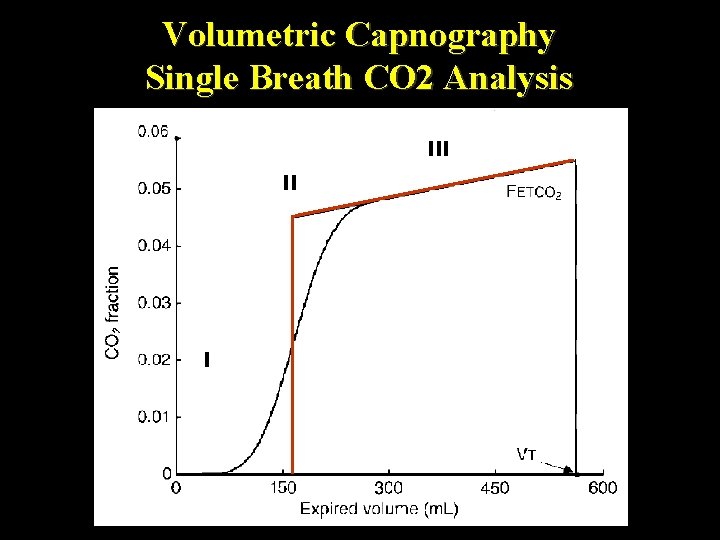
Volumetric Capnography Single Breath CO 2 Analysis III II I
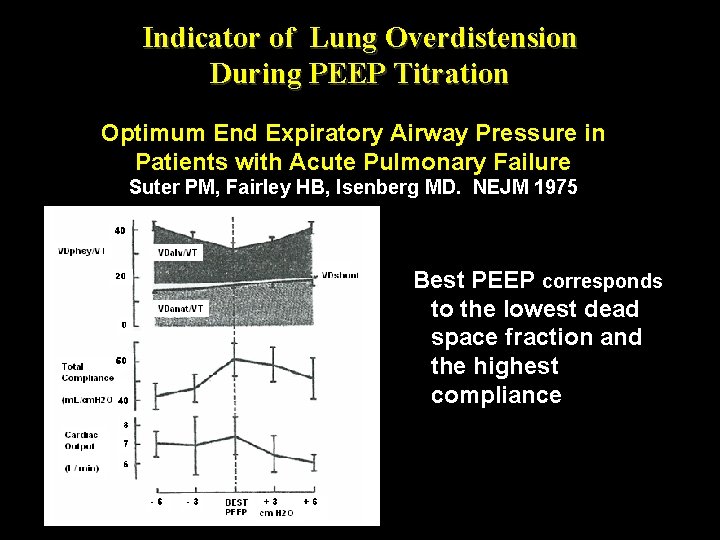
Indicator of Lung Overdistension During PEEP Titration Optimum End Expiratory Airway Pressure in Patients with Acute Pulmonary Failure Suter PM, Fairley HB, Isenberg MD. NEJM 1975 Best PEEP corresponds to the lowest dead space fraction and the highest compliance
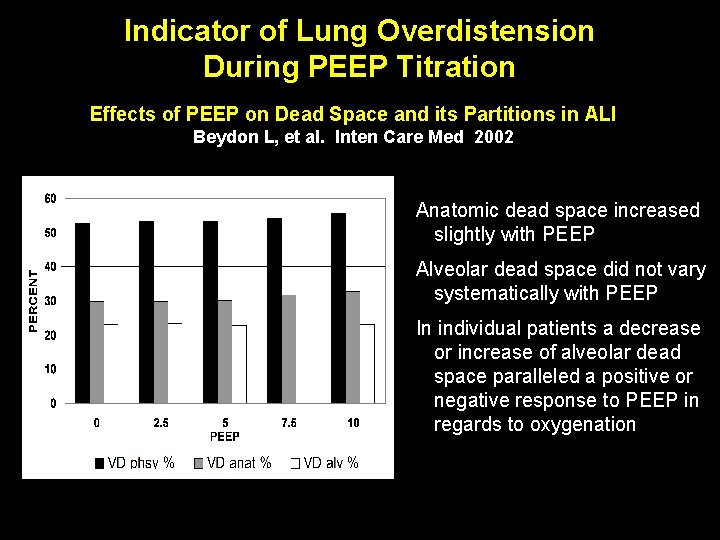
Indicator of Lung Overdistension During PEEP Titration Effects of PEEP on Dead Space and its Partitions in ALI Beydon L, et al. Inten Care Med 2002 Anatomic dead space increased slightly with PEEP Alveolar dead space did not vary systematically with PEEP In individual patients a decrease or increase of alveolar dead space paralleled a positive or negative response to PEEP in regards to oxygenation
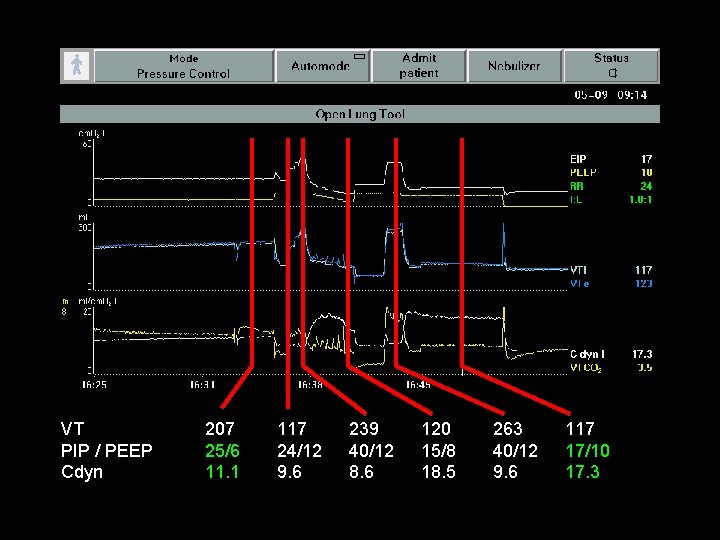
VT PIP / PEEP Cdyn 207 25/6 11. 1 117 24/12 9. 6 239 40/12 8. 6 120 15/8 18. 5 263 40/12 9. 6 117 17/10 17. 3
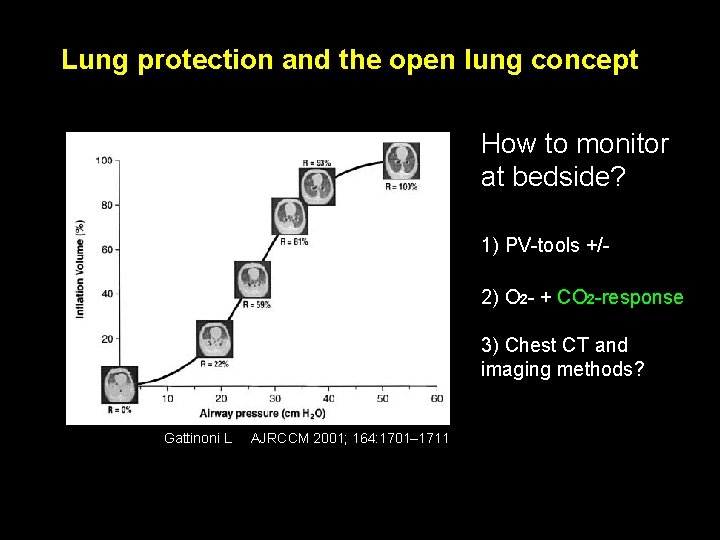
Lung protection and the open lung concept How to monitor at bedside? 1) PV-tools +/2) O 2 - + CO 2 -response 3) Chest CT and imaging methods? Gattinoni L AJRCCM 2001; 164: 1701– 1711
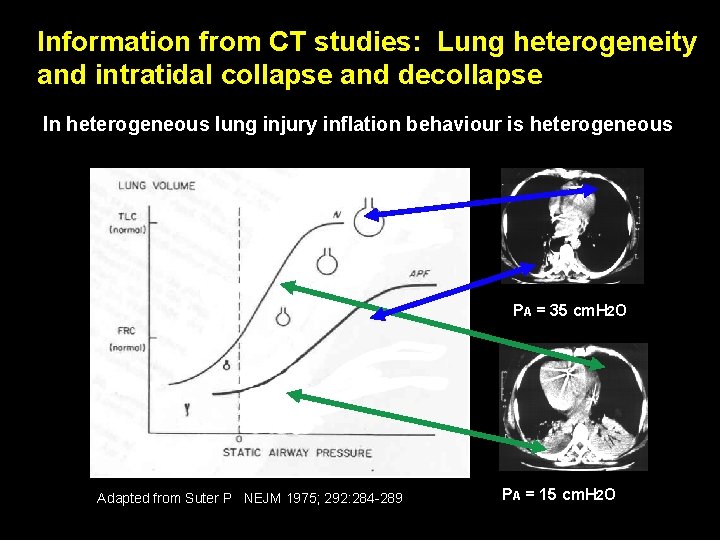
Information from CT studies: Lung heterogeneity and intratidal collapse and decollapse In heterogeneous lung injury inflation behaviour is heterogeneous PA = 35 cm. H 2 O Adapted from Suter P NEJM 1975; 292: 284 -289 PA = 15 cm. H 2 O
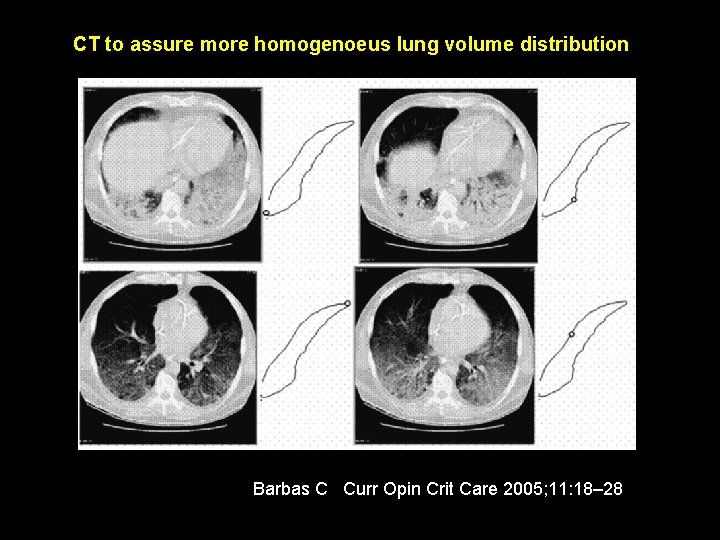
CT to assure more homogenoeus lung volume distribution Barbas C Curr Opin Crit Care 2005; 11: 18– 28 Barabs
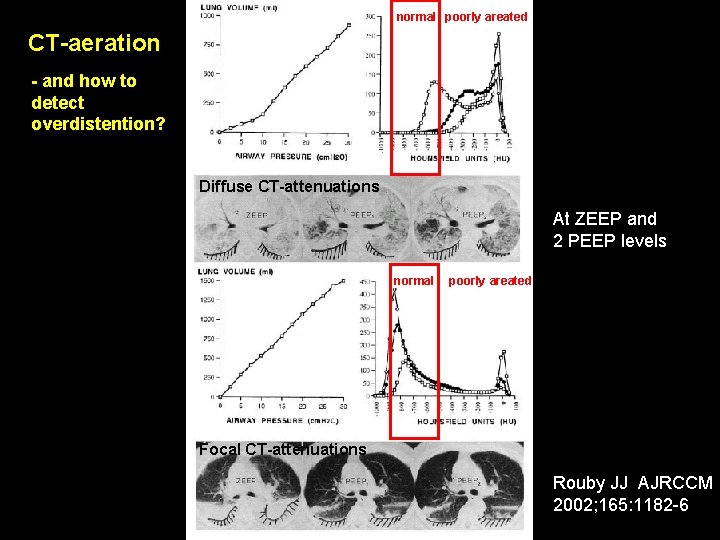
normal poorly areated CT-aeration - and how to detect overdistention? Diffuse CT-attenuations At ZEEP and 2 PEEP levels normal poorly areated Focal CT-attenuations Rouby JJ AJRCCM 2002; 165: 1182 -6
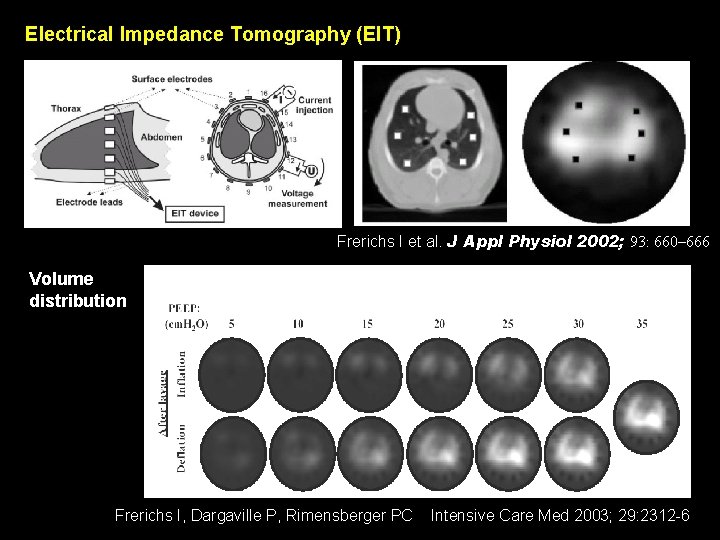
Electrical Impedance Tomography (EIT) Frerichs I et al. J Appl Physiol 2002; 93: 660– 666 Volume distribution Frerichs I, Dargaville P, Rimensberger PC Intensive Care Med 2003; 29: 2312 -6
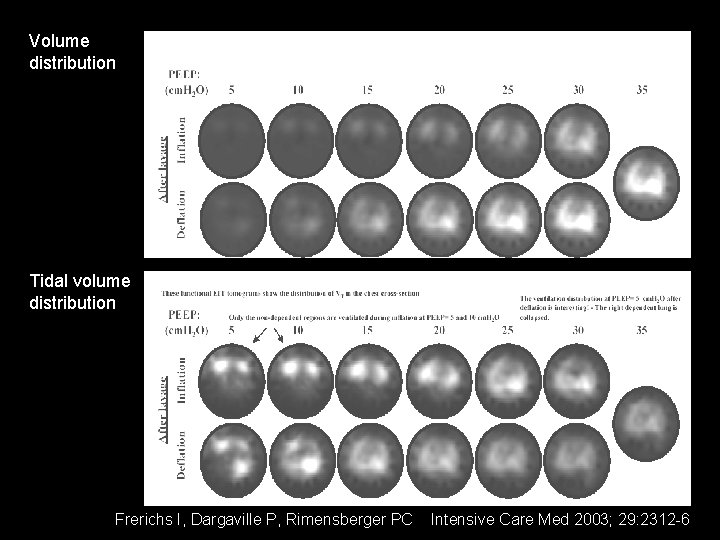
Volume distribution Tidal volume distribution Frerichs I, Dargaville P, Rimensberger PC Intensive Care Med 2003; 29: 2312 -6
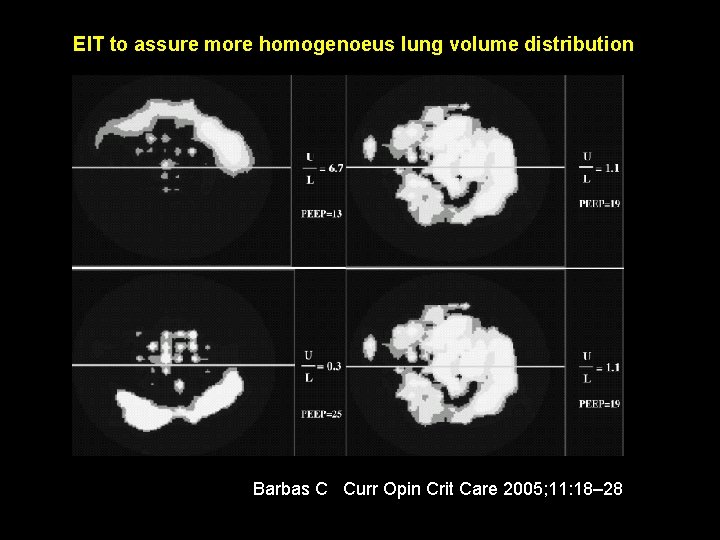
EIT to assure more homogenoeus lung volume distribution Barbas C Curr Opin Crit Care 2005; 11: 18– 28 Barabs
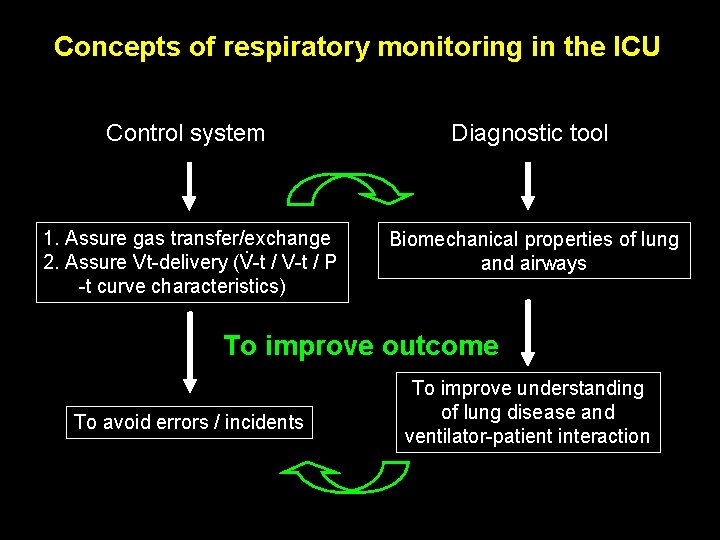
Concepts of respiratory monitoring in the ICU Control system Diagnostic tool 1. Assure gas transfer/exchange. 2. Assure Vt-delivery (V-t / P -t curve characteristics) Biomechanical properties of lung and airways To improve outcome To avoid errors / incidents To improve understanding of lung disease and ventilator-patient interaction
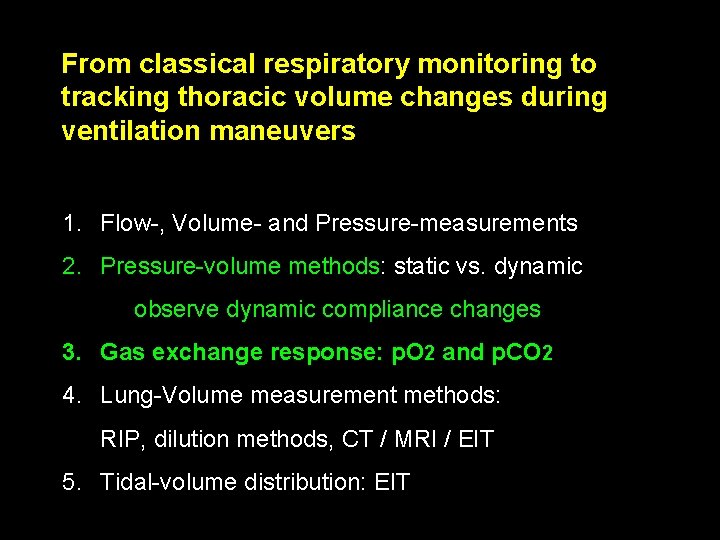
From classical respiratory monitoring to tracking thoracic volume changes during ventilation maneuvers 1. Flow-, Volume- and Pressure-measurements 2. Pressure-volume methods: static vs. dynamic observe dynamic compliance changes 3. Gas exchange response: p. O 2 and p. CO 2 4. Lung-Volume measurement methods: RIP, dilution methods, CT / MRI / EIT 5. Tidal-volume distribution: EIT
- Slides: 37