
Respiratory Disorders Chapter 4 Medical Considerations RESPIRATORY DISORDERS
- Slides: 49
Respiratory Disorders Chapter 4 Medical Considerations
RESPIRATORY DISORDERS n n n Tonsillitis Laryngitis Common cold Bronchitis Pneumonia n n n Pleurisy Emphysema Cystic fibrosis Asthma Lung cancer
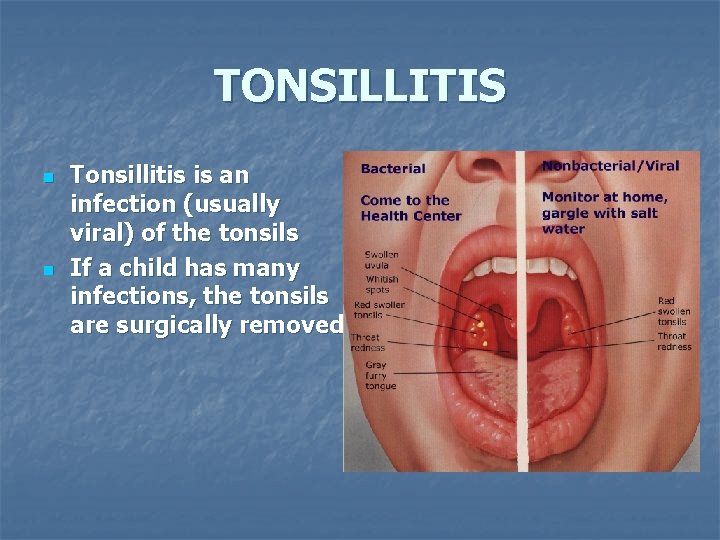
TONSILLITIS n n Tonsillitis is an infection (usually viral) of the tonsils If a child has many infections, the tonsils are surgically removed
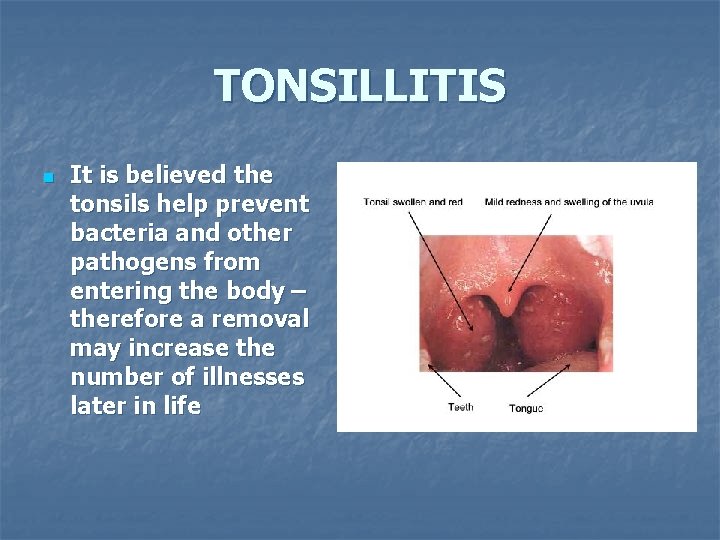
TONSILLITIS n It is believed the tonsils help prevent bacteria and other pathogens from entering the body – therefore a removal may increase the number of illnesses later in life
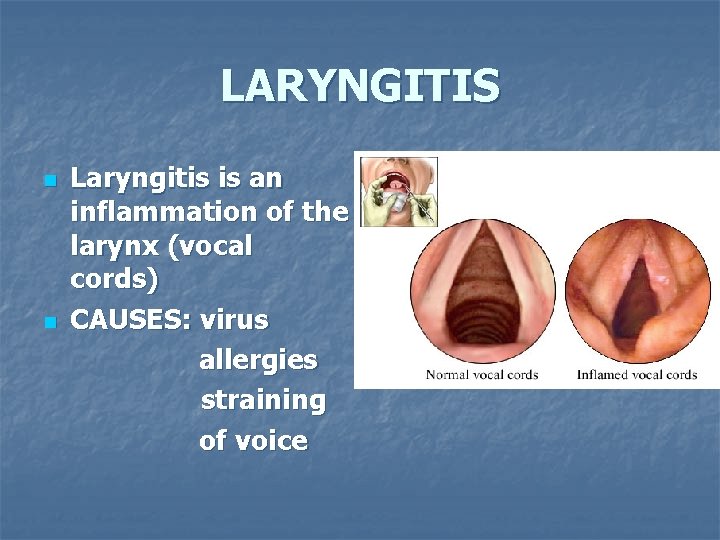
LARYNGITIS n n Laryngitis is an inflammation of the larynx (vocal cords) CAUSES: virus allergies straining of voice
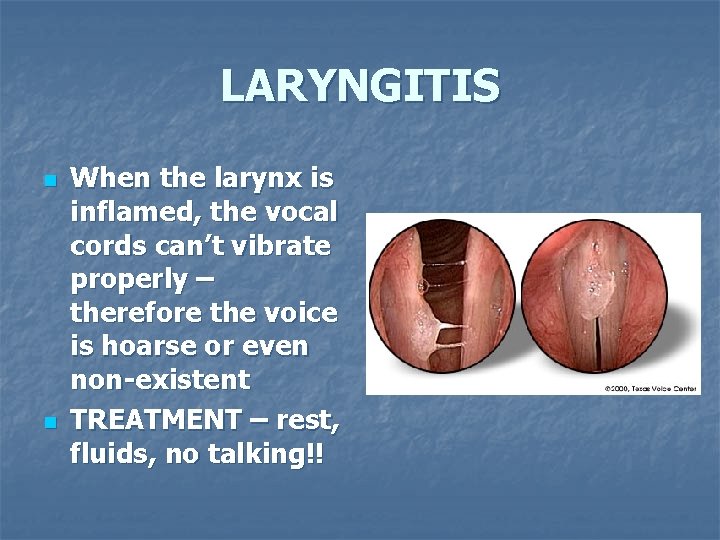
LARYNGITIS n n When the larynx is inflamed, the vocal cords can’t vibrate properly – therefore the voice is hoarse or even non-existent TREATMENT – rest, fluids, no talking!!
Upper Respiratory Tract Infections: Common Cold (Infectious Rhinitis) n n n Viral (rhinovirus) Spread through respiratory droplets Highly contagious Initially mucous membranes of nose, pharynx swollen, increased secretions Signs n n n Nasal congestion and watery discharge Mouth breathing Change in tone of voice Sore throat, headache, slight fever Cough
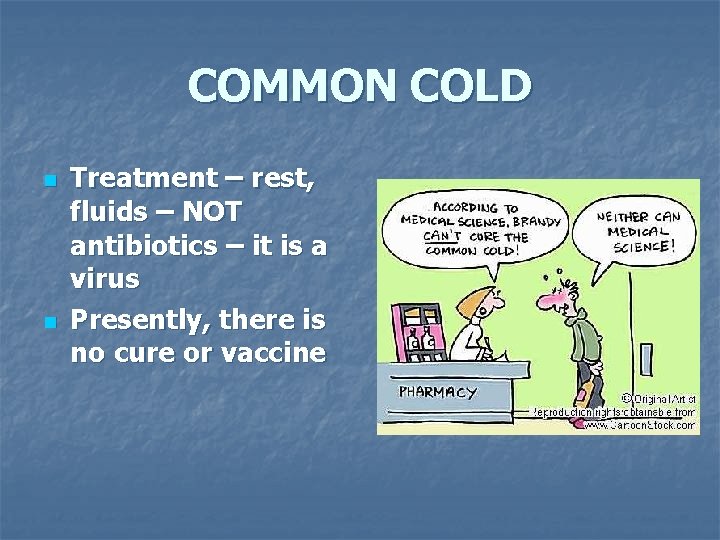
COMMON COLD n n Treatment – rest, fluids – NOT antibiotics – it is a virus Presently, there is no cure or vaccine
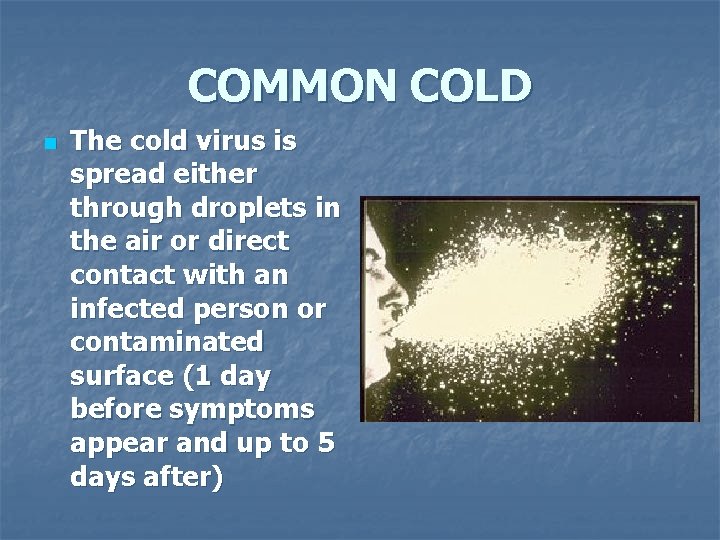
COMMON COLD n The cold virus is spread either through droplets in the air or direct contact with an infected person or contaminated surface (1 day before symptoms appear and up to 5 days after)
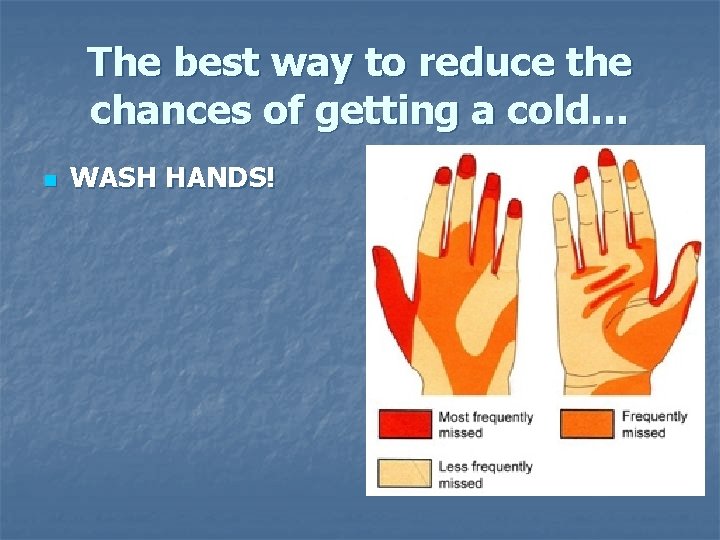
The best way to reduce the chances of getting a cold… n WASH HANDS!
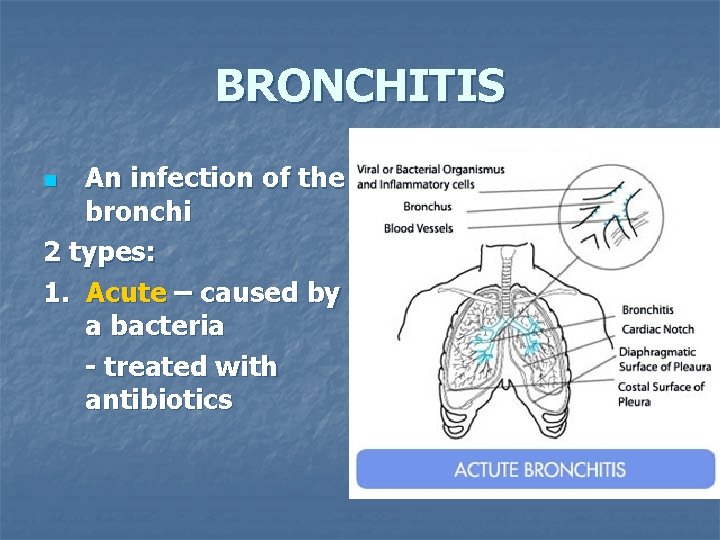
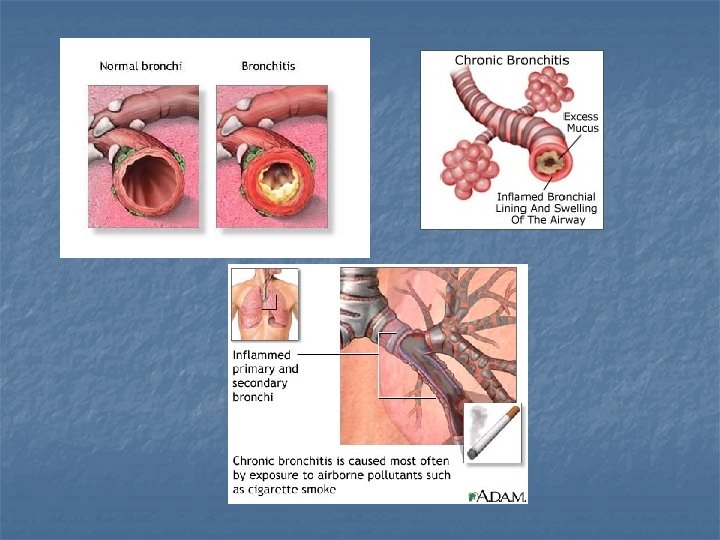
BRONCHITIS An infection of the bronchi 2 types: 1. Acute – caused by a bacteria - treated with antibiotics n
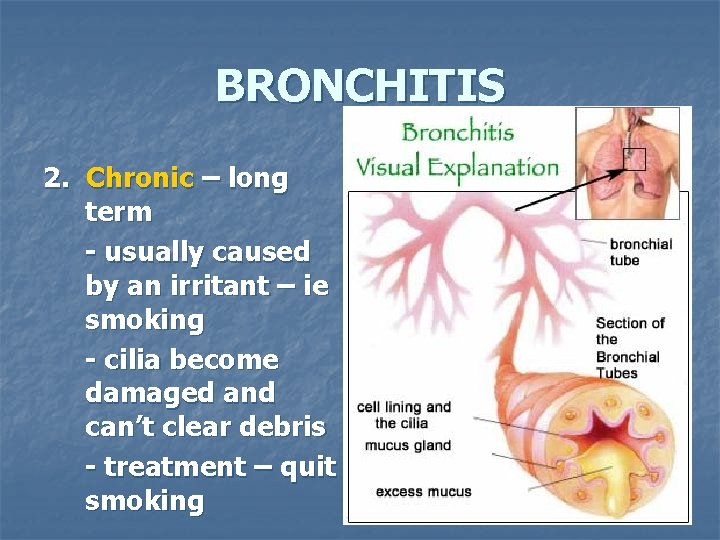
BRONCHITIS 2. Chronic – long term - usually caused by an irritant – ie smoking - cilia become damaged and can’t clear debris - treatment – quit smoking
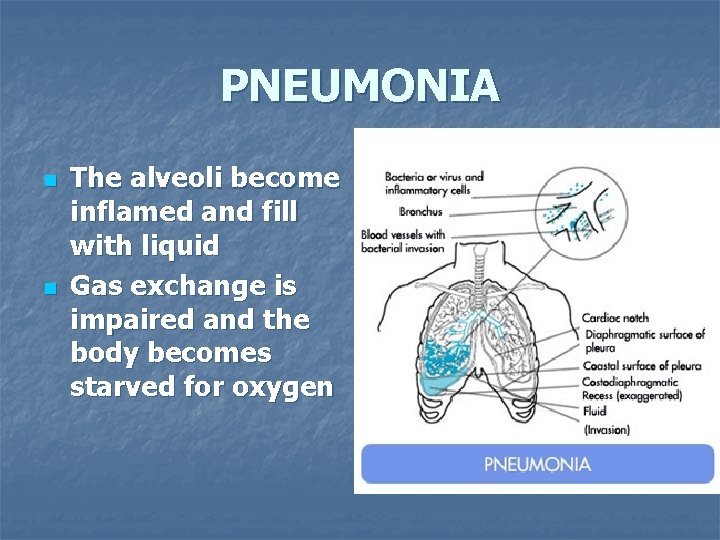
PNEUMONIA n n The alveoli become inflamed and fill with liquid Gas exchange is impaired and the body becomes starved for oxygen
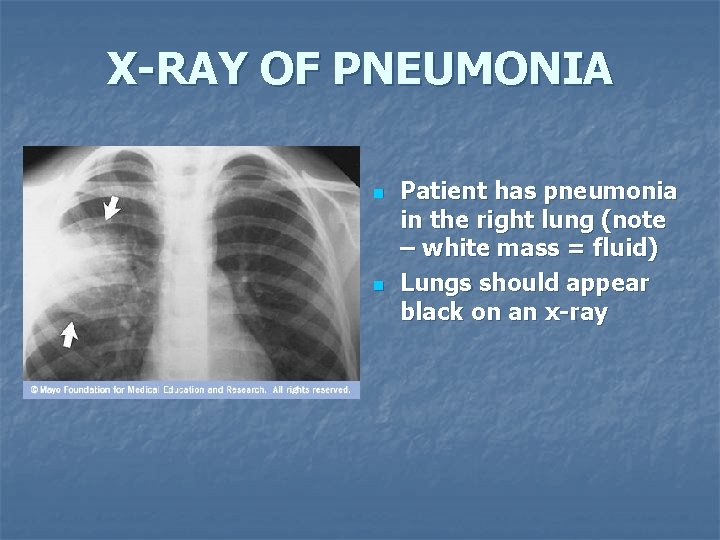
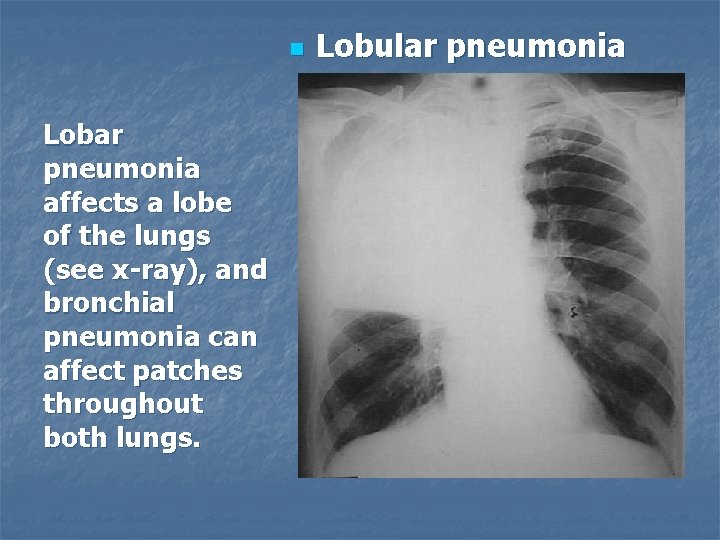
X-RAY OF PNEUMONIA n n Patient has pneumonia in the right lung (note – white mass = fluid) Lungs should appear black on an x-ray
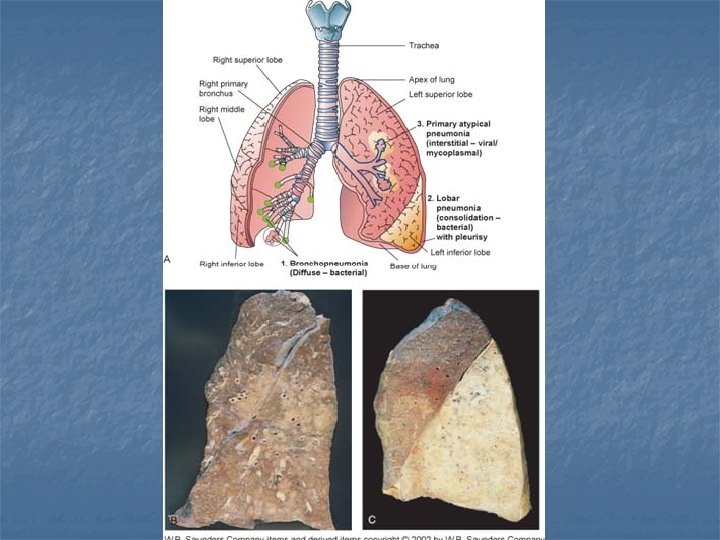
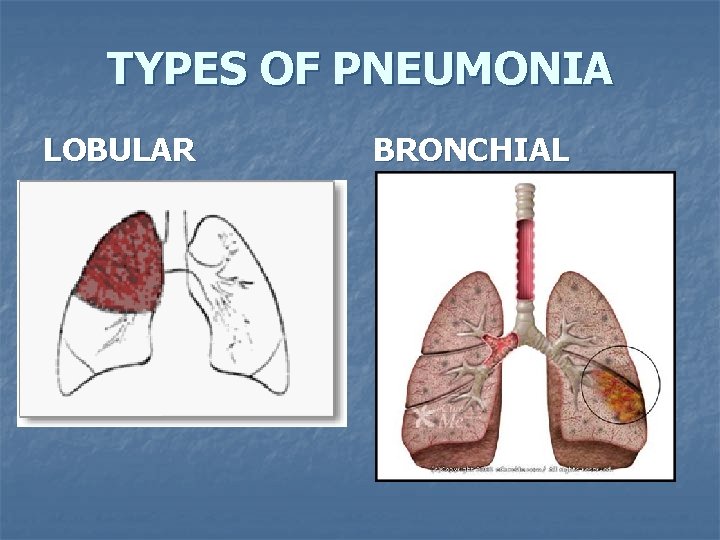
n Lobar pneumonia affects a lobe of the lungs (see x-ray), and bronchial pneumonia can affect patches throughout both lungs. Lobular pneumonia
TYPES OF PNEUMONIA LOBULAR BRONCHIAL
TREATMENT BACTERIAL n Caused by the bacterium Streptococcus pneumoniae n n Treated with antibiotics Can be somewhat prevented with the pneumococcal vaccine VIRAL n n n Caused by a virus Can be treated with anti-viral medication They are usually less severe – however a secondary bacterial infection can follow – which is then treated with antibiotics
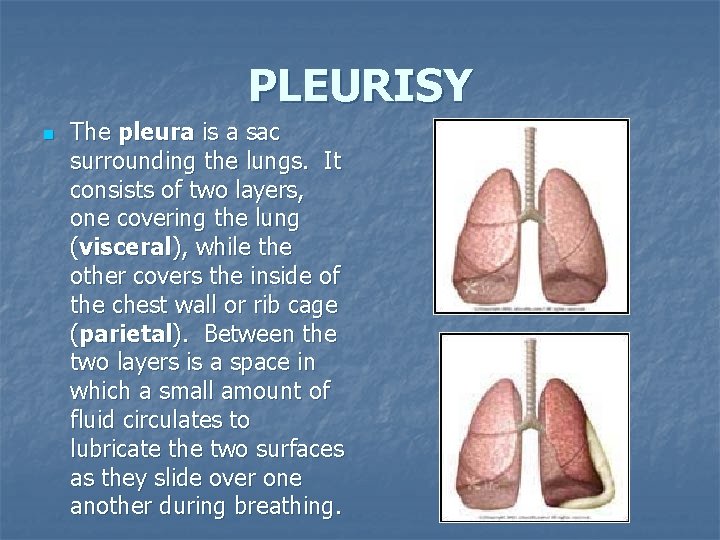
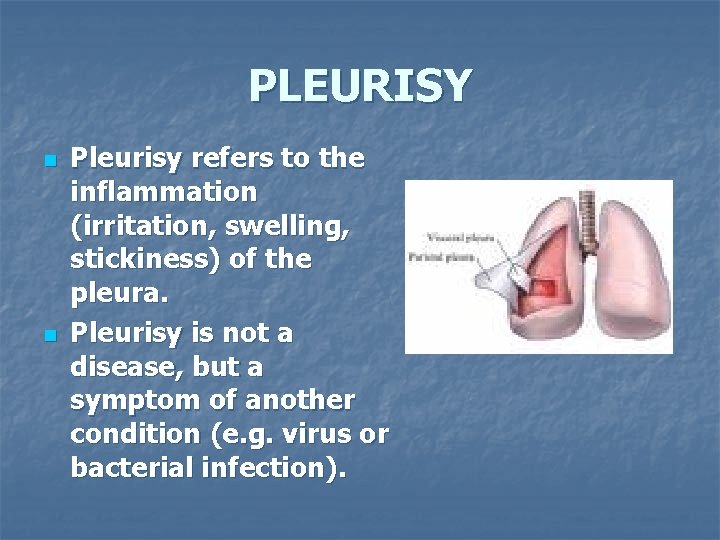
PLEURISY n The pleura is a sac surrounding the lungs. It consists of two layers, one covering the lung (visceral), while the other covers the inside of the chest wall or rib cage (parietal). Between the two layers is a space in which a small amount of fluid circulates to lubricate the two surfaces as they slide over one another during breathing.
PLEURISY n n Pleurisy refers to the inflammation (irritation, swelling, stickiness) of the pleura. Pleurisy is not a disease, but a symptom of another condition (e. g. virus or bacterial infection).
SYMPTOMS & TREATMENT SYMPTOMS § Sharp, stabbing pain in chest – usually localized in one area TREATMENT n Treat the cause – ie virus or bacteria causing the pleurisy
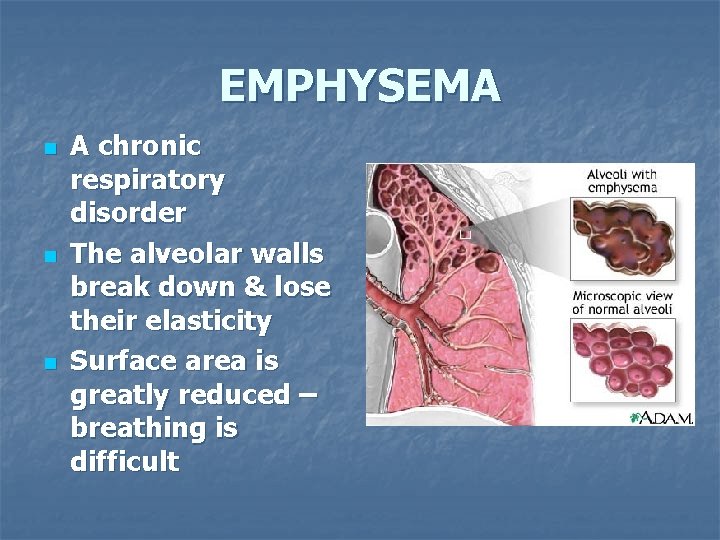
EMPHYSEMA n n n A chronic respiratory disorder The alveolar walls break down & lose their elasticity Surface area is greatly reduced – breathing is difficult
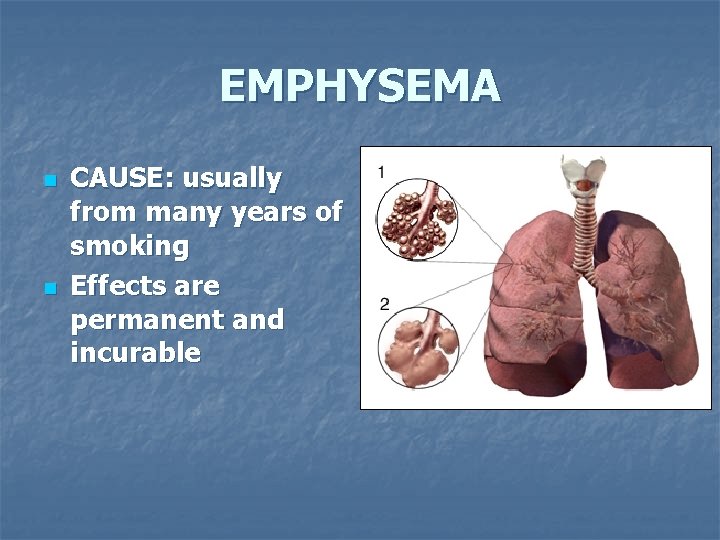
EMPHYSEMA n n CAUSE: usually from many years of smoking Effects are permanent and incurable
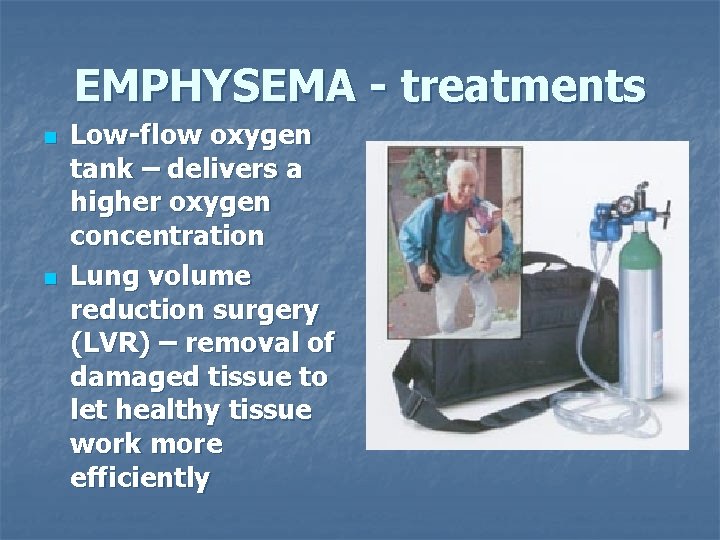
EMPHYSEMA - treatments n n Low-flow oxygen tank – delivers a higher oxygen concentration Lung volume reduction surgery (LVR) – removal of damaged tissue to let healthy tissue work more efficiently
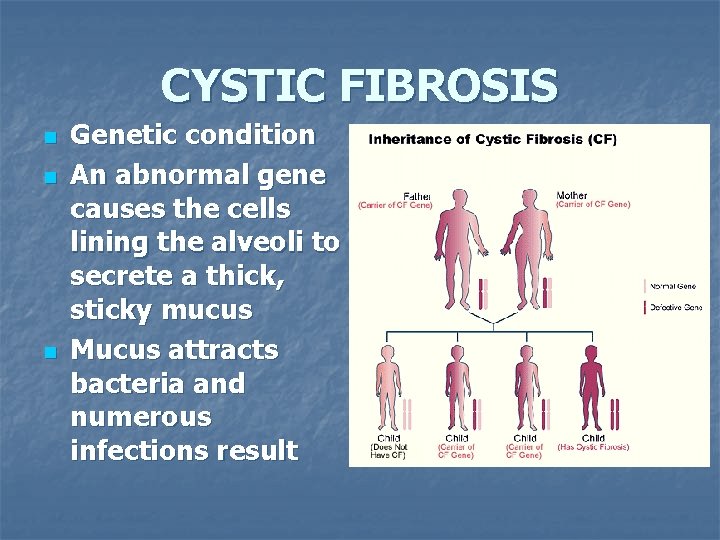
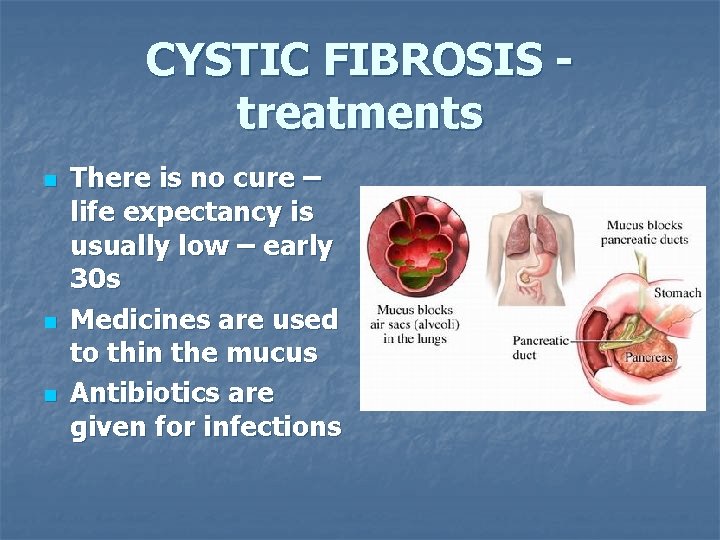
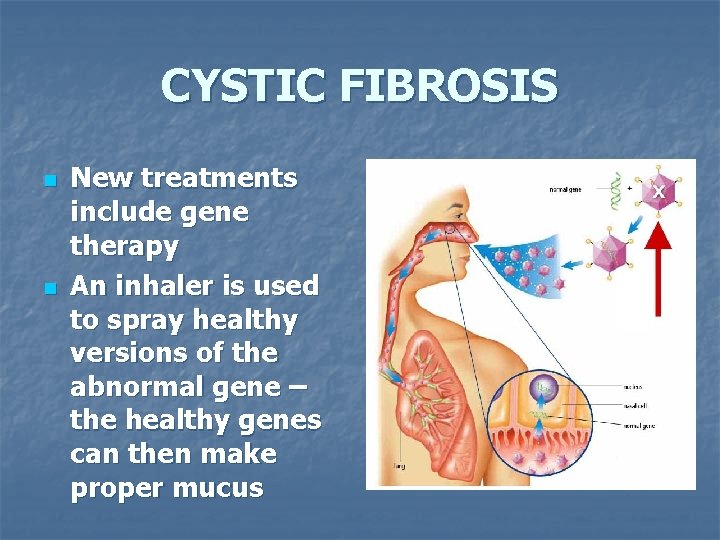
CYSTIC FIBROSIS n n n Genetic condition An abnormal gene causes the cells lining the alveoli to secrete a thick, sticky mucus Mucus attracts bacteria and numerous infections result
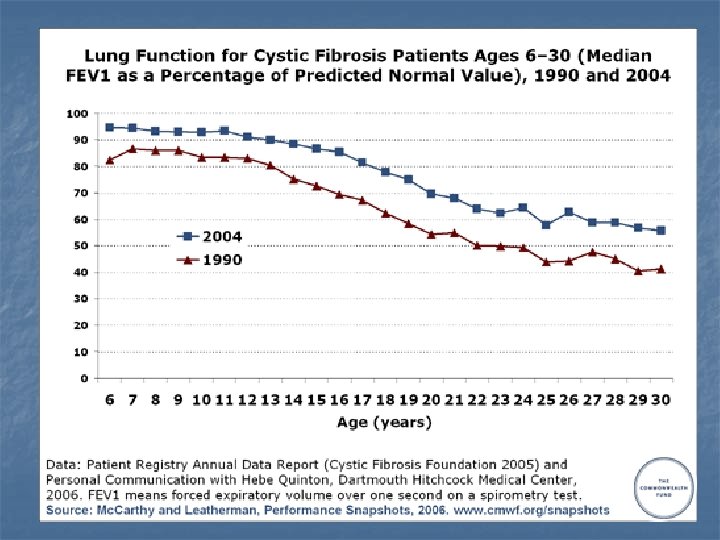
CYSTIC FIBROSIS treatments n n n There is no cure – life expectancy is usually low – early 30 s Medicines are used to thin the mucus Antibiotics are given for infections
CYSTIC FIBROSIS n n New treatments include gene therapy An inhaler is used to spray healthy versions of the abnormal gene – the healthy genes can then make proper mucus
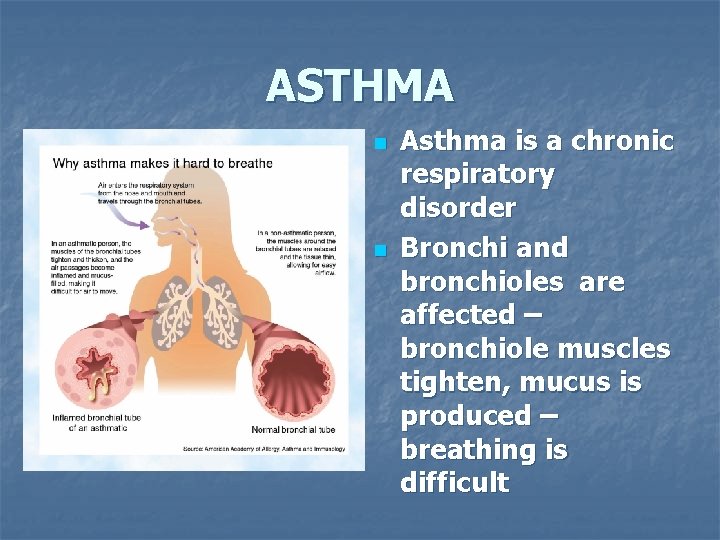
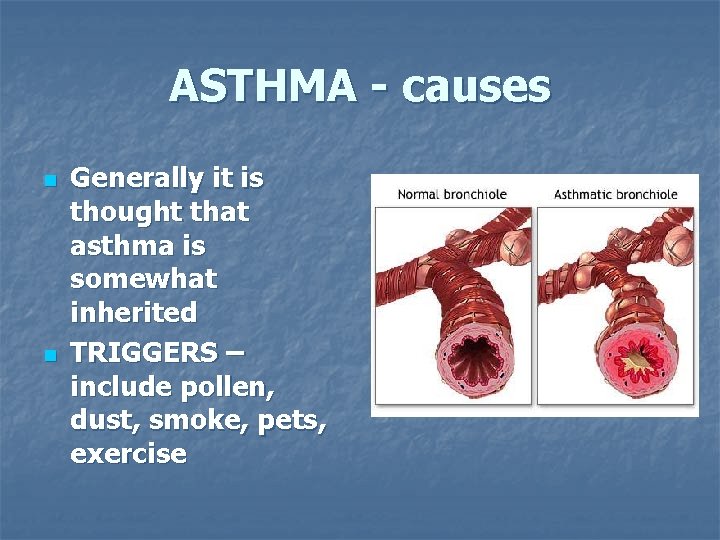
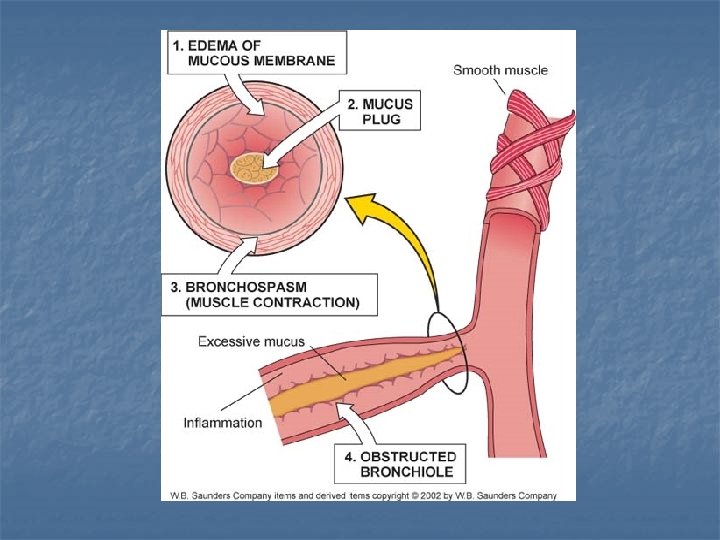
ASTHMA n n Asthma is a chronic respiratory disorder Bronchi and bronchioles are affected – bronchiole muscles tighten, mucus is produced – breathing is difficult
ASTHMA - causes n n Generally it is thought that asthma is somewhat inherited TRIGGERS – include pollen, dust, smoke, pets, exercise
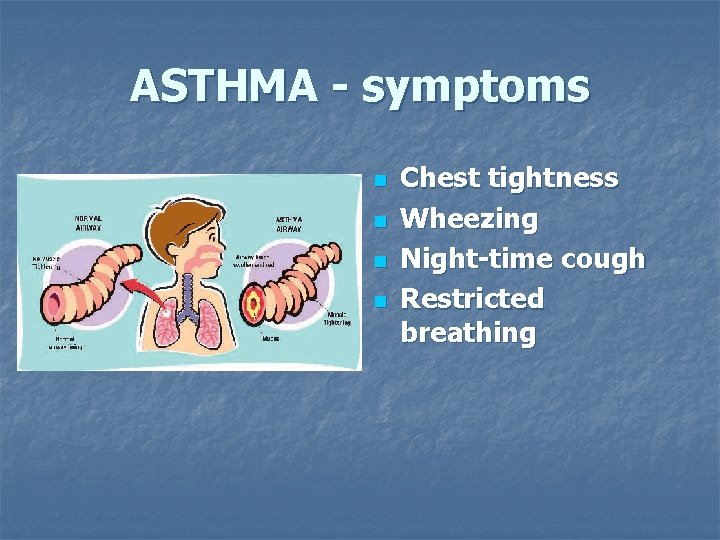
ASTHMA - symptoms n n Chest tightness Wheezing Night-time cough Restricted breathing
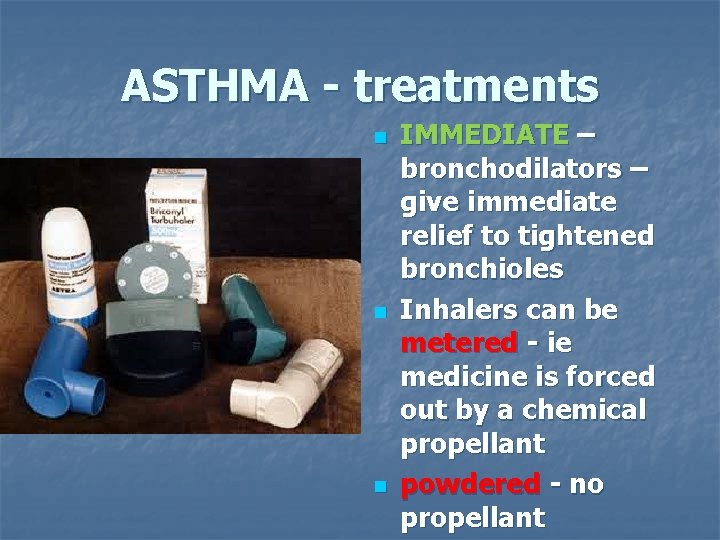
ASTHMA - treatments n n n IMMEDIATE – bronchodilators – give immediate relief to tightened bronchioles Inhalers can be metered - ie medicine is forced out by a chemical propellant powdered - no propellant
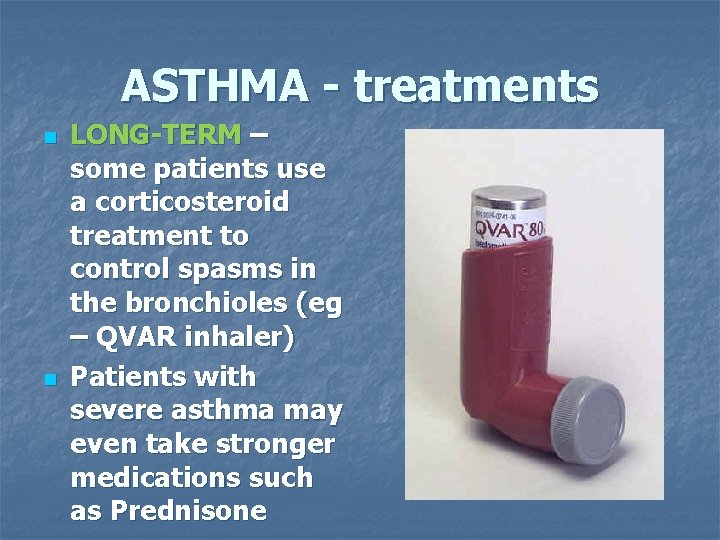
ASTHMA - treatments n n LONG-TERM – some patients use a corticosteroid treatment to control spasms in the bronchioles (eg – QVAR inhaler) Patients with severe asthma may even take stronger medications such as Prednisone
Obstructive Lung Disease: Lung Cancer n Primary or secondary; benign rare n n n Linked with cigarette smoking Metastases develop frequently in lung b/c: n n Primary is major cause of death Venous return and lymph vessels bring tumor cells from distant site in body heart lung Poor prognosis
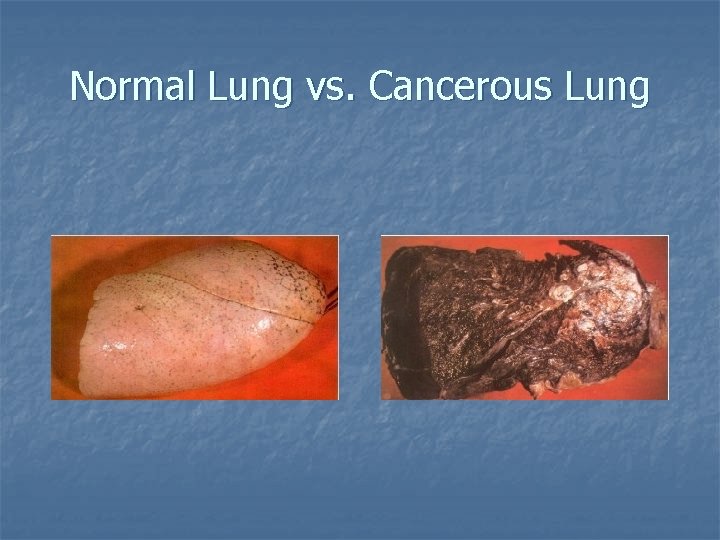
Normal Lung vs. Cancerous Lung
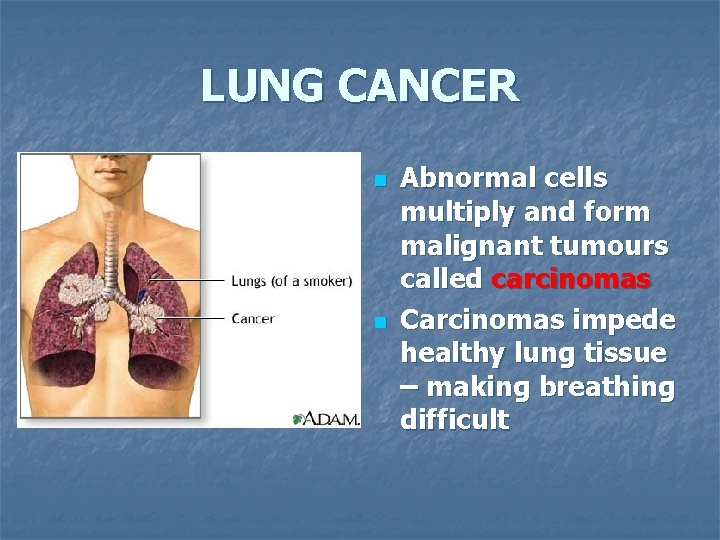
LUNG CANCER n n Abnormal cells multiply and form malignant tumours called carcinomas Carcinomas impede healthy lung tissue – making breathing difficult
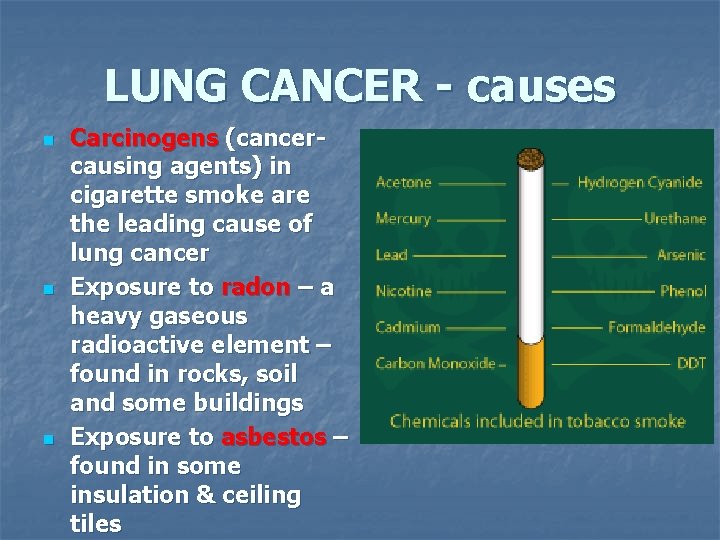
LUNG CANCER - causes n n n Carcinogens (cancercausing agents) in cigarette smoke are the leading cause of lung cancer Exposure to radon – a heavy gaseous radioactive element – found in rocks, soil and some buildings Exposure to asbestos – found in some insulation & ceiling tiles
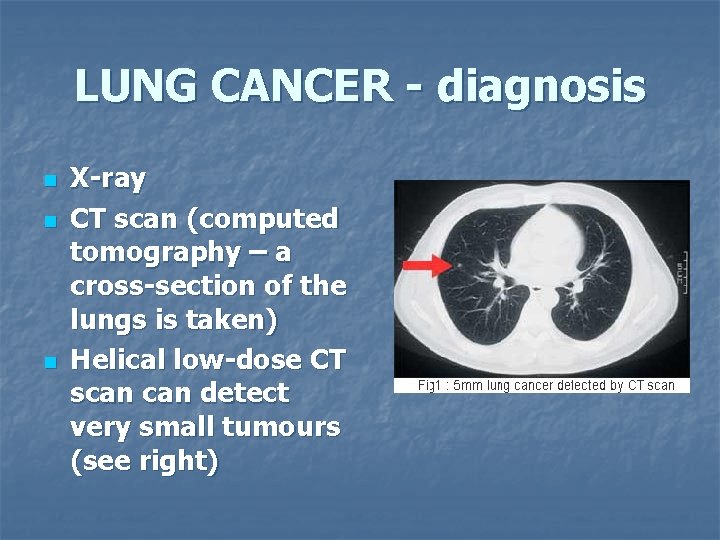
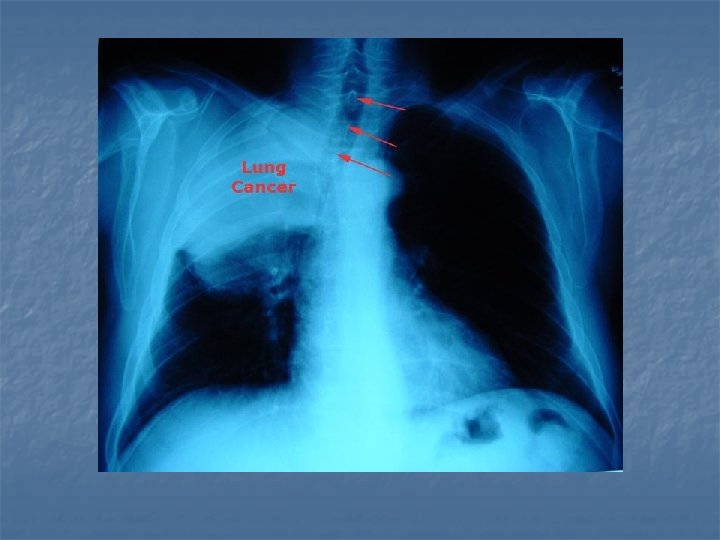
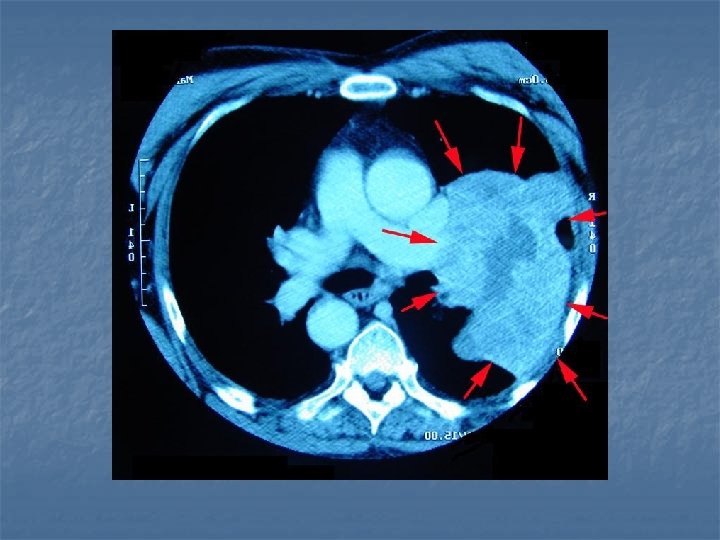
LUNG CANCER - diagnosis n n n X-ray CT scan (computed tomography – a cross-section of the lungs is taken) Helical low-dose CT scan detect very small tumours (see right)
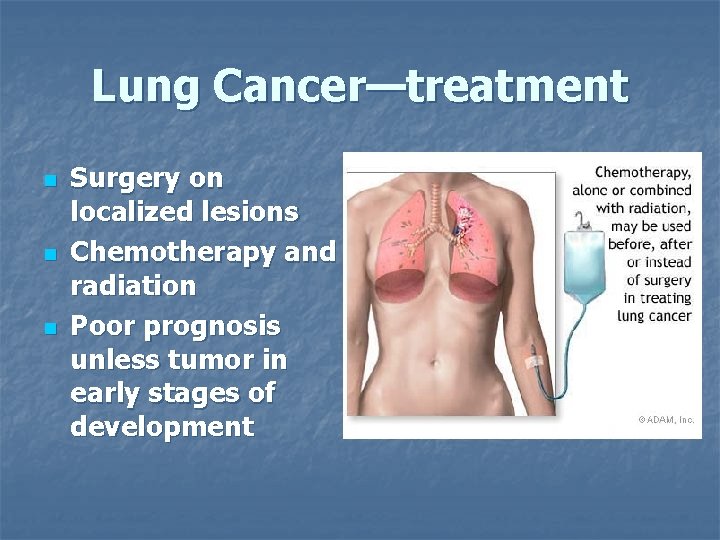
Lung Cancer—treatment n n n Surgery on localized lesions Chemotherapy and radiation Poor prognosis unless tumor in early stages of development
TRADITIONAL HEALING n Many cultures, including native Canadians have used natural treatments for a wide variety of illnesses for many years
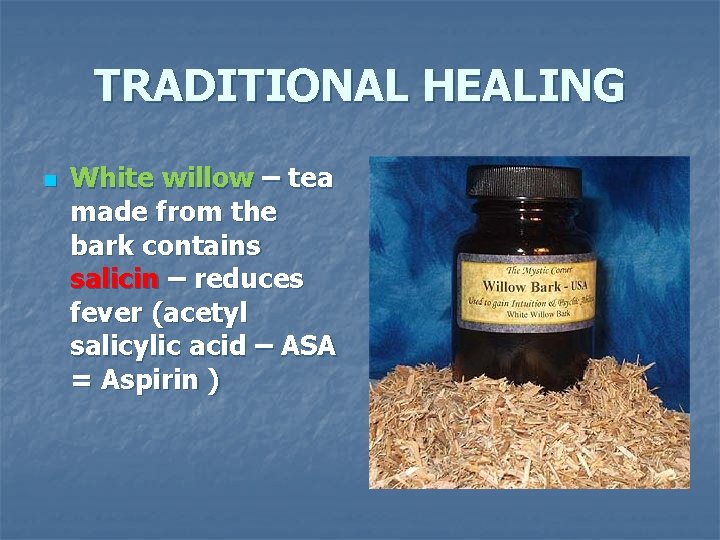
TRADITIONAL HEALING n White willow – tea made from the bark contains salicin – reduces fever (acetyl salicylic acid – ASA = Aspirin )
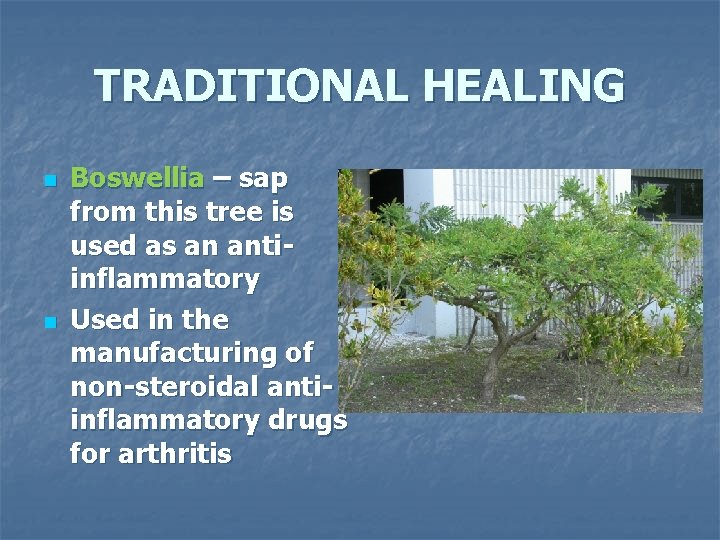
TRADITIONAL HEALING n n Boswellia – sap from this tree is used as an antiinflammatory Used in the manufacturing of non-steroidal antiinflammatory drugs for arthritis
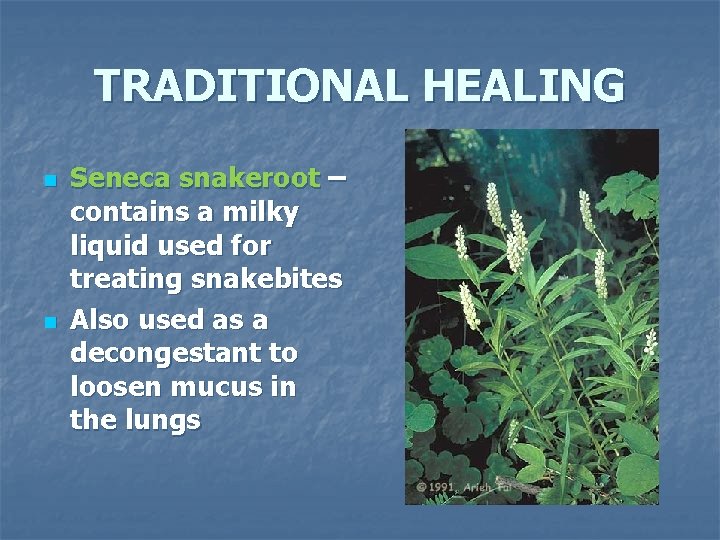
TRADITIONAL HEALING n n Seneca snakeroot – contains a milky liquid used for treating snakebites Also used as a decongestant to loosen mucus in the lungs
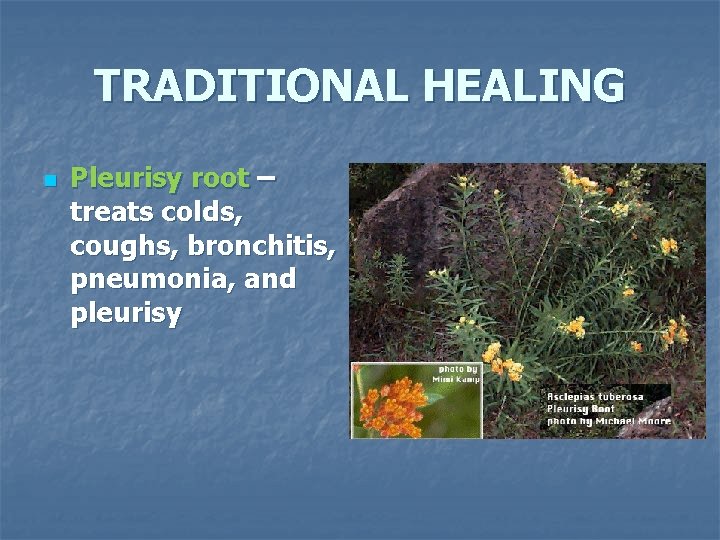
TRADITIONAL HEALING n Pleurisy root – treats colds, coughs, bronchitis, pneumonia, and pleurisy
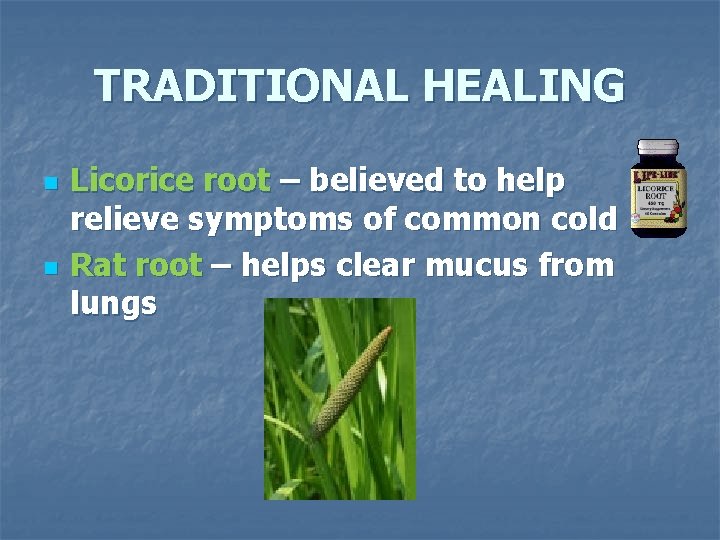
TRADITIONAL HEALING n n Licorice root – believed to help relieve symptoms of common cold Rat root – helps clear mucus from lungs