
RESPIRATORY CYCLE Dr Abdelaziz M Hussein Objectives Definition
RESPIRATORY CYCLE Dr. Abdelaziz M. Hussein
Objectives • • Definition of respiration Division of respiration Physiological anatomy of respiratory system Mechanics of pulmonary ventilation Gas exchange at lungs O 2 and CO 2 carriage by blood Hypoxia
Definition • Transport of oxygen from atmosphere to tissue • Oxidation of food stuff and removal of CO 2
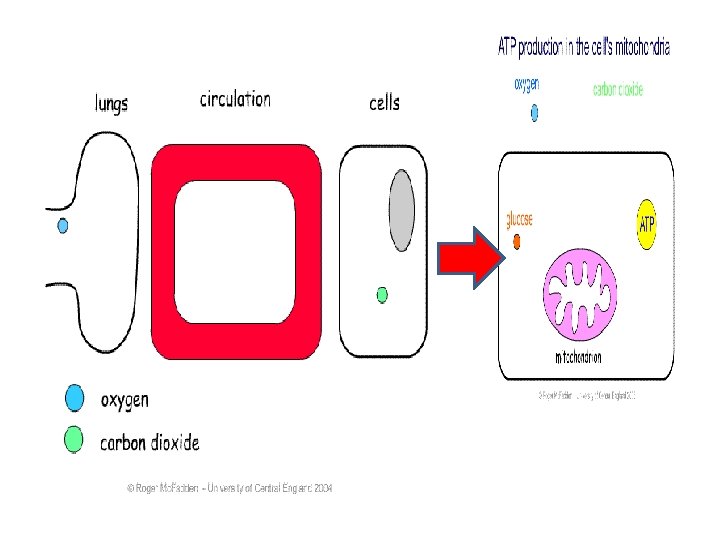
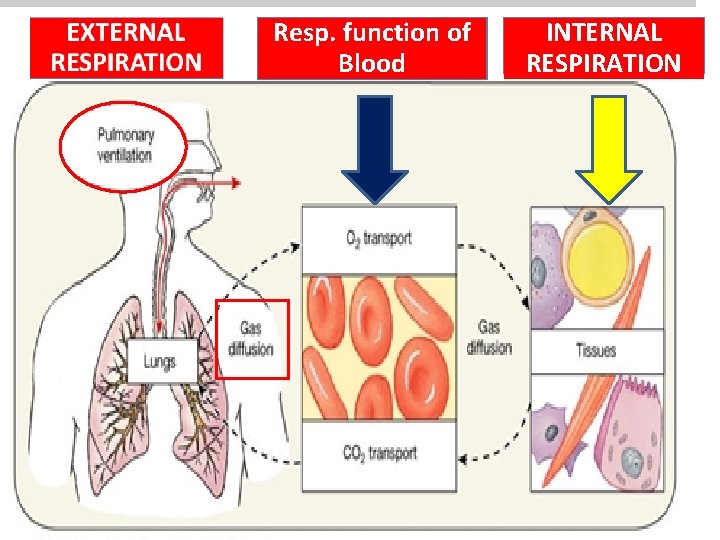
Resp. function of Blood INTERNAL RESPIRATION
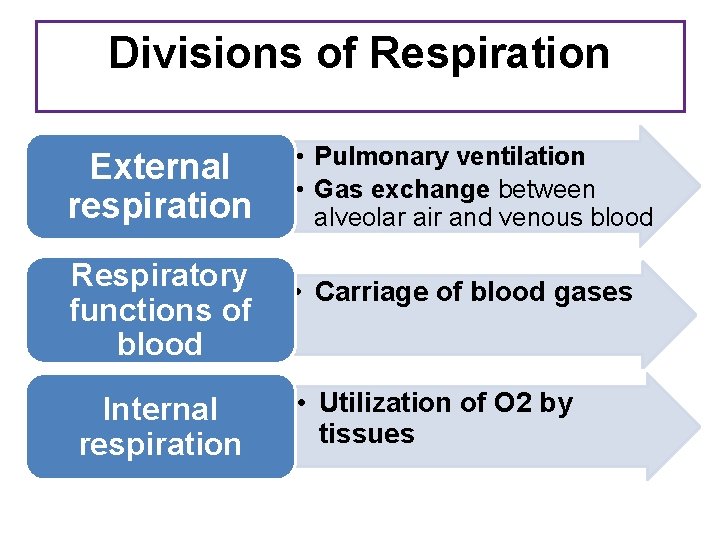
Divisions of Respiration External respiration Respiratory functions of blood Internal respiration • Pulmonary ventilation • Gas exchange between alveolar air and venous blood • Carriage of blood gases • Utilization of O 2 by tissues
Physiological anatomy of respiratory system • Respiratory system consists of → (I) Air conducting part (II) Respiratory part
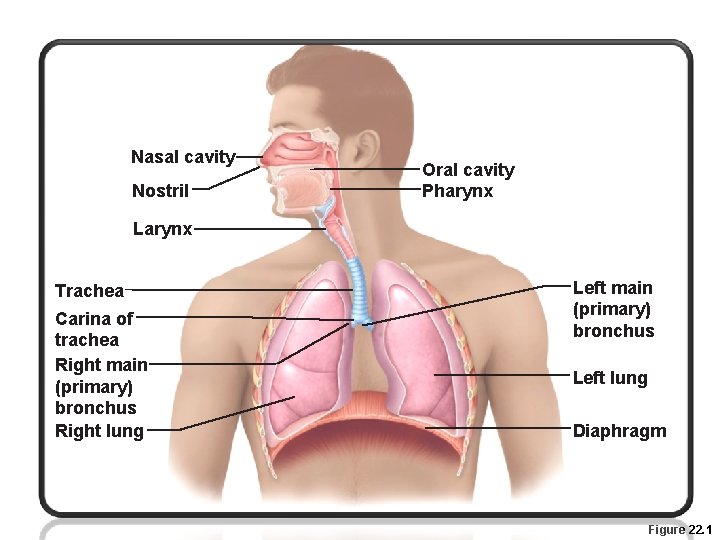
Nasal cavity Nostril Oral cavity Pharynx Larynx Trachea Carina of trachea Right main (primary) bronchus Right lung Left main (primary) bronchus Left lung Diaphragm Figure 22. 1
I)Air conducting part Definition: Ønose, nasopharynx, larynx, trachea, two main bronchi, smaller branchioles resp branchioles -characters → Øthick wall, so not allow gas exchange.
FUNCTIONS: 1)conduction of air to respiratory zone. 2)Air conditioning →to make temperature of air entering lung 37°C due to Blood capillaries of resp. passage
3) Air moistening by mucosa of the lung (dry air will damage delicate lung tissue) 4) Filtration & cleaning from foreign particles & bacteria 5) Protective reflexes → (i) cough reflex (ii) sneezing reflex
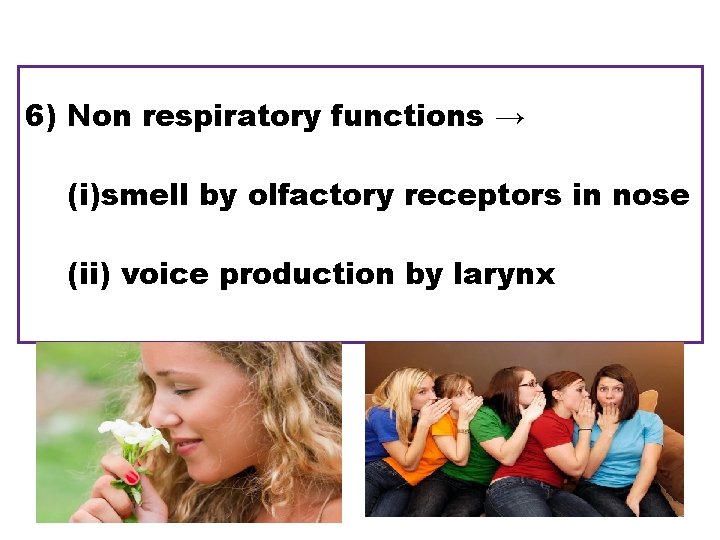
6) Non respiratory functions → (i)smell by olfactory receptors in nose (ii) voice production by larynx
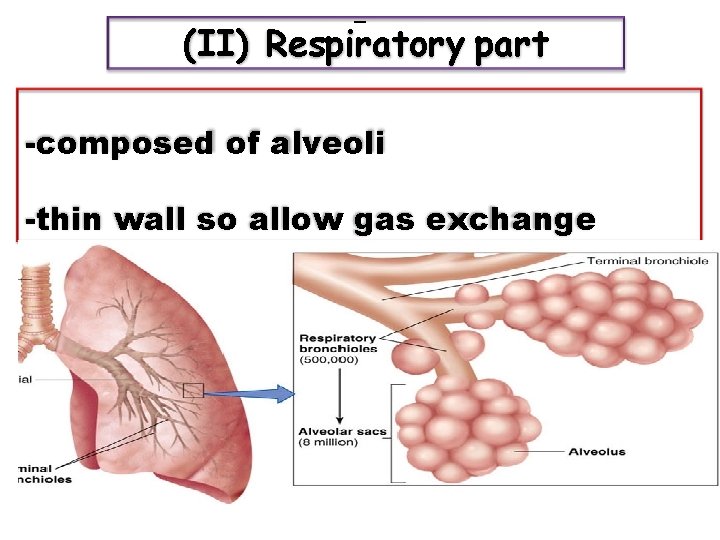
(II) Respiratory part -composed of alveoli -thin wall so allow gas exchange
Pulmonary Ventilation: ØDef : - air in flow & out flow from respiratory System in the form of Respiratory cycles.
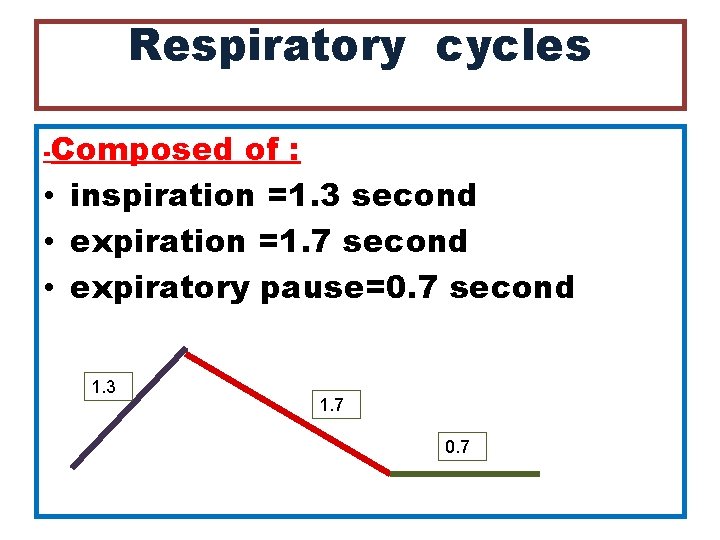
Respiratory cycles -Composed of : • inspiration =1. 3 second • expiration =1. 7 second • expiratory pause=0. 7 second 1. 3 1. 7 0. 7
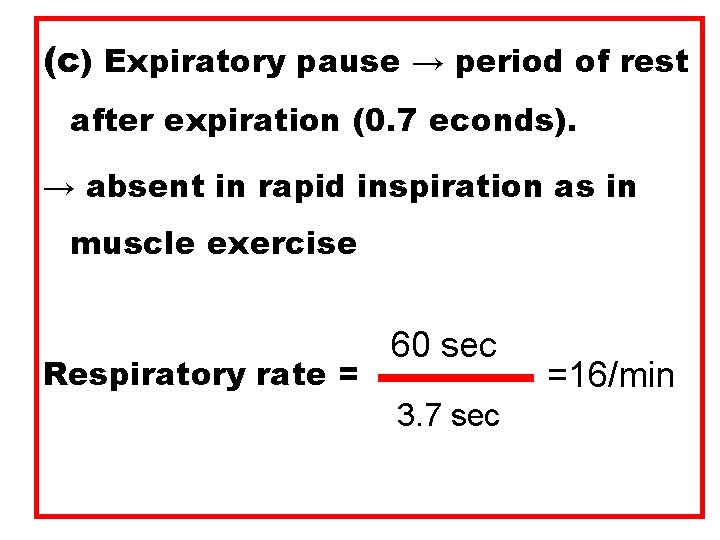
(c) Expiratory pause → period of rest after expiration (0. 7 econds). → absent in rapid inspiration as in muscle exercise Respiratory rate = 60 sec 3. 7 sec =16/min
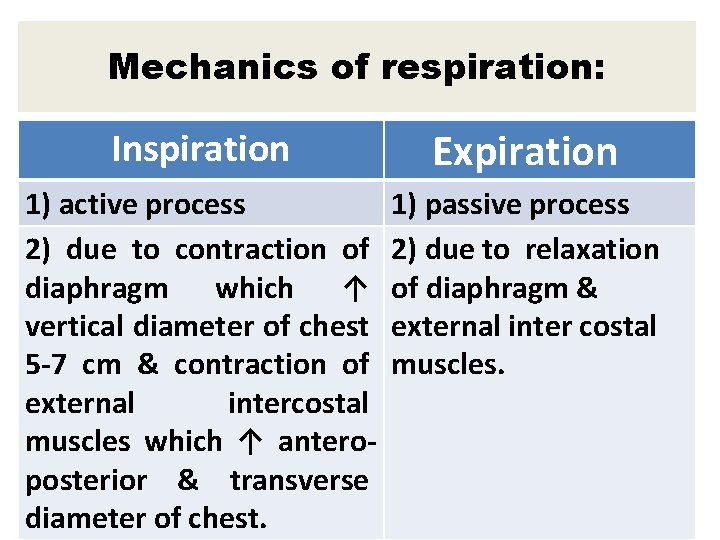
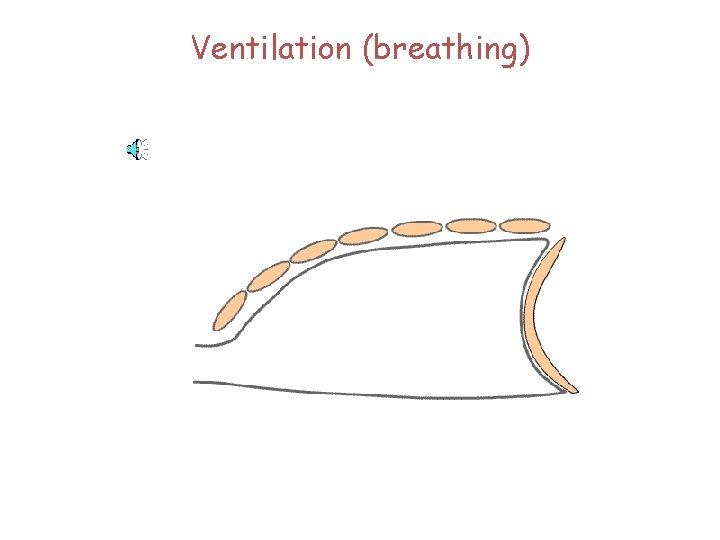
Mechanics of respiration: Inspiration Expiration 1) active process 2) due to contraction of diaphragm which ↑ vertical diameter of chest 5 -7 cm & contraction of external intercostal muscles which ↑ anteroposterior & transverse diameter of chest. 1) passive process 2) due to relaxation of diaphragm & external inter costal muscles.
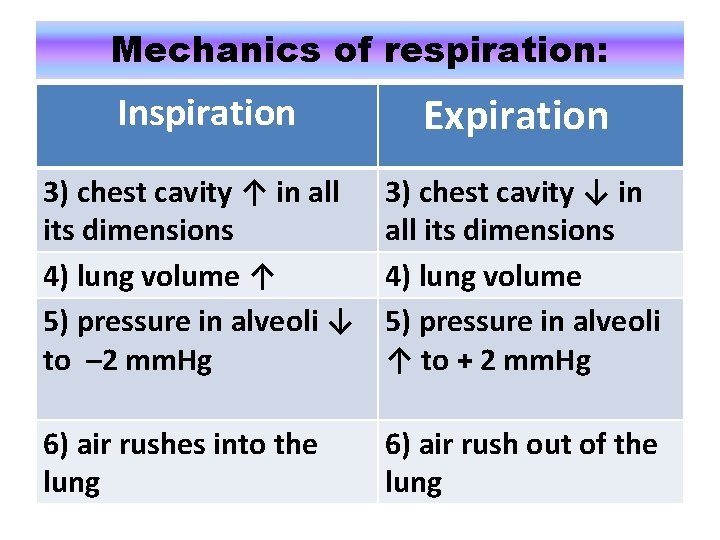
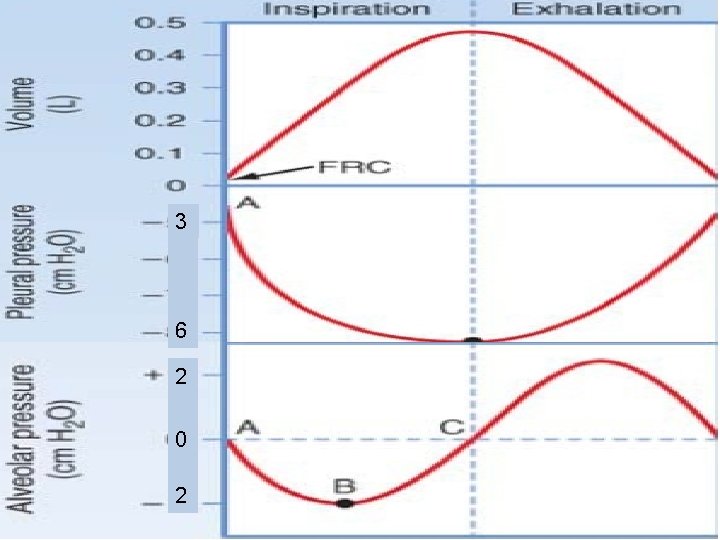
Mechanics of respiration: Inspiration Expiration 3) chest cavity ↑ in all its dimensions 4) lung volume ↑ 5) pressure in alveoli ↓ to – 2 mm. Hg 3) chest cavity ↓ in all its dimensions 4) lung volume 5) pressure in alveoli ↑ to + 2 mm. Hg 6) air rushes into the lung 6) air rush out of the lung
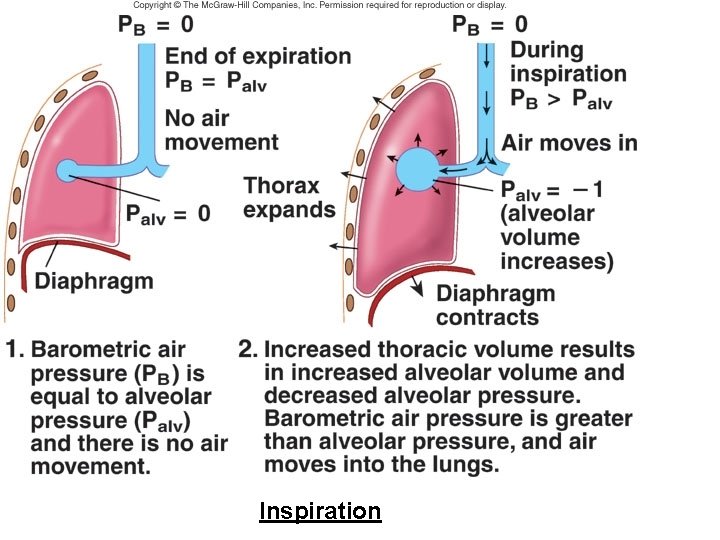
Inspiration
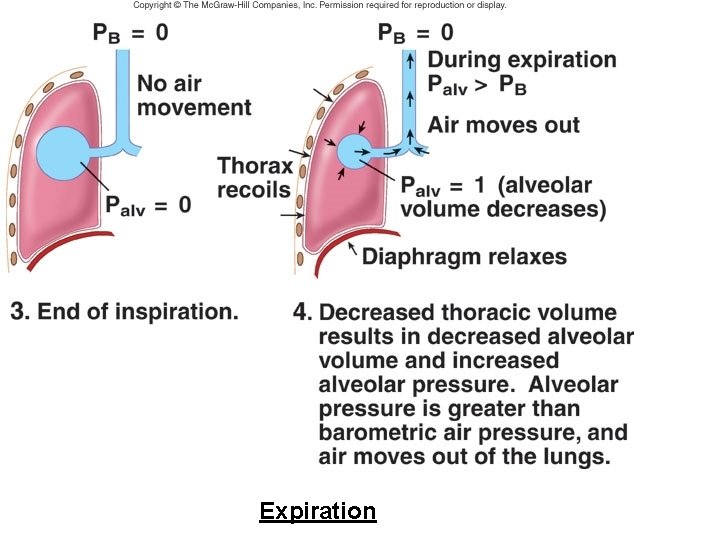
Expiration
Ventilation (breathing)
3 6 2 0 2
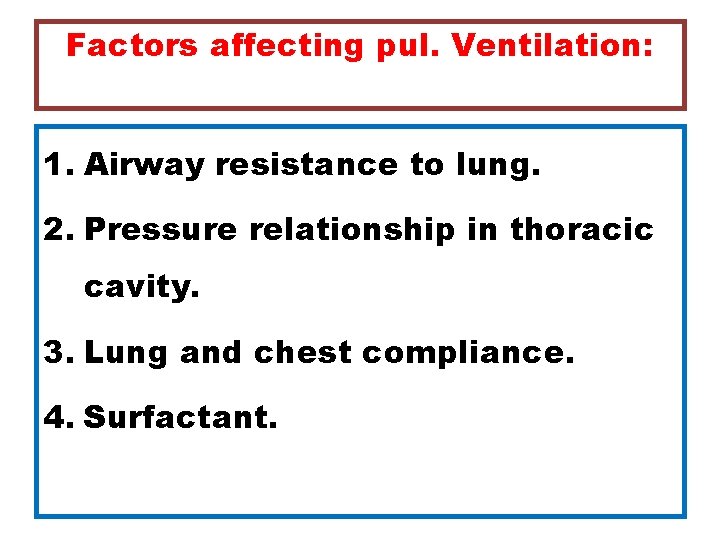
Factors affecting pul. Ventilation: 1. Airway resistance to lung. 2. Pressure relationship in thoracic cavity. 3. Lung and chest compliance. 4. Surfactant.
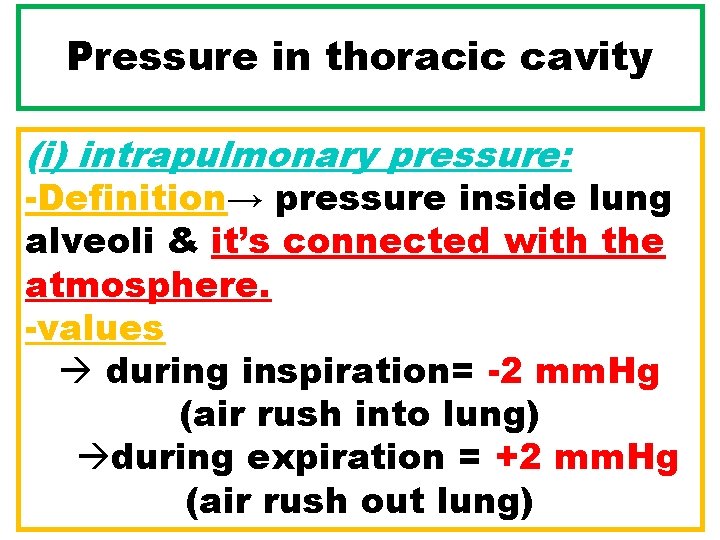
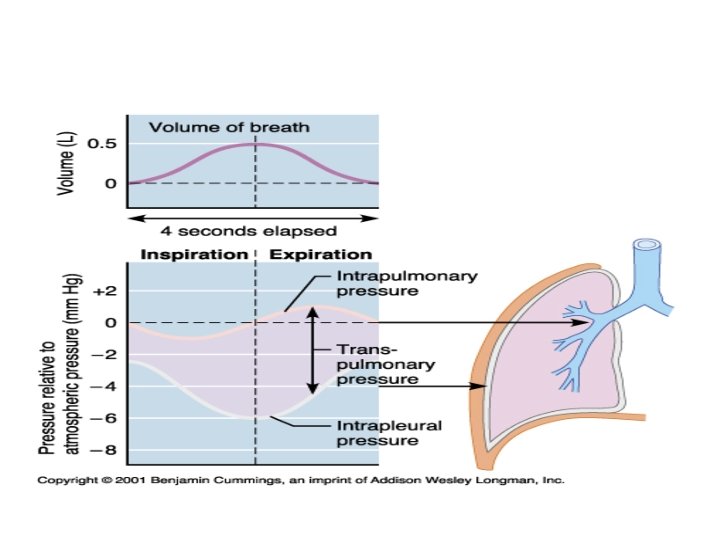
Pressure in thoracic cavity (i) intrapulmonary pressure: -Definition→ pressure inside lung alveoli & it’s connected with the atmosphere. -values during inspiration= -2 mm. Hg (air rush into lung) during expiration = +2 mm. Hg (air rush out lung)
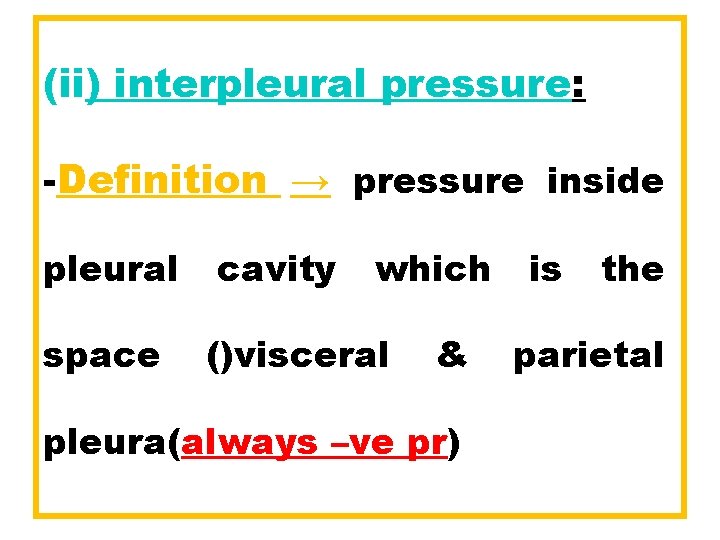
(ii) interpleural pressure: -Definition → pressure inside pleural cavity which space ()visceral & pleura(always –ve pr) is the parietal
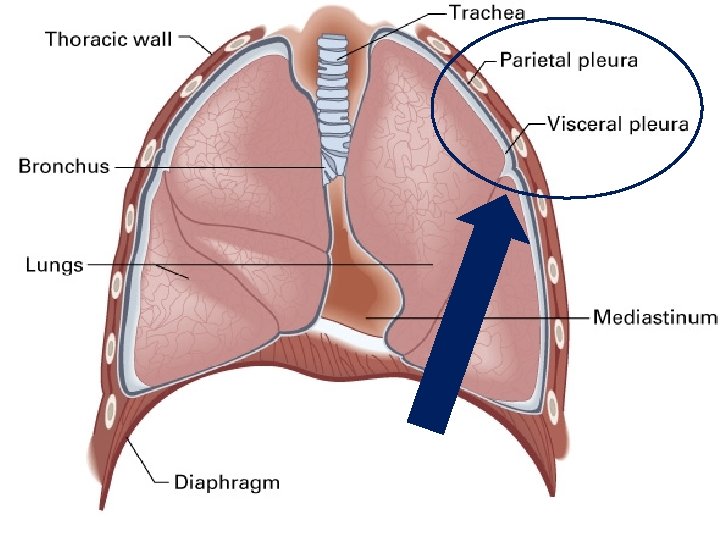
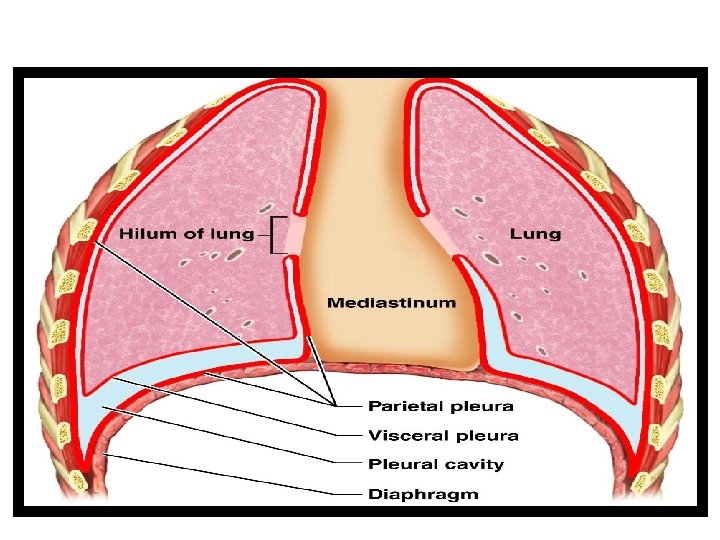
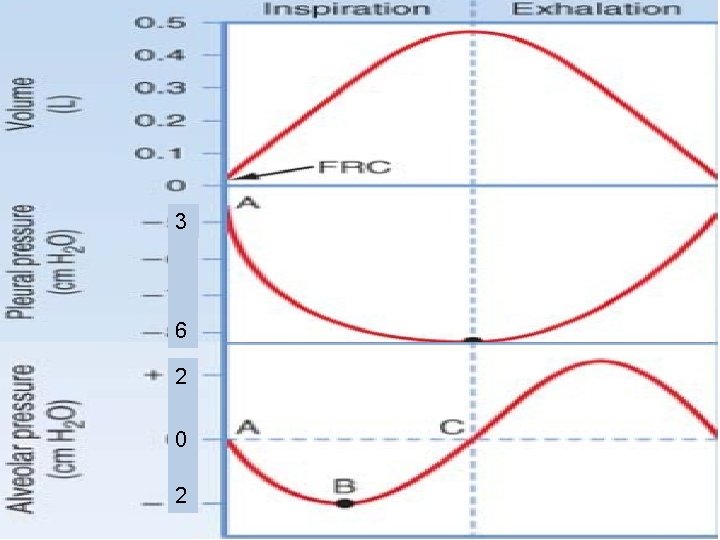
3 6 2 0 2
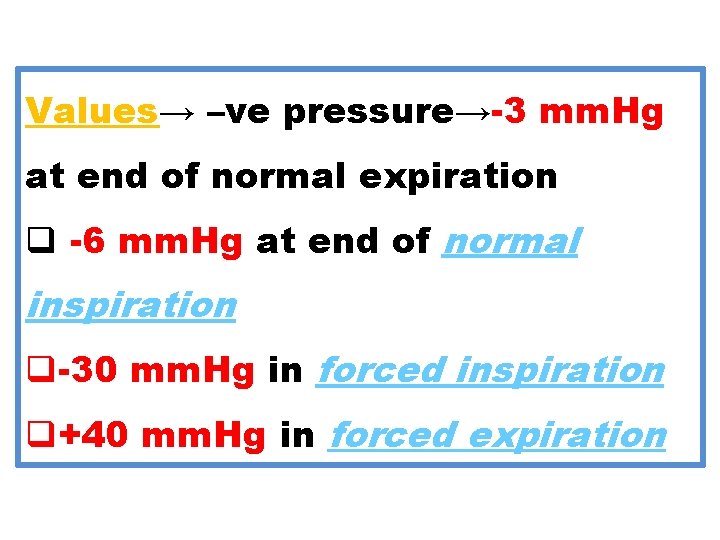
Values→ –ve pressure→-3 mm. Hg at end of normal expiration q -6 mm. Hg at end of normal inspiration q-30 mm. Hg in forced inspiration q+40 mm. Hg in forced expiration
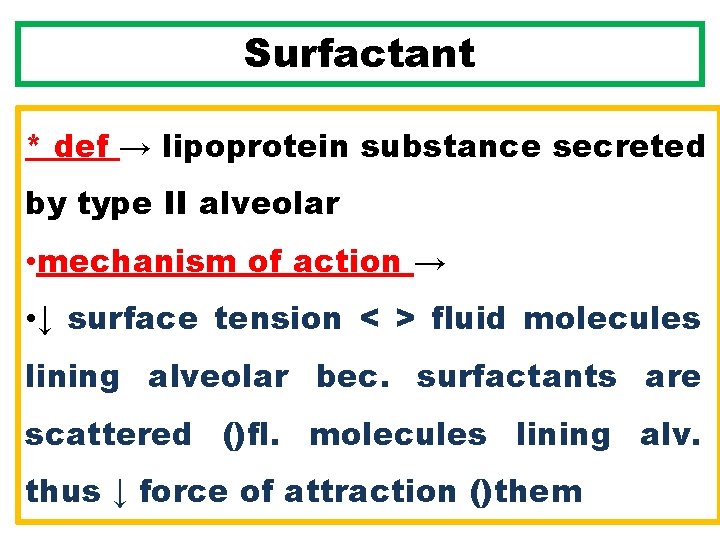
Surfactant * def → lipoprotein substance secreted by type II alveolar • mechanism of action → • ↓ surface tension < > fluid molecules lining alveolar bec. surfactants are scattered ()fl. molecules lining alv. thus ↓ force of attraction ()them
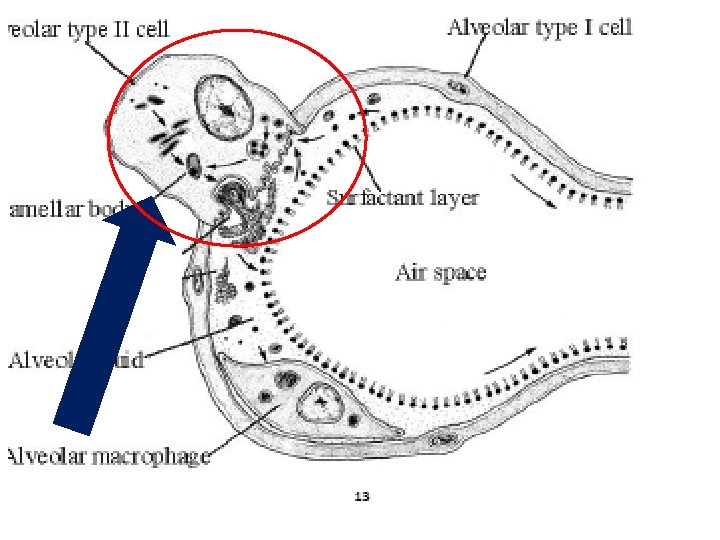
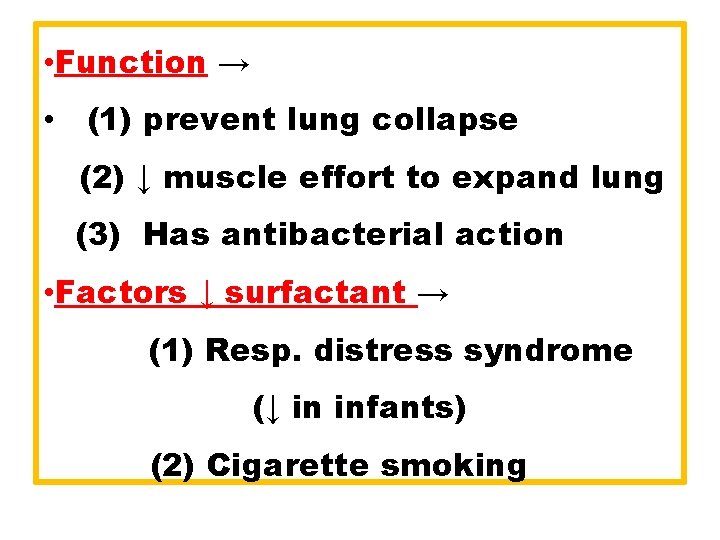
• Function → • (1) prevent lung collapse (2) ↓ muscle effort to expand lung (3) Has antibacterial action • Factors ↓ surfactant → (1) Resp. distress syndrome (↓ in infants) (2) Cigarette smoking
Gas Exchange at Lungs 34
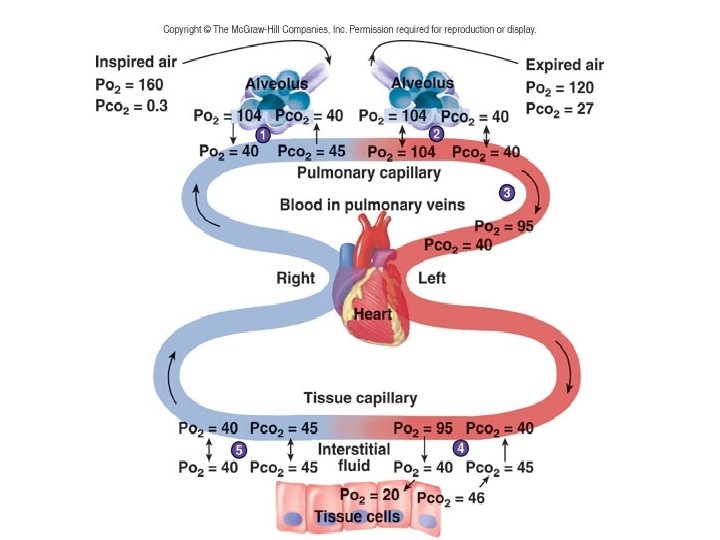
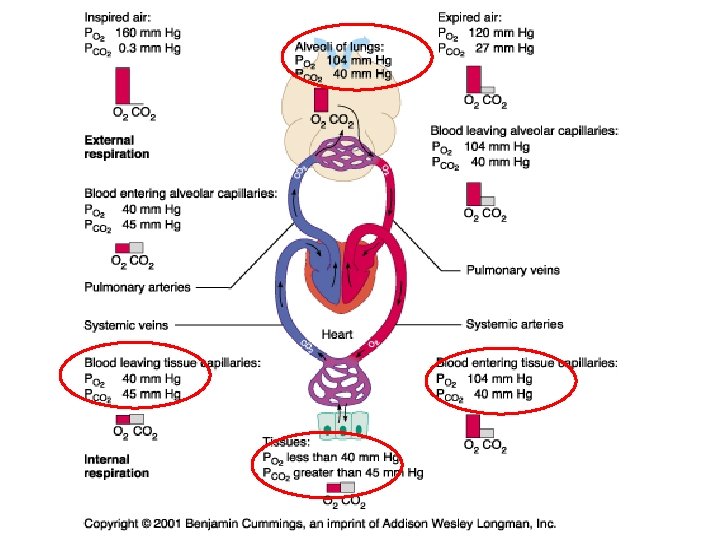
Exchange of gases Def → exchange of gases >< air in the alveoli and capillaries around alveoli through respiratory Membrane
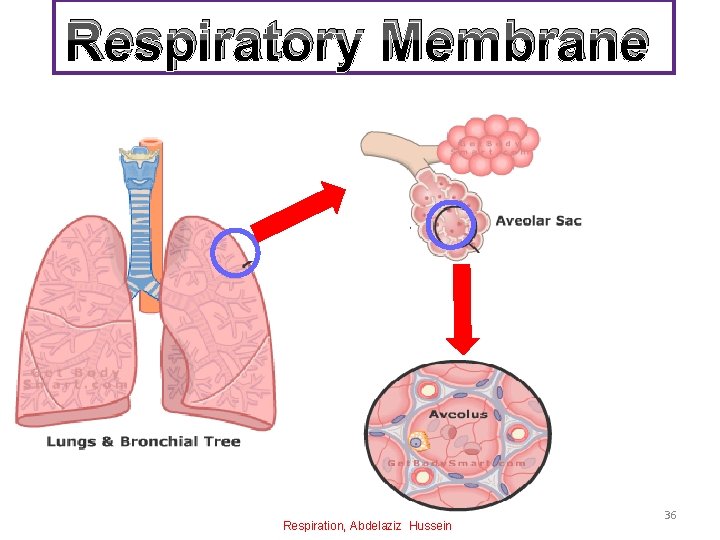
Respiratory Membrane Respiration, Abdelaziz Hussein 36
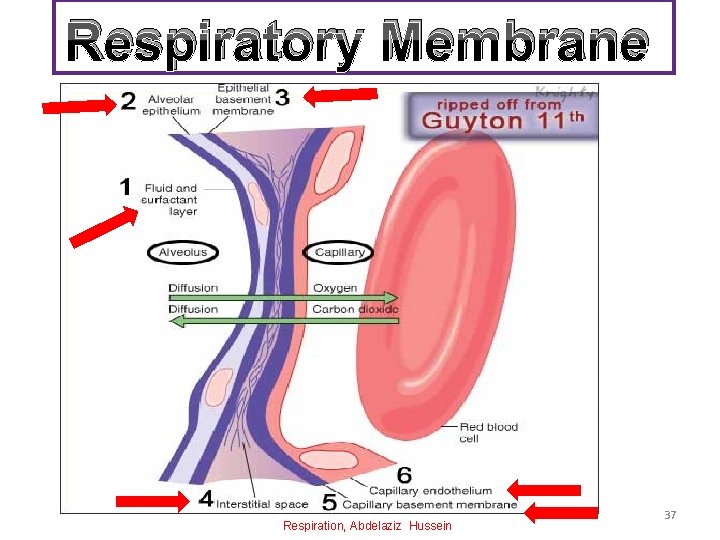
Respiratory Membrane Respiration, Abdelaziz Hussein 37
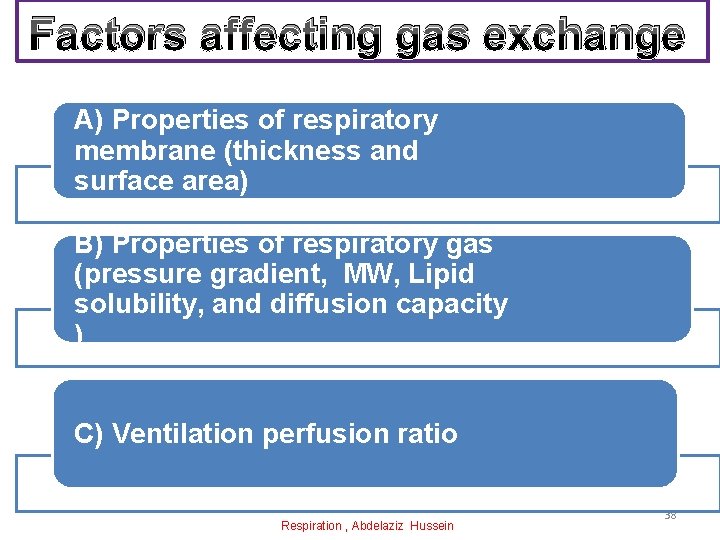
Factors affecting gas exchange A) Properties of respiratory membrane (thickness and surface area) B) Properties of respiratory gas (pressure gradient, MW, Lipid solubility, and diffusion capacity ) C) Ventilation perfusion ratio Respiration , Abdelaziz Hussein 38
O 2 and CO 2 Carriage 40
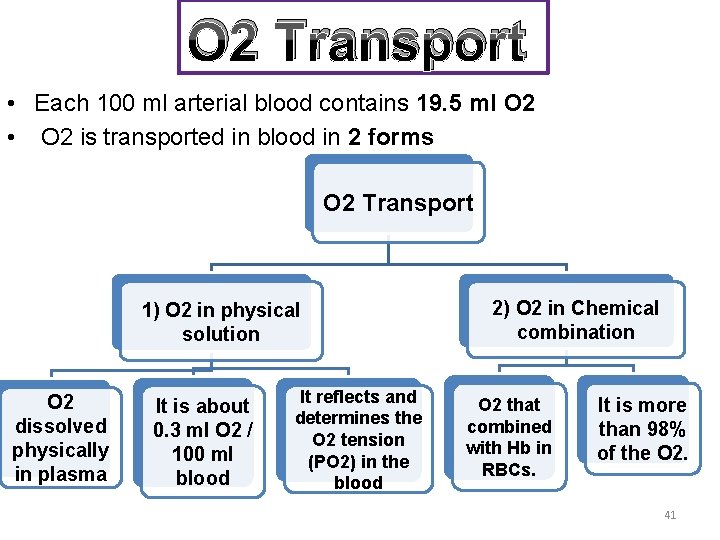
O 2 Transport • Each 100 ml arterial blood contains 19. 5 ml O 2 • O 2 is transported in blood in 2 forms O 2 Transport 1) O 2 in physical solution O 2 dissolved physically in plasma It is about 0. 3 ml O 2 / 100 ml blood It reflects and determines the O 2 tension (PO 2) in the blood 2) O 2 in Chemical combination O 2 that combined with Hb in RBCs. It is more than 98% of the O 2. 41
CO 2 Transport 42
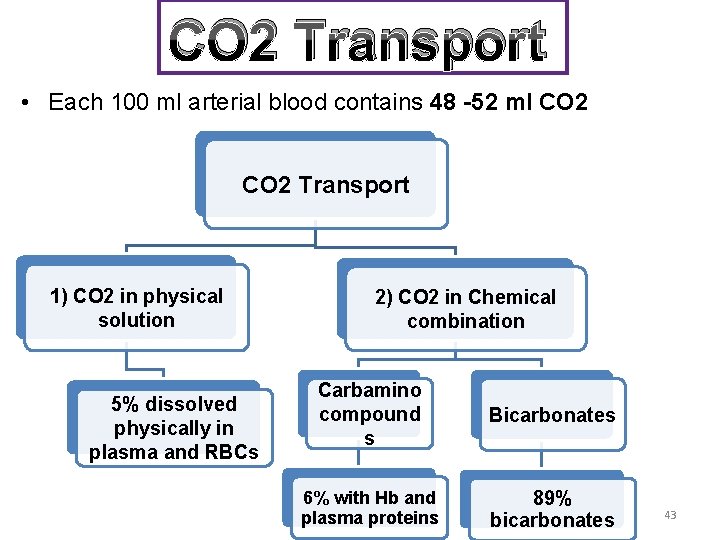
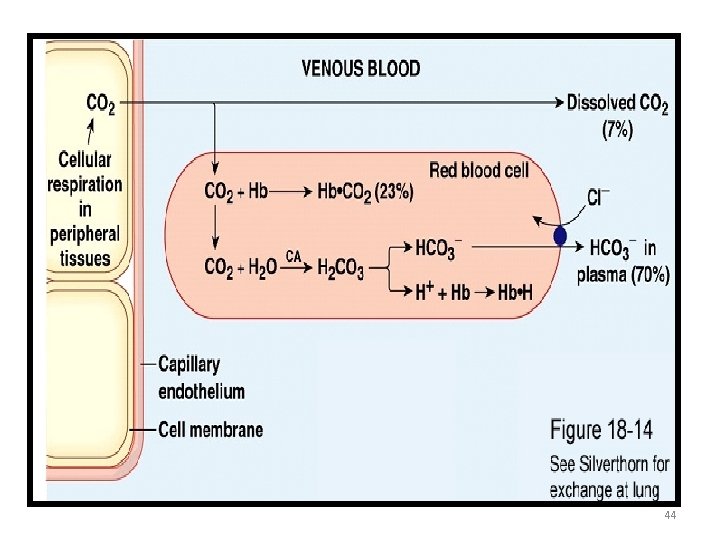
CO 2 Transport • Each 100 ml arterial blood contains 48 -52 ml CO 2 Transport 1) CO 2 in physical solution 5% dissolved physically in plasma and RBCs 2) CO 2 in Chemical combination Carbamino compound s Bicarbonates 6% with Hb and plasma proteins 89% bicarbonates 43
44
Hypoxia 46
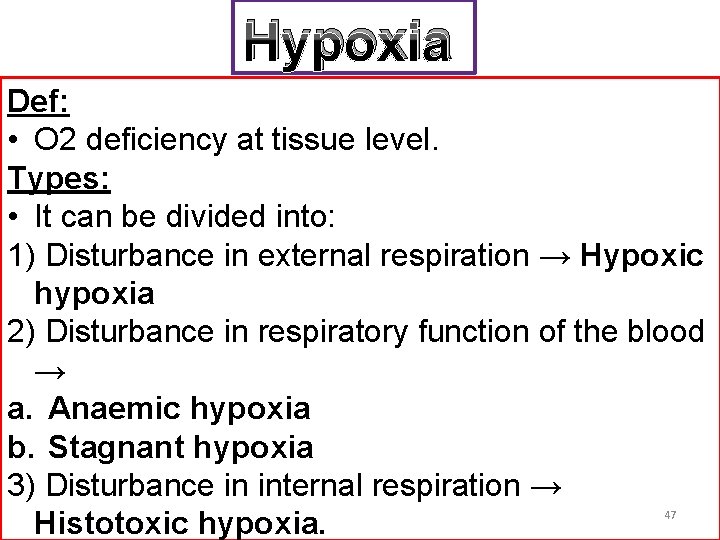
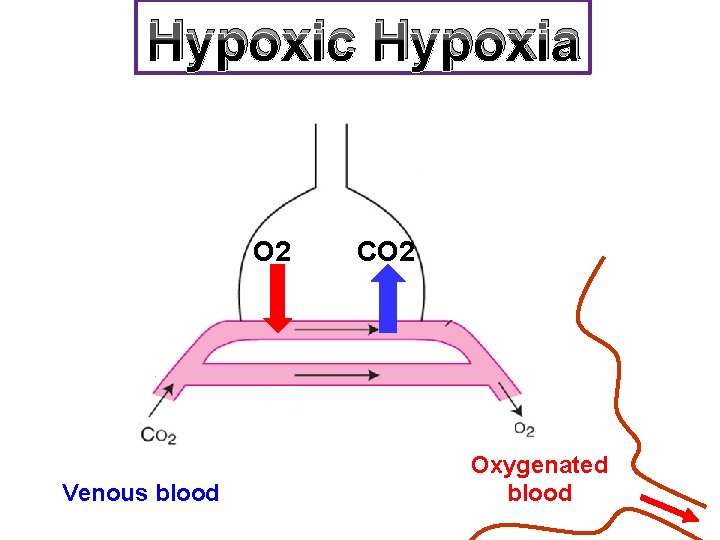
Hypoxia Def: • O 2 deficiency at tissue level. Types: • It can be divided into: 1) Disturbance in external respiration → Hypoxic hypoxia 2) Disturbance in respiratory function of the blood → a. Anaemic hypoxia b. Stagnant hypoxia 3) Disturbance in internal respiration → Histotoxic hypoxia. 47
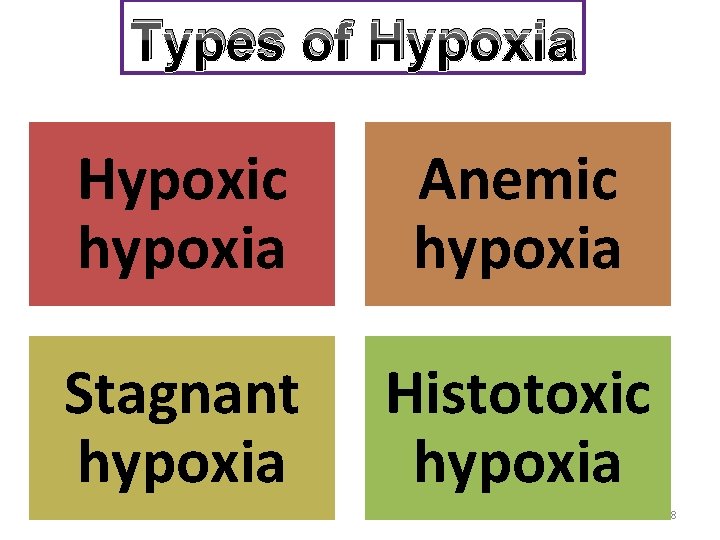
Types of Hypoxia Hypoxic hypoxia Anemic hypoxia Stagnant hypoxia Histotoxic hypoxia 48
Hypoxic Hypoxia 49
Hypoxic Hypoxia O 2 Venous blood CO 2 Oxygenated blood
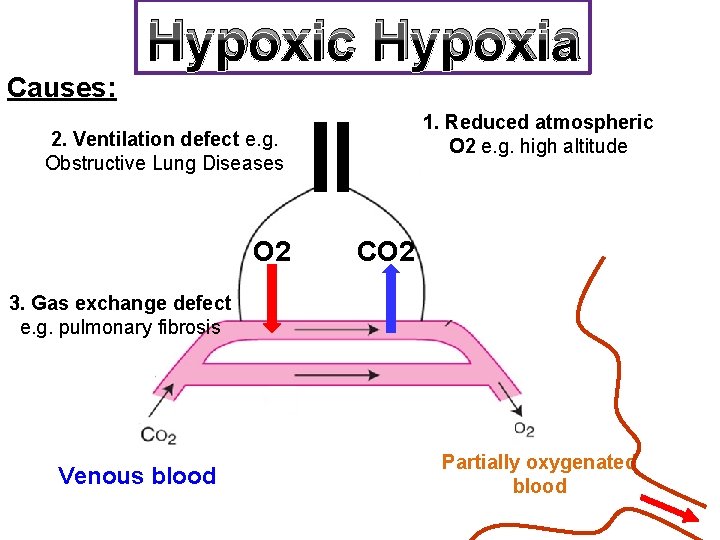
Hypoxic Hypoxia Causes: 1. Reduced atmospheric O 2 e. g. high altitude 2. Ventilation defect e. g. Obstructive Lung Diseases O 2 CO 2 3. Gas exchange defect e. g. pulmonary fibrosis Venous blood Partially oxygenated blood
Stagnant Hypoxia 52
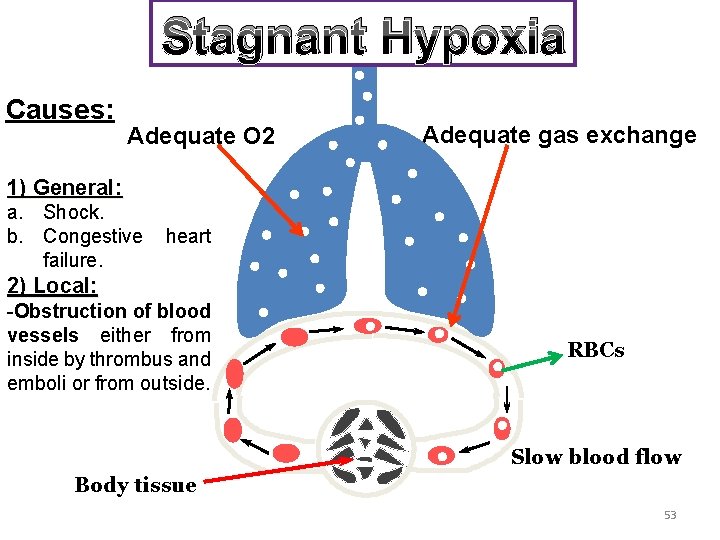
Stagnant Hypoxia Causes: Adequate O 2 Adequate gas exchange 1) General: a. Shock. b. Congestive heart failure. 2) Local: -Obstruction of blood vessels either from inside by thrombus and emboli or from outside. RBCs Slow blood flow Body tissue 53
Anemic Hypoxia 54
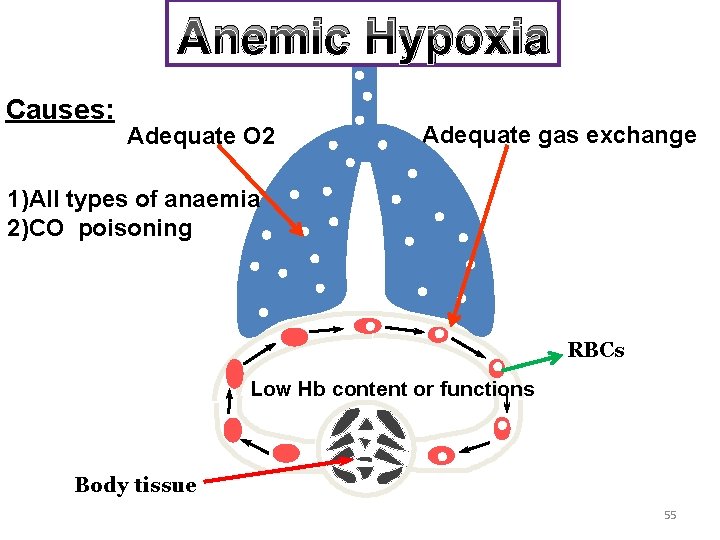
Anemic Hypoxia Causes: Adequate O 2 Adequate gas exchange 1)All types of anaemia 2)CO poisoning RBCs Low Hb content or functions Body tissue 55
Histotoxic Hypoxia 56
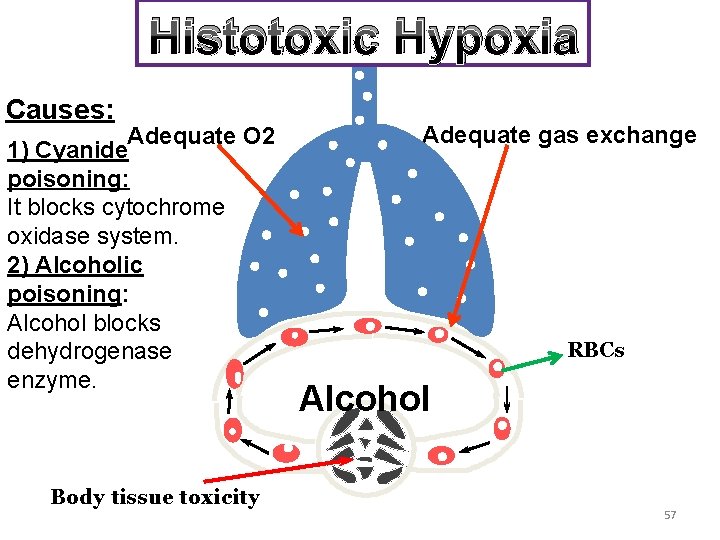
Histotoxic Hypoxia Causes: Adequate O 2 1) Cyanide poisoning: It blocks cytochrome oxidase system. 2) Alcoholic poisoning: Alcohol blocks dehydrogenase enzyme. Body tissue toxicity Adequate gas exchange RBCs Alcohol 57

- Slides: 58