
Respiratory and Circulatory Systems O 2 CO 2
- Slides: 29
Respiratory and Circulatory Systems
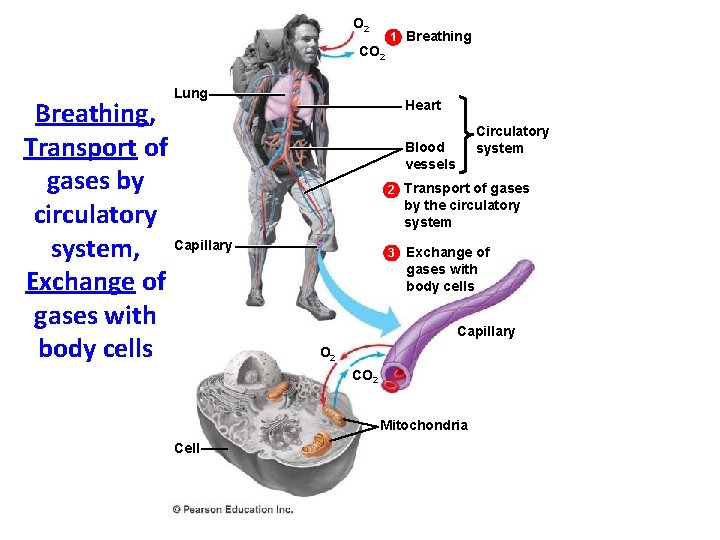
O 2 CO 2 Lung Breathing, Transport of gases by circulatory system, Capillary Exchange of gases with body cells 1 Breathing Heart Circulatory system Blood vessels 2 Transport of gases by the circulatory system 3 Exchange of gases with body cells Capillary O 2 CO 2 Mitochondria Cell
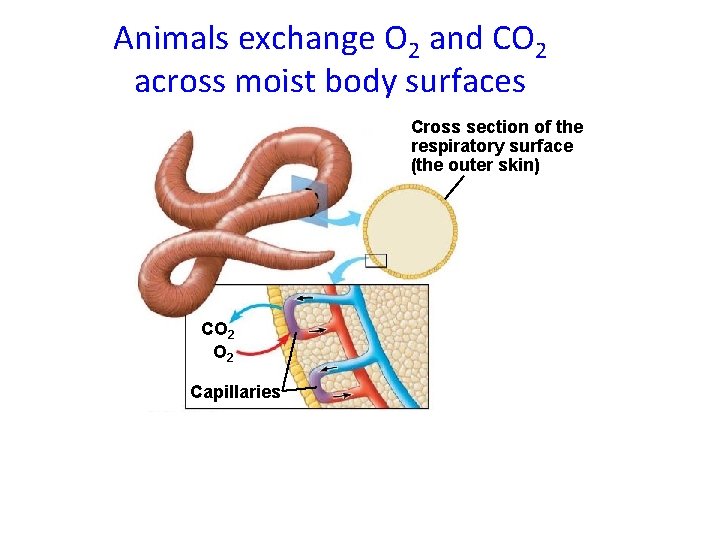
Animals exchange O 2 and CO 2 across moist body surfaces Cross section of the respiratory surface (the outer skin) CO 2 Capillaries
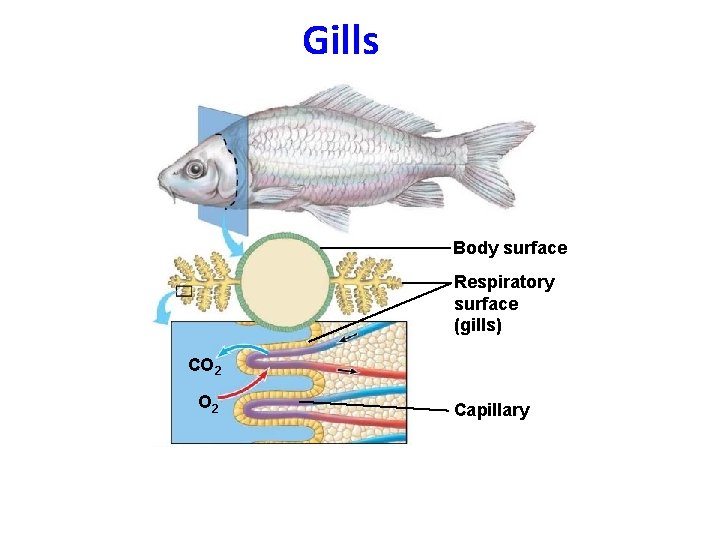
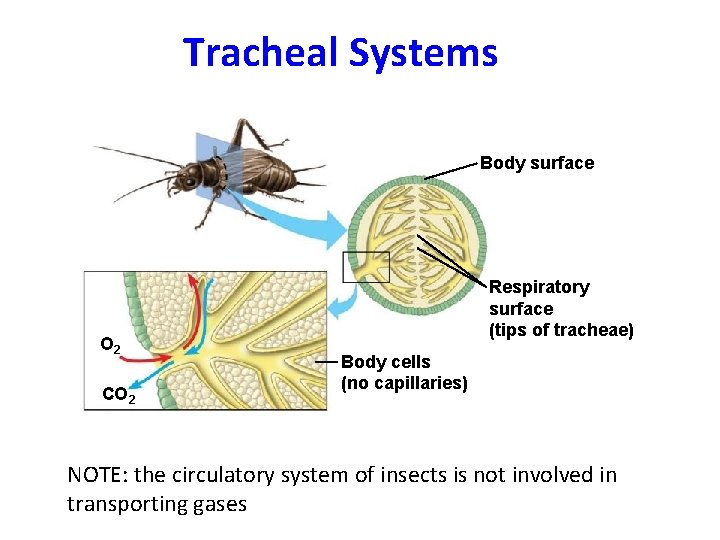
Animals exchange O 2 and CO 2 across moist body surfaces • Most animals have specialized body parts that promote gas exchange: – gills in most aquatic animals, – tracheal systems in insects, and – lungs in terrestrial vertebrates. • Many animals have adaptations to improve ventilation, the flow of water or air over the respiratory surface.
Gills Body surface Respiratory surface (gills) CO 2 Capillary
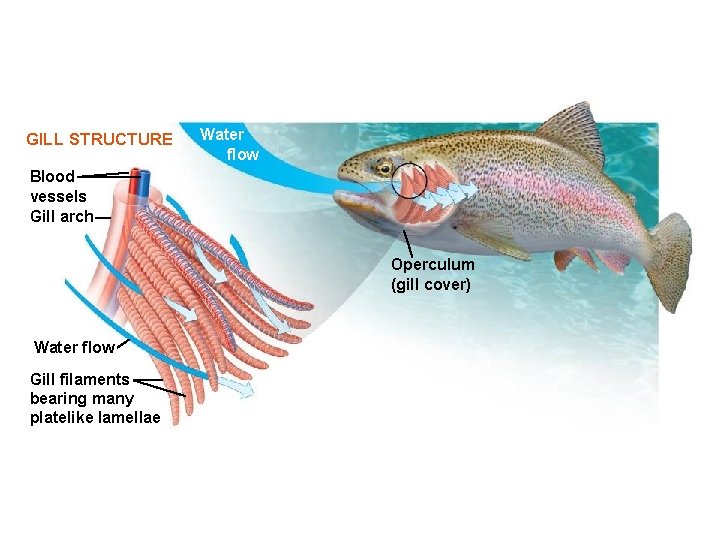
GILL STRUCTURE Water flow Blood vessels Gill arch Operculum (gill cover) Water flow Gill filaments bearing many platelike lamellae
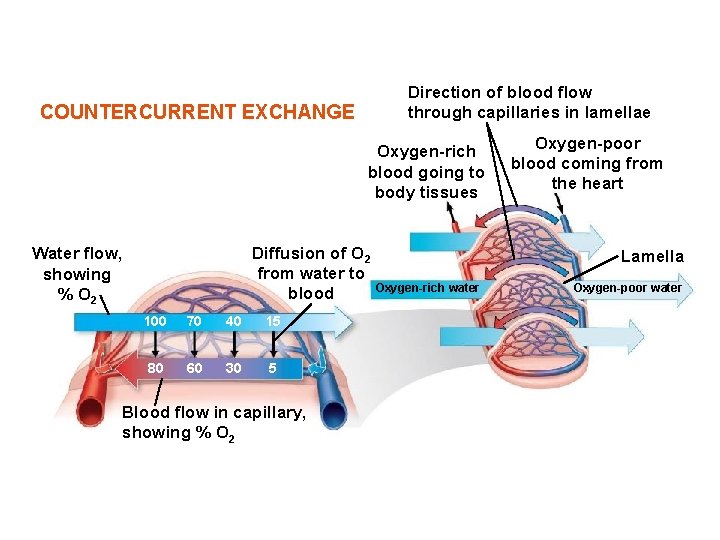
COUNTERCURRENT EXCHANGE Direction of blood flow through capillaries in lamellae Oxygen-rich blood going to body tissues Diffusion of O 2 from water to Oxygen-rich water blood Water flow, showing % O 2 100 70 40 15 80 60 30 5 Blood flow in capillary, showing % O 2 Oxygen-poor blood coming from the heart Lamella Oxygen-poor water
Tracheal Systems Body surface O 2 CO 2 Respiratory surface (tips of tracheae) Body cells (no capillaries) NOTE: the circulatory system of insects is not involved in transporting gases
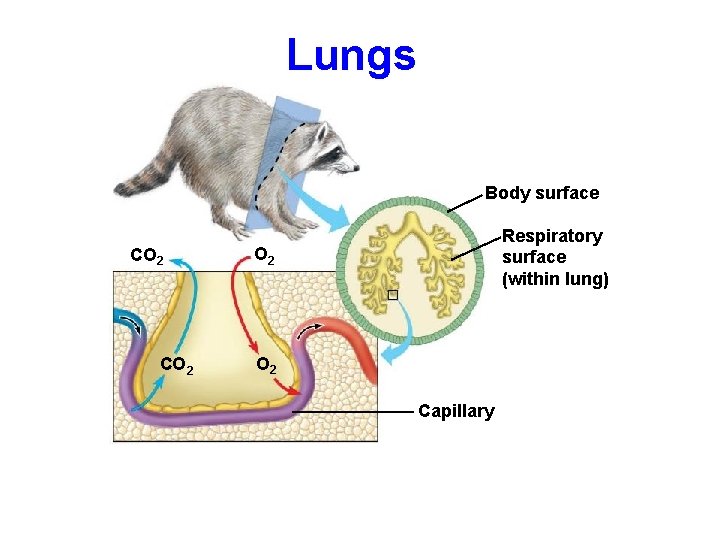
Lungs Body surface CO 2 Respiratory surface (within lung) O 2 Capillary
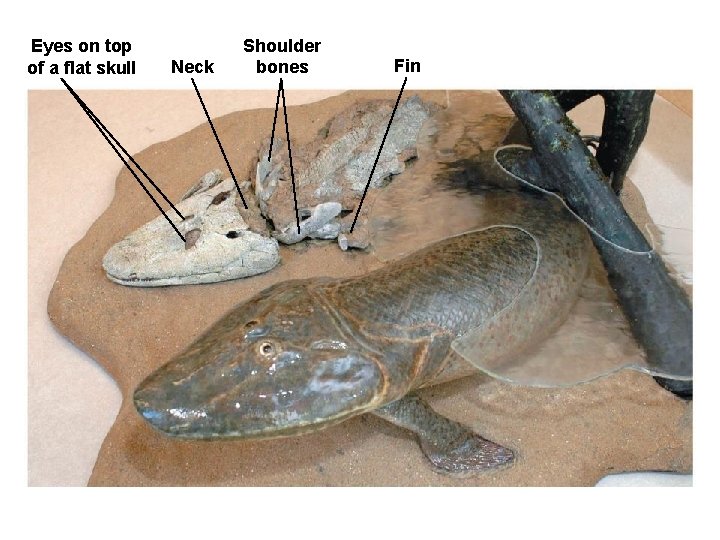
EVOLUTION CONNECTION: The evolution of lungs facilitated the movement of tetrapods onto land • Tetrapods seem to have evolved in shallow water. – Fossil fish with legs had lungs and gills. – Legs may have helped them lift up to gulp air. – The fossil fish Tiktaalik • lived about 375 million years ago and • illustrates these air-breathing adaptations.
Eyes on top of a flat skull Neck Shoulder bones Fin
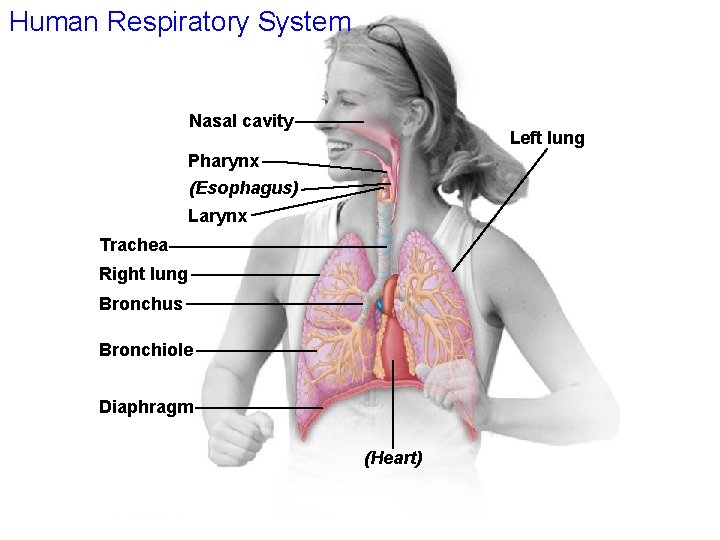
Human Respiratory System Nasal cavity Left lung Pharynx (Esophagus) Larynx Trachea Right lung Bronchus Bronchiole Diaphragm (Heart)
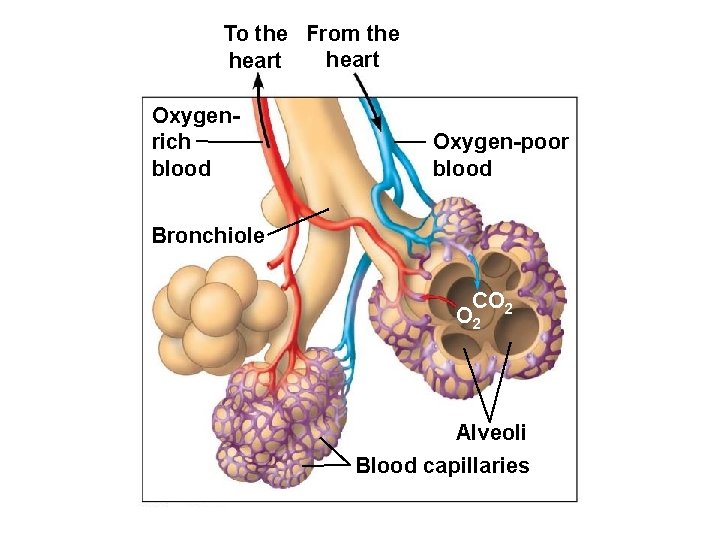
To the From the heart Oxygenrich blood Oxygen-poor blood Bronchiole CO O 2 2 Alveoli Blood capillaries
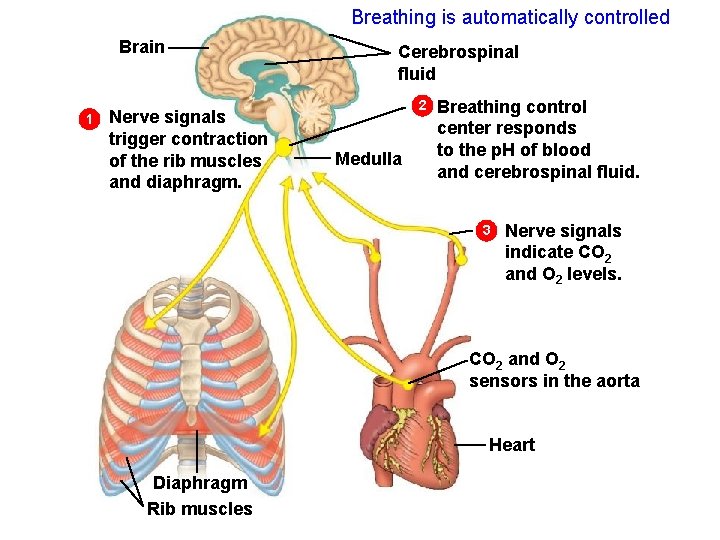
Breathing is automatically controlled Brain 1 Nerve signals trigger contraction of the rib muscles and diaphragm. Cerebrospinal fluid 2 Medulla Breathing control center responds to the p. H of blood and cerebrospinal fluid. 3 Nerve signals indicate CO 2 and O 2 levels. CO 2 and O 2 sensors in the aorta Heart Diaphragm Rib muscles
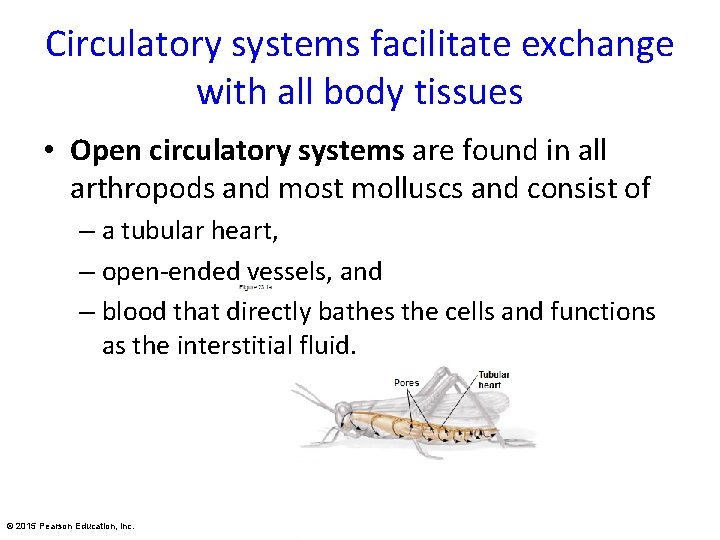
Circulatory systems facilitate exchange with all body tissues • Open circulatory systems are found in all arthropods and most molluscs and consist of – a tubular heart, – open-ended vessels, and – blood that directly bathes the cells and functions as the interstitial fluid. © 2015 Pearson Education, Inc.
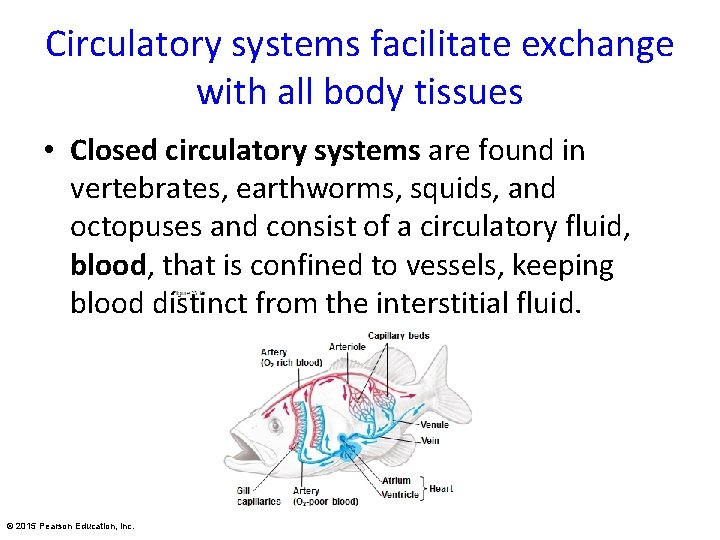
Circulatory systems facilitate exchange with all body tissues • Closed circulatory systems are found in vertebrates, earthworms, squids, and octopuses and consist of a circulatory fluid, blood, that is confined to vessels, keeping blood distinct from the interstitial fluid. © 2015 Pearson Education, Inc.
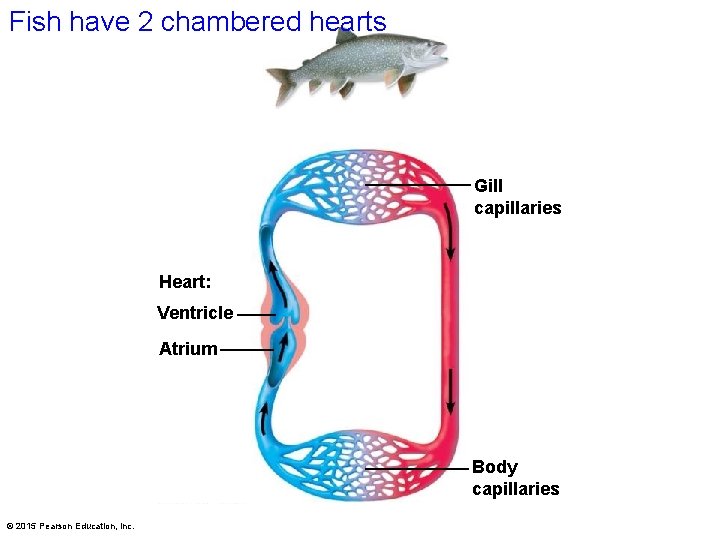
EVOLUTION CONNECTION: Vertebrate cardiovascular systems reflect evolution • Blood passes through the heart of a fish once in each circuit through the body, an arrangement called single circulation. • A single circuit would not supply enough pressure to move blood through the capillaries of the lungs and then to the body capillaries of a terrestrial vertebrate. © 2015 Pearson Education, Inc.
Fish have 2 chambered hearts Gill capillaries Heart: Ventricle Atrium Body capillaries © 2015 Pearson Education, Inc.
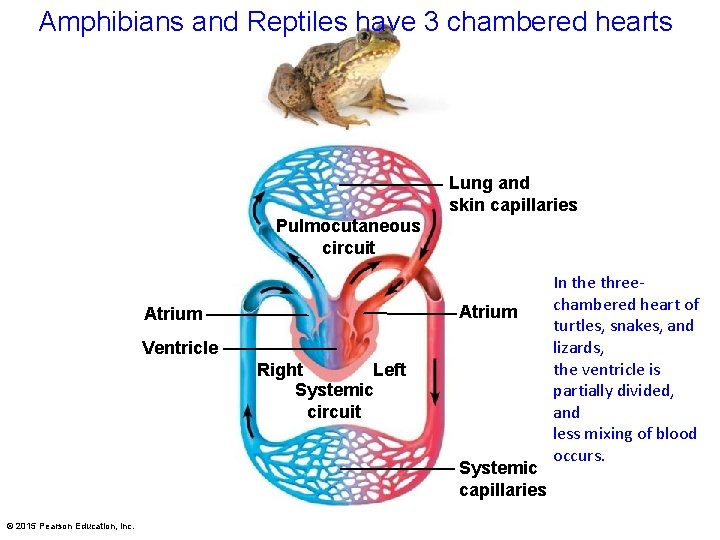
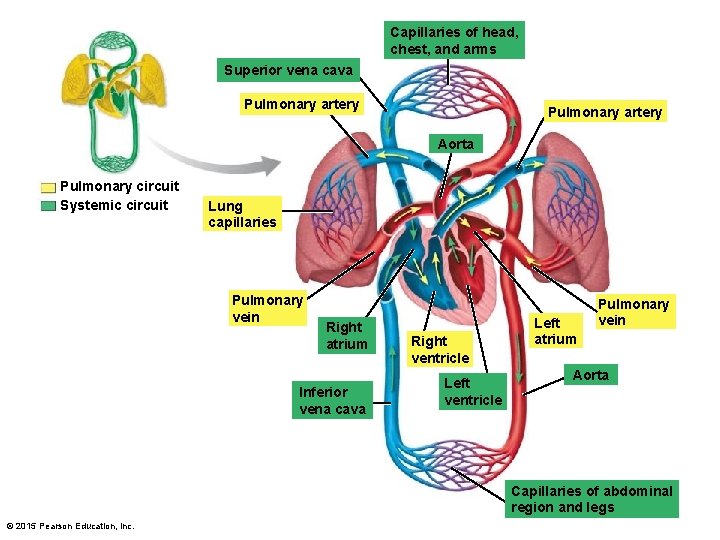
EVOLUTION CONNECTION: Vertebrate cardiovascular systems reflect evolution • Land vertebrates have a double circulation in which blood is pumped a second time after it loses pressure in the lungs. – The pulmonary circuit carries blood between the heart and gas exchange tissues in the lungs. – The systemic circuit carries blood between the heart and the rest of the body. © 2015 Pearson Education, Inc.
Amphibians and Reptiles have 3 chambered hearts Lung and skin capillaries Pulmocutaneous circuit Atrium Ventricle Left Right Systemic circuit Systemic capillaries © 2015 Pearson Education, Inc. In the threechambered heart of turtles, snakes, and lizards, the ventricle is partially divided, and less mixing of blood occurs.
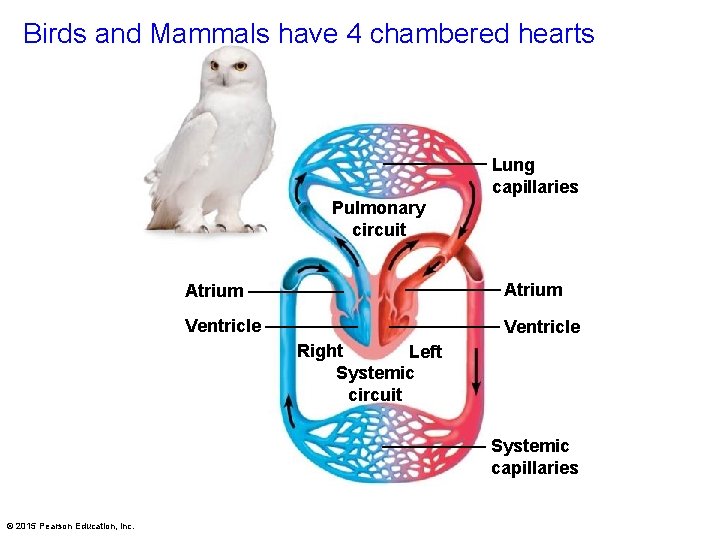
Birds and Mammals have 4 chambered hearts Lung capillaries Pulmonary circuit Atrium Ventricle Right Left Systemic circuit Systemic capillaries © 2015 Pearson Education, Inc.
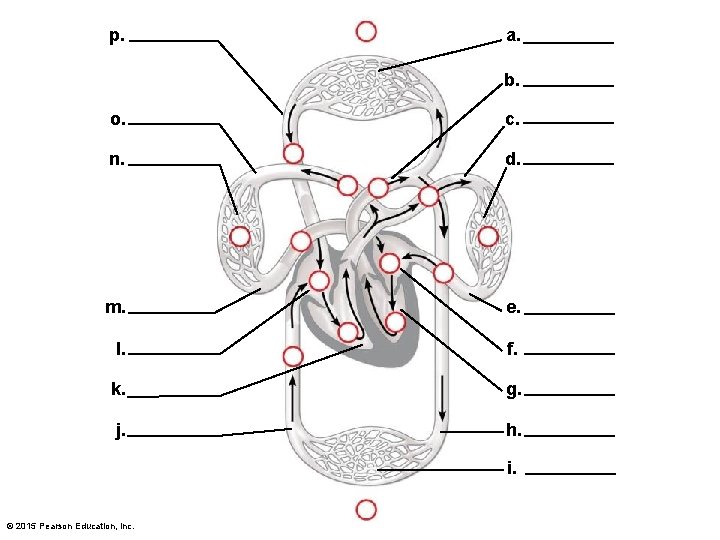
Capillaries of head, chest, and arms Superior vena cava Pulmonary artery Aorta Pulmonary circuit Systemic circuit Lung capillaries Pulmonary vein Right atrium Inferior vena cava Right ventricle Left atrium Pulmonary vein Aorta Capillaries of abdominal region and legs © 2015 Pearson Education, Inc.
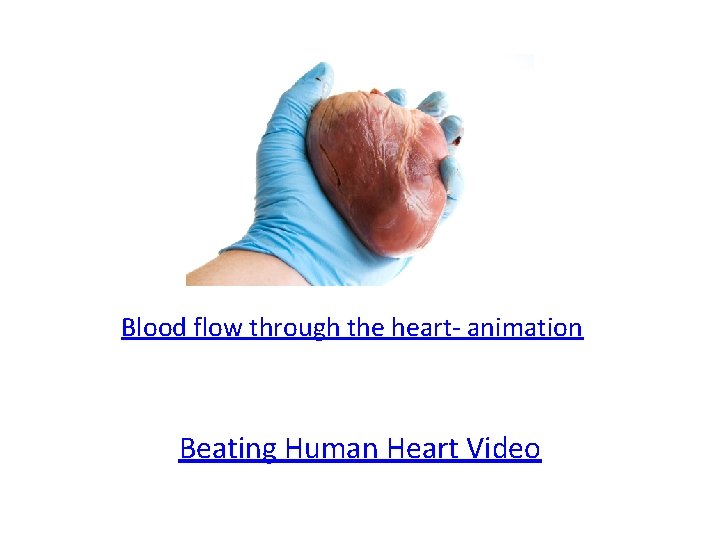
Blood flow through the heart- animation Beating Human Heart Video
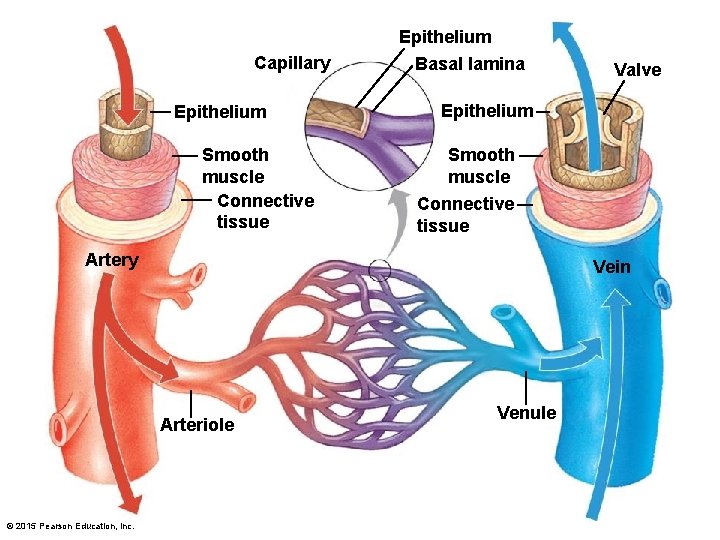
Capillary Epithelium Smooth muscle Connective tissue Epithelium Basal lamina Epithelium Smooth muscle Connective tissue Artery Vein Arteriole © 2015 Pearson Education, Inc. Valve Venule
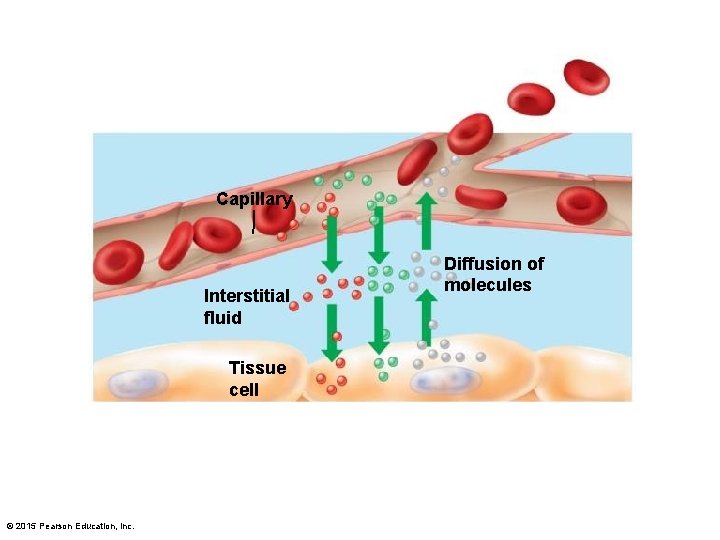
Capillary Interstitial fluid Tissue cell © 2015 Pearson Education, Inc. Diffusion of molecules
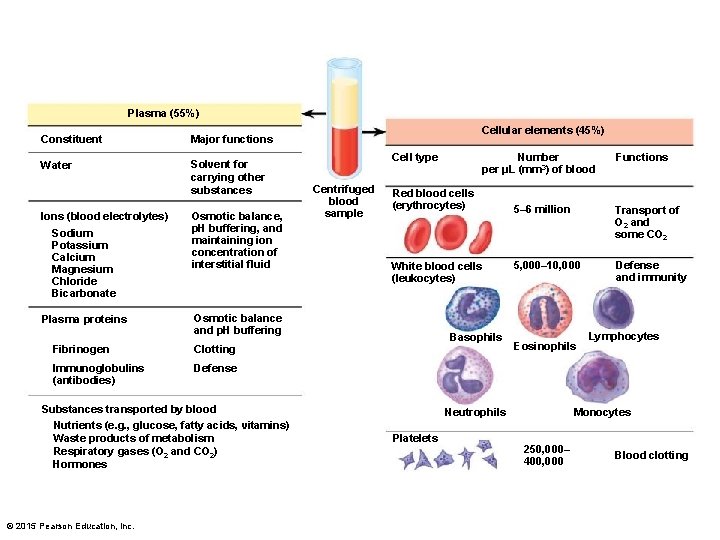
Plasma (55%) Constituent Major functions Water Solvent for carrying other substances Ions (blood electrolytes) Sodium Potassium Calcium Magnesium Chloride Bicarbonate Plasma proteins Osmotic balance, p. H buffering, and maintaining ion concentration of interstitial fluid Cell type Centrifuged blood sample Clotting Immunoglobulins (antibodies) Defense Substances transported by blood Nutrients (e. g. , glucose, fatty acids, vitamins) Waste products of metabolism Respiratory gases (O 2 and CO 2) Hormones Number per μL (mm 3) of blood Red blood cells (erythrocytes) White blood cells (leukocytes) Osmotic balance and p. H buffering Fibrinogen © 2015 Pearson Education, Inc. Cellular elements (45%) Basophils 5– 6 million Transport of O 2 and some CO 2 5, 000– 10, 000 Defense and immunity Eosinophils Lymphocytes Monocytes Neutrophils Platelets Functions 250, 000– 400, 000 Blood clotting
p. a. b. o. c. n. d. m. e. l. f. k. g. j. h. i. © 2015 Pearson Education, Inc.