
Respiratory and Circulatory System Model By Sarah Newman
Respiratory and Circulatory System Model By: Sarah Newman, Hannah Cook, Sierra Aghazadeh, Noah Taylor
Introduction: An organ system is a group of organs that work together to perform one or more functions. Each organ does a particular job in the body, and is made up of certain tissues. There are 11 organ systems that help the human body function, our specific one is the respiratory. When it comes to making the organ system function, the organ structures of the organ systems take a huge part. They are organized in a ranking way. The systems made up of different cells, are the most basic. This causes the different tissues to form and create different organs, and organ systems. Each one serves a different function. This is because of the different structures and tissues in the body. Without these functions taking place in all the organ systems in your body, maintaining homeostasis wouldn’t be possible, and neither would survival.
Respiratory System: The respiratory system is the main organ system involved with getting enough oxygen into your body and making sure that you are exhaling all of the bad gases that could be harmful to your body. The respiratory system consists of the lungs, trachea, bronchial tubes, lung lobules, alveoli, and capillaries. After inhaling air, the air travels past our sinuses and through our trecea into your lungs where the oxygen gets absorbed by the alveoli which forms a wall inside the lung walls. The alveo walls are about 0. 2 micrometers and are made of a single layer of epithelial cells and pulmonary capillaries. Once the air has been absorbed into the capillaries, the oxygen attaches to blood cells and the blood cells travel through the heart where it is pumped around the body delivering oxygen to each cell. While the capillaries are delivering oxygen to the cells, they are collecting carbon dioxide and other wastes.
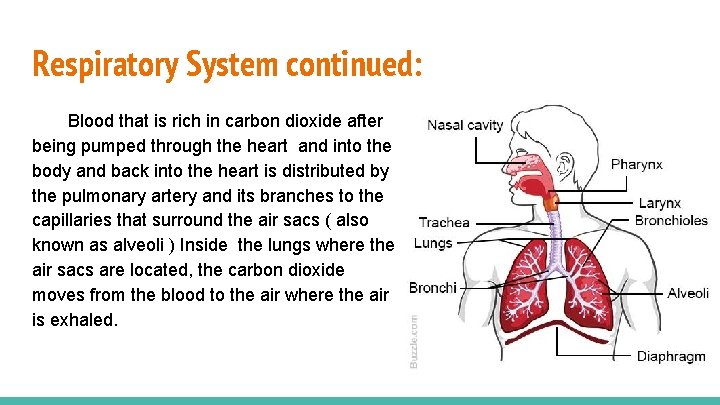
Respiratory System continued: Blood that is rich in carbon dioxide after being pumped through the heart and into the body and back into the heart is distributed by the pulmonary artery and its branches to the capillaries that surround the air sacs ( also known as alveoli ) Inside the lungs where the air sacs are located, the carbon dioxide moves from the blood to the air where the air is exhaled.
Respiratory System in Our Model: In our model the clear water represents the oxygen that has just been inhaled by the lungs. The red water represents the blood that meets up with oxygen where a gas exchange occurs in the alveolar wall represented by the first green balloon. Then both waters mix representing the oxygen attaching to the red blood cells. This is the first function being represented in our model.
Circulatory System: The circulatory system is the organ system that lets blood circulate around the body and transport nutrients, oxygen, CO 2, hormones, and blood throughout the body. The circulatory system works by having the deoxygenated blood return to the right atrium before being passed into the right ventricle to be pumped through the lungs and become oxygenated. The newly oxygenated blood is passed into the left atrium before being passed to the left ventricle to be pumped through the aorta and throughout the body before returning and having the cycle start again.
Circulatory System continued: The circulatory system is used for transporting nutrients, oxygen, carbon dioxide, hormones, and blood cells to and from the cells in the body to nourish them and help maintain homeostasis. The main function of the circulatory system is to move blood and lymph through the body. Doing this, transports nutrients and oxygen to the cells of the body and removes waste products such as carbon dioxide. This system is essential to regulate temperature and p. H balance. Also, protect the body from diseases. The organs in the circulatory system are the heart, blood vessels, and the lungs. The major tissues used are the epithelial tissues(protective tissue), muscle tissue(cardiac in heart, third layer of arteries, and the middle layer of veins), nervous tissue(react to stimuli), and connective tissue(body “glue”). The main cells used in the circulatory system are red blood cells, white blood cells, and platelets(small blood fragments to help blood mend wounds with clotting).
Circulatory System in our model: The second green balloon in our model represents the heart which is a part of the circulatory system and the flow of the red water (blood) through the tubes (veins and arteries) is the function being represented in our model. The blood being pumped to and from the cells through the veins and arteries (clear tubes) is another circulatory system function that is being represented in our model. Another function being represented is the heart pumping blood to and from the cells and lungs. The water (blood) is being pumped though our model with a water pump.
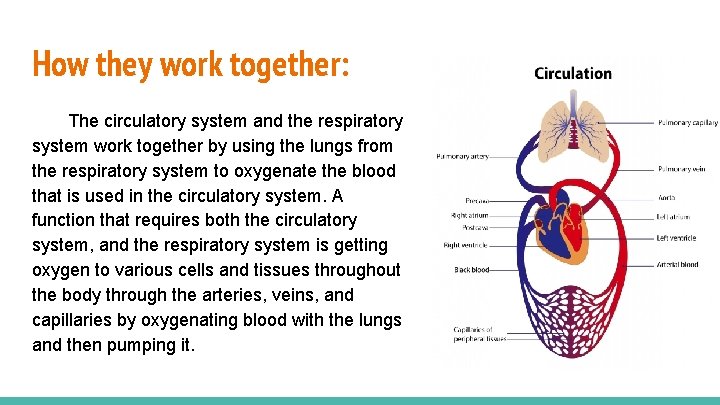
How they work together: The circulatory system and the respiratory system work together by using the lungs from the respiratory system to oxygenate the blood that is used in the circulatory system. A function that requires both the circulatory system, and the respiratory system is getting oxygen to various cells and tissues throughout the body through the arteries, veins, and capillaries by oxygenating blood with the lungs and then pumping it.
Both Functions Working Together in Our Model: In our model we show the red oxygenated blood going to the cells and blue blood that in carrying waste given off by the cells back through the heart where the blood gets pumped and back to the lungs where the unnecessary gases are exhaled. This is represented with the different colored water flowing through the heart, veins, arteries, and alveolar wall.
Conclusion: Our model was built to show the importance of the respiratory and circulatory systems and it’s importance in the human body by building a model. Both systems play a major part in our everyday life and this partnership the two systems have with each other occurs with every system in your body. All of the systems work together to create spectacular organisms which can only be formed with the billions of cell that are working hard everyday to keep the organism functioning.
Bibliography: 1. “Human Circulatory system. ” Human Circulatory System. N. p. , n. p. Web. 23 Jan. 2017. 2. "Circulatory System. " Wikipedia. Wikimedia Foundation, n. d. Web. 24 Jan. 2017. 3. "Main Circulatory System Organs and Their Functions Everyone Needs to Know. " New Health Advisor. N. p. , 24 July 2015. Web. 24 Jan. 2017. 4. "Major Organs, Tissues, and Cells. " The Circulatory System. N. p. , n. d. Web. 24 Jan. 2017. 5. "Respiratory System: Facts, Function and Diseases. " Live. Science. Purch, n. d. Web. 24 Jan. 2017.
- Slides: 12