
Respiration Think pair share The word equation for




- Slides: 20
Respiration
Think, pair, share • The word equation for respiration. • Where aerobic respiration takes place in the cell. • Why do cells need energy?
Energy in Cells need energy for; Cell division, growth, muscle contraction and synthesising large molecules. Where does this energy come from?
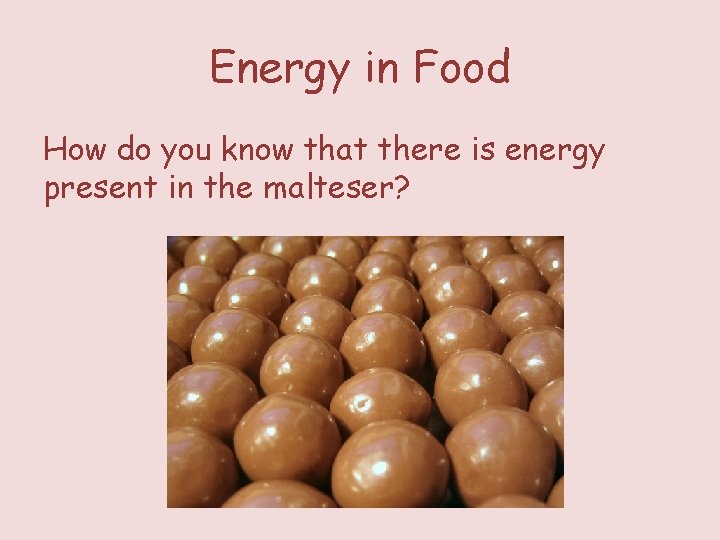
Energy in Food How do you know that there is energy present in the malteser?
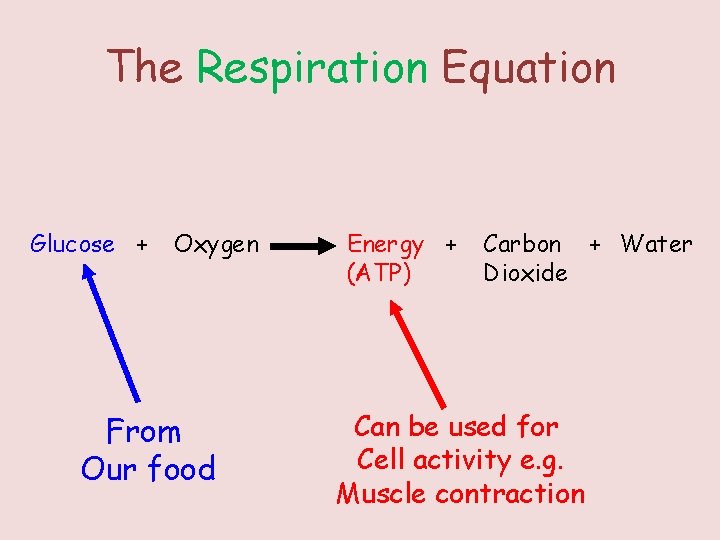
The Respiration Equation Glucose + Oxygen From Our food Energy + (ATP) Carbon + Water Dioxide Can be used for Cell activity e. g. Muscle contraction
Respiration is a series of enzyme controlled reactions that releases the chemical energy stored in glucose.
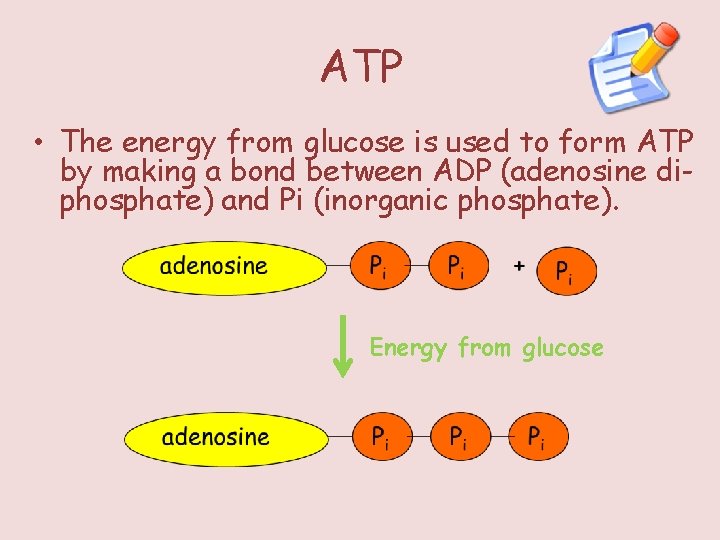
ATP • The energy from glucose is used to form ATP by making a bond between ADP (adenosine diphosphate) and Pi (inorganic phosphate). Energy from glucose
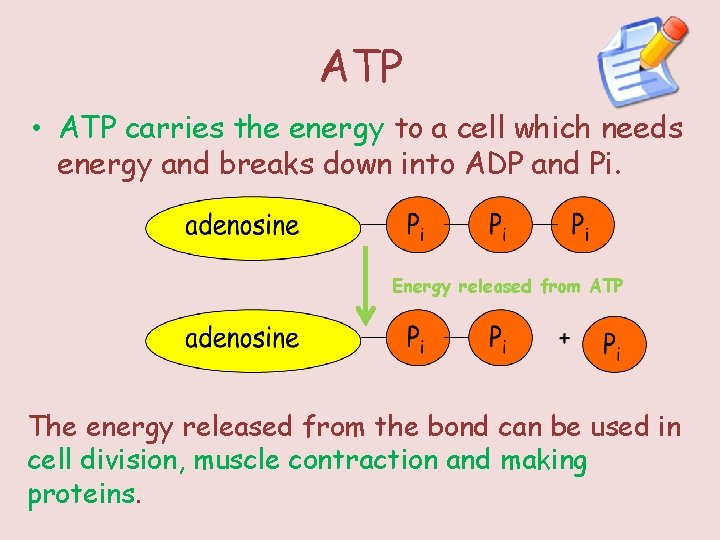
ATP • ATP carries the energy to a cell which needs energy and breaks down into ADP and Pi. Energy released from ATP The energy released from the bond can be used in cell division, muscle contraction and making proteins.
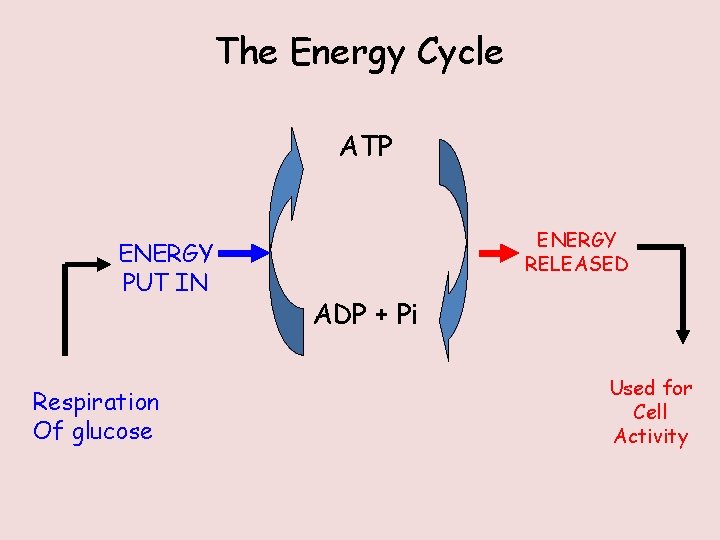
The Energy Cycle ATP ENERGY PUT IN Respiration Of glucose ENERGY RELEASED ADP + Pi Used for Cell Activity
Quick Questions 1. What is respiration? 2. What is the equation for respiration? 3. What form does the energy take when it is released from food? 4. What does ATP stand for? 5. What can ATP be used for?
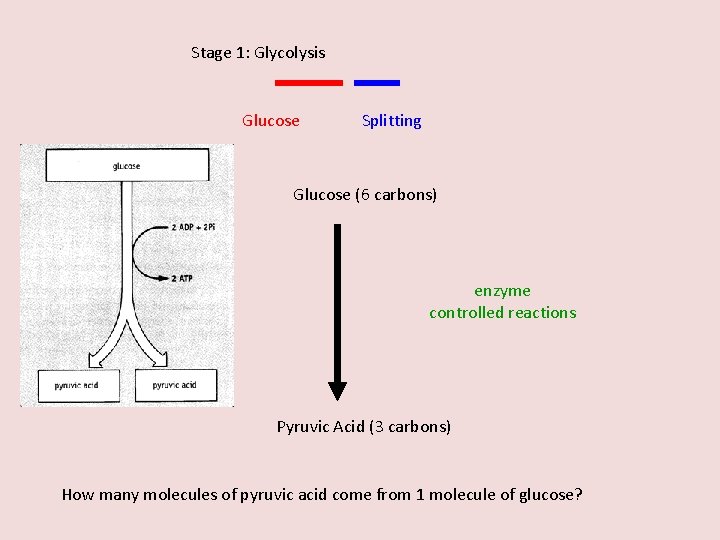
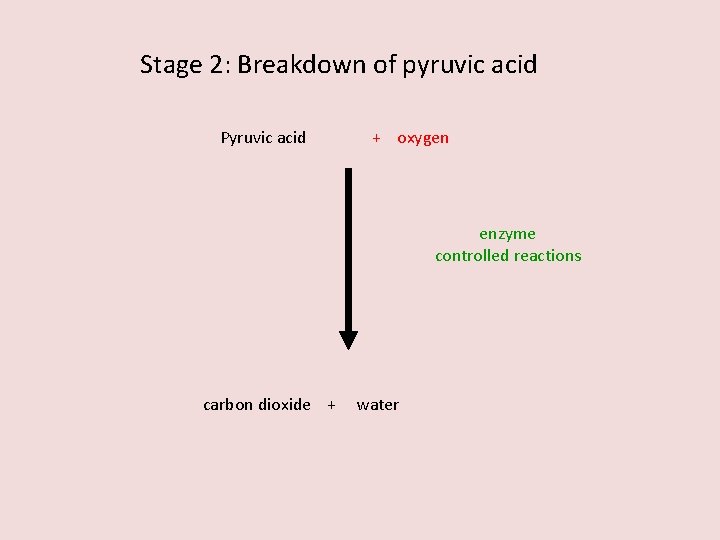
Aerobic Respiration Using Oxygen Breakdown of glucose to release energy in the presence of oxygen is a two step process: 1. Glycolysis: Glucose is split in two becoming pyruvic acid 2. Breakdown of pyruvic acid into simple products
Stage 1: Glycolysis Glucose Splitting Glucose (6 carbons) enzyme controlled reactions Pyruvic Acid (3 carbons) How many molecules of pyruvic acid come from 1 molecule of glucose?
Stage 2: Breakdown of pyruvic acid Pyruvic acid + oxygen enzyme controlled reactions carbon dioxide + water
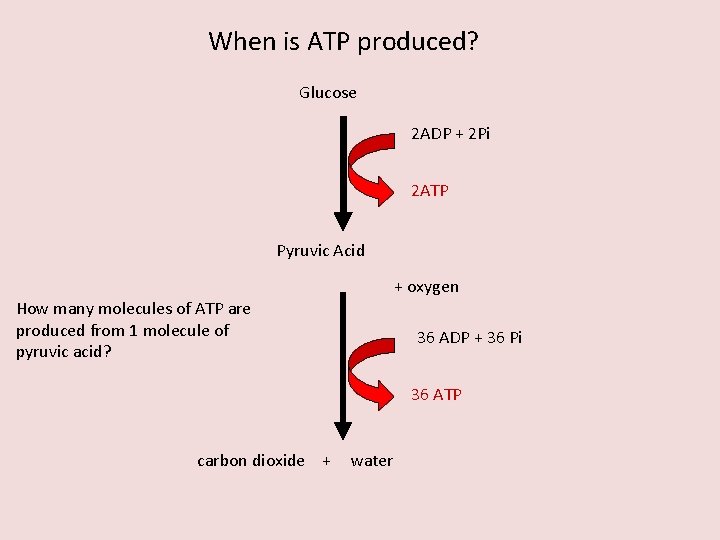
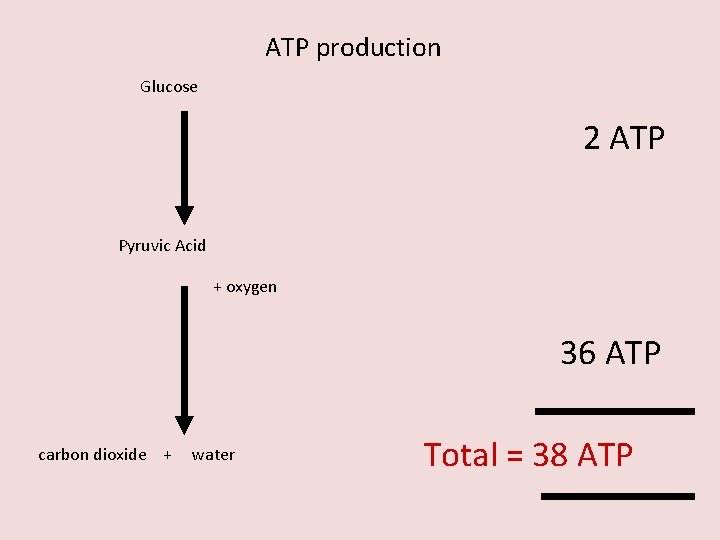
When is ATP produced? Glucose 2 ADP + 2 Pi 2 ATP Pyruvic Acid + oxygen How many molecules of ATP are produced from 1 molecule of pyruvic acid? 36 ADP + 36 Pi 36 ATP carbon dioxide + water
ATP production Glucose 2 ATP Pyruvic Acid + oxygen 36 ATP carbon dioxide + water Total = 38 ATP
Anaerobic Respiration in Plants and Yeast no oxygen Glucose 2 ADP + Pi 2 ATP Total 2 ATP Pyruvic Acid No ATP Ethanol and Carbon Dioxide
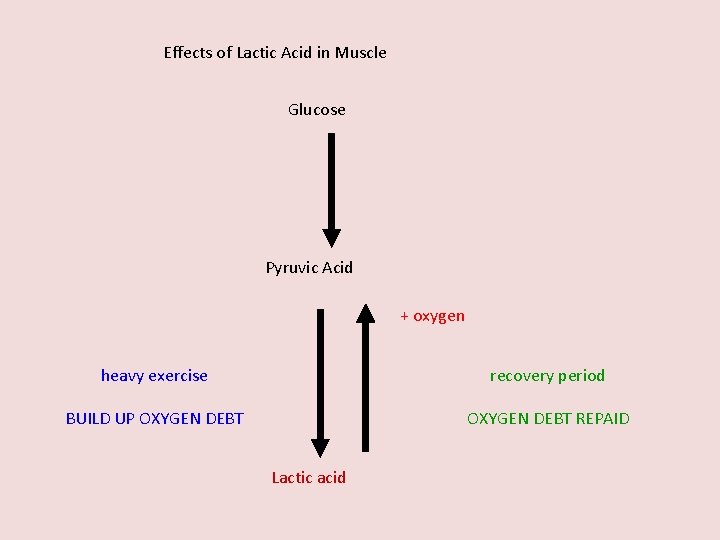
Effects of Lactic Acid in Muscle Glucose Pyruvic Acid + oxygen heavy exercise recovery period BUILD UP OXYGEN DEBT REPAID Lactic acid
3. 5. 3 Comparing aerobic and anaerobic Anaerobic respiration animals plants Glycolysis Yes Yes ATP yield 38 2 2 Carbon dioxide & water Lactic acid Ethanol & Carbon dioxide Products
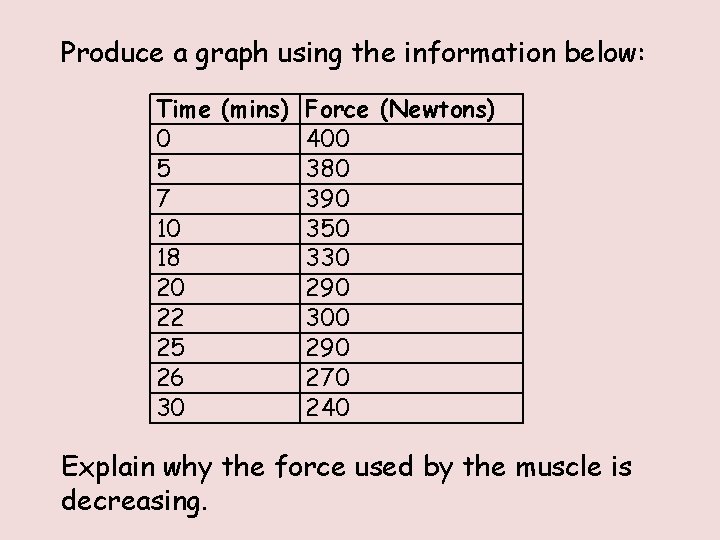
Produce a graph using the information below: Time (mins) Force (Newtons) 0 400 5 380 7 390 10 350 18 330 20 290 22 300 25 290 26 270 30 240 Explain why the force used by the muscle is decreasing.
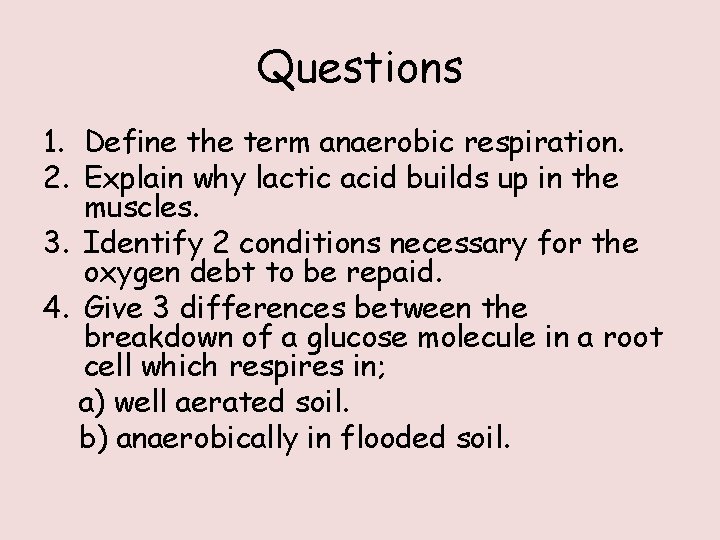
Questions 1. Define the term anaerobic respiration. 2. Explain why lactic acid builds up in the muscles. 3. Identify 2 conditions necessary for the oxygen debt to be repaid. 4. Give 3 differences between the breakdown of a glucose molecule in a root cell which respires in; a) well aerated soil. b) anaerobically in flooded soil.