
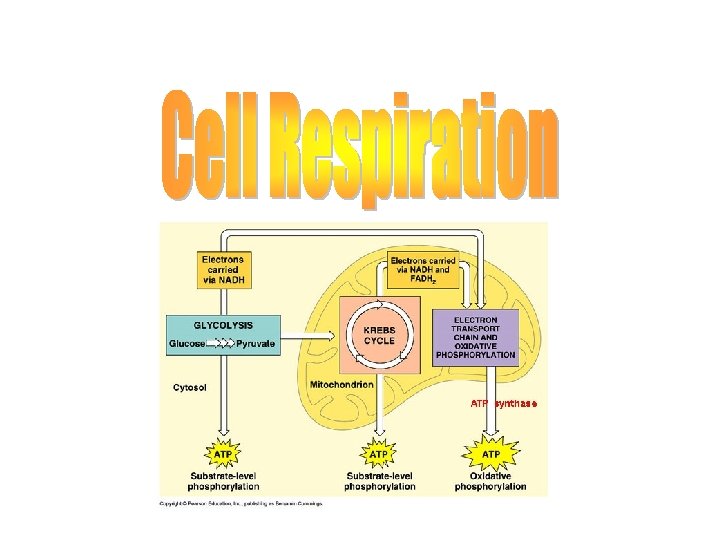
Respiration The process by which food molecules glucose
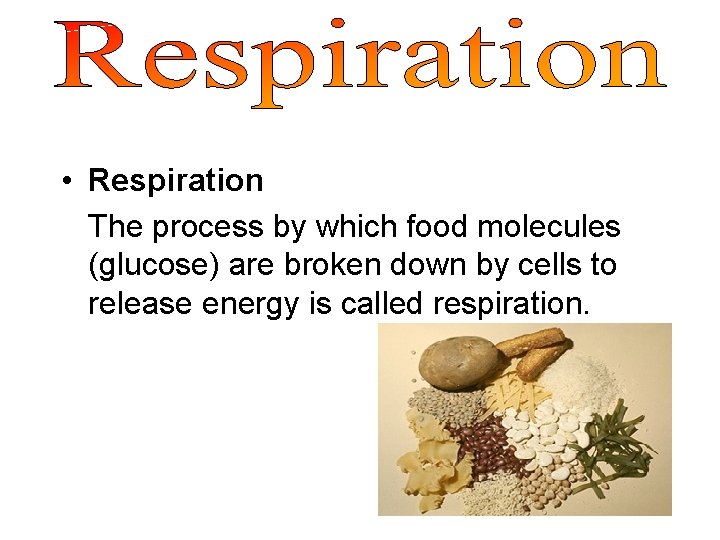
• Respiration The process by which food molecules (glucose) are broken down by cells to release energy is called respiration.
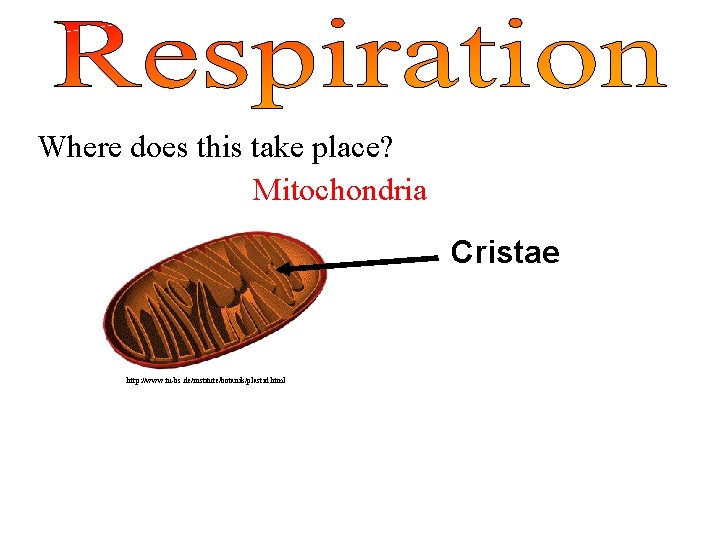
Where does this take place? Mitochondria Cristae http: //www. tu-bs. de/institute/botanik/plastid. html
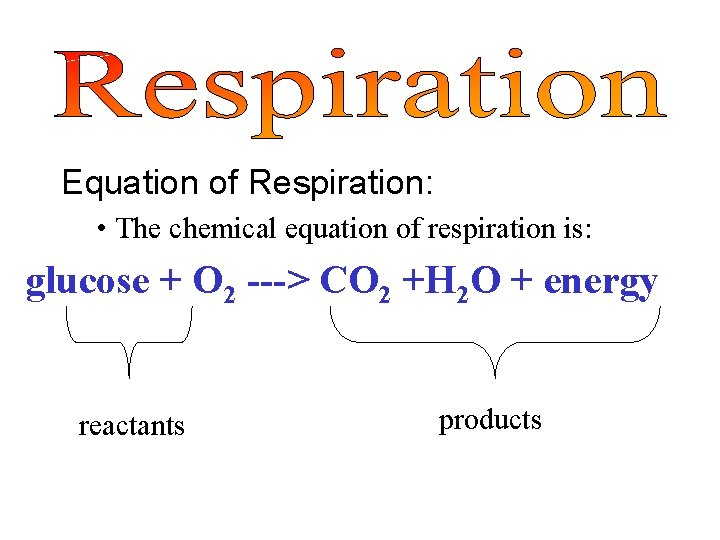
Equation of Respiration: • The chemical equation of respiration is: glucose + O 2 ---> CO 2 +H 2 O + energy reactants products
Where do the reactants for respiration come from? glucose + O 2
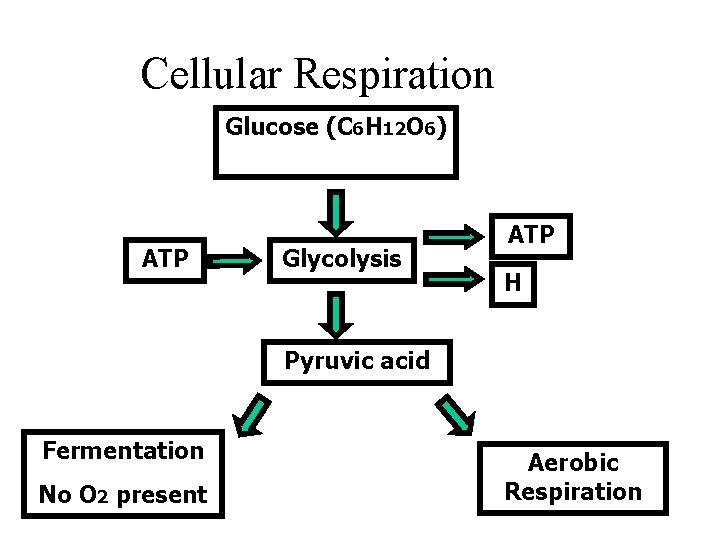
Cellular Respiration Glucose (C 6 H 12 O 6) ATP Glycolysis ATP H Pyruvic acid Fermentation No O 2 present Aerobic Respiration
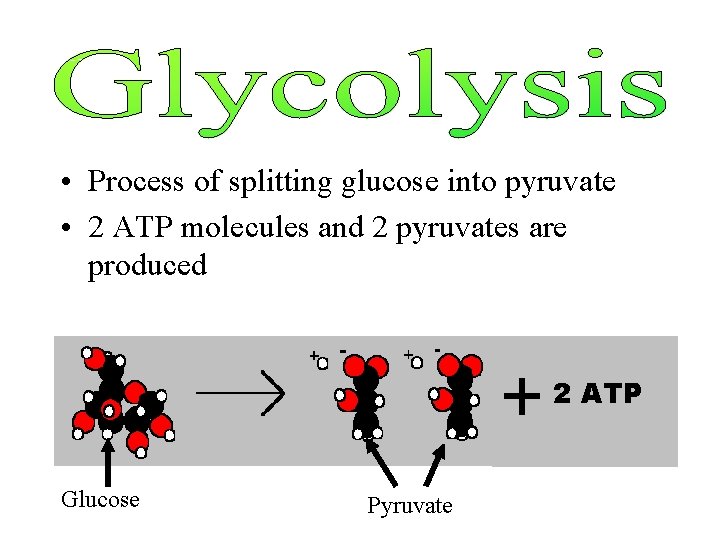
• Process of splitting glucose into pyruvate • 2 ATP molecules and 2 pyruvates are produced 2 ATP Glucose Pyruvate
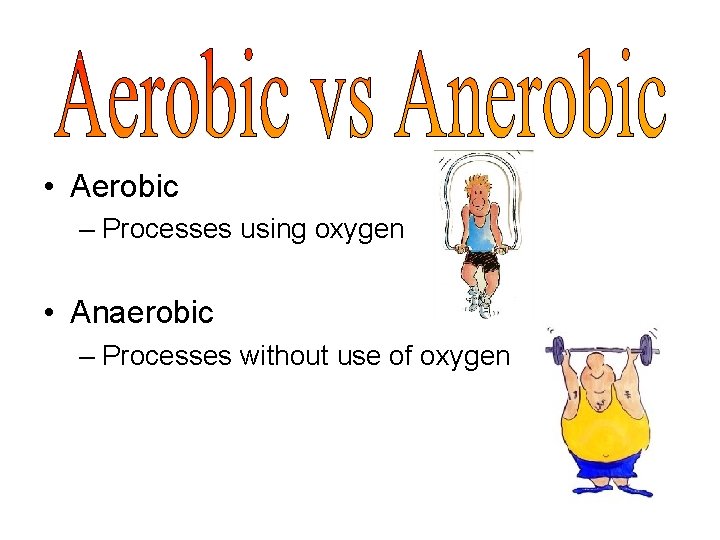
• Aerobic – Processes using oxygen • Anaerobic – Processes without use of oxygen
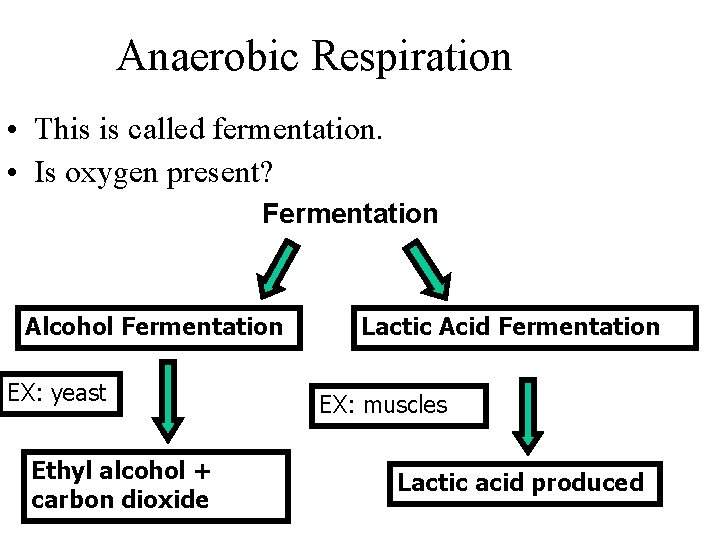
Anaerobic Respiration • This is called fermentation. • Is oxygen present? Fermentation Alcohol Fermentation EX: yeast Ethyl alcohol + carbon dioxide Lactic Acid Fermentation EX: muscles Lactic acid produced
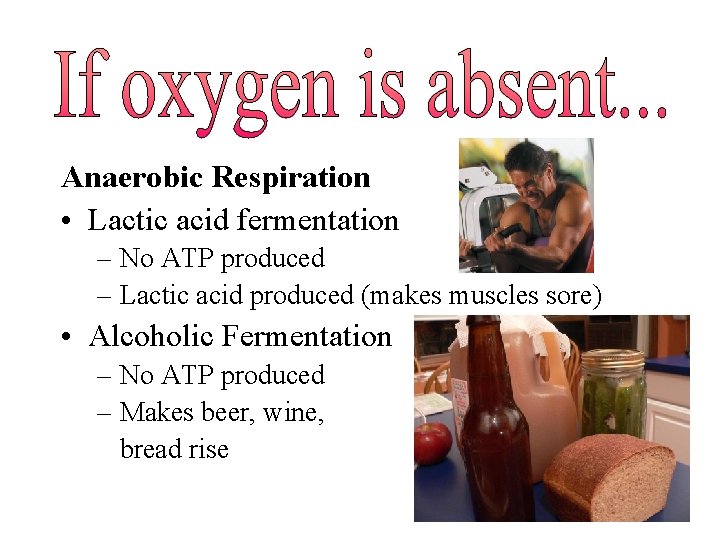
Anaerobic Respiration • Lactic acid fermentation – No ATP produced – Lactic acid produced (makes muscles sore) • Alcoholic Fermentation – No ATP produced – Makes beer, wine, bread rise
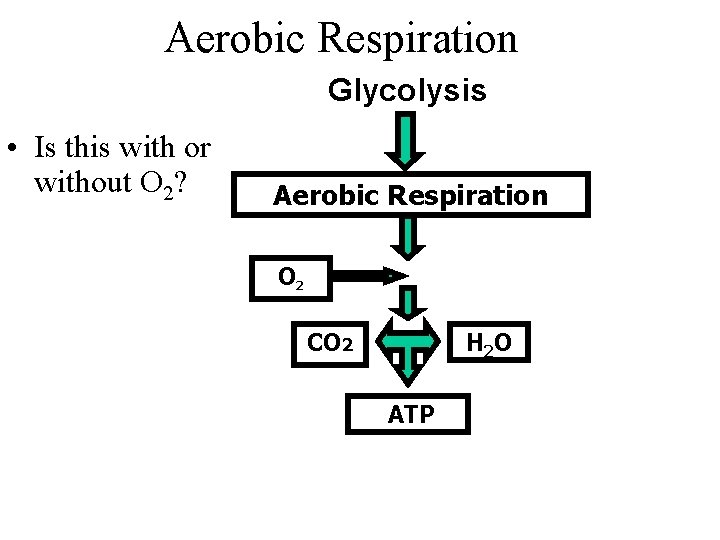
Aerobic Respiration Glycolysis • Is this with or without O 2? Aerobic Respiration O 2 H 2 O CO 2 ATP
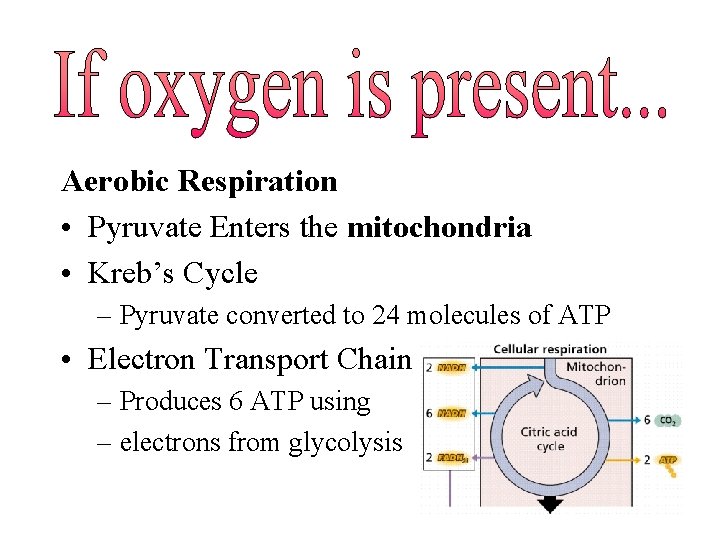
Aerobic Respiration • Pyruvate Enters the mitochondria • Kreb’s Cycle – Pyruvate converted to 24 molecules of ATP • Electron Transport Chain – Produces 6 ATP using – electrons from glycolysis
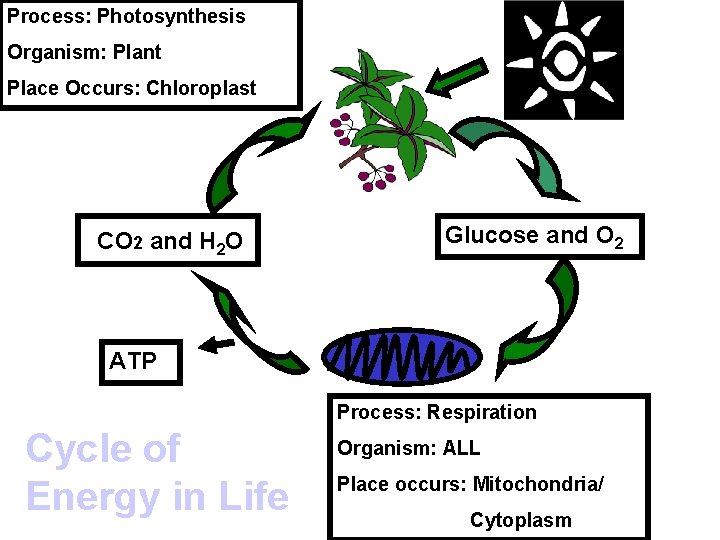
Process: Photosynthesis Organism: Plant Place Occurs: Chloroplast CO 2 and H 2 O Glucose and O 2 ATP Process: Respiration Cycle of Energy in Life Organism: ALL Place occurs: Mitochondria/ Cytoplasm
1. What molecule do animal cells get there energy from? 2. What is happening during glycolysis? 3. Can more ATP be made in aerobic or anaerobic respiration? 4. Where does aerobic respiration take place? 5. Explain the difference between Aerobic and Anaerobic?
- Slides: 14