
Respiration The Four Stages Respiration The 4 Parts

- Slides: 31
Respiration The Four Stages
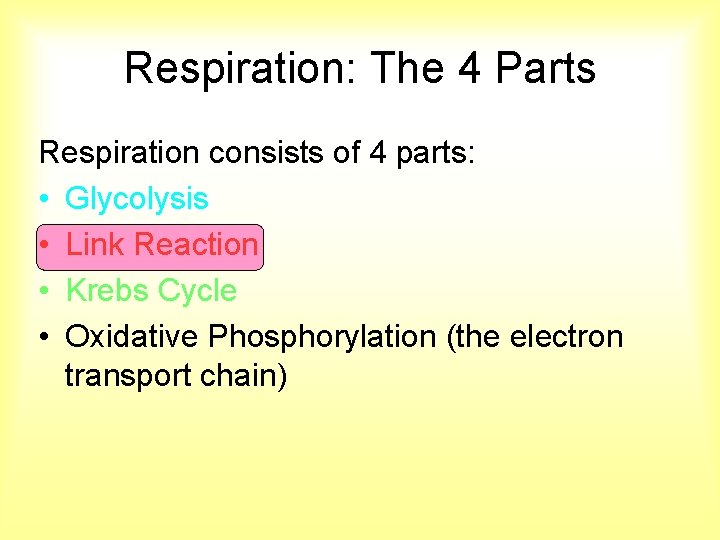
Respiration: The 4 Parts Respiration consists of 4 parts: • Glycolysis • Link Reaction • Krebs Cycle • Oxidative Phosphorylation (the electron transport chain)
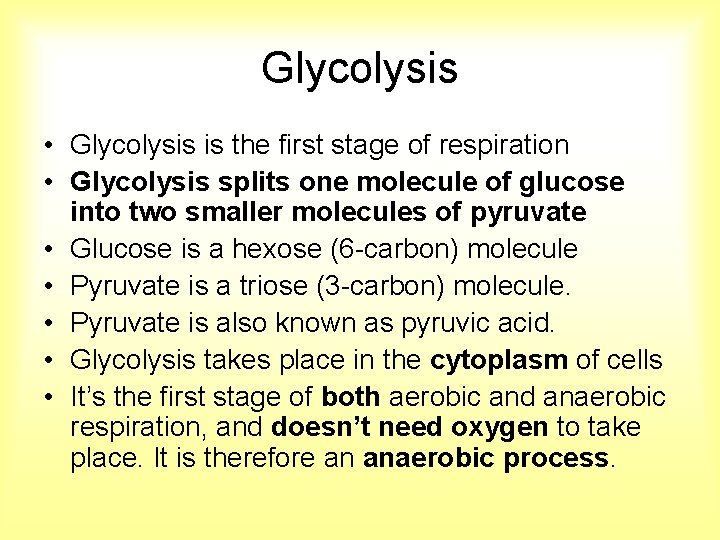
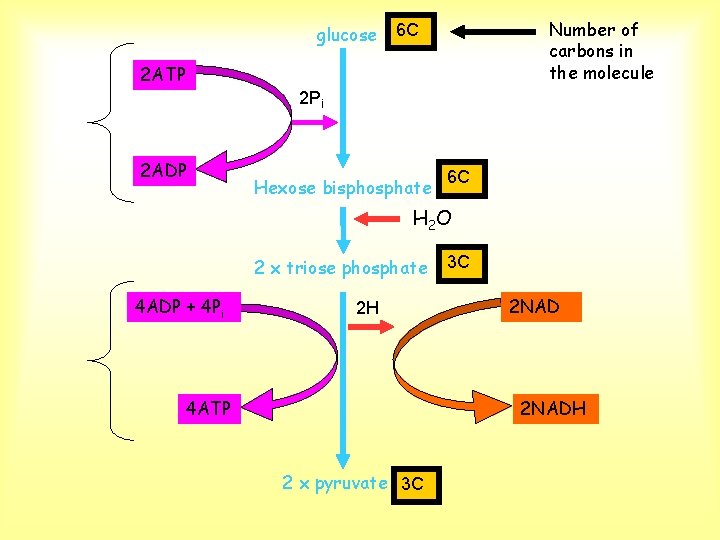
Glycolysis • Glycolysis is the first stage of respiration • Glycolysis splits one molecule of glucose into two smaller molecules of pyruvate • Glucose is a hexose (6 -carbon) molecule • Pyruvate is a triose (3 -carbon) molecule. • Pyruvate is also known as pyruvic acid. • Glycolysis takes place in the cytoplasm of cells • It’s the first stage of both aerobic and anaerobic respiration, and doesn’t need oxygen to take place. It is therefore an anaerobic process.
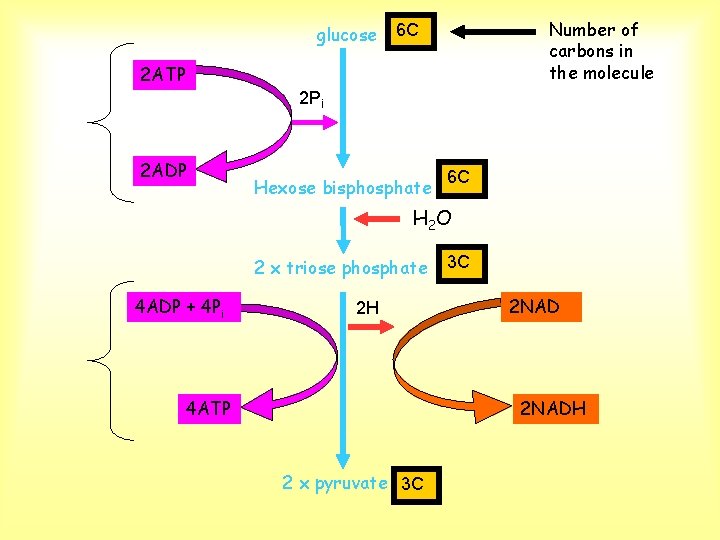
glucose Number of carbons in the molecule 6 C 2 ATP 2 Pi 2 ADP Hexose bisphosphate 6 C H 2 O 2 x triose phosphate 4 ADP + 4 Pi 2 H 4 ATP 3 C 2 NADH 2 x pyruvate 3 C
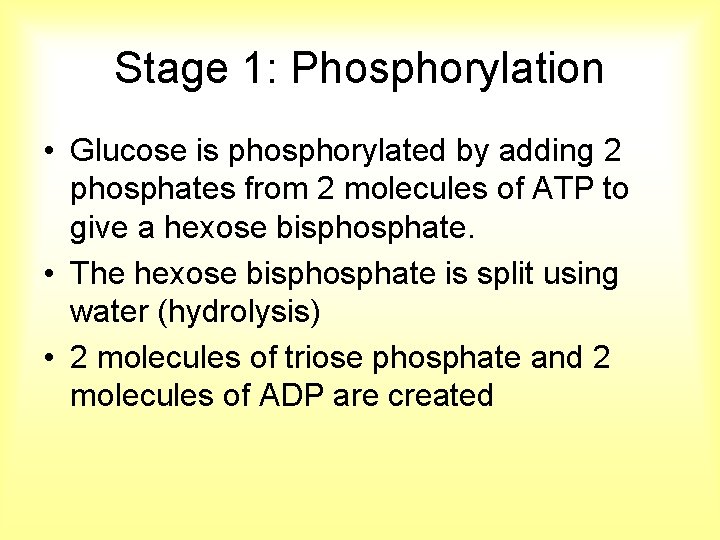
Stage 1: Phosphorylation • Glucose is phosphorylated by adding 2 phosphates from 2 molecules of ATP to give a hexose bisphosphate. • The hexose bisphosphate is split using water (hydrolysis) • 2 molecules of triose phosphate and 2 molecules of ADP are created
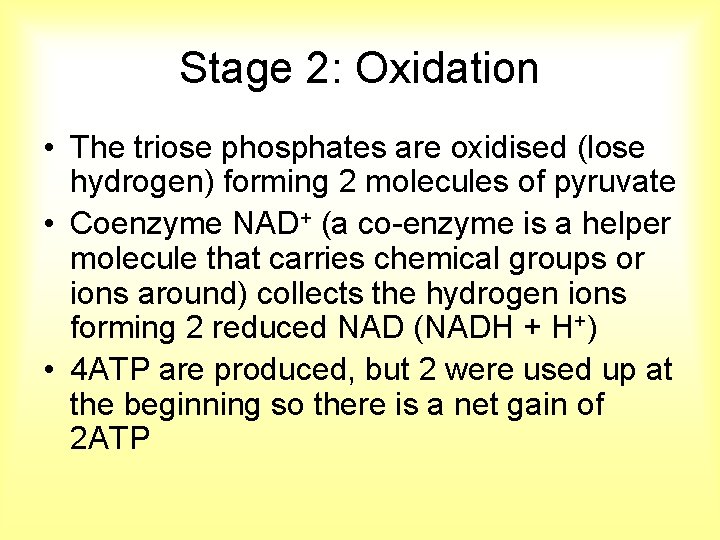
Stage 2: Oxidation • The triose phosphates are oxidised (lose hydrogen) forming 2 molecules of pyruvate • Coenzyme NAD+ (a co-enzyme is a helper molecule that carries chemical groups or ions around) collects the hydrogen ions forming 2 reduced NAD (NADH + H+) • 4 ATP are produced, but 2 were used up at the beginning so there is a net gain of 2 ATP
Respiration: The 4 Parts Respiration consists of 4 parts: • Glycolysis • Link Reaction • Krebs Cycle • Oxidative Phosphorylation (the electron transport chain)
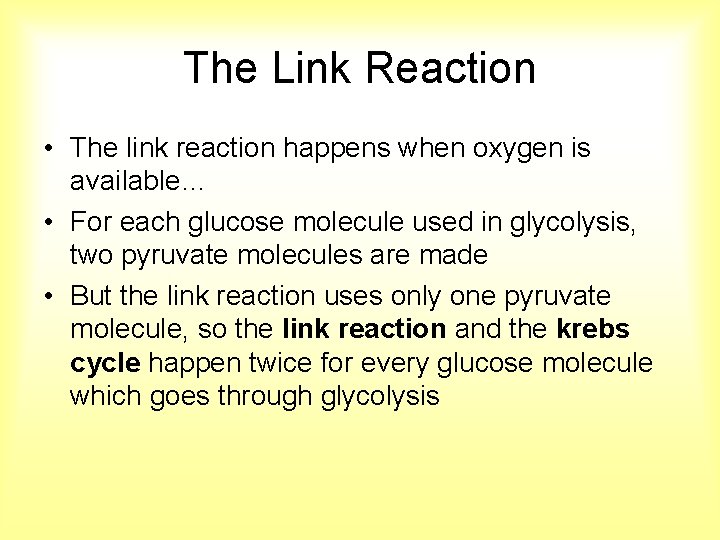
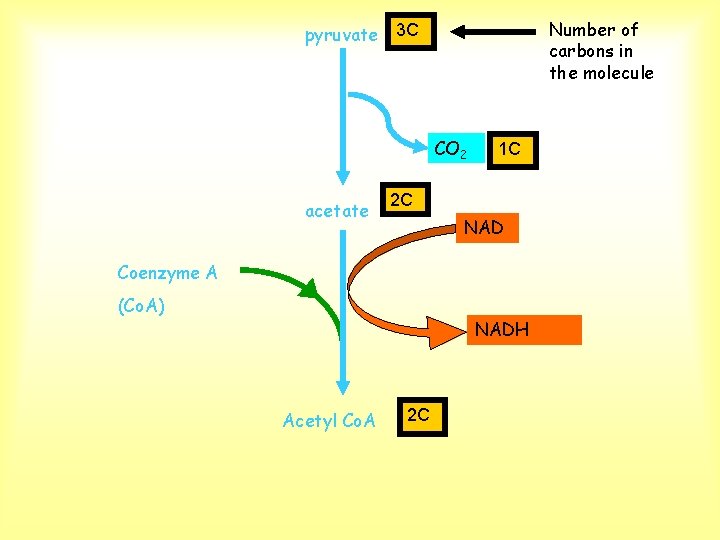
The Link Reaction • The link reaction happens when oxygen is available… • For each glucose molecule used in glycolysis, two pyruvate molecules are made • But the link reaction uses only one pyruvate molecule, so the link reaction and the krebs cycle happen twice for every glucose molecule which goes through glycolysis
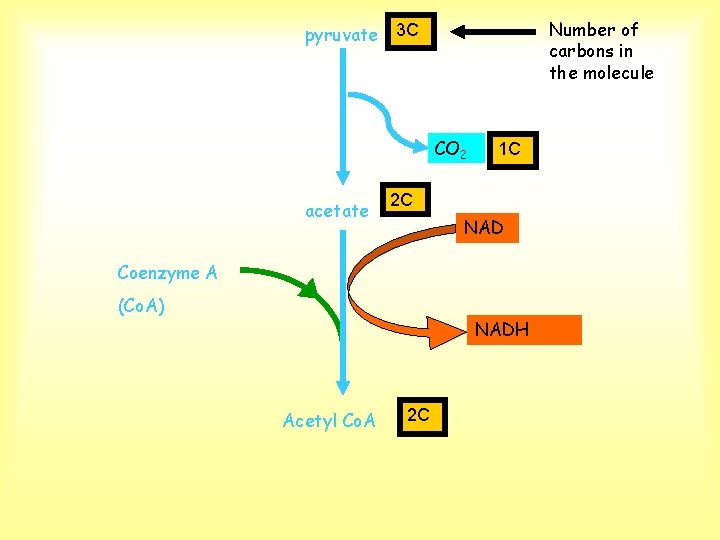
Number of carbons in the molecule pyruvate 3 C CO 2 acetate 1 C 2 C NAD Coenzyme A (Co. A) NADH Acetyl Co. A 2 C
The Link Reaction Converts Pyruvate to Acetyl Coenzyme A • One carbon atom is removed from pyruvate in the form of CO 2 • The remaining 2 -carbon molecule (acetate) combines with coenzyme A to produce acetyl coenzyme A (acetyl Co. A) • Another oxidation reaction happens when NAD collects more hydrogen ions. This forms reduced NAD (NADH) • No ATP is produced in this reaction
The Products of the Link Reaction go to the Krebs Cycle and the ETC • So for each glucose molecule: • Two molecules of acetyl co enzyme A go into the Krebs cycle • Two carbon dioxide molecules are released as a waste product of respiration • Two molecules of reduced NAD are formed and go into the electron transport chain
Exam Questions 1. Describe simply how a 6 -carbon molecule of glucose can be changed to pyruvate (5) 2. Describe what happens in the link reaction (4)
Answers 1. The 6 –carbon glucose molecule is phosphorylated using phosphate from 2 molecules of ATP (1) and hydrolysed/ split using water (1), to give 2 molecules of the 3 -carbon molecule triose phosphate (1). This is then oxidised by removing hydrogen ions (1) to give 2 molecules of 3 carbon pyruvate (1)
Answers 2. The 3 -carbon pyruvate is combined with coenzyme A (1) to form a 2 -carbon molecule, acetyl coenzyme A (1). The extra carbon is released as carbon dioxide (1). The coenzyme NAD is converted into reduced NAD in this reaction by accepting hydrogen ions
The Challenge • Can you draw glycolysis and the link reaction…. ?
Number of carbons in the molecule pyruvate 3 C CO 2 acetate 1 C 2 C NAD Coenzyme A (Co. A) NADH Acetyl Co. A 2 C
glucose Number of carbons in the molecule 6 C 2 ATP 2 Pi 2 ADP Hexose bisphosphate 6 C H 2 O 2 x triose phosphate 4 ADP + 4 Pi 2 H 4 ATP 3 C 2 NADH 2 x pyruvate 3 C
Respiration: The 4 Parts Respiration consists of 4 parts: • Glycolysis • Link Reaction • Krebs Cycle • Oxidative Phosphorylation (the electron transport chain)
The Krebs Cycle is the Third Stage of Aerobic Respiration • The krebs cycle takes place in the matrix of the mitochondria. • It happens once for each pyruvate molecule made in glycolysis, and so it goes round twice for every glucose molecule that enters the respiration pathway
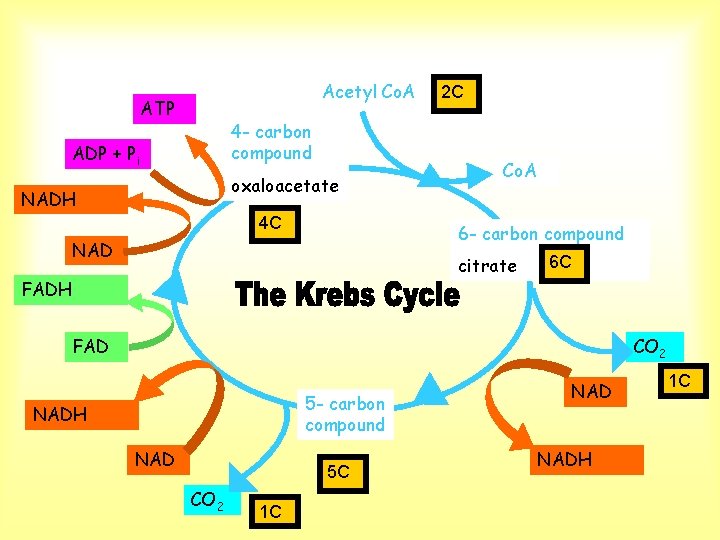
Acetyl Co. A ATP 4 - carbon compound ADP + Pi oxaloacetate NADH 4 C 2 C Co. A 6 - carbon compound NAD citrate FADH 6 C FAD CO 2 5 - carbon compound NADH NAD 5 C CO 2 1 C NADH 1 C
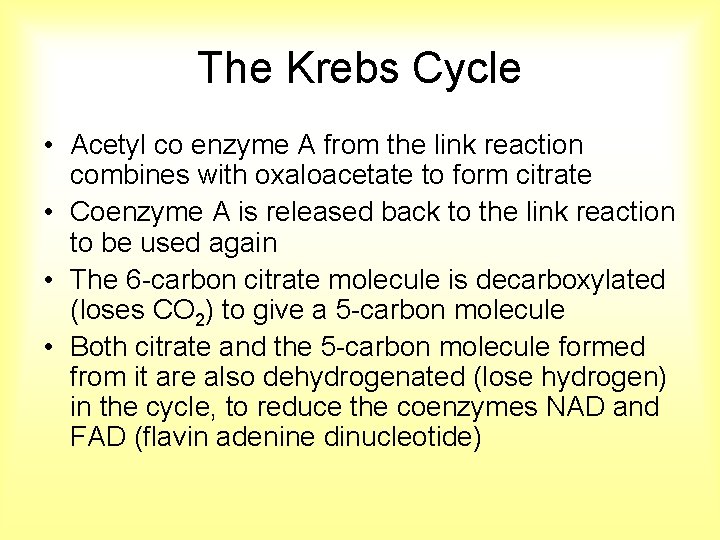
The Krebs Cycle • Acetyl co enzyme A from the link reaction combines with oxaloacetate to form citrate • Coenzyme A is released back to the link reaction to be used again • The 6 -carbon citrate molecule is decarboxylated (loses CO 2) to give a 5 -carbon molecule • Both citrate and the 5 -carbon molecule formed from it are also dehydrogenated (lose hydrogen) in the cycle, to reduce the coenzymes NAD and FAD (flavin adenine dinucleotide)
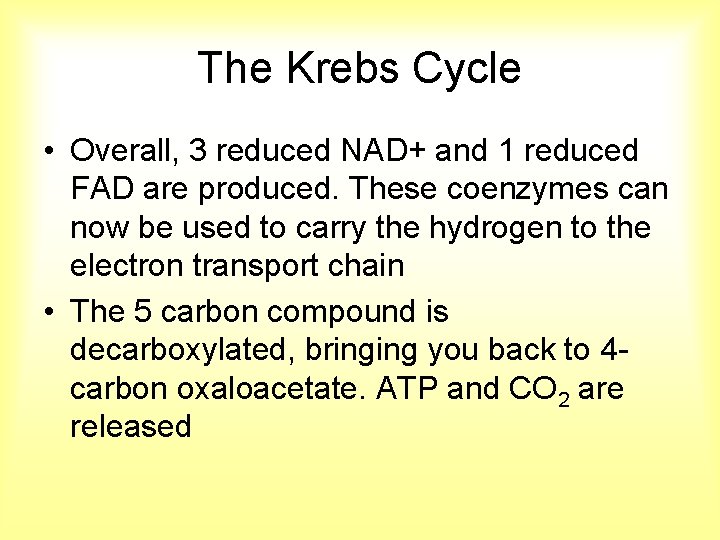
The Krebs Cycle • Overall, 3 reduced NAD+ and 1 reduced FAD are produced. These coenzymes can now be used to carry the hydrogen to the electron transport chain • The 5 carbon compound is decarboxylated, bringing you back to 4 carbon oxaloacetate. ATP and CO 2 are released
Products of the Krebs Cycle enter the final Stage of Aerobic Respiration • Some products are reused, some are released and others are used in the final stage, oxidative phosphorylation: the electron transport chain…
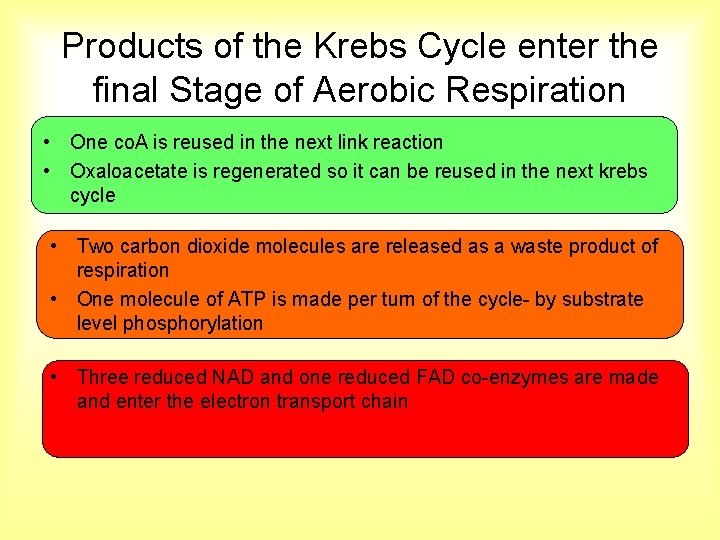
Products of the Krebs Cycle enter the final Stage of Aerobic Respiration • One co. A is reused in the next link reaction • Oxaloacetate is regenerated so it can be reused in the next krebs cycle • Two carbon dioxide molecules are released as a waste product of respiration • One molecule of ATP is made per turn of the cycle- by substrate level phosphorylation • Three reduced NAD and one reduced FAD co-enzymes are made and enter the electron transport chain
Oxidative Phosphorylation happens via the electron transport chain • All the products from the previous stages are used in this final stage. Its purpose is to transfer the energy from molecules made in glycolysis, the link reaction and the Kreb’s cycle to ADP. This forms ATP, which can then deliver the energy to parts of the cell that need it. The synthesis of ATP as a result of the energy released by the electron transport chain is called oxidative phosphorylation • The electron transport chain is where most of the ATP from respiration is produced. In the whole process of aerobic respiration, 32 ATP molecules are produced from one molecule of glucose: 2 ATP in glycolysis, 2 ATP in the Krebs cycle and 28 ATP in the electron transport chain • The electron transport chain also reoxidises NAD and FAD so they can be reused in previous steps
Respiration: The 4 Parts Respiration consists of 4 parts: • Glycolysis • Link Reaction • Krebs Cycle • Oxidative Phosphorylation (the electron transport chain)
Oxidative Phosphorylation produces lots of ATP • The energy needed for ATP synthesis is provided by the electron transport chain. It uses the reduced NAD and FAD from the previous 3 stages to produce 28 molecules of ATP for every molecule of glucose
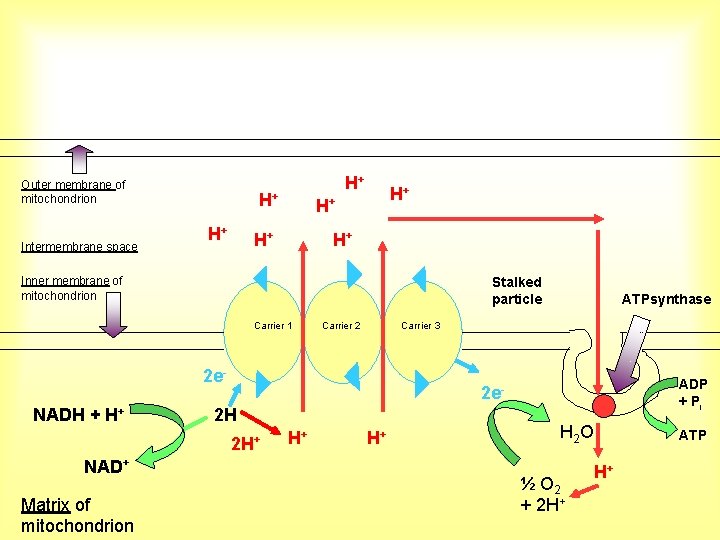
Outer membrane of mitochondrion Intermembrane space H+ H+ Inner membrane of mitochondrion Stalked particle Carrier 1 Carrier 2 Carrier 3 2 e. NADH + H+ Matrix of mitochondrion ADP + Pi 2 e- 2 H 2 H+ NAD+ ATPsynthase H+ H+ H 2 O ½ O 2 + 2 H+ ATP H+
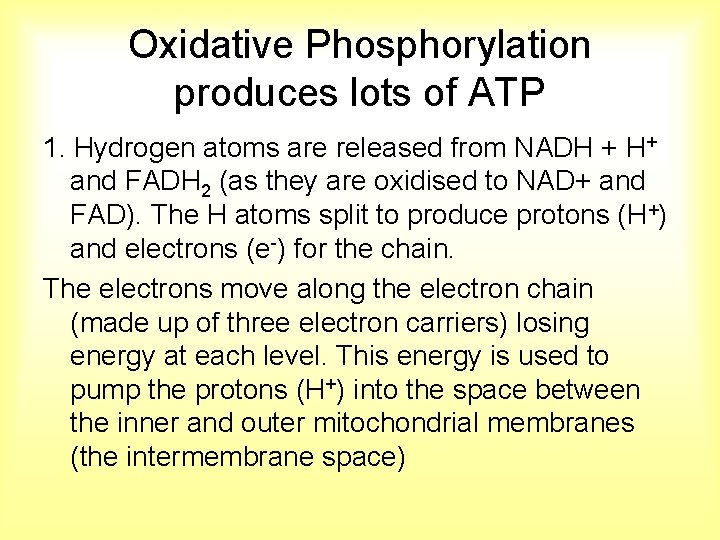
Oxidative Phosphorylation produces lots of ATP 1. Hydrogen atoms are released from NADH + H+ and FADH 2 (as they are oxidised to NAD+ and FAD). The H atoms split to produce protons (H+) and electrons (e-) for the chain. The electrons move along the electron chain (made up of three electron carriers) losing energy at each level. This energy is used to pump the protons (H+) into the space between the inner and outer mitochondrial membranes (the intermembrane space)
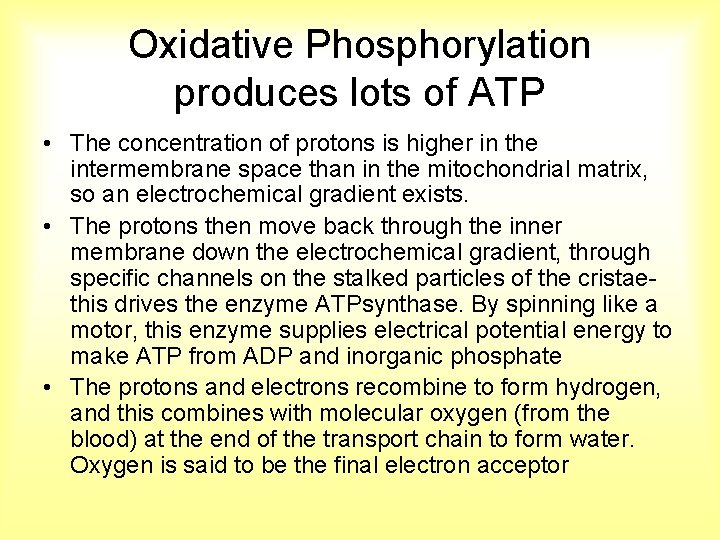
Oxidative Phosphorylation produces lots of ATP • The concentration of protons is higher in the intermembrane space than in the mitochondrial matrix, so an electrochemical gradient exists. • The protons then move back through the inner membrane down the electrochemical gradient, through specific channels on the stalked particles of the cristaethis drives the enzyme ATPsynthase. By spinning like a motor, this enzyme supplies electrical potential energy to make ATP from ADP and inorganic phosphate • The protons and electrons recombine to form hydrogen, and this combines with molecular oxygen (from the blood) at the end of the transport chain to form water. Oxygen is said to be the final electron acceptor