
Respiration Steps of Respiration Steps of Respiration Steps
- Slides: 15
Respiration
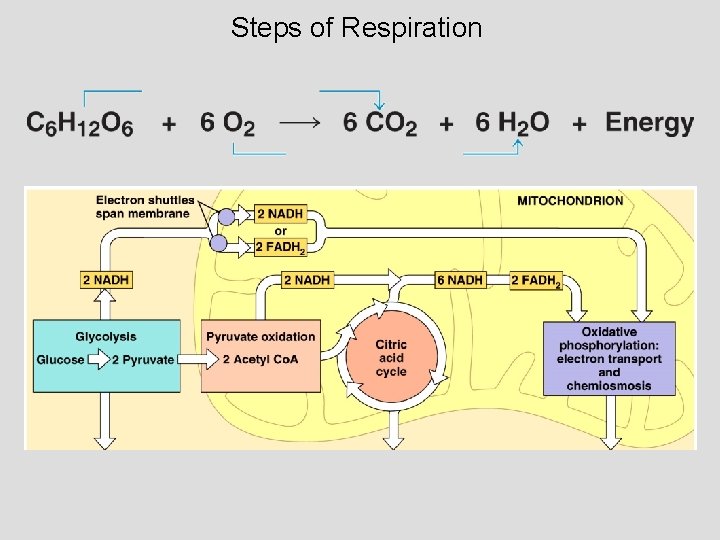
Steps of Respiration
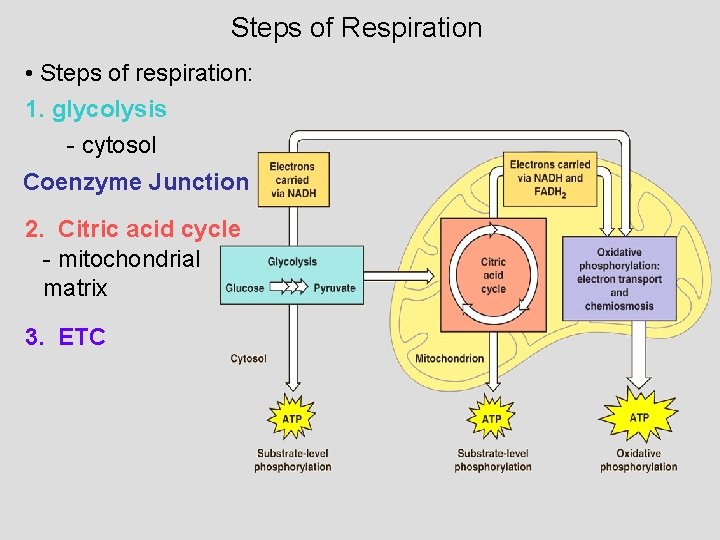
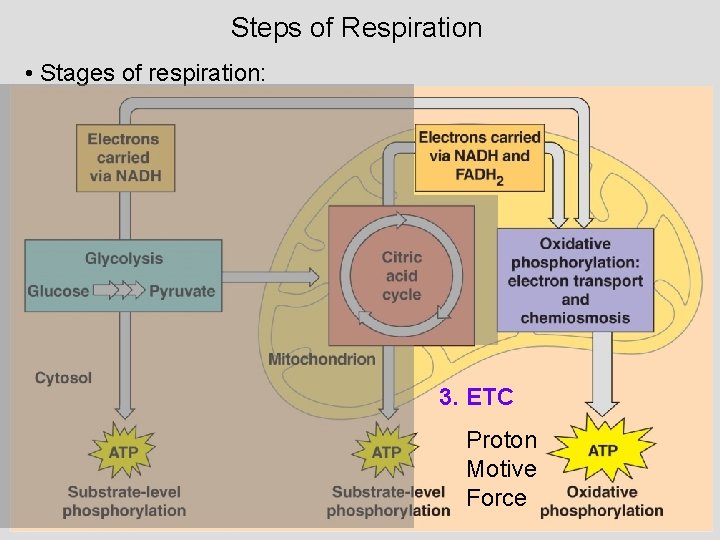
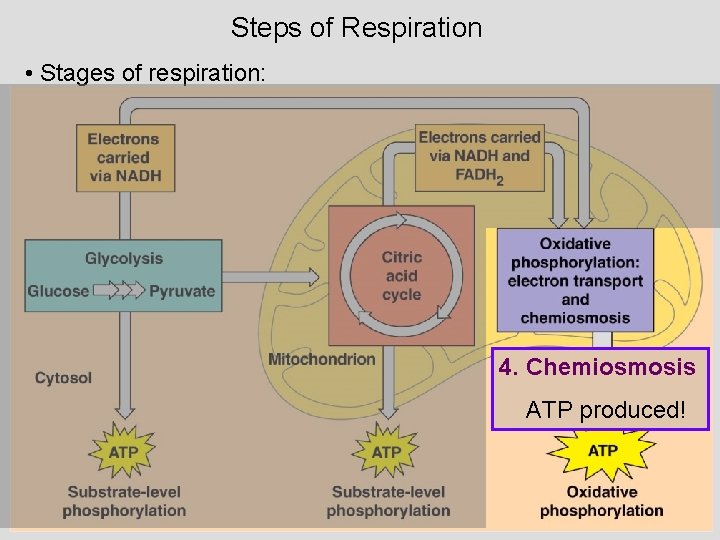
Steps of Respiration • Steps of respiration: 1. glycolysis - cytosol Coenzyme Junction 2. Citric acid cycle - mitochondrial matrix 3. ETC
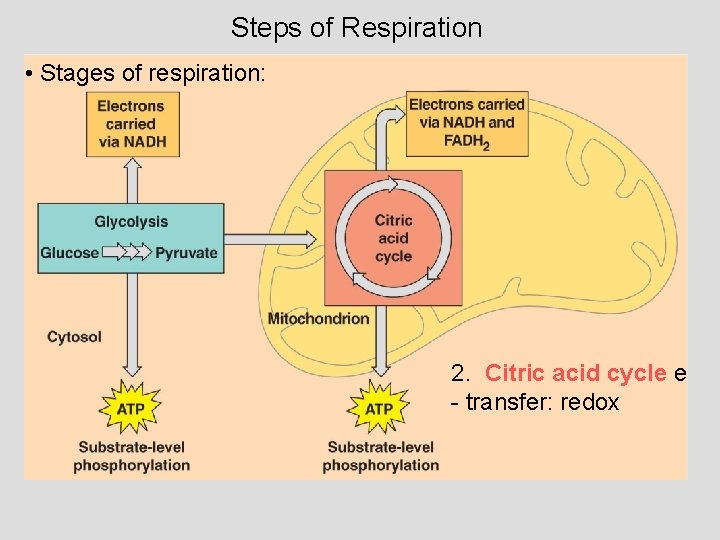
Steps of Respiration • Stages of respiration: 2. Citric acid cycle e - transfer: redox
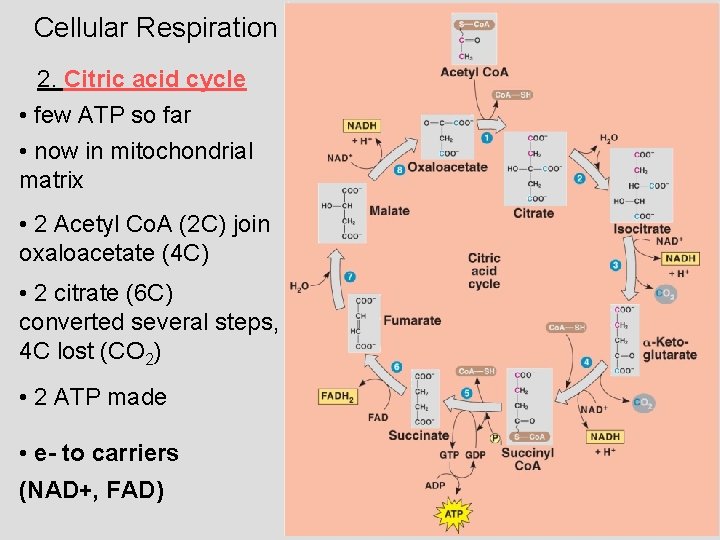
Cellular Respiration 2. Citric acid cycle • few ATP so far • now in mitochondrial matrix • 2 Acetyl Co. A (2 C) join oxaloacetate (4 C) • 2 citrate (6 C) converted several steps, 4 C lost (CO 2) • 2 ATP made • e- to carriers (NAD+, FAD)
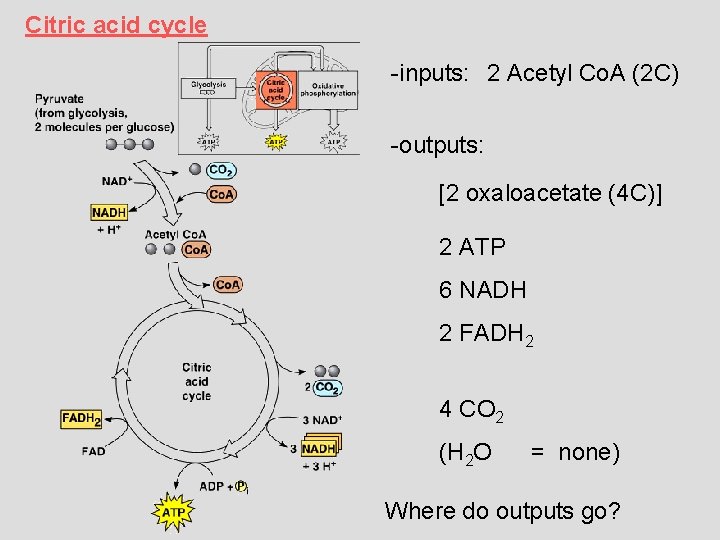
Citric acid cycle -inputs: 2 Acetyl Co. A (2 C) -outputs: [2 oxaloacetate (4 C)] 2 ATP 6 NADH 2 FADH 2 4 CO 2 (H 2 O = none) Where do outputs go?
Steps of Respiration • Stages of respiration: 3. ETC Proton Motive Force
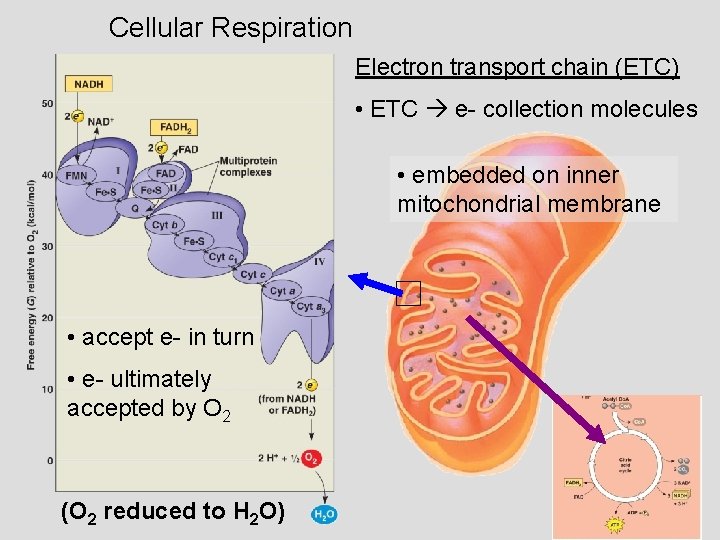
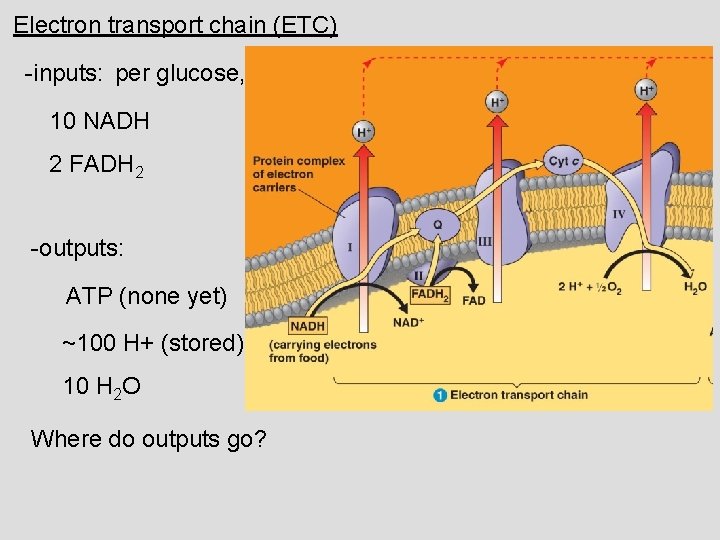
Cellular Respiration Electron transport chain (ETC) • ETC e- collection molecules • embedded on inner mitochondrial membrane • accept e- in turn • e- ultimately accepted by O 2 (O 2 reduced to H 2 O)
Electron transport chain (ETC) -inputs: per glucose, 10 NADH 2 FADH 2 -outputs: ATP (none yet) ~100 H+ (stored) 10 H 2 O Where do outputs go?
Steps of Respiration • Stages of respiration: 4. Chemiosmosis ATP produced!
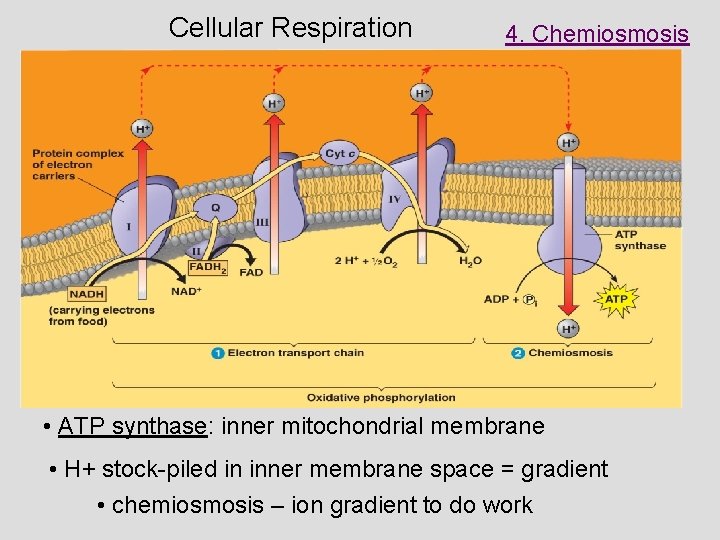
Cellular Respiration 4. Chemiosmosis • ATP synthase: inner mitochondrial membrane • H+ stock-piled in inner membrane space = gradient • chemiosmosis – ion gradient to do work
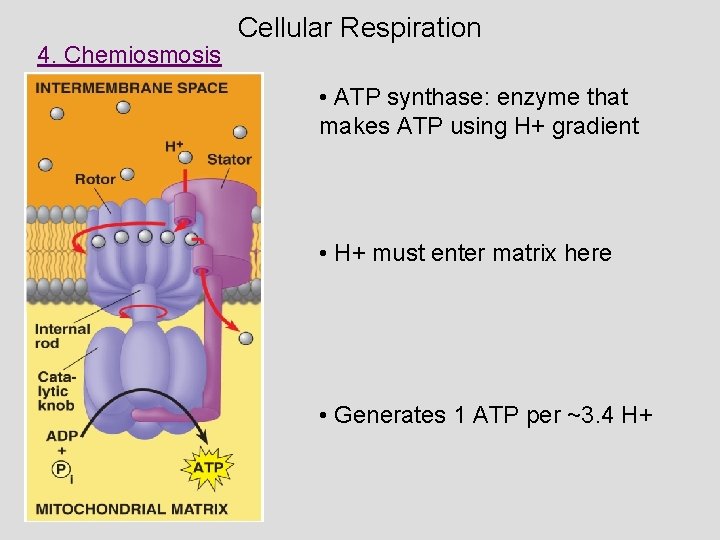
4. Chemiosmosis Cellular Respiration • ATP synthase: enzyme that makes ATP using H+ gradient • H+ must enter matrix here • Generates 1 ATP per ~3. 4 H+
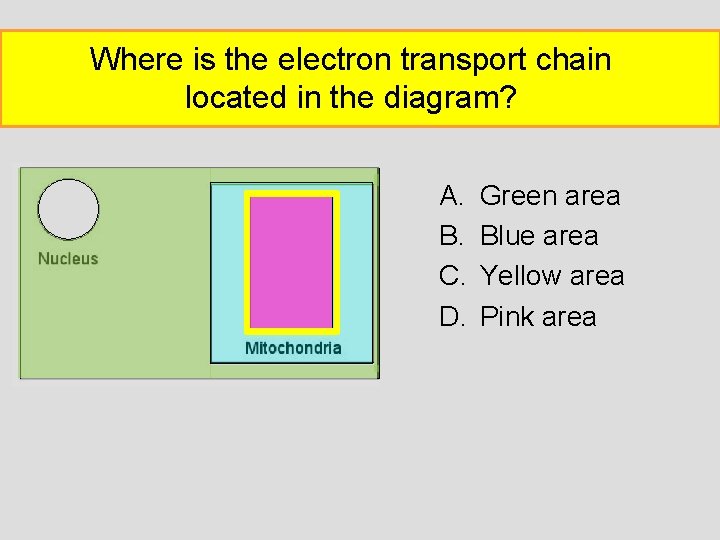
Where is the electron transport chain located in the diagram? A. B. C. D. Green area Blue area Yellow area Pink area
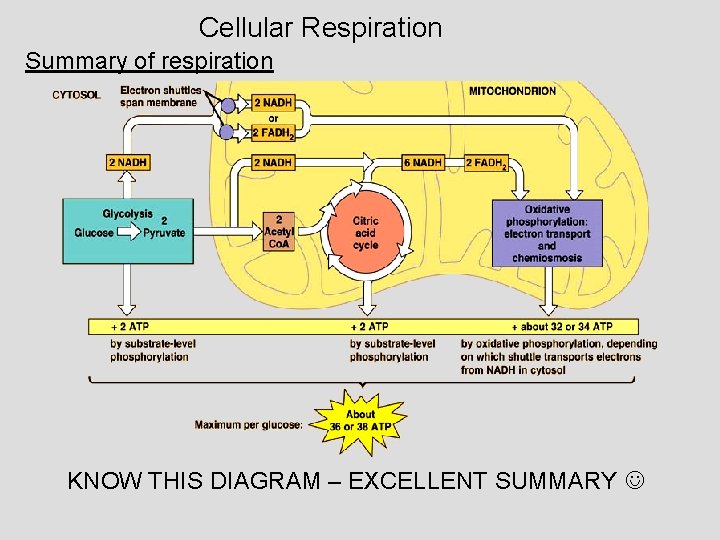
Cellular Respiration Summary of respiration KNOW THIS DIAGRAM – EXCELLENT SUMMARY
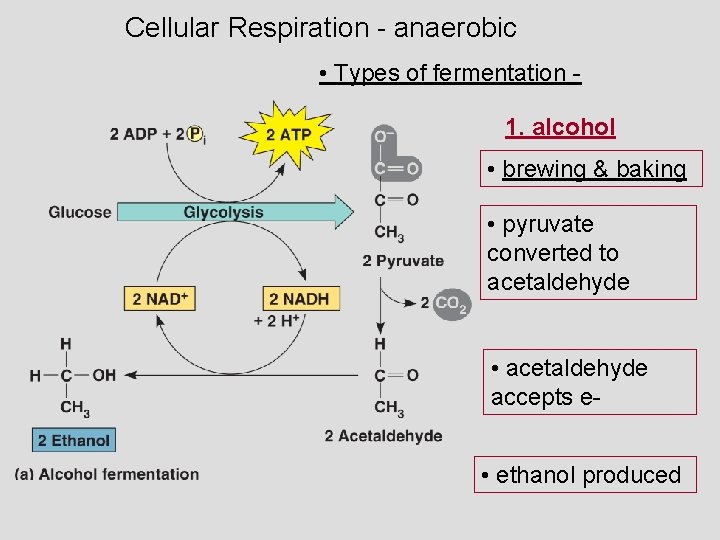
Cellular Respiration - anaerobic • Types of fermentation 1. alcohol • brewing & baking • pyruvate converted to acetaldehyde • acetaldehyde accepts e • ethanol produced