
Respiration Process of bringing oxygen into the body
Respiration
Process of bringing oxygen into the body and expelling carbon dioxide from the body The process is controlled by the brain and regulated by the changing carbon dioxide levels in the blood stream At rest less CO 2 in blood stream, slower respiration rate
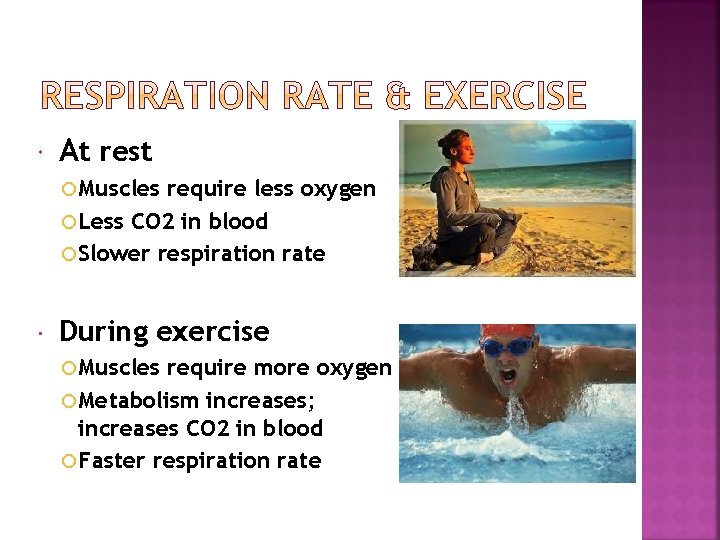
At rest Muscles require less oxygen Less CO 2 in blood Slower respiration rate During exercise Muscles require more oxygen Metabolism increases; increases CO 2 in blood Faster respiration rate
Excitement Increases in epinephrine (adrenaline) Pain Fever Trauma
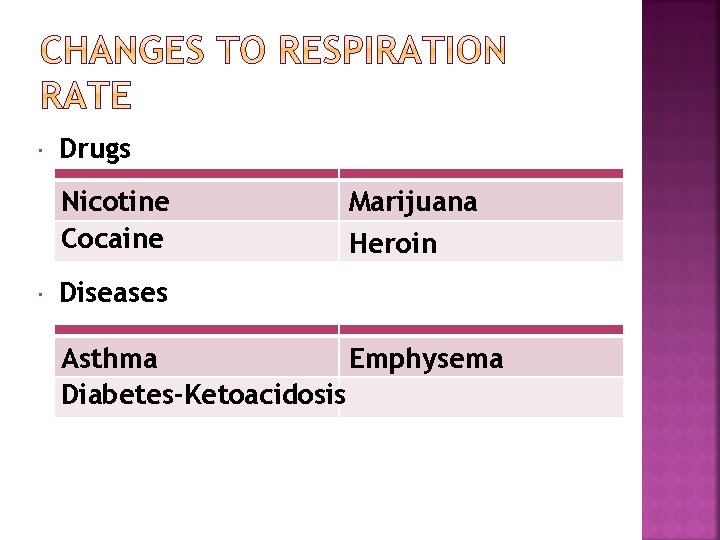
Drugs Nicotine Cocaine Marijuana Heroin Diseases Asthma Emphysema Diabetes-Ketoacidosis
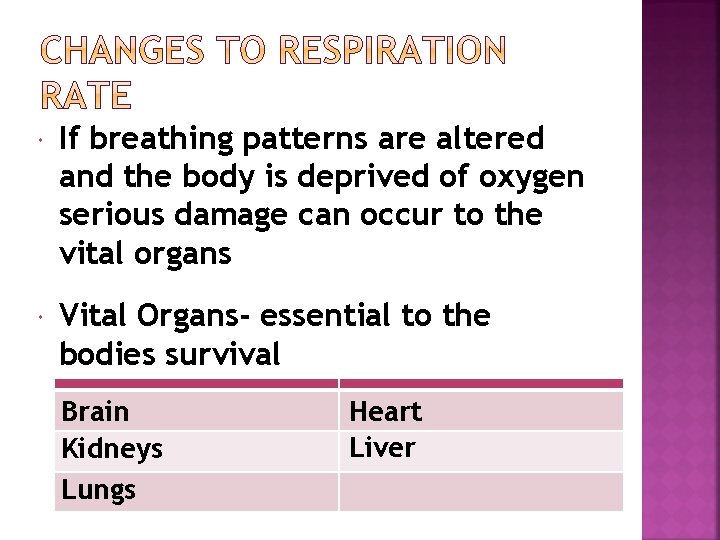
If breathing patterns are altered and the body is deprived of oxygen serious damage can occur to the vital organs Vital Organs- essential to the bodies survival Brain Kidneys Lungs Heart Liver
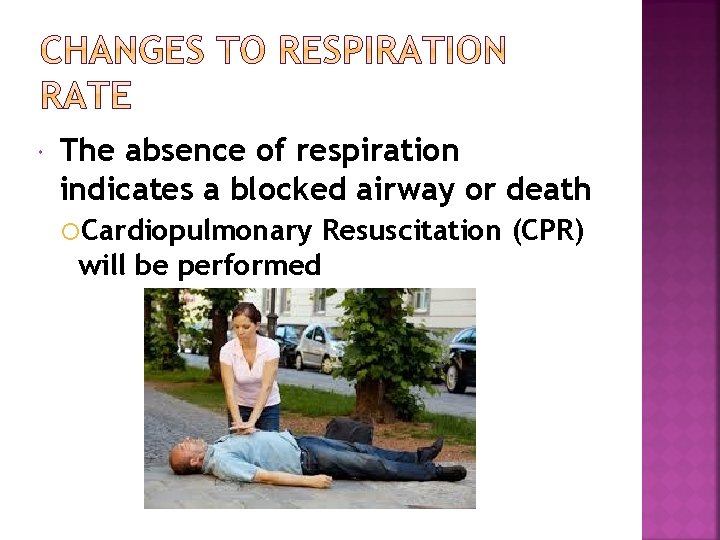
The absence of respiration indicates a blocked airway or death Cardiopulmonary will be performed Resuscitation (CPR)
Each respiration is divided into two phases Phase 1: inhalation; breathing in. Phase 2: exhalation; breathing out Ranges: Age 15 and over 15 -20 breaths per minute Well trained athlete: 6 to 8 breaths per minute Why do you think trained athletes respiration rates are so much lower?
Abdominal Primarily use abdominal muscleschest is mostly still Apnea Cessation of breathing, may be temporary or permanent Sleep apnea
Bradypnea Abnormal decrease in respirations Less than 12 respirations per minute Cheyne-Stokes Very irregular pattern Intermittent periods of apnea 10 -60 seconds, followed by periods of fast and slow breathing Occur as someone is close to death
Decreased Very little air movement in the lungs Dyspnea Difficult or painful breathing, shortness of breath Common with emphysema Hyperpnea or Tachypnea Abnormal increase in respirations More than 20 respirations per minute Hyperventilation
Kussmaul’s breathing Deep gasping respirations Patient feels and urge to breathe Associated with diabetic ketoacidosis and kidney failure Labored breathing Difficult breathing Uses shoulder, neck and abdominal muscles
When a person focuses on breathing, the rate of respiration is often altered May increase or decrease rate of respiration Try to hide the fact that respirations are being counted Tell patient that you are taking their pulse, but really measure respiration rate
Volume of air exchanged can be determined by placing one hand on patient’s chest and feeling chest rise and fall
Describing volume Deep Prolonged inspiration possible indication of: Upper airway obstruction Prolonged expiration possible indication of: Chronic obstructive pulmonary disease (COPD) Asthma Bronchitis Emphysema
Describing volume Shallow Shock may be occurring Irregular Gasping (think sleep apnea, kussmauls or cheyne-stokes) May indicate cardiac issues
Describing volume Noisy Obstruction of the air way Swallowed foreign object Laryngitis – voice box or vocal cords irritated from overuse Anaphylaxis – Medical emergency Occurs in people with severe allergies When exposed to allergen causes a combination of a rash, abdominal pain, difficulty breathing and shock
If a patient is having difficulty breathing have the individual sit up and lean forward Signs of oxygen deprivation Mental confusion Restlessness A person experiencing signs/symptoms of oxygen deprivation must be seen immediately- could lead to shock
Anti-histamines Used to treat allergic conditions Bronchodilators Used to assist in opening narrowed airways Used to treat Asthma, COPD and emphysema Albuterol – used to treat asthma Decongestants Used to assist in loosening secretions from the airway
Include: Respiration rate, respiration pattern and volume of respiration If additional medical attention was advised
Respiration rate: 14 breaths per minute, pattern: normal, volume: normal
Respiration rate: 10 breaths per minute, pattern: Cheyne-Stokes, volume: irregular and noisy, EMS activated
Respiration rate: 22 breaths per minute, pattern: Kussmaul, volume: shallow, EMS activated
Asthmatic patient; Respiration rate: 9 breaths per minute, pattern: decreased and labored, volume: shallow, patient administered own inhaler, parents contacted
Respiration rate: 14 breaths per minute, pattern: normal, volume: normal RR was measured at 14 breaths per minute with a normal pattern and normal volume. Signature with title
Respiration rate: 10 breaths per minute, pattern: Cheyne-Stokes, volume: irregular and noisy, EMS activated RR was measured at 10 breaths per minute with a Cheyne-Stokes pattern and irregular and noisy volume. 911 was called and pt was transported to the hospital. Signature with title
Respiration rate: 22 breaths per minute, pattern: Kussmaul, volume: shallow, EMS activated RR was measured at 22 breaths per minute with a Kussmaul pattern and shallow volume. 911 was called and pt was transported to the hospital. Signature with title
Asthmatic patient; Respiration rate: 9 breaths per minute, pattern: decreased and labored, volume: shallow, patient administered own inhaler, parents contacted RR was measured at 9 breaths per minute with a decreased and labored pattern and shallow volume. Pt administered their own inhaler. Parents were contacted and advised to seek additional medical help if signs and symptoms persist. Signature with title
- Slides: 28