
Respiration in Humans The release of chemical energy
- Slides: 21
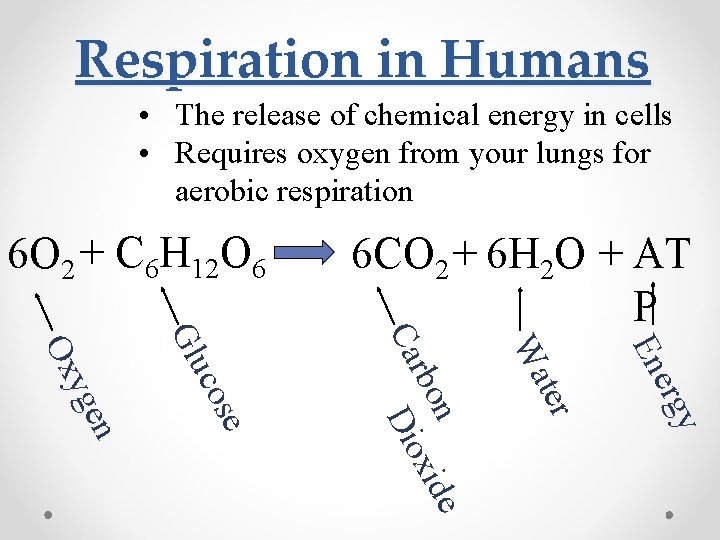
Respiration in Humans • The release of chemical energy in cells • Requires oxygen from your lungs for aerobic respiration 6 O 2 + C 6 H 12 O 6 6 CO 2 + 6 H 2 O + AT P y erg En ter Wa e n xid rbo Dio Ca e cos Glu n yge Ox
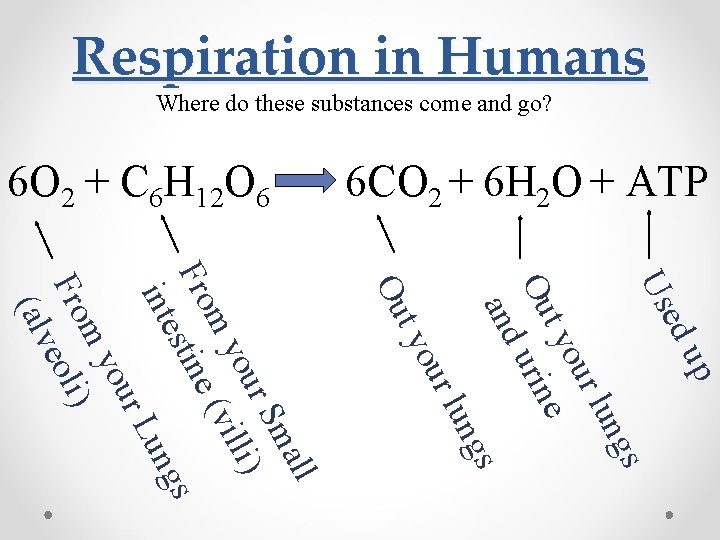
Respiration in Humans Where do these substances come and go? 6 CO 2 + 6 H 2 O + ATP 6 O 2 + C 6 H 12 O 6 Us ed up ngs gs lun lu our ty e Ou urin and our ty Ou ll ma r. S you villi) ( m Fro ine est ngs u int r. L you m li) Fro veo (al
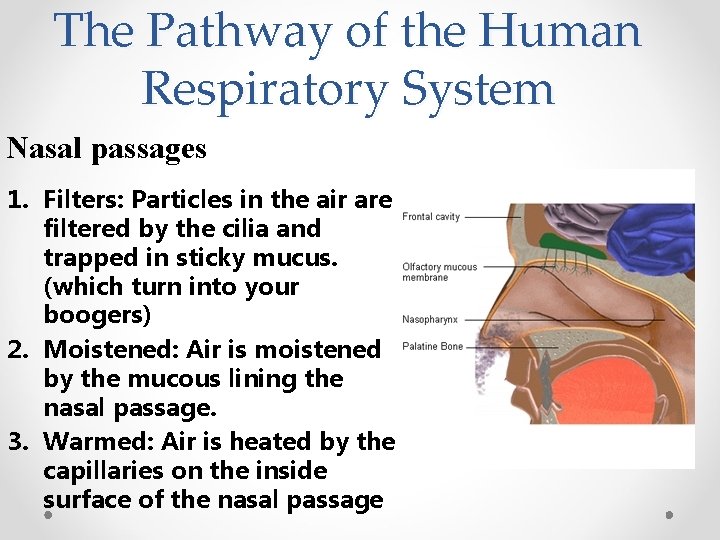
The Pathway of the Human Respiratory System Nasal passages 1. Filters: Particles in the air are filtered by the cilia and trapped in sticky mucus. (which turn into your boogers) 2. Moistened: Air is moistened by the mucous lining the nasal passage. 3. Warmed: Air is heated by the capillaries on the inside surface of the nasal passage
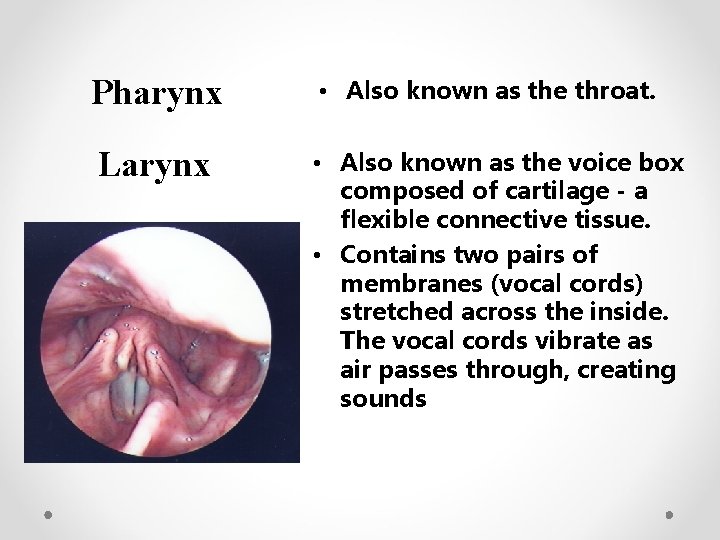
Pharynx • Also known as the throat. Larynx • Also known as the voice box composed of cartilage - a flexible connective tissue. • Contains two pairs of membranes (vocal cords) stretched across the inside. The vocal cords vibrate as air passes through, creating sounds
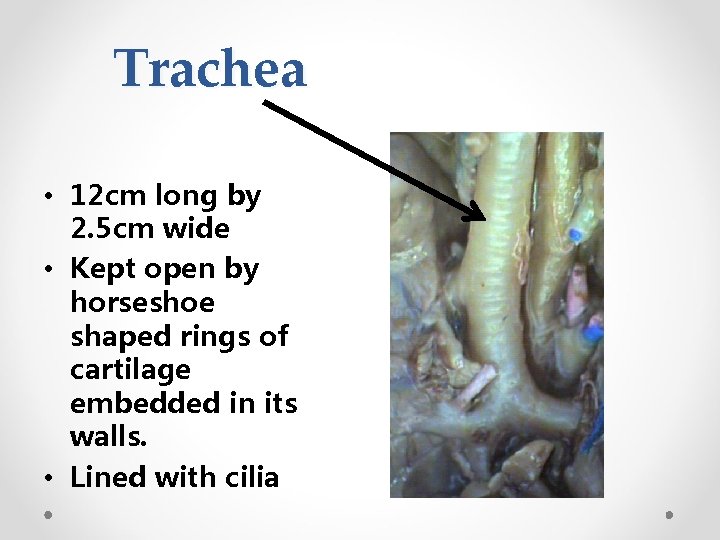
Trachea • 12 cm long by 2. 5 cm wide • Kept open by horseshoe shaped rings of cartilage embedded in its walls. • Lined with cilia
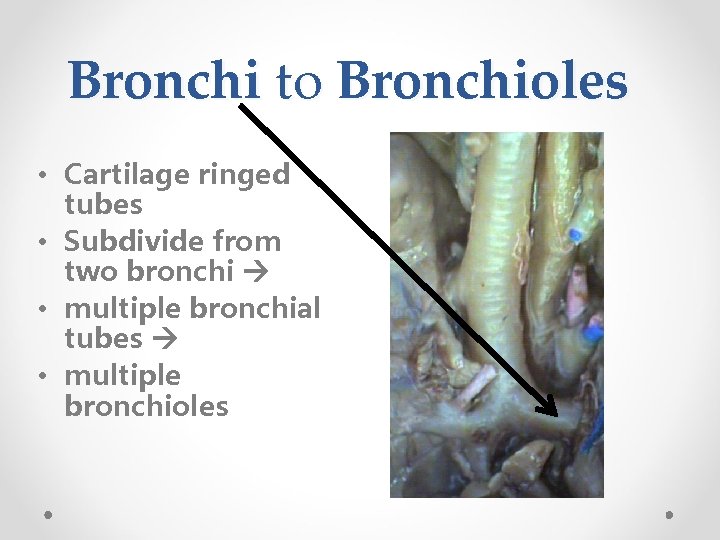
Bronchi to Bronchioles • Cartilage ringed tubes • Subdivide from two bronchi • multiple bronchial tubes • multiple bronchioles
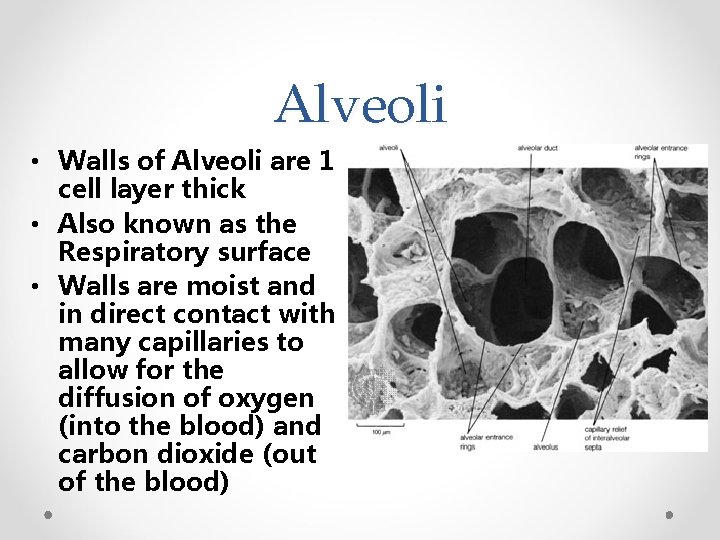
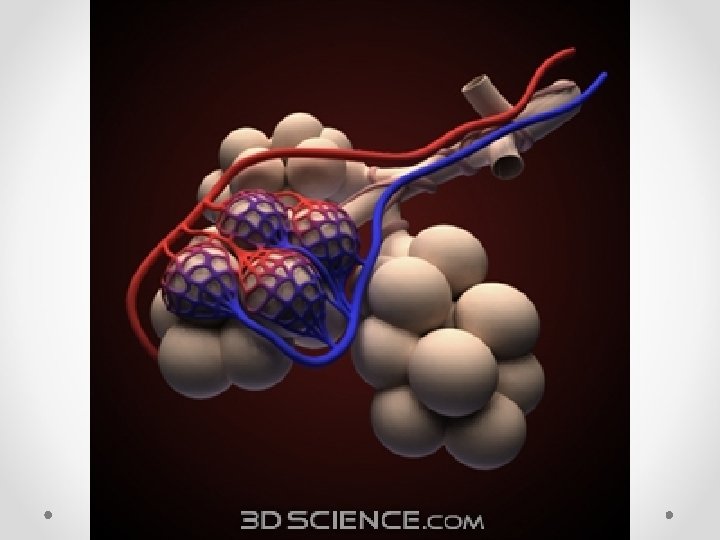
Alveoli • Walls of Alveoli are 1 cell layer thick • Also known as the Respiratory surface • Walls are moist and in direct contact with many capillaries to allow for the diffusion of oxygen (into the blood) and carbon dioxide (out of the blood)
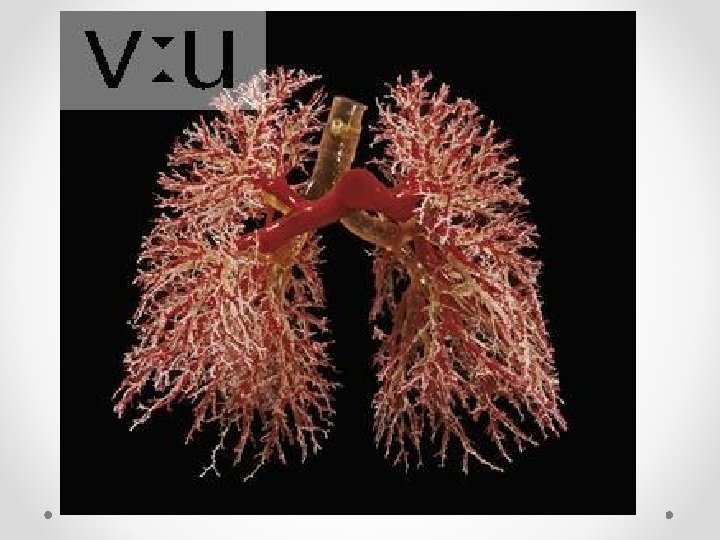
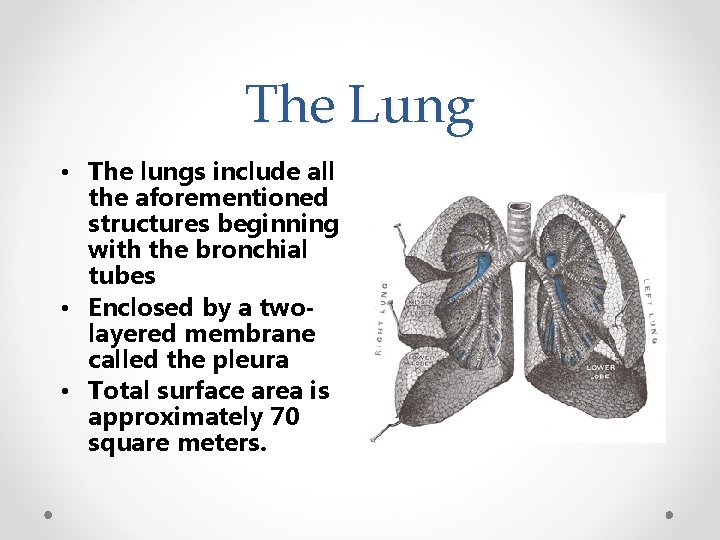
The Lung • The lungs include all the aforementioned structures beginning with the bronchial tubes • Enclosed by a twolayered membrane called the pleura • Total surface area is approximately 70 square meters.
What is the diaphragm? • A muscle that forms the base of the chest cavity. • Controls inhalation and exhalation
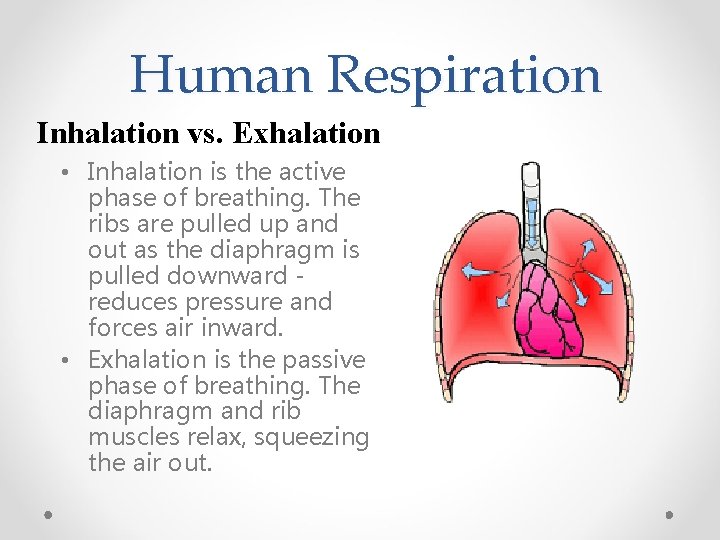
Human Respiration Inhalation vs. Exhalation • Inhalation is the active phase of breathing. The ribs are pulled up and out as the diaphragm is pulled downward reduces pressure and forces air inward. • Exhalation is the passive phase of breathing. The diaphragm and rib muscles relax, squeezing the air out.
Respiratory Diseases • Emphysema - Loss of elasticity in the lungs. Respiratory surface is smaller --> shortness of breath. Irreversible • Lung Cancer - Tumors form in the lungs --> irregular and uncontrolled cell growth. • Asthma - A severe allergic reaction. Bronchioles spasm, squeezing the air passages --> difficulty breathing • Bronchitis - Irritated and swollen bronchial tubes. Leads to excess mucous blocking the alveoli --> hard to breathe. • Pneumonia - Alveoli become filled with liquid due to a bacterial infection. Prevents gas exchange.
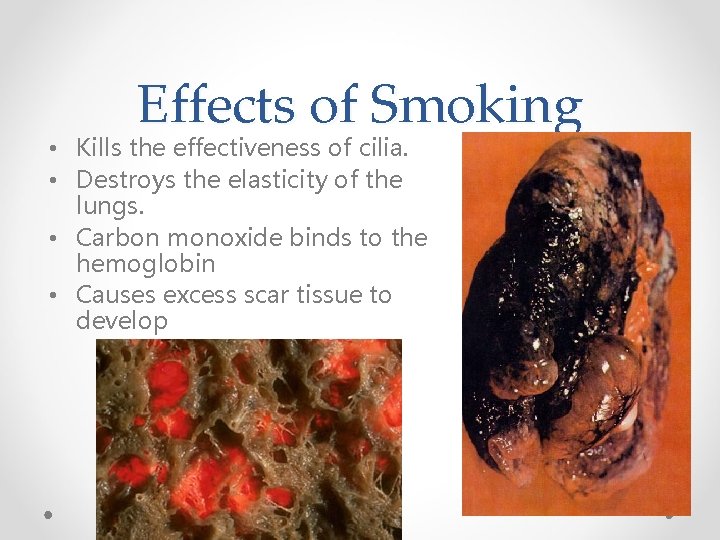
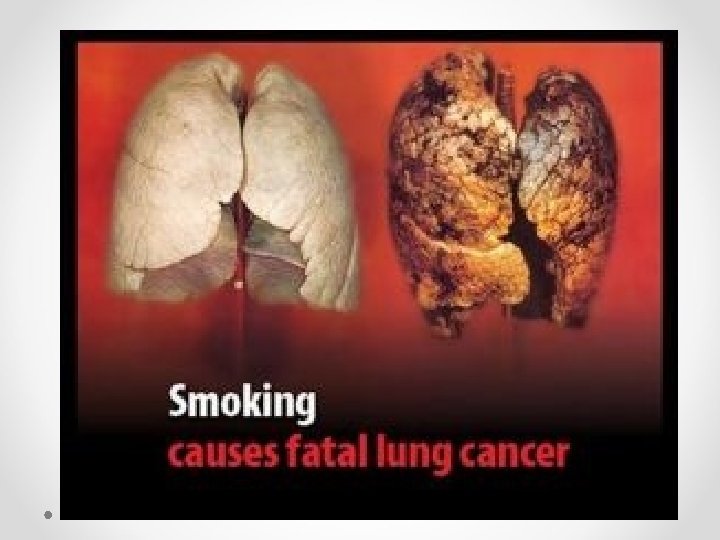
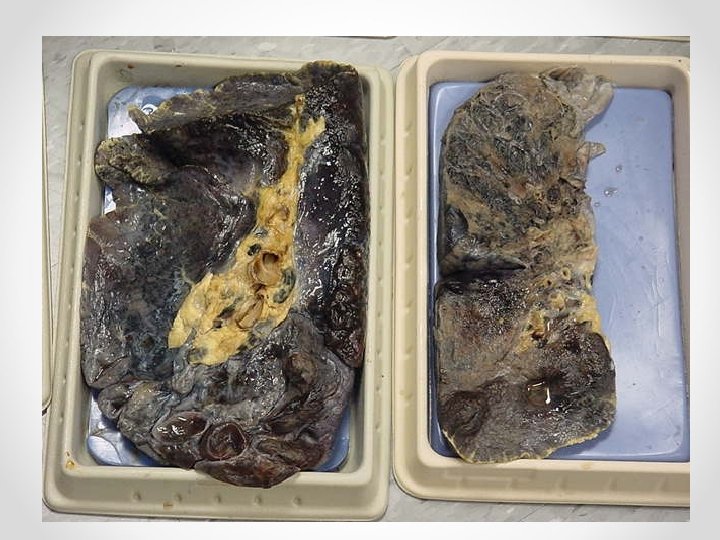
Effects of Smoking • Kills the effectiveness of cilia. • Destroys the elasticity of the lungs. • Carbon monoxide binds to the hemoglobin • Causes excess scar tissue to develop
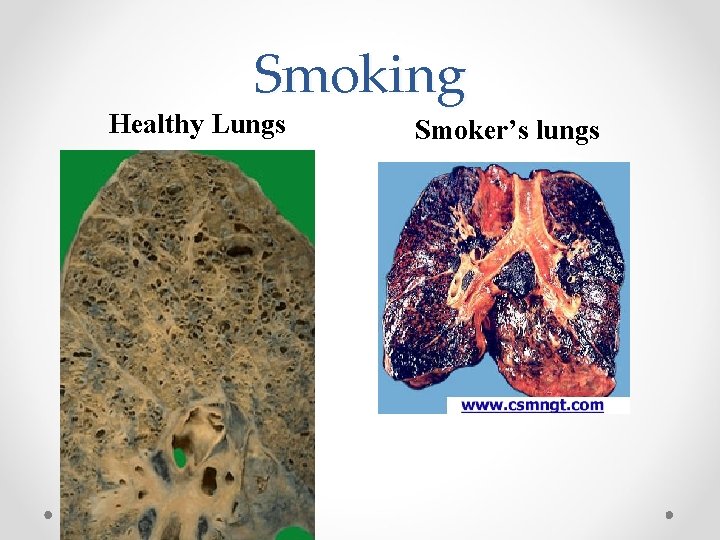
Smoking Healthy Lungs Smoker’s lungs
Human Excretory System Purpose: The removal of waste created by the body during life activities. 4 System perform excretion: • Digestive system: Removes undigested solids • Urinary system : Kidney, Ureter, Urinary bladder, and Urethra remove liquid waste from blood. • Respiratory system: Lungs removes carbon dioxide and water • Integumentary system: Skin removes excess salt and water.
Skin • Contain sweat gland that produce sweat (a waste product) • Sweat contains: o Water o Salts o Urea • Evaporation of sweat helps cool the body (maintain homeostasis)
Liver • Detoxifies harmful materials in the blood. • Takes harmful substances and makes them harmless (ex. . Urea)
Kidneys • Filter out waste (detoxified by the liver) from your blood • The nephron of the kidney is the location where the blood is filtered. • Waste (urine) goes through the ureter to be stored in the urinary bladder • Regulates the amount of substances (water, salts, sugar, etc…) found in your blood by removing excess. • Excess sugar in diabetics will be removed by the kidneys