
RESPIRATION Gas Exchange PARTIAL PRESSURES z In a
- Slides: 24
RESPIRATION Gas Exchange
PARTIAL PRESSURES z. In a mixture of gasses, the total pressure distributes among the constituents proportional to their percent of the total z. The concentration of a gas can therefore be expressed as its partial pressure
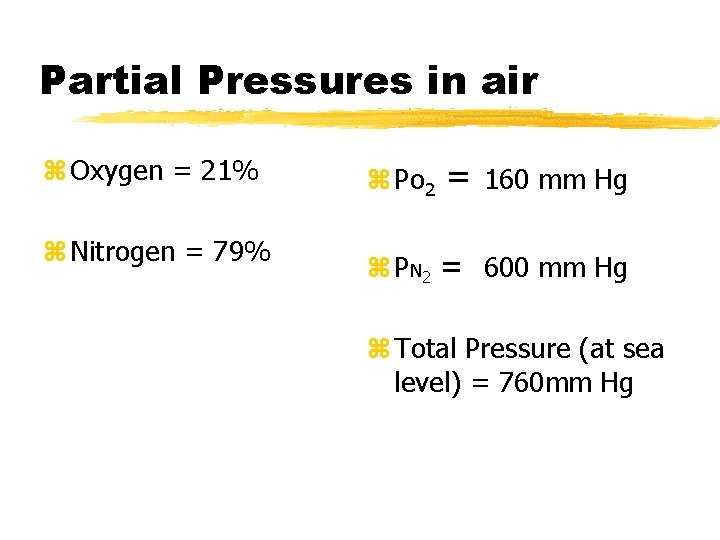
Partial Pressures in air z Oxygen = 21% z Po 2 z Nitrogen = 79% z PN 2 = 600 mm Hg = 160 mm Hg z Total Pressure (at sea level) = 760 mm Hg
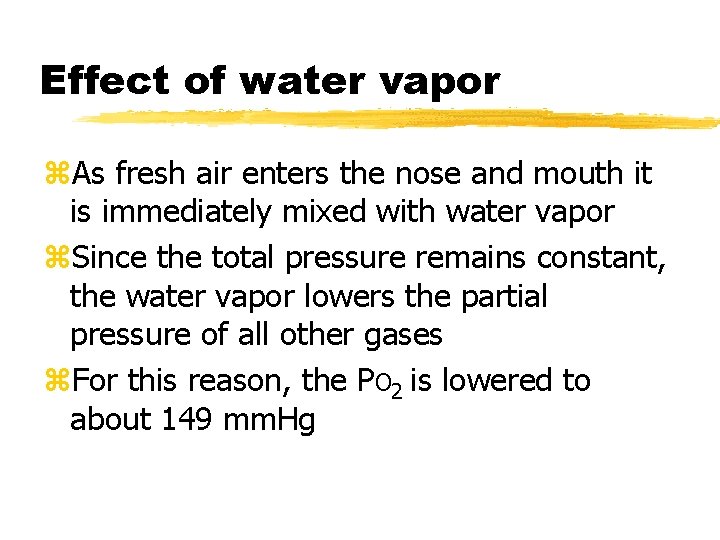
Effect of water vapor z. As fresh air enters the nose and mouth it is immediately mixed with water vapor z. Since the total pressure remains constant, the water vapor lowers the partial pressure of all other gases z. For this reason, the PO 2 is lowered to about 149 mm. Hg
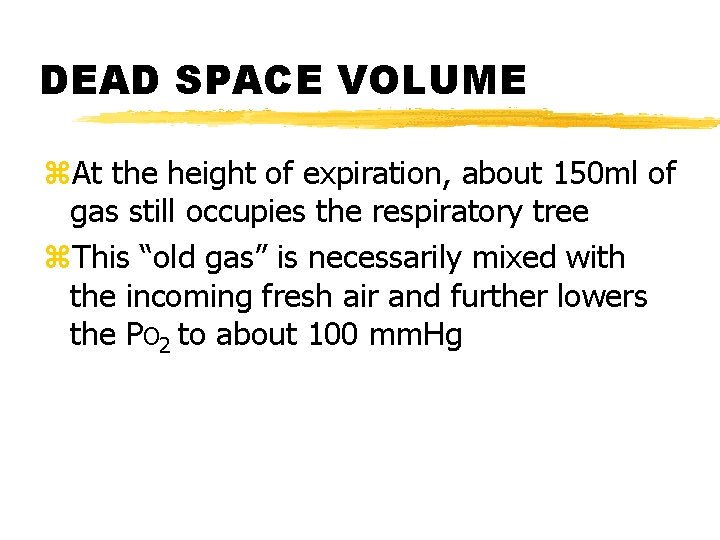
DEAD SPACE VOLUME z. At the height of expiration, about 150 ml of gas still occupies the respiratory tree z. This “old gas” is necessarily mixed with the incoming fresh air and further lowers the PO 2 to about 100 mm. Hg
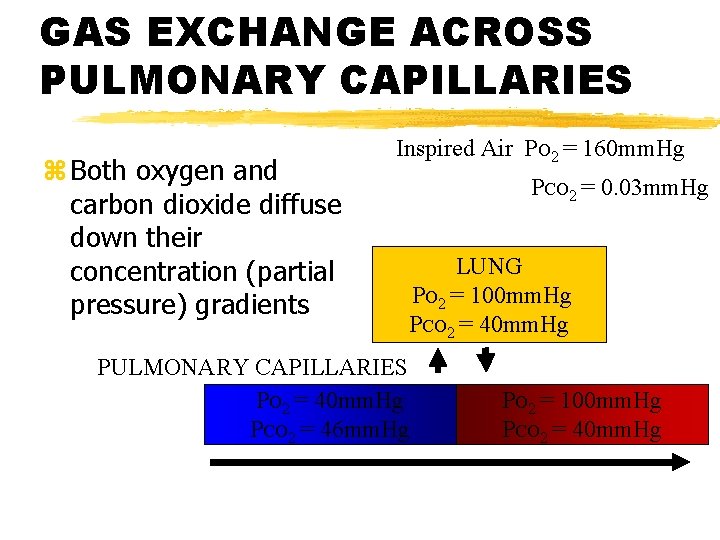
GAS EXCHANGE ACROSS PULMONARY CAPILLARIES z Both oxygen and carbon dioxide diffuse down their concentration (partial pressure) gradients Inspired Air PO 2 = 160 mm. Hg PCO 2 = 0. 03 mm. Hg LUNG PO 2 = 100 mm. Hg PCO 2 = 40 mm. Hg PULMONARY CAPILLARIES PO 2 = 40 mm. Hg PCO 2 = 46 mm. Hg PO 2 = 100 mm. Hg PCO 2 = 40 mm. Hg
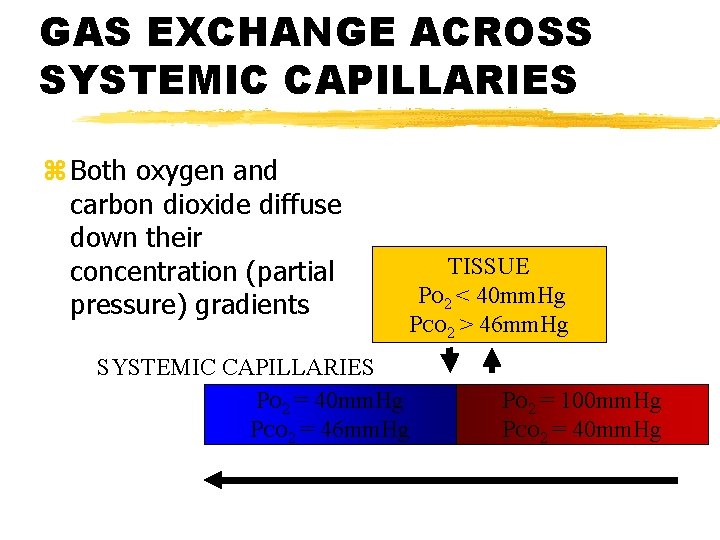
GAS EXCHANGE ACROSS SYSTEMIC CAPILLARIES z Both oxygen and carbon dioxide diffuse down their concentration (partial pressure) gradients TISSUE PO 2 < 40 mm. Hg PCO 2 > 46 mm. Hg SYSTEMIC CAPILLARIES PO 2 = 40 mm. Hg PCO 2 = 46 mm. Hg PO 2 = 100 mm. Hg PCO 2 = 40 mm. Hg
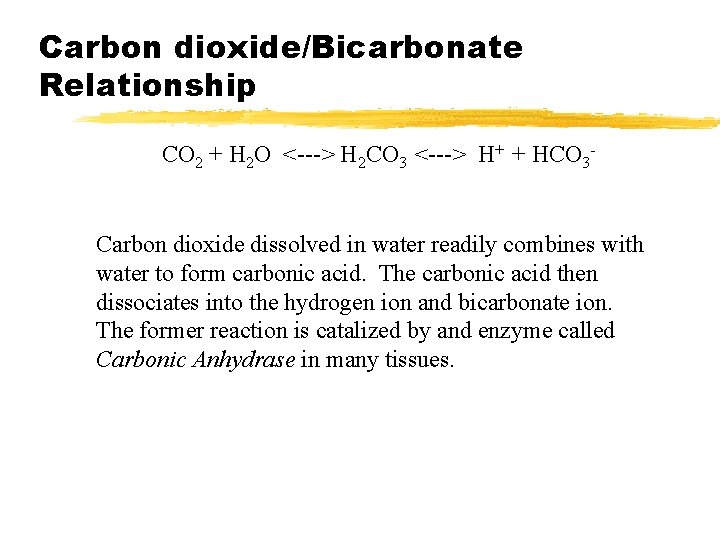
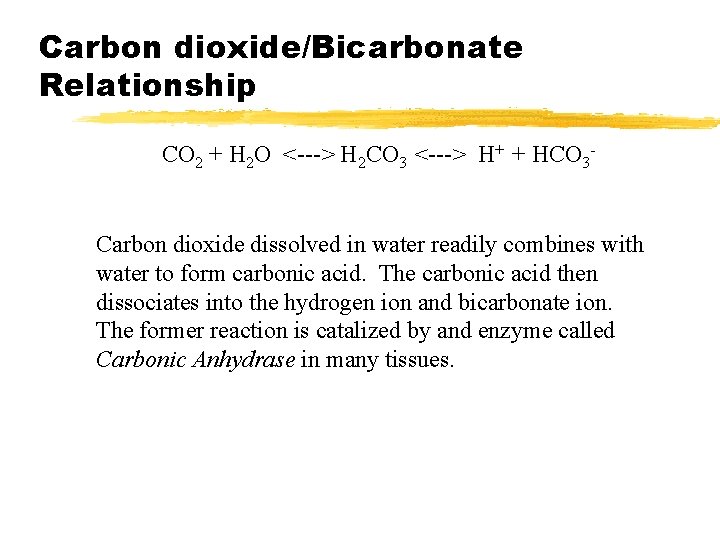
Carbon dioxide/Bicarbonate Relationship CO 2 + H 2 O <---> H 2 CO 3 <---> H+ + HCO 3 Carbon dioxide dissolved in water readily combines with water to form carbonic acid. The carbonic acid then dissociates into the hydrogen ion and bicarbonate ion. The former reaction is catalized by and enzyme called Carbonic Anhydrase in many tissues.
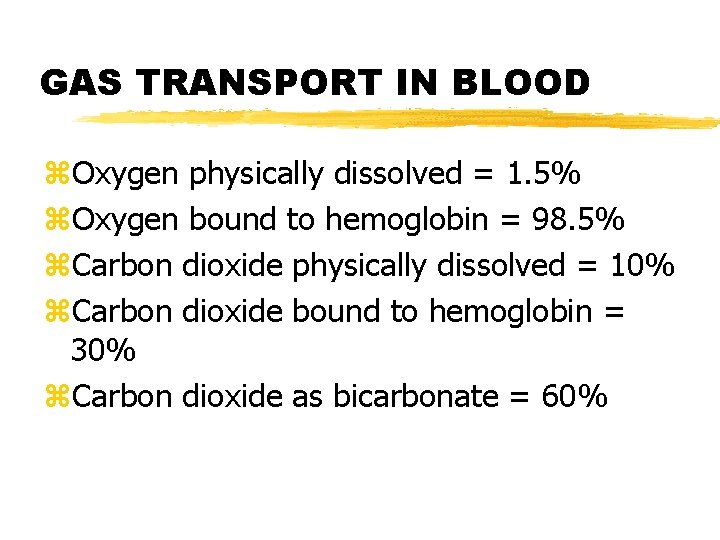
GAS TRANSPORT IN BLOOD z. Oxygen physically dissolved = 1. 5% z. Oxygen bound to hemoglobin = 98. 5% z. Carbon dioxide physically dissolved = 10% z. Carbon dioxide bound to hemoglobin = 30% z. Carbon dioxide as bicarbonate = 60%
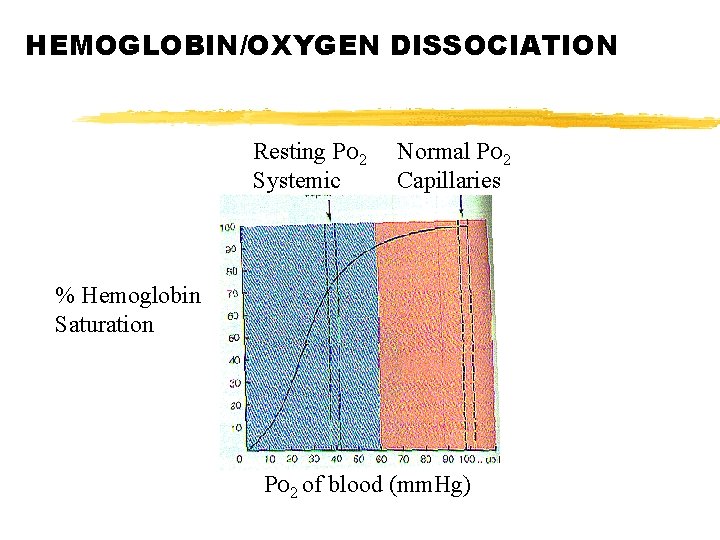
HEMOGLOBIN/OXYGEN DISSOCIATION Resting PO 2 Systemic Normal PO 2 Capillaries % Hemoglobin Saturation PO 2 of blood (mm. Hg)
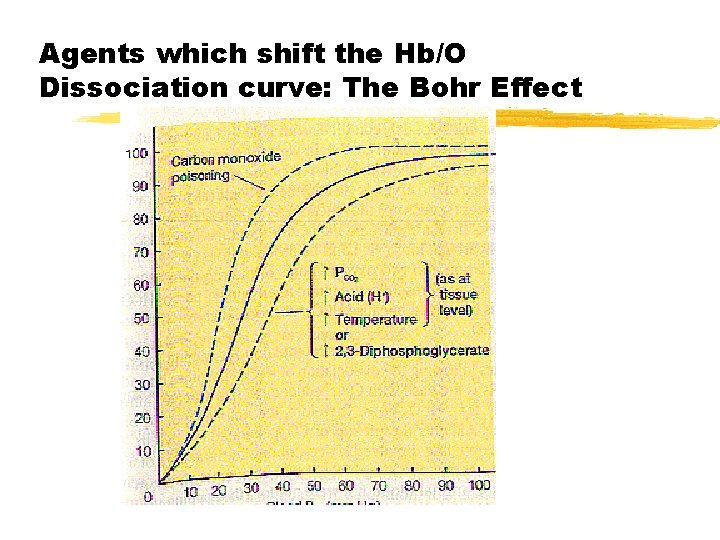
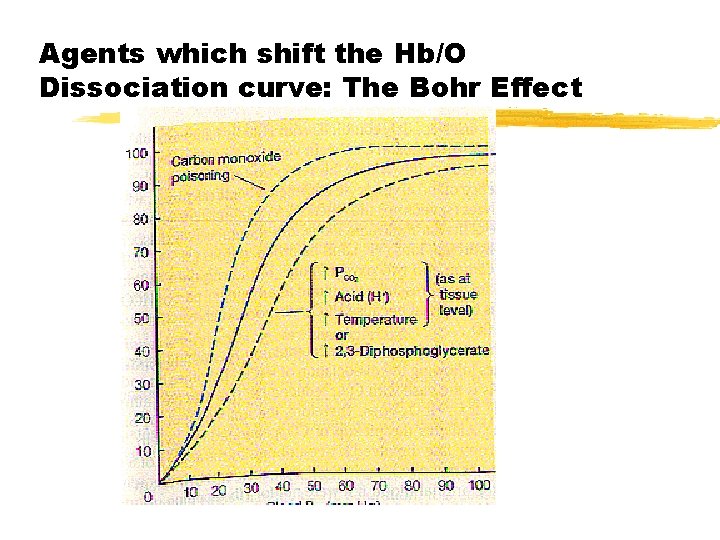
Agents which shift the Hb/O Dissociation curve: The Bohr Effect
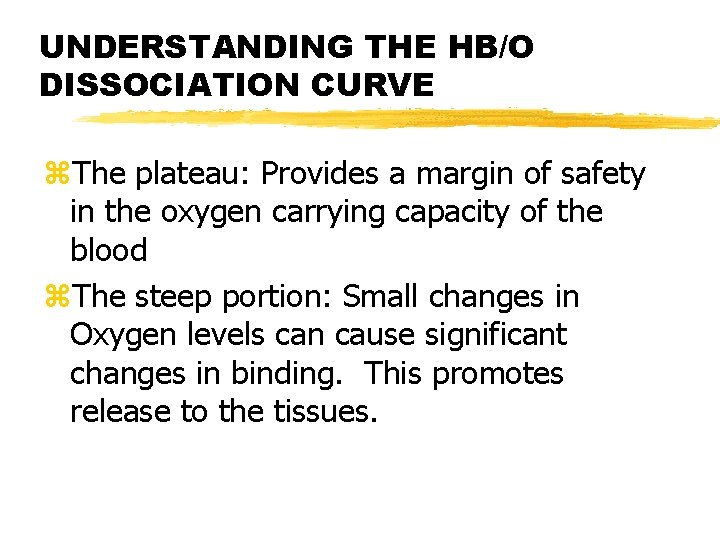
UNDERSTANDING THE HB/O DISSOCIATION CURVE z. The plateau: Provides a margin of safety in the oxygen carrying capacity of the blood z. The steep portion: Small changes in Oxygen levels can cause significant changes in binding. This promotes release to the tissues.
Agents which shift the Hb/O Dissociation curve: The Bohr Effect
Carbon dioxide/Bicarbonate Relationship CO 2 + H 2 O <---> H 2 CO 3 <---> H+ + HCO 3 Carbon dioxide dissolved in water readily combines with water to form carbonic acid. The carbonic acid then dissociates into the hydrogen ion and bicarbonate ion. The former reaction is catalized by and enzyme called Carbonic Anhydrase in many tissues.
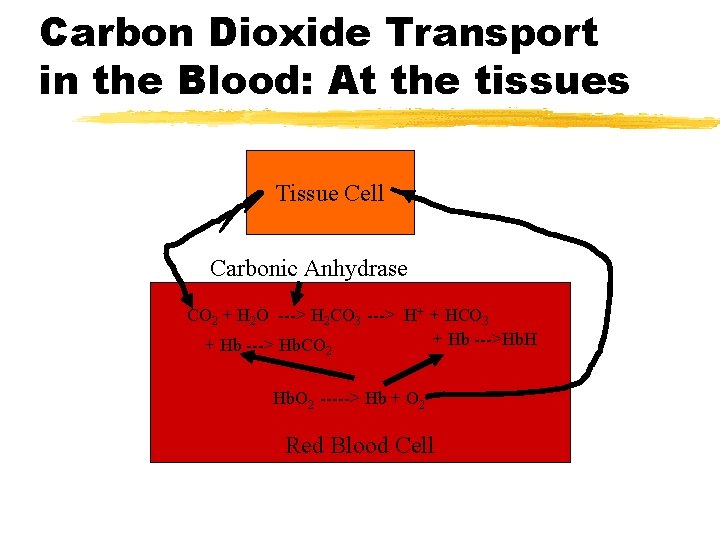
Carbon Dioxide Transport in the Blood: At the tissues Tissue Cell Carbonic Anhydrase CO 2 + H 2 O ---> H 2 CO 3 ---> H+ + HCO 3 + Hb --->Hb. H + Hb ---> Hb. CO 2 Hb. O 2 -----> Hb + O 2 Red Blood Cell
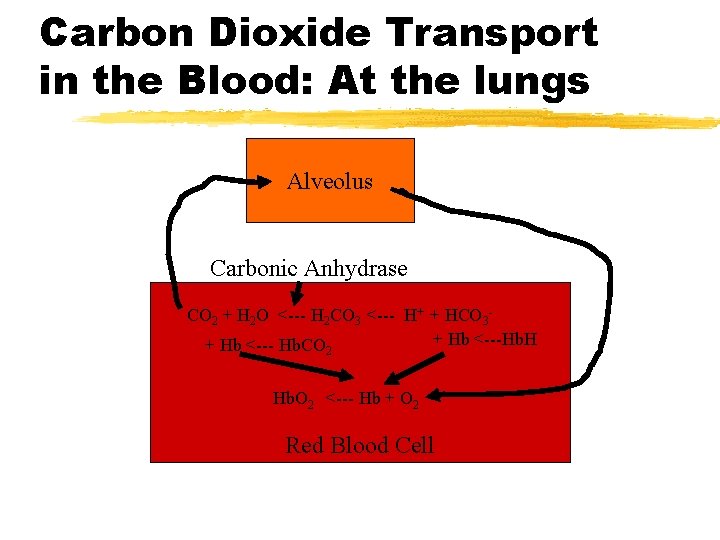
Carbon Dioxide Transport in the Blood: At the lungs Alveolus Carbonic Anhydrase CO 2 + H 2 O <--- H 2 CO 3 <--- H+ + HCO 3+ Hb <---Hb. H + Hb <--- Hb. CO 2 Hb. O 2 <--- Hb + O 2 Red Blood Cell
The Haldane Effect z. Removal of oxygen from hemoglobin increases hemoglobin’s affinity for carbon dioxide z. This allows carbon dioxide to “ride” on the empty hemoglobin
RESPIRATORY CONTROL z. Pons: Pneumotactic center z. Pons: Apneustic center z. Medulla: Dorsal respiratory group z. Medulla: Ventral respiratory group
Medulla: Dorsal respiratory group z. Inspiratory neurons z. Pacemaker activity z. Expiration occurs when these cease firing
Medulla: Ventral respiratory group z. Both inspiratory and expiratory neurons z. Inactive during normal quiet breathing z. Rev up inspiratory activity when demands for ventilation are high
Pons: Pneumotactic center z. Fine tuning over medullary centers z. Switches off inspiration
Pons: Apneustic center z. Fine tuning over medullary centers z. Blocks switching off of inspiritory neurons
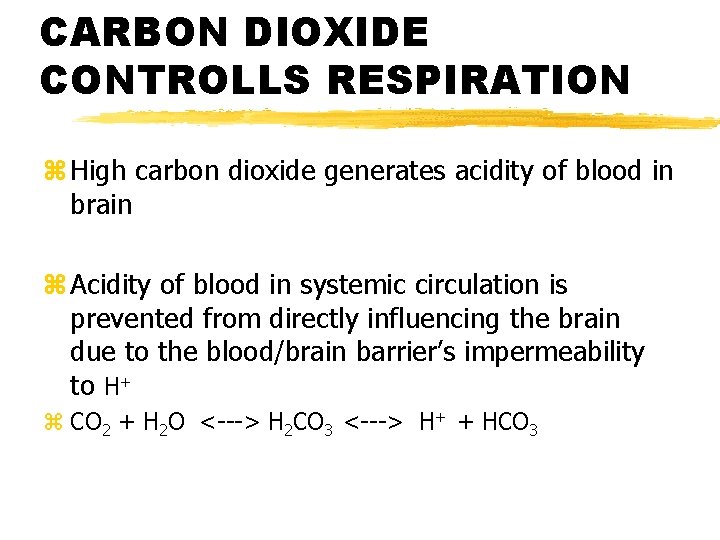
CARBON DIOXIDE CONTROLLS RESPIRATION z High carbon dioxide generates acidity of blood in brain z Acidity of blood in systemic circulation is prevented from directly influencing the brain due to the blood/brain barrier’s impermeability to H+ z CO 2 + H 2 O <---> H 2 CO 3 <---> H+ + HCO 3
OXYGEN LEVELS MUST FALL DRASTICALLY TO AFFECT BREATHING z. Receptors in carotid bodies z. Below 60 mm. Hg for oxygen partial pressure, breathing is stimulated z. This is a last-ditch, fail-safe mechanism only!