
RESPIRATION ENERGY ABILITY TO DO WORK 1 What
RESPIRATION
ENERGY- ABILITY TO DO WORK • 1. What types of activities require energy? • 2. How do humans obtain most of their energy? • 3. How do plants obtain most of their energy?
RESPIRATION • Heterotrophs (humans/animals) obtain energy through eating food! • Food contains calories and glucose. • Energy is released from glucose/food.
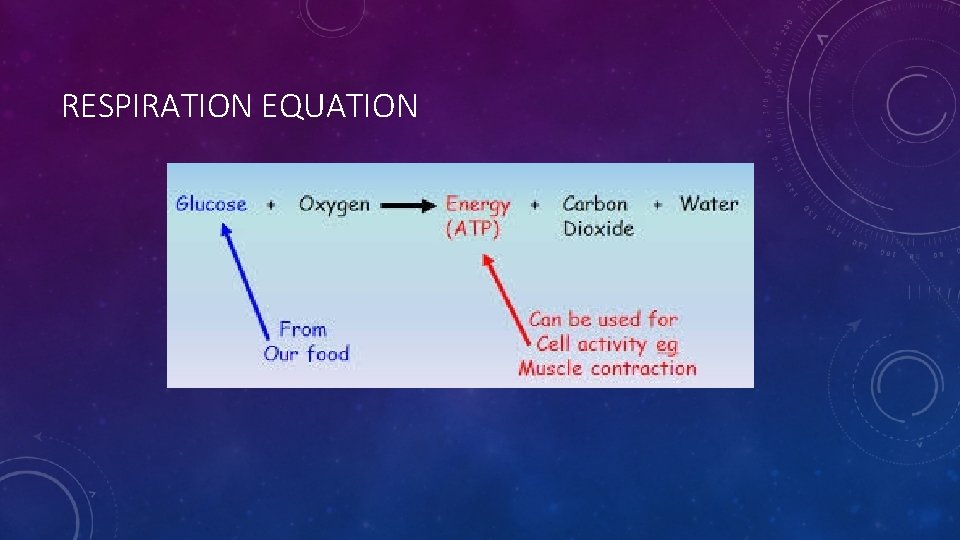
RESPIRATION EQUATION
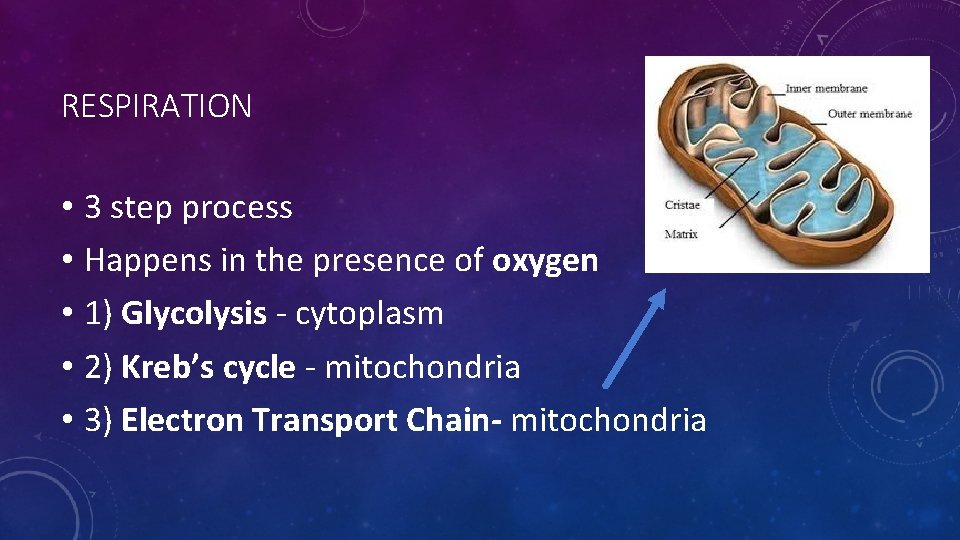
RESPIRATION • 3 step process • Happens in the presence of oxygen • 1) Glycolysis - cytoplasm • 2) Kreb’s cycle - mitochondria • 3) Electron Transport Chain- mitochondria
GLYCOLYSIS (STEP 1) (SPLITTING SUGAR) • Glucose --- pyruvate • Electron carriers store energy (NAD/NADH) and transfer to other cell pathways. • Takes place in cytoplasm • Fast reaction • No O 2 needed http: //www. youtube. com/watch? v=Ef. Glznwfu 9 U
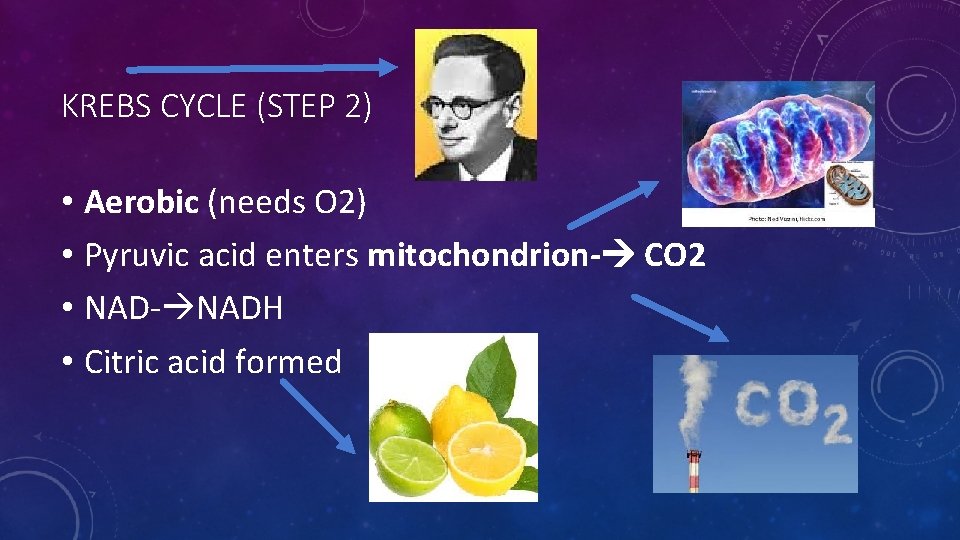
KREBS CYCLE (STEP 2) • Aerobic (needs O 2) • Pyruvic acid enters mitochondrion- CO 2 • NAD- NADH • Citric acid formed
KREBS CYCLE- • Citric acid broken down • More CO 2 released • NADH, ATP is released…AKA (energy!)
ELECTRON TRANSPORT (STEP 3) Electrons from Krebs cycle are taken to Electron Transport Chain Transfers ADP- ATP via carrier proteins Occurs in mitochondrion membrane (eukaryotes) Occurs in cell membrane (prokaryotes) H 20 is released as E- bond with H and O
FERMENTATION • • • A way to release energy without O 2 Anaerobic (no air/oxygen) Substitutes for Krebs and Electron Transport chain 2 types 1) Alcoholic 2) Lactic Acid Fermentation
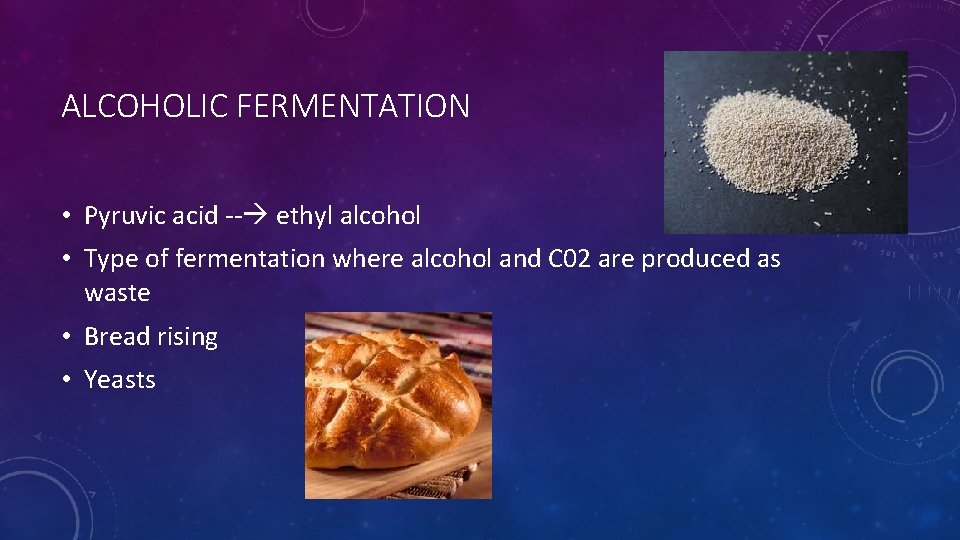
ALCOHOLIC FERMENTATION • Pyruvic acid -- ethyl alcohol • Type of fermentation where alcohol and C 02 are produced as waste • Bread rising • Yeasts
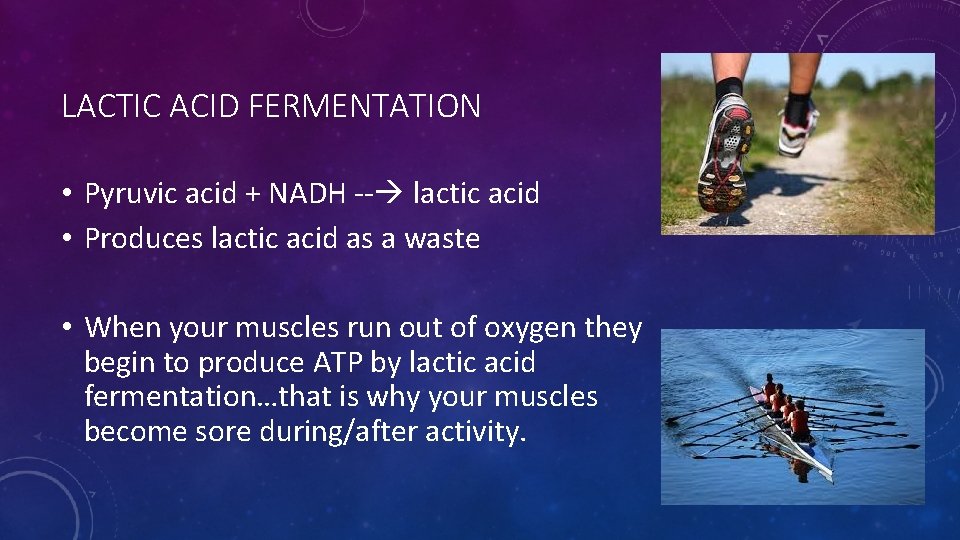
LACTIC ACID FERMENTATION • Pyruvic acid + NADH -- lactic acid • Produces lactic acid as a waste • When your muscles run out of oxygen they begin to produce ATP by lactic acid fermentation…that is why your muscles become sore during/after activity.

TO SUMMARIZE… http: //www. youtube. com/watch? v=-Gb 2 Ez. F_Xq. A
- Slides: 13