
RESPIRATION DURING EXERCISE CHANGES THAT OCCUR IN RESPIRATION



- Slides: 41
RESPIRATION DURING EXERCISE
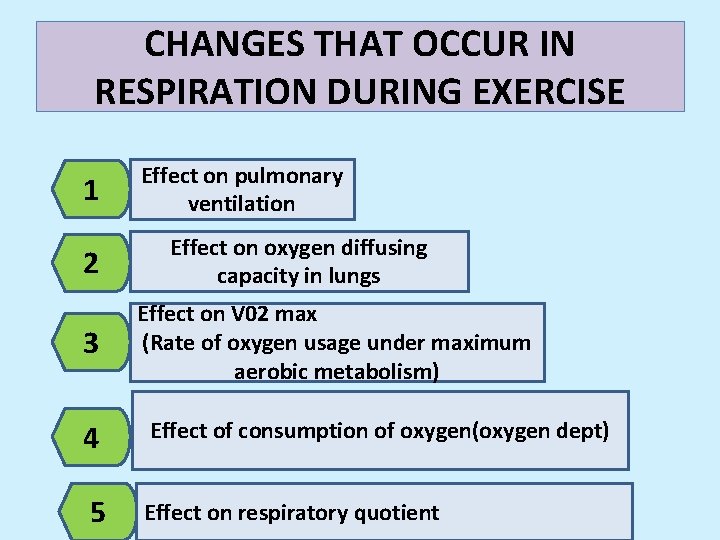
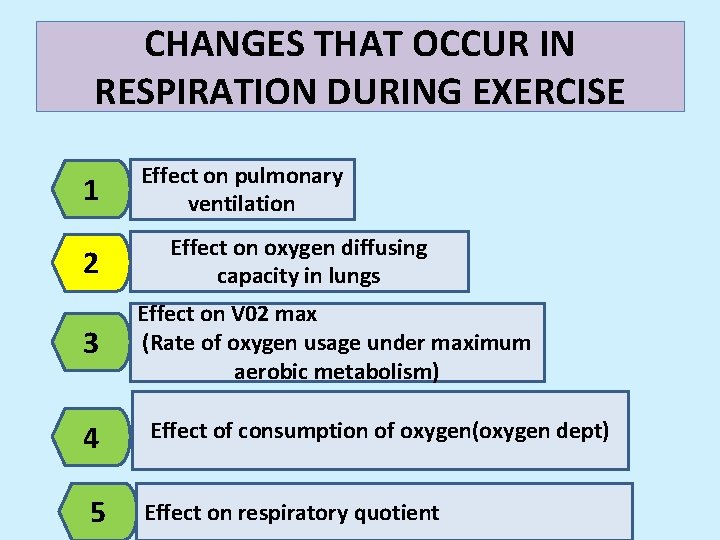
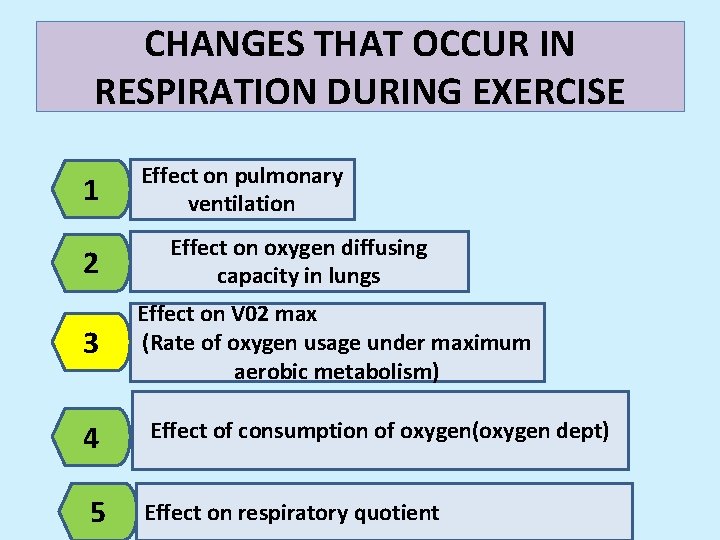
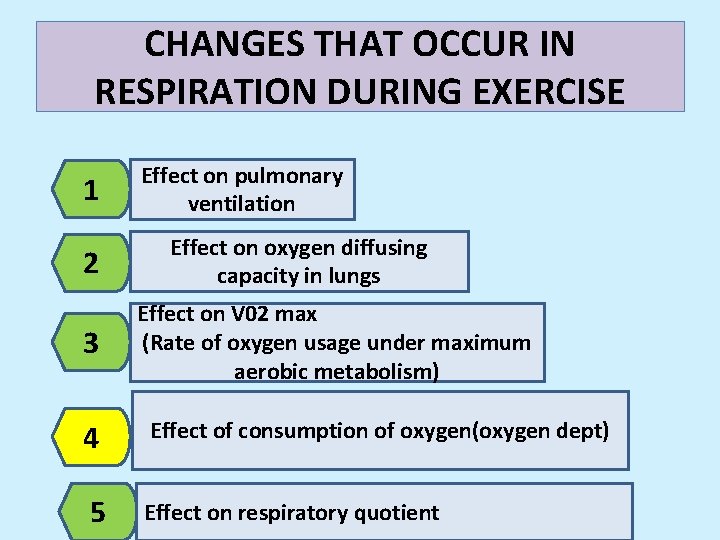
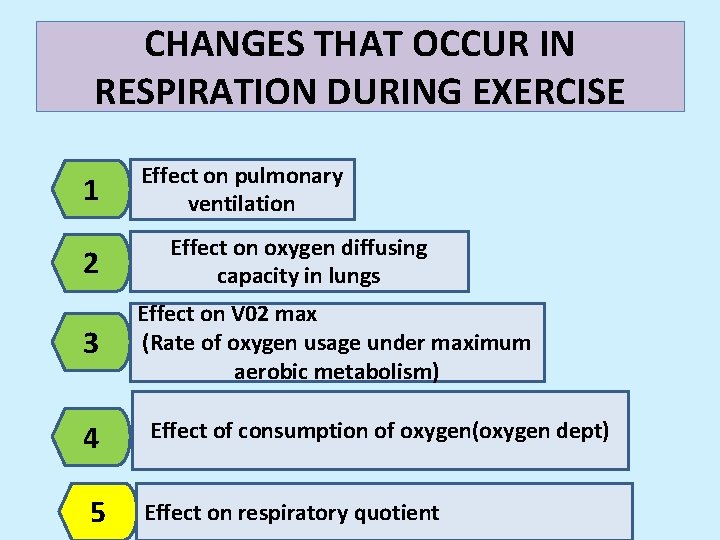
CHANGES THAT OCCUR IN RESPIRATION DURING EXERCISE 1 2 3 Effect on pulmonary ventilation Effect on oxygen diffusing capacity in lungs Effect on V 02 max (Rate of oxygen usage under maximum aerobic metabolism) 4 Effect of consumption of oxygen(oxygen dept) 5 Effect on respiratory quotient
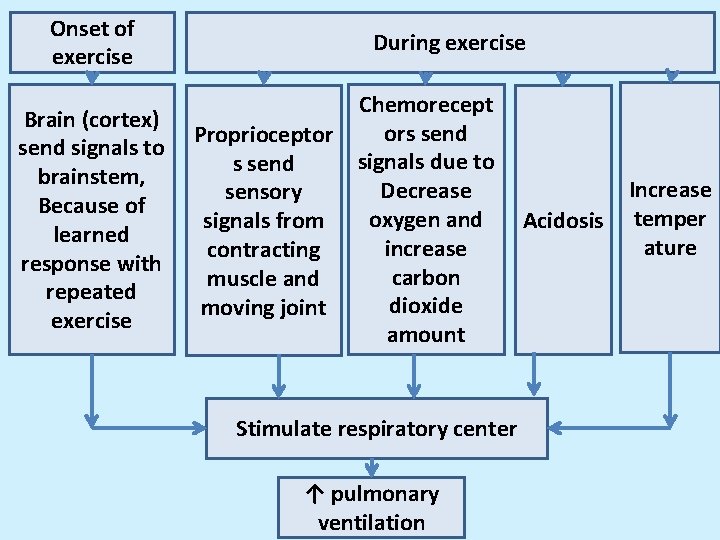
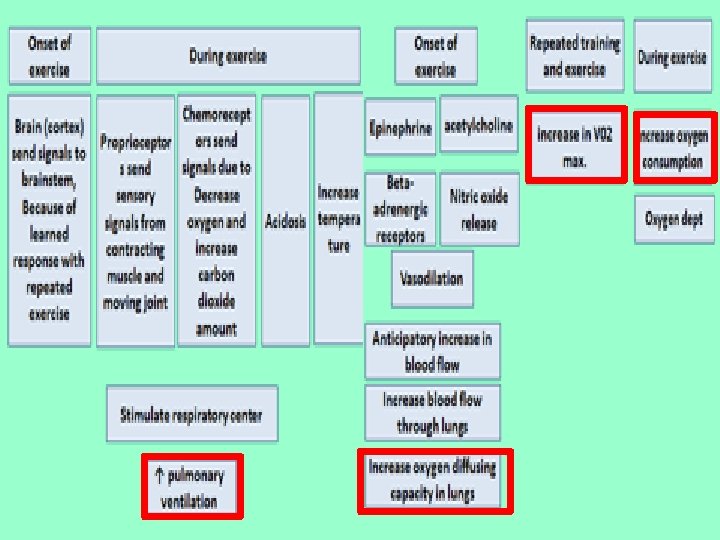
Onset of exercise Brain (cortex) send signals to brainstem, Because of learned response with repeated exercise During exercise Proprioceptor s send sensory signals from contracting muscle and moving joint Chemorecept ors send signals due to Decrease oxygen and increase carbon dioxide amount Stimulate respiratory center ↑ pulmonary ventilation Acidosis Increase temper ature
q Thus increase in exercise intensity → increase in pulmonary ventilation. q (PO 2, PC 02 and H ion concentration remain normal during exercise)
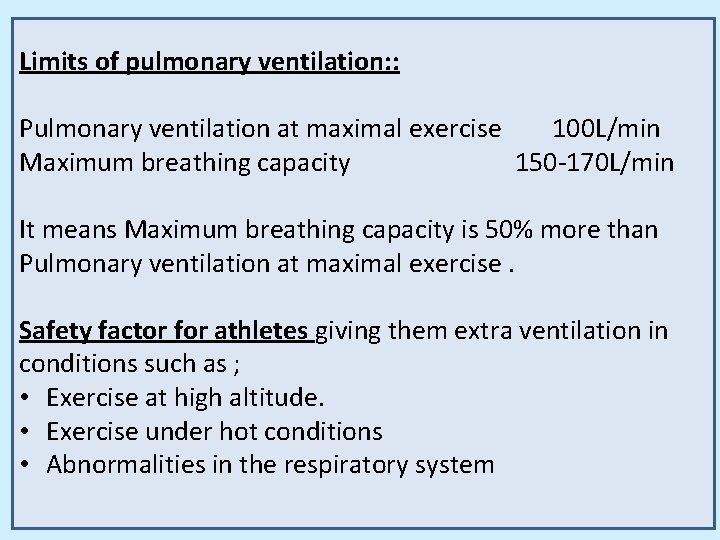
Limits of pulmonary ventilation: : Pulmonary ventilation at maximal exercise 100 L/min Maximum breathing capacity 150 -170 L/min It means Maximum breathing capacity is 50% more than Pulmonary ventilation at maximal exercise. Safety factor for athletes giving them extra ventilation in conditions such as ; • Exercise at high altitude. • Exercise under hot conditions • Abnormalities in the respiratory system
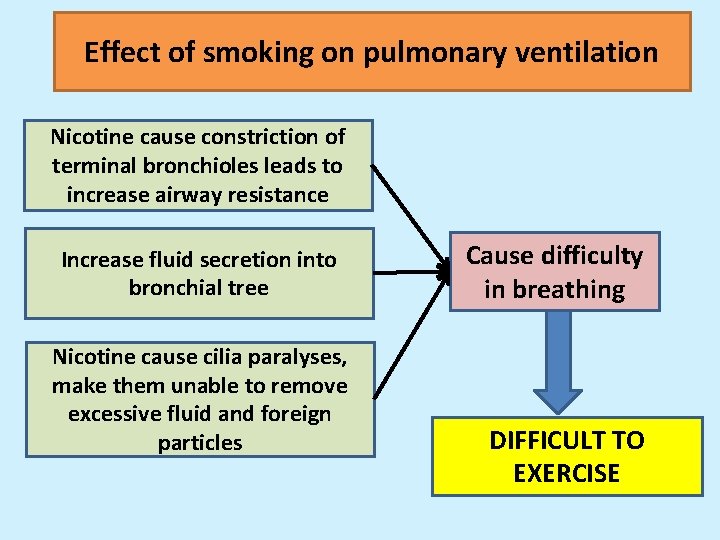
Effect of smoking on pulmonary ventilation Nicotine cause constriction of terminal bronchioles leads to increase airway resistance Increase fluid secretion into bronchial tree Nicotine cause cilia paralyses, make them unable to remove excessive fluid and foreign particles Cause difficulty in breathing DIFFICULT TO EXERCISE
CHANGES THAT OCCUR IN RESPIRATION DURING EXERCISE 1 2 3 Effect on pulmonary ventilation Effect on oxygen diffusing capacity in lungs Effect on V 02 max (Rate of oxygen usage under maximum aerobic metabolism) 4 Effect of consumption of oxygen(oxygen dept) 5 Effect on respiratory quotient
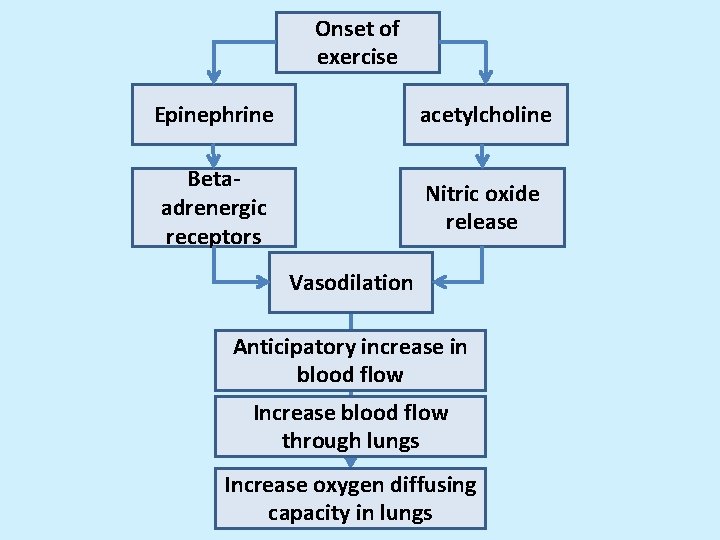
Onset of exercise Epinephrine acetylcholine Betaadrenergic receptors Nitric oxide release Vasodilation Anticipatory increase in blood flow Increase blood flow through lungs Increase oxygen diffusing capacity in lungs
CHANGES THAT OCCUR IN RESPIRATION DURING EXERCISE 1 2 3 Effect on pulmonary ventilation Effect on oxygen diffusing capacity in lungs Effect on V 02 max (Rate of oxygen usage under maximum aerobic metabolism) 4 Effect of consumption of oxygen(oxygen dept) 5 Effect on respiratory quotient
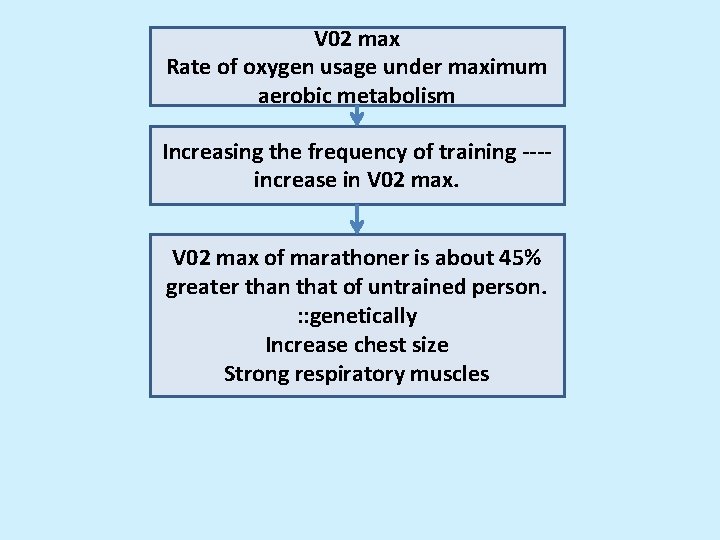
V 02 max Rate of oxygen usage under maximum aerobic metabolism Increasing the frequency of training ---increase in V 02 max of marathoner is about 45% greater than that of untrained person. : : genetically Increase chest size Strong respiratory muscles
CHANGES THAT OCCUR IN RESPIRATION DURING EXERCISE 1 2 3 Effect on pulmonary ventilation Effect on oxygen diffusing capacity in lungs Effect on V 02 max (Rate of oxygen usage under maximum aerobic metabolism) 4 Effect of consumption of oxygen(oxygen dept) 5 Effect on respiratory quotient
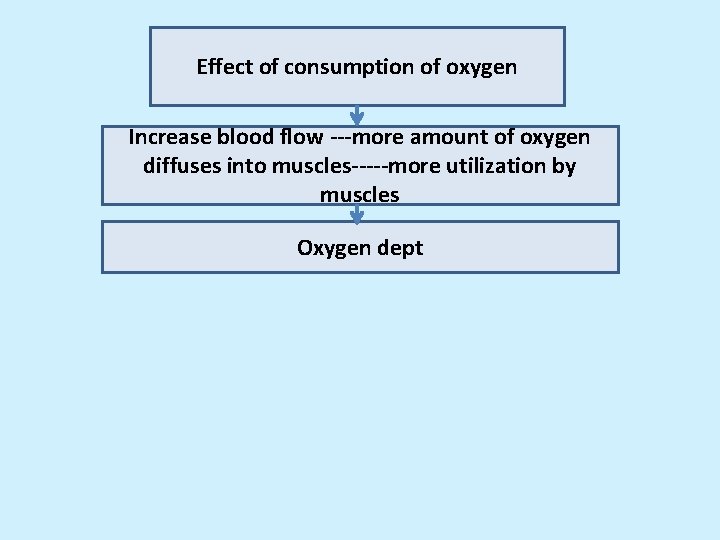
Effect of consumption of oxygen Increase blood flow ---more amount of oxygen diffuses into muscles-----more utilization by muscles Oxygen dept
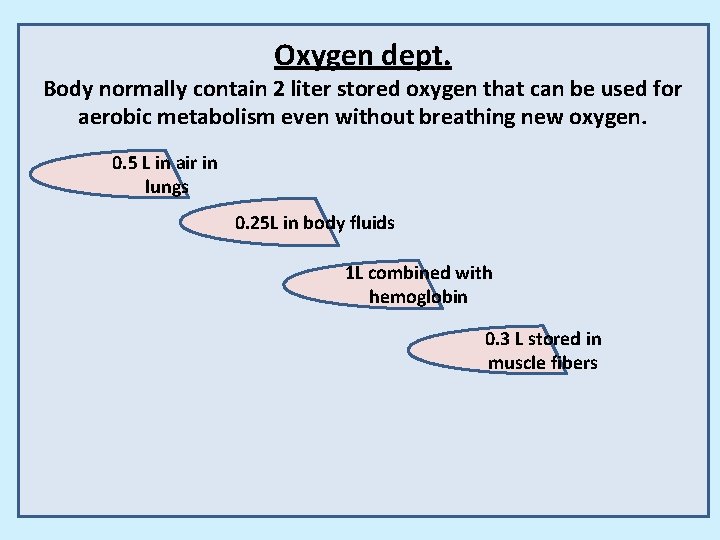
Oxygen dept. Body normally contain 2 liter stored oxygen that can be used for aerobic metabolism even without breathing new oxygen. 0. 5 L in air in lungs 0. 25 L in body fluids 1 L combined with hemoglobin 0. 3 L stored in muscle fibers
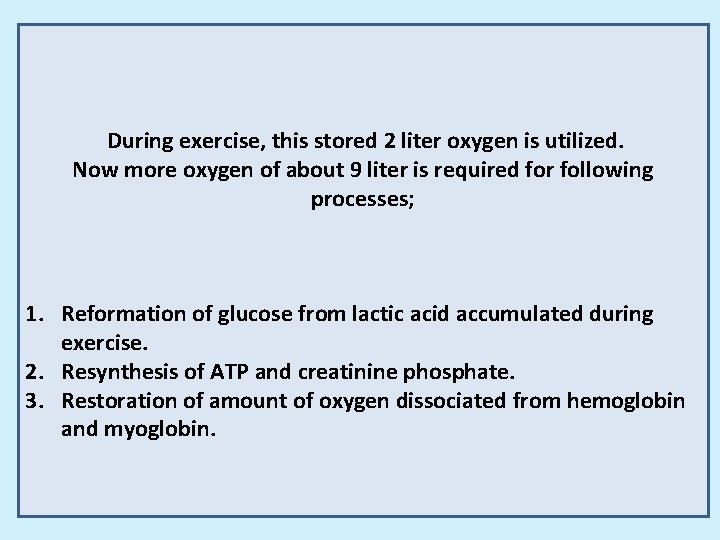
During exercise, this stored 2 liter oxygen is utilized. Now more oxygen of about 9 liter is required for following processes; 1. Reformation of glucose from lactic acid accumulated during exercise. 2. Resynthesis of ATP and creatinine phosphate. 3. Restoration of amount of oxygen dissociated from hemoglobin and myoglobin.
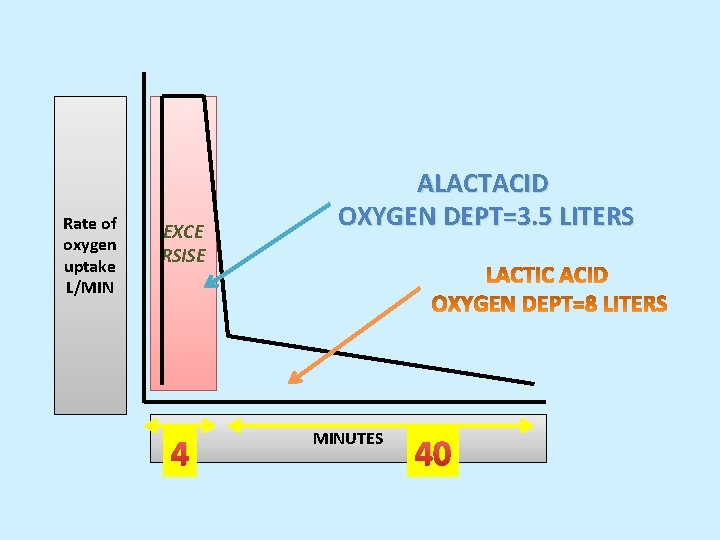
Rate of oxygen uptake L/MIN EXCE RSISE 4 ALACTACID OXYGEN DEPT=3. 5 LITERS MINUTES 40
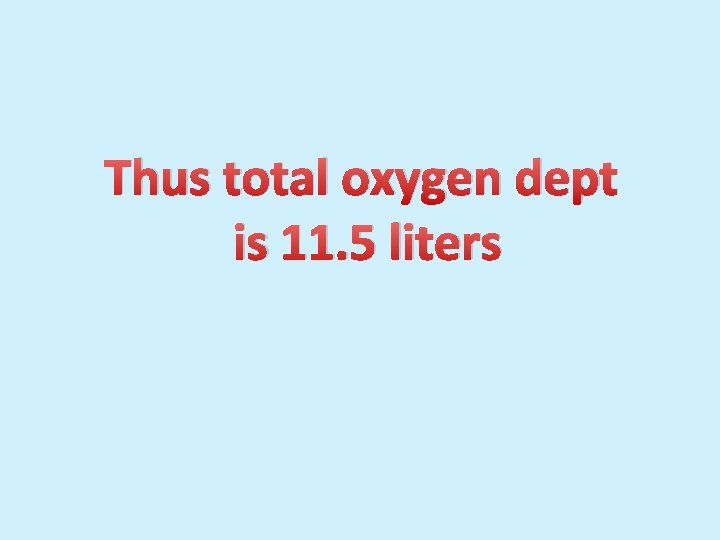
Thus total oxygen dept is 11. 5 liters
CHANGES THAT OCCUR IN RESPIRATION DURING EXERCISE 1 2 3 Effect on pulmonary ventilation Effect on oxygen diffusing capacity in lungs Effect on V 02 max (Rate of oxygen usage under maximum aerobic metabolism) 4 Effect of consumption of oxygen(oxygen dept) 5 Effect on respiratory quotient
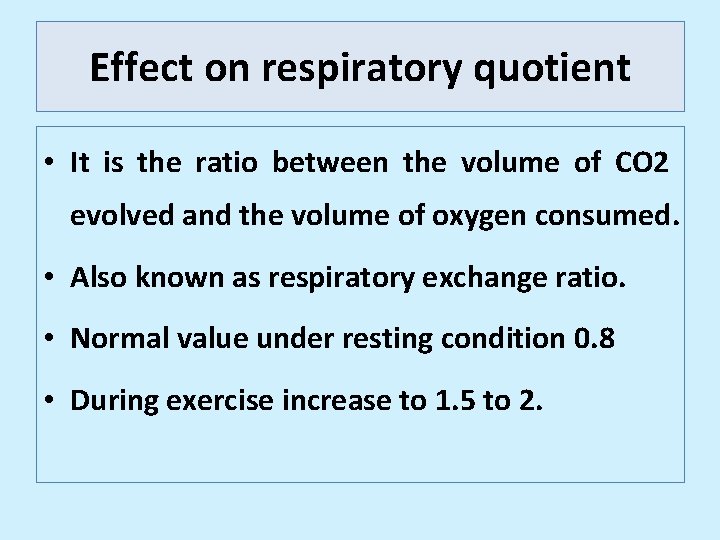
Effect on respiratory quotient • It is the ratio between the volume of CO 2 evolved and the volume of oxygen consumed. • Also known as respiratory exchange ratio. • Normal value under resting condition 0. 8 • During exercise increase to 1. 5 to 2.
CARDIOVASCULAR SYSTEM IN EXERCISE
EFFECT ON STROKE VOLUME AND HEART RATE EFFECT ON WORK OUTPUT, OXYGEN CONSUMPTION AND CARDIAC OUTPUT EFFECT ON HEART MUSCLE EFFECT ON VO 2 MAX
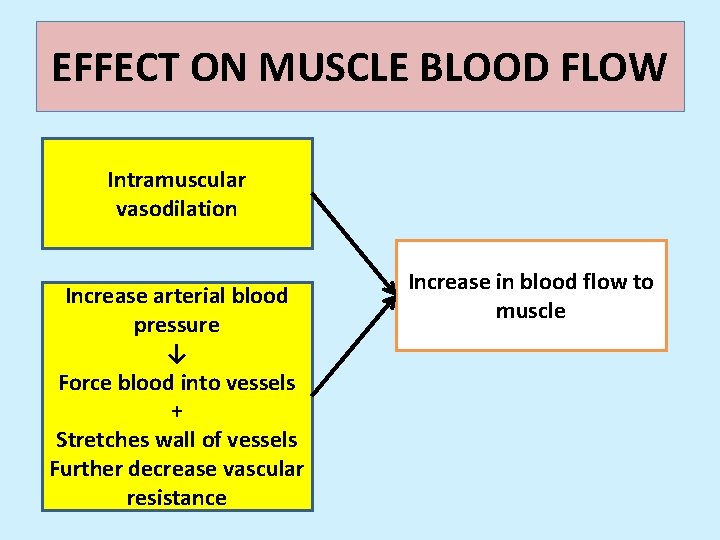
EFFECT ON MUSCLE BLOOD FLOW Intramuscular vasodilation Increase arterial blood pressure ↓ Force blood into vessels + Stretches wall of vessels Further decrease vascular resistance Increase in blood flow to muscle
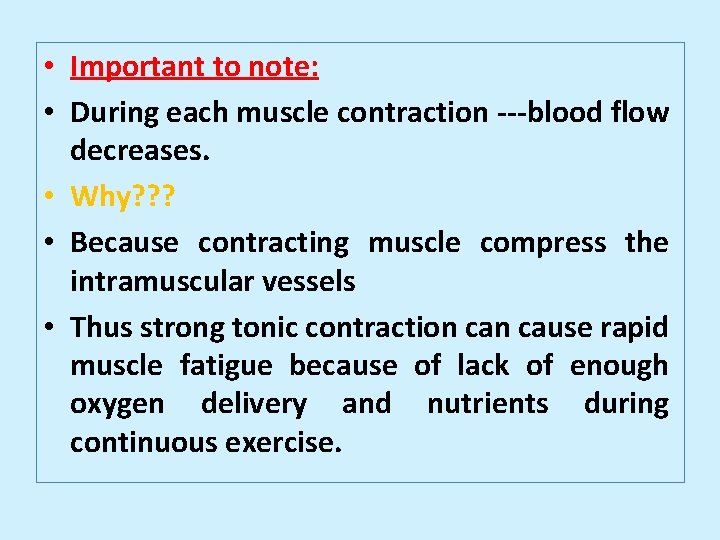
• Important to note: • During each muscle contraction ---blood flow decreases. • Why? ? ? • Because contracting muscle compress the intramuscular vessels • Thus strong tonic contraction cause rapid muscle fatigue because of lack of enough oxygen delivery and nutrients during continuous exercise.
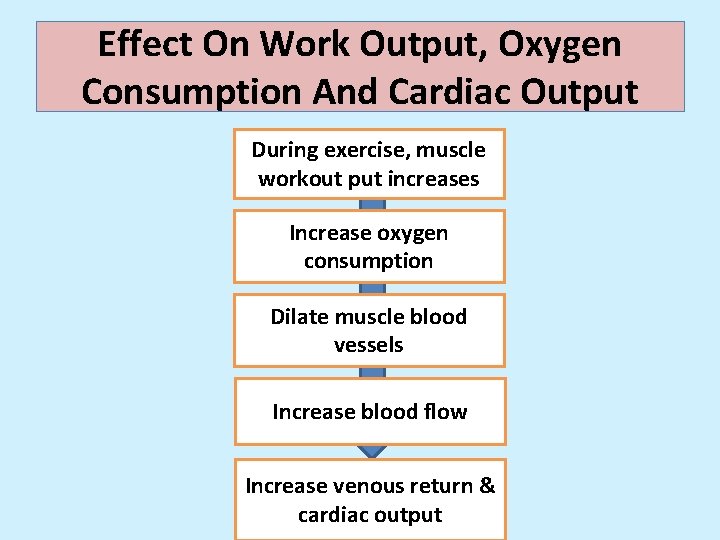
Effect On Work Output, Oxygen Consumption And Cardiac Output During exercise, muscle workout put increases Increase oxygen consumption Dilate muscle blood vessels Increase blood flow Increase venous return & cardiac output
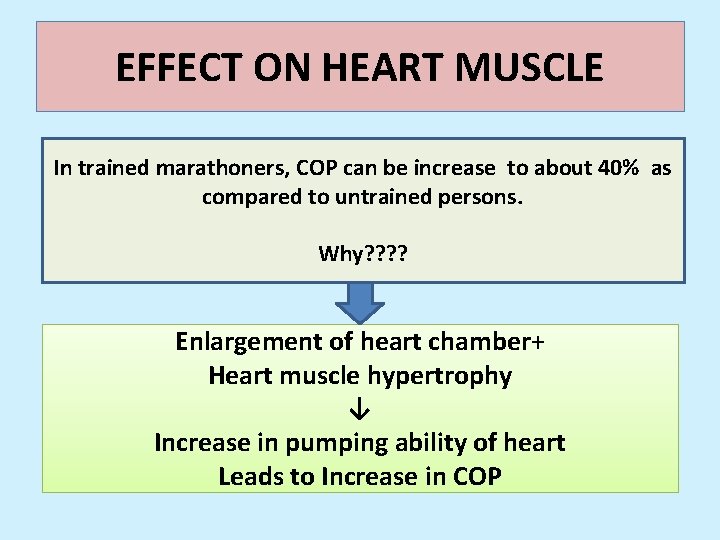
EFFECT ON HEART MUSCLE In trained marathoners, COP can be increase to about 40% as compared to untrained persons. Why? ? Enlargement of heart chamber+ Heart muscle hypertrophy ↓ Increase in pumping ability of heart Leads to Increase in COP
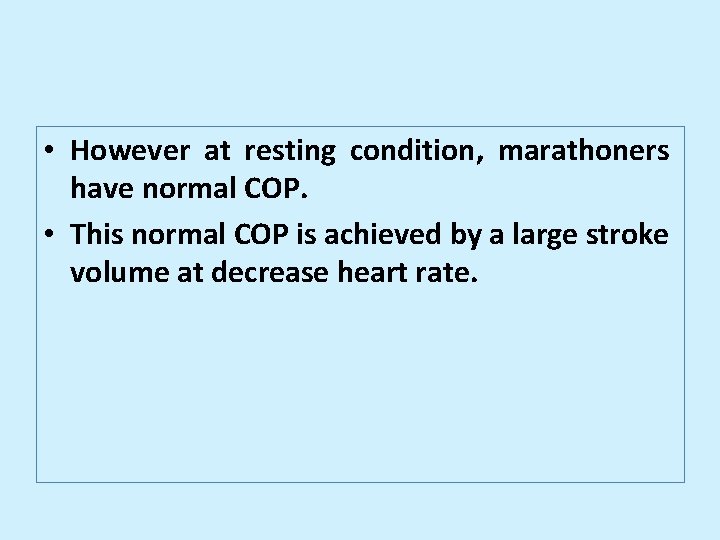
• However at resting condition, marathoners have normal COP. • This normal COP is achieved by a large stroke volume at decrease heart rate.
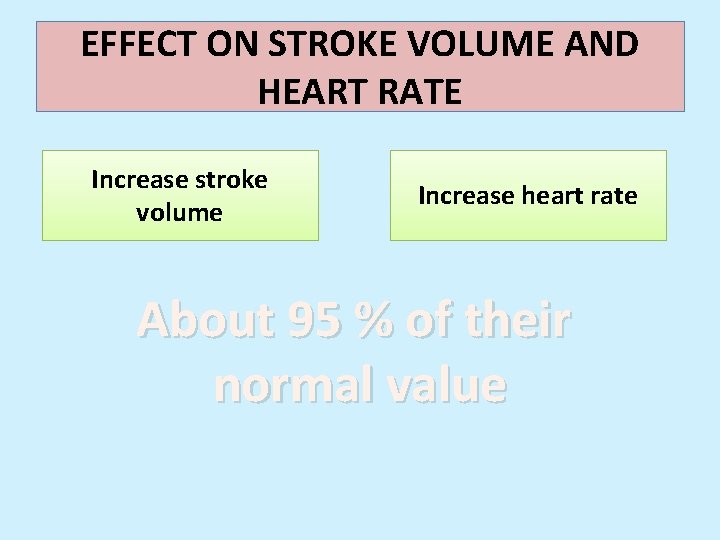
EFFECT ON STROKE VOLUME AND HEART RATE Increase stroke volume Increase heart rate About 95 % of their normal value
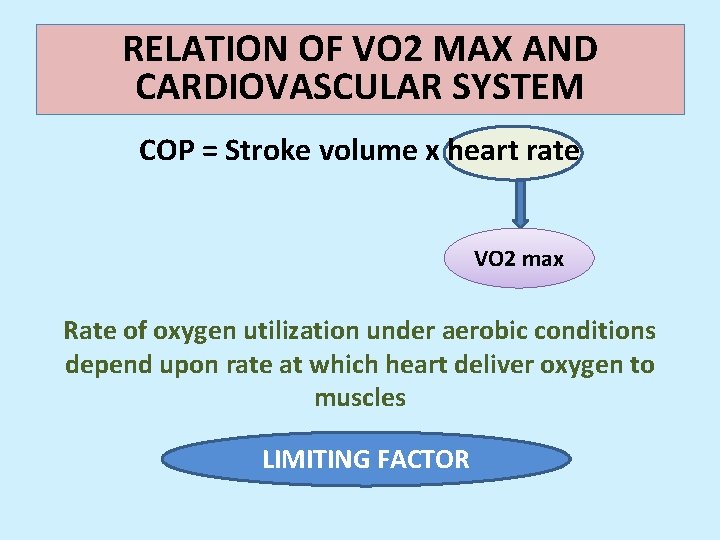
RELATION OF VO 2 MAX AND CARDIOVASCULAR SYSTEM COP = Stroke volume x heart rate VO 2 max Rate of oxygen utilization under aerobic conditions depend upon rate at which heart deliver oxygen to muscles LIMITING FACTOR
Thus any disease that decrease the COP cause decrease in achievable body muscle power
BODY HEAT IN EXERCISE
• During exercise , oxygen consumption increase to about 20 folds in well trained athlete. • And amount of heat liberated is directly proportional to oxygen consumption.
HEAT STROKE • During exercise , even under normal condition, body temperature rise. • In hot and humid conditions, body temperature rise to 106 F to 108 F. • This elevated temperature destroy the tissue cells especially brain cells. • Symptoms are; weakness, exhausation, headache , dizziness and unconsciousness.
• Reason: 1. At this very high temperature, temperature regulating mechanism often fail. 2. Increase body temperature doubles the rate of all intracellular chemical reactions, thus liberating more heat.
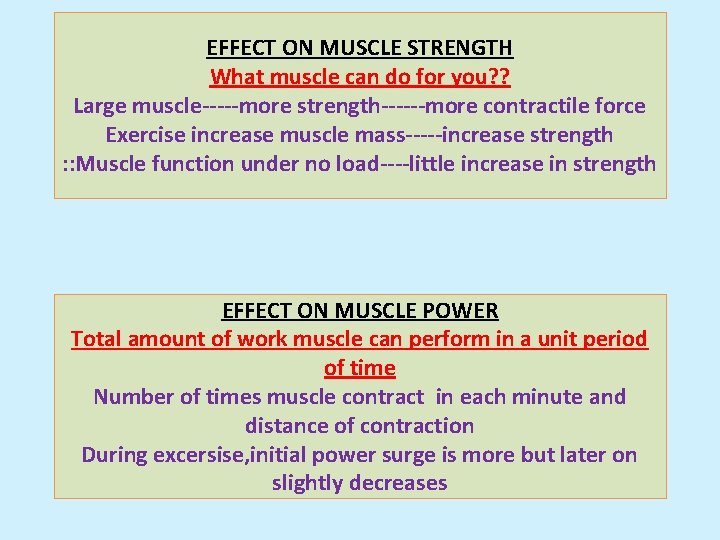
EFFECT ON MUSCLE STRENGTH What muscle can do for you? ? Large muscle-----more strength------more contractile force Exercise increase muscle mass-----increase strength : : Muscle function under no load----little increase in strength EFFECT ON MUSCLE POWER Total amount of work muscle can perform in a unit period of time Number of times muscle contract in each minute and distance of contraction During excersise, initial power surge is more but later on slightly decreases
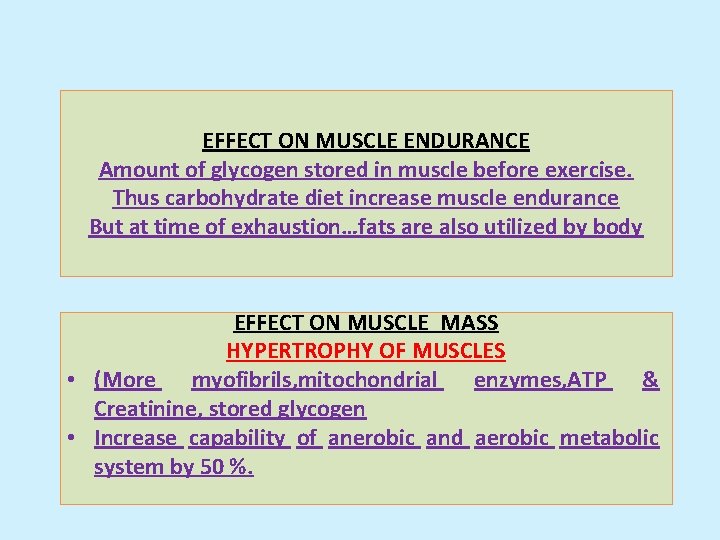
EFFECT ON MUSCLE ENDURANCE Amount of glycogen stored in muscle before exercise. Thus carbohydrate diet increase muscle endurance But at time of exhaustion…fats are also utilized by body EFFECT ON MUSCLE MASS HYPERTROPHY OF MUSCLES • (More myofibrils, mitochondrial enzymes, ATP & Creatinine, stored glycogen • Increase capability of anerobic and aerobic metabolic system by 50 %.
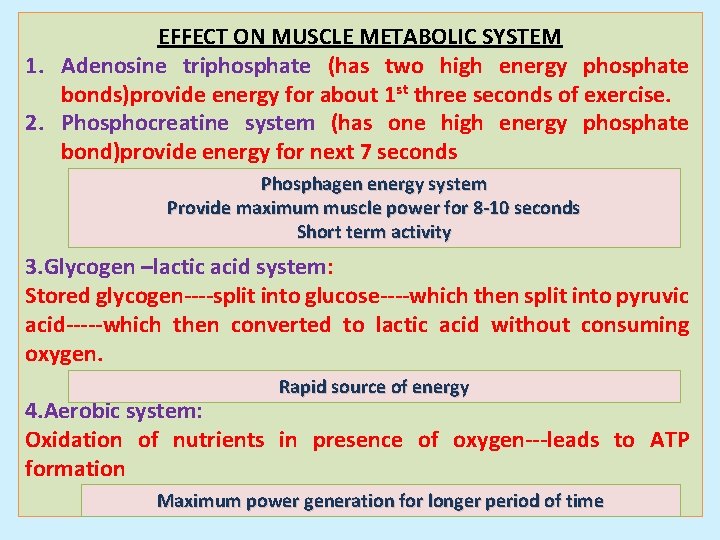
EFFECT ON MUSCLE METABOLIC SYSTEM 1. Adenosine triphosphate (has two high energy phosphate bonds)provide energy for about 1 st three seconds of exercise. 2. Phosphocreatine system (has one high energy phosphate bond)provide energy for next 7 seconds Phosphagen energy system Provide maximum muscle power for 8 -10 seconds Short term activity 3. Glycogen –lactic acid system: Stored glycogen----split into glucose----which then split into pyruvic acid-----which then converted to lactic acid without consuming oxygen. Rapid source of energy 4. Aerobic system: Oxidation of nutrients in presence of oxygen---leads to ATP formation Maximum power generation for longer period of time
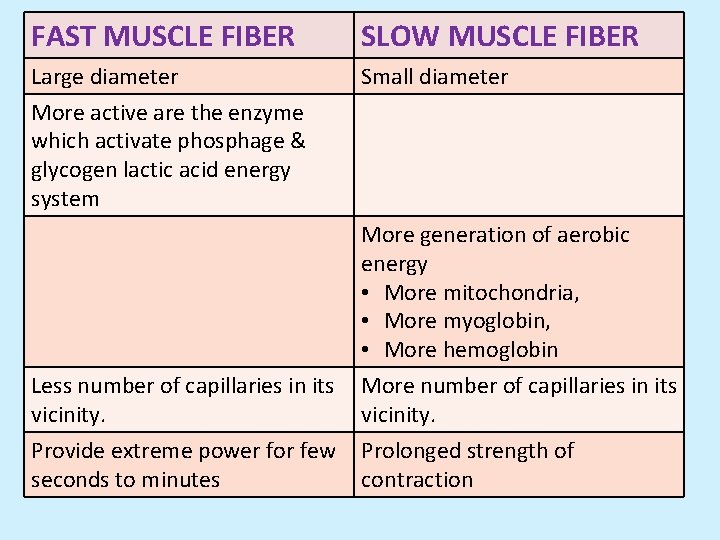
FAST MUSCLE FIBER SLOW MUSCLE FIBER Large diameter Small diameter More active are the enzyme which activate phosphage & glycogen lactic acid energy system More generation of aerobic energy • More mitochondria, • More myoglobin, • More hemoglobin Less number of capillaries in its vicinity. Provide extreme power for few seconds to minutes More number of capillaries in its vicinity. Prolonged strength of contraction
• Athletic training show no change in proportion of fast and slow twitch muscle fibers. • Thus their number is genetically determined. • Which in turn determine which area of athletics is most suited to each person. • Some are born to be marathoners (↑slow twitch fibers) whereas , other are born to be jumpers (↑fast twitch muscle fibers).
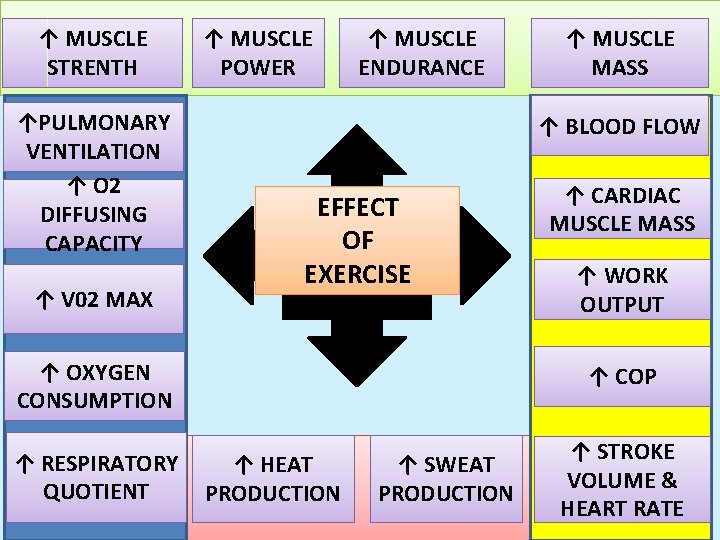
↑ MUSCLE STRENTH ↑PULMONARY VENTILATION ↑ O 2 DIFFUSING CAPACITY ↑ V 02 MAX ↑ MUSCLE POWER ↑ MUSCLE ENDURANCE ↑ MUSCLE MASS ↑ BLOOD FLOW EFFECT OF EXERCISE ↑ CARDIAC MUSCLE MASS ↑ WORK OUTPUT ↑ OXYGEN CONSUMPTION ↑ COP ↑ RESPIRATORY QUOTIENT ↑ STROKE VOLUME & HEART RATE ↑ HEAT PRODUCTION ↑ SWEAT PRODUCTION