
Respiration Decomposition 2 biochemical processes Two processes where
Respiration & Decomposition (2 biochemical processes) Two processes where carbon is ADDED to the atmosphere
Respiration Also known as cellular respiration All living things need nutrition & oxidise this nutrition to release energy
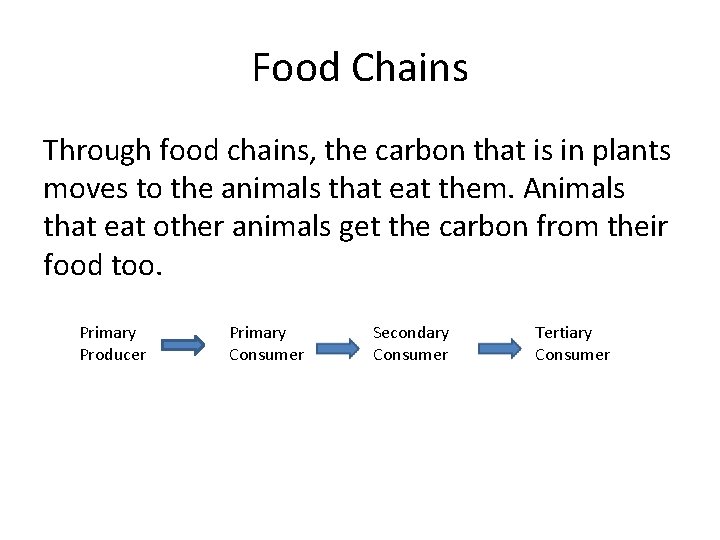
Food Chains Through food chains, the carbon that is in plants moves to the animals that eat them. Animals that eat other animals get the carbon from their food too. Primary Producer Primary Consumer Secondary Consumer Tertiary Consumer
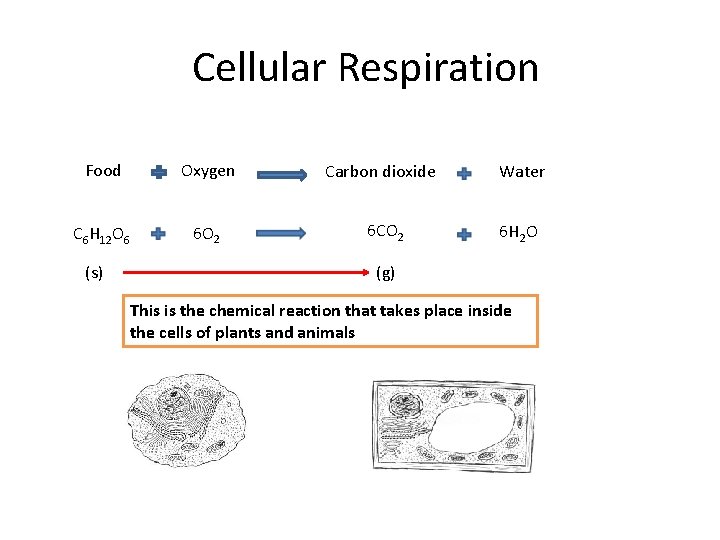
Cellular Respiration Food Oxygen Carbon dioxide Water C 6 H 12 O 6 6 O 2 6 CO 2 6 H 2 O (s) (g) This is the chemical reaction that takes place inside the cells of plants and animals
Excretion & Death Plants & animals release waste products & eventually die!
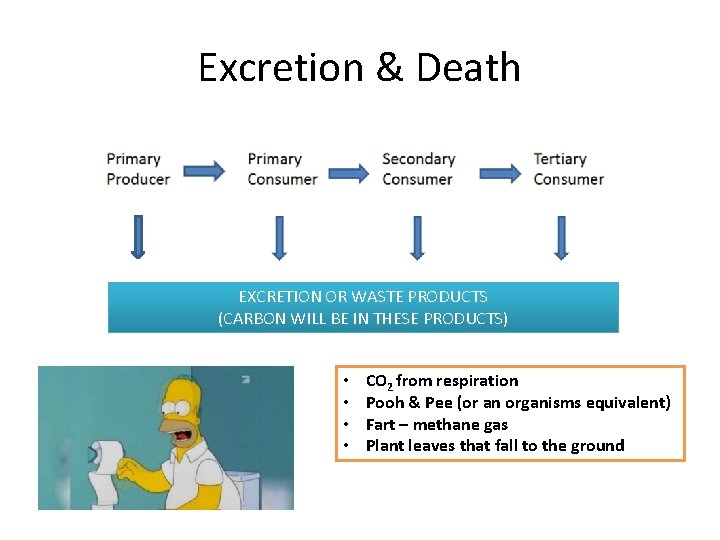
Excretion & Death EXCRETION OR WASTE PRODUCTS (CARBON WILL BE IN THESE PRODUCTS) • • CO 2 from respiration Pooh & Pee (or an organisms equivalent) Fart – methane gas Plant leaves that fall to the ground
Decomposition This is a process where micro-organisms breakdown dead organisms & the waste products from organisms
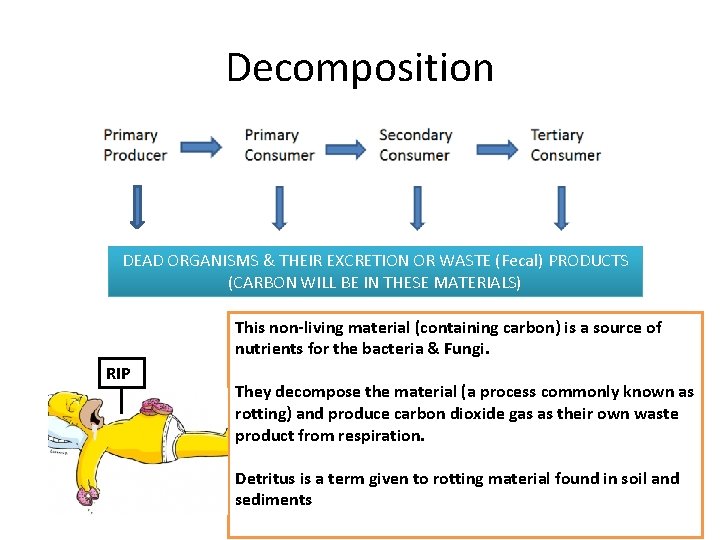
Decomposition DEAD ORGANISMS & THEIR EXCRETION OR WASTE (Fecal) PRODUCTS (CARBON WILL BE IN THESE MATERIALS) This non-living material (containing carbon) is a source of nutrients for the bacteria & Fungi. RIP They decompose the material (a process commonly known as rotting) and produce carbon dioxide gas as their own waste product from respiration. Detritus is a term given to rotting material found in soil and sediments
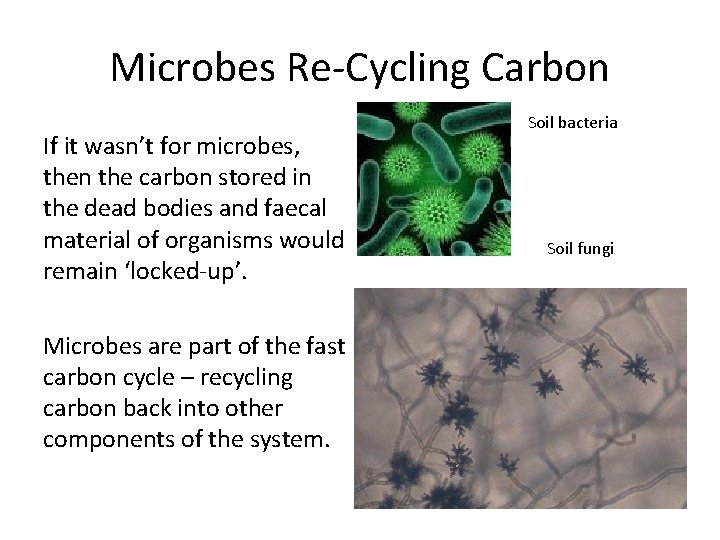
Microbes Re-Cycling Carbon If it wasn’t for microbes, then the carbon stored in the dead bodies and faecal material of organisms would remain ‘locked-up’. Microbes are part of the fast carbon cycle – recycling carbon back into other components of the system. Soil bacteria Soil fungi
ADDITION Through respiration& decomposition, carbon dioxide & methane gas can be added to the atmosphere Plants & Animals are a temporary SINK for carbon compounds but eventually give them up to the atmosphere, soil or aquatic system that they are living in.
- Slides: 10