
Respiration A Dr Production Energy Concepts Thermodynamics Reaction
- Slides: 25
Respiration A Dr. Production
Energy Concepts • Thermodynamics & Reaction Rates
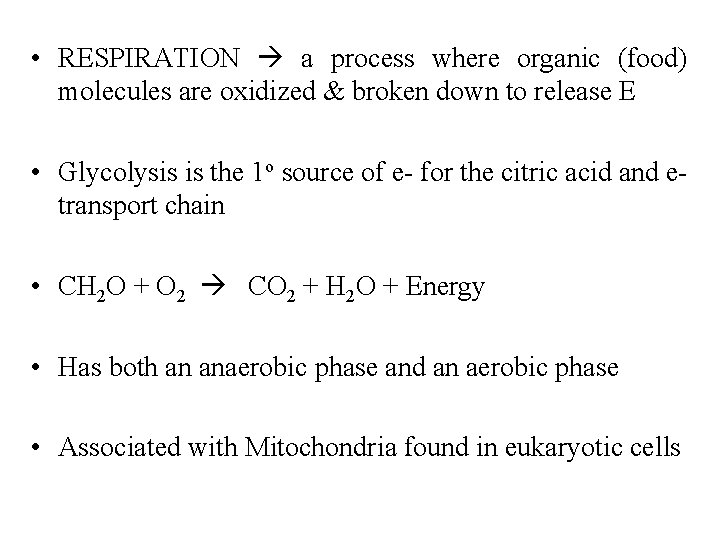
• RESPIRATION a process where organic (food) molecules are oxidized & broken down to release E • Glycolysis is the 1 o source of e- for the citric acid and etransport chain • CH 2 O + O 2 CO 2 + H 2 O + Energy • Has both an anaerobic phase and an aerobic phase • Associated with Mitochondria found in eukaryotic cells
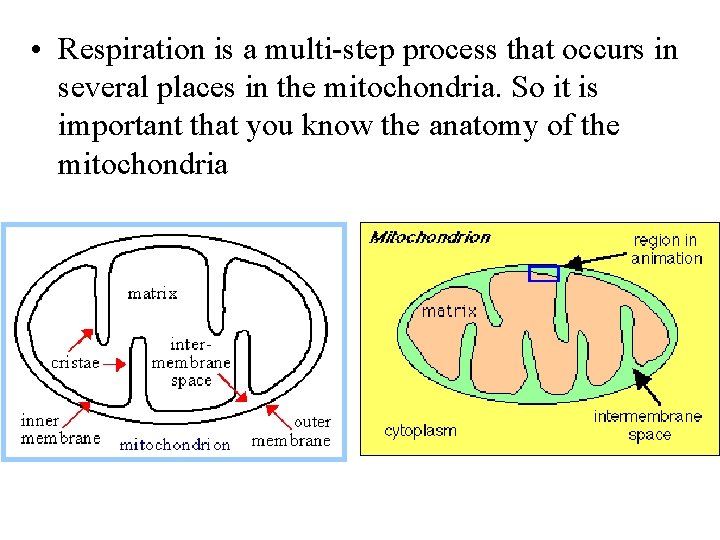
• Respiration is a multi-step process that occurs in several places in the mitochondria. So it is important that you know the anatomy of the mitochondria
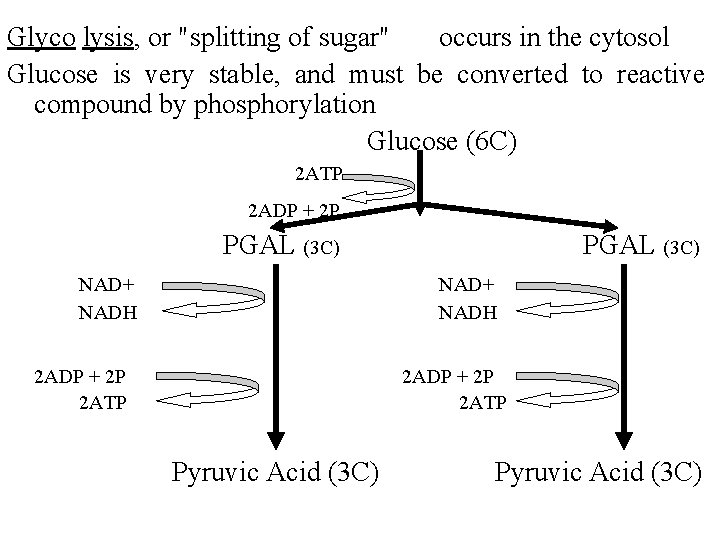
Glyco lysis, or "splitting of sugar" occurs in the cytosol Glucose is very stable, and must be converted to reactive compound by phosphorylation Glucose (6 C) 2 ATP 2 ADP + 2 P PGAL (3 C) NAD+ NADH 2 ADP + 2 P 2 ATP Pyruvic Acid (3 C)
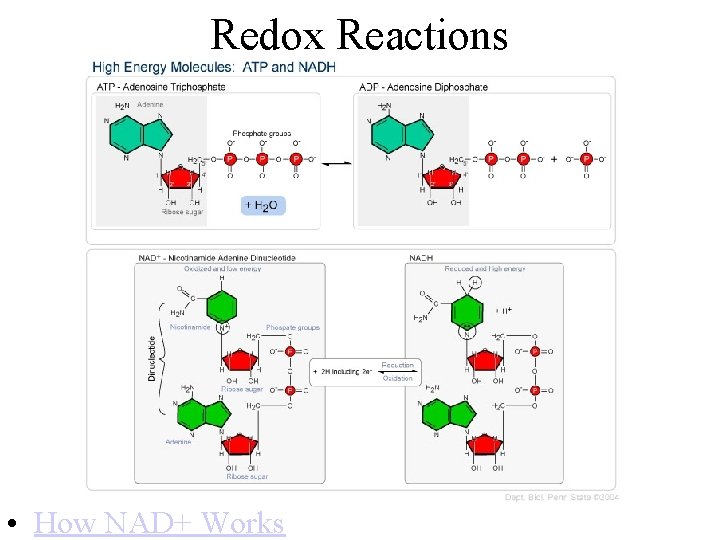
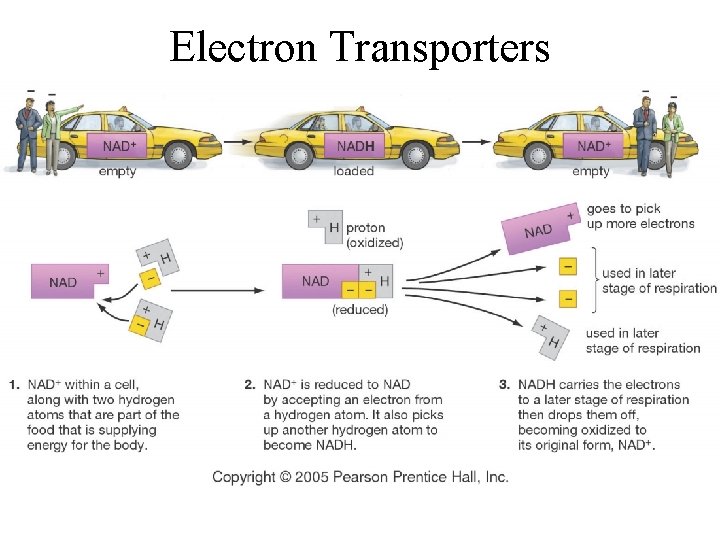
Redox Reactions • How NAD+ Works
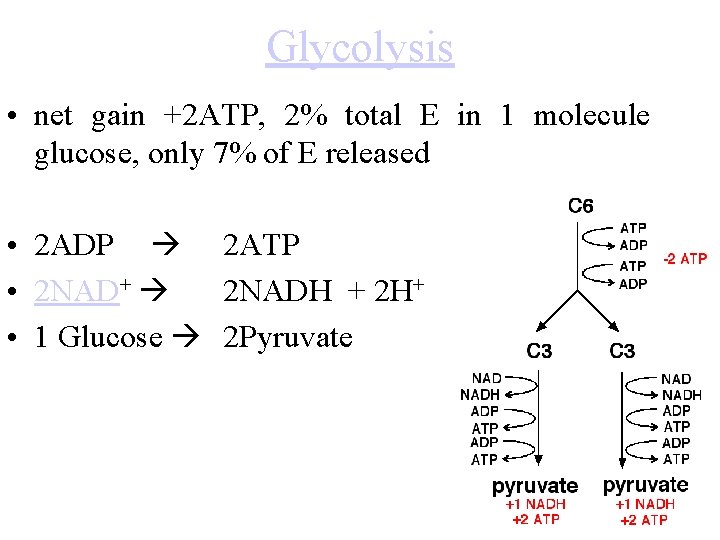
Glycolysis • net gain +2 ATP, 2% total E in 1 molecule glucose, only 7% of E released • 2 ADP 2 ATP • 2 NAD+ 2 NADH + 2 H+ • 1 Glucose 2 Pyruvate
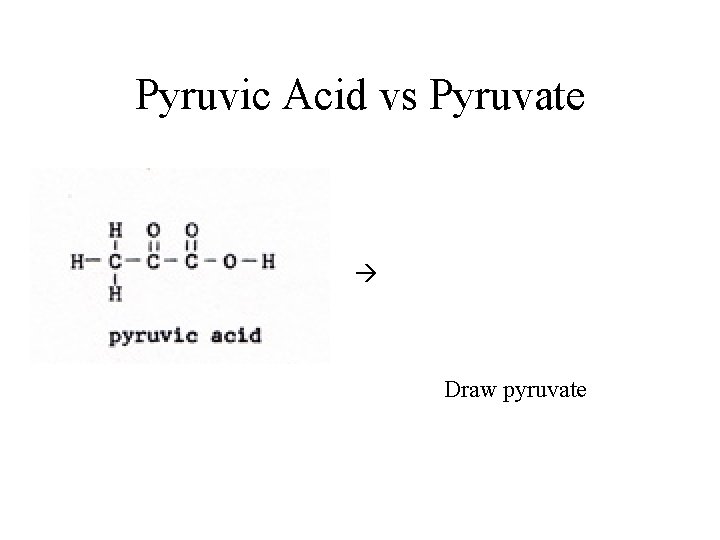
Pyruvic Acid vs Pyruvate Draw pyruvate
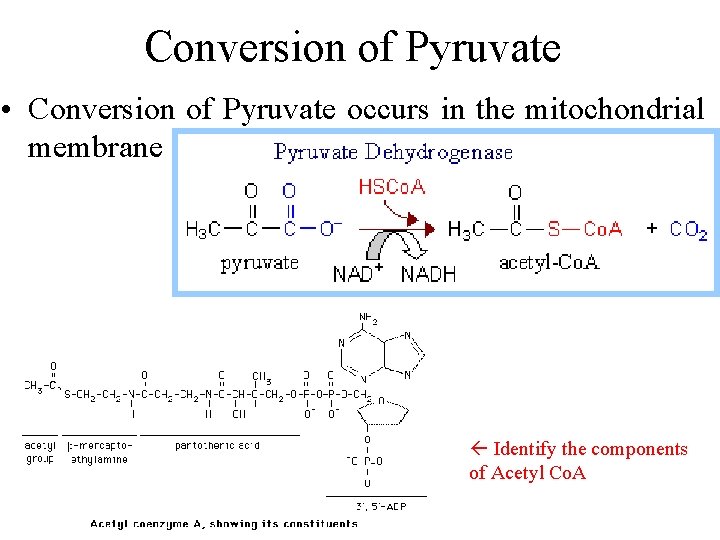
Conversion of Pyruvate • Conversion of Pyruvate occurs in the mitochondrial membrane Identify the components of Acetyl Co. A
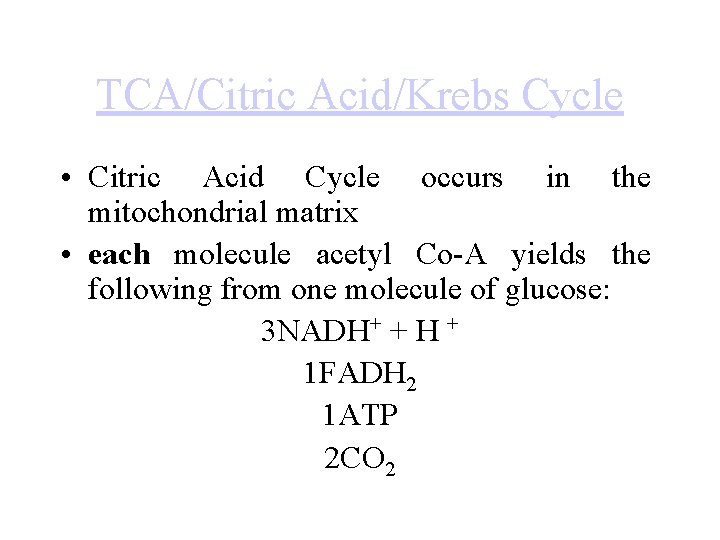
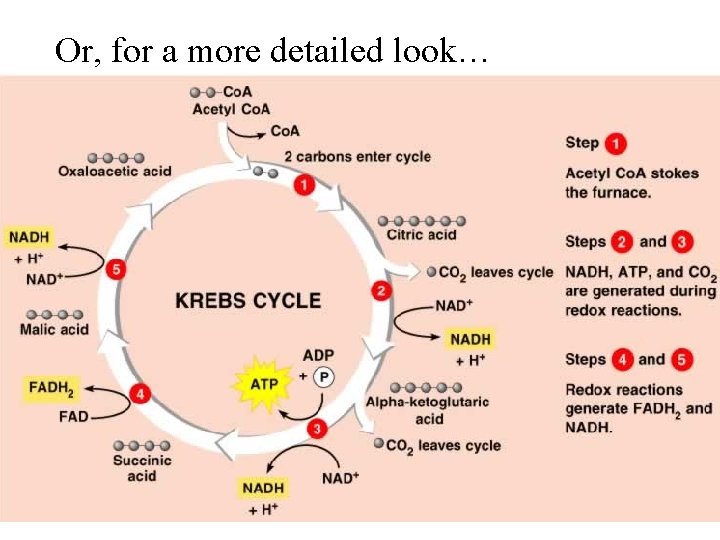
TCA/Citric Acid/Krebs Cycle • Citric Acid Cycle occurs in the mitochondrial matrix • each molecule acetyl Co-A yields the following from one molecule of glucose: 3 NADH+ + H + 1 FADH 2 1 ATP 2 CO 2
Or, for a more detailed look…
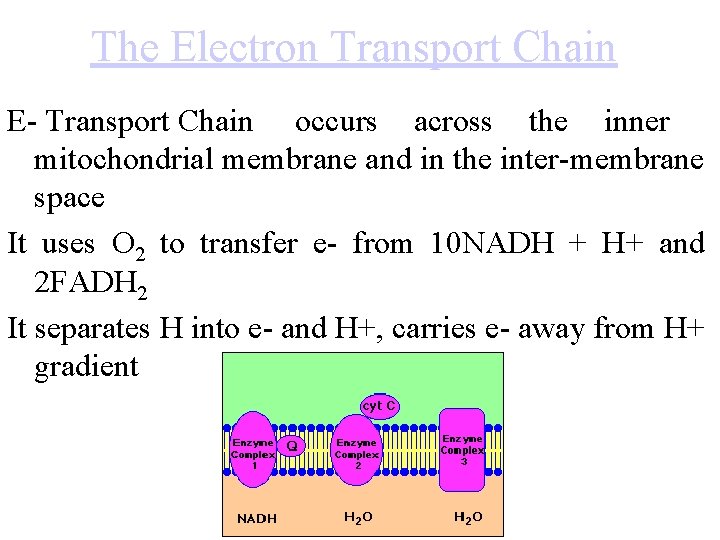
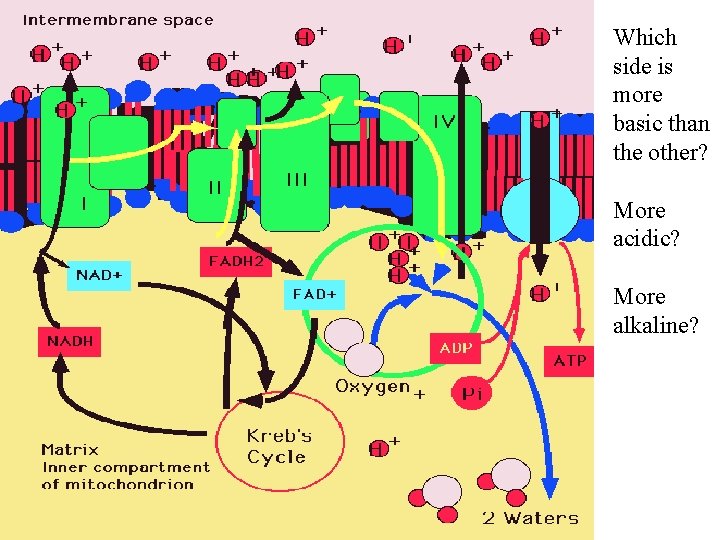
The Electron Transport Chain E- Transport Chain occurs across the inner mitochondrial membrane and in the inter-membrane space It uses O 2 to transfer e- from 10 NADH + H+ and 2 FADH 2 It separates H into e- and H+, carries e- away from H+ gradient
Which side is more basic than the other? More acidic? More alkaline?
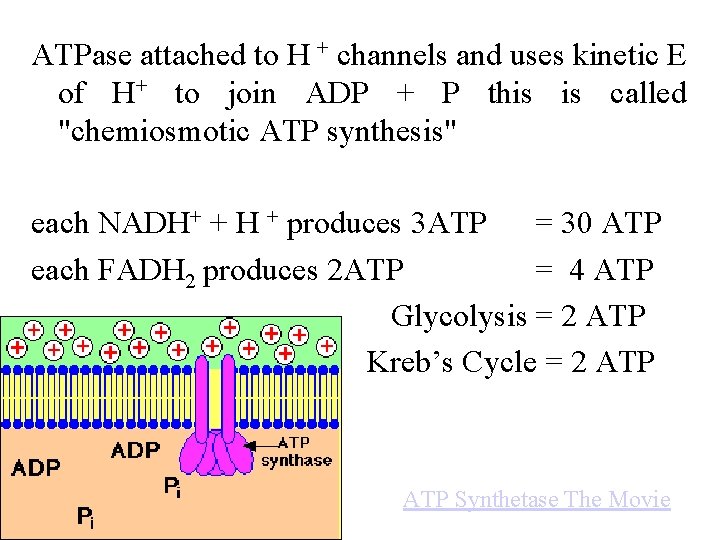
ATPase attached to H + channels and uses kinetic E of H+ to join ADP + P this is called "chemiosmotic ATP synthesis" each NADH+ + H + produces 3 ATP = 30 ATP each FADH 2 produces 2 ATP = 4 ATP Glycolysis = 2 ATP Kreb’s Cycle = 2 ATP Synthetase The Movie
Electron Transporters
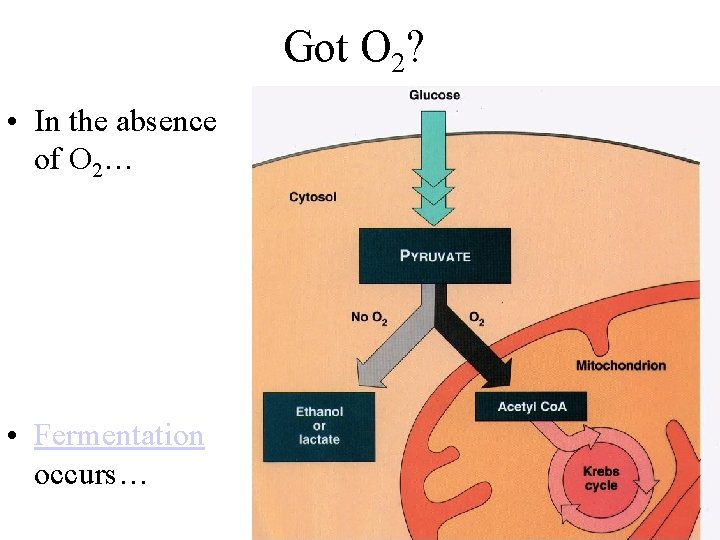
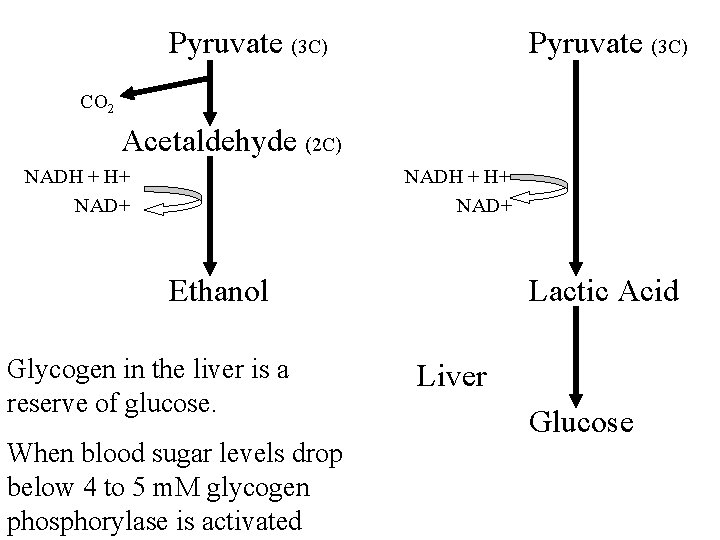
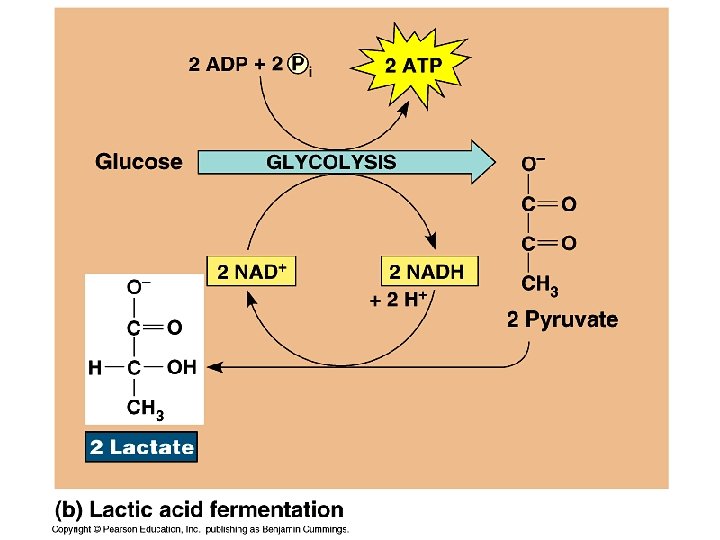
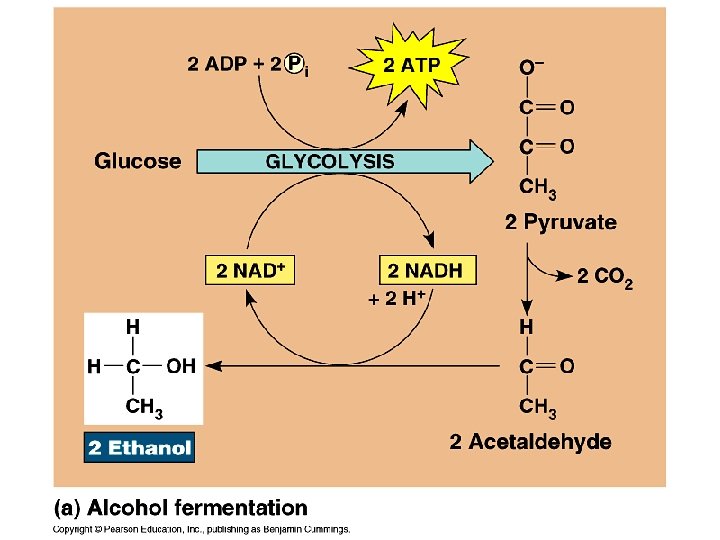
Got O 2? • In the absence of O 2… • Fermentation occurs…
Pyruvate (3 C) CO 2 Acetaldehyde (2 C) NADH + H+ NAD+ Ethanol Glycogen in the liver is a reserve of glucose. When blood sugar levels drop below 4 to 5 m. M glycogen phosphorylase is activated Lactic Acid Liver Glucose
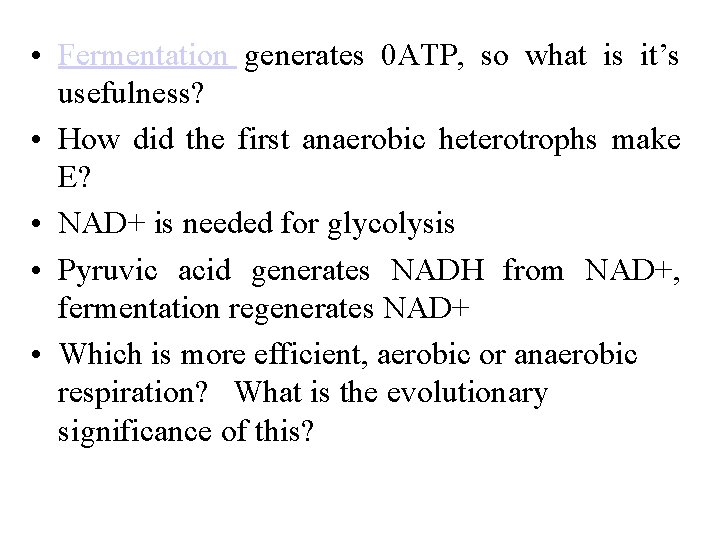
• Fermentation generates 0 ATP, so what is it’s usefulness? • How did the first anaerobic heterotrophs make E? • NAD+ is needed for glycolysis • Pyruvic acid generates NADH from NAD+, fermentation regenerates NAD+ • Which is more efficient, aerobic or anaerobic respiration? What is the evolutionary significance of this?
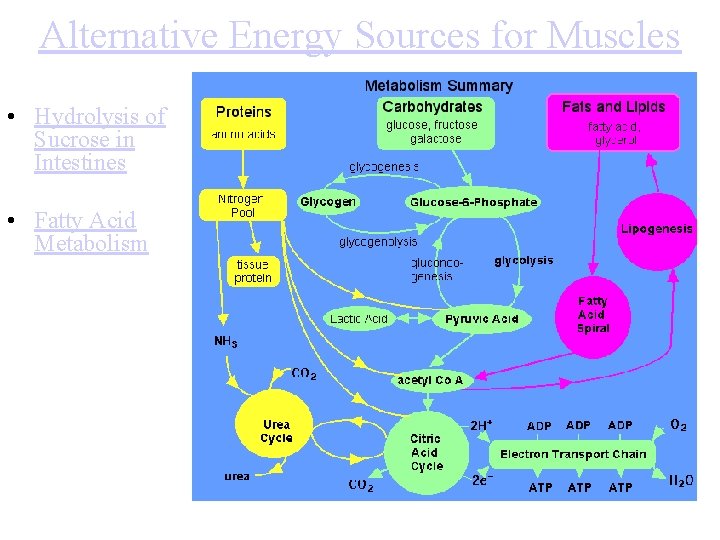
Alternative Energy Sources for Muscles • Hydrolysis of Sucrose in Intestines • Fatty Acid Metabolism
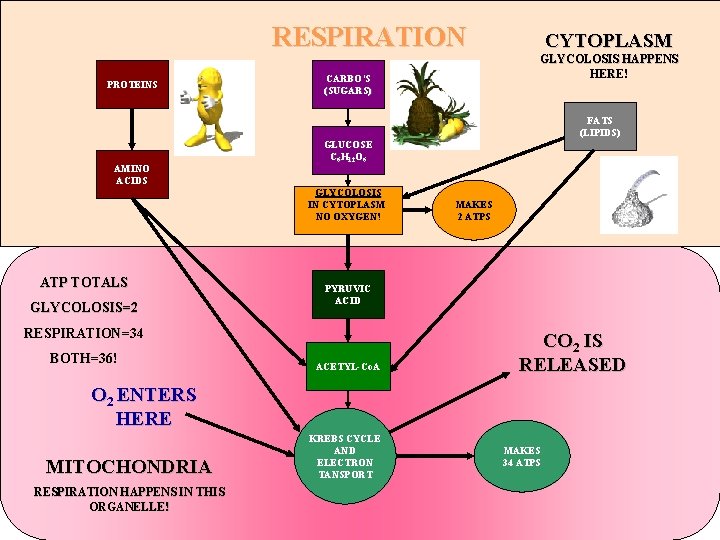
RESPIRATION PROTEINS CARBO’S (SUGARS) CYTOPLASM GLYCOLOSIS HAPPENS HERE! FATS (LIPIDS) AMINO ACIDS GLUCOSE C 6 H 12 O 6 GLYCOLOSIS IN CYTOPLASM NO OXYGEN! ATP TOTALS GLYCOLOSIS=2 PYRUVIC ACID RESPIRATION=34 BOTH=36! MAKES 2 ATPS ACETYL-Co. A CO 2 IS RELEASED O 2 ENTERS HERE MITOCHONDRIA RESPIRATION HAPPENS IN THIS ORGANELLE! KREBS CYCLE AND ELECTRON TANSPORT MAKES 34 ATPS
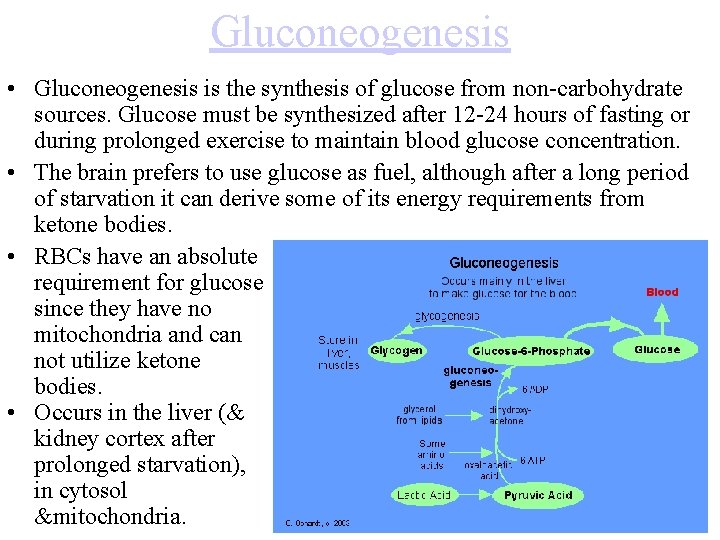
Gluconeogenesis • Gluconeogenesis is the synthesis of glucose from non-carbohydrate sources. Glucose must be synthesized after 12 -24 hours of fasting or during prolonged exercise to maintain blood glucose concentration. • The brain prefers to use glucose as fuel, although after a long period of starvation it can derive some of its energy requirements from ketone bodies. • RBCs have an absolute requirement for glucose since they have no mitochondria and can not utilize ketone bodies. • Occurs in the liver (& kidney cortex after prolonged starvation), in cytosol &mitochondria.
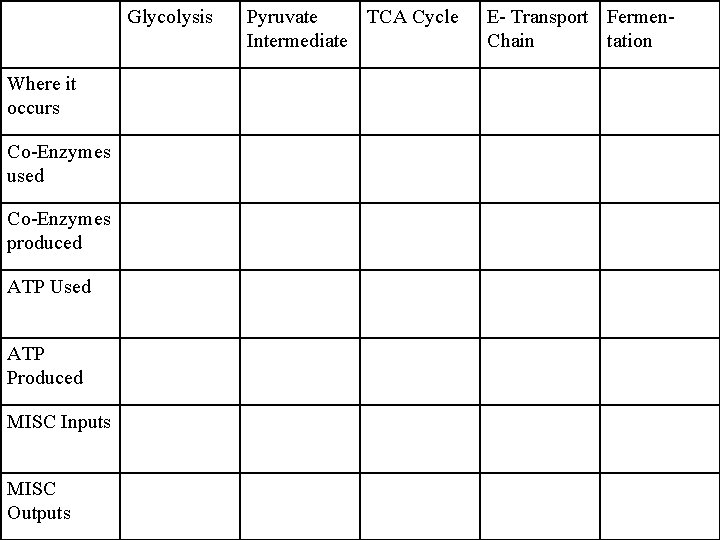
Glycolysis Where it occurs Co-Enzymes used Co-Enzymes produced ATP Used ATP Produced MISC Inputs MISC Outputs Pyruvate TCA Cycle Intermediate E- Transport Fermen. Chain tation
References • • • Hibernation: Krebs cycle Tutorial Citric Acid Cycle tutorial A&P Animations & Quizzes ATP & Energy Storage Fermentation & Irritable Bowel Syndrome Step by Step Glycolysis Interactive Biochemistry Animations Overview of Glycolysis Heavy Chemistry Fundamentals of Biochemistry Animations Glycolysis with Redox Reactions Cellular Respiration Animation: Summary