
RESOURCES WASTE STRATEGY WASTE PREVENTION PROGRAMME FOR ENGLAND

- Slides: 16
RESOURCES & WASTE STRATEGY WASTE PREVENTION PROGRAMME FOR ENGLAND CSR COMMUNITY 12 MAY 2021
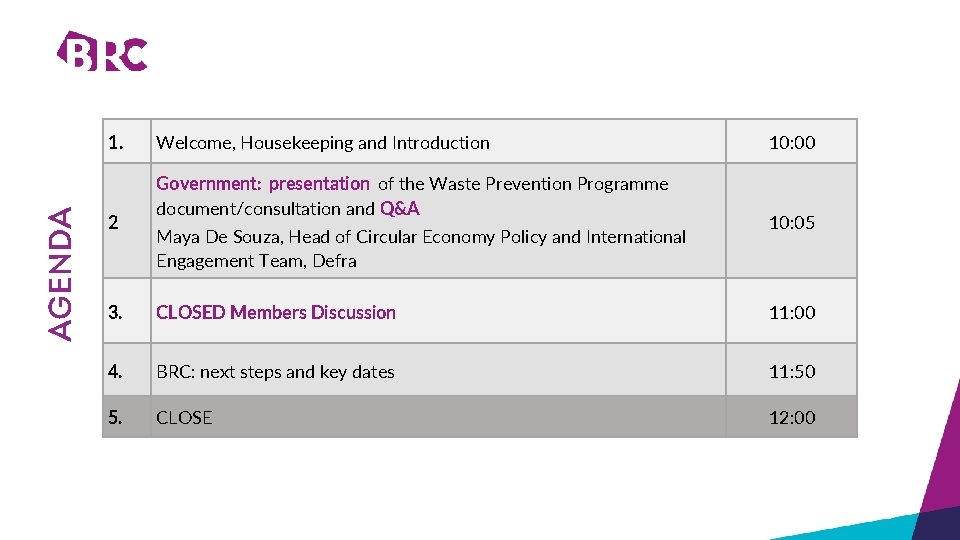
AGENDA 1. 2 Welcome, Housekeeping and Introduction Government: presentation of the Waste Prevention Programme document/consultation and Q&A Maya De Souza, Head of Circular Economy Policy and International Engagement Team, Defra 10: 00 10: 05 3. CLOSED Members Discussion 11: 00 4. BRC: next steps and key dates 11: 50 5. CLOSE 12: 00
Competition issues “Today we are meeting as members of the BRC. As a trade association, we take competition compliance seriously. Whilst discussions can cover matters of interest to our industry, we cannot discuss or exchange sensitive commercial information. If at any time during this meeting, you think our discussions may be in breach of competition rules, please inform the Chair. The Chair may close the meeting at any time if [s]he believes that discussions are in breach of competition rules”. Chatham House Rule To encourage openness and the sharing of information, the Chatham House Rule is invoked during this meeting. Participants are free to use the information received, but neither the identity nor the affiliation of the speaker(s), nor that of any other participant, may be revealed.
Waste prevention programme for England - Towards a Resource-Efficient Economy Consultation presentation Maya De Souza, Head of Circular Economy Policy and International Engagement Team, Defra
Q&A and EXCHANGE OF VIEWS
CLOSED Members discussion FOCUS ON THE PROPOSALS
Waste prevention programme for England CONSULTATION Waste Prevention Programme - Scope: England - Builds on the Resources and Waste Strategy - Complementary policy document that focuses on the top of the waste hierarchy – with the objective to increase reuse, repair and remanufacture - Aligned with the wider Government policies and efforts on: reducing GHG emissions, improving resource security, increasing jobs and growth, discouraging littering. Cross-cutting and sector-specific approach focused at: • Transforming product design • Making it easier for consumers to make sustainable purchasing decisions • Using extended producer responsibility (EPR) and other financial incentives • Align the regulatory framework with a circular economy approach • Integrating the approach into industrial policy • Supporting shared responsibility
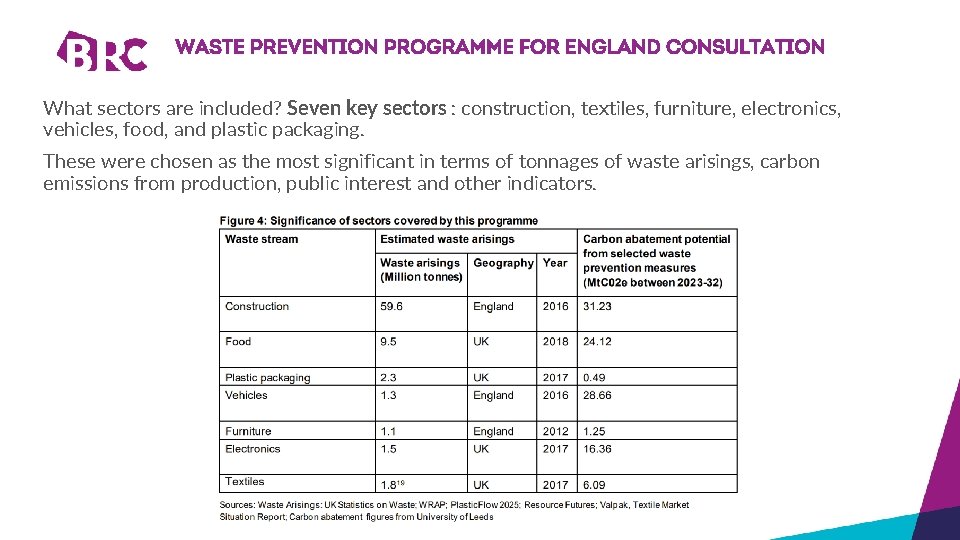
Waste prevention programme for England CONSULTATION What sectors are included? Seven key sectors : construction, textiles, furniture, electronics, vehicles, food, and plastic packaging. These were chosen as the most significant in terms of tonnages of waste arisings, carbon emissions from production, public interest and other indicators.
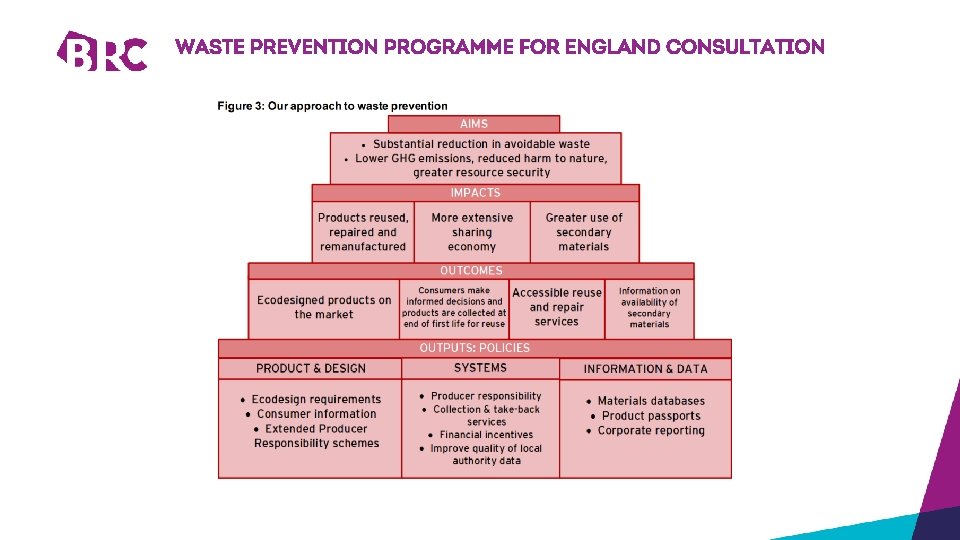
Waste prevention programme for England CONSULTATION
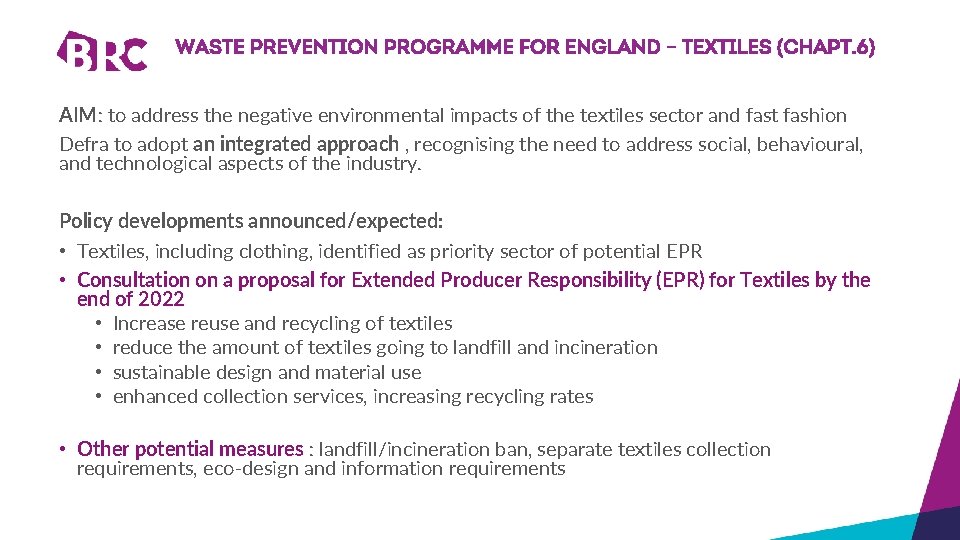
Waste prevention programme for England – TEXTILES (Chapt. 6) AIM: to address the negative environmental impacts of the textiles sector and fast fashion Defra to adopt an integrated approach , recognising the need to address social, behavioural, and technological aspects of the industry. Policy developments announced/expected: • Textiles, including clothing, identified as priority sector of potential EPR • Consultation on a proposal for Extended Producer Responsibility (EPR) for Textiles by the end of 2022 • Increase reuse and recycling of textiles • reduce the amount of textiles going to landfill and incineration • sustainable design and material use • enhanced collection services, increasing recycling rates • Other potential measures : landfill/incineration ban, separate textiles collection requirements, eco-design and information requirements
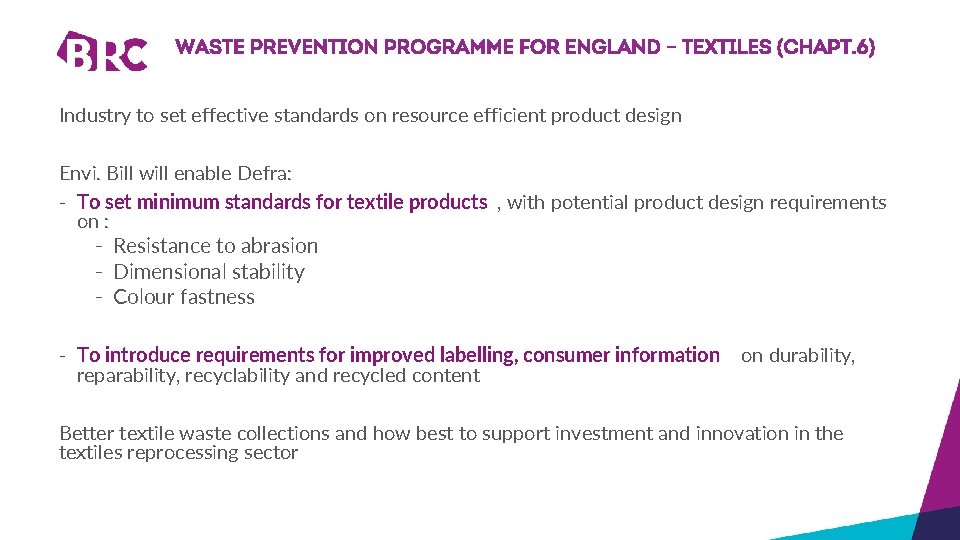
Waste prevention programme for England – TEXTILES (CHAPT. 6) Industry to set effective standards on resource efficient product design Envi. Bill will enable Defra: - To set minimum standards for textile products , with potential product design requirements on : - Resistance to abrasion - Dimensional stability - Colour fastness - To introduce requirements for improved labelling, consumer information reparability, recyclability and recycled content on durability, Better textile waste collections and how best to support investment and innovation in the textiles reprocessing sector
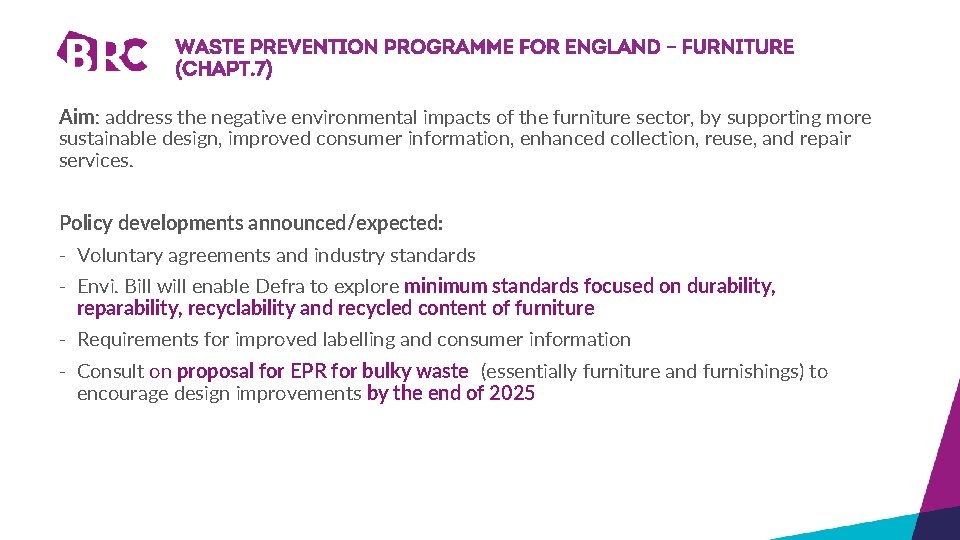
Waste prevention programme for England – FURNITURE (Chapt. 7) Aim: address the negative environmental impacts of the furniture sector, by supporting more sustainable design, improved consumer information, enhanced collection, reuse, and repair services. Policy developments announced/expected: - Voluntary agreements and industry standards - Envi. Bill will enable Defra to explore minimum standards focused on durability, reparability, recyclability and recycled content of furniture - Requirements for improved labelling and consumer information - Consult on proposal for EPR for bulky waste (essentially furniture and furnishings) to encourage design improvements by the end of 2025
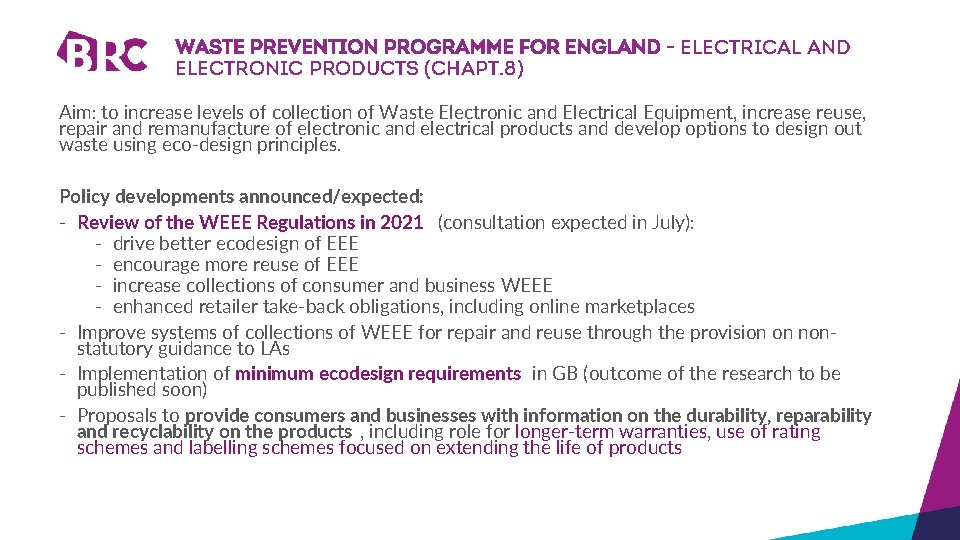
Waste prevention programme for England - ELECTRICAL AND ELECTRONIC PRODUCTS (chapt. 8) Aim: to increase levels of collection of Waste Electronic and Electrical Equipment, increase reuse, repair and remanufacture of electronic and electrical products and develop options to design out waste using eco-design principles. Policy developments announced/expected: - Review of the WEEE Regulations in 2021 (consultation expected in July): - drive better ecodesign of EEE - encourage more reuse of EEE - increase collections of consumer and business WEEE - enhanced retailer take-back obligations, including online marketplaces - Improve systems of collections of WEEE for repair and reuse through the provision on nonstatutory guidance to LAs - Implementation of minimum ecodesign requirements in GB (outcome of the research to be published soon) - Proposals to provide consumers and businesses with information on the durability, reparability and recyclability on the products , including role for longer-term warranties, use of rating schemes and labelling schemes focused on extending the life of products
Waste prevention programme for England - PACKAGING, PLASTICS, SINGLE-USE ITEMS (chapt. 10) Aim: to encourage a shift away from hard to recycle and single-use products, and support research and innovation into more sustainable materials and systems, reducing litter and plastic pollution as well as conserving material resources Policy developments announced/expected: - Defra consultation on potential bans on other single-use plastic items - Explore how packaging EPR could further drive reuse - Review of the Packaging (Essential Requirements ) Regulations 2015 to be completed in 2021
Waste prevention programme for England – FOOD (chapt. 11) Aim: reduce food waste in the home and across the supply chain and take forward key policy commitments in this area including for certain businesses to measure, report and act on food waste. Target: eliminating food waste to landfill by 2030 Policy developments announced/expected: • Defra will introduce mandatory annual reporting of food waste by certain food businesses of an appropriate size, upon consultation
NEXT STEPS • Deadline for member comments by 24 May • BRC to share a draft on 28 May • Final members comments on the BRC draft by 7 June • 10 June: deadline submission • https: //consult. defra. gov. uk/waste-and-recycling/waste-prevention-programme-for-england 2021/supporting_documents/Waste%20 Prevention%20 Programme%20 for%20 England%20%20 consultation% 20 document. pdf