
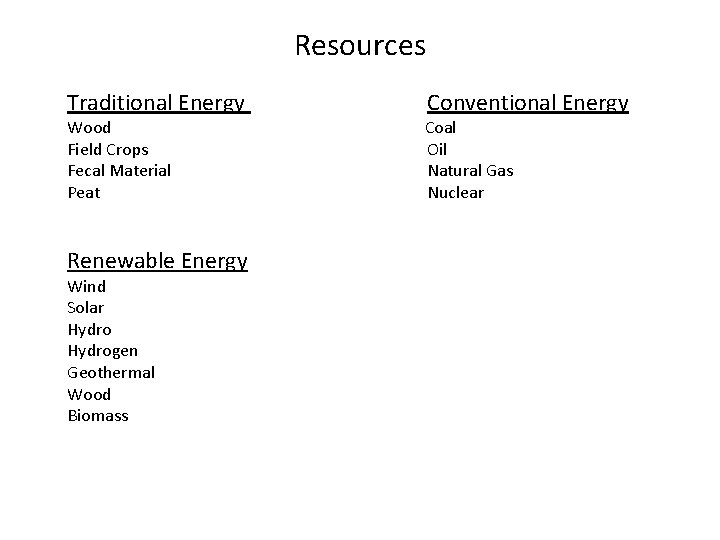
Resources Traditional Energy Wood Field Crops Fecal Material
- Slides: 27
Resources Traditional Energy Wood Field Crops Fecal Material Peat Renewable Energy Wind Solar Hydrogen Geothermal Wood Biomass Conventional Energy Coal Oil Natural Gas Nuclear
NON-Renewable Resources
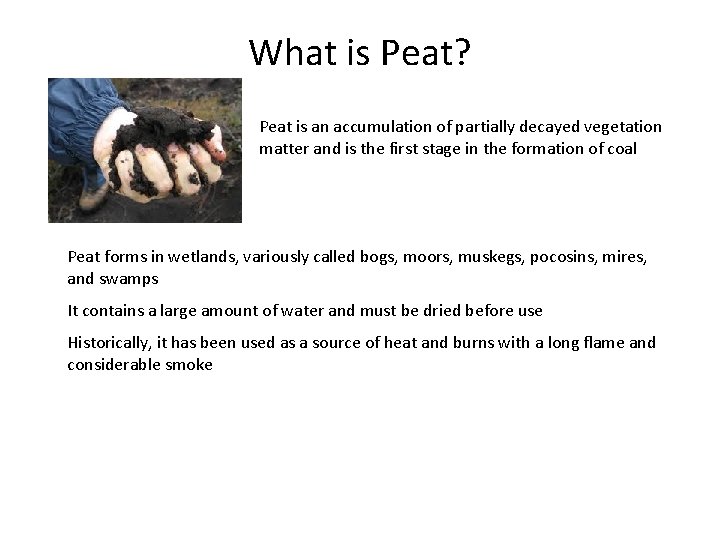
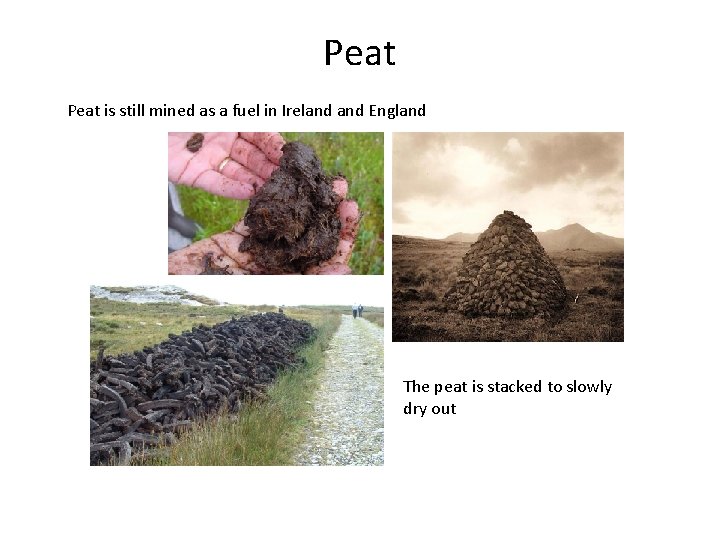
What is Peat? Peat is an accumulation of partially decayed vegetation matter and is the first stage in the formation of coal Peat forms in wetlands, variously called bogs, moors, muskegs, pocosins, mires, and swamps It contains a large amount of water and must be dried before use Historically, it has been used as a source of heat and burns with a long flame and considerable smoke
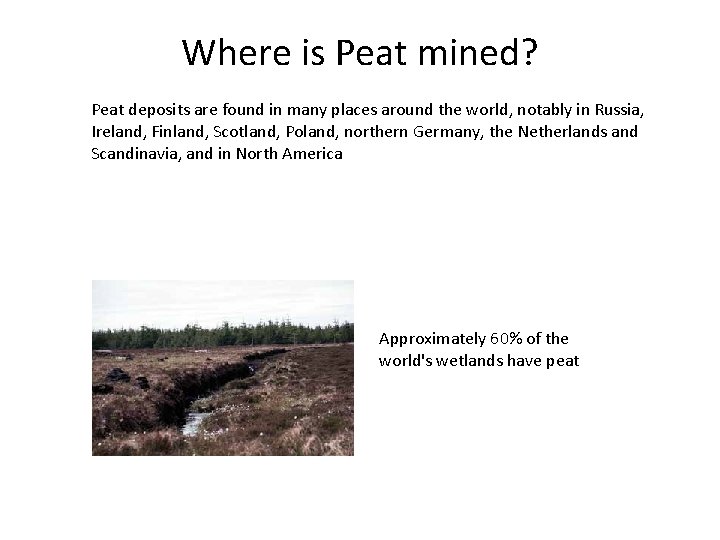
Where is Peat mined? Peat deposits are found in many places around the world, notably in Russia, Ireland, Finland, Scotland, Poland, northern Germany, the Netherlands and Scandinavia, and in North America Approximately 60% of the world's wetlands have peat
Peat is still mined as a fuel in Ireland England The peat is stacked to slowly dry out
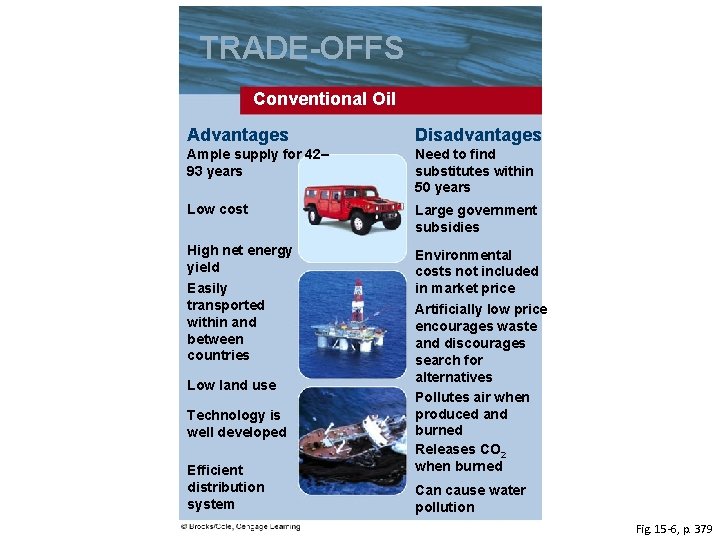
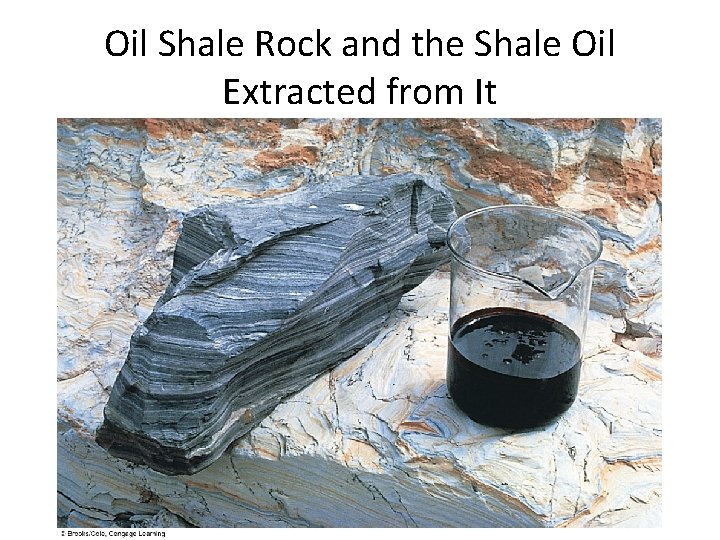
What Are the Advantages and Disadvantages of Oil? • Conventional oil is currently abundant, has a high net energy yield, and is relatively inexpensive, but using it causes air and water pollution and releases greenhouse gases to the atmosphere. • Heavy oils from oil sand oil shale exist in potentially large supplies but have low net energy yields and higher environmental impacts than conventional oil has.
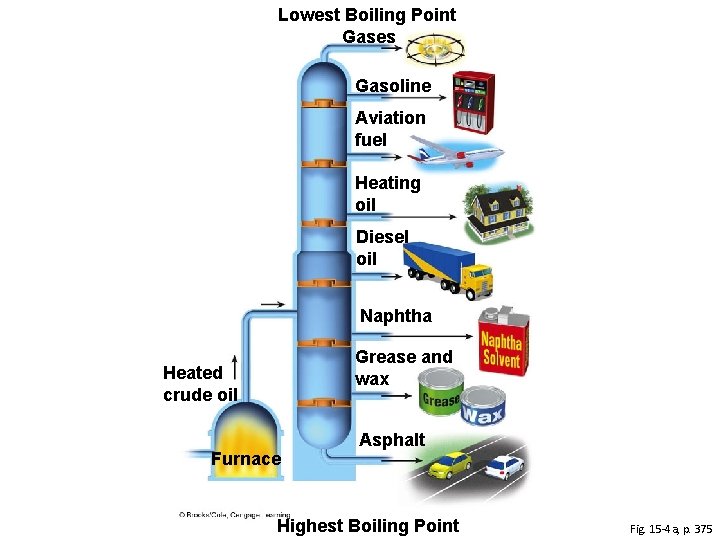
Lowest Boiling Point Gases Gasoline Aviation fuel Heating oil Diesel oil Naphtha Grease and wax Heated crude oil Furnace Asphalt Highest Boiling Point Fig. 15 -4 a, p. 375
Who controls the Oil Prices? • OPEC Controls Most of the World’s Oil Supplies • 13 countries have at least 60% of the world’s crude oil reserves – Saudi Arabia: 25% – Canada: 15% • Oil production peaks and flow rates to consumers
The United States Uses Much More Oil Than It Produces • Produces 9% of the world’s oil • Imports 60% of its oil • About One-fourth of the world’s conventional oil is controlled by countries that sponsor or condone terrorism
What are the Advantages and Disadvantages of Conventional Oil? • Extraction, processing, and burning of nonrenewable oil and other fossil fuels – Advantages – Disadvantages
TRADE-OFFS Conventional Oil Advantages Disadvantages Ample supply for 42– 93 years Need to find substitutes within 50 years Low cost Large government subsidies High net energy yield Environmental costs not included in market price Easily transported within and between countries Low land use Technology is well developed Efficient distribution system Artificially low price encourages waste and discourages search for alternatives Pollutes air when produced and burned Releases CO 2 when burned Can cause water pollution Fig. 15 -6, p. 379
Oil Shale Rock and the Shale Oil Extracted from It
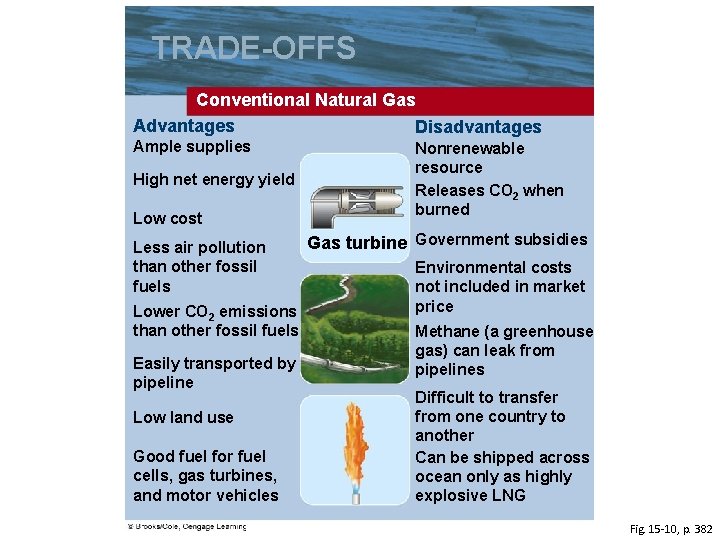
What Are the Advantages and Disadvantages of Natural Gas? • Conventional natural gas is more plentiful than oil, has a high net energy yield and a fairly low cost, and has the lowest environmental impact of all fossil fuels.
TRADE-OFFS Conventional Natural Gas Advantages Disadvantages Ample supplies High net energy yield Low cost Less air pollution than other fossil fuels Lower CO 2 emissions than other fossil fuels Easily transported by pipeline Low land use Good fuel for fuel cells, gas turbines, and motor vehicles Nonrenewable resource Releases CO 2 when burned Gas turbine Government subsidies Environmental costs not included in market price Methane (a greenhouse gas) can leak from pipelines Difficult to transfer from one country to another Can be shipped across ocean only as highly explosive LNG Fig. 15 -10, p. 382
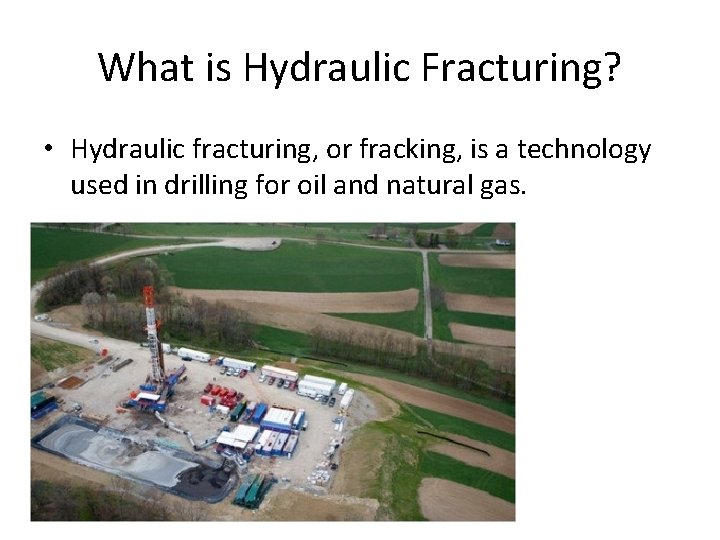
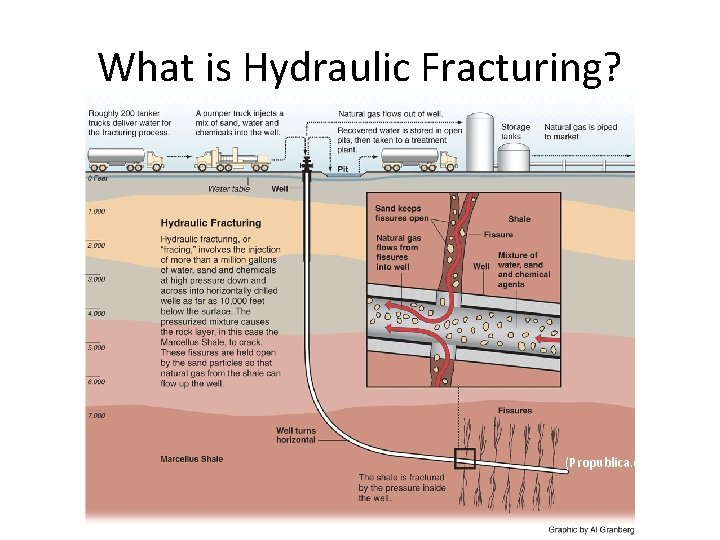
What is Hydraulic Fracturing? • Hydraulic fracturing, or fracking, is a technology used in drilling for oil and natural gas. (ohiocitizen. org)
What is Hydraulic Fracturing? (Propublica. org)
What Are the Advantages and Disadvantages of Coal? • Conventional coal is very plentiful and has a high net energy yield and low cost, but it has a very high environmental impact. • Gaseous and liquid fuels produced from coal could be plentiful, but they have lower net energy yields and higher environmental impacts than conventional coal has.
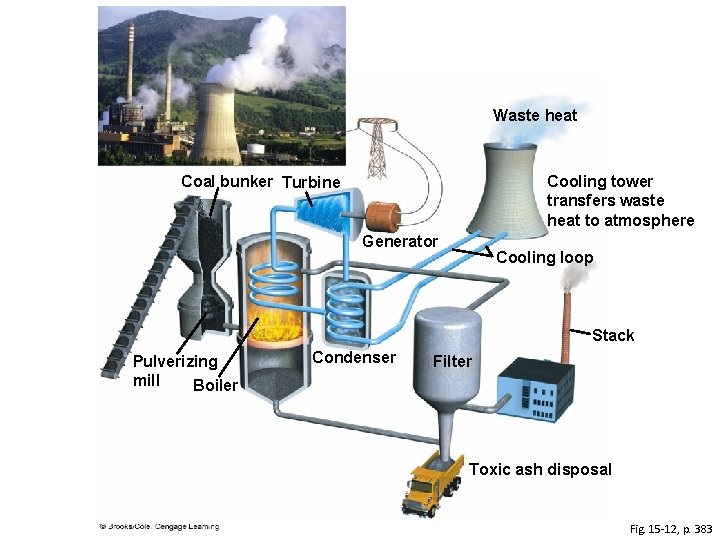
Waste heat Coal bunker Turbine Cooling tower transfers waste heat to atmosphere Generator Cooling loop Stack Pulverizing mill Boiler Condenser Filter Toxic ash disposal Fig. 15 -12, p. 383
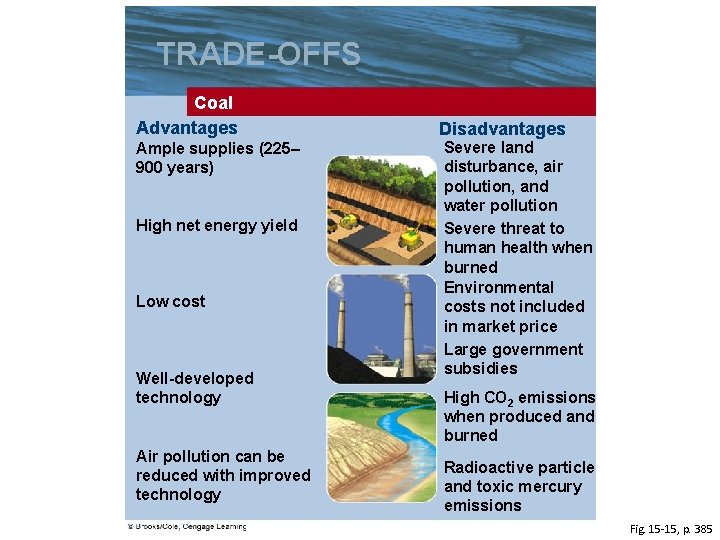
TRADE-OFFS Coal Advantages Ample supplies (225– 900 years) High net energy yield Low cost Well-developed technology Air pollution can be reduced with improved technology Disadvantages Severe land disturbance, air pollution, and water pollution Severe threat to human health when burned Environmental costs not included in market price Large government subsidies High CO 2 emissions when produced and burned Radioactive particle and toxic mercury emissions Fig. 15 -15, p. 385
What Are the Advantages and Disadvantages of Nuclear Energy? • Nuclear power has a low environmental impact and a very low accident risk, but high costs, a low net energy yield, long-lived radioactive wastes, vulnerability to sabotage, and the potential for spreading nuclear weapons technology have limited its use.
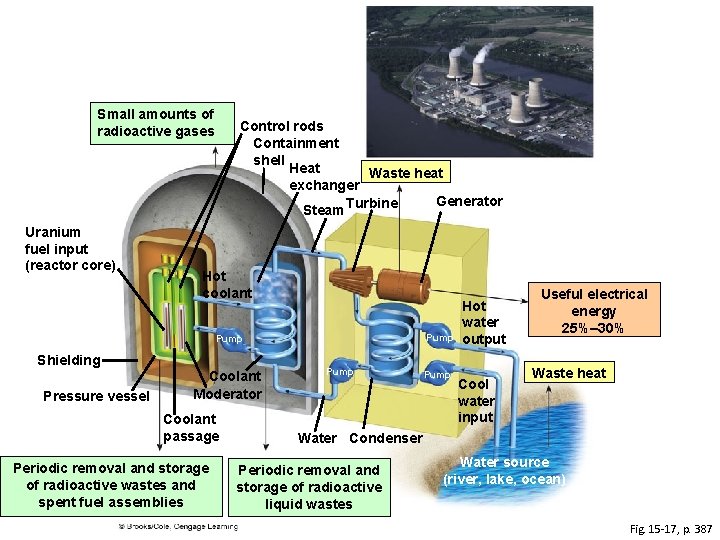
How Does a Nuclear Fission Reactor Work? (1) • Controlled nuclear fission reaction in a reactor – Light-water reactors • Fueled by uranium ore and packed as pellets in fuel rods and fuel assemblies • Control rods absorb neutrons
How Does a Nuclear Fission Reactor Work? (2) • Water is the usual coolant • Containment shell around the core for protection • Water-filled pools or dry casks for storage of radioactive spent fuel rod assemblies
Small amounts of radioactive gases Uranium fuel input (reactor core) Control rods Containment shell Heat Waste heat exchanger Generator Turbine Steam Hot coolant Pump Shielding Pressure vessel Coolant Moderator Coolant passage Periodic removal and storage of radioactive wastes and spent fuel assemblies Pump Hot water output Cool water input Useful electrical energy 25%– 30% Waste heat Water Condenser Periodic removal and storage of radioactive liquid wastes Water source (river, lake, ocean) Fig. 15 -17, p. 387
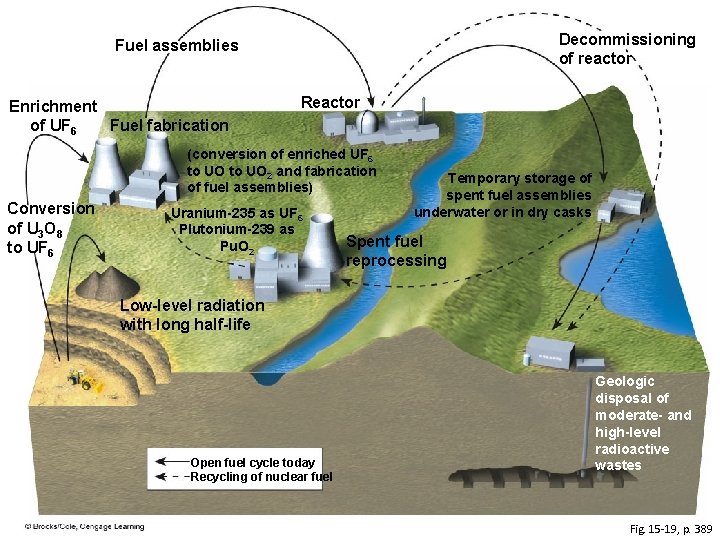
What Is the Nuclear Fuel Cycle? • Mine the uranium • Process the uranium to make the fuel • Use it in the reactor • Safely store the radioactive waste • Decommission the reactor
Decommissioning of reactor Fuel assemblies Enrichment Fuel fabrication of UF 6 Reactor (conversion of enriched UF 6 to UO 2 and fabrication of fuel assemblies) Conversion of U 3 O 8 to UF 6 Uranium-235 as UF 6 Plutonium-239 as Pu. O 2 Temporary storage of spent fuel assemblies underwater or in dry casks Spent fuel reprocessing Low-level radiation with long half-life Open fuel cycle today Recycling of nuclear fuel Geologic disposal of moderate- and high-level radioactive wastes Fig. 15 -19, p. 389
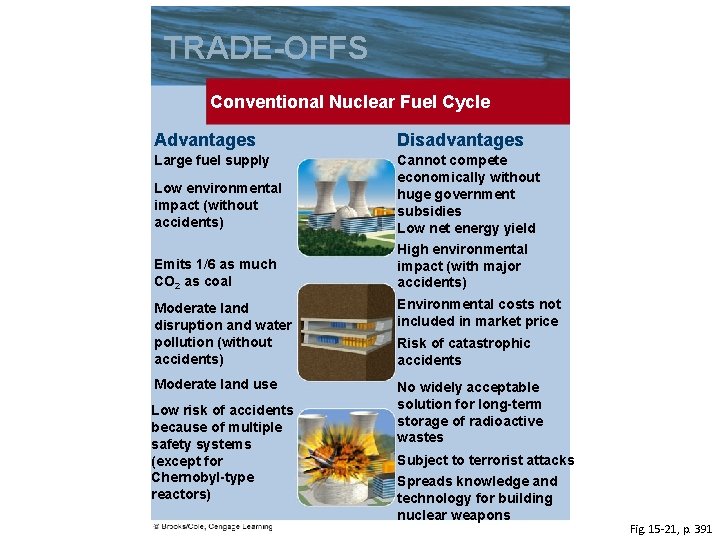
TRADE-OFFS Conventional Nuclear Fuel Cycle Advantages Disadvantages Large fuel supply Cannot compete economically without huge government subsidies Low net energy yield High environmental impact (with major accidents) Low environmental impact (without accidents) Emits 1/6 as much CO 2 as coal Moderate land disruption and water pollution (without accidents) Environmental costs not included in market price Moderate land use No widely acceptable solution for long-term storage of radioactive wastes Low risk of accidents because of multiple safety systems (except for Chernobyl-type reactors) Risk of catastrophic accidents Subject to terrorist attacks Spreads knowledge and technology for building nuclear weapons Fig. 15 -21, p. 391
Will Nuclear Fusion Save Us? • “Nuclear fusion is the power of the future and always will be” • Still in the laboratory phase after 50 years of research and $34 billion dollars • 2006: U. S. , China, Russia, Japan, South Korea, and European Union – Will build a large-scale experimental nuclear fusion reactor by 2040